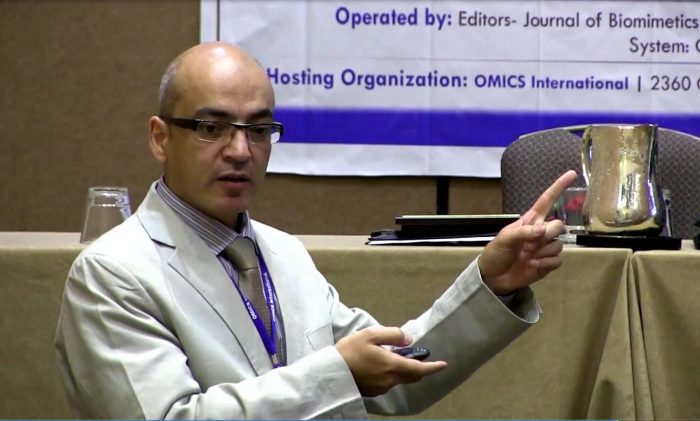
Prof. Dr. Dennis Säring is a faculty member at the University of Applied Sciences Wedel , specifically affiliated with the School of Engineering. His academic and research activities focus on Deep Learning , Medical Image Analysis , and applications of Artificial Intelligence in healthcare and biomedical imaging. He has led seminars on Deep Learning topics and supervised student projects in Autonomous Driving at Audi's AADC 2018 competition. Research Highlights : Cardiovascular imaging, forensic age estimation via MRI, neural network-based bone segmentation, and cerebrovascular aneurysm analysis. Technical Expertise : Cardiac MRI, 3D/4D image processing, parametric mapping, and spatiotemporal data fusion. His recent publications (2018-2023) emphasize 3D MR segmentation for age assessment, CMR strain analysis in athletes, and T1/T2 mapping for myocarditis. Key collaborations include institutions like the University Medical Center Hamburg-Eppendorf and Wedler Hochschulbund, with funding for autonomous vehicle research. While no explicit scientific awards are listed, his work spans clinical cardiology, forensic radiology, and AI-driven medical diagnostics.
Lieuwke Kranenburg is an Assistant Professor at the Faculty of Veterinary Medicine , Utrecht University , specializing in Equine Internal Medicine . She provides patient care at the University Equine Clinic and teaches Master's courses in equine digestion , infectious diseases , and skin problems . Research Focus: Equine internal medicine, digestive diseases, infectious pathogens, metabolic disorders Professional Certifications: EBVS® European Veterinary Specialist in Equine Internal Medicine International Collaboration: Trained Chinese veterinarians at Heilan Equestrian Centre Publications highlight her work on equine gastric disease management, diagnostic imaging, infectious disease epidemiology, and metabolic research. She contributes to equine clinical research through peer-reviewed journals and conference abstracts. Professional Involvement: Former board member of the Equine Medicine Group and current GGP representative for FEEVA, maintaining professional networks and advancing equine veterinary practice.
Hee Kwon Song, Ph.D. is an Associate Professor of Radiology at the University of Pennsylvania , affiliated with the Institute for Translational Medicine and Therapeutics and the Penn Center for Musculoskeletal Disorders . His expertise lies in MRI physics and MRI engineering , focusing on novel dynamic imaging strategies. Education: BS in Electrical Engineering, Northwestern University (1991) MS in Bioengineering, University of Pennsylvania (1994) PhD in Bioengineering, University of Pennsylvania (1999) Master of Law, University of Pennsylvania Carey Law School (2021) Dr. Song’s research specializes in dynamic contrast-enhanced MRI (DCE-MRI) using radial data acquisition and KWIC reconstruction for ultra-fast imaging. His work enables retrospective respiratory motion compensation and flexible resolution adjustments in tumor treatment monitoring ( lung, liver, breast, kidney, ovarian ). Applications extend to non-contrast MRA and tissue T1 mapping . Selected Publications demonstrate his focus on accelerated MRI , bone-selective imaging , and deep learning reconstruction , with collaborations spanning Medicine, Obstetrics and Gynecology, Neurology , and Radiation Oncology . Contact: heekwon.song@pennmedicine.upenn.edu
Dr. Gabriella Lindberg is an Assistant Professor in the Department of Bioengineering at the University of Oregon's Knight Campus, leading the Lindberg Lab. Her research focuses on developing bioinks, hydrogels, and bioresins to engineer musculoskeletal tissues that replicate native biological environments. She holds a PhD from the University of Otago and previously served as a Research Fellow in the Christchurch Regenerative Medicine and Tissue Engineering (CReaTE) Group. Dr. Lindberg has secured significant grants, including a New Zealand Health Research Council Emerging Researcher Grant, and has won multiple awards such as the ISBF Young Investigator Award (2019) and CMDT/MedTech CoRE awards. Her work spans collaborative projects with institutions in New Zealand, Germany, Netherlands, and Australia. Current lab members include researchers like Vinni Thoms (Lab Manager) and Tim Wheeler (Postdoctoral Scholar). The lab is recruiting for postdoctoral and graduate positions in immunomodulation for osteoarthritis and bone marrow tissue engineering. Key research platforms include biofabrication, biomaterials, and organoid development. Dr. Lindberg’s research emphasizes clinical relevance, with projects addressing patient variability and disease progression modeling. Her team explores oxygen control in 3D-printed constructs and integrates inflammatory biology with biomaterials science. The lab’s long-term goals include advancing 3D bioassembly for musculoskeletal repair and hematological disease treatments. Notable contributions include work on vitreous humor as a biomaterial, automated 3D bioassembly, and the development of photoclickable gelatin bioinks. She has mentored numerous students, including PhD candidates Axel Norberg and Bram Soliman, and supervised master’s and undergraduate researchers in tissue engineering and biofabrication techniques.
Karol Budohoski, MD, PhD, FRCS, is an Assistant Professor in the Department of Neurosurgery at the University of Utah , with additional Adjunct Assistant Professor status in Radiology & Imaging Sciences. He specializes in cerebrovascular , endovascular , and skull base neurosurgery , treating complex pathologies like brain aneurysms, arteriovenous malformations, and skull base tumors. Education: PhD in Neurosurgery (University of Cambridge), MD (Medical University of Warsaw), Clinical Fellowships at University of Utah and UCSF His academic focus on subarachnoid hemorrhage pathophysiology and cerebral vasospasm has led to innovations in brain monitoring tools. Recent publications (2023-2025) span neurovascular surgery , stroke interventions , global neurosurgery , and cerebral autoregulation studies. He practices at the Clinical Neurosciences Center in Salt Lake City, Utah, with a patient rating of 4.9/5 (125 reviews), praised for clarity, attentiveness, and technical expertise.
Dr. Richard H. Wiggins serves as Professor of Radiology and Imaging Sciences at the University of Utah School of Medicine, where he also holds the position of Associate Dean of Continuing Medical Education. He maintains adjunct professorships in Otolaryngology, Head and Neck Surgery, and Biomedical Informatics. His educational background includes a BA in Biochemistry from the University of Texas at Austin and an MD from the University of Texas at Houston Health Sciences Center, followed by specialized training at the University of Florida and University of Utah. Dr. Wiggins's research spans neuroradiology, biomedical informatics, and medical education innovation. His work explores advanced imaging techniques for head and neck pathologies, PET-CT applications in oncology, and the development of novel educational platforms like the RadDiscord community. He maintains particular expertise in temporal bone imaging, paragangliomas, and thyroid nodule classification systems. Analysis of his recent publications shows strong emphasis on: (1) optimizing oncologic imaging protocols, especially PET-CT applications across cancer types; (2) advancing head and neck radiology through volumetric analysis and radiomics; and (3) transforming radiology education via gamification and digital communities. His scientific honors include: Distinguished Teaching Award (Otolaryngology, University of Utah) Honored Educator Award (Radiological Society of North America) Inaugural Fellow, Academy of Health Science Educators 25th Fellow of the Society of Imaging Informatics in Medicine Fellow of the American College of Radiology He leads the Utah Head and Neck Imaging Center of Excellence, which includes an educational YouTube channel (@UHNICE). While specific grants aren't detailed, his extensive lecture record (600+ presentations) and leadership roles in professional societies like SIIM (Program Chair 2014-2020), ASHNR (Past President), and WNRS (Past President) demonstrate significant academic influence.
Sarah Newman is an Assistant Professor of Anthropology and Social Sciences at the University of Chicago's College and serves as Director of Undergraduate Studies. She holds a PhD from Brown University (2015). Her research integrates archaeological, historical, and art historical methods to examine themes such as waste, human-animal relationships, and long-term landscape transformations in Mesoamerica and beyond. Key projects include the Invisible Landscapes initiative, co-directed with Felipe Rojas and Eduardo Góes Neves, which explores anthropogenic landscapes through multidisciplinary collaboration. Newman’s fieldwork in Jordan investigates water management systems near Petra, while her Maya-focused studies address zooarchaeology, sensory experiences, and knowledge systems. Her monograph Unmaking Waste: New Histories of Old Things (2023) redefines waste as a culturally contingent concept, challenging Eurocentric narratives through cross-cultural comparisons. A current book project, Animal Archaeology , extends archaeological methodologies to non-human histories. Newman’s affiliations include the Committee on Environment, Geography, and Urbanization, the Institute for the Formation of Knowledge, and the Center for Latin American Studies. Publications span topics from Classic Maya animal categories to Neolithic sites in Jordan. Her work emphasizes interdisciplinary approaches, including remote sensing and 3D imaging technologies. Recent research explores sensory archaeology, particularly olfactory practices in Mesoamerica, and critiques traditional archaeological frameworks through comparative global perspectives.
Dr. Zhenghao Chen is a Lecturer in Data Science at the University of Newcastle, affiliated with the School of Information and Physical Sciences. He earned his Ph.D. from the University of Sydney in 2022, following a B.Eng. H1 degree from the same institution in 2017. Prior to his current position, Dr. Chen served as a Postdoctoral Research Fellow at the University of Sydney (2022-2024), a Research Engineer at TikTok (2024), and as a Visiting Research Scientist at Microsoft Research and Disney Research (2022-2023). Dr. Chen's educational background includes: Doctor of Philosophy, University of Sydney (2022) Bachelor of Information Technology (B.Eng. H1), University of Sydney (2017) Dr. Chen's research spans multiple domains within artificial intelligence, with particular expertise in Computer Vision, Natural Language Processing, and Machine Learning. His work in Generative AI has garnered significant recognition, with applications in both academic and industrial settings. His research interests are reflected in his Fields of Research percentages: Deep Learning (30%), Computer Vision (30%), Natural Language Processing (20%), and Multimodal Analysis and Synthesis (20%). His publications in top-tier venues like CVPR, ICCV, ECCV, and journals like IEEE TPAMI demonstrate the breadth and impact of his work. Analysis of Dr. Chen's recent publications (2022-2025) reveals a consistent focus on neural compression techniques, 3D perception, and multimodal AI systems. His work spans medical imaging (CXR bone suppression), video compression, point cloud processing, and neural surface reconstruction. A notable trend is his exploration of efficient AI systems that work well under resource constraints, as evidenced by his involvement in the EMCLR workshop. His research often bridges theoretical advances with practical applications across multiple domains. Dr. Chen has received several prestigious awards: Microsoft Research Asia StarTrack Fellowship (2025) ACM SIGMM Award for Outstanding PhD Thesis in Multimedia Computing (2024) Australia Government Research Training Program (RTP) Fellowship (2019) Google Australia Prize for Excellence in Computer Science (2017) Dr. Chen is actively involved in the academic community, serving on the Program Committee for major AI conferences including CVPR, ICCV, ECCV, SIGGRAPH, AAAI, and others. He also organizes workshops in Multimedia and ICCV conferences, and serves as a reviewer for prestigious journals. His teaching responsibilities include courses on Intelligent Visual Signal Understanding, Video Intelligence and Compression, Database and Information Management, and Computing Fundamentals at both the University of Sydney and University of Newcastle.
Brian Weeks is an Associate Professor in the School for Environment and Sustainability at the University of Michigan, where he joined as an Assistant Professor in 2019. His research focuses on understanding how species and communities respond to human-induced environmental changes, with particular emphasis on avian systems. Weeks leads an active research group that integrates museum specimen-based work, genomics, and field studies to investigate biodiversity responses to global change. Weeks' research interests span evolutionary ecology, climate change biology, and biodiversity conservation. His work primarily examines how bird species and communities have responded to environmental change through morphological adaptations. He combines museum-, field-, and lab-based approaches to study evolutionary processes across multiple scales, from macroevolutionary patterns in the Solomon Islands to contemporary changes in North American migratory birds. His lab has developed innovative methods like Skelevision for high-throughput measurement of functional traits from museum skeletal specimens. His publication record shows a strong focus on climate-driven morphological changes in birds, with recent work demonstrating how warming temperatures drive size reductions while simultaneously increasing wing length. His research has revealed that smaller-bodied species change at faster rates, and that migration timing shifts are decoupled from morphological changes. Weeks' lab also investigates biodiversity-ecosystem functioning relationships and extinction risk prediction. Packard Fellowship in Science and Engineering (2022) Ecological Society of America's George Mercer Award (2022) Katma Award, American Ornithological Society ISI Highly Cited paper (2021) Weeks advises multiple PhD and Master's students, and his lab collaborates extensively with researchers across institutions. His work has received significant media attention, with coverage in Science, The Wall Street Journal, The Washington Post, BBC News, and numerous international outlets. His research on birds shrinking due to climate change achieved an Altmetric score higher than 99.98% of papers tracked, reflecting its substantial scientific and public impact.
Aaron Sandel is an Associate Professor in the Department of Anthropology at the University of Texas at Austin , where he has been affiliated since at least 2012. He co-directs the Ngogo Chimpanzee Project and leads the Primate Ethology & Endocrinology (PEE) Lab . His research focuses on primate social bonds, emotions, and physiological metrics, with fieldwork based in Kibale National Park, Uganda . He teaches courses on biological anthropology, primate conservation, and the origins of friendship. Research Interests : Social bond formation across species Primate emotion quantification Life history and physiology Machine learning behavior analysis Comparative endocrinology Conservation biology Article Trends : Recent publications emphasize chimpanzee social dynamics, emotional/physiological metrics (via urine and breathing rate), and comparative evolutionary analysis. His work spans primatology , evolutionary anthropology , and machine learning applications , with increasing focus on gorilla sociality and human evolution in recent years.
Dr. S. Marshal Isaacs is a distinguished Professor of Emergency Medicine at the University of Texas Southwestern Medical School and a senior faculty member at Parkland Hospital's Emergency-Trauma Center. As Medical Director of the Dallas Fire-Rescue Department (DFR), he oversees one of the nation's busiest EMS systems (500 daily incidents, 400+ paramedics). His career includes 12 years as Medical Director for the San Francisco Fire Department, renowned for advancing prehospital care, AED programs, and clinical trials. He collaborates closely with EMS leaders like Drs. Ray Fowler and Kathy Rinnert to enhance Dallas' BioTel System, a 15-municipality EMS federation. Dr. Isaacs' academic roles include NIH-funded research through the ROC consortium and teaching EM residents. His clinical expertise spans otology/neurotology, surgical innovation (e.g., endoscopic ear surgery), and radiation oncology for skull base tumors. He co-authored key NAEMSP texts and pioneered bacteriophage therapy for mastoiditis. Awards include the prestigious Michael K. Copass Award for EMS excellence. Education: Union College, SUNY Stony Brook Medical School (1988), residency at Allegheny General Hospital (Pittsburgh), and a Stanford University EMS fellowship. He served as SFGH's Chief Flight Physician and UCSF faculty before joining UTSW. Current initiatives include the Dallas EMS Vision Process and interdisciplinary NIH projects.
Prof. Dr. Andreas Stadlbauer is a medical physicist affiliated with the Clinical Institute for Diagnostic and Interventional Radiology at St. Pölten University Hospital and the Department of Neurosurgery at Friedrich-Alexander University Erlangen-Nuremberg. He holds an adjunct professorship at the University of Erlangen-Nuremberg and contributes to both clinical and academic research in biomedical imaging and AI applications in oncology. University: Friedrich-Alexander University Erlangen-Nuremberg Hospital Affiliation: St. Pölten University Hospital Department: Department of Neurosurgery Academic Rank: Adjunct Professor His research focuses on advanced MRI techniques, particularly physio-metabolic imaging of brain tumors, oxygen metabolism, and the integration of artificial intelligence in clinical diagnostics. He has led research on glioma classification, tumor microenvironment characterization, and deep learning models for radiomic analysis. The recent publications highlight a strong trend toward AI-driven diagnostic tools in neuro-oncology, particularly in differentiating glioblastomas from metastases and predicting genetic mutations using machine learning. His work emphasizes the clinical translation of complex imaging data into actionable insights. Artificial Intelligence in Oncology Medical Imaging and Radiomics Brain Tumor Metabolism Deep Learning for MRI Analysis Oxygen Metabolism Imaging Clinical Decision Support Systems Prof. Stadlbauer has been involved in seed-funded research projects developing deep learning algorithms for clinical integration. He collaborates extensively with neurosurgeons, radiologists, and oncologists across institutions, contributing to multidisciplinary tumor boards and translational research initiatives. He completed his doctorate in medical physics in 2004, habilitation in 2008, and an MBA in Health Management in 2010. His academic journey reflects a blend of technical expertise and leadership in healthcare innovation.
Michelle Borkin is an Assistant Professor in the Khoury College of Computer Sciences at Northeastern University’s Boston campus, where she co-leads the Visualization @ Khoury Lab and co-directs the Northeastern Visualization Consortium (NUVis). She additionally serves as Affiliated Faculty with the NULab for Text, Maps, and Networks and with the Information Design & Data Visualization Program in the College of Arts, Media, and Design. Education PhD, Applied Physics, Harvard University School of Engineering and Applied Sciences (2014) MS, Applied Physics, Harvard University BS, Astronomy & Astrophysics and Physics, Harvard University Research Interests Borkin’s research integrates data visualization and human-computer interaction to create novel techniques that enable discovery across disciplines. Her work spans: Multidimensional brushing-and-linking methodologies 3D data visualization and selection techniques Tree and network visualization Visualization evaluation methodologies and perception/cognition theory Accessibility and visualization for social good Medical and astrophysical visualization applications Publication Trends Across more than 50 peer-reviewed papers, Borkin’s research exhibits three dominant threads: (1) foundational studies on visualization perception and memorability, (2) design and evaluation of novel interactive tools for complex data (medical, astronomical, political, and social media), and (3) methodological contributions such as the Design Study “Lite” Methodology that accelerate visualization pedagogy and community-engaged research. Awards & Honors CHI 2020 Best Paper Award IEEE VIS 2020 Best Poster Honorable Mention IEEE VIS 2018 Best Poster Award NSF Graduate Research Fellowship NDSEG Graduate Fellowship TED Fellow Advising & Grants Borkin currently advises five PhD students—Jane Adams, Mackenzie Creamer, Franc O, Aditeya Pandey, and Laura South—and has previously mentored Michail Schwab and Uzma Haque Syeda. Her research has been supported by NSF, NDSEG, and TED fellowships, as well as internal Northeastern awards. Labs & Teams Co-Lead, Visualization @ Khoury Lab Co-Director & Co-Founder, Northeastern Visualization Consortium (NUVis) Affiliated Faculty, NULab for Text, Maps, and Networks Affiliated Faculty, Information Design & Data Visualization Program, CAMD
Mohamed H. Doweidar is a Full Professor in the Mechanical Engineering Department at the University of Zaragoza, Spain. He is affiliated with the School of Engineering and Architecture (EINA), the Bioengineering Division of the Aragón Institute of Engineering Research (I3A), and the CIBER-BBN (Bioengineering, Biomaterials, and Nanomedicine). His academic career spans over three decades, with teaching roles since 1994 and significant contributions to computational biomechanics and biomedical engineering. Education: Ph.D. in Computational Fluid Mechanics (2004), University of Zaragoza M.Sc. in Engineering Mathematics (2001), Ain Shams University Bachelor's in Statistics & Computer Science (1997), Mansoura University Industrial Engineering Degree (1993), Benha Higher Institute of Technology Research Interests: Focus on Computational Biomechanics , Cell Simulation , Hyperelastic Materials , Finite Element Method , and Error Estimation . His work integrates computational models to study cellular behavior, tissue regeneration, and biomedical applications. Key Contributions: Authored/co-authored books on biomechanics and computational modeling, including "Digital Human Modeling and Medicine: The Digital Twin" (2022). Supervised numerous doctoral students, some of whom received university awards. Active in editorial boards, project evaluations (ANEP), and international conferences. Labs & Groups: Member of the Applied Mechanics and Bioengineering Group (AMB), CIBER-BBN, and I3A. Research spans cell migration , biomaterials , and computational oncology .
Thomas Byrd, MD, MS, serves as Assistant Professor in the Division of Hospital Medicine within the Department of Medicine at the University of Minnesota School of Medicine. His academic work bridges clinical practice with cutting-edge informatics research, focusing on improving hospital-based care through technological innovation and data-driven approaches. Dr. Byrd's research program centers on artificial intelligence applications in surgical and critical care settings, patient deterioration detection systems, and secure clinical communication technologies. His investigations span validation of deterioration index models, barriers to secure messaging adoption, AI-driven radiology follow-up systems, and earlier work in medical imaging and biomedical engineering. This multidisciplinary focus aims to enhance patient safety through real-time monitoring, workflow optimization, and predictive analytics in hospital environments. Analysis of his 15 most recent publications (2014-2024) reveals an evolving research trajectory from biomedical engineering foundations toward AI-driven clinical solutions. Key thematic clusters include: (1) AI applications in surgery and critical care triage; (2) patient deterioration monitoring systems; (3) secure mobile communication adoption; and (4) earlier biomedical engineering work in medical imaging and drug delivery systems. The publications demonstrate increasing focus on translational informatics with strong emphasis on real-world implementation challenges. Scientific Awards: No scientific awards documented in available source material Advising and Grants: While Dr. Byrd's role as faculty suggests potential advising responsibilities, no student names or grant funding details appear in the provided documentation. His research output indicates active investigation in clinical informatics but specific mentoring activities or funded projects remain unspecified in the source text. Laboratory and Team Affiliations: Dr. Byrd is institutionally anchored in the Division of Hospital Medicine at the University of Minnesota, though specific laboratory facilities or dedicated research teams are not described. His collaborative work appears cross-disciplinary, spanning departments of medicine, surgery, radiology, and biomedical engineering as evidenced by publication topics.