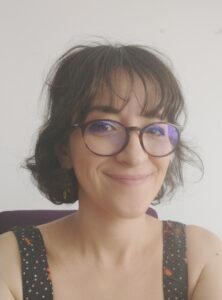
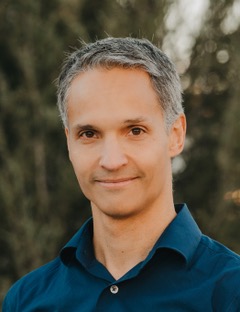
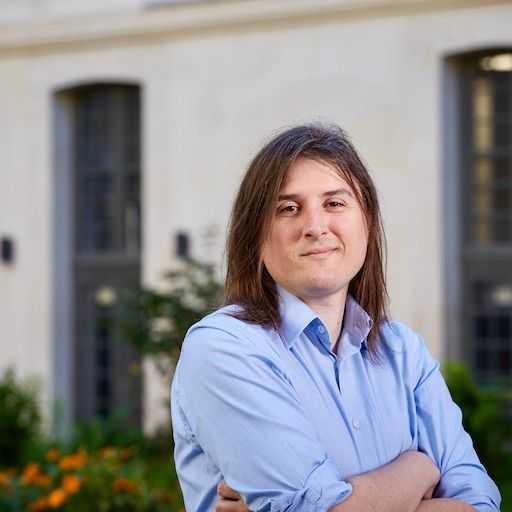
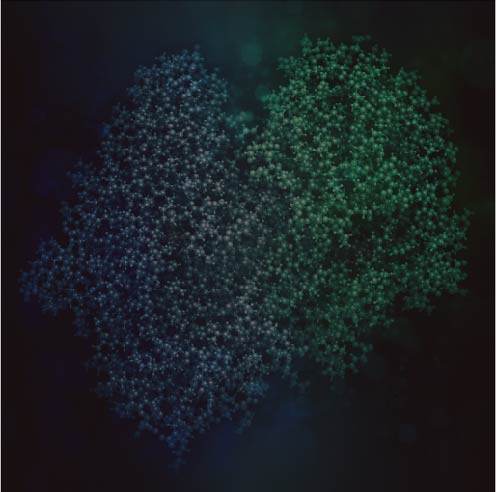
Divita Mathur is the Frank Hovorka Assistant Professor of Chemistry at Case Western Reserve University's College of Arts and Sciences. Her research focuses on leveraging DNA nanotechnology to address biochemical challenges in gene delivery, optoelectronic materials, and molecular cognition. Education: PhD, Bioinformatics & Computational Biology, Iowa State University (2016) Postdoctoral Research, US Naval Research Lab & George Mason University BEng, Biotechnology, Delhi College of Engineering (2010) Mathur's work integrates DNA scaffolds with organic/inorganic molecules to enhance photophysical properties and develop therapeutic platforms. She leads the Mathur Nano Lab, which explores four key areas: optoelectronic tailoring, gene origami, cytosolic stability, and molecular cognition through VR-enabled education tools. Research trends indicate a focus on DNA-templated optical systems, quantum dot integration, and stability analysis in biological environments. Collaborations with Crespo and Parker groups highlight interdisciplinary approaches to dye-DNA constructs, while partnerships with Iowa State University colleagues address STEM education in DNA nanotechnology.
Aurore Keyboard is a Lecturer at Paris Cité University , serving as Deputy Director of ECHELLES since January 23, 2024. She specializes in American poetry from the 20th and 21st centuries, with particular focus on Indigenous poetry in North America and the politics of literature . Education: Doctorate in American Literature (2014), Master’s in English Literature (2008), English Aggregation (2007) Professional Experience: Lecturer at Paris Cité University (2022-present), University of Lille (2017-2022), and multiple prior academic positions Her research explores: Indigenous literary traditions and their contemporary manifestations Material circulations through periodicals, collections, and anthologies Political constructions of territory, history, and environment in literature Poetic translation projects across cultural boundaries Scientific awards include the Marianne Moore Essay Prize (2018). Her publications show strong engagement with American modernism , literary cartography , and interdisciplinary approaches connecting poetry with visual and spatial analysis.
James Evans is a Professor at the University of Chicago's Department of Sociology within the College of Social Science. He serves as Director of Knowledge Lab and founded the Computational Social Science program. Education: PhD in Sociology (Stanford University), B.A. in Anthropology (Brigham Young University) Former Roles: Research Associate (Harvard Business School), Founder of private high school Evans' research explores collective cognition, focusing on how social and technical institutions shape knowledge processes through machine learning, network analysis, and computational methods. His work spans science studies, sociology, and human-machine collaboration, examining phenomena like innovation emergence, agreement/dispute dynamics, and knowledge topology. Article Trends: Recent publications analyze sensor networks (RFID, cell phones), digital observatories, and alternative discovery regimes using AI/ML and network science, covering domains from science to law and religion. Evans teaches courses on augmented intelligence, computational content analysis, and the history of modern science. His work has been supported by NSF, NIH, and AFOSR grants.
Stephan Eckstein is a junior professor in the Department of Mathematics at the University of Tübingen and a member of the university's machine learning cluster. His research bridges probability theory and machine learning with particular focus on stochastic optimization and numerical approximation. Research interests include: Optimal transport theory and its computational aspects Regularization techniques for high-dimensional problems Causal models and probabilistic structures Graphical models in machine learning Graph neural networks Recent publications analyze dimensional stability in optimal transport, exponential convergence rates for Sinkhorn algorithms, and causal modeling in financial time series generation. Contact: stephan.eckstein@uni-tuebingen.de
Michael McMurray, Ph.D., is a Professor in the Department of Cell & Developmental Biology at the University of Colorado Anschutz Medical Campus. He holds graduate program affiliations with the Biomedical Sciences Program, Cell Biology Stem Cells and Development Program, Medical Scientist Training Program (MSTP), Molecular Biology Program, and Structural Biology Biochemistry and Biophysics Program. His research has significantly advanced our understanding of septin proteins and their role in cellular processes. Dr. McMurray earned his Ph.D. from the University of Washington and Fred Hutchinson Cancer Research Center in 2004. His research focuses on identifying molecular mechanisms underlying the assembly of macromolecular complexes, with particular emphasis on septin proteins. His laboratory primarily uses budding yeast (Saccharomyces cerevisiae) as a model system for genetic analysis. Key research areas include GTP binding and hydrolysis in septins, chaperone-mediated quality control of septin assembly, chemical rescue of mutant protein function, and the establishment of sexual identity and cell polarity during yeast gametogenesis. Analysis of Dr. McMurray's recent publications reveals consistent themes in septin assembly pathways, protein folding mechanisms, and the relationship between nucleotide binding and complex formation. His work demonstrates how GTP binding guides de novo folding toward oligomerization-competent states, how slow GTP hydrolysis enforces assembly order, and how chaperones mediate quality control over septin assembly. His laboratory has pioneered methods for determining temporal order of protein-protein interactions in living cells and discovered chemical rescue mechanisms for mutant proteins using naturally occurring small molecules. NSF award 1928900 for Wild Yeast Outreach Program NIH R01 GM035010 NIH R01 GM124024 NIH R35 GM148198 Dr. McMurray has mentored numerous students and postdocs who have gone on to diverse careers in academia, industry, and medicine. Current lab members include Alya Hussain and Michael Brown (PhD students) and Marc Steingesser (Lab Manager). Former lab members include Lydia Heasley (now Assistant Professor at CU AMC), Andrew Weems (Instructor at UT Southwestern), and Ashley Denney (Resident Physician). His lab is supported by multiple NIH grants that fund research on septin assembly mechanisms and protein quality control pathways. The McMurray Lab maintains the Wild Yeast Outreach Program, which engages middle school students in yeast isolation and identification. This NSF-funded initiative connects public education with cutting-edge research on natural yeast populations and their genetic diversity. The lab also utilizes advanced techniques including in vivo crosslinking, in vitro reconstitution, and split-YFP systems to study protein complex assembly in living cells.
Franz Ostrizek serves as an Assistant Professor (tenure track) in the Department of Economics at Sciences Po, Paris since 2022, and maintains a Research Affiliate position at the Institute on Behavior and Inequality (briq) at the University of Bonn. His academic credentials include: PhD in Economics from Princeton University (2020) MSc in Economics from the Institute for Advanced Studies (Vienna) Magister in Law from the University of Vienna Ostrizek's research bridges microeconomic theory and behavioral economics , specializing in behavioral mechanism design , performance evaluation systems , and incentive structures under misspecified beliefs . His work investigates how cognitive limitations—particularly 'cursedness' (systematic underinference from statistical patterns)—affect information processing in strategic environments. He develops theoretical models showing how principals can optimize evaluation technologies in dynamic employment relationships and design screening mechanisms that account for cognitive biases and externalities. His publication trajectory (2015-2025) reveals a consistent focus on information economics and behavioral mechanism design , with increasing emphasis on cursed equilibrium applications. Recent work examines transparency policies in information markets, dynamic principal-agent problems with learning, and screening mechanisms incorporating both payoff-types and externality-influence dimensions. His methodology combines rigorous theoretical modeling with behavioral insights to address real-world incentive design challenges. Key recognitions include: 2021 Young Economist Award (Austrian Economic Association) William S. Dietrich II Summer Grant (Princeton Economic Theory Center, 2019) Hamid Biglari *87 Behavioral Science Fellowship (Kahneman-Treisman Center) Fifth-year fellowship (Griswold Center for Economic Policy Studies) Ostrizek's research has been supported by prestigious fellowships including the Hamid Biglari Fellowship and Princeton's Summer Grant program. While specific student advising details aren't documented in the source material, his tenure-track position at Sciences Po involves mentoring graduate researchers. Current grant activities focus on extending his work on cursed equilibrium applications to labor market design. He maintains active research affiliations with briq (Bonn) as a Research Affiliate and IZA (Institute of Labor Economics) as an associated member, participating in collaborative projects on behavioral inequality and information economics.
Lena Brundin, M.D., Ph.D., is a Professor in the Department of Neurodegenerative Science at Van Andel Institute. She leads research investigating the role of inflammation in neurological and psychiatric conditions such as Parkinson’s disease and depression. Her work focuses on inflammatory mediators, particularly the kynurenine pathway, and their impact on brain health. Dr. Brundin holds dual appointments with Michigan State University College of Human Medicine and has a background in clinical psychiatry from Lund University, Sweden, where she was previously an Associate Professor. Her research spans basic science and clinical studies, including clinical trials targeting inflammation-driven suicidality and Parkinson’s disease progression. Key collaborations include the VAI-SU2C Epigenetics Dream Team and studies with Western Michigan University. Dr. Brundin’s team has published over 200 peer-reviewed papers, with recent work highlighting links between infections (e.g., UTIs, herpes simplex), inflammation, and neurodegenerative/neuropsychiatric outcomes. Notable contributions include identifying cytokine profiles predictive of suicide risk, discovering the vermiform appendix’s role in Parkinson’s risk, and elucidating placental inflammation’s role in perinatal depression. Her lab actively mentors over 15 trainees and has launched 15 clinical trials, including studies on kynurenine pathway modulation and biomarker development. Dr. Brundin’s work bridges clinical and translational research, with a focus on developing anti-inflammatory therapies for depression, suicide prevention, and Parkinson’s disease management. Her lab’s impact extends to global initiatives like the National Network of Depression Centers and collaborative efforts to advance neurodegenerative science.
Orit Peleg is an Associate Professor in the Department of Computer Science at the University of Colorado Boulder, affiliated with the BioFrontiers Institute. She holds a B.S. and M.S. in Physics and Computer Science from Bar-Ilan University (Israel), and a Ph.D. in Materials Science from ETH Zurich. Her research merges physics, biology, engineering, and computer science to study disordered living systems, focusing on: Collective behavior in honeybee swarms (mechanical stability, pheromone communication) Firefly synchronization and communication systems Biological signal design principles in plants and insects Mechanics of animal navigation (e.g., dung beetles) Her work has been featured in journals like Biophysical Journal and Proceedings of the National Academy of Sciences . She leads the Peleg Lab, collaborating across disciplines to address questions in: Biophysics of environmental adaptation Biomimetic governance models Deep-sea marine life rhythms Current projects include honeycomb construction mechanics, governance insights from non-human collectives, and temporal patterns in deep-sea ecosystems. Her lab utilizes advanced techniques like X-ray tomography and agent-based modeling.
Ronald D. Fricker, Jr. is the Vice Provost for Faculty Affairs and a Professor of Statistics at Virginia Tech. He previously served as Head of the Department of Statistics and Interim Dean of the College of Science. Dr. Fricker holds a Ph.D. and M.A. in Statistics from Yale University, an M.S. in Operations Research from The George Washington University, and a B.S. from the United States Naval Academy. His research focuses on statistical methods for disease surveillance, biosurveillance, and statistical process control, with over 100 publications and three books. Education: Ph.D. and M.A. in Statistics, Yale University M.S. in Operations Research, George Washington University B.S., United States Naval Academy Research Interests: Biosurveillance, statistical process control, epidemiological modeling, and public health analytics. His work has addressed pandemic response (e.g., COVID-19 modeling for Virginia Tech) and disease outbreak detection systems. Dr. Fricker’s scientific awards include Fellowships from the American Statistical Association and the American Association for the Advancement of Science. He has advised numerous interdisciplinary teams and contributed to initiatives like the New River Valley Regional Safety and Health Task Force during the pandemic. His leadership in academic affairs emphasizes faculty development, diversity, and institutional advancement. Labs/Teams: Co-led the Virginia Tech COVID Modeling Group and collaborated with the Department of Population Health Sciences.
Regina Luttge is an Associate Professor at Eindhoven University of Technology (TU/e) in the Department of Mechanical Engineering and Chair of Neuro-Nanoscale Engineering. Her research focuses on developing biomimetic brain-on-chip systems through micro-nanofabrication, combining tissue engineering with microfluidics for studying neurodegenerative diseases. ERC Starting Grant (2011) and Proof of Concept Grant (2015) Chief Scientific Officer at MyLife Technologies BV since 2012 Research Interests : Temporal/spatial cellular microenvironment control Directional neuronal network formation via nanogrooves Hydrogel scaffolds for 3D neural cultures Clinically relevant preclinical models Microfabrication for neurotechnology Recent Publications demonstrate trends in mechanodynamic brain-on-chip , epileptic seizure modeling , and neurodegenerative assembloids , with keywords spanning Biomedical Microsystems, Nanofabrication, and Neurotechnology. Scientific Awards ERC Starting Grant (2011) for "Chatting with Neurons" ERC Proof of Concept Grant (2015) for "Sieving Neuronal Networks" Education & Supervision : PhD from Imperial College London (2003), former researcher at Institut für Mikrotechnik Mainz. Supervised 38 student theses including T. Labeur's hydrogel bead trapping research and T.A. Roza's automated Brain-on-Chip feedback-loop system. Industry Collaboration : Co-founded MyLife Technologies BV, bridging academic research with commercial microsystem development while mentoring student entrepreneurship through TU/e's challenge-based learning initiatives.
Stanisław Czuczwar is a Professor in the Department of Pathophysiology at the Faculty of Medical Sciences, Medical University of Lublin. His research focuses on neurology, pharmacology, and neurodegenerative diseases, with a particular emphasis on epilepsy, Alzheimer’s disease mechanisms, and antiepileptic drug efficacy. He investigates oxidative stress, ischemia-related brain injury, and proteinopathies using animal models and gene expression analysis. His work explores neuroprotective strategies involving antioxidants like melatonin and examines drug interactions (e.g., caffeine and antiseizure medications). Recent studies highlight ischemia-reperfusion effects on Alzheimer’s-related genes and the role of tau protein phosphorylation in neurodegeneration. Key contributions include developing methodologies like methionine sulfoximine for epilepsy research and evaluating cenobamate as a novel antiseizure medication. Collaborative projects address translational aspects of epilepsy management in clinical settings, including pregnancy care. Publications span over 400 records, focusing on neurodegeneration, antiepileptic drug mechanisms, and ischemic brain pathology. His edited book (2024) on physiology and pathophysiology underscores his academic leadership in medical education.
Laurent Cherubin is a Research Professor at Florida Atlantic University (FAU), affiliated with the Harbor Branch Oceanographic Institute (HBOI) and the Department of Ocean and Mechanical Engineering (OME). His research focuses on marine ecology, ocean dynamics, and the application of advanced technologies like autonomous robotics and machine learning to study marine ecosystems. He specializes in acoustic monitoring of marine life, fish spawning aggregations, and the impacts of climate change on coastal systems. Cherubin’s work integrates physics-based models with cutting-edge AI techniques to analyze ocean currents, larval dispersal patterns, and species behavior. His recent studies include using autonomous wave gliders to track delphinid habitats and developing deep learning algorithms for detecting grouper vocalizations. He also investigates climate-driven changes in the West Florida Shelf and Gulf of Mexico’s circulation dynamics, contributing to fisheries management and conservation strategies. His research has advanced methodologies in spatio-temporal modeling, acoustic signal processing, and bio-physical connectivity assessments. He collaborates with institutions globally to address challenges in marine biodiversity protection and sustainable resource management. Cherubin’s interdisciplinary approach bridges engineering, computer science, and environmental science to tackle complex oceanographic problems. While no formal awards are listed, his contributions to marine robotics and AI applications in oceanography are significant. His work on fish spawning aggregations and larval dispersal has informed conservation policies in the Caribbean and Bahamas, emphasizing the importance of ecosystem connectivity. Ongoing projects include improving predictive models for ocean dynamics and advancing acoustic technologies for real-time marine monitoring.
Jing Rui He is a Professor in the School of Information Sciences at the University of Illinois at Urbana-Champaign, and Director of the MSIM Program. He holds affiliate positions in the Siebel School of Computing and Data Science and the Center for Digital Agriculture at the National Center for Supercomputing Applications (NCSA). His research focuses on machine learning, graph theory, and AI ethics, with emphasis on anomaly detection, federated learning, and trustworthy AI systems. He has received multiple accolades including AAAI Senior Member (2023), ACM Distinguished Member (2023), and the NSF CAREER Award (2019). Research interests include graph-based learning, temporal networks, and ethical AI applications. He leads initiatives in climate data modeling and digital agriculture through NCSA collaborations. Notable contributions include developing robust federated learning frameworks and graph anomaly detection algorithms. His work bridges theoretical advancements with practical applications in cybersecurity, recommendation systems, and climate science. Recent publications highlight innovations in large language model safety, multi-modal climate benchmarks, and fair anomaly detection. He actively participates in interdisciplinary projects, such as the TrustLOG workshop on trustworthy graph learning. His research is supported by grants from NSF and industry partnerships, emphasizing translational research with societal impact. Awards: AAAI Senior Member (2023), ACM Distinguished Member (2023), IEEE Senior Member (2020) Grants & Advising: NSF CAREER Award (2019), advises on interdisciplinary projects at NCSA and Siebel School Labs/Teams: Center for Digital Agriculture, TrustLOG workshop leadership, GLB (Graph Learning Benchmarks) initiatives
Alex Kaiserman is an Associate Professor and Fairfax Fellow in Philosophy at Balliol College, University of Oxford. He holds a D.Phil. (2013-2016) and B.Phil. (2011-2013) from Jesus College, Oxford, and an M.Phys.Phil. in Physics and Philosophy from Balliol College (2007-2011). His research focuses on metaphysics and moral philosophy, particularly causation, free will, and moral responsibility. He teaches graduate metaphysics and philosophy of law at the Faculty of Philosophy, and undergraduate courses in General Philosophy, Logic, and Moral Philosophy at Balliol College. His research interests include the metaphysics of causation, theories of free will, legal responsibility frameworks, and the intersection of philosophy with physics. He has published widely on topics like degree-theoretic responsibility, alternative possibilities in agency, and paradoxes of time and causation. His work often bridges analytical metaphysics with applied ethics and legal theory. Kaiserman’s teaching spans foundational courses in logic, metaphysics, and moral philosophy. He supervises graduate students in metaphysics and ethics, and maintains active research collaborations in legal philosophy and causal theory. His personal webpage at Balliol College contains updated publications and research details.
Nils Breyer is an Assistant Professor at Linköping University's Department of Science and Technology (ITN), part of the Communications and Transport Systems faculty. His research focuses on leveraging big data analytics to enhance public transport and railway systems through methods like machine learning and statistical analysis. Key interests include privacy-preserving travel pattern analysis, traffic information optimization, and large-scale data processing. Teaching responsibilities include courses on optimization, traffic planning, programming, statistical learning, and public transport systems. He actively supervises bachelor's and master's theses while contributing to educational program development. Current research involves radar sensor data, GPS tracking, and mobile network data to improve traffic flow and passenger experience. His work emphasizes practical applications such as post-disruption travel behavior analysis using smart card data and cellular network-based inter-city trip classification. Collaboration areas include transport analytics, logistics, and communication systems with societal impact through improved transport infrastructure planning.