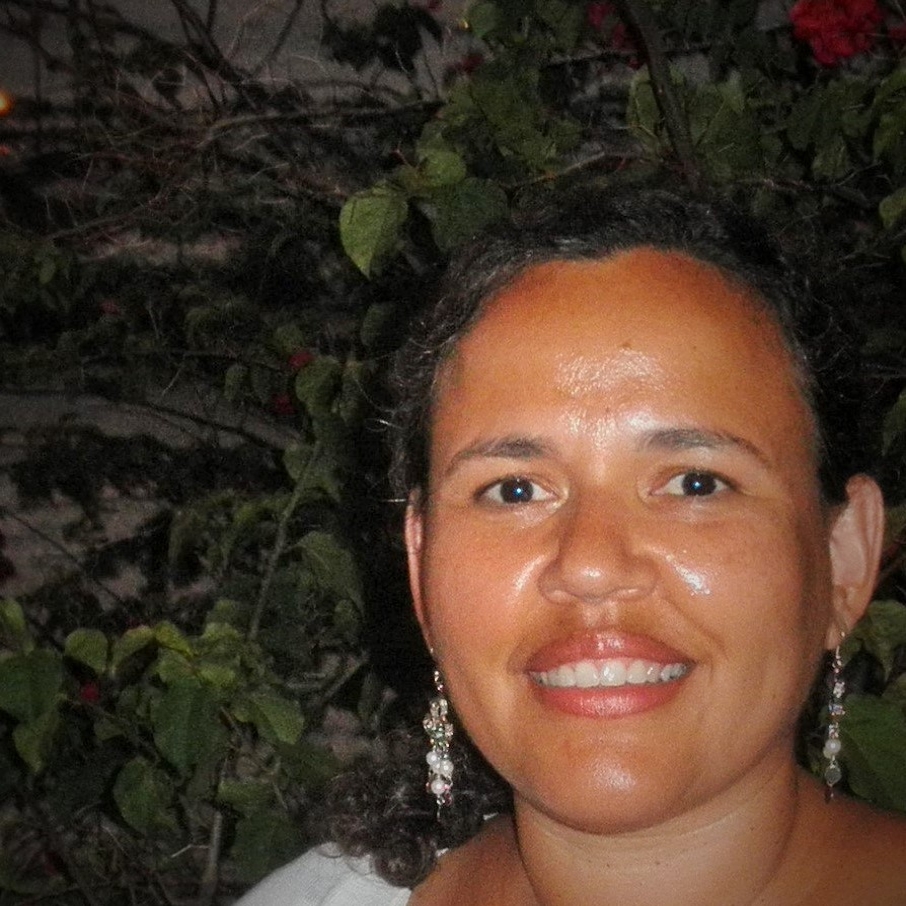
Dr. Amanda Keeler is an Associate Professor and Chair in the Department of Digital Media and Performing Arts, Journalism and Media Studies at Marquette University's Diederich College of Communication. She teaches courses on Media Aesthetics, Radio/TV History, Advanced Scriptwriting, and Crime and Storytelling. Her education includes a Ph.D. and B.A. from Indiana University and an M.A. from the University of Chicago. Her research focuses on media history, prestige television, true crime media, radio preservation, and cultural studies. Notable works include co-editing Prestige Television: Cultural and Artistic Value in 21st Century America (2022) and exploring topics like Star Trek 's utopian/dystopian spaces and the cultural impact of podcasts. Keeler has received multiple Dean's Recognition Awards for research, teaching, and advising. She serves on the Library of Congress Radio Preservation Task Force and the Society for Cinema and Media Studies. Her recent scholarship emphasizes sound history, true crime storytelling, and the intersection of media and cultural memory.
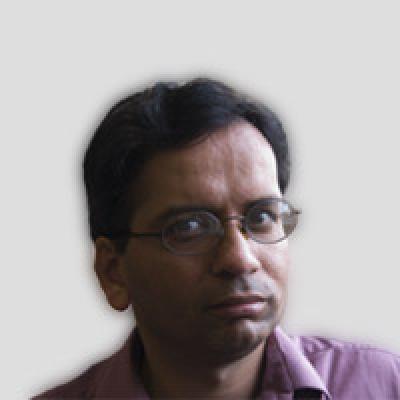
Shanti Kumar is an Associate Professor in the Department of Radio-Television-Film at The University of Texas at Austin and a faculty affiliate in the Department of Asian Studies, the Center for Asian-American Studies, and the South Asia Institute. His educational background includes: B.Sc. in Math, Physics and Chemistry from Osmania University, Hyderabad, India (1987) B.A. in Communication and Journalism from Osmania University (1988) M.A. in Communication and Journalism from Osmania University (1989) M.A. in Media Studies from Texas Christian University (1994) Ph.D. in Telecommunications from Indiana University-Bloomington (1998) Prof. Kumar's research centers on Global and International Media with specialized focus on South Asian Media and Postcolonial Media . His work critically examines Media History , Media Criticism , and Identity and Representation within globalization contexts, exemplified by his book Gandhi Meets Primetime: Globalization and Nationalism in Indian Television (2006) and co-edited volumes like Television at Large in South Asia (2012). Prior to joining UT Austin in 2006, he taught at the University of Wisconsin-Madison and the University of North Texas. His industry experience includes journalism as a sub-editor/reporter for Deccan Chronicle and multimedia design/scriptwriting at CMC Limited in India.
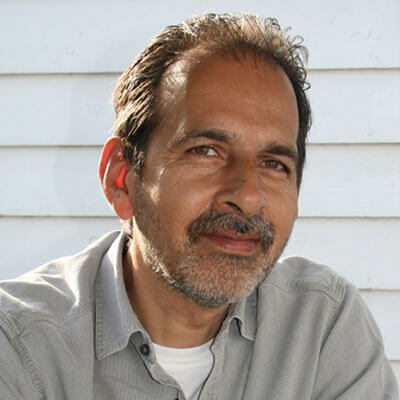
Austin Bunn is an Associate Professor in the Department of Performing and Media Arts at Cornell University, where he also serves as Director of the Milstein Program in Technology and Humanity. His career bridges academia, filmmaking, and literary arts, with expertise in screenwriting, short film production, and creative nonfiction. Education B.A. in American Studies, Yale University M.F.A. in Fiction & Playwriting, University of Iowa Writers' Workshop Research and Creative Interests: Austin's work spans screenwriting pedagogy, LGBTQ+ narratives in film, and interdisciplinary storytelling. His recent focus includes audio drama development and rural queer representation in documentary media. Selected Scientific Awards: Carpenter Memorial Advising Award (2017) Audie Award for Best Fiction Collection (2017) Michener-Copernicus Fellowship International Days Prize, Venice Film Festival Advising and Professional Impact: He has mentored at the Screenwriters' Colony and Outfest Screenwriting Lab, and won the Carpenter Memorial Advising Award for connecting students with industry professionals. His Milstein Program leadership fosters collaborations between technology and humanities.
Dr. Kiray M. Khoury is an Assistant Professor in the Department of Communication and Media at Canadian University Dubai (CUD), affiliated with the School of Communication and Creative Industries. She brings extensive international teaching experience from institutions in the United Kingdom, Canada, and Lebanon, including the University of Saint Joseph, Notre Dame University, Lebanese University, and UK International College. Her educational background includes a PhD in Communication and Media Studies from the University of East London (awarded with full scholarship) and certification as a mental health coach from Light University in the USA, specializing in youth mental health. Research interests span: Core focus: Technology adoption in mass media and social media's impact on Generation Z mental health Media production: Arab media studies, scriptwriting, journalism, and digital content creation Strategic communication: Advertising, PR, crisis management, consumer behavior Digital ecosystems: Social change, digital marketing, and multimedia communication Awards include a competitive full scholarship for doctoral studies at the University of East London. Professional activities feature curriculum development for the Lebanese Army, student collaborations with organizations like Nestlé, leadership of media literacy video projects, conference participation on digital media trends, and workshops on youth mental health advocacy in the UAE. Prior industry experience includes roles as scriptwriter, journalist, and television host at Future Television, plus leadership as Head of Public Relations in Lebanon.
Dr. Phil Mathews is a Principal Academic at Bournemouth University’s Faculty of Media and Communication. His research focuses on narrative structures in screenwriting, particularly the character arc model within romance genres. He leads the BA (Hons) Scriptwriting for Film and Television program and has held roles as an external examiner at multiple institutions, including Glasgow Caledonian University and Falmouth University. With a PhD in 'The Limits of Character Arcs in Romance Narratives' (2019), his work bridges theoretical and practical aspects of storytelling. Education: PhD in Screenwriting (Bournemouth University, 2019) MA in Screenwriting (London College of Printing, 2000) Research Interests: Phil explores how character transformation operates in screen narratives, critiques romance genre conventions, and investigates trauma representation in media. His practice-led approach includes original screenplay development and pedagogical frameworks for screenwriting education. Grants: Script Ease (Completed) Student Journey Resource (Completed) Labs/Teams: Associated with the Centre of Excellence in Media Practice, focusing on collaborative media education and script development.
Jack Powers serves as Professor and Chair of Media Arts, Sciences and Studies at Ithaca College's Roy H. Park School of Communications, where he teaches entertainment media business and researches children's media effects. With extensive industry experience including film production and network consulting, he bridges academic theory with professional practice. His educational background includes: PhD in Mass Communications (Media & Behavior concentration) from Syracuse University MA in Journalism/Mass Communication from The Ohio State University BA in Communications and French from University of Mount Union Powers' research spans entertainment industry dynamics, media effects on children, and emerging media technologies. His work examines Hollywood entry strategies, streaming economics, documentary ethics, and digital behavior patterns - particularly how new technologies impact dating, adolescent development, and social discourse. He emphasizes practical application through industry connections and production experience. His recent publications reveal evolving focus from children's media effects toward industry business models and technology impacts, with increasing attention to ethical implications of social media, streaming disruption, and production innovation. Current scholarship addresses writers' room pedagogy and filmmaking's technological transformation. Powers actively integrates professional practice into academia, currently producing a $1 million feature film employing Park School students. His teaching philosophy emphasizes "learning is doing" through required LA internships, London study abroad, and hands-on production via ICTV's 20+ television shows. He maintains direct industry access through regular Hollywood consulting for major networks and production companies. He oversees student development through extensive industry connections, with alumni employed at Disney, ESPN, MLB Network, HBO, Netflix, and numerous major productions. Personal media interests include Taylor Sheridan works, Game of Thrones, and directors like Tarantino and Scorsese, reflecting his professional engagement with contemporary media trends.
Josslyn Jeanine Luckett is Assistant Professor in the Department of Cinema Studies at the Tisch School of the Arts, New York University. She is also affiliated faculty of NYU's Asian Film and Media Initiative. Her interdisciplinary background bridges film, Africana studies, ethnic studies, and theology, positioning her at the forefront of critical media scholarship. Her educational journey includes a PhD in Africana Studies from the University of Pennsylvania, an MFA in Dramatic Writing from NYU/Tisch School of the Arts, an MDiv from Harvard Divinity School, and a BA in Ethnic Studies from the University of California, Berkeley. Luckett’s research centers on media studies, jazz and improvisation, and comparative Ethnic Studies, with a focus on race, media, and social justice. She investigates representations of Afrodiasporic spiritual practices in film and television and is currently working on a book project about the pre-history of the L.A. Rebellion through the lens of UCLA’s Ethno-Communications Program. Her scholarship appears in Film Quarterly , Public Books , World Records Journal , Rebel Musics , and the Los Angeles Times . Her creative work includes writing the teleplay for the MTV Original Movie Love Song and serving on the writing staff of Ava DuVernay’s Queen Sugar for its seventh season. Her recent appointment to the National Film Preservation Board of the Library of Congress underscores her national impact in film preservation and scholarship. Fellow, Sundance Institute Screenwriters and Playwrights Labs Fellow, Film Independent Directing Lab Member, Macondo Writers Workshop Member, Writers Guild of America (since 1998) Luckett has mentored emerging writers through institutional and creative affiliations. While no formal advisees are listed, her role as a professor and creative practitioner involves significant guidance to students. She has not received direct grant mentions in the text, but her fellowships and editorial roles indicate sustained research support. She contributes to the academic and cultural mission of NYU through her teaching, research, and public engagement.
Maxine Gee is a Principal Academic in Screenwriting at Bournemouth University, Faculty of Media and Communication, where she teaches across undergraduate and postgraduate programs in film and scriptwriting. She is an internationally produced playwright and screenwriter with a PhD by Creative Practice from the University of York (2018). Her work spans stage adaptations, web series, and science fiction short films, including the acclaimed Tales of Bacon and Terminal . Her research focuses on posthumanism, science fiction, horror (especially folk horror), Japanese media, adaptation, and the evolving role of AI in creative storytelling. She explores how narrative forms, particularly screenwriting, can interrogate identity, genre, and technological change. Her creative practice is deeply intertwined with theoretical inquiry, exemplified in her PhD work on posthuman noir. Maxine's recent publications and conference presentations highlight a growing emphasis on human-AI collaboration in media creation, as seen in her 2024 AHRC BRAID-funded project Shared Post-Human Imagination . Her scholarly output includes articles in Cinema: Journal of Film and Philosophy , Journal for Cultural Research , and the Palgrave Handbook of Script Development . She has been recognized with awards for her short film Terminal , including Best Short Sci-Fi Film and Best Writer at the Queen Palm International Film Festival (2019). Her external roles include serving as an external examiner for MA Screenwriting programs at several UK universities and as leader of the Screenwriting Research Network’s Practice Based/Led Working Group since 2018. Maxine is actively engaged in public outreach, including events like Rise of the Robot and Which One of Us Is Human? , and has delivered invited lectures at institutions such as UC Riverside and the University of York. Her work bridges academic research, creative production, and public discourse on the future of storytelling.
Dr Philip Cowan is a Senior Lecturer in Film - Cinematography at the University of South Wales, Faculty of Business and Creative Industries. He holds a PhD in Film Authorship and has extensive industry experience, having worked on over 80 film and television productions across drama, documentary, dance/performance, and animation. His research focuses on cinematography's role in film authorship, aesthetics, and visual narrative. Education: PhD by Thesis (2016, MIRIAD), MA Scriptwriting (2003), PGCE/Cert Ed (2001). Research Interests: Cinematography's authorial role, aesthetics of moving images, collaborative filmmaking dynamics, and the technical and theoretical contributions of cinematographers like Gregg Toland and Vittorio Storaro. His work explores how visual style and technical choices shape narrative meaning. Awards: BAFTA Cymru awards, 20 international 'Best Short Film' accolades, and recognition for The Sleeping Mat Ballad (2016). His publications include a 2022 monograph on Gregg Toland and peer-reviewed articles on film theory. Professional Roles: Editorial Board member of Cinematography in Progress , Society for Cinema and Media Studies (SCMS) member, adviser to the Ethiopian Film Initiative, and contributor to global academic and industry events. Labs/Teams: Active in the Creative Industries Research and Innovation Group at the University of South Wales, focusing on interdisciplinary creative projects.
Lauri Kitsnik is a Researcher in the Department of Asian and North African Studies at Ca' Foscari University of Venice. His work centers on Japanese and Korean language and literature, with a strong emphasis on Japanese cinema, screenwriting, and cultural history. He teaches courses such as Introduction to Japanese Culture and Literature, Japanese Language 1 and 2, and Japanese Language 3, serving both undergraduate and graduate students in programs including Languages and Civilizations of Asia and Mediterranean Africa. His research interests include classical and post-war Japanese cinema, screenwriting history, film adaptation, stardom, gender in film, and documentary modes. He explores the intersections between literature and film, particularly how screenplays are written, read, and adapted. His scholarship often focuses on key figures such as Yōko Mizuki, Kaneto Shindō, and Keisuke Kinoshita, situating their work within broader socio-political and industrial contexts. Kitsnik's recent publications reveal a consistent and high-quality output across monographs, peer-reviewed journal articles, and book chapters. His 2024 monograph Tangible Images: Reading and Writing Classical Japanese Cinema represents a significant contribution to the field. His articles span topics from the poetics of The Naked Island to the legacy of the Kinoshita-gumi, reflecting a deep engagement with both aesthetic and historical dimensions of Japanese film. He frequently publishes in journals such as Japanese Studies , Journal of Screenwriting , and Asian Cinema , and contributes to edited volumes from major academic publishers. His scientific contributions include critical reviews of major works in anime and Japanese film theory, demonstrating his role as an active interlocutor in contemporary scholarly discourse. While no formal awards or grants are listed, his sustained publication record and inclusion in prestigious handbooks and university press volumes indicate scholarly recognition. Kitsnik advises on film and literature translation and has translated Japanese literary works into other languages. His office hours are held weekly, and he is actively involved in teaching and research. There is no mention of lab affiliations or team leadership, but his independent research output is robust and thematically cohesive.
Nina Werth is a lecturer at the Hochschule für Gestaltung (HfG) Offenbach, where she studied film until 2001 and continues to contribute as an educator and creative practitioner. She is affiliated with the School of Art and Design, specifically in the Department of Film, where she supervises the annual film trip for prospective students, guiding them through screenwriting, directing, camera work, sound, and editing. Her role is part-time and rooted in practical instruction. Her research and artistic interests lie at the intersection of documentary filmmaking, visual storytelling, migration and identity, and intercultural experiences in Germany. She views documentary film as a form of serious inquiry, akin to scientific investigation without formal science. Her work emphasizes deep observation, ethical engagement, and creative exploration of social themes. The recent works reflect a strong focus on longitudinal documentaries, personal narratives, and social integration. Projects like Born in Offenbach and Mannheim School demonstrate her commitment to immersive storytelling. Her creative outputs span film, photography, and scriptwriting, with a consistent emphasis on real-life subjects and societal questions. German Television Award, 2013 (for 'Gods Like Us') As a lecturer, she mentors students through hands-on film projects and promotes interdisciplinary thinking and teamwork. Although no formal advising of graduate students is mentioned, her involvement in educational programs indicates active pedagogical engagement. She has collaborated on media projects with institutions like the Wollheim Memorial and broadcasters such as ZDF, contributing to both cultural and historical documentation. She is involved in creative teams and collaborative projects, such as the six-year script development trio with Rainer Ewerrien and Carsten Strauch. Her current work includes developing a new film format and a documentary with an open-ended approach, reflecting her philosophy of entering lives without fully living them.
Robin Mukherjee is a Lecturer in Scriptwriting at Bath Spa University's School of Writing, Publishing and the Humanities. A multidisciplinary creative practitioner, he works across television, film, radio, and theatre while maintaining active academic engagement through teaching and research. Education: MA Critical and Creative Writing His creative practice spans three decades, with notable achievements including: Feature film 'Lore' (2012) - Australia's official Oscar entry and winner of 10 international awards BAFTA-nominated television series 'Combat Kids' (2011) Published book 'The Art of Screenplays: A Writer's Guide' (2014) Teaching experience at Bath Spa University, Arts University Bournemouth, Birkbeck College, and other institutions Robin has also delivered guest lectures at TEDx Wandsworth (2015) and Staffordshire University (2016), and serves as a PhD supervisor. His work focuses on liberating creative processes in scriptwriting while maintaining technical rigor.
Thomas Alcott serves as a Lecturer in Film Theory and Practice within the Department of Theatre, Film, and Television Studies at Aberystwyth University. He teaches across Film and Television, Media and Communications, and Filmmaking modules while supervising dissertation research in his specialty areas. His research centers on Celebrity and Stardom with deep expertise in Audience Studies , particularly examining professional wrestling fandom through political economy and labor analysis frameworks. His work bridges media theory with real-world applications, as evidenced by contributions to UK parliamentary inquiries on wrestling classification. Key methodologies include audience reception studies and critical analysis of star imagery across sports and entertainment contexts. Alcott's publication trajectory reveals a consistent focus on authenticity negotiation in staged sports (2024), football stardom construction (2023), and childhood influences in wrestling reception (2019). His work demonstrates strong interdisciplinary connections between sports sociology, media studies, and cultural psychology with increasing policy impact. Professionally, Alcott leverages dual expertise as both academic and practitioner. His industry background includes work as an Assistant Director on major productions like Made in Dagenham (2010) and Doctor Who Confidential , supplemented by scriptwriting training through the Script Factory and Maddog Casting. His Master's in Scriptwriting informs his practical approach to film theory. Notable activities include editorial work for Celebrity Studies journal (2024) and participation in the 2021 All-Party Parliamentary Inquiry into Professional Wrestling, where his research directly influenced recommendations for classifying wrestling as a sport. He remains active in academic networks through BAFTS Stardom and Performance SIG engagements.
Francisco Suarez is an Associate Professor at the School of Communication at SUNY Oswego, where he teaches courses such as Intro to Video Production, Global Documentary, and Scriptwriting for Television. He holds an Associate’s Degree in Marketing and Advertising from the Institute of New Profession (Caracas, Venezuela), a Bachelor’s in Television, Radio and Film, and a Master’s in Media Management from Syracuse University’s Newhouse School of Public Communication. With over two decades of industry experience, Suarez has worked as a producer for agencies like Leo Burnett, HBO Latin America, MTV Latino America, and Maryknoll, where he produced documentaries and syndicated radio shows. His research interests focus on media production techniques, global documentary practices, and the intersection of media with cultural narratives. Currently, he oversees courses in post-production, podcasting, and television scriptwriting, reflecting his hands-on industry background. His Spring 2025 schedule includes teaching BRC 310 Producing Podcasts and BRC 428 Scriptwriting for TV. Office hours are held Monday-Wednesday via francisco-suarez.youcanbook.me.
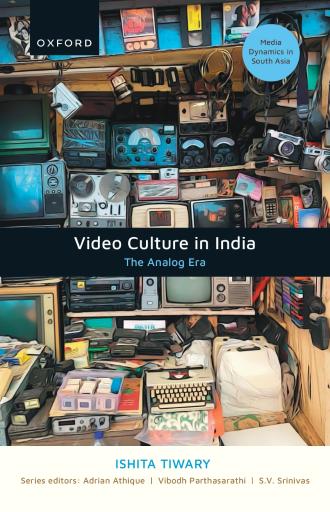
Ishita Tiwary is an Assistant Professor at Concordia University's Cinema department and holds the Canada Research Chair in Media and Migration. Her work explores intersections of video cultures, media infrastructures, and migratory processes. Research Lab: Raah Lab Current Projects: Streaming platforms' impact on Indian media industries Her research focuses on: Historical evolution of analog video in India (1980s-present) Contraband media practices and informal networks Media aesthetics in regional and transnational contexts Migrant media technologies and local practices Platform capitalism and digital standardization Affective infrastructures in domestic media Recent publications analyze: Streaming platform standardization Impact of OTT services on Indian scriptwriting Gender representation in global streaming content Legal disruptions in media technology Cultural significance of video archives Media populism and news cycles Scientific Recognition: Canada Research Chair in Media and Migration Teaching areas include: Global Video Modernities World Cinema analysis Media methods and migration studies Approaches to film theory