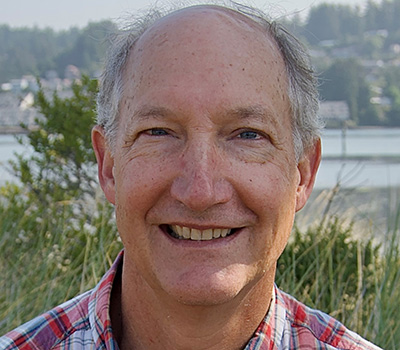
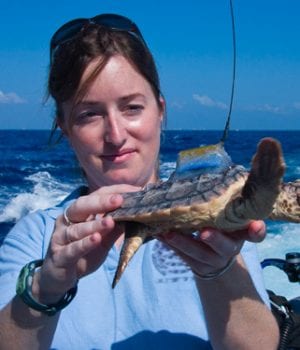
Robert MacCurdy is an Assistant Professor at the Department of Mechanical Engineering, University of Colorado Boulder . He leads the Matter Assembly Computation Lab (MACLab) focused on automating robot design and fabrication. His research bridges computational design and advanced manufacturing to create "robots that walk out of the printer." The lab develops tools like OpenVCAD , an open-source volumetric multi-material geometry compiler.
Christopher Turbill is an Associate Professor in Animal Science at Western Sydney University's School of Science, where he maintains an active research program focused on animal physiological ecology. He is affiliated with the Hawkesbury Institute for the Environment and serves as a Principal Investigator on multiple research projects while accepting HDR candidates for supervision. PhD from University of New England (2006) Thesis: Thermoregulatory Ecology of Tree-roosting Bats Supervised by Prof. Fritz Geiser Postdoctoral fellowships from Austrian Science Fund and Australian Research Council (DECRA) Former ecologist with NSW Government Professor Turbill's research integrates thermal and metabolic physiology with behavioral ecology to understand animal-environment interactions. His work has revealed significant ecological consequences of controlled body temperature variation in mammals and birds, linking these processes with metabolic energy expenditure, activity patterns, and life-history strategies. He specializes in bat biology and investigates conflicts between human environmental change and animal conservation requirements. His research keywords include ecophysiology, thermoregulation, energy expenditure, life-history ecology, body temperature, torpor, hibernation, and wildlife conservation. Analysis of Turbill's recent publications reveals a strong focus on thermal biology and conservation physiology, particularly regarding bats and birds. His work examines how animals manage energy through torpor, respond to climate change through thermal regulation, and adapt to anthropogenic disturbances. The research spans field studies of flying-foxes, microbats, and passerine birds across Australian ecosystems, with increasing emphasis on conservation applications related to white-nose syndrome, fire impacts, and wind energy development. Turbill leads significant research projects including the Ecology of the eastern horseshoe bat and its sensitivity to fire impacts (2024-2027), Vulnerability of Australian bats to white-nose syndrome (2021-2026), and Torpor use and burrowing behaviour in an arid zone passerine (2024). His work attracts funding from diverse sources including the Australian Research Council, Department of Planning and Environment, and various conservation organizations. Professor Turbill directs the BatsLab research group, which maintains a virtual hub for bat research at Western Sydney University. His team employs advanced methodologies including thermal imaging, GPS tracking, and physiological monitoring to study animal responses to environmental challenges. Current work focuses on developing conservation interventions for heat-stressed flying-foxes and assessing vulnerabilities of Australian bat species to emerging diseases.
Kevin A. Shinpaugh is Collegiate Professor in the Department of Aerospace and Ocean Engineering at Virginia Tech’s College of Engineering. Since 2019 he has led instruction and research in spacecraft design and propulsion, leveraging decades of experience in high-performance computing and space-systems engineering. Education Ph.D., Aerospace Engineering, Virginia Tech (1994) M.S., Aerospace Engineering, Virginia Tech (1989) B.S., Aerospace Engineering, Virginia Tech (1986) Research Focus Dr. Shinpaugh’s scholarship centers on the intersection of high-performance computing (HPC) and space systems engineering . He develops and applies advanced computational techniques to spacecraft design, propulsion analysis, and mission planning. His work spans numerical simulation of complex aerospace systems, optimization of propulsion architectures, and creation of scalable HPC frameworks that enable rapid design iteration for spacecraft and launch vehicles. Publication Trends Across more than thirty refereed papers and design-competition reports, a clear trajectory emerges: early contributions in experimental fluid-mechanics instrumentation (laser-Doppler velocimetry, fiber-optic sensors) evolved into large-scale computational studies of space systems, and most recently into student-led mission-concept designs for CubeSats, lunar exploration, and interplanetary missions. Keywords consistently include spacecraft design, propulsion, deployable structures, and mission architecture. Service & Committees Chair, Virginia Tech HPC User Committee (2004–2011) Member, VT HPC Advisory Board (2007–present) NSF TeraGrid/XSEDE Campus Champion for Virginia Tech (2006–2013) IBM HPC/AI Customer Advisory Council DC (2019–present) Member, VT AOE Seminar Committee (2019–present) Laboratory & Computing Resources Dr. Shinpaugh has long stewarded Virginia Tech’s high-performance computing ecosystem. He directs students and collaborators in leveraging the university’s Advanced Research Computing (ARC) clusters, as well as national facilities through XSEDE and DoD HPCMP, to execute spacecraft-design simulations and propulsion analyses at scale.
Katrine Eldegard is a Professor at the Norwegian University of Life Sciences (NMBU), Faculty of Environmental Sciences and Natural Resource Management (MINA), Department of Ecology and Natural Resource Management (INA). She leads BatLab Norway and contributes extensively to national and international conservation science policy. Institution: Norwegian University of Life Sciences School: Faculty of Environmental Sciences and Natural Resource Management Department: Department of Ecology and Natural Resource Management Position: Professor Her research centers on understanding how human activities and land use affect natural ecosystems and species across taxa and spatial scales. She specializes in the behavioral, population, and community-level responses of mammals, birds, and insects to anthropogenic pressures such as energy infrastructure, transport networks, and forestry. A major focus is on bat ecology and conservation, pollination dynamics, and biodiversity monitoring in boreal and agricultural landscapes. Her recent publications reveal strong trends in climate change impacts on bat morphology and distribution, pollinator-plant interactions under environmental change, and the ecological consequences of infrastructure development. These works integrate field ecology with advanced modeling and policy-relevant assessments. She has played leading roles in key scientific committees: Chair, Mammal Committee, Norwegian Red List for Species (2021) Chair, Mammal Committee, Norwegian Alien Species List (2023) Member, Norwegian Scientific Committee for Food and Environment (VKM), CITES Expert Panel Norway’s representative, UNEP/Eurobats Advisory Committee Eldegard has supervised numerous research projects and collaborated with government agencies and private partners on applied ecology. She teaches courses including NATF200 Vern og forvaltning av norsk natur and the upcoming NATF300 Conservation Science. Her work is supported by extensive fieldwork, interdisciplinary collaboration, and integration of ecological theory with practical conservation. She leads BatLab Norway, a research group dedicated to advancing knowledge on bat ecology, behavior, and conservation through innovative methods including telemetry, acoustic monitoring, and landscape analysis.
Itsuro Morita is Professor in the School of Fundamental Science and Engineering, Faculty of Science and Engineering, Waseda University, Tokyo. Before joining Waseda in 2022 he spent 23 years at KDDI R&D Laboratories, advancing from researcher to executive research fellow, and has been a visiting researcher at Stanford University. He is an IEEE Fellow and IEICE Fellow recognized for pioneering large-capacity, long-haul optical transmission systems. Education: 2004 – 2005 Tokyo Institute of Technology, Graduate School of Science & Engineering, Department of Electrical and Electronic Engineering (Doctoral coursework) 1990 – 1992 Tokyo Institute of Technology, Graduate School of Science & Engineering, Department of Physical Electronics (M.E.) 1986 – 1990 Tokyo Institute of Technology, School of Engineering (B.E.) Research Interests: Morita’s work sits at the intersection of optical fiber communication and software-defined networking. He explores ultra-high-capacity transmission via space-division multiplexing (multi-core/few-mode fibers), real-time MIMO digital signal processing for modal crosstalk mitigation, and SDN/NFV orchestration of disaggregated optical networks. Additional interests include quality-of-transmission estimation using machine learning, telemetry-enabled control planes (gRPC/gNMI), and metro-embedded edge/cloud architectures for IoT services. Publication Trends: Recent articles emphasize two converging themes: (i) petabit-per-second SDM/WDM experiments using novel fiber geometries and real-time DSP, and (ii) cloud-native SDN control frameworks that integrate machine-learning-based QoT prediction, YANG/NETCONF modeling, and open APIs (TAPI/OpenConfig) for multi-domain, partially disaggregated networks. These works collectively push both the physical capacity frontier and the agility of next-generation optical infrastructure. Scientific Awards: C&C Prize 2024 (NEC C&C Foundation) – contributions to WDM optical submarine cable systems IEICE Achievement Award 2021 – pioneering research on 10-Pbit/s ultra-large-capacity SDM transmission Telecom System Technology Award 2021 – 10.16-Pbit/s dense SDM/WDM transmission record IEEE Fellow (2021) – contributions to large-capacity high-speed transmission systems IEICE Fellow (2020) – research on trans-oceanic high-speed optical signal transmission Ichimura Industrial Award – Contribution Prize 2018 – development of terabit-class submarine cable systems Maejima Hisoka Award 2012 – proposal and demonstration of distributed-control soliton communication Minister of Economy, Trade and Industry Award for Advanced Technology 2006 – 160 Gbit/s ultra-high-speed optical transmission technology Advising & Grants: At Waseda University Morita advises graduate students on experimental photonic networking and leads externally funded projects on petabit SDM transmission and SDN orchestration. While specific grant numbers are not disclosed, his continuous industry-university collaborative testbeds (with KDDI, CTTC, and others) indicate substantial competitive funding. Labs & Teams: He heads the Optical Space-Division-Multiplexing Laboratory at Waseda, maintaining joint experimental facilities with KDDI Research and international partners (e.g., CTTC, Spain). The group operates real-time coherent MIMO testbeds, multi-domain SDN controllers, and fiber-level SDM prototypes capable of petabit-per-second demonstrations.
Mark Hebblewhite is a Professor in Ungulate Ecology at the Wildlife Biology Program, University of Montana. His research integrates ecological theory with applied wildlife management, focusing on species like elk, wolves, and grizzly bears. Institution: University of Montana Academic Rank: Professor Research Interests span: Wildlife-habitat interactions Predator-prey dynamics Conservation of endangered species Remote sensing for forest and wildlife monitoring Climate change impacts on ecosystems Recent Publications emphasize: Multi-scale movement ecology Remote sensing integration for forest inventory Anthropogenic effects on wildlife behavior Fire ecology and post-disturbance recovery LiDAR and satellite-based vegetation mapping Collaborations include researchers from the University of Alberta, University of British Columbia, Colorado State University, and the Wildlife Conservation Society.
Dr. Chiara Bertelli is a Lecturer in Biosciences at Swansea University within the Faculty of Science and Engineering, School of Biosciences, Geography and Physics. With over 15 years of experience in coastal and marine ecological surveys, she specializes in seagrass ecology and restoration, marine conservation, and habitat suitability modeling. Dr. Bertelli has extensive field experience including boat-based surveys, SCUBA diving, and snorkeling in both temperate and tropical environments. She is currently completing her PhD part-time focusing on environmental drivers of change in seagrass meadows in the UK and Brazil. Her educational background includes advanced training in marine biology with specialization in ecological survey techniques and data analysis using R and Primer. Her primary research focuses on seagrass ecology as nature-based solutions for climate change. She develops habitat suitability models to inform optimal locations for seagrass restoration, with applications in carbon sequestration (blue carbon) and marine biodiversity enhancement. Her work aligns with UN Sustainable Development Goals 13 (Climate Action) and 14 (Life Below Water). Analysis of Dr. Bertelli's recent publications (2020-2025) reveals a strong emphasis on practical applications of seagrass research to inform restoration efforts. Her work spans habitat suitability modeling, environmental stress responses, nutrient dynamics, and decision-support tool development. A significant portion addresses seed-based restoration techniques, ecosystem services, and the socio-ecological dimensions of marine conservation. Dr. Bertelli actively collaborates with external organizations including Project Seagrass, Sky Ocean Rescue, WWF, Natural England, and the National Oceanographic Centre. Her current ReSOW project aims to develop the CEEDS (Coastal Ecosystem Enhancement Decision Support) tool, an open-source platform to guide seagrass restoration practitioners. As an educator, Dr. Bertelli teaches several field-based marine biology courses including BIO260 Marine Biology Field Course, BIO327 Tropical Marine Ecology Field Course, and BIO346 Professional Skills in Marine Biology. Her teaching emphasizes practical, field-based learning and professional skill development for marine biologists, with a focus on survey techniques, data analysis, and environmental impact assessment. Dr. Bertelli is actively involved in research teams focused on marine ecosystem restoration and coastal management. Her work bridges academic research with practical conservation applications, working closely with government agencies, NGOs, and international research partners to translate scientific findings into actionable conservation strategies.
Thad Starner is a Professor in the College of Computing at Georgia Institute of Technology and Technical Lead/Manager on Google's Glass. He directs the Contextual Computing Group (CCG), co-founded the Animal Computer Interaction Lab, and contributes to Georgia Tech's Ubicomp Group and Brainlab. A wearable computing pioneer since 1993, he has over 500 publications and 80 issued U.S. patents. Coined 'augmented reality' in 1990 Developed CopyCat for ASL learning in deaf children Invented Passive Haptic Learning for skill acquisition His research spans wearable interfaces for Deaf-hearing communication, dolphin interaction systems (CHAT), dog-handler communication (FIDO), and brain-computer interfaces for ALS patients. Current projects focus on optical aging simulation, XR input methods, and animal behavior telemetry. Recent publications (2023-2025) explore AR display ergonomics, AI-augmented reasoning, sign language recognition, and animal-computer interaction. His work has been featured in 60 Minutes, BBC, National Geographic, and Time Magazine. CHI Academy (2017) Lemelson-MIT Prize finalist White House Champions of Change finalist He advises graduate students in wearable systems and teaches AI and prototyping courses. His lab developed the Perceptive Workbench for gesture tracking and created early Eigenfaces research for face recognition.
Maurizio Ramanzin is a Full Professor at the University of Padova , affiliated with the School of Animal Science and Department of Agronomy, Animals, Food and Natural Resources (DAFNAE) . His research focuses on Agricultural Sustainability , Environmental Impact Assessment , and Precision Livestock Farming . Academic Field : AGR/19 Email : maurizio.ramanzin@unipd.it Address : Agripolis - Viale dell'università, 16 - Legnaro (Padova) – ITALY His work explores the interactions between livestock systems and ecosystem services in mountainous regions, with emphasis on: Grazing Management and biodiversity conservation Life Cycle Assessment (LCA) of dairy and beef systems Climate Change Adaptation in Alpine ungulates Animal Welfare in small-scale farms Technological Tools (GPS, NIRS) for monitoring grazing behavior Key trends in his recent publications include: Quantifying environmental drivers of wolf predation on livestock Developing low-cost biologging systems for dairy cows Analyzing social-ecological trade-offs in mountain agriculture Assessing microbial dynamics in alpine soils
Steven J. Cooke is a Professor in the Department of Biology at Carleton University and a former Canada Research Chair. He holds a B.ES. from the University of Waterloo, an M.Sc. from Waterloo, and a Ph.D. from the University of Illinois. His research focuses on integrative biology, conservation science, and natural resource management, with a particular emphasis on fish migration, aquatic habitat restoration, and the development of solutions for conservation challenges. He is a founding director of the Canadian Centre for Evidence-Based Conservation and actively involved in the Collaboration for Environmental Evidence, promoting evidence synthesis in conservation. Dr. Cooke’s work bridges natural and social sciences, emphasizing collaboration with practitioners, policymakers, and stakeholders to create actionable knowledge. He has authored over 700 peer-reviewed papers and pioneered the discipline of conservation physiology. His awards include Fellowship in the Royal Canadian Geographical Society and Secretary of the College of the Royal Society of Canada. His lab’s research spans topics like fish-hydropower interactions, winter biology, and the ecology of stress in wild fish. He advocates for sustainable recreational fisheries and habitat restoration, with recent projects addressing shoreline development impacts and AI applications in conservation. Dr. Cooke’s academic contributions extend to education and policy, with a focus on bridging research and practice. His work emphasizes the importance of cities in species conservation and the urgent need for global freshwater biodiversity strategies. He collaborates internationally on projects such as assessing cumulative effects of renewable energy and advancing black bass management.
David A. Aborn is a Professor in the Department of Biology, Geology, and Environmental Science at the University of Tennessee-Chattanooga (UTC). His primary research focuses on bird migration, urban ecology, and conservation, particularly studying stopover biology, habitat selection in urban environments, and the effects of urbanization on avian populations. He holds a PhD in Biological Science from the University of Southern Mississippi (1996), an MS in Zoology from Clemson University (1989), and a BS in Zoology from Clemson University (1985). His work integrates field studies, telemetry, and citizen science to address ecological questions. Dr. Aborn’s research projects include assessing urban greenspaces as stopover sites for migratory birds, studying overwintering Sandhill Cranes, and investigating the breeding biology of Tree Swallows. He has received grants totaling over $595,000 from organizations like the National Science Foundation and the Tennessee Wildlife Resources Agency. His publications span 40+ articles in journals such as Nature Ecology and Evolution , Wilson Journal of Ornithology , and Southeastern Naturalist , with a focus on avian behavior, habitat use, and conservation challenges. Key research trends in his articles include urban birdstopover dynamics, stress physiology in migratory species, and invasive species impacts. He serves on committees for UTC’s Environmental Task Force, Reappointment, and Promotion. As a certified Master Bird Bander (USGS), he actively engages in public outreach through roles like Chattanooga Audubon Society board member and frequent guest lectures at local schools and organizations. Dr. Aborn advises the UTC Wildlife Zoology Club and coordinates graduate programs in Environmental Science. His work bridges academic research with applied conservation, emphasizing the role of urban ecosystems in avian survival and biodiversity preservation.
Jack Barth is a Professor in the College of Earth, Ocean, and Atmospheric Sciences (CEOAS) at Oregon State University (OSU) and Executive Director of the Marine Studies Initiative (MSI). He holds a Ph.D. in Oceanography from MIT and Woods Hole Oceanographic Institution (1987). His research focuses on coastal ocean dynamics, hypoxia, and marine ecosystem interactions. Barth has led projects on ocean observing systems, including glider technology and the Ocean Observatories Initiative (OOI). He serves on the Oregon Ocean Policy Advisory Council’s Scientific Committee and co-chairs the Ocean Acidification and Hypoxia Council. Education: B.A., University of Colorado (1982); Ph.D., MIT/WHOI Joint Program (1987). Experience includes roles as Postdoctoral Research Associate (1987–1989), Assistant Professor (1989–2001), and Professor (2001–present). He also served as Associate Dean for Research in CEOAS (2016–present) and Executive Director of MSI (2016–present). Research Interests: Coastal ocean circulation, hypoxia, inner continental shelf dynamics, eastern boundary currents, and ocean observing systems. He has published over 100 papers and mentored 20+ students/postdocs. Awards include Fellowships from The Oceanography Society (2013) and the American Meteorological Society (2017). Awards: Carl-Gustav Rossby Award (1988), Pattullo Teaching Award (2010), and multiple keynote lectures. His work addresses climate impacts, marine conservation, and interdisciplinary collaboration for sustainable ocean management.
Kate Mansfield is a Professor of Biology and Davis-Shine Endowed Professor of Conservation Biology at the University of Central Florida, where she directs the Marine Turtle Research Group (MTRG). Her research spans all life stages of sea turtles from nesting ecology to oceanic juvenile dispersal. Research programs include: Long-term monitoring of nesting populations in the Archie Carr National Wildlife Refuge Health assessments of juvenile turtles in Indian River Lagoon foraging habitats Satellite tracking of oceanic-stage juvenile turtles during their 'lost years' International collaborations studying sea turtle dispersal patterns The MTRG maintains field sites in Florida's Archie Carr National Wildlife Refuge, which supports the largest loggerhead rookery in the Western Hemisphere and significant green turtle nesting. Coastal research examines impacts of harmful algal blooms, disease ecology, and diet composition on juvenile turtle health. Offshore tracking studies in the Gulf of Mexico, Atlantic, and Indian Oceans provide pioneering data on juvenile sea turtle movements and dispersal. Dr. Mansfield offers summer internships at UCF's coastal field station and maintains scientific partnerships with Brazil's Projecto TAMAR and the Sargasso Sea Commission.
Dina Dechmann is Group Leader at the Max Planck Institute of Animal Behavior, Department of Migration in Radolfzell, Germany. She leads the Ephemeral Resource Adaptations Research Group, focusing on how animals adapt to fluctuating resource availability through behavioral, morphological, and physiological strategies. Her educational background includes: Ph.D. in Animal Behavior from University of Zürich (2005) MS in Systematics & Ecology from ETH Zürich (1999) Habilitation at University of Konstanz (2018) Dr. Dechmann identifies as a classical behavioral ecologist with a passion for evolution, increasingly focusing on how resource distribution in time and space influences animal adaptations. Her research examines movement patterns (particularly in flying foxes and bats), energetics, information transfer during foraging, and morphological adaptations like wing shape. A significant focus involves seasonal phenological changes, especially in brain structure, as seen in her work on Dehnel's Phenomenon in shrews. She is actively involved in the ICARUS satellite tracking initiative to monitor bat migration. Her recent publications reveal consistent themes across animal behavior, neuroecology, and conservation biology. The work demonstrates sophisticated integration of field studies with molecular and physiological approaches, particularly in studying how animals navigate resource ephemerality. Key trends include bat migration patterns, brain plasticity in response to seasonal changes, and methodological innovations in wildlife tracking. Her research bridges fundamental behavioral ecology with practical conservation applications, especially regarding common bat species. Dr. Dechmann mentors a diverse international team including postdocs, doctoral students, and technical staff. Her group maintains strong collaborations across European institutions and with international partners, particularly in Panama where some field studies occur. While specific grant details aren't provided, her work on the ICARUS initiative and extensive publications suggest substantial research funding. The Ephemeral Resource Adaptations Group operates as a small, international team focused on resource distribution challenges for animals. Current projects examine migration as an adaptation to seasonal change, hibernation energetics in climate change contexts, social information sharing for ephemeral resources, alternative wintering strategies in small mammals, and impacts of research methodologies on animal behavior.
Patrick Miller is a Professor in the School of Biology at University of St Andrews , with affiliations to the Scottish Oceans Institute , Sea Mammal Research Unit , and Institute of Behavioural and Neural Sciences . He leads research on the communication and behavioral ecology of marine mammals , focusing on how anthropogenic activities like naval sonar impact cetacean behavior and physiology. His work utilizes advanced tools such as hydrophone arrays and animal-attached tags to study species including sperm whales , northern bottlenose whales , and humpback whales . Research Interests include: Behavioral Ecology of marine mammals Bioacoustics and echolocation studies Impact of Underwater Noise on cetaceans Physiological Adaptation to marine environments Conservation Biology of endangered species Marine Technology development Article Trends show expertise in acoustic disturbance , foraging strategies , and whale vocalizations , with recent studies on sonar effects, dive capabilities, and behavioral responses to environmental stressors. Scientific Awards include the Kobe Award (2013) . Advisory Roles involve collaborations with institutions like the University of Tokyo (visiting professor) and European Commission (Marie Curie Fellowship). Projects include 3S3 Behavioral Response Studies (2015–2016) and Off-Range Beaked Whale Studies (ORBS) (2016–2017). Media Contributions highlight his work on whale conservation and naval sonar impacts .