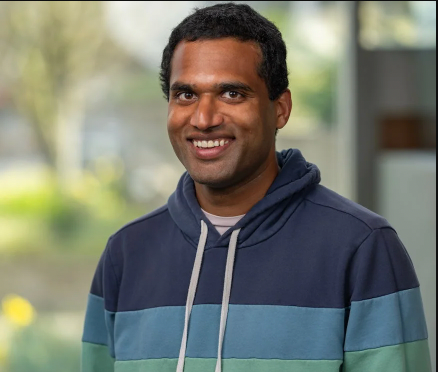
Alistair Morgan is a Researcher at the Department of Environmental Sciences , University of Basel , Switzerland, since November 2021. His research focuses on paleoclimatology and speleothem geochemistry , particularly in SW Asia , to understand historical climate variability and its societal impacts. PhD in Quaternary Geology (2021–present) MRes in Speleothem Isotope Geochemistry (2020–2021) MESci in Environmental Geoscience (2011–2015) His work integrates speleothem records , lake sediments , and historical data to reconstruct rainfall variability over decadal to multi-decadal scales, addressing water scarcity in the Middle East . Key projects involve Byzantine and Hittite climate interactions , Mid-Holocene hydroclimatic optima , and volcanic climate forcing . His publications span topics like Dansgaard-Oeschger cycles , stalagmite dating , and human-climate entanglements .
Ajay Kalra serves as an Associate Professor of Water Resources Engineering in the Civil Engineering Department at Southern Illinois University Carbondale's College of Engineering. His office is located in Engineering Building, Room 114, where he teaches undergraduate and graduate courses including Fluid Mechanics, Open Channel Hydraulics, Water Resources Engineering, and Advanced Hydraulic Design. Dr. Kalra's research spans hydro-climatology, urban sustainability, artificial intelligence applications in water resources, drought frequency analysis, and probabilistic forecasting. His interdisciplinary work connects climate science with practical water management solutions, focusing on how large-scale climate patterns influence regional hydrology. He has developed innovative approaches using machine learning to improve streamflow forecasting and drought prediction, particularly in western U.S. river basins. His scholarly output shows consistent productivity with research trends indicating increasing focus on machine learning applications for hydrological prediction, climate change impacts on water resources, and urban flood management. Recent publications demonstrate strong integration of remote sensing data with traditional hydrological models to address water challenges in both gauged and ungauged basins. Outstanding dissertation award 2011 (UNLV) Outstanding dissertation award 2011 (UNLV-College of Engineering) Best poster award (2nd Place, UNLV-College of Engineering) GPSA merit award 2010-2011 Member Tau Beta Pi (Engineering Honor Society) Dr. Kalra actively mentors graduate students and collaborates with researchers across institutions. His professional service includes membership in the American Geophysical Union and American Society of Civil Engineers. His current research program continues to explore the connections between oceanic-atmospheric oscillations and regional hydrology while expanding into urban water sustainability challenges under changing climate conditions.
Prof. Dr. Uwe Schlink is a leading Professor at the Institute of Meteorology, University of Leipzig, and Senior Researcher at the Department of Urban & Environmental Sociology, Helmholtz Centre for Environmental Research - UFZ. His work focuses on urban climate research , thermal comfort , urban air quality , and statistical modelling with Bayesian inference. He leads the working group on urban climate and personal exposure, bridging environmental science with societal resilience. Affiliation: University of Leipzig (since 2009) and UFZ (since 2013) Research Themes: Urban heat islands, personal exposure to environmental stressors, statistical climate models, and health impacts of air pollution His research spans environmental health , urban climatology , and resilient city planning , with significant contributions to understanding thermodynamic interactions between urban structures and climate. He has pioneered methods for high-resolution land surface temperature analysis and green infrastructure performance in mitigating heat stress. Recent publications (2023-2025) highlight his work on PM2.5-bound PAH exposure , anthropogenic heat impacts in Beijing, and Asian plateau climate dynamics . Collaborative projects address urban heat stress , green roofs , and health-focused urban planning .
Muhammad Adnan Abid is a Postdoctoral Research Assistant at the University of Oxford’s Department of Physics, specializing in Atmospheric, Oceanic, and Planetary Physics. His primary affiliation is with the Predictability of Weather and Climate research group. He holds a Researcher academic rank and is based at the Robert Hooke Building, Oxford. His research focuses on climate variability and predictability across sub-seasonal to decadal timescales, emphasizing inter-basin interactions and teleconnections between tropical oceans and extratropical regions. Key areas include ENSO teleconnections to Europe via the Indian Ocean, Indian Ocean Dipole (IOD) dynamics, and the role of inter-basin linkages in climate predictability. He utilizes intermediate-complexity models like SPEEDY-NEMO to study climate modes and their predictability. Abid is involved in the ASPECT project , which aims to integrate seasonal-to-decadal forecasts with climate projections for decision-making, particularly in European climate adaptation. He has contributed to projects like ITHACA and maintains strong ties to WCRP lighthouse activities. His work bridges climate modeling, predictability analysis, and interdisciplinary applications, with publications in journals such as Climate Dynamics , npj Climate and Atmospheric Science , and Nature Communications . His research highlights include decadal-scale Antarctic sea ice predictions and the development of climate information systems for extreme weather forecasting. Abid collaborates extensively with institutions globally and is a member of the Earth System Modeling and Climate Predictability communities. His contributions emphasize improving climate prediction accuracy for societal resilience against extreme weather and climate shifts.
Associate Professor Andrea Taschetto is a climate scientist at the Climate Change Research Centre within the Faculty of Science at the University of New South Wales (UNSW). She holds a PhD in Physical Oceanography from the University of São Paulo (USP), Brazil, where she also completed her MSc and BSc in Physics. She is recognized for her research on climate variability and ocean-atmosphere interactions, with particular focus on El Niño Southern Oscillation (ENSO) and its impacts on regional climate patterns. Dr. Taschetto's research interests center on understanding how oceans affect regional climate, with specific emphasis on climate variability, atmospheric teleconnection patterns, interactions across tropical ocean basins, and future climate projections. Her work explores how large-scale sea surface temperature patterns impact rainfall variability and drought over Australia and other regions. She is particularly interested in how different types of ENSO influence atmospheric circulation, regional climate, and interact with other oceanic basins. Her research has significant implications for understanding and predicting climate extremes and their impacts on water resources and agriculture. Her recent publications demonstrate a strong focus on Australian climate extremes, ocean basin interactions, drought mechanisms, and climate model evaluation. Her work frequently appears in high-impact journals including Nature Reviews Earth and Environment, Geophysical Research Letters, and Journal of Climate. She has made significant contributions to understanding the connections between tropical climate variability and Australian rainfall patterns, as well as the mechanisms behind major drought events. Australian Academy of Science Dorothy Hill Award for excellence in Earth sciences research ARC Future Fellowship (2017) ARC Post Doctoral Fellowship (2010) São Paulo Research Foundation (FAPESP) Fellowship, Brazil (2010) UNSW Gold Star Award (2009) Dr. Taschetto actively supervises PhD students including Nicholas Grosfeld, Michael Eabry, Annette Stellema, Sebastian McKenna, Quincy Forest, and Iara Scricco. She has been involved in numerous research grants, including the ARC Centre of Excellence for Climate Extremes (2022-2024) and the ARC Future Fellowship project 'Tropical ocean interactions and implications for regional climate' (2017-2021). She serves on the CLIVAR Pacific Regional Panel and is an Associate Editor for the Journal of the Southern Hemisphere Earth System Science. As the CCRC Undergraduate Coordinator at UNSW, she also teaches CLIM1001/GENS0401 - Introduction to Climate Change, an online course for first-year undergraduate students.
Emanuel Duarte Ribeiro is a PostDoc researcher at the University of Basel , affiliated with the Faculty of Humanities and Natural Sciences and working within the Department of Environmental Sciences under the FG Salzburger research group. His research focuses on paleoenvironmental reconstruction using biotic indicators in lake sediments, climate change impacts on aquatic ecosystems, and experimental studies in alpine springs. Current projects include KUMiT (Climate, Environment, People in Thurgau), SNSF-funded work on remote mountain lake ecosystems, and laboratory experiments on pesticide effects. His recent publications address diverse topics including Alpine plant diversity dynamics Neolithic land-use impacts Methane cycling in meromictic lakes Tropical paleofire metrics Fish fossil records Multi-proxy climate reconstructions Collaborations span institutions including UNESCO Biosphere Engiadina Val Müstair , Swiss National Park , and multiple international research teams analyzing paleoenvironmental datasets from Europe, Africa, and South America.
Daniel Skinner is a Senior Research Associate in the School of Environmental Sciences at the University of East Anglia, affiliated with the Climatic Research Unit and the Centre for Ocean and Atmospheric Sciences. His research focuses on decadal climate variability, particularly the Madden-Julian Oscillation (MJO), South Pacific Convergence Zone (SPCZ), and tropical-extratropical interactions. He leads the Pacific Rainfall over Millennial Scales (PROMS) project, investigating South Pacific hydroclimate dynamics over millennia. Education: Doctor of Philosophy (2024), University of East Anglia Master of Mathematics (2020), University of East Anglia Research Interests: Climate modeling of decadal variability Paleoclimatic reconstructions using biomarkers Teleconnections between tropical and extratropical systems Climate change impacts on hydroclimate systems His work bridges atmospheric dynamics and paleoclimate studies, integrating idealized models like IGCM4 with proxy data from paleoclimatologists. Recent work emphasizes MJO-driven atmospheric responses and multi-decadal climate modes, with findings published in Geophysical Research Letters and Weather . Articles span topics from glacial climate reconstructions to policy-oriented climate action frameworks. Scientific Recognition: Malcolm Walker Award for New Environmental Researchers (2024) Fellow of the Royal Meteorological Society (2024) Recipient of multiple academic prizes including the BSc Final Year Project Prize (2019) Professional Engagement: Co-chair of the Youth and Early Careers Special Interest Group (2022-2023) Science Engagement Fellow, Royal Meteorological Society (2022-2023) Editorial role at Weather since 2023 Labs/Teams: Climatic Research Unit (CRU) Centre for Ocean and Atmospheric Sciences (COAS)
Clay Tabor is an Associate Professor in the Department of Earth Sciences at the University of Connecticut, within the College of Liberal Arts and Sciences. His research focuses on understanding Earth's climate system responses to various forcings through paleoclimatology, with expertise in glacial cycles, isotopic hydroclimate analysis, and Cretaceous climate dynamics. He actively collaborates across disciplines with atmospheric chemists, geochemists, and geologists. Dr. Tabor holds a Ph.D. in Earth Sciences from the University of Michigan and a B.S. in Atmospheric Sciences from the University of North Carolina–Asheville. His teaching includes courses on Paleoclimatology (ERTH 4850/5850) and Our Evolving Atmosphere (ERTH 2800). His research interests span three core themes: 1) glacial cycles and sea level change, 2) water isotopologue patterns and regional hydroclimate, and 3) Cretaceous climate dynamics and the end-Cretaceous mass extinction. He employs advanced methods such as stable isotope analysis, climate modeling, and proxy data interpretation to address these topics. No scientific awards are explicitly listed in the provided information. His work involves interdisciplinary collaborations and leverages both observational datasets and Earth system models to advance climate science understanding.
Professor Liu Chunlei is affiliated with the Department of Atmospheric Physics at Guangdong Ocean University, where he leads research within the South China Sea Institute of Marine Meteorology. His expertise spans climate dynamics, ocean-atmosphere interactions, and tropical cyclone studies. He holds a PhD from the University of Manchester (1991) and has contributed to numerous high-impact projects funded by the National Natural Science Foundation of China and the Fujian Key Laboratory of Severe Weather. His recent work focuses on energy flux discrepancies, moisture transport mechanisms, and cyclone development dynamics. Liu has presented at international conferences like the SPARC General Assembly and the 5th International Electronic Conference on Atmospheric Sciences. Education: PhD in Atmospheric Physics (University of Manchester, UK, 1991), MSc in Atmospheric Chemistry (State Meteorological Bureau of China), BSc in Earth and Space Sciences (USTC, 1985). Research interests include atmospheric physics, climate modeling, and extreme weather events. His publications analyze global energy budgets, tropical cyclone sensitivities, and ocean surface heat flux dynamics. Collaborations with institutions like ECMWF and NASA highlight his international reach. No scientific awards are explicitly listed. Grants include projects on severe weather (2021) and climate feedback mechanisms (2020-2022). He advises through the South China Sea Institute, focusing on marine meteorology and regional climate studies.
Donald K. Perovich is a Professor of Engineering at Dartmouth College's Thayer School of Engineering. His research focuses on Arctic geophysics, sea ice dynamics, and climate change impacts. He has conducted extensive fieldwork, including leadership roles in the SHEBA and MOSAiC expeditions, and pioneered studies on sea ice-albedo feedback mechanisms. Education: BS in Physics (Michigan State University, 1972), MS and PhD in Geophysics (University of Washington, 1979/1983). He has held visiting and adjunct roles, including Chief Scientist for the SHEBA project (1996–1999) and Co-Chief Scientist for NASA's ICESCAPES mission (2010–2012). Research emphasizes sunlight-ice interactions, meltwater dynamics, and Arctic system responses to global warming. His work integrates field observations, satellite data, and modeling to understand climate feedbacks and environmental changes. Notable awards include AGU Fellow (2013), CRREL Gallery of Distinguished Employees (2021), and multiple Department of Defense recognitions. He actively contributes to international committees, including the Arctic Sea Ice Working Group and the Year of Polar Prediction Steering Committee. Perovich has led major grants and collaborations, including NOAA-funded Arctic monitoring projects. His lab focuses on advancing technologies for autonomous data collection in extreme environments. Current research explores how thinner Arctic ice affects heat transfer and ecosystem dynamics.
Dr. Nina Ridder is a Research Associate at the Centre of Excellence for Climate Extremes (CLEX) at the University of New South Wales. Her research focuses on compound climate events, extreme weather, and their societal impacts. Her work spans disciplines such as Climate Science, Oceanography, Hydrology, and Atmospheric Rivers , with a strong emphasis on understanding interactions between extreme events. Recent studies highlight her expertise in CMIP6 climate models , ENSO and IOD teleconnections , and compound flood mechanisms . Selected trends in her publications include: Compound drought and heatwaves in Australia Storm surge and river discharge interactions Global mapping of multivariate climate risks Climate model validation for extreme events Climate change impacts on compound event frequency Her research has appeared in journals like Nature Communications , Geophysical Research Letters , and Frontiers in Earth Science , reflecting a multidisciplinary approach to climate risk assessment.
Sune Olander Rasmussen is an Associate Professor at the Niels Bohr Institute , University of Copenhagen , specializing in Ice, Climate and Geophysics . With a background in geophysics, mathematics, and complex systems dynamics, his work focuses on integrating large ice core datasets and developing tools for climate data analysis. Research Interests : Greenland ice core studies, climate change, Dansgaard-Oeschger events, volcanic eruption impacts on climate, firn seismic properties, and probabilistic age modeling. Scientific Contributions : Key developer of the GICC05 time scale, with significant publications in Climate of the Past , Nature Communications , and PNAS . Awards : Carlsberg Foundation Distinguished Associate Professor. Leadership Roles : Chair of the NEEM dating consortium (since 2008) and the INTIMATE research network (since 2011).
Deliang Chen is a Professor at the Department of Earth Sciences , University of Gothenburg. His research focuses on Earth System Science, global environmental change, climate dynamics and modeling, atmospheric circulation patterns in the Third Pole Region, and regional climate impacts across Eurasia. Swedish Research Council (VR: 2019-03954) grant for Tibetan Plateau warming-Europe heatwave link Swedish National Space Agency (SNSA: 188/18) funding for convection and precipitation analysis in Third Pole Research Themes: Deliang Chen's work spans climate dynamics, high-altitude environmental monitoring, and cross-continental climate linkages, with emphasis on the Tibetan Plateau's role in global climate systems. His recent publications explore topics ranging from Antarctic warming mechanisms to socio-climatic impacts on historical empires and modern transboundary water systems. Collaborative Efforts: He works with international teams across climate modeling, ecological studies, and hydrological analyses, contributing to advancements in convection-permitting simulations, drought assessments, and sustainable development goal integration in polar regions.
Kevin M. Grise is an Associate Professor in the Department of Environmental Sciences at the University of Virginia, Charlottesville, VA, USA. His research focuses on atmospheric dynamics, cloud radiative effects, and their role in climate system variability and long-term change. Ph.D. from Colorado State University (2011) Specializes in Southern Hemisphere climate dynamics, Hadley circulation changes, and cloud-storm track interactions Research Interests : Grise investigates cloud-circulation feedbacks in climate models, particularly how poleward jet shifts influence cloud patterns and radiative budgets. His work bridges observational data (e.g., CloudSat/CALIPSO) with CMIP6 simulations to reduce climate projection uncertainties. Article Trends : His publications emphasize atmospheric circulation responses to greenhouse gas forcing, tropical expansion mechanisms, and cloud radiative effects. Key themes include storm track variability, cloud feedback to annular modes, and model evaluation against observational benchmarks. Grants : Funded by NSF Grant AGS-1752900 and NASA FINESST Grant 80NSSC22K1437. Teaching : Courses include Atmosphere and Weather (EVSC 3300) , Global Climate Variability Seminar (EVSC 4452) , and advanced topics in atmospheric dynamics.
Susheel Adusumilli is an Assistant Professor in the Department of Earth Sciences at the University of Oregon's College of Arts and Sciences. His research focuses on using remote sensing and field methods to study changes in the Antarctic Ice Sheet and their downstream impacts on coastal communities, particularly along the California and Oregon coasts. He emphasizes science communication, participating in United Nations COP meetings and guiding state-level policy documents. Research interests include coastal studies, ice sheet dynamics, and sea level adaptation strategies. His work integrates satellite observations with field data to track ice loss, coastal erosion patterns, and climate-driven environmental changes. Key methodologies involve deep learning applications, altimetry data analysis, and interdisciplinary approaches linking atmosphere-ice-ocean interactions. Recent articles highlight advancements in predicting shoreline changes using AI, understanding Antarctic ice shelf stability, and quantifying Earth's heat storage mechanisms. These studies underscore the urgency of climate adaptation strategies for vulnerable coastal regions. Adusumilli collaborates with international teams to produce actionable insights for policymakers and scientific communities.