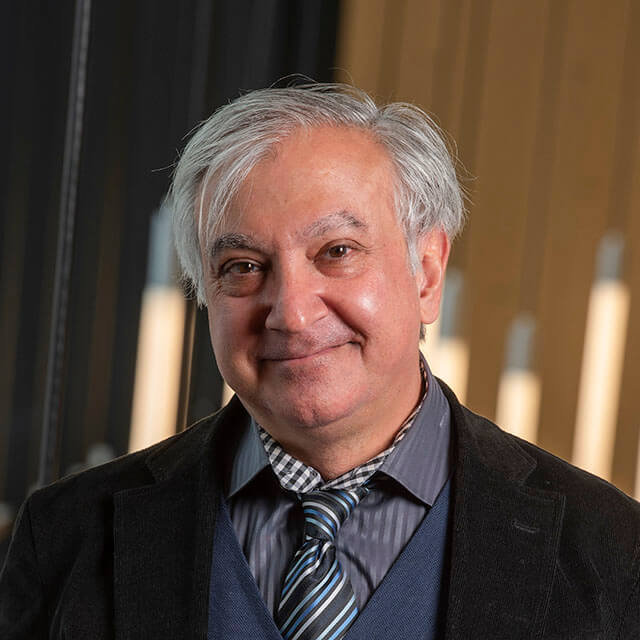
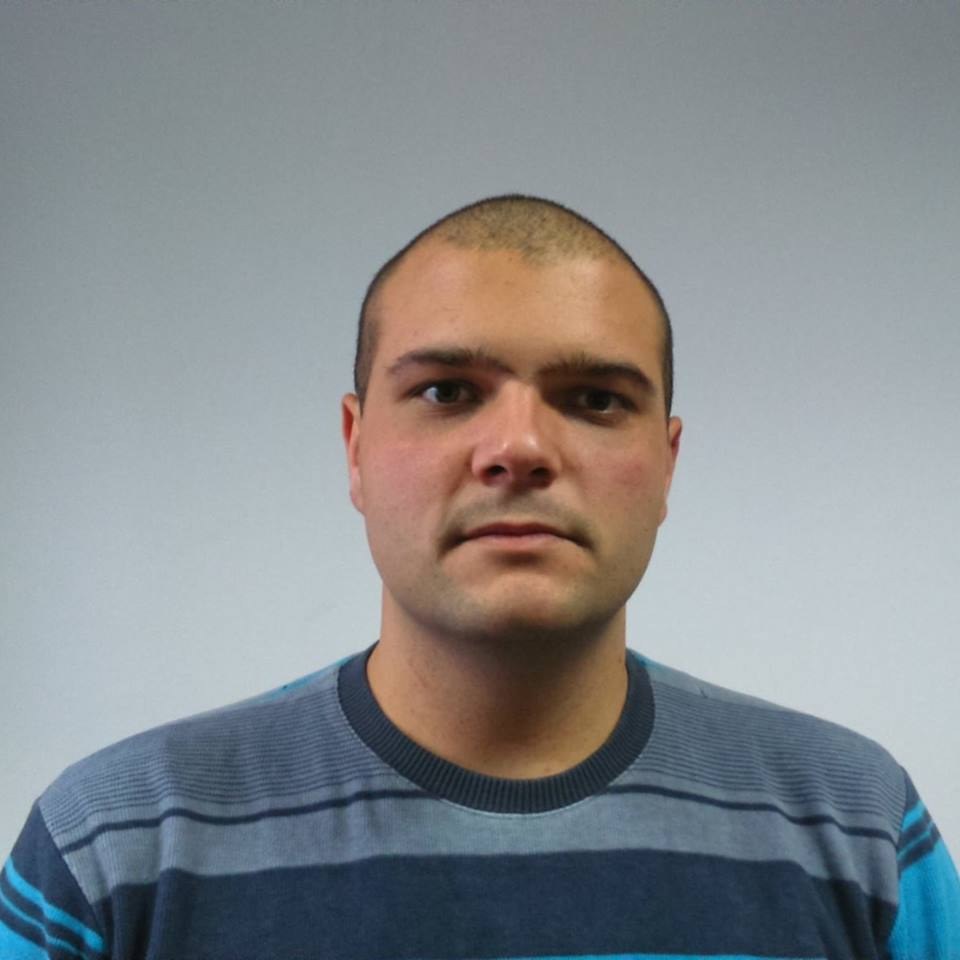
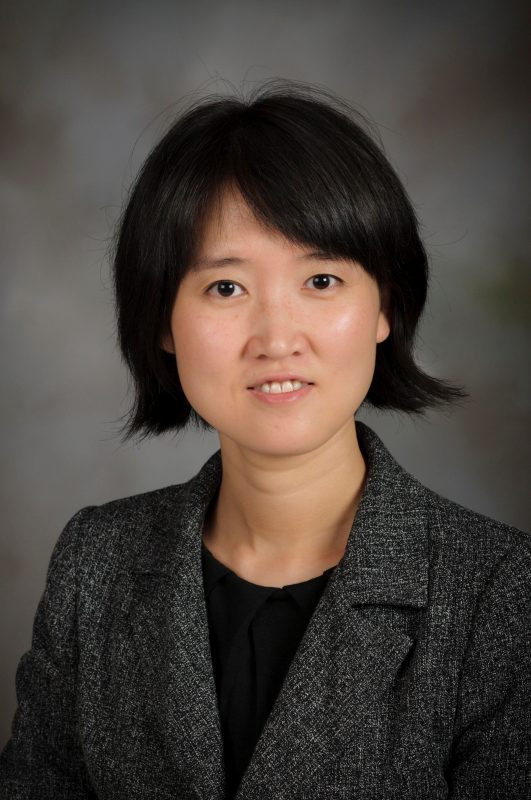
Selçuk Özgür is a Lecturer at Istanbul Technical University's Department of Electronics and Communication Engineering. He holds an MSc in Telecommunication Engineering (with thesis) from the same institution and a Licence in Electronics and Communication Engineering from Izmir University. Istanbul Technical University - Telecommunication Engineering (MSc, with thesis) Izmir University - Electronics and Communication Engineering (Licence) His research focuses on microwave imaging technologies, particularly for medical diagnostics like brain stroke detection. Key areas include antenna design, inverse scattering methods, dielectric property analysis, and qualitative imaging techniques. His work contributes to biomedical engineering and electromagnetic theory. Recent publications highlight advancements in microwave imaging systems, including tissue-mimicking phantoms, compact antenna designs, and comparative studies of linear sampling and factorization methods. These studies often intersect with medical imaging, signal processing, and electromagnetic modeling. H-index: 4 (Scopus); 23 readers on Mendeley; 2 patents referencing his work. He has published 7 research outputs since 2014, including 4 conference contributions and 3 journal articles.
Saeid Moslehpour is Chair and Associate Professor in the Department of Electrical and Computer Engineering at the University of Hartford's College of Engineering, Technology, and Architecture. He holds a Ph.D. in Industrial Technology and Computer Engineering (1993) from Iowa State University, along with multiple degrees from the University of Central Missouri including an Ed.Sp in Industrial Technology. Ph.D., Industrial Technology and Computer Engineering - Iowa State University (1993) Ed.Sp, Industrial Technology - University of Central Missouri MS, Electronics - University of Central Missouri BS, Electronics - University of Central Missouri His research focuses on Soft Processors , Electronic Modeling , and Cyber Learning , with expertise in SPICE modeling, FPGA/VHDL/Verilog programming, microprocessor design, telecommunications, and digital signal processing. He has pioneered laboratory developments including wireless, telecommunications, and surface roughness analysis systems. Recent work includes publications on EEG signal analysis , space systems hazard analysis , and embedded electronics . He received academic honors from Phi Kappa Phi and Epsilon Pi societies and maintains certifications in telecommunications and Cisco networking systems. Phi Kappa Phi Academic Honor Society (1993) Epsilon Pi Industrial Technology Honor Society (1993) Excellent Student Scholarship (1992-94) As an ASEE editor and committee chair, he has shaped engineering education policy and assessment. His industry collaborations with Northern Net Technology and Pars Server Tehran demonstrate practical applications of his work.
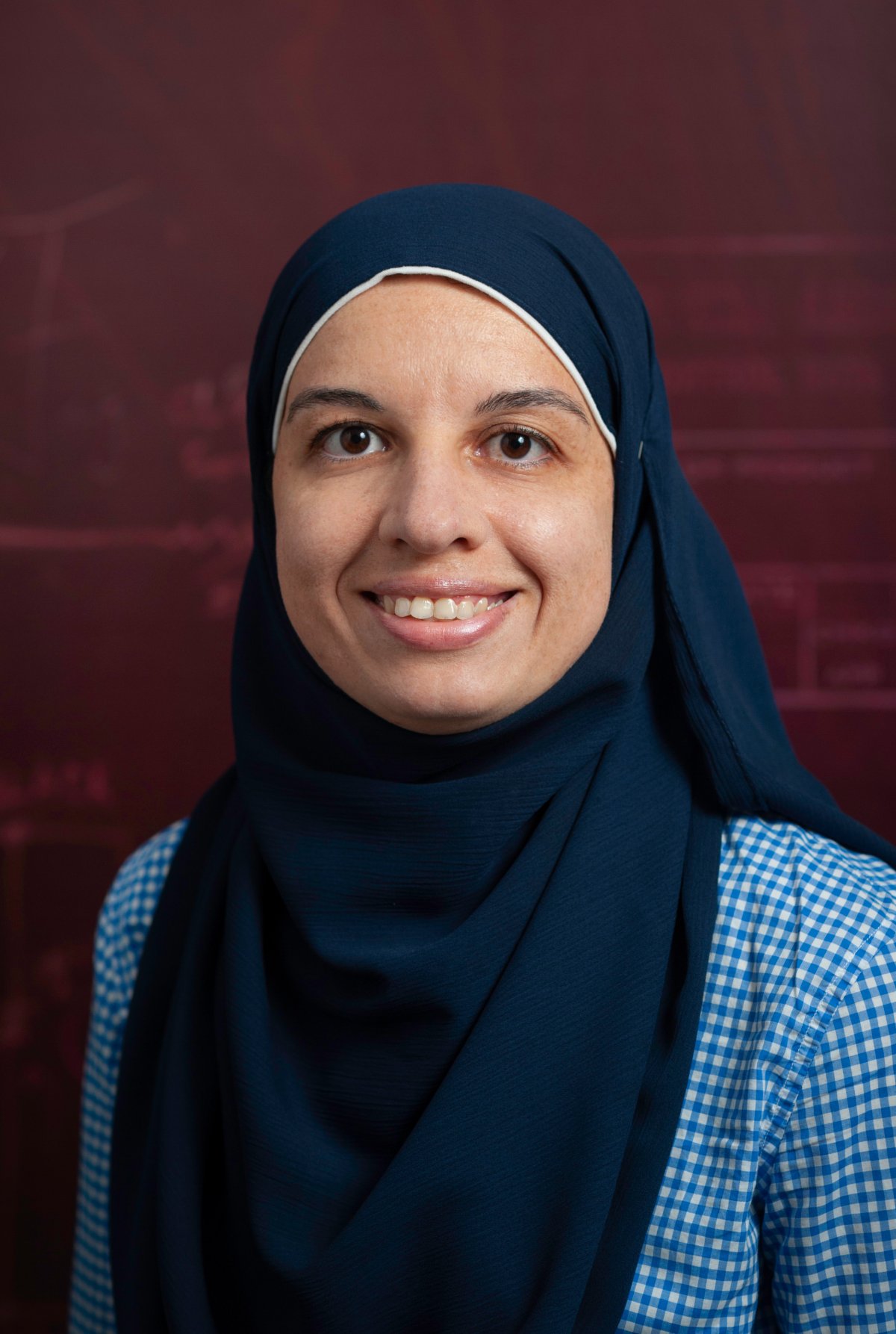
Eman Ramadan is a Lecturer and Research Associate at the University of Minnesota 's Computer Science and Engineering Department , collaborating with Professor Zhi-Li Zhang at the UMN Networking Lab . She co-leads the Computer Networking, Mobile, and AI Research Lab , focusing on 5G/NextG mobile networking, autonomous vehicles, content distribution networks, resilient routing, and software-defined networking. PhD in Computer Science (2022), MSc in Computer Science (2014), MSc in Computer Engineering (2012), BSc in Computer Engineering (2008) – all from University of Minnesota or Alexandria University Her research explores 5G network performance, particularly mmWave throughput prediction, carrier aggregation implications, and roaming challenges in the European Union. Current projects include developing AI/ML algorithms for intelligent network infrastructures and enhancing SDN resilience through the Taproot framework. Recent publications (2024-2022) demonstrate significant advancements in 5G network analysis, caching optimization, and network-application integration. She has secured NSF funding as Co-PI for xGTracker platform (2023-2025), and holds a provisional patent for 5G throughput prediction. Recipient of CSE Postdoctoral Award for DEI Leadership (2023) Best paper awards at SIGCOMM NetAIM (2018) and APNet (2017) Travel grants including ACM SRC (2018), GENI (2014), and CRA-W (2014) She actively contributes to diversity initiatives, serving as chair of CS-IDEA committee and member of CSE Diversity & Inclusivity Alliance . Her work bridges theoretical research with practical implementation across multiple domains.
Luis Miguel Hernández Acosta serves as an Associate Professor in the Department of Telematics Engineering at the University of Las Palmas de Gran Canaria (ULPGC), affiliated with both the GIR IUMA: Information and Communications Systems research group and the IU of Applied Microelectronics. His academic work spans software engineering and telematics systems within the School of Engineering. His research interests focus on Software Engineering , Mobile Computing , and Computer Vision , with significant contributions to practical applications including web/mobile platforms for service management, computer vision for medical diagnostics, and communication systems. Current projects demonstrate strong industry alignment in restaurant management, transportation optimization, and telemedicine solutions. Analysis of recent publications reveals consistent expertise in full-stack development, real-time systems, and cross-platform frameworks, with increasing integration of machine learning techniques since 2022. Key thematic trends include Practical implementation of publish/subscribe architectures for real-time notifications Computer vision applications in medical diagnostics Optimization algorithms for transportation and service platforms Advising Activities: Supervised 28 bachelor/master theses (2021-2025) Specializes in guiding telecommunications and computer engineering students Projects span mobile development (65%), web platforms (25%), and AI applications (10%) Research Infrastructure: Works within the Department of Telematics Engineering's ecosystem, leveraging resources from both GIR IUMA and the Applied Microelectronics Institute for hardware-software integration projects.
Dr. Khan Reaz is a Researcher in the Cybersecurity and AI group within the Department of Mathematics and Computer Science at Freie Universität Berlin. He has been with the university since August 2016, contributing to numerous research projects including UltraSec, PHY2APP, ONE5G, SecureFog, and AutoKEY. His work focuses on building quantum-ready security solutions with expertise spanning post-quantum cryptography, blockchain technologies, and Internet of Things security. Dr. Reaz holds a Dr. rer. nat. in Computer Science from Freie Universität Berlin, a Double M.Sc. in Information and Communication Technology and Innovation and Entrepreneurship from Technische Universität Berlin and Sorbonne Université, and a B.Sc. in Electronic and Telecommunication Engineering from North South University. He also participated in an exchange study in the USA as a recipient of the Global UGRAD scholarship administered by the U.S. Department of State. His research interests center around cybersecurity architecture with a particular focus on post-quantum privacy and security, next-generation communication networks, blockchain applications, Internet of Things security, formal verification of protocols, and ontology. Dr. Reaz designs security architectures that anticipate threats in the post-quantum world, bridging digital identity, quantum-safe protocols, and AI-powered security agents to build systems that defend, adapt, and scale under next-generation threat models. Dr. Reaz's publication record demonstrates consistent contributions to the fields of wireless security, blockchain applications for IoT, formal verification of security protocols, and UWB-based security solutions. His work shows a clear progression from foundational signal processing and direction of arrival algorithms to more applied cybersecurity solutions focusing on practical implementations for emerging technologies. CISPA Helmholtz-Zentrum für Informationssicherheit travel-grant (2023) Master scholarship from European Institute of Innovation & Technology (2013-2015) Fraunhofer FOKUS grant for Intelligent Services for Digital Cities (2013) Microsoft Student Partner award for outstanding contribution (2011) Runner-up at the Commercial Idea Contest, Grameenphone Ltd. (2010) ITU Youth Education Scheme grant for Bachelor study (2008-2011) Selected for Asia Youth Camp, South Korea (2008) Global UGRAD Exchange Program participant, U.S. Department of State (2007) Dr. Reaz has been actively involved in multiple European cybersecurity projects including AUTOKEY, SecureFog, PHY2APP, and UltraSec, contributing to advancements in privacy-preserving authentication, secure device onboarding, and post-quantum readiness. He participates in global discussions through NIST activities and EU-level working groups such as the 5G and 6G Security Working Groups. He regularly presents at top-ranked conferences including USENIX, ACM MobiSys, and IEEE GLOBECOM. As part of the Cybersecurity & AI Lab at Freie Universität Berlin, Dr. Reaz works within a team that focuses on AI, deep learning, and fundamental information theory for security, privacy, and identity with applications in IoT, 6G, blockchains, post-quantum codes, and deep fake detection.
Olivier Hudry is a Professor at Télécom Paris in the Computer Science and Networks (Infres) department. He is affiliated with the Cybersecurity and Cryptography (C²) research team and the Information Processing and Communication Laboratory (LTCI) . His work bridges combinatorial optimization and graph theory with applications in cybersecurity , voting theory , and network optimization . His research includes identifying codes in graphs , domination problems , and algorithmic complexity in social choice theory. Recent publications focus on q-ary Lee hypercubes , rainbow problems , and unique solutions in graph theory . He has also developed software for computing Slater indices in tournaments . Teaching roles include courses on Data Structures and Algorithms (INF 101), Continuous Optimization (MDI 210), Complexity Theory (MITRO 203), and Combinatorial Optimization (MITRO 205). He has authored textbooks on combinatorial analysis and operations research . Contact: olivier.hudry@telecom-paris.fr | olivier.hudry@telecom-paristech.fr
Theodoros Kaifas is an Assistant Professor at the Department of Electrical and Computer Engineering, Democritus University of Thrace, specializing in microwaves, antennas, and wireless communications. He has held academic positions at Aristotle University of Thessaloniki and International Hellenic University. BA in Physics MA and PhD in Electronic Physics (Radioelectrics), Aristotle University of Thessaloniki His research spans antenna design , microwave engineering , 5-6G wireless networks , and bioelectromagnetic applications . Recent work focuses on advanced antenna arrays, microwave ablation, and computational electromagnetism techniques. Selected research programs include: ARES (2024-2025): Antennas and Reflector Systems ESA-funded projects on multibeam array antennas Thales grants for RFID systems and cognitive radio devices As a senior IEEE member and contributor to international journals, he has taught undergraduate courses in antenna design, mobile communications, and bioelectromagnetism, alongside postgraduate lectures on advanced antenna topics.
Lorenzo Galleani serves as Associate Professor at the Department of Electronics and Telecommunications within the College of Electronic, Telecommunications and Physics Engineering at Polytechnic University of Turin. His academic appointment falls under Scientific Disciplinary Sector IINF-03/A (Telecommunications) in Area 0009 (Industrial and Information Engineering). His research focuses on signal processing for atomic timing in global navigation satellite systems and nonstationary signal processing , with significant contributions to optical time scale development and atomic clock anomaly detection. As principal investigator of the Navigation, Signal Analysis and Simulation (NavSAS) Group, he bridges theoretical signal processing with practical timekeeping applications. Recent publications demonstrate a clear trajectory toward optical clock integration and robust timescale algorithms , particularly through EU-funded projects like ROCIT. His work shows increasing emphasis on sub-nanosecond precision timekeeping for next-generation satellite navigation systems. Galleani has supervised doctoral students in Metrology across ten consecutive academic cycles (2014/15-2022/23) and teaches core courses including Signal Processing: Methods and Algorithms for Communications Engineering. His extensive grant portfolio includes EU Horizon 2020 projects, national PRIN grants, and commercial contracts with space agencies focused on Galileo system support. He leads the Navigation, Signal Analysis and Simulation (NavSAS) research group, which develops signal processing techniques for satellite navigation timing systems. Current projects focus on optical clock integration for international timescales and robust time reference architectures for European GNSS services.
Gabriella Balestra is an Associate Professor at the Polytechnic University of Turin , affiliated with the Department of Electronics and Telecommunications (DET) and serving as Coordinator of the College of Biomedical Engineering . She leads research in biomedical signal processing, telemedicine, and AI-driven medical software design, with a focus on cardiac monitoring and radiomics. Scientific Collaborator, Polytechnic University of Turin & University of Turin (2023-2027) Member, GEDI Observatory for Gender Equality and Inclusion Research Interests span biomedical informatics, clinical process modeling, and machine learning for healthcare. Her work includes developing digital twins for heart failure patients and AI tools for cancer segmentation and telemedicine applications. Recent publications highlight AI integration in radiomics , phonocardiography , and multi-center clinical studies, with a focus on wearable sensors and medical device software. Supervisor: Silvia Cannone (Digital Twin for LVAD Patients), Gregorio Dotti (Telerehabilitation), Jovana Panic (MRI-based AI for Oncology) She leads the Biolab: Biomedical Engineering Group and contributes to national and EU-funded projects like RECHARGE and ASSOCIATE .
Nikolay Petkov Manchev is a Senior Lecturer at the Department of Communication Equipment and Technologies, Technical University - Gabrovo . With expertise in wireless communication systems and IoT infrastructure, his research focuses on LoRaWAN network planning, radio coverage optimization, and smart city applications. Developed bicycle counting station (2022) and vending machine control systems (2021) Published extensively on LoRaWAN energy performance, signal propagation, and IoT communication protocols Active in international conferences like IEEE CIEES 2024 and Electronics (ET) 2022
Dr. R. Gregory Franks is an Associate Professor in the Department of Systems and Computer Engineering at Carleton University. He holds a Ph.D. from Carleton and is a registered Professional Engineer (P.Eng.). His research focuses on performance modeling of distributed systems, operating systems design, and internet protocol routing. Education: Ph.D. in Systems and Computer Engineering, Carleton University Research Focus: Dr. Franks specializes in performance modeling techniques including layered queueing networks, simulation methods, and Petri Nets. His work addresses distributed software performance, reverse engineering challenges, and operating system optimization. Current investigations include peer-to-peer protocol analysis, system optimization using layered models, and trace-based performance model generation for complex systems. Publication Trends: His research output consistently addresses performance modeling innovations, with recent emphasis on layered queueing network optimizations, automated trace analysis, SIP application server performance, and autonomic software engineering. Work demonstrates strong applications in telecommunications, distributed systems, and parallel computing. Supervision and Labs: Directs the RADS Lab (Real-time and Distributed Systems) and has supervised multiple graduate students in performance engineering. Current projects involve collaborations with industry partners including AT&T and CITO, focusing on internet telephony systems and distributed component architectures.
Michael Menth is a Professor at the Department of Computer Science, University of Tübingen, specializing in communication networks. His work bridges theoretical and applied research in network resilience, software-defined networking (SDN), and time-sensitive networking (TSN). University: University of Tübingen Department: Computer Science Research Interests: Network security, P4 programming, multicast protocols, and congestion control. Recent publications focus on advancements in SDN, TSN, and network security. His team has developed tools like P4TG for high-speed traffic generation and SENSOR for flow monitoring. Key projects include BIER-TE for multicast optimization and OIDC² for secure authentication. His research trends emphasize stateless network architectures, machine learning integration for network management, and automotive/E/E system softwarization. Collaborative work spans eHealth platforms like SSTeP-KiZ and security frameworks for industrial networks. Publications from 2022-2025 demonstrate technical depth in P4-based implementations, TSN scheduling, and resilient multicast protocols. While no explicit awards are listed, his extensive RFC contributions (e.g., RFC 5696, RFC 9262) highlight industry-standard impact.
Bruce Hartpence is a Professor in the School of Information at the Golisano College of Computing and Information Sciences, Rochester Institute of Technology (RIT). He has been at RIT since 1998, focusing on networking, security, and machine learning applications in networked systems. His research spans wired/wireless networks, DNS/DHCP/VoIP services, and neural networks for packet classification and security challenges. Hartpence is actively involved in curriculum development for networking and cybersecurity programs, emphasizing hands-on lab experiences. Education: BS, Rochester Institute of Technology MS, Rochester Institute of Technology Ph.D., Rochester Institute of Technology Research Interests: Hartpence's work centers on network visibility, security protocols, and real-time data quality. His neural network research addresses challenges in packet classification, adversary defense, and quality of service (QoS). He also explores software-defined networking (SDN) and the IEEE 1910.1 Meshed Tree project for faster network convergence. Teaching & Projects: Teaches courses on data communications, routing/switching, VoIP, and network design Runs the RIT SDN testbed and contributes to GENI Author of O'Reilly's Packet Guide series on core network protocols and VoIP Develops open-source virtualization clusters for education Labs & Collaborations: Hartpence's lab focuses on practical networking solutions, including hybrid physical/virtual network performance analysis and secure wireless architectures. He collaborates with industry partners like Wegmans on applied research projects.
Yaling Yang is a Professor in the Bradley Department of Electrical and Computer Engineering at Virginia Tech. Her research focuses on wireless networks, network security, resource management, and media access control. She holds a Ph.D. from the University of Illinois at Urbana-Champaign (2006) and a B.S. from UESTC (1999). Her work addresses challenges in dynamic spectrum access, GPS spoofing defense, 5G network resilience, and IoT security. Notable contributions include crowdsourcing-based spectrum monitoring, privacy-preserving dynamic spectrum sharing frameworks (e.g., SZ-SAS), and hardware-software co-design for sensor nodes. Recent publications emphasize agile 5G architectures, interference mitigation, and robust GPS security mechanisms using off-the-shelf devices. Her research often bridges theoretical models with practical implementations in maritime communications and cognitive radio networks. Yang’s affiliations include the Virginia Tech Scholar Profile and an affiliated research group. She collaborates on projects involving energy harvesting marine communication systems and database-driven spectrum management.
Roles & Affiliations : Sahil Waqar is a Researcher at the University of Agder (UiA), affiliated with the Faculty of Engineering and Science and the Department of ICT. His research specialization is in Mobile and Wireless Communications, focusing on radar-based human activity recognition (HAR) systems. Education : PhD Candidate, University of Agder (2020–2024), Thesis: "A Simulation-Based Framework for the Design of Direction-Independent Human Activity Recognition Systems Using Radar Sensors" Research Interests : Waqar’s work emphasizes advancing simulation-based approaches for radar sensor systems, particularly in overcoming challenges like multi-directional motion and data scarcity. His innovations include distributed MIMO radar configurations, interference mitigation techniques, and deep learning-based activity classification. His paradigm-shifting research reduces reliance on experimental data, enabling scalable and cost-effective HAR solutions. Supervisors : Main supervisor Prof. Matthias Uwe Pätzold (UiA) and co-supervisor Assoc. Prof. Bjørn Olav Hogstad (NTNU). Labs & Teams : Involved in UiA’s Mobile and Wireless Communications research group, focusing on RF sensing and radar system design.