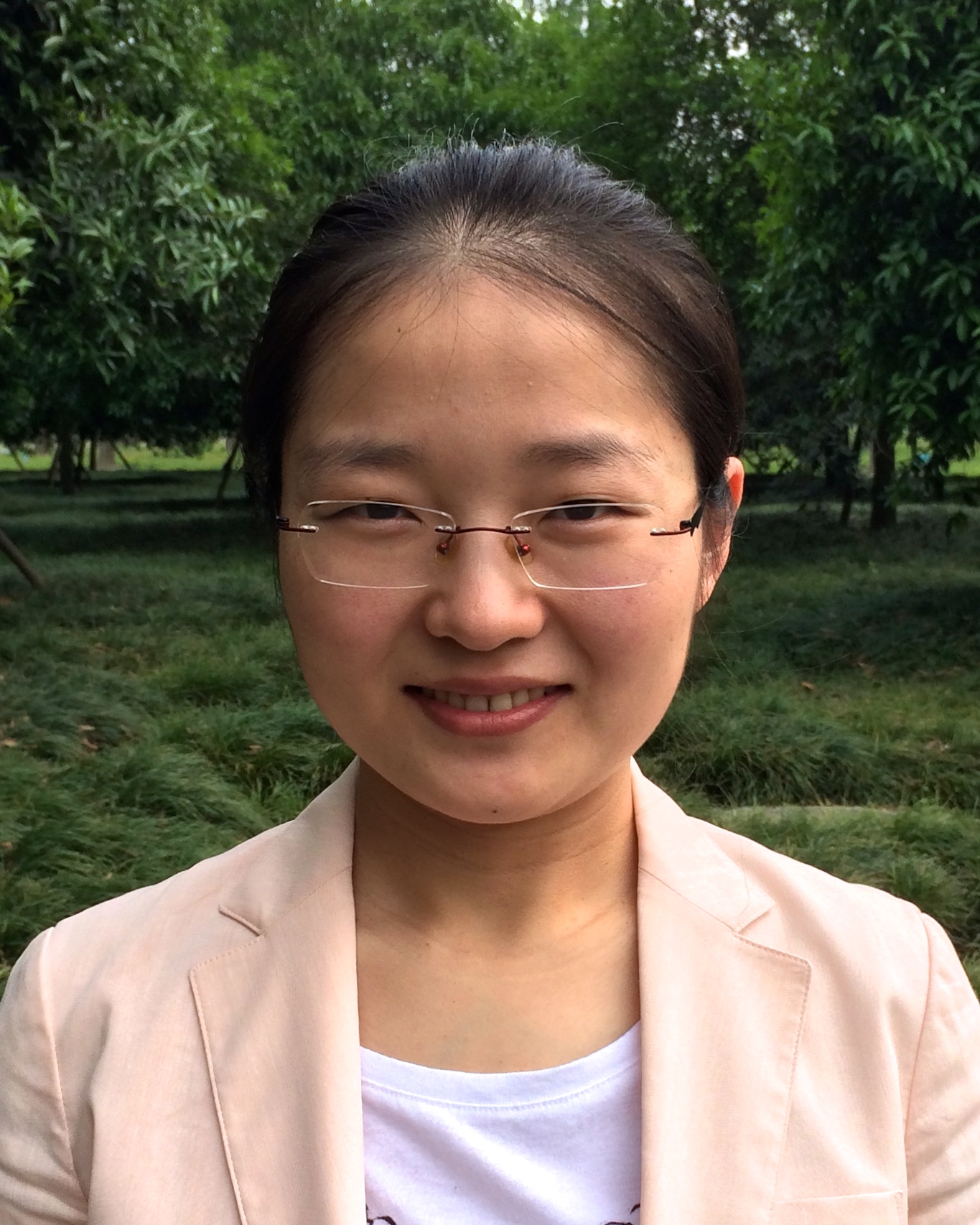
Dr. Emma Li is a Senior Lecturer in Responsible & Interactive Artificial Intelligence at the University of Glasgow's School of Computing Science. She directs the Interactive and Trustworthy AI Lab, developing secure human-robot collaboration frameworks for applications in healthcare, industry, and nuclear decommissioning. Her research pioneers behavioral biometric authentication methods that verify users through robotic motion patterns, enhancing security in teleoperation systems. Recent projects include cyber-physical teleoperation for nuclear decommissioning funded by the RAICo Programme. Li leads the Understandable Autonomous Systems research theme and contributes to the UKRI Centre for Doctor Training in Socially Intelligent Artificial Agents. Her publications demonstrate consistent innovation in human-robot trust establishment, adversarial robustness, and secure communication for robotic systems operating in sensitive environments.
Professor Kunal Mankodiya is a faculty member in the Department of Electrical, Computer and Biomedical Engineering at the University of Rhode Island. He holds the rank of Professor and is affiliated with the College of Engineering. His research focuses on wearable technologies, smart textiles, and medical IoT systems, with notable contributions in neural engineering and body sensor networks. Education Ph.D., University of Luebeck, Germany (2010) M.S., Biomedical Engineering, University of Luebeck, Germany (2007) B.S., Biomedical Engineering, Saurashtra University & C.U. Shah College (2003) Postdoctoral Researcher, Carnegie Mellon University (2011-2014) Postdoctoral Researcher, University of Pittsburgh (2011) Research Interests Mankodiya’s work emphasizes innovative wearable sensor systems for healthcare applications, including smart textiles for medical monitoring and IoT-enabled telemedicine solutions. His research integrates electrical engineering, biomedical engineering, and computer science to address challenges in neurological disorders, neonatal care, and movement disorders. Grants & Awards 2017 NSF CAREER Award 2017 40 under 40 Award, Providence Business News Lead PI on grants totaling over $5M, including NSF CAREER and NIH-funded projects Labs & Teams Mankodiya leads the Smart Wearable and IoT Lab at URI, focusing on interdisciplinary research in healthcare technology. His team collaborates with clinical partners on projects like neonatal monitoring systems and Parkinson’s disease tele-assessment tools.
Sunil K. Agrawal is a Professor of Mechanical Engineering and Professor of Rehabilitation and Regenerative Medicine at Columbia University, where he directs a highly interdisciplinary rehabilitation robotics program bridging the School of Engineering and Applied Sciences and the College of Physicians and Surgeons. His research focuses on developing robotic systems to restore and enhance human mobility for individuals with neurological disorders, pediatric conditions, and age-related decline. Education: PhD in Mechanical Engineering, Stanford University, 1990 MS in Mechanical Engineering, Ohio State University, 1986 BS in Mechanical Engineering, Indian Institute of Technology (IIT) Kanpur, 1984 Research Focus: Dr. Agrawal’s work centers on rehabilitation robotics , where he integrates dynamic systems, control theory, and optimization to create robotic devices that assist in gait training, balance improvement, and functional movement restoration. His studies span stroke, Parkinson’s disease, cerebral palsy, vestibular disorders, and spinal cord injury, using devices like the Tethered Pelvic Assist Device (TPAD) and robotic exoskeletons. Scientific Honors: Machine Design Award, ASME (2016) Robotics and Mechanisms Award, ASME (2016) Fellow, American Institute of Medical and Biological Engineering (AIMBE) (2016) Fellow, American Society of Mechanical Engineers (ASME) (2004) Alexander von Humboldt Foundation U.S. Senior Scientist Award (2007) Friedrich Wilhelm Bessel Research Award (2002) Presidential Faculty Fellow Award, The White House (1994) Research Collaborations & Funding: Dr. Agrawal collaborates with faculty across Neurology, Rehabilitation Medicine, Pediatric Orthopedics, Otolaryngology, Geriatrics, and Psychiatry. His work is supported by the National Science Foundation, National Institutes of Health, and the Spinal Cord Injury Research Board. Laboratory & Outreach: He leads an active research group focused on translational robotic systems, with ongoing clinical trials for stroke, Parkinson’s, cerebral palsy, and elderly fall prevention. His lab develops novel robotic braces, exoskeletons, and VR-integrated training platforms.
Eric Paulos is a Professor in the Department of Electrical Engineering and Computer Sciences at the University of California, Berkeley, directing the Hybrid Ecologies Lab, Master of Design program, CITRIS Invention Lab, and co-directing the Swarm Lab. He holds faculty appointments at the Berkeley Center for New Media and Jacobs Institute for Design Innovation. He earned his PhD in Electrical Engineering and Computer Science from UC Berkeley, where he pioneered internet tele-operated robots including Space Browsing blimps and Personal Roving Presence devices. Paulos is a foundational figure in urban computing (coined in 2004) with research spanning critical making, physical computing, and sustainability-focused design. His work consistently bridges Human-Computer Interaction with social justice, emphasizing inclusive prototyping and the societal implications of emerging technologies through hands-on making practices. His recent publications examine hybrid materials as design mediums, failure-mitigation in creative workflows, and light as computational material, revealing a trajectory toward empowering creators through accessible tool development and critical reflection on technological embodiment. No scientific awards were explicitly documented in the source material. He has advised seven PhD students including Katherine Song (2024), Molly Nicholas (2022), Sarah Sterman (2022), Rundong Tian (2021), Christine Dierk (2020), Cesar Torres (2019), and Joanne Lo (2016), with current recruitment for 2026 focusing on technical prototyping skills and equity-centered innovation in the Hybrid Ecologies Lab. His leadership spans the Hybrid Ecologies Lab (critical making research), Swarm Lab (collaborative robotics), and CITRIS Invention Lab (public fabrication space), fostering interdisciplinary work at the intersection of technology, art, and social impact through facilities like Jacobs Hall and the College of Environmental Design.
Professor David Abbink is a Full Professor of Haptic Human-Robot Interaction at Delft University of Technology, holding a joint appointment between the Department of Cognitive Robotics in the Faculty of Mechanical Engineering and Industrial Design Engineering since November 2023. He founded the Delft Haptics Lab and co-founded the Cognitive Robotics Department in 2017. Abbink leads the transdisciplinary research and innovation centre FRAIM, which was awarded the prestigious NWO Stevin Premie (Dutch Nobel Prize equivalent) in June 2024. Trained as a mechanical engineer specializing in biomechanics, Abbink's research focuses on human behavior adaptations when interacting with autonomous systems. He has published over a hundred scientific articles on human-robot interaction, haptics, shared control, tele-operation, driver assistance systems, and sensorimotor control. His research has been funded by industry partners (Nissan, Boeing, Renault), RVO (Brightsky project 2022-2026), and the Dutch Science Foundation NWO through personal grants (VENI 2010-2014, VIDI 2015-2019). Abbink's recent work centers on worker-robot relations as an academic focus, collaborating with organizations like Erasmus Medical Centre for nursing work, Schiphol and KLM for baggage handling, and KLM Engine Repair Services for maintenance work. He also serves as scientific director for the Centre for Meaningful Human Control, launched in October 2024. His work bridges engineering, social sciences, and practical applications to responsibly shape the future of work with emerging robotic capabilities. NWO Stevin Premie (2024) Best IEEE SMC journal paper on Cybernetics (2019) Top 25 scientific talents according to New Scientist (2015) Best teacher of Faculty 3mE (2013, 2014) Best teacher of Department of BioMechanical Engineering (seven consecutive years) Abbink has supervised over 110 MSc students and 11 PhD students. His educational contributions include developing the Master Programme in Robotics at TU Delft and receiving international recognition for his course 'The Human Controller.' He is also a prominent science communicator, featured on national television, radio, and major Dutch newspapers, and has delivered lectures at venues like The Royal Institution and Lowlands Festival. Despite his academic commitments, Abbink maintains a drummer persona, having recorded four albums and performed over 400 shows across three continents between 1999-2014.
Dr. Eric Meyers is an Assistant Professor in the Department of Bioengineering at the Erik Jonsson School of Engineering and Computer Science, University of Texas at Dallas. He holds a Ph.D. in Biomedical Engineering and dual Bachelor's/Master's degrees in Electrical Engineering from the same institution. His research focuses on closed-loop neurotechnology, neuromodulation, and bioelectronic medicine to enhance recovery from nervous system injuries. Key projects include developing wearable EMG sleeves for stroke rehabilitation and closed-loop neuromodulation systems to restore motor function. Education: B.S. (2012), M.S. (2018), Electrical Engineering; Ph.D. (2017), Biomedical Engineering – all from UTD His research interests span machine learning applications in neurorehabilitation, biomarker discovery for neurological conditions, and clinical translation of bioelectronic therapies. Recent work emphasizes wearable devices for real-time motor function assessment and neuromodulation-driven recovery strategies. Publications highlight advancements in EMG-based neural interfaces, closed-loop algorithms for stroke therapy, and innovative FES systems. His lab actively collaborates on projects funded by NIH and industry partnerships, with a focus on translating technologies to clinical settings.
Adriano Jorge Cardoso Moreira is an Associate Professor with Habilitation at the Department of Information Systems, School of Engineering, Universidade do Minho, Portugal. He is also a Senior Researcher at the Algoritmi Research Centre and Scientific Coordinator of the Urban and Mobile Computing department at Centro de Computação Gráfica. His research focuses on indoor positioning , mobile and context-aware computing , urban computing , and simulation of wireless networks . Research Interests : Indoor Positioning, Mobile Computing, Urban Mobility, Sensor Networks, Wi-Fi and UWB Localization, Smart Cities. Leadership : Coordinated the Computer Communications and Pervasive Media Group (2008-2016), Scientific Committee member (Director of MAP-tele PhD program in multiple terms), and leads the Master in Telecommunications and Informatics since 2021. Publications : Over 100 papers, including IEEE Transactions and Sensors journal articles, with an h-index of 23 and 2136 citations. Awards : First and second prizes in EvAAL-ETRI Indoor Localization Competitions (2015, 2016, 2017).
Keyvan Hashtrudi-Zaad is a Professor in the Department of Electrical and Computer Engineering at Queen's University, affiliated with the Smith School of Engineering and the Ingenuity Labs Research Institute. His expertise spans robotics and control systems, with a focus on haptics, telerobotics, tele-rehabilitation, autonomous vehicles, and medical robotics. He holds the email addresses keyvan.hashtrudi-zaad@queensu.ca and khz@queensu.ca, and his office is located in Walter Light Hall, Room 427. Research Interests: His research emphasizes human-robot interaction, haptic interfaces, autonomous systems, and mechatronics. Key areas include kinesthetic haptics, collaborative teleoperation systems, energy storage systems for electric vehicles, and medical robotics applications such as needle deflection estimation and rehabilitation robotics. His work bridges theoretical control systems with practical applications in healthcare and autonomous technologies. Publications: His recent work addresses challenges in haptic system stability, energy-efficient inverters for electric vehicles, and teleoperation networks. Notable projects include a cable-driven parallel robot for stroke rehabilitation and a study comparing DC/BLDC actuators for haptic feedback. His research often integrates sensor fusion, nonlinear control, and dynamic modeling to solve real-world problems. Awards and Recognition: While specific awards are not listed, his extensive publication record and leadership in interdisciplinary robotics initiatives highlight his contributions to the field. He is part of the Interactive Robotics and Intelligent Systems (IRIS) Laboratory, advancing innovations in medical robotics and autonomous systems. Grants and Collaborations: His work likely involves collaborations across engineering and medical disciplines, supported by grants focused on robotics, control systems, and healthcare technologies. The IRIS Lab serves as a hub for developing cutting-edge solutions in haptic training systems and assistive robotics.
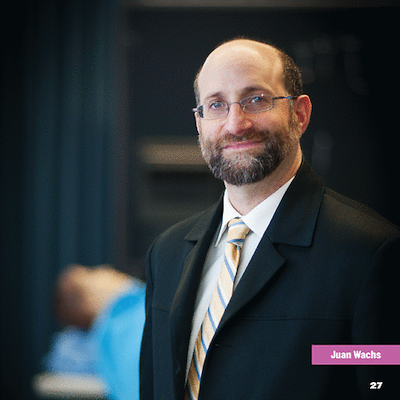
Juan Wachs is the James H. and Barbara H. Greene Professor at the Edwardson School of Industrial Engineering, Purdue University. He holds a courtesy appointment in Biomedical Engineering and is an Adjunct Professor of Surgery at the IU School of Medicine. His research focuses on the intersection of robotics, human-AI interaction, and healthcare systems, with a particular emphasis on surgical robotics, assistive technologies, and telemedicine. Education: PhD in Industrial Engineering (Intelligent Systems), Ben-Gurion University of the Negev MSc in Industrial Engineering (Information Systems), Ben-Gurion University of the Negev BEdTech in Electrical Education, ORT Academic College in Jerusalem Research interests include surgical telementoring via augmented reality, gesture-based interfaces for sterile environments, and semi-autonomous robotic systems for healthcare. His ISAT Lab develops solutions like the STAR telementoring system and robotic assistants like Gesturenurse and FIST-D for explosive ordnance disposal. Recent work emphasizes AI-driven medical decision support (Trauma THOMPSON), burn wound characterization, and robotic ultrasound automation. Key contributions include over 100 publications in robotics, medical AI, and human factors. Scientific Awards: James H. and Barbara H. Greene Professorship Purdue University Faculty Scholar Advising & Labs: Guides over 10 PhD/Master’s students in robotics and healthcare tech ISAT Lab fosters interdisciplinary projects in surgical robotics, human-robot interaction, and accessibility
Mathias Unberath is the John C. Malone Associate Professor in the Department of Computer Science at Johns Hopkins University, with secondary appointments in Ophthalmology and Otolaryngology—Head and Neck Surgery at the School of Medicine. He is a core faculty member of the Laboratory for Computational Sensing and Robotics (LCSR) and the Malone Center for Engineering in Healthcare, and affiliate faculty at the Institute for Assured Autonomy and Data Science and AI Institute. Education: PhD in Computer Science from Friedrich-Alexander University of Erlangen-Nürnberg (2017), MSc in Optical Technologies (2014), BSc in Physics (2012) His research focuses on computer-assisted medicine, integrating computer vision, machine learning, and medical robotics to develop human-centered solutions through mixed reality and embodied technologies. His work addresses surgical phase recognition, explainable AI, and digital twin representations for clinical workflows. Unberath's 15 most recent publications demonstrate expertise in surgical AI (7/15), medical imaging (12/15), and mixed reality (8/15), with specific subfields including segmentation frameworks (3 papers), cognitive load estimation (4 papers), and surgical robotics (5 papers). NSF CAREER Award NIH NIBIB Trailblazer R21 Google Research Scholar Award Inaugural DSAI Junior Faculty Award IPCAI 2025 Best Paper Award He teaches graduate courses in machine learning, AI system design, and interpretable machine learning. His group, the ARCADE Lab, develops technologies for computer-assisted interventions, emphasizing robustness, explainability, and human-AI collaboration in clinical settings.
Raymond H. Cuijpers is an Associate Professor at Eindhoven University of Technology in the Human Technology Interaction group. His research focuses on Cognitive Robotics , Human-Robot Interaction , and Artificial Intelligence for cognitive agents, with applications in healthcare robotics and aging population support. PhD in Physics of Man from Utrecht University (2000) Postdoctoral research at Erasmus MC Rotterdam and Radboud University Nijmegen Key research areas include: Developing socially intelligent robots with proper social cue interpretation Hybrid AI approaches for real-world complexity handling Visual-haptic perception integration in human motor control Service robots for COPD patient assistance (KSERA project) Rescue robotics and tele-operation applications Recent research output (2025) includes studies on: Personalization in human-robot communication Optimal lighting for elderly visual perception Human-robot bonding mechanisms Interactive sensorized platforms for homecare (GUARDIAN) Audiovisual temporal integration in virtual environments He coordinates large-scale European projects like GUARDIAN and previously KSERA, contributes to sustainable development goals through healthcare robotics, and serves on editorial boards of leading journals including International Journal of Social Robotics . His work spans both technical robotics development and human-centric interaction studies.
Stavros Demetriadis is a Full Professor at the School of Informatics, Aristotle University of Thessaloniki, Greece. His research focuses on Learning Technologies, including Conversational Agents in Education, Learning Analytics, Computer-Supported Collaborative Learning (CSCL), Computational Thinking, and Massive Open Online Courses (MOOCs). He has led EU-funded projects like colMOOC and developed educational tools such as 'pytolearn' for Python instruction and 'Cubes Coding' (winner of Open Education Challenge 2014 and NUMA Competition 2014). He has supervised 5 completed PhD theses, 4 ongoing PhDs, and over 60 Master’s theses. Academic Appointments: Full Professor (2020–present), Associate Professor (2015–2020), Assistant Professor (2012–2015), Lecturer (2002–2008), Informatics Teacher (1989–2002) Education: PhD in Multimedia Technology in Education (2000), MSc in Electronic Physics (1986), BSc in Physics (1983) His work bridges AI and education, with over 161 publications and an h-index of 27. Recent research explores ChatGPT integration, ethics in Learning Analytics, and AI-driven assessment tools. He has delivered invited talks at institutions like the University of Valladolid (2024) and coordinates the 'Teachers' Fast-paced Distance Training on Tele-education' project. Awards include three international best paper awards and recognition for his 'Cubes Coding' project. Key Research Contributions: Developed frameworks for Conversational Agents in CSCL Innovated Computational Thinking pedagogy through robotics Explored ethics and culture in Learning Analytics adoption Created Python-based MOOCs for non-programmers He has taught courses like Human-Computer Interaction and Learning Analytics, and led short programs on Conversational AI. His collaborations span institutions in Spain, Denmark, and Greece. ORCID: 0000-0002-1561-6372; Google Scholar, Semantic Scholar, and Scopus profiles list his extensive output.
Professor Peter Asaro is an Associate Professor at The New School's School of Media Studies, specializing in the philosophy of science, technology, and media. His work focuses on artificial intelligence, robotics, and the ethical, legal, and social implications of autonomous systems. He serves as Co-Founder and Co-Chair of the International Committee for Robot Arms Control (ICRAC) and has held research positions at Princeton University, Rutgers University, Umeå University, and the Austrian Academy of Sciences. Education: PhD, MCS, MA, BA His research spans military robotics, AI ethics, surveillance, and the societal impacts of automation. He has contributed to influential publications in journals like IEEE Technology & Society and Robot Law , with a focus on lethal robotics, legal liability, and privacy. Recent work includes critiques of predictive policing algorithms and autonomous weapons systems. Notable awards include the 2010 SXSW Web Interactive Awards for Technical Achievement and Best of Show for his contributions to Apple’s Siri and Microsoft’s Bing math query interfaces. He is currently writing a book on robotics and ethical intersections. Scientific Awards: 2010 SXSW Web Interactive Award for Technical Achievement 2010 SXSW Web Interactive Award for Best of Show Asaro leads funded projects like the Oral History of Robotics (IEEE & NEH) and Regulating Autonomous Artificial Agents (Future of Life Institute). He also contributes to public discourse on technology through his blog and affiliation with 4TU.Ethics and ICRAC.
Brook Kennedy IDSA, NAI is a Professor in the School of Design at Virginia Polytechnic Institute and State University (Virginia Tech), specializing in Industrial Design. His research spans circular design, human health, alternative technology, biogenic materials, and biomimetic processes. As a 2025 National Academy of Inventors Senior Fellow, Kennedy has established cross-disciplinary relationships with biogenic material science faculty at the Technical University of Munich through a 2024 Global Visiting Professorship. His research interests focus on sustainable design solutions addressing global challenges. Kennedy explores how abandoned technologies can inform contemporary sustainability efforts, as evidenced by his 2023 Routledge publication Reimagining Alternative Technology for Design in the 21st Century . His work in fog harvesting materials has produced top-cited articles for Wiley-VCH and Elsevier, while his Lisbon Chair project develops biobased degradable polymers for furniture. The Fog Harp project, inspired by redwood tree needles, offers 10x greater water yield than existing fog collectors. 2025 National Academy of Inventors Senior Fellow Inductee Multiple international design awards including Red Dot Best of the Best, IDEA Gold, and European Product Design Awards Author of 176-page Routledge publication on alternative technology (2023) Co-inventor of 23+ US and foreign patents Widely covered in media including BBC, PBS Newshour, New York Times, and Smithsonian Kennedy maintains active industry collaborations, advising startups, NGOs, and companies like SC Johnson, OXO, and Nokero Solar. His Fog Harp project has been featured in the documentary Finite Water and exhibited at the Smithsonian. He teaches courses including Applied BioDesign, ID LAB, and Professional Practice, while leading Virginia Tech's BioDesign Research Group. His Macronaut smartphone loupe tool bridges design inspiration and tele-health applications, demonstrating his commitment to practical, human-centered solutions.
Pedro Teles is a Full Professor at Católica Lisbon School of Business and Economics, a researcher at Banco de Portugal, and a Research Fellow of the Centre for Economic Policy Research (CEPR). His academic career spans institutions including the Federal Reserve Bank of Chicago, Universitat Pompeu Fabra, and University College London. His research focuses on monetary and fiscal policy, taxation, sovereign debt, and international economics. PhD in Economics, University of Chicago BSc in Economics, Universidade Católica Portuguesa His research explores critical questions in macroeconomics, including: Optimal monetary-fiscal policy frameworks Implications of sticky prices and long-term interest rate targets Taxation strategies for housing, robots, and high-skill immigrants Sovereign default risk and inflation stabilization Monetary theories and policy relevance in modern economies Recent publications address AI regulation (2023), global taxation coordination (2023), and post-pandemic urban economics (2023), demonstrating interdisciplinary applications across macroeconomics, public finance, and technology policy. His work frequently appears in top journals like Journal of Monetary Economics and Review of Economic Studies. Scientific distinctions include: CEPR Research Fellow He has collaborated extensively with institutions such as NBER, Banco de Portugal, and ADEMU, contributing to debates on unconventional policy measures during crises and the design of stable monetary systems.