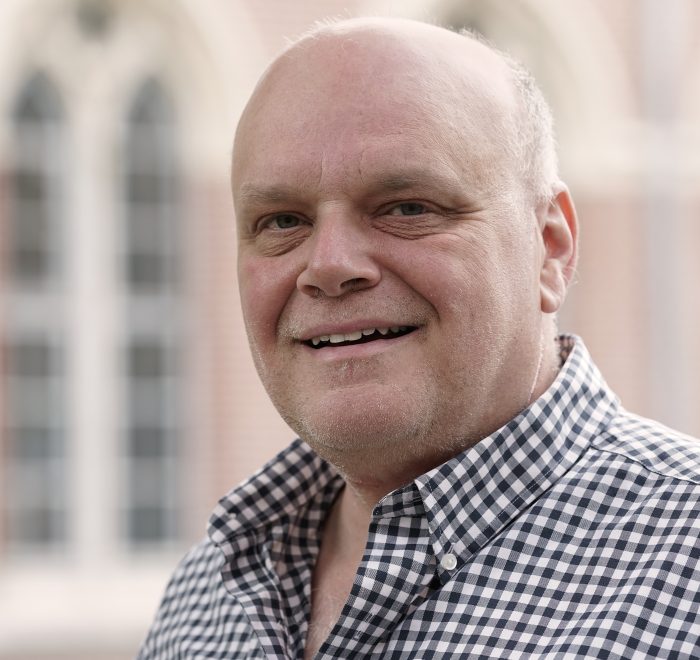
Christopher Coenen is a Research Group Leader at the Institute for Technology Assessment and Systems Analysis (ITAS) at Karlsruhe Institute of Technology (KIT), Germany. He serves as Editor-in-Chief of the journal NanoEthics: Studies of New and Emerging Technologies , with expertise in human enhancement and socio-ethical implications of technoscience. Key affiliations: ITAS (KIT), S.NET, European Commission’s STOA Research Interests focus on: Social, ethical, and historical dimensions of emerging technologies Human-machine convergence in neurotech/synbio Responsible Research and Innovation (RRI) Techno-futuristic ideologies and citizen science Recent Publications address quantum ethics, neurotechnology, biohacking, and techno-cultural narratives across 15 years. His work bridges philosophy, policy, and public engagement with technologies like nanosystems, AI, and synthetic biology. Projects include STIMULUS (microvascular quantum biomarkers), IANUS (trust in science), and QuTec (quantum TA). He previously led studies on synthetic biology, human enhancement, and techno-democracy.
Björn Karlsson is a researcher at the IT University of Copenhagen within the Technologies in Practice department. His work focuses on the intersection of technology, policing, and governance. Active in Predictive Policing and Science and Technology Studies Key researcher in the POL-INTEL project examining police digitalization Collaborator in CUPP and UNDO research initiatives Research interests involve Ontology , Epistemology , and Philosophy of Science applied to digital policing systems. Recent publications analyze Palantir software, Police Power , and Privacy Protection in Nordic contexts. Contributions include: 2025: Scientification through privatization: POL-INTEL in Denmark 2025: The Digital Leviathan: Prediction, Politics and Police Power 2024: Ontological politics in the Danish police’s POL-INTEL
Dr Becky Faith is a Research Fellow at the Institute for Development Studies , specializing in the intersection of technology, international development, and social equity. Ph.D. in Computing/Communications MSc in Technology Strategy Research 15+ years in digital rights and NGO sector Research Focus: Artificial intelligence and development Digital poverty and exclusion Gendered impacts of technology Post-access internet barriers Technological affordances in marginalized contexts Scientific Output Trends: Recent publications emphasize digital exclusion metrics, gender-sensitive policy design, and pandemic-driven technology governance challenges. Her work spans both empirical and theoretical analyses of technology's role in exacerbating or mitigating social inequalities. Projects & Advocacy: Leads the Digital Connections and Inclusion in Brighton and Hove project. Co-organized the 2022 Digital Levelling Up events and contributed to the British Academy's digital poverty evidence hub. Collaborates extensively with NGOs and government agencies on digital rights frameworks.
T Miller is a researcher affiliated with Goldsmiths, University of London , focusing on intersections between design , science and technology studies (STS) , and academic presentation practices . Their work explores how humor, cinematic techniques, and design methodologies can reimagine knowledge communication in scholarly contexts.
Maya Livio is Assistant Professor of Climate, Environmental Justice, Media and Communication and Associate Director of the Center for Environmental Filmmaking at American University. Her work bridges environmental studies, media theory, and digital technology through an intersectional feminist and justice-oriented lens. Dr. Livio's research examines the contact zones between ecosystems and technological systems, with particular focus on media technologies used for biodiversity conservation. Dr. Livio's educational background includes a PhD from the University of Colorado-Boulder, an MA from the University of Amsterdam, and a residency at Caltech. Her professional experience extends beyond academia to include curatorial work at the Boulder Museum of Contemporary Art and the Media Archaeology Lab, where she developed expertise in environmental media and digital justice. Dr. Livio's research interests center on climate and sustainability, environmental equity and justice, and the intersection of media technologies with ecological systems. She examines how tools like camera traps, digital twins, and AI for conservation operate within complex social and ecological contexts, with particular attention to issues of power, access, representation, and Indigenous sovereignty in conservation efforts. Her work challenges conventional approaches to environmental technology by applying intersectional feminist perspectives that highlight the importance of community knowledge and Indigenous sovereignty in conservation efforts. Dr. Livio's recent scholarly output demonstrates consistent productivity across multiple venues, with publications spanning academic journals, conference proceedings, and art catalogs. Her work shows a clear trajectory toward examining the ethical dimensions of environmental technologies, with increasing focus on avian conservation, queer ecology, and feminist approaches to data and technology. Greenberg Faculty Fellowship (2023-2025) Airlie Research & Innovation Award (2023) Caltech-Huntington Art + Research Residency (2023) Creator Development Fund from New Music USA (2022) INSITE Fund from RedLine Contemporary Art Center and Andy Warhol Foundation (2019-2020) Dr. Livio actively mentors students through research projects and has served as co-PI on grants that support collaborative knowledge production. Her approach to supervision emphasizes interdisciplinary collaboration and justice-oriented research practices. She has been involved in organizing symposia and workshops that create spaces for feminist and critical approaches to media technology and environmental studies. Currently, Dr. Livio is leading several significant projects including a feature film and paper on AI for avian conservation through queer ecology, a multimodal research project on camera trapping in Los Angeles, and a book on digital conservation. She also serves as curator for 'Data Rich, Dirt Poor,' a museum-wide exhibition at the Boulder Museum of Contemporary Art (2025-2026).
Philippe Gagnon is a Research Fellow at the Chair of Sciences, Technosciences and Faith and serves as the Scientific Director of the Vaillant-Whitehead Fund. He holds dual doctoral degrees: a Doctor of Theology and a Doctor of Philosophy. His academic work bridges theology, philosophy, and science. His research spans: Epistemology and metaphysics Philosophy of science/logic/mathematics Analytic philosophy and natural philosophy Theological foundations and philosophical theology No publications, awards, students, or grants are detailed in the source text.
Hugo Cadenas is an Associate Professor in the Department of Anthropology and Department of Social Work at the Faculty of Social Sciences, University of Chile. He serves as Director and Editor-in-Chief of the scientific journal MAD and Associate Editor of Kybernetes. Additionally, he is a Fellow of the Cybernetics Society of the UK. Hugo Cadenas specializes in Social Systems Theory, with research interests spanning Sociology, Anthropology, Sociology of Law, and Economic Sociology. His work critically engages with Niklas Luhmann's theoretical framework, examining its applications to legal systems, social organization, and contemporary societal challenges. He has made significant contributions to understanding functional differentiation in Latin American contexts and the relationship between society and nature. His recent publications reveal a strong focus on theoretical developments in social systems theory, particularly exploring the body-agency relationship, the society-nature distinction, and applications to contemporary issues like the pandemic. His work shows consistent engagement with Luhmann's framework while incorporating insights from other theoretical perspectives including actor-network theory and critical theory. Fellow of the Cybernetics Society of UK As Director and Editor-in-Chief of MAD journal and Associate Editor of Kybernetes, Cadenas plays a significant role in academic publishing within his field. His editorial work supports the dissemination of research in social systems theory and related areas. While specific grant information isn't detailed in the available materials, his extensive publication record suggests successful research funding. Cadenas is deeply involved in the international scholarly community focused on social systems theory, particularly through his editorial roles and participation in academic networks centered around Niklas Luhmann's work. His collaborations extend across Latin America and Europe, reflecting the global nature of systems theory research.
Maxime Polleri is an Assistant Professor in the Department of Anthropology within the Faculty of Social Sciences at Laval University. He is an anthropologist of technoscience with specialized expertise in nuclear issues, disaster governance, and misinformation studies. His research is significantly enhanced by his affiliations with the Center for International Security and Cooperation (CISAC) at Stanford University and the MITATE Lab, an international research program on nuclear crises. His research interests span the anthropology of technoscience, nuclear issues, disaster studies, contamination governance, citizen science, and misinformation. With regional expertise focused on Japan, his work examines how different groups navigate radiological risks and post-disaster recovery processes. Professor Polleri's recent publications demonstrate a consistent focus on nuclear governance, disaster recovery, and the social dimensions of radiation. His work bridges anthropology with practical policy concerns, particularly evident in his analysis of Fukushima recovery efforts and contemporary nuclear issues including the Ukraine reactor situation. His research trajectory shows increasing attention to misinformation dynamics in scientific and environmental contexts. Grant from the Faculty of Social Sciences' Research Results Dissemination and Promotion Program (2025-2026) for his book 'Radioactive Governance: The Politics of Revitalization in Post-Fukushima Japan' Professor Polleri actively supervises graduate students and integrates his research on nuclear disasters, radioactive waste management, and misinformation into his teaching. His current projects examining radioactive waste storage in Ontario and AI's role in shaping nuclear discourse provide rich opportunities for student involvement in cutting-edge anthropological research with significant policy implications. His work with the MITATE Lab facilitates international collaboration on nuclear crisis management.
Rikke Munck Petersen is an Associate Professor in Landscape Architecture and Sensory Conception at the University of Copenhagen's Department of Geosciences and Natural Resource Management. She leads research in sensory landscape methodologies and co-organizes the Copenhagen Landscape Lectures series as part of the 'Landscape Architecture and Urbanism' and 'Spatial Change and Planning' research groups. Her educational background includes a PhD (2010) and Cand. Arch. (2000) from the Royal Danish Academy of Fine Arts, School of Architecture, supplemented by studies at the University of Pennsylvania (1999) and Royal Agricultural University of Denmark (1998). PhD, Royal Danish Academy of Fine Arts, School of Architecture (2010) Cand. Arch., Royal Danish Academy of Fine Arts, School of Architecture (2000) Non-degree studies, University of Pennsylvania (1999) Plant use course, Royal Agricultural University of Denmark (1998) Her research pioneers sensory analysis and filmic mediations in landscape transformation, focusing on the body's sensorium, affective experience, and performativity in climate-resilient design. Current projects include multi-sensory river valley analysis (Archive for Becomings, 2025-27) and EU Water4All's INTERLAYER project (2024-27) developing 'slow hydrology' approaches for flood/drought resilience. Her methodology integrates drone footage, film editing, and participatory processes to stimulate sensory awareness in landscape planning. Recent publications reveal strong interdisciplinary convergence between landscape architecture, film studies, and environmental science, with emphasis on affective engagement in climate adaptation. Key trends include drone-mediated sensory co-creation (2020-2024), feminist landscape historiography (2024), and emergent design methodologies for regenerative landscapes (2025). Scientific recognition includes: ICAR-CORA Prize 2011 for PhD thesis 'Landscape transformations' Vola Prize 2000 for master project Frits Schlegel Honors 2003 for early-career architecture She supervises doctoral research including Hongxia Pu's 'Filmic Scroll' (2024) on Chinese desakota landscapes and Kristen Danielle van Haeren's 'Thickness of the Green' (2020) on Danish welfare landscapes. Major grants include Danish Arts Foundation funding (75,000 DKK for Archive for Becomings), EU Water4All (3 million DKK), and Danish Research Council support (6 million DKK for Drone Imaginaries project). As director of Surroundinglab.org and editorial board member for Emotion, Space and Society, she bridges academic research with professional practice. Her studio mupLA (founded 2003) has delivered award-winning landscape projects including Roskilde Festival area planning and Bornholm harbor designs, maintaining active engagement with municipalities and architecture offices.
Aanchal Saraf is an Assistant Professor in the Department of Social Science and Cultural Studies at Pratt Institute's School of Liberal Arts & Sciences, where she researches US empire in Asia and the Pacific with attention to how militarism and science co-constitute raced and gendered bodies, knowledges, and ecologies. Her educational background includes a PhD in American Studies from Yale University (2023) and a BA in Geography and Ethnic Studies from Brown University (2016). She spent 2023-2024 as a member of Dartmouth College's Society of Fellows and was previously an assistant professor at Oberlin College. Saraf's research spans cold war visual and material cultures, technoscience, fashion, environmental humanities, and feminist and queer theory. Her current book project theorizes the 'colonial fallout' of U.S. nuclear weapons testing in the Marshall Islands, working across official and submerged archives, Asian American and Pacific Islander cultural production, and ethnographies of nuclear displacement as narrated by ri-Ṃajeļ on the Big Island of Hawai'i. Her publications demonstrate consistent engagement with interdisciplinary scholarship across American Studies, Pacific Islander studies, and environmental humanities. Recent works examine nuclear colonialism, indigenous resistance to scientific projects like the Thirty Meter Telescope, and the intersection of racial capitalism with contemporary fiction. Her writing appears in both academic journals and public-facing venues like CNN Opinions, reflecting her commitment to public scholarship. Social Science Research Council Fellowship ACLS/Mellon Foundation Fellowship National Science Foundation Fellowship Saraf has received significant research support through prestigious fellowships from major funding organizations. While specific grant details aren't provided in the text, her work on nuclear colonialism in the Pacific appears to be the focus of these competitive awards. Her scholarly trajectory shows movement from Yale PhD candidate to Dartmouth Society of Fellows member to current faculty position at Pratt Institute, indicating strong institutional support for her research agenda. She previously advised students during her time at Oberlin College and continues this mentorship role at Pratt.