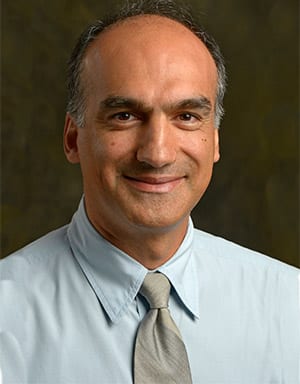
Dr. Daniel J. Hsu is a Professor of Computer Science at Columbia University, affiliated with the Foundations of Data Science Center and TRIPODS Institute. His research focuses on algorithmic statistics, machine learning theory, and their applications in public health informatics. He has advised numerous students and postdocs, and his work bridges foundational theory with practical systems like foodborne illness detection via social media analysis. Key roles: Associate Editor (ACM Transactions on Algorithms), Program Chair (ICML 2025, COLT 2019) Research areas: Foundations of Data Science, Machine Learning Theory, Fairness, and High-dimensional Statistics His work on detecting foodborne illnesses using Yelp reviews has been deployed by NYC Health departments. Recent contributions include advancements in transformer architectures, group fairness algorithms, and multi-group learning frameworks. Scientific awards include the Sloan Fellowship and multiple NSF grants. He has pioneered interactive machine teaching methods and developed algorithms for robust parameter estimation in high-dimensional settings.
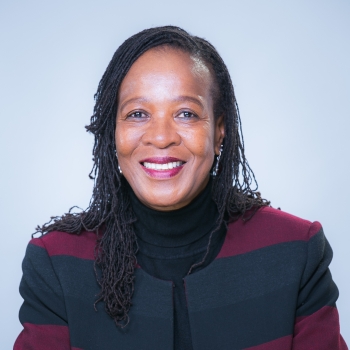
Teboho Moja is a Clinical Professor of Higher Education at New York University's Steinhardt School, holding concurrent roles as an Extraordinary Professor at the University of the Western Cape and a Visiting Research Fellow at the University of Pretoria. She has served as an Executive Director under President Mandela's administration, leading the National Commission on Higher Education, which shaped South Africa's post-apartheid reforms. Her research focuses on higher education policy, equity in education systems, and international development in Africa. She has been honored with the Martin Luther King Jr. Faculty Award and the National Research Foundation Lifetime Achiever Award, among others. Education: She holds an Honorary Doctorate in Education from the University of Pretoria (2020). Her academic contributions include over 50 peer-reviewed publications and keynote addresses at global conferences. She has advised governments and international bodies such as UNESCO and the Councils of Universities in South Africa. Research Interests: Dr. Moja's work emphasizes equitable access to education, international partnerships in higher education, and the role of philanthropy in African universities. She explores how global institutions influence policy reforms, particularly in transitional justice contexts and post-colonial education systems. Her recent publications analyze the relevance of university rankings in Africa and collaborative models between U.S. foundations and African institutions. Awards: Martin Luther King, Jr. Faculty Award (2019) National Research Foundation Lifetime Achiever Award (2019) Women in International Education Award (2019) Graduate Students Star Award (2019) Honorary Doctorate in Education (University of Pretoria, 2020) Advising and Grants: She has led national policy commissions, advised education ministers, and contributed to international bodies. Her work bridges academia and policy, with a focus on systemic reforms and inclusive education models. She has designed field-based courses on South Africa's educational reforms and global perspectives in Indian higher education. Professional Networks: She has held visiting professorships at the Universities of Oslo, Tampere, and Hong Kong. She chairs multiple international advisory boards and collaborates with global scholars on projects addressing equity and development in education.
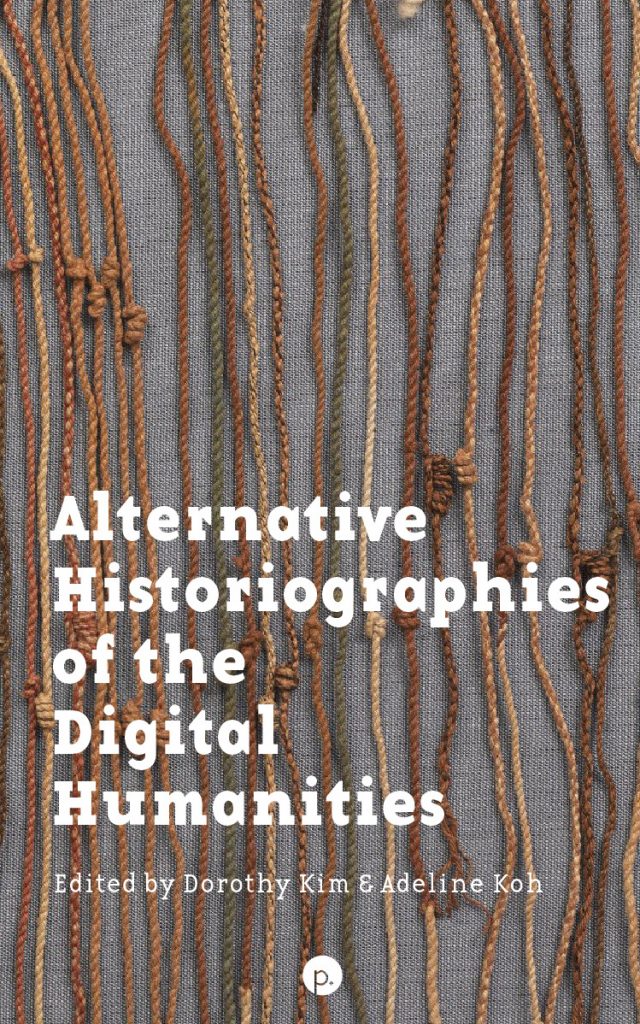
Dorothy Kim serves as Assistant Professor of English at Brandeis University with cross-appointments in the Department of Women's, Gender and Sexuality Studies and the Women's Studies Research Center. Her innovative scholarship bridges medieval literary studies, digital humanities, and critical race theory, examining how medieval history is weaponized by contemporary white supremacist movements and advocating for antiracist frameworks in academia. She earned her Ph.D. and M.A. from the University of California, Los Angeles and her B.A. from the University of California, Berkeley. Her educational trajectory reflects deep engagement with interdisciplinary approaches to literature and cultural studies. Kim's research centers on exposing the racialized foundations of medieval studies, particularly through projects analyzing digital white supremacy and medievalism's role in alt-right ideology. She pioneers methodologies connecting medieval women's literary cultures with contemporary trans feminism while interrogating Jewish/Christian difference in manuscript studies. Her work consistently challenges the field's historical whiteness and develops decolonial digital humanities practices. Her publication trends reveal a decisive shift toward critical race interventions in premodern studies, with increasing focus on database methodologies, sonic histories, and the material politics of medieval manuscript transmission. Recent works demonstrate how digital tools can either reinforce or dismantle racial hierarchies in academic knowledge production. Her distinguished honors include: 2023 Medieval Academy of America Article Prize in Critical Race Studies American Studies Association Digital Humanities Book Prize (2021) Society for Medieval Feminist Scholarship's Best Feminist Article Award (2021) AAUW Postdoctoral Fellowship (2018-2019) Folger Shakespeare Library Long-Term Fellowship (2025-2026) SSHRC, Ford Foundation, Fulbright, and Mellon fellowships Kim directs major collaborative projects including the NEH-funded An Archive of Early Middle English (161-manuscript database) and co-leads the Global Middle Ages Project. As co-director of RaceB4Race and the Reckonings Institute, she creates platforms for community archiving and social justice praxis. Her mentorship focuses on training students in critical digital methodologies through Brandeis' DH Lab while developing antifascist frameworks for humanities education. She currently leads the Brandeis University DH Lab housing her NEH project, co-edits Literature Compass's pre-1800 section, and develops two major book projects: Race, the Crusades, and the Katherine Group (based on her AAUW fellowship) and Music, Multimodal Manuscripts, and Remediating the Medieval Lyric for ArcPress.
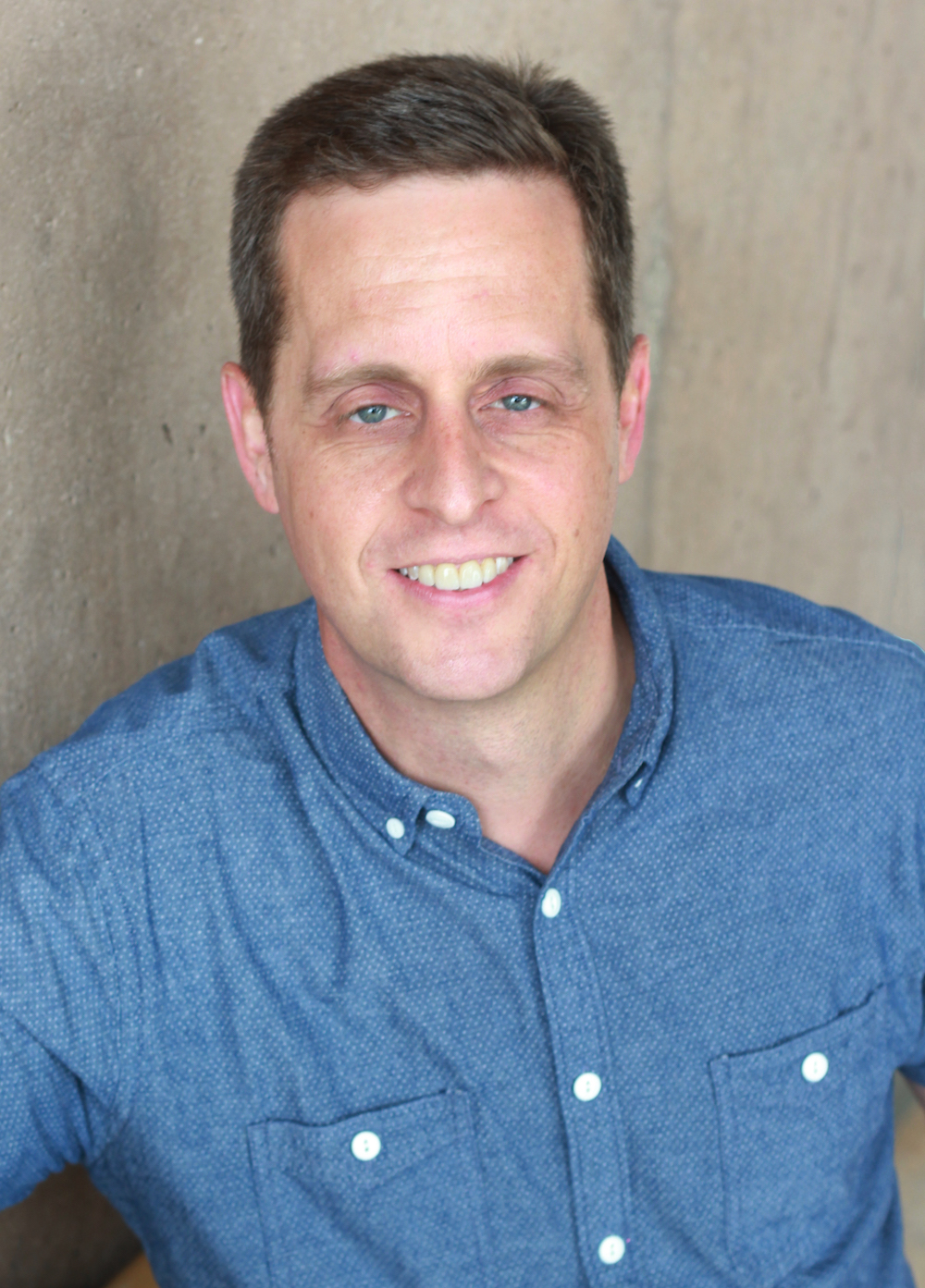
Shahram Ghiasinejad is a Senior Lecturer in the Department of Psychology at the University of Central Florida (UCF), affiliated with the College of Sciences. He joined UCF in 2007 and specializes in education technology, student engagement, and equity in academic settings. Dr. Ghiasinejad holds a B.A. in Computer Science from the University of Texas at Austin, and an M.S. and Ph.D. in Cognition and Neuroscience from the University of Texas at Dallas. Bachelor of Arts: Computer Science, University of Texas at Austin Master of Science: Applied Cognition and Neuroscience, University of Texas at Dallas Doctor of Philosophy: Cognition and Neuroscience, University of Texas at Dallas His research focuses on leveraging experimental and computational methods to understand human language comprehension, alongside innovative approaches to support underrepresented students through multimedia tools and undergraduate research initiatives. Recent work emphasizes equity and engagement in higher education, including strategies for transfer students and first-generation learners. Publications highlight themes such as JoVE video integration for marginalized students, the role of undergraduate research in fostering equity, and creative solutions for academic challenges faced by underrepresented groups. While no formal awards are listed, his work underscores a commitment to inclusive education and student success.
Erik B. Sudderth is a Professor of Computer Science and Statistics and Chancellor's Fellow at the University of California, Irvine (UCI). He leads the Learning, Inference, & Vision Group and directs multiple research centers, including the UCI Center for Machine Learning and Intelligent Systems and the HPI Research Center in Machine Learning and Data Science. He previously served as an Associate Professor at Brown University. Education: B.S. (summa cum laude) in Electrical Engineering from UC San Diego (1999), M.S. and Ph.D. in EECS from MIT (2002, 2006). His research focuses on statistical methods for scalable machine learning, Bayesian nonparametrics, probabilistic graphical models, and applications in computer vision, AI, and environmental science. Key areas include nonparametric clustering, deep generative models, and particle-based inference algorithms. Research interests span diverse topics: advancing Bayesian nonparametric models for medical time series, scalable variational inference, and AI ethics. Notable contributions include the NET-VISA seismic monitoring system (ISBA Mitchell Prize, 2014), the BNPy toolbox (NSF CAREER Award), and work on diverse particle max-product algorithms for continuous inference. Scientific awards include the NSF CAREER Award, ISBA Mitchell Prize, and recognition as one of "AI's 10 to Watch" (IEEE). He has served as editor for top journals (JMLR, IEEE PAMI) and conference chairs (NeurIPS, CVPR). His work bridges theory and practice, with applications in robotics, climate science, and healthcare. Labs/Teams: UCI Learning, Inference, & Vision Group; UCI Center for Machine Learning; CREATE Technology Center. Grants include NSF funding for visually impaired collaboration tools and soil biogeochemical modeling.
Dr Alison Powell is an Associate Professor in the Department of Media and Communications at the London School of Economics and Political Science (LSE), serving as Programme Director for the MSc Media and Communications (Data and Society). Her research focuses on technology design, public sector technology, and digital futures. She is known for her book Undoing Optimization: Civic Action in Smart Cities (2021) and her participatory research method, data walking. From 2019–2023, she directed the JUST AI network, supported by the Ada Lovelace Institute and UKRI, advancing AI ethics research. Her work integrates critical theory, participatory methods, and interdisciplinary collaboration. Education: PhD in Communication from Concordia University (Canada), MA in Media Studies from Toronto Metropolitan University, and postdoctoral research at the Oxford Internet Institute. Prior to academia, she worked in the film and TV industry. Research interests include civic engagement in data-driven governance, ethical AI, and participatory urbanism. She has advised projects like Africa Just AI and Operationalising Ethics for AI, funded by Horizon Europe, AHRC, and the Open Society Foundations. Her articles address topics such as AI governance, urban light ecology, feminist research praxis, and the ethical implications of technology for marginalized communities. She contributes to blogs like Media@LSE and leads initiatives at Polis and the LSE’s Digital Futures for Children project. Grants and collaborations include work with Projects by IF, Open Rights Group, and the Human Data Interactions Network (EPSRC). She explores intersections of technology, justice, and sustainability, emphasizing equitable and inclusive innovation.
Mallory Elizabeth SoRelle serves as the Tony & Teddie Brown Associate Professor at Duke University's Sanford School of Public Policy. Her research examines how public policies both stem from and perpetuate socioeconomic and political inequality in the U.S., with a focus on consumer financial protection and civil justice—issues critical to marginalized communities yet often neglected by welfare state scholars. Her academic credentials include: Ph.D. in Government, Cornell University (2016) M.A. in Government, Cornell University (2014) Master of Public Policy, Harvard University (2010) B.A. in Government, Smith College (2006) SoRelle's scholarly work centers on policy feedback effects, investigating how existing policies shape political behavior and future policy design. She analyzes consumer finance regulation, student debt relief, voting access reforms, and preemption politics, highlighting their disparate impacts on vulnerable populations and implications for democratic health. Her recent publications demonstrate a cohesive research agenda applying policy feedback theory across diverse policy domains. Key themes include the political consequences of financial regulation, the dynamics of student debt politics, and the erosion of voting rights, all examined through the lens of inequality and democratic participation. Dr. SoRelle holds the distinguished Tony & Teddie Brown Associate Professorship at Duke University. She is an active educator teaching courses such as The Political Economy of Policymaking and Public Policy, Political Power, and Social Change. Her research is supported by an NSF CAREER grant (2024-2029) investigating the political economy of fringe financial technologies and their impact on economic inequality.
Navid Azizan is the Alfred H. (1929) and Jean M. Hayes Career Development Assistant Professor at Massachusetts Institute of Technology (MIT), holding dual appointments in the Department of Mechanical Engineering (in Control, Instrumentation & Robotics) and the Schwarzman College of Computing's Institute for Data, Systems & Society (IDSS). He is also a Principal Investigator in the Laboratory for Information & Decision Systems (LIDS), and a faculty member of the MIT Statistics and Data Science Center, the Center for Computational Science and Engineering, and the Operations Research Center. Dr. Azizan received his PhD in Computing and Mathematical Sciences from the California Institute of Technology (Caltech) in 2020, his MSc in Electrical Engineering from the University of Southern California in 2015, and his BSc in Electrical Engineering with a minor in Physics from Sharif University of Technology in 2013. Prior to joining MIT, he completed a postdoc at Stanford University's Autonomous Systems Laboratory and was a research scientist intern at Google DeepMind. His research spans the intersection of machine learning, systems and control, mathematical optimization, and network science. Dr. Azizan's work focuses on developing principled learning and optimization algorithms for reliable intelligent systems, with applications to autonomy and sociotechnical systems. His research has significant implications for creating trustworthy AI systems that can operate effectively in complex, uncertain environments. Dr. Azizan's recent publications demonstrate a strong focus on uncertainty quantification, reliable AI systems, constrained optimization, and control-oriented learning. His work bridges theoretical foundations with practical applications, particularly in autonomous systems where safety and reliability are paramount. His research group has made notable contributions to areas including neural network verification, multi-agent reinforcement learning, and adaptive inference techniques for large language models, with several papers featured on MIT News and selected for oral presentations at top conferences. Alfred H. (1929) and Jean M. Hayes Career Development Professorship (2025-present) Frank E. Perkins Award for Excellence in Graduate Advising (2025) List of Outstanding Academic Leaders in Data from the CDO Magazine (2024, 2023) Amazon Science Hub Research Award (2023) Outstanding UROP Faculty Mentor (2023) Esther and Harold E. Edgerton (1927) Career Development Chair (2022-2025) Information Theory and Applications (ITA) Gold Graduation Award (2020) Dr. Azizan has been recognized for his excellence in graduate advising, receiving the Frank E. Perkins Award for Excellence in Graduate Advising in 2025. During the pandemic, he founded and co-organized the 'Control meets Learning' virtual seminar series, connecting researchers across disciplines. His work has attracted significant research funding from industry partners including Google, Amazon, and MathWorks, supporting both fundamental research and practical applications in reliable intelligent systems. The Azizan Lab at MIT brings together researchers from mechanical engineering, computer science, and applied mathematics to tackle challenges at the intersection of learning and control. The lab emphasizes both theoretical foundations and practical implementations, with a particular focus on developing algorithms that provide guarantees of performance and safety. Current research directions include uncertainty quantification in AI systems, constrained optimization for neural networks, and control-oriented learning for autonomous systems, with applications spanning robotics, transportation, and complex sociotechnical systems.
Shiri Azenkot is an Associate Professor at the Jacobs Technion-Cornell Institute at Cornell Tech and Cornell University, affiliated with the Information Science Department and Technion’s Computer Science Department. Her research focuses on accessibility innovations in emerging technologies, particularly addressing needs of people with vision impairments and neurodiverse populations. She holds a PhD from the University of Washington, advised by Richard Ladner and Jacob Wobbrock, and has been recognized with prestigious awards including the NSF Graduate Research Fellowship. Education: PhD in Computer Science & Engineering from University of Washington (advisors: Richard Ladner, Jacob Wobbrock). Research interests include VR/AR accessibility, assistive technology design, inclusive education tools, and ethical AI applications. Current projects explore social VR avatars for invisible disabilities, AR navigation aids, and AI moderation systems against ableist hate speech. Her work is funded by NSF, AOL, Verizon, and Facebook. Recent publications address video accessibility for ADHD users, AI-driven scene descriptions for blind users, and tactile learning materials co-designed with educators. She leads the XR Access initiative promoting inclusive virtual/augmented reality. Awards include the UW Graduate Medal (2020), NSF CRII Award (2017), and AT&T Labs Fellowship (2014). Her research bridges academic innovation with industry impact through collaborations with tech companies and disability advocacy groups.
Andreas Rietbrock is Professor and Director of the Geophysical Institute (GPI) at the Karlsruhe Institute of Technology (KIT) , Germany, where he also serves as Dean of Studies for Geophysics . He is a leading expert in earthquake seismology, seismic tomography, and subduction zone dynamics, with a strong focus on integrating advanced observational techniques and computational methods. Education: While specific degrees are not listed in the provided text, his extensive publication record and leadership roles indicate advanced academic training in geophysics and seismology. Research Interests: His work spans a wide range of topics including: Seismic imaging of subduction zones (e.g., Nazca, Lesser Antilles) Earthquake rupture dynamics and fault mechanics Volcanic seismology and magma transport Full waveform inversion and AI-enhanced seismic analysis Distributed Acoustic Sensing (DAS) applications Induced seismicity and reservoir monitoring Research Trends: His recent publications (2022–2025) emphasize the use of dense seismic arrays, AI-based data processing, and multi-method tomography to study complex tectonic environments. Key themes include high-resolution imaging of slab structures, fluid migration in subduction zones, and the integration of DAS and machine learning for seismic monitoring. Scientific Contributions: Andreas has led major international projects such as the ANTICS Large-N deployment in Albania and the VoiLA project in the Lesser Antilles. He has published extensively in top-tier journals like Nature , Geophysical Research Letters , and Journal of Geophysical Research , with over 200 peer-reviewed articles. Teaching and Supervision: He teaches courses such as "Introduction to Geophysics II", "Seismology", and "Current Topics in Seismology and Risk". While specific student names are not listed, his role as Dean and principal investigator on numerous projects indicates active supervision of graduate students and postdocs. Labs and Teams: He leads the seismology group at GPI, coordinating large-scale deployments of seismic instruments, including ocean-bottom seismometers and fiber-optic DAS systems. His team collaborates globally with institutions in Europe, South America, and Asia.
Professor Eugene O'Brien serves as Professor of Civil Engineering within the School of Civil Engineering at University College Dublin's College of Engineering and Architecture. His research focuses on critical structural assessment methodologies for long-span bridges, with particular expertise in traffic load modeling and bridge safety evaluation. His research interests center on structural engineering challenges related to bridge infrastructure, specifically traffic load assessment for long-span bridges , structural health monitoring systems , and sustainable infrastructure management . Professor O'Brien pioneered camera-based monitoring techniques to overcome limitations of traditional Weigh-in-Motion sensors during congested traffic conditions, enabling more accurate safety assessments of aging bridge infrastructure. His work addresses the critical gap in quantifying traffic loading on bridges with spans up to 2 kilometers, where conventional methods fail during stop-and-go traffic scenarios. Analysis of his 15 most recent publications reveals a consistent research trajectory focused on probabilistic modeling of traffic loads, with increasing sophistication in handling extreme events and long-term infrastructure performance. His work spans fundamental statistical methods for load effect prediction, practical applications in real-world bridge assessments, and environmental considerations regarding infrastructure carbon footprints. The research demonstrates strong methodological evolution from basic traffic modeling to comprehensive lifetime assessment frameworks incorporating sustainability metrics. As co-founder and director of Roughan O'Donovan's subsidiary Innovative Solutions (ROD-IS), Professor O'Brien has translated research into practice through significant projects including the Malahide Railway Viaduct assessment (2009), EU-funded bridge lifespan simulation tools (2011), vibration reduction systems for bridge cables, and structural assessments for major international projects including the Ting Kau Bridge in Hong Kong, the Forth Road Bridge in Scotland, and the Chacao Channel Bridge in Chile. His consultancy work demonstrates direct application of academic research to critical infrastructure challenges worldwide. Professor O'Brien's research group operates at the intersection of structural engineering and sustainable infrastructure management, with particular emphasis on extending bridge service life through accurate safety assessment. Their work on the Chacao Channel Bridge demonstrates practical implementation of traffic monitoring systems using toll data to manage truck loads, while their environmental impact analysis shows how accurate safety assessments reduce unnecessary bridge replacements, thereby lowering the carbon footprint of transportation infrastructure through extended service life of carbon-intensive materials like concrete and steel.
Leif Eriksson is a Professor at Chalmers University of Technology , specializing in Radar Remote Sensing within the Department of Space, Earth and Environment . His career at Chalmers began in 2004, and he was promoted to Professor in 2022 after serving as Group Leader (2012–2017) and Head of Faculty Assembly (2017–2020). His research focuses on developing advanced methods for environmental monitoring using radar data, particularly synthetic aperture radar (SAR) from satellites and aircraft. Leadership Roles: Group Leader (Radar Remote Sensing), Faculty Assembly Head Key Collaborations: Rymdstyrelsen, EU Horizon, VINNOVA, European Space Agency Research Interests : Dr. Eriksson’s work spans forest biomass estimation , sea ice dynamics , and ocean surface current/wind retrieval . He integrates SAR data with in situ observations and climate models to study: Forest degradation (clear cuts, storm damage) via multi-temporal SAR Sea ice concentration, drift patterns, and thickness in Arctic regions Wind vectors and surface currents using interferometric SAR techniques Applications for maritime navigation safety and polar shipping optimization Article Trends : His recent publications emphasize SAR’s role in transport infrastructure monitoring (e.g., Iron Ore Line degradation), pan-Arctic landfast ice stability , and multi-frequency SAR fusion for enhanced sea ice observations. Collaborative work with teams across Europe and the U.S. highlights interdisciplinary approaches to climate and marine research. Projects & Grants : Dr. Eriksson leads or contributes to projects such as: CAISA (2022–2024): Air-ice-sea data assimilation EONav (2016–2019): Copernicus data for maritime navigation SEDNA (2017–2020): Safe Arctic shipping Forest Biomass Monitoring (2017–2018): Spaceborne SAR applications His work is supported by Rymdstyrelsen, EU Horizon, and industry partners like Trafikverket. Labs & Teams : He is central to the Radar Remote Sensing Group at Chalmers, collaborating with institutions like Lund University and international bodies such as ESA. His research often involves satellite campaigns (e.g., TanDEM-X, Sentinel) and field studies in polar regions.
Meng Wu is an Assistant Professor in the School of Electrical, Computer and Energy Engineering (ECEE) at Arizona State University, specializing in advanced optimization, control, and machine learning methods for integrating distributed energy resources (DERs) into power systems. Her work addresses critical challenges in power system planning, operations, stability, and electricity markets under high DER penetration. Education: Ph.D. in Electrical and Computer Engineering, Texas A&M University, 2017 M.Eng. in Electrical and Computer Engineering, Cornell University, 2011 B.Eng. in Electrical Engineering & Automation, Tianjin University, China, 2010 Research Interests: Dr. Wu's research focuses on DER integration through transmission-distribution coordination , spatio-temporal price forecasting , and optimal market participation strategies. Key areas include: Physics-guided machine learning for DER-penetrated distribution systems Computational algorithms for wholesale-distribution market coordination Dynamic modeling of DERs and composite loads for voltage stability Optimal bidding strategies for energy storage and DER aggregators Publication Trends: Her 2021-2024 publications reveal a concentrated effort on DER market integration using parametric programming and deep learning, with emphasis on real-time locational marginal price forecasting, transmission-distribution coordination, and degradation-aware energy storage operations. Scientific Awards: Best Paper Award, IEEE PES General Meeting (2021) Best Conference Paper Award, North American Power Symposium (2019) Invited Participant, US Frontiers of Engineering Symposium, NAE (2021) Advising and Grants: Dr. Wu mentors multiple PhD and Master's students, including recent graduates Zhongxia Zhang (PhD) and Sayyid Mohssen Sajjadi (MS). Her group secured PSERC funding for projects on DER aggregation and adaptive transmission-distribution modeling, with industry partnerships at ISO New England and Quanta Technology. Research Group: Leading an active research team at ASU, she collaborates with the Power Systems Engineering Research Center (PSERC) on DER integration challenges, advising students through FURI, MORE, and Barrett Honors College programs.
Heewon Chang, Ph.D., is a Professor and Chair in the PhD in Organizational Leadership Department at Eastern University's College of Business and Leadership. She specializes in autoethnography and qualitative research methods, with notable works including Autoethnography as Method (2008). Her research focuses on multicultural education, leadership development, and collaborative learning within marginalized communities. Dr. Chang has contributed to advancing methodologies like Collaborative Autoethnography (CAE) and the Transformative Autoethnography Model (TAM). Her academic journey includes an MA in Education and Anthropology from the University of Oregon (1984) and Pennsylvania Elementary Teaching Certification (2000). She has served in leadership roles, emphasizing equity and inclusion in higher education. Her work bridges personal narratives with sociocultural analysis, impacting fields like organizational behavior and pedagogy. Key research themes include BIPOC doctoral student experiences, online leadership program efficacy, and systems thinking in education. Dr. Chang’s publications span journals and edited volumes, reflecting her commitment to democratizing knowledge through participatory research. She has also contributed to journal editing and community service, advocating for educational equity and mentorship for underrepresented scholars.
Professor Shani Orgad is a leading academic in the Department of Media and Communications at the London School of Economics (LSE), where she holds the rank of Professor. Her research focuses on gender, feminism, media representations, and globalization, with notable works exploring motherhood, work-life balance, and the intersection of media with contemporary cultural narratives. Education: Orgad earned a bachelor’s degree in Media and Communications from The Hebrew University in Jerusalem, followed by a Master's and PhD in Media and Communications at LSE. She is renowned for her interdisciplinary approach, blending media studies with ethnographic research and sociocultural analysis. Research Interests: Her work critically examines media discourses around gender, motherhood, and inequality. Key themes include the 'confidence culture' critique, menopause visibility, and the role of media in shaping public perceptions of marginalized groups. She has also explored humanitarian communication and the challenges faced by NGOs in engaging the public. Awards: Orgad has been recognized for her teaching excellence, including the 2019 LSE Teaching Excellence Prize and the 2018 LSE Excellence in Education Award. Her book Confidence Culture (2022), co-authored with Rosalind Gill, challenges neoliberal individualism in modern feminist discourse. Public Engagement: She frequently contributes to public discussions on media and gender through blogs, podcasts, and media commentaries. Her work bridges academic rigor with societal relevance, addressing issues like pandemic resilience, menopause discourse, and the impact of social media on self-perception. Current Projects: During the 2024/25 academic year, Orgad is on research leave, focusing on new projects that continue her exploration of media, gender, and cultural dynamics.