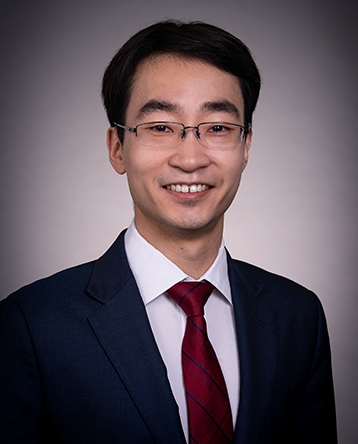
Alexis Blanchet is a Professor at the Université Sorbonne Nouvelle, holding the rank of Maître de conférences Hors Classe since 2022. He serves as Deputy Director of the Cinéma et Audiovisuel department and directs the university's vidéoludothèque. His research focuses on the economic and cultural history of the video game industry in France, intersections between cinema and digital media, and interactive narrative forms. Key roles: Member of IRCAV research institute, former director of the CAV master's program. Research interests include game studies, transmedia storytelling, and media industries analysis. Published extensively including Une Histoire du Jeu Vidéo en France and Lire les Magazines de Jeux Vidéo . Active in academic governance and public outreach through conferences, media appearances, and collaborative projects.
Professor Dr. Michael Woywode is a full professor and holds the Chair of SME Research and Entrepreneurship at the University of Mannheim , within the Business School . His research and teaching are embedded in the Institute for SME Research and Entrepreneurship (ifm Mannheim) , a central research institute of the university, and the Mannheim Center for Entrepreneurship and Innovation (MCEI) , which offers entrepreneurship courses university-wide. Research Interests: Family Firms: Succession planning, leadership transitions, and post-succession innovation. Entrepreneurship: Founder behavior, startup ecosystems, and entrepreneurial decision-making. Digitalization in SMEs: Competitiveness, digital transformation, and innovation in small and medium-sized enterprises. Self-Employment & Labor Markets: New forms of self-employment and their societal implications. Teaching: Prof. Woywode teaches across Bachelor’s, Master’s, and Doctoral levels, offering courses such as Strategic and International Management , Introduction to Entrepreneurship , and Managing the Family Business . Research Output: His recent publications span high-impact journals including Organization Science , Family Business Review , and Journal of Small Business Management , with a clear focus on entrepreneurship, family business, and institutional theory. Team & Collaboration: He leads a multidisciplinary team including postdocs, PhD candidates, and research associates, working closely with the MCEI and ifm Mannheim to foster entrepreneurship research and education.
Christian Poellabauer is a Professor at Florida International University (FIU) in the Knight Foundation School of Computing and Information Sciences, serving as Interim Associate Dean for Research and Graduate Studies in the College of Engineering & Computing. He holds a Ph.D. from Georgia Institute of Technology (2004) and a Diplom-Ingenieur from TU Vienna (1998). His research focuses on mobile sensing, data analytics, and healthcare technologies, leading the MOSAIC Lab which develops solutions for healthcare, IoT, and smart cities. He previously led the Mobile Computing Lab at the University of Notre Dame and held leadership roles in data science institutes. Research Interests: His work spans digital biomarkers for neurodegenerative diseases, speech analysis for mental health, wearable device authentication, and wireless sensor networks. The MOSAIC Lab addresses challenges like real-time sensor data analysis on constrained devices and translating insights into clinical applications. Teaching: He has taught courses on Operating Systems, Mobile Computing, and Smart Health at both FIU and Notre Dame. Recent courses include COP4610 (Operating Systems Principles) and COP5614 (Graduate Operating Systems) at FIU. Service: He serves as Associate Editor for IEEE Transactions on Network Science and Engineering, and has organized conferences like ICNC 2023 and IEEE MASS 2021. His academic service includes roles on editorial boards and technical program committees for major conferences in distributed computing and networking. Advising & Labs: Advises current Ph.D. students in areas like multi-modal sensing for affective computing and mental health crowdsensing. Past students have pursued roles in academia and industry (e.g., Rose-Hulman Institute of Technology, Facebook, Microsoft). The MOSAIC Lab collaborates on projects like digital clinical outcome assessments and motor impairment detection.
Dr. Thomas E. Doyle is an Associate Professor at the McMaster School of Biomedical Engineering and the Department of Electrical & Computer Engineering at McMaster University. His research focuses on biomedical signal processing, human-computer interfacing (HCI), and machine learning applications for healthcare augmentation, rehabilitation, and enhancement. He holds a Ph.D. from Western Ontario, Canada, and teaches courses like COMPENG 2DI4 (Logic Design). His work bridges cybernetics and clinical applications, emphasizing AI-driven solutions for medical diagnostics, patient monitoring, and space exploration. Education: B.E.Sc, B.Sc, M.E.Sc, Ph.D. from Western Ontario, Canada Recent Projects: Developed AI systems for remote healthcare diagnostics (2023) Collaborated with NASA on medical emergency simulators for deep space missions (2017–2023) Led ventilator development efforts for local hospitals during the pandemic (2020) His research interests span machine learning for mental health diagnostics, trust quantification in medical AI, and extended reality (XR) for medical training. He emphasizes interdisciplinary approaches, integrating computational methods with healthcare challenges. Recent publications highlight applications in pediatric emergency care, chronic pain management, and reliable medical device design. Dr. Doyle actively engages in educational initiatives, including first-year engineering pedagogy and experiential learning programs. He has received funding for projects such as the Educating the Engineer of 2025 (EtE-25) awards and contributes to initiatives like the Digital & Smart Systems and Health & Bio-innovation research clusters at McMaster.
Sarah Sharma is a Professor of Media Theory at the University of Toronto’s Faculty of Information and Director of the Institute of Communication, Culture, Information and Technology (ICCIT). Her work interrogates intersections of technology, temporality, and labor through a feminist lens. She has held leadership roles in the McLuhan Centre (2017–2022) and is recognized for advancing critical media theory. Research focuses include: • Temporality’s role in cultural politics • Feminist reimaginings of McLuhan’s media theory • Digital platforms’ socio-political impacts • Labour dynamics in gig economies (e.g., TaskRabbit). Her upcoming book Insufferable Tools: Big Tech and the Broken Machine critiques tech industry failures. Key achievements: • 2024 Desmond Morton Research Excellence Award • 2014 NCA Critical Cultural Book of the Year for In the Meantime: Temporality and Cultural Politics . Her edited volume Re-Understanding Media (2022) exemplifies feminist extensions of media theory. Recent engagements include keynote addresses at the Canadian Communication Association (June 2025) and University of Michigan’s Digital Ideas Workshop (June 2025). She critiques ‘accelerationist’ narratives about technology and advocates for rethinking media through marginalized perspectives.
Prof. Alexander Pretschner is a Professor of Software & Systems Engineering at the Technical University of Munich (TUM) and Founding Director of the Bavarian Research Institute for Digital Transformation (bidt). He also serves as Scientific Director of fortiss, a Bavarian research institute for software-intensive systems. His research focuses on software engineering, testing, information security, and ethical software development. Pretschner holds a PhD from TUM and has held academic positions at Karlsruhe Institute of Technology (KIT) and TU Kaiserslautern. He is a co-editor of several prestigious journals, including IEEE Transactions on Reliability and the Journal of Software Testing, Verification and Reliability. Education: PhD in Computer Science, Technical University of Munich MSc in Computer Science, University of Kansas (on Fulbright Scholarship) Diplom in Computer Science, RWTH Aachen University Research Interests: His work spans testing methodologies, secure software design, and ethical considerations in agile development. Notable contributions include frameworks for metamorphic testing, distributed data usage control, and accountability mechanisms for cyber-physical systems. Awards: IBM Faculty Award (2012, 2013) Google Focused Research Award (2011, 2012) EARTO Innovation Prize (2014) 2nd Platz Supervisory Award (2020) Advising & Grants: Pretschner has supervised numerous PhD and Master’s students, contributing to over 200 publications. He leads projects like EDAP (Ethical Deliberation in Agile Processes) and collaborates with industry partners on cybersecurity and AI ethics initiatives. Labs & Teams: His work is anchored in bidt, fortiss, and TUM’s Chair of Software & Systems Engineering, focusing on societal impacts of digitalization and trustworthy AI systems.
Prof. Jochen Hartmann holds the Digital Marketing professorship at the TUM School of Management (Munich). Previously, he was an assistant professor at the University of Groningen's School of Business and Economics and worked as a management consultant at McKinsey & Company. He earned his doctorate from the University of Hamburg and coordinated the DFG research group FOR 1452 (2019-2022). His research focuses on digital marketing and machine learning, particularly analyzing unstructured data (computer vision, NLP) and generative AI. Key themes include social media, algorithmic fairness, diversity in advertising, and human-machine interactions. Education: Ph.D. in Business Administration (University of Hamburg), Management Consulting experience at McKinsey & Company. Research interests combine cutting-edge AI techniques with marketing challenges. Recent work explores generative AI's impact on advertising, algorithmic bias in finance, and visual search innovations. His text/image mining studies rank among top-cited articles in marketing journals like the International Journal of Research in Marketing and Journal of Marketing Research. Awards include the EMAC-Sheth Sustainability Award, Lindau Nobel Laureate Meetings' Young Economist distinction, and multiple best dissertation awards. Grants: Led DFG-funded research group (2019-2022). Affiliated with Columbia Business School (visiting scholar) and Mannheim Business School (lecturer in machine learning). Labs/Teams: Active in interdisciplinary research groups focusing on AI applications in marketing and business analytics.
Dr. Harry T. Conway is the Alternate Permanent Representative of Liberia and Chair of the Marine Environment Protection Committee (MEPC) at the International Maritime Organization (IMO). He leads global maritime environmental policy initiatives, including the 2023 IMO GHG Strategy. His academic affiliations include guest lecturing at the International Maritime Law Institute's special course on marine environmental protection and opposing a WMU PhD candidate's thesis. Education: PhD in Politics and International Relations (Cardiff University, UK), MA (Distinction) in International Maritime Policy (University of Greenwich, UK), and MBA (Hanze University of Applied Sciences, Netherlands). His research focuses on environmental politics, with emphasis on climate agreements and maritime decarbonization. Professional Experience: Policy Officer and Officer-in-Charge of Liberia's IMO Permanent Mission (2012–present), Chief of Staff at Liberia Maritime Authority (pre-2012), and finance roles in Liberian banking institutions. He contributed to the 2050 Africa Integrated Maritime Strategy for the African Union and serves on the International Quality Assessment Review Body (IQARB). Publications include contributions to 'The African Union and the Law of the Sea' and peer-reviewed articles on maritime innovation and decarbonization. He frequently speaks at international shipping conferences and advises on maritime regulatory frameworks.
Beth St. Jean is an Associate Professor and Faculty Director of the Carillon Community in Health Justice at the University of Maryland’s College of Information Studies (College Park). She holds a PhD and MS in Information from the University of Michigan School of Information and a BA in Mathematics from Smith College. Her research focuses on improving health outcomes through understanding health-related information behaviors, health literacy, and self-efficacy. She co-authored Understanding Human Information Behavior (2021) and leads projects like HackHealth to enhance youth health literacy. Education: PhD in Information, University of Michigan School of Information (2012) MS in Information (LIS), University of Michigan School of Information (2006) BA in Mathematics, Smith College (1988) Research Interests: Health informatics, health justice, consumer health information behavior, health literacy, youth digital practices, and information literacy. Her work emphasizes addressing health disparities through information access and education. Recent Research Trends: Her publications explore topics like long-haulers’ information needs (2024), pandemic-era health justice (2023), and social media’s role in predicting health disparities (2022). She also investigates patient-generated health data challenges (2022) and library roles in promoting health equity (2020). Awards and Recognition: ASIS&T SIG-USE Innovation Award (2017) ACM SIGCHI Excellent Reviewer (2017) ALISE/LMC Paper Award (2015) Beta Phi Mu/LRRT Research Award (2014) Teaching and Grants: Teaches courses on information behavior, research methods, and consumer health informatics. Co-PI on grants like HackHealth 2.0 (NIH, $123K) and youth health literacy initiatives ($68.5K). Also serves as Assistant Director of the Information Policy & Access Center and Senior Fellow at CASCI. Labs and Initiatives: Leads the Carillon Community in Health Justice and collaborates on projects like the HackHealth after-school program to engage disadvantaged youth in health entrepreneurship.
Hanna Halaburda is an Associate Professor of Technology, Operations, and Statistics at the Leonard N. Stern School of Business, New York University, where she joined in 2019. Her research lies at the intersection of economics, technology, and digital platforms, with a strong focus on blockchain, cryptocurrencies, and platform competition. She has published extensively in top academic journals and co-authored the seminal book Beyond Bitcoin: The Economics of Digital Currencies . PhD in Economics, Northwestern University MA in Economics, Warsaw School of Economics MA in Philosophy, Warsaw University Her research interests center on the economic implications of digital transformation. She investigates how blockchain technology reshapes trust, governance, and competition in digital markets. Her work explores token design, consensus mechanisms, smart contracts, and the strategic use of decentralization in platforms. She also studies platform competition under network effects, consumer choice, and omnichannel marketing. A recurring theme is how digital technologies alter traditional economic forces and business models. The most recent articles show a strong trend toward analyzing the governance, security, and economic design of blockchain systems. Her work combines rigorous theoretical modeling with empirical insights, often applying game theory and industrial organization frameworks. Topics include permissioned vs. permissionless blockchains, the role of cryptographic tokens in coordination, and the macroeconomic implications of digital currencies. She also contributes to debates on Web3, AI, and the future of digital platforms. Scientific awards and recognitions include: ISR Best Paper Published in 2022 Runner-Up Lead article in RAND Journal of Economics Best Paper Award at Tokenomics 2023 Best Paper Award at WISE 2023 Best Paper Finalist at WISE 2022 and WISE 2021 Hanna Halaburda has advised and collaborated with numerous researchers and institutions. Her co-authors include leading scholars from Harvard, NYU, and international universities. She has received research recognition through best paper awards and invitations to contribute to high-impact journals and policy discussions. Her work has been supported by academic and policy institutions, including the Bank of Canada, where she previously served as a senior economist. She frequently publishes in both academic and practitioner outlets, including Harvard Business Review and Nature Human Behavior , indicating strong translational impact. She is actively involved in research teams focused on digital assets, blockchain governance, and platform economics. While no formal lab is mentioned, her extensive list of working papers and collaborations suggests leadership in a dynamic research group at NYU Stern. Her recent work on DAOs, public crypto mining firms, and CBDCs indicates ongoing, forward-looking research programs with real-world policy and business implications.
Sarah Woolf-King is an Assistant Adjunct Professor in the Department of Medicine at the University of California, San Francisco (UCSF), School of Medicine. She is a licensed clinical psychologist (CA PSY28178) whose research bridges psychology and health, with a strong focus on substance use, HIV, and mental health in families affected by congenital heart defects. Her educational background includes a B.S. in Psychology from Arizona State University (2002), an M.S./Ph.D. in Clinical Psychology from Syracuse University (2010), an M.P.H. in Epidemiology from UC Berkeley (2011), a clinical internship in Behavioral Medicine at VA Palo Alto (2010), and a T32 Postdoctoral Fellowship at UCSF’s Center for AIDS Prevention Studies (2013). Dr. Woolf-King’s research centers on two primary areas: (1) the impact of alcohol use on HIV treatment and prevention, particularly among HIV-positive men who have sex with men (MSM) and in East African populations, and (2) the mental health needs of parents of children with critical congenital heart defects (CHD). Her work employs diverse methodologies, including daily data collection, qualitative interviews, randomized trials, and biomarker validation (e.g., PEth). She aims to develop integrated behavioral interventions to improve health outcomes for individuals and families coping with chronic illness. Her recent publications (2023–2025) reflect a consistent focus on alcohol use in the context of HIV, with studies on counseling interventions, digital screening, remote biomarker collection, and behavioral mechanisms. There is also growing attention to mental health in vulnerable populations, including college students and parents of children with genetic or cardiac conditions. Her work is increasingly interdisciplinary, combining psychology, epidemiology, public health, and global health. Scientific Awards: Hellman Fellow, Hellman Fellows Fund (2015–2017) Mentored Research Scientist Development Award (K01), NIH/NIAAA (2013–2018) Loan Repayment Program in Clinical Research, NIH/NIAAA (2011–2016) Ruth L. Kirschstein National Research Service Award (F31), NIH/NIAAA (2008–2010) Mentored Scientist Award in HIV/AIDS, UCSF CFAR (2012–2014) Dr. Woolf-King has served as Principal Investigator on NIH-funded projects, including an R34 grant for a brief ACT intervention for HIV-positive hazardous drinkers and a K01 grant on alcohol and sexual risk behavior. She collaborates extensively with researchers at UCSF and in East Africa, particularly Uganda. While her adjunct title suggests a part-time or non-tenure-track role, she maintains an active research program with significant grant support and a robust publication record. There is no indication of retirement or former staff status.
Patrick Le Galès is a CNRS Research Professor at Sciences Po's Centre for European Studies and Comparative Politics (CEE), where he contributes to research on urban governance, public policy, and European political sociology. He was the founding Dean of the Sciences Po Urban School (2015–2022) and remains an active faculty member, teaching and leading research groups on urban transformation and state restructuring. His research interests span urban sociology, comparative public policy, political economy, and the governance of European cities. He investigates themes such as financialization of housing, digital cities, urban inequalities, and the reconfiguration of the modern state. His work combines sociological and political science approaches to analyze how cities and states adapt to economic and social change. The 15 most recent publications reflect a consistent focus on urban governance, state transformation, and European integration. These works span subfields including smart cities, policy instruments, metropolitan conflict, and institutional change, with keywords in political science, sociology, and urban studies. His research often adopts a comparative framework across European and global cities. Fellow of the British Academy (FBA) Member of Academia Europaea CNRS Silver Medal (2018) Stein Rokkan Prize (2002) Regional Studies Association Best Paper Award (2017) CNRS Bronze Medal (1996) GRALE CNRS Prize (1991) Mattei Dogan Foundation Award of Excellence (2007) Le Galès has supervised numerous PhD candidates and junior researchers, though specific advisees are not listed. He has led and participated in multiple funded research projects, including European, national, and international contracts. He has served on ERC panels and editorial boards of leading journals such as British Journal of Political Science , Socio-Economic Review , and European Urban and Regional Studies . He co-edits book series on Governance (Presses de Sciences Po) and Urban and Social Change (Wiley/Blackwell). He is involved in the 'Cities are back in town' and 'Restructuring the state' research groups at the Centre for European Studies and Comparative Politics. He also contributes to the Transversal Seminars and thematic seminar series on urban and policy transformations. His ongoing project LAC-EU (2024–2028) explores Latin American challenges in the 21st century, expanding his comparative urban research globally.
Jesse Schotter is an Associate Professor of English at Ohio State University and a faculty member in the Film Studies Program. His academic work bridges literary scholarship and creative writing, with a focus on twentieth-century literature and media studies. He holds a PhD from Yale University (2011) and a BA from Yale (2003). PhD, Yale University, 2011 BA, Yale University, 2003 Schotter specializes in modernist literature and culture, film theory, and media histories of the twentieth century. His research explores the intersections between traditional literary forms and emerging media technologies, particularly examining how debates about ancient media like Egyptian hieroglyphics influenced twentieth-century understandings of new media such as film and phonography. He investigates how literary modernism engages with questions of media transitions, narrative form, and cultural memory across different historical contexts. His scholarly output reveals consistent engagement with media theory, adaptation studies, and modernist experimentation. Schotter's work demonstrates how literary texts negotiate technological change, with particular attention to narrative structure across different media forms. His publications span traditional academic journals like Genre and James Joyce Quarterly to more accessible venues like Full Stop and Electric Lit , showing his commitment to reaching both academic and public audiences. Finalist, Modernist Studies Association First Book Prize Schotter teaches a diverse range of courses including modernism and media, silent film, ghosts and trauma, contemporary British fiction, introductory film studies, children's fantasy literature and video games. He co-organized the Modernist Studies Association Conference in Columbus in 2018, demonstrating active engagement with the broader academic community. His teaching philosophy appears to integrate his research interests, connecting historical literary forms with contemporary media experiences for students. Schotter maintains an active presence both in academic scholarship and creative writing, with fiction published in literary journals. His work demonstrates the productive tension between scholarly analysis and creative practice, with his research on media history informing his creative writing and vice versa.
Ding Zhao is an Associate Professor in Mechanical Engineering at Carnegie Mellon University (CMU), with cross-appointments in Computer Science, Robotics Institute, CyLab Security & Privacy Institute, and Scott Institute for Energy Innovation. He directs the CMU Safe AI Laboratory, pioneering research in trustworthy AI for autonomous vehicles, robotics, and healthcare. His work emphasizes robustness, safety, and ethical deployment of AI systems. Education: • Ph.D. in Mechanical Engineering, University of Michigan (2016) • B.S. in Automotive Engineering, Jilin University (2010) Research Interests: Zhao's lab bridges machine learning theory and engineering to develop AI for high-stakes applications. Key areas include: trustworthy AI generalization, safety-critical decision-making, generative AI for digital twins, and physical AI in mobility/healthcare. His long-term mission is to create "trustworthy AI generalists" deployable in real-world critical systems. Awards & Honors: NSF CAREER Award MIT Technology Review 35 under 35 China IEEE George N. Saridis Best Paper Award Ford/Carnegie-Bosch/Toyota Industrial Fellowships Qualcomm Innovation Award Advising & Grants: He mentors 13+ PhD and 30+ Master’s students, with alumni at NVIDIA, Meta, Stanford, and Tsinghua University. His lab collaborates with Google, Amazon, Ford, Mayo Clinic, and received grants from NSF, DOT, Rolls-Royce, and Bosch. Courses taught include Trustworthy AI and Modern Control for Robotics . Lab & Projects: The Safe AI Lab develops: Safe Robotic Foundation Models (LocoMan), generative AI for autonomous driving (SafeBench), cardiac diagnostics (Heart-2), multi-agent safety systems, and robotic tool innovation (RoboTool). Projects target landslide monitoring, AV safety with Pittsburgh, and energy grid resilience.
Sandro Zanetti, Full Professor of General and Comparative Literature at the University of Zurich's Faculty of Arts and Humanities, specializes in avant-garde research, artistic production processes, and poetics of (im)probability. He studied German, History, and Philosophy at Basel, Freiburg, and Tübingen (1993-1999), earned his PhD in 2005 at Basel's SNSF project, and held positions including Junior Professor at Hildesheim (2008-2011) and DFG network head (2010-2014). Since 2011 at UZH, he progressed from Assistant to Full Professor (2022) and serves as Co-Dean of Studies since 2021. Current affiliations: Department of General and Comparative Literature (UZH), Center for Arts and Cultural Theory (ZKK), Literary Radio Zurich Former roles: ZGW Center (2010-2022), SNF project leader (2015-2019), Co-editor of History of the Present (2016-present) His research explores: Avant-garde genealogies and postwar literary modernity Time perception and aesthetic temporality Writing as cultural technique Interdisciplinary intersections with philosophy, media studies, and art Publications reveal trends in: 2022-2024: Dada historiography, AI-generated literature, Paul Celan's late works 2019-2021: Aesthetic theory, transactuality, Barthesian concepts 2014-2017: Improvisation networks, multilingualism, collaborative writing He co-founded interdisciplinary platforms and maintains editorial roles across 15 anthologies since 2004.