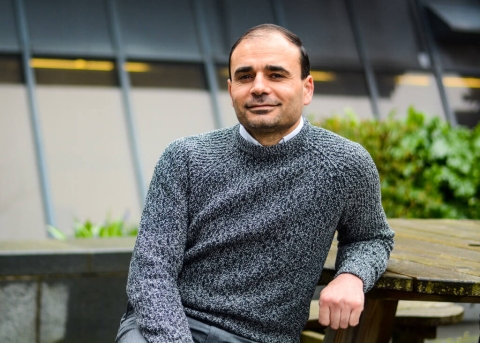
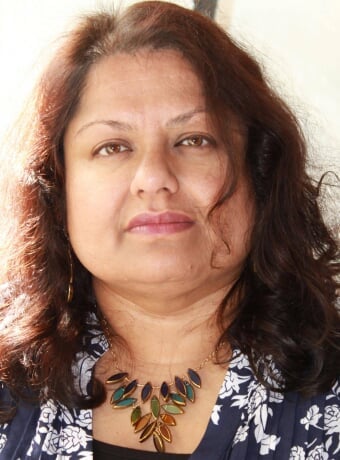
Andrea Appolloni is an Associate Professor at the Department of Management and Law, University of Rome Tor Vergata. His academic career focuses on Management with emphasis on Sustainable Supply Chain Management , Digital Transformation , and Circular Economy . His research explores the intersection of technological innovation and sustainability, particularly through topics like AI in Logistics , Green Procurement , and Policy Optimization . Publications span both theoretical frameworks and empirical studies in China, Italy, and Malaysia, with a strong focus on environmental impact and organizational performance. Recent work includes digital twin applications for human-AI collaboration, blockchain integration in sustainable supply chains, and analyzing barriers to circular economy adoption. His 15 most recent articles (2025-2022) demonstrate a trend toward combining Artificial Intelligence , Operations Management , and Environmental Governance .
Hanne Leth Andersen is the Rector of Roskilde University and a Professor of University Pedagogy. She holds a PhD and has extensive experience in higher education leadership, including roles as director of the Centre for Teaching Development at Aarhus University and director of the Learning Lab at Copenhagen Business School. Her research focuses on foreign language didactics, university pedagogy, educational quality, and innovative teaching methods. Education: PhD in University Pedagogy. Previous academic positions include Professor of University Pedagogy at Aarhus University and Copenhagen Business School. Research interests emphasize exam form innovations, teaching development, language learning methodologies, and the role of foreign languages in education. She advocates for educational quality and pedagogical strategies to enhance student learning environments. Key awards include Chevalier de l'Ordre de la Légion d'Honneur (France), Commandant of the Ordre des Palmes Académiques (France), and Dannebrog Order (Denmark). Notable contributions include developing teacher training programs and advising on educational policies in Norway, Sweden, Finland, and France. Advising and grants: Pioneered collegial supervision methods for teacher competence development at Aarhus University, contributed to Norway’s university quality systems evaluations, and advised on French bachelor’s program reforms. Engaged in strategic board roles within research, education, and cultural institutions. Labs/teams: Active in Roskilde University’s Rectorate leadership, previously directed Learning Lab at CBS, and collaborates internationally on educational strategy initiatives.
Peter Backhaus is a Professor at Waseda University's School of Education, Tokyo. He is affiliated with the Graduate School of Education and Faculty of International Research and Education, contributing to both academic and societal contexts through interdisciplinary research. Doctor of Philosophy (PhD) from Germany ResearchGate profile verified via institutional email His research focuses on Sociolinguistics, Pragmatics, Stylistics, and Linguistic Landscapes , with a strong emphasis on multilingualism in Japanese public spaces and communication dynamics in eldercare facilities. Key themes include institutional interactions, language policy, and discourse analysis. Recent publications like “Magica Spellings” (2025) and “Care Communication” (2017) highlight his expertise in language contact, policy, and healthcare discourse. His work has been cited over 3,699 times (Google Scholar), with an h-index of 13. 2018 Waseda Research Award recipient for outstanding scholarly contributions He has led research projects funded by JSPS, including studies on Japanese spam language (2013-2016) and immigrant language policies (2008-2010). His teaching portfolio at Waseda University includes courses in English linguistics, sociolinguistics, and communication studies.
Dr. Tarek Teba is an Associate Professor in Architectural Heritage at the University of Portsmouth's School of Architecture, Art and Design. He leads the MA Conservation Architecture course and supervises PhD/MPhil students. His roles include coordinating research degrees, teaching in design and technology, and leading heritage initiatives. He holds a PhD from the University of Edinburgh and has held academic positions in Syria and the UK. His research focuses on sustainable conservation frameworks, community engagement in heritage, and digital preservation techniques. He is affiliated with the Centre for Port Cities and Maritime Cultures and the Centre of Excellence for Heritage Innovation. Education: PhD in Architecture, University of Edinburgh (2016) Master’s in Architectural Conservation, University of Edinburgh (2011) BA (Hons) in Architecture, Al-Baath University, Syria (2005) Diploma in Architectural Design, Al-Baath University (2007) Research Interests: Dr. Teba’s work integrates conservation methodologies with sustainability goals, emphasizing community-led approaches to heritage preservation. He uses digital tools like virtual modeling and cultural mapping to engage stakeholders in decision-making. His projects address urban resilience post-conflict, heritage revitalization, and the role of heritage in sustainable development. Key themes include adaptive reuse, intangible heritage, and interdisciplinary collaboration. Recent Articles: Focus on cultural mapping, cross-border heritage co-creation, and post-conflict urban recovery. Recent work includes analysis of historic urban landscapes in Alexandria, archaeological site management in Sardinia, and the impact of transportation infrastructure on heritage towns. Awards: Fellow of the Higher Education Academy (UK). Grants & Leadership: Leads the Cultural Heritage Research Group in the Faculty of Creative & Cultural Industries. Founded the Middle East-Europe Heritage Research Hub and chairs ICOMOS UK's Digital Technologies Committee. Secured funding from the AHRC, GCRF, and others for projects on maritime heritage, urban renewal, and community-driven conservation. Labs/Teams: Active in the Centre of Excellence for Heritage Innovation and the Agile Centre for Equitable Sustainability. Collaborates internationally on heritage projects, including the UNPATH initiative and CRUNCH urban nexus research.
Jaap Zevenbergen is a Full Professor at the University of Twente's Faculty of ITC, specializing in Land Administration and Geo-Information Management. He holds a PhD from Delft University of Technology (2002) and degrees in Geodetic Engineering (Delft) and Law (Leiden University). His research focuses on international land governance, digital transformation of property institutions, and pro-poor land tools, with projects in Africa, Southeast Asia, and Eastern Europe. He has contributed to UN Habitat initiatives and World Bank programs, emphasizing sustainable development goals (SDGs 1, 11, 13). Key roles: Theme leader at TU Delft's OTB Institute (2003–2010), Portfolio Manager for MSc Land Administration at ITC. Teaching: MSc programs in Land Administration, GIMA, and International Land Management. Research interests include: Land Administration Domain Model (LADM) implementation, legal-technical integration in geo-ICT systems, and post-disaster/post-conflict land governance. He has authored/co-authored over 340 publications and edited books like Real Property Transactions . Notable achievement: Co-winner of the 2018 FIG-Survey Review Prize for land policy analysis. Current projects explore 3D cadastral systems, UAV applications in land registration, and ethical geospatial practices. He advises on land reforms in Greece and Egypt and collaborates with institutions like UN Habitat and the World Bank.
Giuseppe Buscarnera is a Professor of Civil and Environmental Engineering at Northwestern University, serving as the Director of Graduate Studies. He holds affiliations with the Theoretical and Applied Mechanics Graduate Program . His research focuses on geomechanics , particularly the multi-physical processes in geomaterials that impact natural hazards and infrastructure design. Buscarnera earned his B.S. and M.S. in Civil Engineering from Politecnico di Milano and a Ph.D. in Geotechnical Engineering from Politecnico di Torino. Before joining Northwestern, he held postdoctoral positions at Politecnico di Milano and collaborated with MIT, the University of Sydney, and others. His key research interests include constitutive modeling of geomaterials, mechanics of unsaturated soils, chemo-mechanics of porous rocks, material stability theory, fracture mechanics in granular systems, and landslide forecasting. His work integrates theoretical mechanics, constitutive modeling, and computational methods to address societal challenges like natural hazard mitigation and sustainable energy technologies. Buscarnera has received significant recognition including the NSF CAREER Award (2013) and ALERT PhD Prize (2011) . He actively serves as a reviewer for International Journal of Numerical and Analytical Methods in Geomechanics and Géotechnique Letters , and is a member of the Italian Geotechnical Association (AGI) and ISSMGE. In advising, he has mentored over 10 graduate and undergraduate students in projects related to landslide modeling, granular mechanics, and material degradation. His lab employs multi-scale approaches combining continuum thermodynamics, particle-scale models, and DEM analyses. Current research emphasizes particle fragmentation, chemical interactions in porous media, and regional subsidence prediction through multi-scale frameworks. The Buscarnera Research Group collaborates internationally and uses advanced tools like X-ray tomography and computational simulations to study geoenvironmental processes. Former members now hold academic and industry roles, including Assistant Professor at IIT Kanpur and positions at GEI Consultants.
Dr. Kent D. Rausch serves as Professor across three departments at the University of Illinois Urbana-Champaign: Agricultural and Biological Engineering, Animal Sciences, and Food Science and Human Nutrition. His research bridges agricultural engineering and food science through advanced process optimization and analytical techniques. His core research domains include: Biofuels and Ethanol Production (focusing on dry-grind corn processes) Grain Processing and Storage Chemistry (corn, soybeans) Food Safety and Fraud Detection (using NIR/hyperspectral imaging) Co-products Valorization (distillers grains, corn germ) Lipid Oxidation Mechanisms Recent work demonstrates increasing integration of machine learning with spectroscopic methods for non-targeted fraud detection in high-value foods like organic spices and quinoa, while maintaining strong contributions to biofuel process engineering. His 2022-2025 publications reveal dual trajectories: advancing ethanol yield through fiber conversion and developing portable detection systems for global food supply chains. Research Impact: 144 scholarly outputs including two widely disseminated datasets on corn dry-grind ethanol processes, with significant Mendeley readership and news coverage. International collaborations span six key research profiles in dry grinding and fermentation domains. Scientific Awards: No awards explicitly listed in source materials. Advising & Infrastructure: No student lists or laboratory details provided, though fingerprint analysis confirms active research groups in dry-grind processing and spectroscopic analysis.
Associate Professor Stijn Glorie is an academic at the University of Adelaide, affiliated with the School of Physics, Chemistry and Earth Sciences under the Faculty of Sciences, Engineering and Technology. He holds the rank of Associate Professor since 2021 and is an ARC Future Fellow (2022–2025). His research focuses on the thermo-tectonic evolution of continental crust using multi-method thermochronology, including apatite U-Pb, fission track, Lu-Hf, and Re-Os dating. He has led the development of novel in situ dating techniques and applied these methods to regions like Central Asia, Australia, Antarctica, and India. Glorie teaches courses in Tectonics and Sedimentary Geology and coordinates research projects involving geochronology and continental evolution. His work spans from fundamental geochronological method development to applied studies addressing mountain-building, basin formation, and mineralization processes. He has contributed to major infrastructure initiatives like the AuScope EarthBank and GPlates projects, supporting industry-academia collaboration in resource geoscience. Education: PhD in Geology, Ghent University, Belgium (2012) Postdoctoral Researcher, Ghent University (2012–2013) Research Interests: Continental crust evolution and tectonic history Innovative thermochronology methods (LA-ICP-MS/MS, beta-decay dating) Fluid-assisted metamorphic processes Provenance analysis of sediments and detrital minerals Awards: ARC Future Fellowship (2022–2025) Grants/Supervision: Eligible to supervise Masters and PhD students Coordinates industry-academia partnerships through AuScope initiatives Labs/Teams: Advances in laser ablation geochronology techniques Collaborations on global thermochronology datasets (e.g., AusGeochem platform)
Professor Mark Fitzgerald is a leading academic and clinician in trauma care, holding dual roles as Director of Trauma Services at The Alfred Hospital and Director of the National Trauma Research Institute. He is also an Adjunct Professor at Monash University’s Department of Surgery and Honorary Professor at Deakin University’s School of Information Technology. His work focuses on trauma systems improvement, reducing errors in resuscitation care, and standardizing life-saving protocols. Education: MBBS (University of Melbourne, 1981) Fellowship Australasian College for Emergency Medicine (1987) MD (Monash University, 2015) on Computer-Assisted Decision Support for Trauma Resuscitation Global Clinical Scholar in Epidemiology and Biostatistics (Harvard Medical School, 2015) Grad. Cert. Internet Communications (Curtin University, 2019) Research Interests: Professor Fitzgerald’s research emphasizes trauma system development globally (e.g., China, India, Saudi Arabia), error reduction in critical care, and innovative resuscitation techniques. His work aligns with UN Sustainable Development Goals, particularly targeting reductions in preventable deaths and improved healthcare access. Awards: Ambulance Service Medal (2003) Foundation Medal, Australasian College for Emergency Medicine (2003) Honorary Life Membership, Neurotrauma Society of India (2010) Gordon Trinca Medal for Trauma Services (2013) Grants & Funding: Secured over AUD$10m in research grants and AUD$16m in development funding for trauma initiatives. Active in multicenter trials, including the Advancing Care Through Injury Outcome Navigators (ACTION) Study and trials evaluating novel hemorrhage-control agents like BE1116. Labs & Teams: Leads the Trauma Reception & Resuscitation Project and collaborates internationally on trauma system optimization. His team develops digital tools for decision support and error mitigation in emergency settings.
Mandy de Wilde is an Assistant Professor at Leiden University's Institute of Cultural Anthropology and Development Sociology within the Social and Behavioural Sciences faculty. Her research focuses on environmental anthropology, political ecology, and Science and Technology Studies (STS), exploring sustainable farming practices, indigenous crop valuation, and climate resilience in Northwestern Europe. She conducts fieldwork at the PolderLab Vrouwe Venne, studying experimental farming with wet crops like rice and cranberries. Previously, she held postdoctoral positions at the University of Amsterdam, Wageningen University, and the University of Antwerp, and was a visiting fellow at institutions including the University of Edinburgh and Humboldt University Berlin. Her work examines intersections of ecological, economic, and social relations, emphasizing more-than-human agency and gendered normativities in sustainability movements. She teaches courses on economy-ecology linkages, anthropological research methods, and urban belonging. Notable publications include studies on rats as political agents in Amsterdam and gender dynamics in zero-waste living. Her research bridges academic inquiry with practical experiments in sustainable agriculture and urban ecologies.
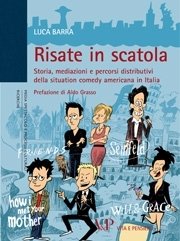
Luca Barra is Full Professor of Television and Digital Media at the Department of Arts, University of Bologna. His research focuses on media studies, particularly television history and contemporary evolution, transnational circulation of content, serialization, and comic/humorous genres. He has coordinated the Master's Degree in Information, Cultures and Media Organization since 2021 and serves as editor-in-chief of VIEW. Journal of European TV History and Culture. University of Bologna, Department of Arts Research areas: Television History, Transnational Media, Digital Transformation, Italian TV Production Barra's work examines the international mediation of ready-made TV formats, Italian streaming partnerships, and the cultural implications of digital television. His recent articles analyze dystopian narratives, sitcom reception in Italy, and the redefinition of celebrity during the pandemic. He contributes to academic discourse through editorial roles in journals like SERIES and Comunicazioni Sociali. His publications include monographs on Italian television programming, sitcoms, and co-edited volumes exploring European premium TV fiction and digital media frameworks. Barra has led research projects such as ATLas and F-ACTOR, and collaborates with international institutions including Brown University and NECS.
Bithin Datta is a Senior Lecturer in the Discipline of Civil Engineering at James Cook University (Australia), part of the College of Science and Engineering and the Division of Tropical Environments and Societies. He is affiliated with TropWATER (Centre for Tropical Waters and Aquatic Ecosystem Research), the Economic Geology Research Unit (EGRU) at JCU, and the CRC-for Contamination Assessment and Remediation of the Environment (CRC-CARE) at the University of Newcastle. Previously, he held Professor and Senior Professor positions at IIT Kanpur, India (1995-2009), and served as Head of the Civil Engineering Department and Head of the Postgraduate Environmental Engineering and Management Program. He has held Visiting Professorships at Dalhousie University (Canada), Denmark Technical University (Copenhagen), and the Asian Institute of Technology (Bangkok). Education: B.Tech (Hons) in Civil Engineering from IIT Kharagpur (India), Master’s degree in Civil Engineering (first rank in specialization), and a PhD in Civil Engineering from Purdue University (USA), specializing in Hydraulics and Systems Engineering. He is a Fellow of Engineers Australia (FIEAust). Research interests include water resources systems management, groundwater and surface water modeling, reservoir operation optimization, saltwater intrusion control, AI-driven environmental predictions, and ecological flow assessment. His work integrates simulation-optimization frameworks, machine learning (e.g., ANFIS, SVM), and hydraulic engineering principles to address contamination, climate change, and infrastructure challenges in tropical and coastal regions. His publications (178+ entries) focus on computational tools for groundwater contamination source identification, sustainable aquifer management, and reservoir environmental impacts. Notable projects include a $629,000 CRC-CARE-funded initiative for contamination monitoring networks and AI-based drought prediction models in tropical Queensland. Advising: Coordinated the Master of Engineering (Water Resources Management) at JCU and supervised over 30+ Master’s and 19 Ph.D. students across IIT Kanpur, JCU, and the University of South Australia. His research has been ranked #1 globally by ScholarGPS in Groundwater Pollution, Surrogate Models (AI/ML), and Saltwater Intrusion management. Labs/Teams: Core member of TropWATER, EGRU, and CRC-CARE, leading interdisciplinary projects on tropical water systems and geochemical contamination modeling in mine sites.
Dr. Ioannis Kaparias is an Associate Professor in Transport Engineering at the University of Southampton, affiliated with the Transportation Research Group (TRG). He holds a Master of Engineering from Imperial College London and a PhD from the same institution. His academic career includes roles at City, University of London, and postdoctoral research at Imperial College. He is a Fellow of Advance HE, a member of the Chartered Institute of Highways and Transportation (CIHT), and serves as Deputy Editor-in-Chief of the IET Intelligent Transport Systems journal. Education: MEng in Civil Engineering, Imperial College London (2004) PhD in Transport Engineering, Imperial College London (2008) Postdoctoral Researcher, Imperial College London (2008–2012) Research Interests: Efficient, safe, and sustainable land transport systems Highway and traffic management, including real-time routing and network reliability Active travel modes (cycling/pedestrian infrastructure) Public transport operations and optimization New transport technologies (CAVs, MaaS, EVs) Land use-transport interaction models Teaching: Highway & Traffic Engineering modules at Southampton Doctoral Programme Director (Training) in the School of Engineering Past roles include teaching at Imperial College London, City University London, and the University of East London External Roles: Member of US Transportation Research Board committees (Pedestrians/ACH10 and Human Factors/ACH40) Independent expert for the European Commission Speaker at international conferences (e.g., 'To share or not to share space? A very British tale', 2023)
Walter Szeliga is a Professor and Department Chair at Central Washington University. He holds a Ph.D. from the University of Colorado (2010). His research focuses on seismology, GPS, and InSAR technologies, with emphasis on earthquake early warning systems, crustal deformation monitoring, and natural hazards mitigation. Dr. Szeliga leads efforts in integrating real-time geodetic data streams for disaster response and has contributed to the development of ShakeAlert® systems. His work spans global geophysical networks, ionospheric perturbations, and paleotsunami studies. Key research interests include: Real-time GNSS applications for seismic monitoring Crustal deformation analysis using InSAR and GPS Earthquake source characterization through multi-method approaches Historical seismotectonic reconstructions Disaster forecasting and early warning system optimization Recent studies highlight advancements in trapping atmospheric lee waves detection via GNSS, volcanic plume dynamics during the 2022 Tonga eruption, and long-term paleotsunami records in Chile. His work bridges geophysical instrumentation with computational modeling to address critical questions in tectonic processes and hazard assessment. Scientific contributions include 50+ peer-reviewed articles on topics ranging from Cascadia subduction zone dynamics to global navigation satellite system innovations. His research has implications for civil infrastructure resilience, space weather impacts, and international geohazard collaboration frameworks.
Rupali Datta is a Professor of Biological Sciences at Michigan Technological University (MTU), affiliated with the Great Lakes Research Center (GLRC). Her research focuses on applying plant biochemistry, genetics, and microbiology to address environmental contamination through phytoremediation and plant-microbe interactions. She holds a PhD from the University of Hyderabad, India. Dr. Datta collaborates with experts in environmental geochemistry, soil science, and analytical chemistry to study contaminant bioavailability in aquatic and terrestrial systems. Her work emphasizes remediation of heavy metals (arsenic, lead), explosives (TNT/RDX), antibiotics, and petroleum hydrocarbons using green technologies. She leads projects funded by agencies like the Department of Defense, EPA, and HUD. Key research areas include: Phytoremediation of contaminated soils and water using vetiver grass and hyperaccumulator plants Bioavailability of contaminants in human and environmental systems Development of sustainable remediation technologies like biochar and water treatment residuals Health effects of metal exposure in cell and animal models Recent grants include a $2.5M DoD project on PFAS remediation (2023–2025) and a HUD initiative to reduce lead bioavailability in residential soils (2021–2024). Dr. Datta’s lab also partners with SIROM Scientific Solutions, LLC, advancing environmental R&D. Her work bridges fundamental science and applied solutions, addressing global challenges in pollution and sustainability.