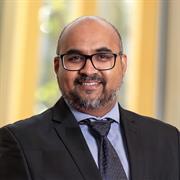
Andrew Mitchell is a Professor at the Faculty of Law, Monash University, and a member of the WTO Dispute Settlement Panelists Indicative List. He has extensive legal practice experience with Allens Arthur Robinson and consults for governments, international organizations, and the private sector. Mitchell has taught law in Australia, Canada, Indonesia, Singapore, and the US. He holds law degrees from the University of Melbourne, Harvard Law School, and a PhD from the University of Cambridge. His research focuses on international economic law, public international law, and digital trade governance, with a particular emphasis on the intersection of trade law and public health. Mitchell has secured six major grants, including an Australian Research Council Future Fellowship, and has authored over 170 books and articles. He serves as an editor for Edward Elgar’s International Economic Law Series and multiple journal editorial boards. Recent projects include 'Safeguarding Health in International Investment Agreements' (2022–2025) 'Maritime Cooperation for a Sustainable Indo-Pacific' (2021–2022) 'Global E-Commerce and Cottage Industries in India' (2020–2021) He has contributed to policy submissions on bilateral investment treaties and delivered lectures on data sovereignty and digital trade. His awards include editorial leadership roles at journals like the Journal of World Investment and Trade and Asia Pacific Law Review .
Professor Simon Buckingham Shum is a leading academic in Learning Informatics at the University of Technology Sydney (UTS), serving as inaugural Director of the Connected Intelligence Centre since 2014. His work bridges Human-Computer Interaction, Educational Technology, and Learning Analytics to develop AI-driven tools like OnTask that enhance student belonging through personalized feedback. Key research areas: Human-Computer Interaction, Learning Analytics, AI in Education, Collective Intelligence Recent work focuses: LLM-augmented qualitative analysis, Belonging Analytics frameworks, and ethical AI implementation in education CIC received the 2024 Vice-Chancellor’s Student Experience Award for scaling OnTask across multiple faculties. His contributions span over 30 years, including founding roles at The Open University’s Knowledge Media Institute and innovations in Open Educational Resources (OER), SocialLearn, and FutureLearn platforms. Notable awards: 2024 Student Experience Award (OnTask), Fellow of the Royal Society of Arts (RSA), DEFI STRI Researcher at University of Cambridge Education: B.Sc. in Psychology (York), M.Sc. in Ergonomics (UCL), PhD in Human-Computer Interaction (York) He leads multidisciplinary collaborations with teams across Business, Law, and Education faculties, pioneering tools like Theme Explorer and Qreframer bot. His recent focus on the "metacrisis" reframes educational technology’s role in addressing global systemic challenges through transdisciplinary approaches.
Associate Professor Mark Humphery-Jenner is a distinguished faculty member at the University of New South Wales (UNSW) Business School, specifically within the School of Banking and Finance. With an exceptional academic pedigree including multiple PhDs from prestigious institutions worldwide, he has established himself as a leading researcher at the intersection of finance, law, and corporate governance. Dr. Humphery-Jenner's educational background demonstrates remarkable breadth and depth, featuring PhDs from UNSW, Tilburg University, and Leiden University, along with master's degrees from Columbia University and the University of Washington. His undergraduate achievements include a BCom with First Class Honours and University Medal, and an LLB with First Class Honours, both from UNSW. This multidisciplinary foundation spanning business, law, and finance informs his comprehensive research approach. His research spans corporate finance, venture capital, and law, with particular focus on how legal frameworks shape financial decision-making and corporate behavior. Humphery-Jenner has published extensively in top-tier finance journals including the Journal of Financial Economics, Journal of Financial and Quantitative Analysis, Review of Finance, and Journal of Corporate Finance, as well as leading management journals such as Strategic Management Journal and Journal of International Business Studies. His scholarly contributions address critical issues in executive compensation, securities litigation, corporate governance, and private equity markets. Analysis of his recent publications reveals a sophisticated research trajectory increasingly focused on the relationship between litigation risk and financial reporting practices, corporate governance mechanisms, and investor protection frameworks. His work demonstrates particular attention to Australian regulatory contexts while maintaining a strong international comparative perspective, especially regarding Asian capital markets and cross-border investment. With substantial industry experience including work in investment banking and consulting for hedge funds, Humphery-Jenner brings practical insights to his academic work. He has been teaching in various capacities since 2006 and has served as an assistant professor in finance since 2012, contributing significantly to business education at UNSW. His professional background enhances his ability to bridge theoretical research with real-world financial practice.
Professor Isabella Alexander is a distinguished legal historian and intellectual property scholar at the University of Technology Sydney (UTS), Faculty of Law. She specializes in copyright law with a particular focus on its historical dimensions and application to cartography and visual works. As a leading researcher in her field, she holds significant research grants including ARC Discovery projects on copyright law in the 21st century and copyright in cartography. Her educational background includes: PhD from the University of Cambridge LLB (Hons) from the Australian National University BA (Hons) from the Australian National University Professor Alexander's research explores how laws inform and regulate the creation, circulation and reception of knowledge and culture from a historical perspective. Her work bridges legal history with contemporary intellectual property challenges, particularly in areas of copyright for visual works, cartography, and digital creativity. She has made significant contributions to understanding the historical development of copyright principles and their application to modern technological contexts. An analysis of her recent publications reveals a strong focus on the intersection of copyright law with visual culture, cartography, and emerging digital challenges including AI-generated content and memes. Her work demonstrates a clear trajectory toward interdisciplinary approaches that connect historical legal frameworks with contemporary technological and cultural phenomena, showing increasing engagement with how historical understanding can inform solutions to modern intellectual property challenges. Her notable scientific achievements include: 2023 LSAANZ Award for published scholarly book/monograph for "Copyright and Cartography: History, Law, and the Circulation of Geographical Knowledge" Professor Alexander has secured significant research funding as Lead Chief Investigator on the ARC Discovery grant "Hacking Copyright Law in the 21st Century: Art, Law, History and Technology" and as sole Chief Investigator on "Copyright and Cartography: Understanding the past, shaping the future." She has actively contributed to policy development through submissions to the Australian Productivity Commission's Inquiry into IP Arrangements and on addressing copyright infringement online through secondary liability and website blocking mechanisms. She currently serves as President of the Australian and New Zealand Law and History Society and is a member of the Governing Board of the International Society for the History and Theory of Intellectual Property, demonstrating her leadership and influence in both national and international academic communities.
Professor Marilyn Pittard is a leading academic in the Faculty of Law at Monash University, currently serving as Associate Dean Engagement. She has held numerous leadership roles including Interim Dean, LLM Director, and Associate Dean (Research), with a career spanning over two decades in academic administration and legal scholarship. Her research focuses on Labour Law, Employment Rights, and Human Rights, with significant contributions to understanding workplace relations, vulnerable workers, and the intersection of criminal records with employment access. She has secured grants from the Australian Research Council and other institutions for projects like The Other Side of Security and Living Down the Past . Recent publications highlight trends in employment law, including anti-slavery practices, redundancy frameworks, and digital-era workplace challenges. She chairs the Victorian Legal Admissions Board’s Academic Course Appraisal Committee and contributes to the Australian Labour Law Journal and Employment Law Bulletin .
Dr. Ly Fie Sugianto is an Associate Professor in the Department of Accounting at Monash Business School, Monash University. Her research focuses on the integration of data analytics, artificial intelligence, and machine learning in accounting and business systems, with applications in the energy sector and organizational behavior. Monash Business School, Monash University Department of Accounting Specialization: Accounting Information Systems, Data Analytics, AI Her research interests span Accounting Information Systems , Agent-Based Simulation , Decision Support Systems , and Technology Adoption . She applies computational methods to study competitive dynamics in deregulated electricity markets and the impact of digital tools on employee well-being and organizational resilience. The recent publications reflect a strong trend in using AI and simulation to analyze complex socio-technical systems, particularly in energy markets and leadership dynamics. Keywords across her work include agent-based modeling , data analytics , servant leadership , and enterprise social media , indicating interdisciplinary research at the intersection of information systems, management, and public policy. Her scientific awards include competitive grants from the ARC (SPIRT/Linkage) , the Australia Indonesia Governance Research Partnership (AIGRP) , and the Sumitomo Foundation . ARC Grant: Dispatch Optimisation in the Australian National Electricity Market Sumitomo Foundation: Technology Use and Employee Well-Being AIGRP: Governance and MSME Resilience during Pandemic Dr. Sugianto has advised research projects and collaborated with industry partners such as Western Power , Ecogen Energy , and AEMO . She is currently accepting PhD students and leads externally funded research initiatives. Her work contributes to UN Sustainable Development Goals related to industry innovation and responsible consumption. She is affiliated with research teams focusing on intelligent decision support systems and digital transformation in business , with active collaborations in Australia and Indonesia.
Marcus Smith is an Associate Professor in Law at the Charles Sturt University , where he teaches LAW222 Technology Law and directs the Bachelor of Laws program. He holds advanced degrees from the Australian National University (PhD, LLM) and the University of Cambridge (MPhil). His research spans technology law and regulation , focusing on genomic data governance biometric identification AI ethics blockchain policy cybersecurity surveillance law He leads the Contemporary Threats to Australian Security research group and serves as Chief Investigator on an NHMRC-funded project (MRF2015531) addressing genomic dataset governance. His recent work analyzes algorithmic bias in facial recognition AI in healthcare blockchain's regulatory challenges post-pandemic cybercrime surveillance ethics data security frameworks He actively supervises PhD and honours students in technology law and contributes to law reform through submissions to international bodies like the UN Human Rights Council .
Professor Shaun Larkin is a part-time academic at the School of Public Health , University of Sydney, specializing in Health Policy and Financing . He is affiliated with the Leeder Centre for Health Policy, Economics and Data and a member of the Charles Perkins Centre . With a career spanning executive roles at HCF and non-executive directorships in health startups, his work bridges academia and industry. Education : Harvard Business School alumnus with a HlthScD, MBA, MHSc, and BHA. His research focuses on health economics , health policy , and health services management , emphasizing: Translational research in healthcare financing Trends in private-public healthcare partnerships Price transparency in private health insurance Leadership in health systems Chronic disease management Quality use of medicines His publications reveal a trajectory from foundational work in: Psychiatric services data standardization (2000) Heart disease and diabetes management (2013-2015) Telehealth interventions (2017-2018) Private sector policy frameworks (2019-2020) Saudi Arabian health reforms (2022-present) Private equity in healthcare (2025) As an advisor, he currently supervises research students on topics including: Quality use of medicines in Saudi Arabia Sustainable financial models for private hospitals Patient-reported outcome measures in Australia He also contributes to the Leeder Centre and engages with global health startups as an investor and advisor.
Dr. Rebecca Connolly is an Adjunct Professor at the Sydney Law School, University of Sydney, specializing in International Space Law, Technology Law, and Biotechnology Regulation. Her research addresses global governance challenges in outer space militarization, commercialization, and sustainability, while contributing to agricultural biotechnology policy frameworks. She is affiliated with the Space Law Council of Australia and New Zealand and the International Law Association. Education: LL.B (Hons), LL.M, Ph.D. (Sydney University). Teaching focuses on International Space Law and Technology Law. Recent publications (2023) emphasize regulatory gaps in near-space military activities and outer-space advertising, reflecting her expertise in emerging legal frontiers. Publications span over two decades, with early work addressing WTO disputes over genetically modified foods and AUSFTA environmental cooperation. No scientific awards listed, though her contributions to space law are notable. She supervises in space law and technology law domains, contributing to interdisciplinary legal scholarship.
Demetris Christodoulou is an Associate Professor in Accounting, Governance and Regulation at the University of Sydney. He holds a BEcon from Piraeus University, an MSc(Fin) from the University of York (UK), and a PhD from Athens University of Economics and Business (AUEB). His research focuses on applying data analytics, econometrics, and visualization techniques to financial analysis, equity valuation, life insurance, and financial advice. He co-directs the PEMA research group, specializing in productivity and performance measurement analytics, and previously led the MEAFA research group (2007–2022). He has collaborated extensively with industry partners including Deloitte and Australian insurers, and developed training programs for over 1,000 executives. His work includes open-source contributions to Stata software and the Graph Workflow platform, alongside $662k in workshop-generated funds supporting academic programs. He has advised multiple PhD students and taught at leading universities globally. Education: BEcon in Economics (Econometrics), Piraeus University MSc in Finance, University of York (UK) PhD in Accounting and Financial Analysis, Athens University of Economics and Business His research interests span financial reporting models, life insurance underwriting strategies, and behavioral finance. Recent projects address dishonesty mitigation in insurance disclosures and the adviser effect on customer disclosures. He has published widely in top journals like the Review of Accounting Studies and Stata Journal , and his work was featured in The Australian for insights on insurance fraud reduction. He maintains international collaborations, including visiting roles at Columbia Business School and the University of Cyprus, and serves on advisory boards for organizations like Behaviour.ai. Publications highlight methodological innovations in econometrics and visualization, with 2025's upcoming Stata Journal paper advancing time-series analysis techniques. His grants include partnerships with industry on longitudinal studies of insured lives, aiming to improve risk modeling and public policy insights.
Sean Foley is a Professor of Applied Finance at Macquarie University, specializing in Fintech, Cryptocurrencies, Trading, and Market Design. He leads the Decentralized Assets division at the Digital Finance Cooperative Research Centre (DFCRC), bridging academia, industry, and government. His research focuses on blockchain applications like automated market makers, DeFi protocols, and stablecoins. Education: PhD in Finance from the University of Sydney (2014), focusing on 'The Impact of Regulation on Market Quality'. Research Interests: Decentralized finance (DeFi) systems Cryptocurrency market dynamics and regulation Market microstructure and liquidity provision Energy market crises and policy Regulatory frameworks for financial markets Key Projects: Leading the DFCRC's Industrial PhD Scholarships (2021–2031), mentoring students like Arvind Rangarajan and Juuso Artturi Itkonen. Research on Australia's National Electricity Market (NEM) suspension and energy policy. Awards: Best Paper Award at the Cryptocurrency Conference (2019) Philip Brown Prize for Best Australian Paper (2021) Exceptional Research Prize (2019) Advising & Grants: Supervised over 10 PhD students through DFCRC scholarships. Secured $181 million for the Digital Finance CRC. Lead applicant in the Gunns Ltd shareholder class action. Labs/Teams: Head of Decentralized Assets at DFCRC, collaborating on policy and technology. Co-researcher on 'Electricity Markets in Crisis' and cryptocurrency illicit use studies.
Dr Nima Izadyar serves as a Senior Lecturer and Course Chair of the Bachelor of Building Surveying (NBBS) at Victoria University's School of Built Environment and Engineering within the College of Sport, Health and Engineering. He leads curriculum innovation, applied research, and student-industry engagement in building regulation and performance. His educational background includes a PhD from Queensland University of Technology (QUT), Australia (2020), with academic and research experience spanning Australia, Southeast Asia, and the Middle East. Dr Izadyar's research focuses on developing practical, data-driven solutions for sustainable built environments. His work connects engineering principles with building science to improve indoor environmental quality, enhance ventilation performance, and integrate renewable energy systems. He has secured competitive funding for projects targeting sustainable housing design, digital transformation in construction, and energy efficiency through nature-based and AI-enabled solutions. His research output appears in high-impact journals in building, energy, and sustainability fields. His scholarly contributions have been recognized with prestigious awards including the Signato Medal and the AIRAH Higher Education and Research Award. Signato Medal AIRAH Higher Education and Research Award As an academic supervisor, Dr Izadyar mentors HDR students on critical topics including greening private outdoor spaces for improved indoor environmental quality, regulatory frameworks in Class 2 buildings, ventilation system optimization, occupant-centric window design, and BIM integration in construction education. His supervision approach emphasizes applied systems thinking, interdisciplinary collaboration, and alignment with national sustainability goals. He has secured competitive funding for projects targeting sustainable housing design, digital transformation in construction, and energy efficiency solutions. Dr Izadyar actively contributes to industry engagement through international collaborations that generate tangible outcomes in the built environment, serving as a reviewer, editor, and guest editor for scholarly publications while maintaining strong connections with industry partners to bridge research and practice.
Professor Hala Zreiqat AM is a leading biomedical engineer at The University of Sydney , serving as the Director of the ARC Training Centre for Innovative BioEngineering . A Fellow of all major Australian academies (AAS, ATSE, FAHMS, FRSN), she develops 3D printed bioceramics for bone regeneration while championing diversity through initiatives like the IDEAL Society and BIOTech Futures mentorship program. Her work bridges academia, clinical practice, and industry in musculoskeletal research . Research Focus: Her lab creates synthetic bone scaffolds that mimic natural bone architecture, strength, and porosity, enabling non-rejected bone regeneration via patient-matched implants. Key applications include orthopaedic, dental, and maxillofacial repair , with over $18M in competitive funding and multiple patents. Current projects explore AI-driven scaffold performance prediction and anti-senescence strategies for aging-related bone loss. Scientific Trends: Recent publications highlight 3D printed nanovoxelated ceramics , antisenescence biomaterials , and multifunctional theranostic platforms . Her team integrates machine learning for scaffold design, atom probe tomography for interface analysis, and two-photon imaging for cellular monitoring in 3D environments. 2021-2022 Fulbright Senior Scholar 2018 NSW Premier's Woman of the Year 2019 Eureka Prize for Innovative Use of Technology Fellow of Australian Academy of Science (2021) Over $18M in research funding Teaching & Leadership: She designed core courses like Tissue Engineering and Nanomaterials in Medicine , mentoring 158 students in 2020 alone. As Chair of CAAR (2020-2023), she strengthens Australia-Arab collaborations. Her lab trains early-career researchers , with alumni now in academia and industry.
Professor Will Bateman is a distinguished academic at the Australian National University (ANU) College of Law, where he serves as a Professor and recently completed his term as Associate Dean (Research) from 2021 to 2024. He is also a Chief Investigator for the ANU Grand Challenge project "Humanising Machine Intelligence" and a Fellow at the Gradient Institute, a leading ethical AI research organization based in Sydney. Professor Bateman's educational background is impressive, having earned a PhD and LLM (Hons) from the University of Cambridge and a BA/LLB (Hons) from the Australian National University. Prior to his academic career, he worked in appellate litigation, commercial disputes, and banking as a solicitor at Herbert Smith Freehills, and served as an associate to Justice Stephen Gageler AC of the High Court of Australia and Justice Steven Rares of the Federal Court of Australia. Professor Bateman's research spans two major interdisciplinary domains that sit at the intersection of law with finance and technology. His work on financial regulation focuses on the legal aspects of central banking, sovereign debt markets, digital currencies, and sustainable investing. He has provided expert evidence to the UK Parliament's House of Lords Inquiry into Quantitative Easing, and has collaborated with major financial institutions including the Federal Reserve Bank of New York and the Bank of England. His research on artificial intelligence examines regulatory frameworks for AI in the public sector, with collaborations including the Minderoo Foundation and the Gradient Institute. His recent publications demonstrate a remarkable breadth across legal theory, financial regulation, and AI governance. The articles reveal a consistent theme of examining how traditional legal frameworks adapt to new financial technologies and monetary policy challenges. His work bridges theoretical legal scholarship with practical policy implications, as evidenced by his numerous government consultations and collaborations with central banks worldwide. 2020 Yorke Prize by the University of Cambridge for his work on public finance and constitutionalism Top 10 all-time most downloaded SSRN paper on central banking ("Central Bank Money: Liability, Asset, or Equity of the Nation?") Professor Bateman actively supervises research students, currently mentoring Benjamin Ettinger who is pursuing a PhD on "Legal Method, Cartels and Public Monopolies: A View From the High Court 1908 - 1948." He has secured significant research funding, including projects funded by the Economic and Social Research Council (UK), the German Research Foundation (Deutsche Forschungsgemeinschaft), and The Minderoo Foundation. His "Rebuilding Macroeconomics Initiative: Legal and Economic Conceptions of Money" received £245,000, while the "FA Mann" project was funded with €620,000 (approximately A$1,012,500). He leads the "Humanising Machine Intelligence" project, an ambitious interdisciplinary initiative involving computer scientists, mathematicians, philosophers, sociologists, psychologists, and lawyers aimed at developing democratically legitimate machine intelligence. He also co-led a major project with the University of Western Australia to formulate model legal frameworks for AI regulation in the public sector, funded by The Minderoo Foundation.
Associate Professor Lasantha Meegahapola is a Deputy Head of Department (Teaching & Learning) at RMIT University's School of Engineering in Melbourne, Australia. He holds an IEEE Senior Membership and serves as an Associate Editor for several prestigious journals, including IEEE Transactions on Power Systems and IET Renewable Power Generation. His research focuses on Power System Stability with Renewable Integration, Microgrid Control, and Smart Grid Technologies, addressing challenges like voltage stability, inverter-based grid dynamics, and renewable energy penetration. He has supervised 16 PhD students to completion and published over 200 articles. Key contributions include identifying stability issues in microgrids and advancing grid-forming inverter control strategies. His work aligns with UN Sustainable Development Goals 7 (Clean Energy), 9 (Infrastructure), and 13 (Climate Action). He is actively involved in IEEE committees, including the PSDP Task Force on Microgrid Stability. Teaching roles include Programme Manager for the Bachelor of Electrical Engineering (HK) and Subject Coordinator for Power System Analysis and Control courses. Collaborations span industry and international research institutions, emphasizing real-world applications of his research in power systems and renewable energy integration.