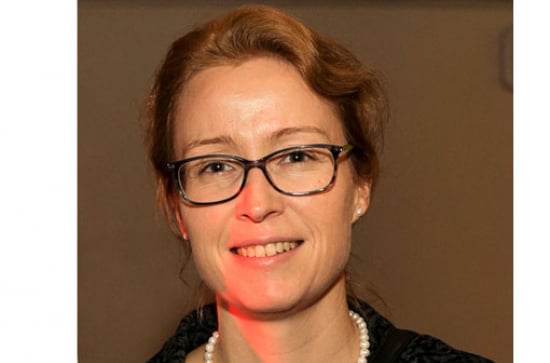
Rozenn Dahyot is a Professor of Computer Science at Maynooth University within the Faculty of Science & Engineering. She previously held roles as Assistant and Associate Professor in Statistics at Trinity College Dublin (2008-2021) and Lecturer in Computer Science (2005-2008). Her research interests bridge Digital Signal Processing, Computer Vision, Machine Learning, and Statistical Analysis. She organized the European Signal Processing Conference (EUSIPCO2021) in Dublin and served as President of the Irish Pattern Recognition and Classification Society (IPRCS) from 2014-2020. Her work spans topics like semantic scene understanding, CNN compression, and medical image segmentation. Key contributions include advancements in graph-based image analysis, reinforcement learning optimization, and AI-driven systems for disaster management. Dahyot is a member of IEEE, ACM, and EURASIP, contributing to both academic and industrial collaborations.
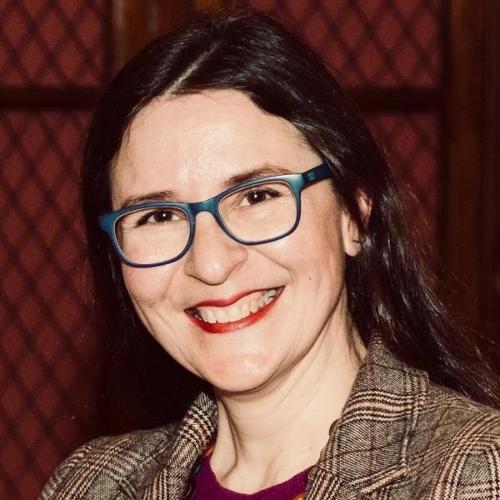
Dr. Andrew Hines is a Researcher at the School of Computer Science, University College Dublin, specializing in machine learning applications for signal processing in speech, audio, and video domains. His work focuses on Quality of Experience (QoE) modeling, speech quality assessment, and immersive media analysis. He has held leadership roles in European COST Actions like Qualinet and CryptoAction, and previously worked in industry as a Director of Engineering. University: University College Dublin Role: Director of Research, Innovation and Impact Key Collaborations: IEEE (Senior Member), Audio Engineering Society (Ireland) Research interests center on machine learning for QoE optimization, audio-visual integration, and healthcare applications like heart sound classification and stroke rehabilitation. His recent publications explore self-supervised learning, neural speech codecs, and contextual factors in speech/audio quality assessment. Scientific contributions include awards like IEEE Senior Membership, and his work spans both academic research and industrial engineering in finance and aviation sectors. He leads the QxLab research team at UCD and develops open-source platforms such as WARP-Q and AQP for quality metrics.
Dr. Selja Seppälä is a Lecturer in Business Analytics within the Department of Business Information Systems at Cork University Business School, University College Cork. She specializes in Natural Language Processing, applied ontology, terminology, and corpus studies with applications across multiple domains including linguistics, legal informatics, biomedical informatics, and education. Her research focuses on developing AI technologies that combine Large Language Models and other NLP techniques with curated ontologies to enhance data quality, transparency and trustworthiness in information systems. Dr. Seppälä currently leads the AI-LIEN project, which uses AI-powered technologies for learning analytics, and collaborates on projects investigating the impact of AI on organizations and legislative review. Natural Language Processing (NLP) Applied Ontology and Terminology Corpus Studies AI Technologies for Information Systems Large Language Models integration Legal Informatics applications Dr. Seppälä's scholarly contributions include 43 publications in international outlets and 27 open-source research artifacts. Her work has secured approximately €500,000 through competitive research grants, demonstrating significant impact in her field. Marie Skłodowska-Curie Career-FIT Fellow (2019-2022) Dr. Seppälä serves on the editorial board of Applied Ontology (IOS Press) and as Communication Co-officer and Substitute Auditor for the International Association for Ontology and its Applications (IAOA). She actively contributes to academic service as a reviewer for journals including the European Journal of Information Systems and Terminology, and regularly participates in program committees for international conferences focused on computational linguistics, natural language processing, applied ontology, and financial technology applications. At UCC, she contributes through the development of the CUBS Canvas Template and membership in the CUBS Digital Learning & Teaching Committee.
Dr. Vivek Nallur is an Assistant Professor in the School of Computer Science at University College Dublin. His research focuses on Machine Ethics, Multi-Agent Systems, emergence in socio-technical systems, and decentralized adaptation mechanisms. He holds a PhD from the University of Birmingham and advanced certifications in university teaching from UCD. Education: BBS, Delhi University Post-Graduate Diploma in Advanced Software Technology, National Centre for Software Technology MS, Carnegie Mellon University PhD, University of Birmingham Prof Cert University Teaching & Learning, University College Dublin Research Interests: Machine Ethics explores ethical decision-making in autonomous systems, while Multi-Agent Systems (MAS) are his primary tool for studying self-adaptation and emergence. He serves on key committees like IEEE P7008 (Ethically Driven Nudging) and the AAAI 2021 Spring Symposium on AI Ethics. His work bridges computer science with philosophy, law, and social sciences. Advising & Grants: Supervises three PhD students focusing on ethical AI, elder-care robotics, and AI governance. Leads the Machine Ethics Research Group and participates in the ML-Labs SFI grant (2019–2027). Professional Roles: Senior Member of IEEE, organizer for AAAI ethics symposia, and contributor to OpenAAL's ELSI panel. Teaches modules on Machine Learning, Operating Systems, and Web Development.
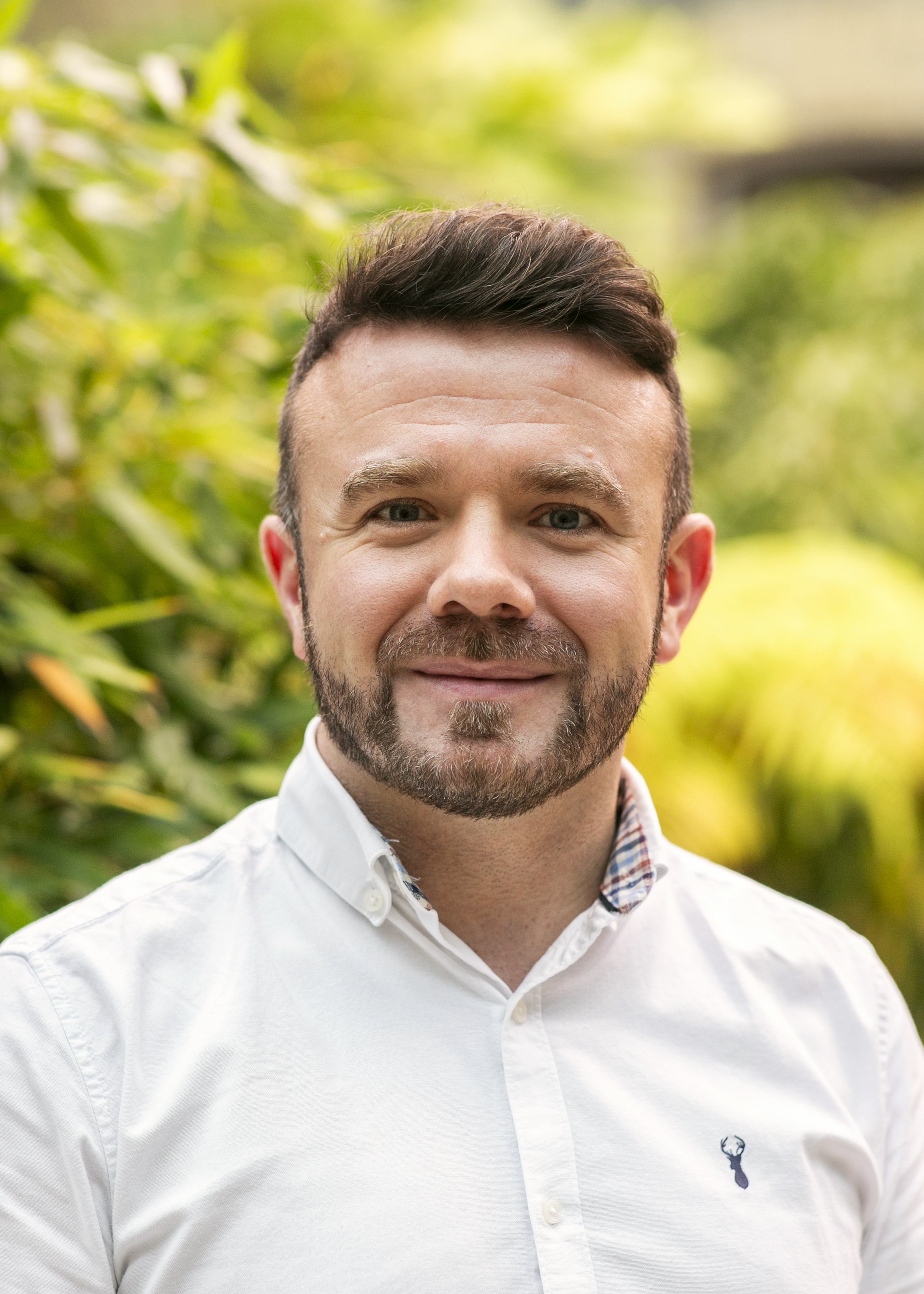
John Breslin is a Personal Professor in Electronic Engineering at the College of Science and Engineering, University of Galway, serving as Director of the TechInnovate and AgInnovate programmes. Associated with two Taighde Éireann – Research Ireland Centres, he is a Principal Investigator at Insight Centre for Data Analytics (specializing in data analytics) and a Funded Investigator at VistaMilk (Agri-Technology), while also leading the EDIH Data2Sustain project. With an h-index of 50, over 12,000 citations, and 300+ peer-reviewed publications including seminal books on the Social Semantic Web, he ranks among Ireland's most influential researchers in digital technologies. Breslin's research fundamentally bridges Semantic Web technologies, AI-driven data analytics, and practical innovation. His co-creation of the SIOC framework—implemented across 65,000+ websites by entities like Yahoo and Boeing—demonstrates real-world impact in social data interoperability. Current work leverages blockchain and federated learning for sustainable Agri-Technology through VistaMilk, while his TechInnovate programmes translate academic research into commercial ventures across healthcare, smart manufacturing, and energy systems. Analysis of his 15 most recent publications reveals dominant themes in AI-enhanced security (35% of works), blockchain applications for sustainability (27%), and multimodal AI for healthcare (20%). His team pioneers privacy-preserving techniques for IoT and medical devices, neurosymbolic visual reasoning frameworks, and federated learning architectures addressing data heterogeneity—directly supporting his roles in national research infrastructures like Insight and VistaMilk. John has received several prestigious awards: IIA Net Visionary Award (twice) ITAG Outstanding Contribution to the ICT Sector Award Galway Chamber President’s Award Best Irish-Published Book Award (2020 for Old Ireland in Colour) Multiple Best Paper Awards He leads major research initiatives funded by Taighde Éireann – Research Ireland: Insight Centre for Data Analytics (as Principal Investigator) VistaMilk SFI Research Centre (as Funded Investigator) EDIH Data2Sustain (as Principal Investigator) His entrepreneurial programs TechInnovate and AgInnovate have mentored 200+ startups, securing €50M+ in follow-on funding. Breslin co-founded PorterShed (Galway City Innovation District) and serves on Scale Ireland's Steering Group, creating Ireland's most active regional innovation ecosystem outside Dublin. He maintains active industry partnerships with Vodafone, Boeing, and agricultural cooperatives through VistaMilk's testbed facilities.
Prof Noel O'Connor is a Full Professor at Dublin City University's School of Electronic Engineering, specializing in cutting-edge research at the intersection of artificial intelligence (AI), medical imaging, robotics, and smart city technologies. His work spans applications such as cardiac MRI reconstruction, robotic manipulation using reinforcement learning, and the development of the Smart DCU Digital Twin for autism-friendly university environments. Research interests include AI-driven medical diagnostics, multimodal data fusion, and adaptive systems. His contributions to cardiac MRI reconstruction and transformer-based medical imaging analysis reflect a strong focus on healthcare innovation. He also explores ethical AI practices to reduce social bias in foundation models. Recent work emphasizes smart infrastructure projects, such as optimizing parking recommendations for electric vehicles and enhancing accessibility through digital twin frameworks. His research often integrates real-time sensor data and multi-agent systems to address complex urban challenges. No scientific awards are listed. Collaborations include the ASU-DCU International Research Program on Sensors and Machine Learning. Advising details and grant information are not explicitly provided.
Cathy Ennis is an Assistant Professor in the Department of Computer Science at Maynooth University, Ireland, specializing in perceptually guided graphics and virtual reality. She is actively involved in research and teaching, with affiliations to the ADAPT Centre and D-REAL SFI Centre for Research Training. Education: BEng in Electronic Engineering, Maynooth University MSc in Cognitive Science, University College Dublin PhD in Computer Graphics, Trinity College Dublin PG Dip in Higher Education Teaching and Learning, DIT Research Interests: Dr. Ennis's research centers on creating realistic virtual humans and crowds, exploring multisensory perception in VR, and applying these technologies in serious games and interactive systems. Her work integrates AI, HCI, and immersive technologies to enhance user engagement and learning. Her recent publications reflect a strong focus on virtual character realism, VR-based education, and machine learning applications in animation and interaction. Notable themes include speech-animation realism, cultural VR experiences, and reinforcement learning for character control. Scientific Awards: Best Paper Award, IEEE VR 2022 Teaching and Supervision: Dr. Ennis currently teaches CS401 (Machine Learning and Neural Networks) and CS261 (Multimedia Technology). She is actively seeking PhD students and collaborators interested in VR, games, and virtual characters, particularly using machine learning for gesture generation and engagement. Labs and Teams: She is a Funded Investigator with the ADAPT Centre and D-REAL SFI Centre for Research Training, contributing to interdisciplinary research in AI, HCI, and immersive technologies.
James Hadley is an Associate Professor in Russian and Slavonic Studies and holds the Ussher Assistant Professorship in Literary Translation at Trinity College Dublin. He directs the MPhil in Literary Translation program and leads the Irish Research Council-funded QuantiQual Project. His research focuses on translation studies, particularly indirect translations, employing digital humanities and empirical methods to explore previously unanswerable questions. He is based at the Trinity Centre for Literary and Cultural Translation, fostering public engagement through events and initiatives. Dr. Hadley’s work bridges literary translation, technology integration, and computational analysis. He actively recruits doctoral/postdoctoral researchers interested in digital humanities applications in translation studies, especially regarding indirect translation. His research has addressed topics such as machine translation impacts, sentiment classification, and historical translation practices in Japan. He can be contacted at hadleyj@tcd.ie for collaborative opportunities. His academic contributions span theoretical frameworks (e.g., the Concatenation Effect Hypothesis) and practical applications like OCR tools for historical texts. The Trinity Centre serves as a hub for interdisciplinary translation studies, emphasizing both scholarly rigor and public accessibility.
Dr. Mengdi Wang is a Lecturer and Research Assistant in Multilingualism at the School of Applied Language & Intercultural Studies (SALIS), Dublin City University. She teaches Chinese language and culture courses, including modules like Chinese Language and Culture 1 (Beginners) and Chinese Literature and Film . Her research focuses on Computer-Mediated Communications, Telecollaboration, and Technology-Enhanced Language Learning, particularly in the context of Chinese as a Foreign Language (CFL) education. She has contributed to peer-reviewed journals and conferences, including the XXIst International CALL Research Conference. Mengdi holds a First Class Honoured Graduate degree from University College Cork and has received notable awards such as the Outstanding Advisor in the 21st World Chinese Student Composition Competition. She is an active member of professional associations like the European Association of Computer Assisted Language Learning and the Ireland Association of Chinese Teaching, where she serves on the committee. Her work emphasizes intercultural communicative competences and technology-mediated task-based learning, particularly for adolescent learners. Recent research includes analyzing Zoom-based telecollaboration for Irish learners of Chinese and systematic reviews of CALL methodologies in CFL education.
Dr. Máire Ní Ríordáin is a Senior Lecturer in the School of Education at University College Cork. She currently serves as M.Ed. Modular Programme Director, School of Education Examinations Officer, and Chair of the School of Education Research Ethics Committee. She is also Treasurer of the Educational Studies Association of Ireland (ESAI) and a serving member of their Executive Committee. Her educational background includes a BSc.(Hons.) in Physical Education and Mathematics from the University of Limerick (2005) and a PhD in Mathematics Education from the same institution (2009). Dr. Ní Ríordáin's research focuses on the intersection of language and mathematics education. Her primary interests include bilingualism (Irish and English) in mathematics education, mathematics teacher professional development, practitioner research in teacher education, and STEM education. She has developed frameworks like LCM2 to analyze bilingual mathematics learning and has contributed significantly to understanding how language influences mathematical cognition. Her work addresses critical issues in Irish education, particularly regarding the teaching of mathematics through Irish and supporting out-of-field mathematics teachers. Her extensive publication record demonstrates a consistent focus on language-responsive mathematics teaching, bilingual education, and teacher development. Recent work explores CLIL (Content and Language Integrated Learning) approaches, STEM education, and gender issues in mathematics learning. She has led major international conferences, including serving as Co-Leader of the 14th Congress of the European Society for Research in Mathematics Education. Teaching Council Research Bursary (2009) Advanced Scholar Award (2005) MACSI Postgraduate Scholarship (2006) Dr. Ní Ríordáin has supervised multiple doctoral students including Aoife O'Brien, Fergal Harrington, Laura Tagnin, and Bernie Ní Dhonnchú. She has secured significant research funding, including projects like M²EID (€95,500 from Irish Research Council), CaLSAM (€68,840 from ERASMUS), and several grants from University College Cork and the National Forum for the Enhancement of Teaching and Learning. She has been actively involved in national teacher development programs, particularly for out-of-field mathematics teachers.
Professor Francesco Pilla is a Full Professor of Smart and Sustainable Cities at University College Dublin's School of Architecture, Planning and Environmental Policy, where he also serves as Co-Director of the Spatial Dynamics Lab. Previously, he held positions as MSc Director (2018-2019) and Undergraduate Director for the School of Architecture. With over 15 years of experience in GIS modeling and spatial data analysis, Professor Pilla's work bridges technology, urban planning, and community engagement to create more sustainable cities. Professor Pilla's research focuses on developing geospatial analysis tools and environmental pollution models (air, noise, water) using GIS platforms to facilitate interoperability between research teams and end users. His approach integrates environmental pollution models with pervasive and community sensing applications for calibration and validation. A key innovation in his work is the integration of co-design principles through Living Labs in urban planning and citizen science initiatives to improve city life from an environmental perspective. His recent publications reveal a strong focus on urban sustainability challenges, with significant contributions to air quality monitoring, sustainable transportation, climate adaptation, and citizen science methodologies. His work increasingly incorporates advanced AI techniques, including large language models and machine learning algorithms, to analyze urban systems and develop data-driven solutions for complex environmental problems. The research demonstrates a clear trend toward integrating diverse data sources and developing practical tools for urban governance and planning. Haagen-Smit Prize (2024) - Recognizing outstanding papers published in Atmospheric Environment Best eMobility Project - Electric Vehicle Awards 2024 All Ireland community & council awards - Best Community Transport Initiative 2024 Academic research award: tipping point for action from Financial Times (2023) Professor Pilla leads numerous significant research projects including iSCAPE (H2020-SC5) as Coordinator, OPERANDUM (Principal Investigator for UCD) focusing on flood risk reduction with nature-based solutions, WeCount (Principal Investigator for UCD), and Connecting Nature (Principal Investigator for UCD). He has also secured funding through SFI Investigator grants for 'Scalable, Privacy-Enhanced Analytics for sharing mobility systems' and several Environmental Protection Agency projects. His collaborative work extends to partnerships with MIT through Fulbright/EPA TechImpact awards and IBM through Faculty Awards. At the Spatial Dynamics Lab, Professor Pilla oversees research that combines geospatial analysis, environmental monitoring, and community engagement. His innovative 'Bike Library' initiative, which has expanded to multiple schools in Dublin, exemplifies his commitment to translating research into practical community solutions. The lab's work integrates advanced sensing technologies, GIS platforms, and citizen science to address urban environmental challenges through collaborative approaches.
Dr. Monica Ward is a Teaching Professor at Dublin City University, currently serving as the Dean of Teaching and Learning within the Office of the Vice-President for Academic Affairs. Her work bridges technology and pedagogy, focusing on innovative educational tools. Office of the Vice-President for Academic Affairs Glasnevin Campus, Room D114 Monica's research interests revolve around Computer-Assisted Language Learning (CALL) , educational technology , and game-based learning . She has contributed significantly to inclusive education, language revitalization (e.g., Irish and Nawat), and formative assessment in both language learning and introductory programming. Her projects often leverage Artificial Intelligence , Virtual Reality , and gamification to create engaging, accessible learning environments. Her recent publications highlight trends in adaptive learning technologies , socio-cultural immersion , and student-centered CALL design . Notable works include studies on educational robotics for dyslexic learners, AI-driven text analysis in game-based language learning, and the impact of interactive oral assessments. Monica has developed educational games like Cipher: Faoi Gheasa and Cipher VR , which integrate mythology and technology to enhance language reconnection. She also explores peer observation, collaborative modules, and green approaches in educational app development, reflecting her commitment to sustainable and culturally relevant teaching strategies.
John Sheppard is a Lecturer in the Department of Computing and Mathematics at South East Technological University. His research focuses on digital forensics , AI applications in cybersecurity , and network intrusion detection . His expertise spans forensic methodologies and the ethical implications of generative AI in investigations. Research interests include: AI-driven forensic analysis techniques Resource-constrained security systems Multimedia evidence processing Recent publications (2023-2024) demonstrate a strong emphasis on AI-enhanced cybersecurity solutions and innovative forensic geolocation methods . Work explores limitations and opportunities in applying large language models to digital investigations.
Venkata Virajit Garbhapu (Viru) is a Research Fellow at the CONNECT Centre, Trinity College Dublin, specializing in optical networks with emphasis on physical layer optimization and cross-layer integration. Education: PhD, Institut Polytechnique de Paris (CIFRE scholar with Huawei) Laura Magistrale, Politecnico Di Milano His research focuses on maximizing network capabilities through physical layer impairment-aware frameworks, demonstrated by 52.8% training time reduction in distributed AI systems using 800G DCI links and superior failure recovery via optical circuit switching. Key contributions include per-channel power allocation algorithms balancing linear/nonlinear impairments and feasible C-band integration of classical/QKD signals through Raman noise-aware wavelength allocation. His work centers on developing sophisticated simulators enabling cross-layer optimization for functionalities like QKD and packet switching. Analysis of his 2019-2025 publications reveals a dominant trend toward AI-driven network automation, with increasing emphasis on digital twins and large language models for lifecycle management, alongside quantum-classical signal coexistence. The research consistently bridges theoretical algorithms with experimental demonstrations, showing progression from transfer learning for failure detection to advanced AI/quantum integration. No scientific awards were mentioned in available sources. His PhD was supported by a CIFRE industrial scholarship with Huawei, and he participated in the European QSNP project. No student advisement details are provided, though his BONSAI research addressed optical network failure management using transfer learning to overcome data scarcity. He operates within the CONNECT Centre ecosystem at Trinity College Dublin while maintaining active collaboration with Huawei Paris Research Center, reflecting strong industry-academia integration in optical communications research.
Robbie Irwin serves as an Assistant Lecturer in the Department of English and Roinn na Gaeilge at an unconfirmed institution. His work focuses on integrating technology with language education, particularly within Irish-language contexts. His research interests include: The use of technology in language learning The teaching of Irish at primary level Digital Education within the Irish education system Immersion education methodologies Irwin specializes in Múineadh na Gaeilge (Irish Teaching) and Digital Education through Creative Technologies, with a strong emphasis on enhancing pedagogical approaches through technological innovation. His work addresses critical gaps in Irish-language education infrastructure and digital resource development.