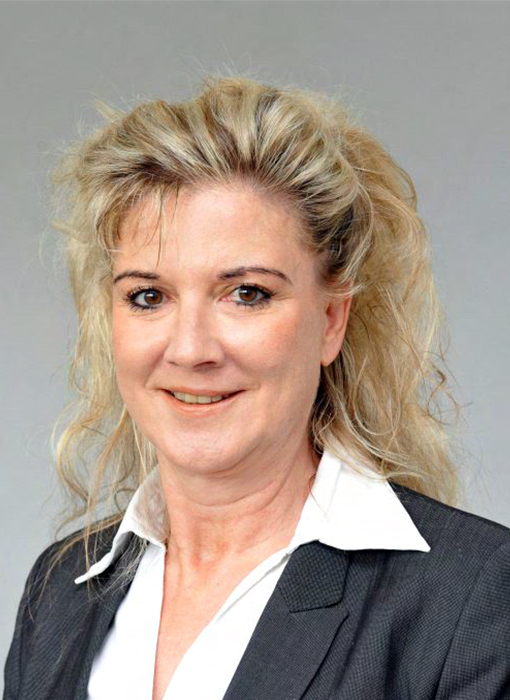
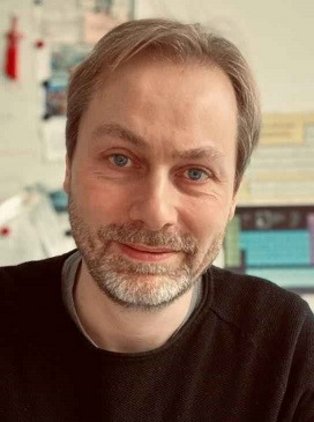
Prof. Dr. Bettina Glunde is a faculty member at the Frankfurt University of Applied Sciences , Department 4: Social Work & Health. She specializes in healthcare education, vocational pedagogy, and aging-related care innovations. Her work emphasizes interdisciplinary collaboration, qualitative research, and technology integration in nursing education. Current research focuses on interdisciplinary housing counseling (ProWoB project) and robot-assisted elder care (Pepper robot study). She leads international educational initiatives like the Erasmus Winterschool and Summerschool programs. Her publications span topics including project management in PhD research , interprofessional curricula , and media competency for migrants . She is affiliated with academic organizations such as the German Society for Nursing Science and the German Society for Pedagogy .
Prof. Dr.-Ing. Frank Thielecke is a full Professor and the head of the Institute of Aircraft Systems Engineering (Flugzeug-Systemtechnik) at Technische Universität Hamburg (TUHH), Germany. His research is centered on advanced aircraft systems, avionics, flight control, and the integration of emerging technologies such as hydrogen and hybrid-electric propulsion. Institution: Technische Universität Hamburg Department: Institute of Aircraft Systems Engineering (Flugzeug-Systemtechnik) Email: frank.thielecke@tuhh.de Office: Neßpriel 5, Room 1.012, 21129 Hamburg His research interests include integrated modular avionics (IMA), model-based systems engineering (MBSE), aircraft load estimation, health monitoring, fault diagnosis, and sustainable aviation technologies. He leads a research group actively contributing to next-generation aircraft design, with a strong focus on digitalization, virtual testing, and system safety. The recent publications highlight a consistent trend in developing model-based tools and architectures for avionics and aircraft systems. Key themes include the design of IMA platforms, virtual integration, system validation, hydrogen aircraft systems, and control algorithms for UAVs and flexible aircraft. His work frequently appears in AIAA, DASC, DLRK, and CEAS conferences and journals. Prof. Thielecke has been involved in numerous collaborative research projects focusing on more-electric aircraft, fuel cell systems, and advanced actuation. He has contributed to the development of frameworks such as ASHLEY and SArA for avionics platform design and systems architecting. His team also works on noise reduction in hydraulic systems and condition monitoring for aircraft subsystems. He supervises a group of researchers and PhD students, many of whom co-author his publications. While specific student names are not listed, long-term collaborators like Oliver Luderer, Thimo Bielsky, Nils Külper, and Philipp Chrysalidis are likely doctoral candidates or postdoctoral researchers in his group. He has secured funding for projects related to hydrogen aircraft, hybrid propulsion, and digital avionics engineering. His lab, the Institute of Aircraft Systems Engineering, operates test benches for avionics, hydraulic systems, and flight control validation. The team uses advanced simulation, co-simulation (e.g., FMI), and hardware-in-the-loop techniques for virtual integration and testing. Ongoing work includes the development of tools for early validation of flight control platforms and automated requirement-based testing.
Prof. Petra Ahrweiler is a full professor of Sociology of Technology and Innovation at the Johannes Gutenberg University Mainz (since 2013), with a focus on social simulation and innovation policy. She previously served as Director of the EA European Academy for Technology Assessment (2013–2017) and held a professorship at University College Dublin. Her research explores technology-society interactions, innovation networks, and AI ethics, emphasizing participatory approaches and policy modeling. She leads initiatives like the TISSS LAB and Sensorithm Digital Transformation Lab, focusing on AI, climate action, and societal impact. A recipient of fellowships from acatech and AcademiaNet, she also served as ESSA President (2020–2022). Education: PhD in Social Sciences from the Free University of Berlin (on AI), Habilitation from the University of Bielefeld (simulation in science studies). Former roles include research at MIT (USA) and leadership at the Innovation Research Unit (IRU), UCD. Research Interests: Her work bridges sociology and computational modeling, addressing topics like participatory AI, innovation dynamics, and policy simulation. Recent foci include culture-sensitive AI, climate action catalysts, and pandemic response modeling. She co-leads major projects such as AI FORA, CECAN, and PEERE, advancing interdisciplinary collaboration. Awards & Leadership: Acatech and AcademiaNet fellowships, ESSA presidency, and leadership in international research consortia. Her work emphasizes ethical AI, societal engagement, and systemic innovation. Labs & Teams: Core leader of TISSS LAB (Technology Innovation & Simulation Science) and the Sensorithm Lab, which develop adaptive sensor systems and participatory AI tools. Collaborates globally on digital transformation and social simulation.
Kristin Litteck is a postdoctoral researcher at the Leibniz Institute for Science and Mathematics Education (IPN) in Kiel, Germany. She earned her PhD in 2024 and holds degrees in Mathematics and English education from Kiel University. Focuses on acquisition of mathematical concepts (derivative/integral) Investigates prior knowledge effects at upper secondary transition Explores intercultural differences in mathematics instruction Develops AI applications for mathematics education Active in the LPA – Learning Progression Analytics and MiO – Mathematik in der Oberstufe projects, her work bridges cognitive theory and educational practice. She serves on the IPN ethics committee since 2025 and has contributed to PME and GDM conference proceedings.
Dr. Wolfgang Haupt is a researcher and Head of the Research Group 'Politics and Planning' at the Leibniz-Institut für Raumbezogene Sozialforschung (IRS) since December 2023. He holds a PhD in urban studies from the Gran Sasso Science Institute and Sant'Anna School of Advanced Studies and has a background in geography from Technische Universität Dresden. He is currently completing his habilitation at the Chair of Regional Planning, Brandenburg University of Technology Cottbus-Senftenberg, where he also teaches. His research focuses on urban climate governance, resilience, policy learning between cities, and institutional change. His research expertise spans urban climate governance, climate change adaptation and mitigation, urban resilience, policy diffusion, transnational municipal networks, cultural heritage in urban development, and institutional change. He has led and contributed to numerous research projects on local climate policy, city-to-city learning, and transformation pathways in German and European cities. His work emphasizes the role of smaller and structurally disadvantaged municipalities in climate action, challenging dominant narratives focused on large, well-resourced cities. The most recent publications reflect a strong trend in analyzing climate governance in medium-sized and smaller cities, the impact of social movements like Fridays for Future, the role of disruptive events (e.g., Tesla Gigafactory) in institutional change, and comparative studies of climate policy in European forerunner cities. His research increasingly integrates interdisciplinary and transdisciplinary approaches, examining the intersection of climate, migration, and infrastructure policies. Lead Project: Conflicts in Planning: Major Projects and their Potential for Institutional Change (2022–2025) Third-party funded project: Unlikely Climate Pioneers: Local Governments’ Net Zero Actions in Left Behind Places in the UK and Germany (2024–2026) Third-party funded project: Im Dialog mit Expert*innen aus der kommunalen Praxis: Was können wir aus der Migrations- und Klimakrise lernen? (2024–2025) Cross-departmental project: Disruption and Spatial Development (2022–2025) Habilitation project: Forerunner, Follower and Laggards: Governance of Climate Change in German Cities (2022–2025) Dr. Haupt regularly supervises and collaborates with early-career researchers and contributes to academic and public discourse through teaching, conference presentations, and expert policy dialogues. He is actively involved in transdisciplinary research, engaging with municipal practitioners and policymakers to bridge research and practice in urban planning and climate governance. He leads multiple research teams focusing on climate governance, institutional change, and urban resilience.
Prof. Dr. Dominik Munz is a Professor of Coordination Chemistry at the Faculty of Natural Sciences and Technology, Saarland University , Germany. He leads an interdisciplinary research group at the interface of inorganic, organic, and physical chemistry, focusing on creative solutions for catalysis, energy conversion, and functional materials. Education: Ph.D. from TU Dresden (implied by 'alma mater' reference). Research Interests: The Munz group is driven by the pursuit of novel chemical bonding and unusual electronic structures. Their primary research areas are: Bond Activation for Catalysis: Designing new transition- and main-group metal complexes with innovative bonding motifs to activate strong bonds and facilitate energy conversion. Optoelectronic Materials: Investigating radicaloid systems for applications in solar cells and microelectronics. Reactive Intermediates as Molecular Switches: Exploring transient, highly reactive species for use in soft and intelligent materials. Their synthetic work is guided by computational predictions and employs advanced spectroscopic techniques under inert conditions. Publication Trends: The group's recent publications (2023-2025) demonstrate a strong focus on pushing the boundaries of main-group and transition-metal chemistry. Key themes include the synthesis of highly unusual species like terminal gold(I) imides and lead(II)-substituted triplet carbenes, the discovery of powerful new reagents from simple oxidations (e.g., PPh3), and the exploration of high- and low-valent states of metals (e.g., FeVII, Al(I)). Their work frequently appears in top-tier journals like JACS , Nature , and Angewandte Chemie , highlighting its significance and impact. Scientific Awards: European Research Council (ERC) Starting Grant Advising and Grants: Prof. Munz actively mentors a large group of students and postdoctoral researchers, as evidenced by numerous publications led by his advisees. His research is supported by significant competitive grants, including the ERC Starting Grant and a DFG-funded Research Training Group (RTG Ec=m²), which is hiring 10 new PhD scholars. This indicates a robust research program focused on 'Engineering Covalent Bonds in Molecules and Materials.' Laboratories and Research Groups: The Munz group operates state-of-the-art laboratories at Saarland University, equipped with brand-new gloveboxes for air-sensitive chemistry. The group is a key part of the 'PharmaScienceHub,' a collaborative initiative between Saarland University and the Helmholtz Institute for Pharmaceutical Research. They are also involved in the Skilizium, a research meeting with groups from Saarland, Marburg, and Münster. The group fosters a dynamic environment, engaging in outreach activities like hosting high school students and organizing scientific meetings such as the Fulbright-Cottrell Meeting on Science Communication.
Volker Markl is a Professor at Technische Universität Berlin in the Institute of Software Engineering and Theoretical Computer Science, with additional affiliations at the Berlin Institute for the Foundations of Learning and Data (BIFOLD) and the German Research Center for Artificial Intelligence (DFKI). His research spans database systems, stream processing, and distributed data management with significant contributions to both theoretical foundations and practical implementations. Markl's research interests focus on next-generation data management systems, particularly for streaming and IoT environments. His work addresses critical challenges in distributed query processing, system integration, and performance optimization. He has pioneered approaches for stream processing in volatile infrastructures and developed innovative techniques for GPU-accelerated database operations. His NebulaStream project represents a major contribution to distributed stream processing systems. His publication record demonstrates consistent impact across top database venues including VLDB, SIGMOD, and ICDE. Recent work shows increasing focus on machine learning integration with database systems, privacy-preserving query processing, and educational approaches for teaching large-scale data management. Markl has mentored numerous researchers who have become prominent in the database community, with frequent collaborators including Steffen Zeuch, Tilmann Rabl, and Philipp Grulich. His leadership extends to major research initiatives and collaborations across European institutions.
Ricardo Azambuja Silveira is a Professor at the Federal University of Santa Catarina, Brazil, with a distinguished research career spanning over two decades in the fields of multi-agent systems, intelligent tutoring systems, and semantic web technologies for education. His work bridges artificial intelligence with educational technology, creating innovative frameworks for adaptive learning environments and intelligent educational agents. Dr. Silveira's research interests focus on developing agent-based approaches to enhance educational experiences through technologies like BDI (Belief-Desire-Intention) architectures, ontology-based systems, and multi-context reasoning. His work particularly emphasizes the integration of intelligent agents with learning management systems to create personalized educational experiences. His recent publications demonstrate a continued evolution from foundational multi-agent frameworks to sophisticated neural-symbolic integrations and context-aware educational technologies. Throughout his career, he has published over 60 scholarly works, with consistent output from 2001 through 2024, demonstrating sustained research productivity. His publication trends show a clear trajectory from early work on JADE (Java Agent Development Framework) for distance education to current research on neural-symbolic integration in agent systems. The majority of his publications appear in prominent conferences like PAAMS, MICAI, and ICAART, reflecting his standing in the multi-agent systems community. Dr. Silveira has mentored numerous researchers who have become his frequent collaborators, including Arnoldo Uber Junior, Rodrigo Rodrigues Pires de Mello, and Thiago Ângelo Gelaim. His research has been supported through various academic grants that enabled the development of frameworks like Sigon (a multi-context system framework) and iEnsemble (for committee machine learning). He has been actively involved in the organization of academic events, particularly the Methodologies and Intelligent Systems for Technology Enhanced Learning (MIS4TEL) conference series, where he has served as both participant and organizer. His work contributes significantly to the theoretical foundations and practical implementations of intelligent educational technologies.
Dr. Hans-Joachim Grafe is a group leader at the Institute for Solid State Research within the Leibniz Institute for Solid State- and Materials Research (IFW Dresden) in Germany. His research focuses on Nuclear Magnetic Resonance (NMR) studies of quantum materials, particularly investigating high temperature superconductors and quantum magnets. Dr. Grafe completed his diploma thesis at TU Braunschweig on NMR measurements of Sr 14 Cu 24 O 41 under the guidance of Hans-Henning Klauß. He then pursued his PhD at IFW Dresden and TU Dresden, working with Bernd Büchner and Nicholas Curro at Los Alamos National Laboratory on NMR studies of rare earth co-doped lanthanum cuprates. His research interests span Nuclear Magnetic Resonance spectroscopy, high temperature superconductivity, quantum magnetism, and the development of novel NMR instrumentation. Dr. Grafe has made significant contributions to understanding the electronic and magnetic properties of unconventional superconductors using NMR techniques. Recently, he has been involved in developing self-assembled rolled-up microcoils for NMR on nanoliter-sized samples, expanding the capabilities of NMR spectroscopy for studying minute quantities of materials. Analysis of Dr. Grafe's recent publications (2021-2025) reveals a strong focus on applying NMR techniques to investigate quantum magnetic systems, high-temperature superconductors, and novel instrumentation development. His work spans condensed matter physics, materials science, and NMR methodology, with particular emphasis on frustrated magnets, iron-based superconductors, and innovative approaches to enhance NMR sensitivity for nanoscale applications. Dr. Grafe has presented his research at numerous international conferences and seminars, including the Mitteldeutsches Resonanztreffen, Analytica, and various university seminars across Europe. His invited talks often focus on NMR applications in quantum materials and recent advances in NMR instrumentation.
Prof. Dr. Thomas Stäcker is a Part-time Professor for Digital Humanities at the Department of Information Sciences, University of Applied Sciences Potsdam. He serves as Director of the University and State Library Darmstadt (since 2017) and Deputy Director of the Herzog August Library Wolfenbüttel (since 2009). His career spans roles as a librarian at Herzog August Bibliothek (since 1998) and Johannes a Lasco Library in Emden (1997-1998). Education: Master's degree in History of Philosophy and Latin (1991), doctorate (1994) from TU Braunschweig, University of Essex, and University of Osnabrück Research: Digital Humanities, digitization of early printed books, XML/TEI encoding, OCR technologies, and cultural heritage preservation Leadership: Key roles in major digitization projects (e.g., VD17, Dünnhaupt Digital) and digital library development His work bridges library science with scholarly research, emphasizing open access, digital editions, and metadata standards. He has authored/co-authored numerous monographs, including the 2015 'Grenzen und Möglichkeiten der Digital Humanities' and the 2016 Festschrift chapter on open access. Stäcker co-edited digital editions like Christoph Heidmann's Oratio de Bibliotheca Julia (2013) and maintained active engagement through blogs like 'dhd-blog.org' (2015 post on humanities research data).
Professor Melanie Volkamer is a leading computer scientist at the Karlsruhe Institute of Technology (KIT), where she heads the SECUSO (Security, Usability, Society) research group within the Institute for Applied Informatics and Formal Description Methods at the Faculty of Business and Economics. She moved her research group from TU Darmstadt to KIT at the beginning of 2018 and has established herself as one of Germany's foremost experts on the human factor in security and privacy. Professor Volkamer's research focuses on human-centered security design, emphasizing that technical security solutions must be developed with user behavior and mental models in mind. She investigates why users often choose less secure passwords, fall for phishing emails, and how they react to security warnings. Her interdisciplinary team combines computer science, mathematics, and psychology to develop security solutions that better protect users against attacks while being usable in real-world contexts. Her publication record shows a strong focus on electronic voting security, email security, and cybersecurity awareness. Recent work includes analyzing the security challenges of online general meetings for listed companies, developing child-friendly authentication systems like KidzPass, and creating effective tools for detecting phishing emails. Her research demonstrates consistent attention to both technical security requirements and human factors in security design. Scientific Awards and Recognition: SECUSO tools recommended by the Federal Office for Information Security NoPhish concept materials included in the Federal Office for Information Security's CyberFibel since January 2021 Development of open source privacy-friendly apps available in the App Store Creation of educational tools like the Phishing Master Shooting Game Professor Volkamer actively advises on cybersecurity policy and regularly contributes to public discourse through media appearances and expert statements. She has supervised student projects that have resulted in practical security tools and has collaborated with government agencies including the Federal Ministry of Education and Research (BMBF) and the EU on security research projects. Her work with the Competence Center for Applied Security Technology (KASTEL) positions her at the forefront of Germany's cybersecurity research efforts. SECUSO, under Volkamer's leadership, develops practical security awareness measures including lectures, videos, flyers, and online tools that help citizens recognize fraudulent messages and better protect themselves online. The research group's work bridges academic research and practical application, making significant contributions to both theoretical understanding and real-world security solutions.
Thomas Jordan is a Professor and head of the Hydrogen Department at the Institute for Thermal Energy Technology and Safety (ITES) at Karlsruhe Institute of Technology (KIT). His research focuses on ensuring the safe deployment of hydrogen technology as a key pillar for fossil-fuel-free energy systems. He investigates hydrogen behavior through theoretical and experimental approaches, including combustion risks in complex environments and safety measures like ventilation systems. Jordan contributes to international standards via the ISO and leads collaborations with institutions in the USA, Canada, Japan, and Korea. As part of KIT’s Energy Center, he oversees the Hydrogen Test Center Karlsruhe (HYKA), an industrial-scale facility for experimental hydrogen safety testing. His work has driven the development of simulation tools for reactive flows and new test standards. Since 2005, he has represented Germany in the Hydrogen Safety Task of the International Energy Agency (IEA) and co-founded the International Association for Hydrogen Safety (HySafe), serving on its board. Since 2017, he has been a member of the European Hydrogen Safety Panel.
Professor Sebastian F. Maehrlein is a physicist specializing in high-field terahertz physics who assumed his professorship at the Helmholtz-Zentrum Dresden-Rossendorf (HZDR) on June 1, 2024. This position represents a joint appointment with TU Dresden, where he heads the High-Field THz-Driven Phenomena Department within the Institute of Radiation Physics. Maehrlein's research focuses on using high-intensity terahertz radiation to push the boundaries of basic research on quantum materials. His work is closely aligned with the DALI (Dresden Advanced Light Infrastructure) project at HZDR, which aims to provide precise insights into elementary quantum processes in matter by triggering microscopic processes with light to create excited or hidden states of matter with novel properties. He views quantum technologies as foundational for future applications across multiple domains. Before joining HZDR, Maehrlein led the 'THz Structural Dynamics' research group at the Fritz Haber Institute of the Max Planck Society in Berlin. In 2022, he successfully secured an Emmy Noether Junior Research Group from the German Research Foundation (DFG), part of which he transferred to HZDR. Emmy Noether Junior Research Group (DFG, 2022) Maehrlein actively participates in the DRESDEN-concept scientific network, which he describes as 'an extremely fruitful collaboration' among Dresden's research institutions. His motivation for joining HZDR includes the opportunity to pioneer new research fields in high-field terahertz physics and contribute to the development of next-generation materials and breakthroughs in quantum technology.
PD Dr. habil. Anna Schnauber-Stockmann is a prominent researcher in media and communication science at Johannes Gutenberg University Mainz, where she has been a member of the Media Structure and Media Effects research group since 2010. She completed her habilitation in October 2024 with the thesis 'The Importance of the Situation in Media Use and Media Effects Research' and was awarded Venia Legendi in Communication Science. Previously, she served as an interim professor at IJK (HMTM Hannover) from April to September 2021. Her academic journey includes earning a Dr. phil. in Communication Research in May 2016 with a dissertation on 'Day-to-day Media Selection. The Role of Habits in the Selection Process' and completing her Master's degree at the University of Mainz in 2007. Dr. Schnauber-Stockmann's research focuses on media use and effects, particularly examining how situational factors influence media selection and consumption patterns. Her work explores media habits, mobile communication behaviors, self- and feedback-effects in media contexts, and the application of quantitative research methods, especially in situ methodologies. She investigates how daily routines shape media platform usage and how these patterns affect individual behavior and social interactions. Her research bridges theoretical frameworks with practical applications in digital media environments, with particular attention to how time, context, and personal characteristics interact in media consumption. Her recent publications reveal a strong emphasis on situational media research, with significant contributions to understanding phubbing behavior, mobile media habit formation, and the distinction between person-specific and situation-specific variations in media use. Through meta-analyses and longitudinal studies, she has advanced methodological approaches for measuring media habits and examining real-time media effects. Her work consistently applies sophisticated quantitative methods to capture the dynamic nature of contemporary media consumption. Top Faculty Paper 2023 of ICA's Mobile Communication Division Top Student-led Paper 2023 of ICA's Mobile Communication Division Best Proposal Award 2017 of the DGPuK division Methods Research grant from the 'Friends of the University of Mainz' for outstanding dissertation (2017) Award for best dissertation on media convergence, University of Mainz (2016) As an active member of the academic community, Dr. Schnauber-Stockmann serves as treasurer of the German Communication Association (DGPuK) since May 2020 and previously served as spokesperson for the Media Reception and Effects division (2019-2021). She is an editorial board member for 'Media Psychology' and 'Mobile Media & Communication' and regularly reviews for leading communication journals. Her work demonstrates significant influence through numerous invited presentations and collaborations with international researchers across multiple institutions.
Ulrich Schroeders is a Professor of Psychological Diagnostics at the University of Kassel, where he has been employed since October 2017. His work focuses on developing and validating psychological assessment tools, with particular expertise in cognitive diagnostics and educational measurement. He teaches various programs for approximately 500 students annually and serves as a supervisor for teacher training students preparing for their oral state examinations in Pedagogy/Psychology. Dr. Schroeders earned his PhD from Humboldt University of Berlin in 2010 with a dissertation titled "Measurement of Cognitive Abilities Using Modern Technologies: Artifacts, Equivalence, and New Constructs." Prior to that, he completed his Diploma in Psychology at Julius-Maximilians-University Würzburg in 2004 with a thesis on diagnosing dyscalculia in first-grade students. His research spans several key areas in psychological assessment. He specializes in technology-based competency diagnostics, developing innovative methods for measuring cognitive abilities and school competencies. A significant portion of his work involves applying Machine Learning and metaheuristics to psychometric problems, particularly in structural equation modeling. His methodological expertise includes advancing techniques in Local Structural Equation Modeling (LSEM) and Meta-Analytic Structural Equation Modeling (MASEM), with applications across educational and clinical psychology contexts. Analysis of Dr. Schroeders' recent publications reveals a strong focus on computational approaches to psychological assessment. His work frequently employs optimization algorithms like Ant Colony Optimization and Bee Swarm Optimization to address challenges in test construction and validation. There's a clear trajectory toward game-based and technology-enhanced assessment methods, as seen in studies using Mastermind and Wordle as assessment tools. His research also demonstrates growing interest in applying machine learning to predict behavioral outcomes, including juvenile delinquency, suicide risk, and psychotherapy outcomes. Dr. Schroeders has secured significant research funding, including projects funded by the German Research Foundation (DFG) and the Hector Foundation. His current projects include "Facing the Replication Crisis in Machine Learning Modeling" (2025-2027) and "PINGUIN: Potenzialidentifikation IN der GrUndschule" (2024-2027), which focuses on identifying elementary students' initial competencies. He leads the development of the BEFKI assessment system (Berliner Test zur Erfassung fluider und kristalliner Intelligenz), which includes versions for different age groups (5-7, 8-10, and 11+). His methodological toolbox includes specialized approaches for test construction and validation, particularly focusing on optimization algorithms applied to psychological measurement problems.