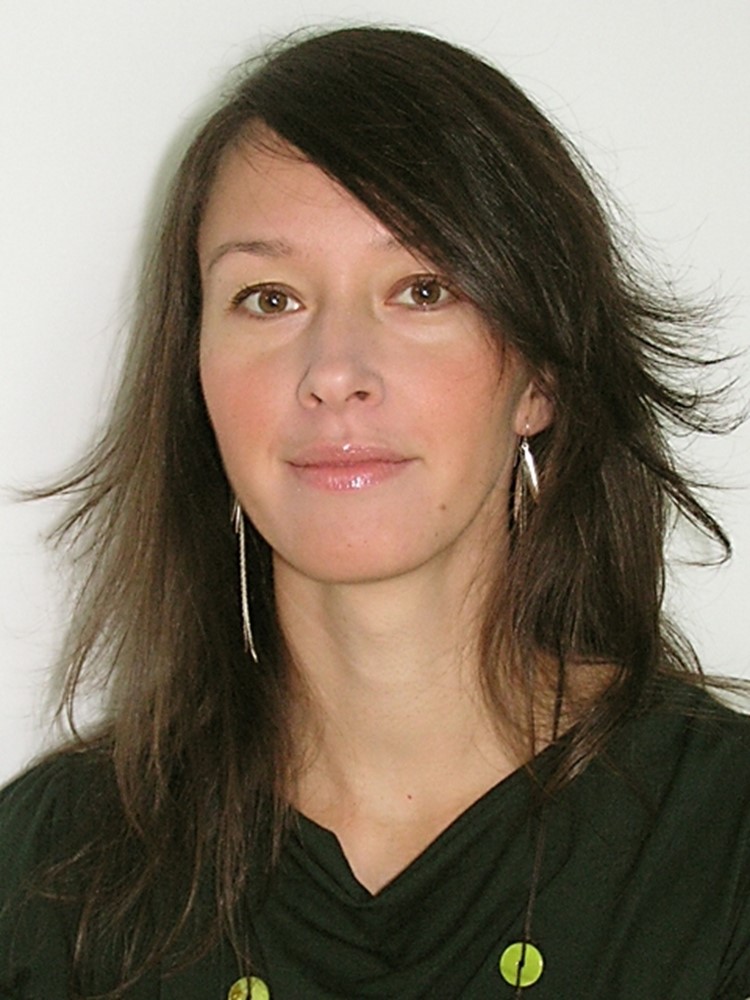
Ing. Jana Chovancová, PhD. is an Associate Professor at the Department of Environmental Economy and Management, Faculty of Management and Business, University of Presov. She holds a PhD in Environmental Management from Technical University in Košice, with bachelor's and master's degrees in Operations Management and Environmental Protection Technology. Education: Bachelor's: Operations Management, Technical University in Košice Master's: Environmental Protection Technology, Technical University in Košice Doctoral: Environmental Management, Technical University in Košice Research Interests: Focuses on environmental management systems, voluntary environmental policy initiatives in corporations, and sustainability of energy systems in the EU. Engaged in over 20 national/international projects including VEGA, KEGA, APVV, ESF, TEMPUS, and Norway Grants. Co-developed an Innovation Voucher project with local companies. Professional Activities: Conducted international internships at Technical University of Novi Sad, Bucharest University of Technology, Hungarian University of Agricultural and Life Sciences, and Cyprus University of Technology. Author/co-author of >200 publications (40 in Web of Science). Teaching: Teaches Operations Management, Logistics, and Managerial Decision Making. Office hours: Mon 10:40-11:20 and Thu 9:00-10:30 (by prior email arrangement). Office Location: Room 412, 3rd floor, Konštantínova 16, Prešov.
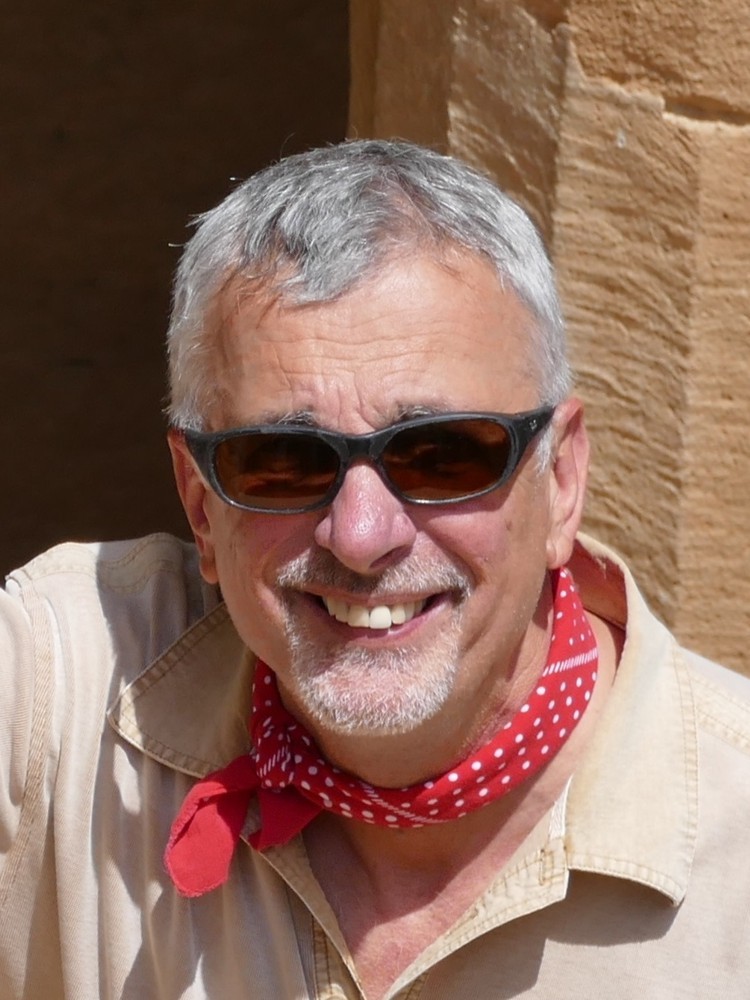
Peter Bobrowsky serves as Adjunct Faculty in Earth Sciences at Simon Fraser University and as Scientist Emeritus at the Geological Survey of Canada. His global career spans multiple continents, focusing on geological hazards and earth sciences. His primary research areas include Natural Hazards and Quaternary Geology, with specialized interests in landslides, paleotsunamis, geoethics, medical geology, aggregate resources, and paleoenvironmental reconstruction. His work often addresses practical challenges in hazard mitigation and resource management through interdisciplinary field studies and technical analysis. Recent publications demonstrate sustained focus on landslide monitoring in British Columbia's Thompson River valley, paleotsunami chronology along the Cascadia margin, and geoethics advancement. His interdisciplinary approach integrates geophysics, geochemistry, and sedimentology to address climate resilience and infrastructure protection, with strong emphasis on practical applications for transportation corridors and coastal communities.
Assoc. Prof. Müge Balkaya is an Associate Professor in the Civil Engineering Department at Istanbul Technical University (ITU). She holds a PhD in Soil Mechanics and Geotechnical Engineering from ITU and has been affiliated with the university since 2000. Her research focuses on geotechnical engineering applications, including soil mechanics, contaminated site remediation, geosynthetics, and pipeline behavior analysis. She has extensive experience in numerical modeling, sediment capping techniques, and waste material utilization in geotechnical projects. **Education**: - PhD (2010), Soil Mechanics & Geotechnical Engineering, ITU - MSc (2002), Geotechnical Engineering, ITU - BSc (1999), Civil Engineering, ITU **Research Interests**: - Soil-structure interaction in buried pipelines - Contaminated sediment management and capping technologies - Geosynthetics and recycled materials in construction - Deep soil mixing and column stability - Dynamic compaction and soil impact analysis **Publications Trends**: Her recent work emphasizes meshless methods for soil analysis, numerical simulations of contaminated site remediation, and applications of EPS geofoam in road embankments. Key contributions include studies on pipe behavior under varying soil conditions and the use of recycled materials in geotechnical engineering. **Professional Memberships**: - Turkish National Committee for Solid Waste Pollution Research and Control - Turkish National Committee for Soil Mechanics and Foundation Engineering **Grants/Advising**: No specific grants listed. Collaborates with researchers on projects involving international institutions like Queen's University (Canada) and Polish institutions. **Lab/Teams**: Active in ITU's Geotechnical Engineering research group, focusing on experimental and numerical analysis of geotechnical systems.
Associate Professor Tamra Lysaght is affiliated with Sydney Health Ethics at the University of Sydney's Faculty of Medicine and Health. Her research focuses on the ethics, regulation, and governance of emerging biomedical technologies, including stem cell research, genomics, precision medicine, and digital health. She holds leadership roles in organizations like the Committee for Ethics, Law and Society of the Human Genome Organisation and the International Society for Stem Cell Research. Lysaght has secured significant grants, such as the 2024 FMH Start-up Scheme and the 2022 Department of Health and Aged Care grant for ethical governance of genomic data. Her work addresses global challenges in bioethics, policy, and clinical innovation, with an emphasis on Southeast Asia through the Sydney Southeast Asia Centre. Her awards include the Mark S. Ehrenreich Regional Prize (2020) and a Hastings Centre Visiting Fellowship (2011). Current projects include codesigning governance frameworks for embryo and stem cell research and advancing precision medicine data policies. Lysaght teaches health ethics, research ethics, and empirical bioethics, contributing to the education of future healthcare professionals and researchers.
Aníbal Arregui is a Research Fellow affiliated with the University of Rostock, with prior association to the University of Barcelona. His work focuses on the socio-environmental impacts of extractive industries on marginalized communities, particularly quilombola populations in the Amazon. His research integrates biopolitical theory with ethnographic studies to analyze the interplay between industrial extraction, environmental governance, and traditional lifeways. Arregui conducted fieldwork between 2007 and 2009 in the Trombetas Basin, investigating the effects of the Mineração Rio do Norte (MRN) bauxite mine on the Boa Vista quilombola community. His research interests include environmental anthropology, biopolitics, and the socio-technical transformations wrought by extractive capitalism. He explores how mining operations disrupt traditional body techniques, land use practices, and communal infrastructures like slash-and-burn agriculture (roçados) and flour houses (casa da farinha). Arregui’s work highlights the entanglement of corporate and state environmental policies with the erosion of quilombola cultural and ecological sovereignty. Key findings include the mine’s role in disciplining workers’ bodies through surveillance and medical protocols, while simultaneously naturalizing the Amazon as a ‘protected’ space that excludes traditional extractivism. His analysis underscores the neoliberalization of nature and the disarticulation of quilombola socio-technical systems. Funding for his work came from a PhD grant (Generalitat de Catalunya, University of Barcelona) and a postdoctoral contract (DFG-GK, University of Rostock). His research contributes to broader debates on biopolitics, environmental justice, and the politics of technology in global extractive economies.
Professor Marco Amati is a faculty member at RMIT University, affiliated with the School of GUSS, where he holds the rank of Professor. He serves as the Program Manager for the Master of Urban Planning and Environment program, focusing on developing impactful educational initiatives. His research emphasizes urban green spaces, environmental sustainability, and the intersection of planning with health and social sciences. Key areas include the cooling benefits of trees, urban agriculture, and social-ecological systems. Professor Amati’s work integrates interdisciplinary approaches, such as ecological design frameworks and machine learning for urban policy. His supervision spans topics like urban green spaces, peri-urban food systems, and land reform in developing countries. Notable contributions include studies on Melbourne’s urban vegetation, heat mitigation strategies, and the social dimensions of urban planning. He actively collaborates with institutions like the Clean Air and Urban Landscape Hub and has authored influential publications on biodiversity integration, multicultural urban landscapes, and climate-responsive design. His expertise bridges technical fields (e.g., geomatic engineering) with humanities, reflecting a commitment to holistic urban development.
Professor Jesse Richardson is a distinguished faculty member at West Virginia University College of Law where he serves as Professor of Law and Lead Land Use Attorney. His expertise spans water law, land use law, and agricultural law, with particular focus on karst resources and floodplain management. Richardson teaches courses in Land Use, Water Law, and Land Use and Sustainable Development Clinic, bringing practical experience from his previous private practice in Virginia. Richardson's educational background includes a J.D. from the University of Virginia (1992), M.S. in Agricultural and Applied Economics from Virginia Tech (1996), and B.S. in Agricultural Economics from Virginia Tech (1984). His academic journey previously included a position as Associate Professor in Urban Affairs and Planning at Virginia Tech. Professor Richardson's research focuses on the intersection of property rights, environmental protection, and sustainable development. His work examines how legal frameworks can balance agricultural needs with environmental protection, particularly in sensitive karst regions. He has made significant contributions to understanding water rights, floodplain management, and the legal challenges of heirs' property. His scholarship often addresses the practical implementation of environmental regulations at local and state levels, with particular attention to Appalachian communities. Analysis of Richardson's recent publications reveals a consistent focus on water law evolution, particularly regarding the Clean Water Act and Waters of the United States definitions. His work increasingly addresses climate change adaptation through land use planning and examines how traditional property law concepts must evolve to address modern environmental challenges. The interdisciplinary nature of his research connects legal scholarship with practical resource management concerns. Professional Scholarship Award from American Agricultural Law Association (1999) William E. Wine Award for teaching excellence from Virginia Tech (2004) University Certificate of Excellence in Outreach (2009) AALA Excellence in Agricultural Law for Academia Award (2018) As Lead Land Use Attorney, Richardson directs the Land Use and Sustainable Development Law Clinic, providing students with hands-on experience in land use planning and environmental law. His outreach extends to service on the Boards of Directors of the American Agricultural Law Association, the Universities Council on Water Resources, and the National Cave and Karst Research Institute. He has previously served on the Virginia Farmland Protection Task Force and the Virginia Water Policy Technical Advisory Committee, demonstrating strong connections between academic work and practical policy development. Richardson has worked directly with communities in West Virginia and Virginia on land use planning issues, particularly those involving karst and water resources. Professor Richardson maintains active engagement with professional communities through frequent podcast appearances on the 'Ag Law in the Field' series, where he has participated in multiple episodes discussing regulatory takings, conservation easements, exempt wells, and Supreme Court water cases. His work bridges academic scholarship with practical legal application in rural and agricultural contexts.
Helle Nedergaard Nielsen is an Associate Professor at the Department of Sustainability and Planning, Aalborg University, affiliated with The Technical Faculty of IT and Design and The Danish Centre for Environmental Assessment. Her work focuses on environmental impact assessment (EIA), strategic environmental assessment (SEA), renewable energy policy, and problem-based learning in sustainability education. Research Interests Her research emphasizes community engagement in planning processes, particularly in renewable energy projects and waste management systems. She explores how participatory methods like PBL (Problem-Based Learning) enhance sustainability education and policy implementation. Key themes include: Ethical and social dimensions of EIA/SEA Community acceptance of renewable energy infrastructure Circular economy transitions in Southeast Asia and Scandinavia Policy design for transparent public participation Projects She leads/co-leads projects such as the Integrated ecological, genomic and oceanographic analysis for planning marine habitat protection (2024–2027) and UNLOCKING THE SUPPLY OF RARE EARTH ELEMENTS IN EUROPE (2023–2027). Notable collaborations include the SEA-ASIA initiative for capacity building in environmental assessment. Advising & Grants As a Principal Investigator (PI), she oversees projects funded by national and EU grants, focusing on marine governance and sustainable resource management. She advises on PhD projects related to environmental policy and participatory methods. Labs/Teams Maintains active roles in the Danish Centre for Environmental Assessment and collaborates with institutions like the University of Agder and BioNetGain Foundation.
Lone Kørnøv is a Professor at Aalborg University's Department of Sustainability and Planning, affiliated with The Technical Faculty of IT and Design and The Danish Centre for Environmental Assessment. She holds a PhD in Strategic Environmental Assessment and Decision Making Processes. Her research focuses on environmental assessment frameworks, sustainability transitions, biodiversity integration, and governance mechanisms for spatial planning. She has advised 10 PhD students and led projects such as BioValue, AAU-Climate Methodology Innovation, and ENVISION. Key research interests include strategic environmental assessment (SEA), environmental impact assessment (EIA), industrial symbiosis, and the application of Sustainable Development Goals (SDGs) in policy. Her recent work emphasizes transformative mitigation strategies for biodiversity and digital tools for environmental assessment. Publications span over 250 peer-reviewed articles, focusing on topics like biodiversity benchmarking, spatial planning impacts, and AI applications in environmental decision-making. Awards include The Order of Dannebrog (2024) and Inno woman 2024, reflecting her contributions to environmental governance and innovation.
Maria Angustias Auger Martinez is an Associate Professor and Deputy Director of the Physics Department at Carlos III University of Madrid . Her research focuses on materials science , particularly in surface engineering , thin film deposition , and mechanical property enhancement of coatings for industrial and nuclear applications. Email : mariaangustias.auger@uc3m.es Contact : +34 916249478 Location : 4.0.C07 - Quevedo Towers (Leganés) Her work involves reactive magnetron sputtering for depositing TiN , ZrN , and AlN coatings, analyzing their microstructure , hardness , and corrosion resistance . She has contributed to understanding nanoparticle dispersion in ODS steels for fusion reactors and developed multilayer coatings with enhanced mechanical properties. Her publications from 2002–2017 reflect expertise in X-ray diffraction , AES/EDS characterization , and nanoindentation . Notable projects include industrial tool life extension (67% improvement via TiN coatings) and thermal stability studies of nitride films. She collaborates on structural material development for nuclear applications (e.g., W-V/Ti ODS materials ). Her research spans metallurgical characterization , tribology , and corrosion behavior of advanced materials. Despite no explicit scientific awards or student advising information in the provided texts, her technical contributions to coating technologies and nuclear-grade alloys demonstrate significant impact in applied materials science.
Tarja Tiainen is a University Lecturer at the Faculty of Information Technology and Communication Sciences, Department of Computing Sciences, Tampere University. Her research focuses on virtual environments, user-centered design, and gender dynamics in ICT. She holds expertise in healthcare design, product development, and innovation diffusion. Her work explores how virtual prototyping enhances collaborative design processes in industries like healthcare and manufacturing. Notable research includes studies on gender bias in academic recruitment and the perception of renewable energy infrastructure using VR. Tiainen has also contributed to methodologies for evaluating user experiences in virtual spaces, emphasizing ethical considerations and semantic clarity for diverse populations. Her publications span over two decades, addressing themes such as participatory design, ICT specialists' predispositions, and the interplay between technology and societal structures. She actively engages with interdisciplinary teams to bridge theoretical and applied research in computing sciences. Professional activities include organizing conferences like IRIS and FeBR, demonstrating her leadership in advancing information systems research. Her work consistently bridges technical innovation with human-centered values, particularly in contexts requiring equitable and inclusive design solutions.
Laura Di Chiacchio is a cybersecurity lecturer at Aston Business School and researcher at the Cyber Security Innovation Centre (CSI) within Aston University's College of Business and Social Sciences. Her work focuses on cybersecurity awareness, digital transformation, and sustainability, emphasizing the interplay between technology, organizational behavior, and environmental stewardship. Education: PhD (Co-tutelle): Bridging Sustainability and Digital Transformation, Coventry University (2024) and Universidad Politécnica de Cartagena (2023) MSc: Non-financial Reporting Analysis, Coventry University (2020) Strategic Management Certificate, Chartered Management Institute (2019) BSc: [Details unspecified] Research Interests: Digitalization's societal impact Technology governance and ethical use Cybersecurity human factors Eco-literacy through digital tools Corporate social responsibility Teaching: Module Leader: Cybersecurity Human Factors & Regulatory Aspects PIPE (Product, Intellectual Property & Entrepreneurship) course leader Cybersecurity Bootcamp instructor Awards: 2024: Premio Extraordinario de Doctorado 2020: Ede and Ravenscroft Academic Excellence Award Professional Activities: Member: British Academy of Management, ISACA UK APMG Certified Cyber Security University Instructor
Hüseyin Erdem Görgün is a Professor of Environmental Engineering at Istanbul Technical University's Department of Environmental Engineering. He has held academic roles since 1990, including Professor since 2007, and served in administrative positions like Vice President of the Department and Member of the Faculty Board of Directors. His research focuses on treatment plant design, climate change mitigation, and waste management. He earned his PhD in Environmental Engineering from Istanbul Technical University in 1996 after completing his MSc (1991) and BSc (1987) in the same field. His work emphasizes sustainable development through projects like the Ergene River Basin restoration and evaluation of CO2 emission scenarios in Turkey's electricity sector. He contributed to policy frameworks such as improving environmental permit processes and deposit refund systems for recyclables. His technical expertise spans mathematical modeling of wastewater treatment systems and optimization of nitrogen removal processes. Education: Bachelor of Science in Environmental Engineering, Istanbul Technical University (1983-1987) Master of Science (Thesis), Istanbul Technical University (1989-1991) Doctor of Philosophy (Dr), Environmental Engineering, Istanbul Technical University (1992-1996) Prof. Görgün's research interests include water pollution control, industrial wastewater treatment, and environmental policy implementation. He has advised on national projects like the TC Elbistan Municipality environmental management plan and contributed to international initiatives such as the UN-CP/RAC Clean Technologies Programme. His work bridges technical innovation with policy, addressing challenges in coastal zone management and sustainable industrial clustering. Notable administrative roles include serving as National Focal Point for the UN-CP/RAC and membership in key organizations like the Turkish National Committee on Water Pollution and Research (since 1990). His research spans over three decades, with publications focusing on wastewater treatment optimization, climate change mitigation strategies, and recycling systems.
Emre Akyüz is a Professor in the Department of Maritime Transportation Engineering at Istanbul Technical University. His research focuses on maritime safety, risk analysis, and decision-making models in maritime systems. He leads projects addressing tanker safety, cyber-attack risks in autonomous ships, and maritime health training. Akyüz has published over 100 articles and secured multiple grants, including EU-funded initiatives. He was awarded the ITU Science Awards' Young Academician Success Award (2023) and Above Threshold Prizes (2022). Research Interests: Risk analysis in tanker operations and cargo handling Cybersecurity for maritime autonomous systems Human reliability in navigation systems Safety optimization of maritime equipment placement Environmental impact of marine pollution Decision-making frameworks using Bayesian networks and fuzzy logic Recent Projects: Optimized safety equipment placement model for vessels (2023-2026) Hybrid risk analysis for chemical tanker operations (2023-2025) Numerical risk assessments for ship recycling (2023) EU-funded maritime health training (2019-2021) Awards: ITU Science Awards, Young Academician Success Award (2023) Above Threshold Prize (2022) Horizon Above the Threshold Prize (2022) Labs & Teams: Leads research groups focusing on maritime safety engineering, autonomous systems cybersecurity, and hybrid risk modeling methodologies.
Prof. Aleksandra Sas-Bojarska is a Professor at the Department of Urban Design and Regional Planning, Gdańsk University of Technology. She holds a habilitation in Architecture and Urban Sciences (2008) from the Faculty of Architecture. Her work focuses on landscape protection, environmental impact assessments (EIA), and sustainable urban development. She has led projects like 'Landscape protection in Environmental Impact Assessment in context of contemporary legal and methodological constraints' (2018). Her research interests include urban environmental planning, threats to landscapes from infrastructure projects, and EIA methodologies. Notable achievements include two national awards (2018) for her monograph on infrastructure projects and landscape protection. She teaches courses like 'Environmental Impact Assessment' and 'Urban Design IV', emphasizing interdisciplinary approaches to urban challenges. Prof. Sas-Bojarska has authored over 60 publications and actively participates in international workshops promoting sustainable design education. Her work bridges academic research with practical policy recommendations for urban sustainability.