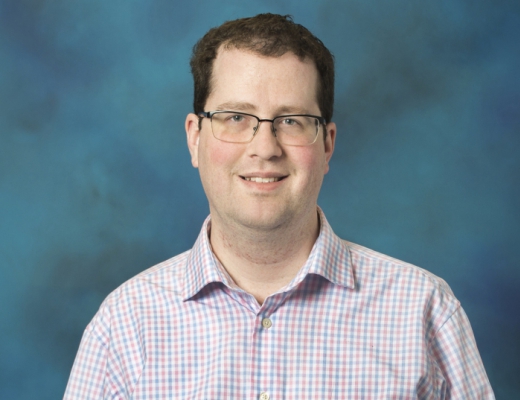
Scott Fraundorf is an Associate Professor in the Department of Psychology at the University of Pittsburgh , where he leads the MAPLE (Memory And Psycholinguistics in Learning & Education) Lab . He combines cognitive science and data science to study human behavior prediction, educational program evaluation, and psycholinguistics . His research focuses on student learning and metacognition language processing and educational technology interventions statistical modeling using regression , machine learning , and mixed-effects models as well as open-source tool development for cognitive science. Key technical skills include Python , R , and SQL programming, with 3 patents for intelligent tutoring systems in English grammar. He has mentored over 70 graduate students and faculty in quantitative methods.
Phillip J Ansell is an Associate Professor in the Department of Aerospace Engineering at the University of Illinois. He serves as the Director of the Center for High-Efficiency Electrical Technologies for Aircraft (CHEETA), focusing on advancing sustainable aviation through innovative propulsion and energy systems. His research interests include aerodynamics optimization, hydrogen propulsion, electric aircraft integration, and cryogenic technologies. Ansell has received prestigious awards such as the AFOSR Young Investigator Award (2015), ARO Young Investigator Award (2017), and the Lawrence Sperry Award (2023), recognizing his contributions to sustainable aviation and flow control technologies. His work spans interdisciplinary areas like hydrogen fuel cell systems, airfoil design, and electrified aircraft architectures. Recent research emphasizes sustainable aviation frameworks, cryogenic hydrogen storage, and propulsion-airframe integration. Ansell has collaborated on projects involving distributed propulsion systems, wind energy optimization, and advanced plasma actuators for flow control. His leadership in CHEETA drives innovations in superconductivity and high-temperature superconducting components for next-generation aircraft. Notable contributions include studies on laminar flow control, transonic aerodynamics, and the technical challenges of integrating MW-scale hydrogen propulsion systems. His publications reflect a blend of theoretical modeling, experimental validation, and systems engineering approaches to address aviation's sustainability challenges.
Maurice Heemels is a Full Professor at Eindhoven University of Technology (TU/e), leading the Control Systems Technology group. He holds additional professorships in EAISI Mobility, EAISI Foundational, EAISI Health, and EAISI High Tech Systems. His research focuses on hybrid and networked systems, emphasizing resource-aware control, event-triggered strategies, and cyber-physical systems integration. He is an IEEE Fellow and chairs the IFAC Technical Committee on Networked Systems. Academic Background: MSc and PhD in Mathematics (TU/e, 1995 and 1999, both summa cum laude ) Visiting Professorships: ETH Zurich (2001), UC Santa Barbara (2008) Industry Experience: Research & Development at Océ NV Research Interests: Hybrid Systems, Networked Control, Event-Triggered Control Model Predictive Control (MPC) in healthcare and high-tech systems Cyber-Physical Systems for applications like lithography and precision agriculture Key Contributions: Developed Hybrid Integrator-Gain (HIGS) systems and Projection-Based Control methodologies Recipient of a VICI Grant for wireless control systems research Oversaw over €7M in research funding from NWO, EU, and industry Awards & Recognition: Automatica Outstanding Service Award (2014) Best Paper Awards (EBCCSP 2017, etc.) Invited Keynote Speaker at ECC, CDC, and others Grants & Projects: Current Projects: COMEDI (Cost-effective Mechatronics), PROACTHIS (Projection-based Control) Past Projects: Fault Detection in Wafer Scanners, Drone-based Farming Labs & Teams: Active in TU/e’s Cyber-Physical Systems and Systems Engineering research groups, collaborating globally on nonsmooth dynamics and hybrid systems.
Andreas Müller is a Lecturer at ETH Zürich's Department of Civil, Environmental, and Geomatic Engineering. He holds a Master of Science in Civil Engineering from the Technical University Munich (TUM, 2015) and has worked as a bridge engineer at BUNG Ingenieure AG in Munich (2016–2017). Since 2017, he has been pursuing a PhD under Prof. Taras, initially at Bundeswehr University Munich (UniBw) and later continuing at ETH Zürich's Chair of Steel and Composite Structures. His research focuses on structural stability, particularly the buckling behavior of high-strength steel hollow sections, post-buckling rotation capacity, and the influence of initial imperfections analyzed via 3D surface scans (Reverse Engineering). He also investigates spiral-welded tubes' imperfection assessment and strain hardening effects on aluminum structural sections. Education: Master of Science in Civil Engineering, Technical University Munich (2015) Research interests emphasize bridging experimental and computational methods in structural engineering. He employs machine/deep learning for predictive modeling of buckling phenomena, particularly leveraging Deep Neural Networks (DNN) to enhance accuracy in structural analysis. His work addresses practical challenges in steel and composite structures, including standard compliance (e.g., prEN1993-1-1 updates) and real-world geometry imperfections' impact on load capacities. Advising and grants: As a current PhD candidate, he is supervised by Prof. Taras but has not yet listed advisees. His research is supported by institutional resources at ETH Zürich's Chair of Steel and Composite Structures. Labs/Teams: Active member of the Chair of Steel and Composite Structures at ETH Zürich, contributing to advanced structural mechanics research and engineering innovation initiatives.
Professor Washington Yotto Ochieng serves as Head of the Department of Civil and Environmental Engineering and Chair Professor in Positioning and Navigation Systems at Imperial College London. He directs the Centre for Active Resilience and Security (CARS) and maintains key affiliations with the Centre for Systems Engineering and Innovation, Centre for Transport Engineering and Modelling, Institute for Molecular Science and Engineering, and Space Lab. His extensive advisory roles include the Science Museum Group Board of Trustees, Royal Institute of Navigation Presidency, and Royal Academy of Engineering Africa Steering Committee. His educational background includes a BSc (First Class) in Engineering from the University of Nairobi and MSc (Distinction) and PhD in Civil Engineering from the University of Nottingham. He received an honorary DSc from Technical University of Kenya in 2023. Ochieng's research pioneers critical infrastructure resilience, user-centric mobility, and positioning/navigation/timing (PNT) systems. He has designed satellite navigation systems (including Europe's EGNOS and GALILEO) for multi-domain applications and advanced Air Traffic Management and Intelligent Transport Systems. His work integrates geomatics, transportation engineering, and sustainable mobility to solve global urban infrastructure challenges, with recent emphasis on decarbonization and AI-driven solutions. His 2024-2025 publications reveal strong trends in sustainable transportation decarbonization, AI-optimized traffic management, and resilient urban positioning systems. Research focuses on hydrogen fuel cell trains, carbon-efficient aviation, and deep reinforcement learning applications for emission reduction, demonstrating interdisciplinary integration of engineering, environmental science, and artificial intelligence to address climate challenges. Fellow of the Royal Academy of Engineering (2013) Harold Spencer-Jones Gold Medal from Royal Institute of Navigation (2019) Doctor of Science (honoris causa) from Technical University of Kenya (2023) Elder of the Order of the Burning Spear (EBS) from Kenya (2023) Commander of the Order of the British Empire (CBE) (2024) Ochieng provides strategic guidance to UK Government bodies (Government Office for Science, Department for Transport, FCDO), European Parliament, and European Court of Auditors. His advisory work shaped the Blackett Review on Satellite-derived Time/Position, UK Space Strategy, and Future of Mobility report. He chairs the Science Museum London Advisory Board and leads FCDO's Sustainable Urban Economic Development program in Africa, with significant grant influence through UK National Physical Laboratory and Department for International Development. He directs the Centre for Active Resilience and Security (CARS) and leads Space Lab initiatives, focusing on mission-critical PNT systems and infrastructure resilience. His teams collaborate with international consortia including RTCM Special Committee 134 and US Institute of Navigation, developing next-generation navigation solutions for safety-critical applications across transport, aviation, and urban environments.
Lin Cai is an Associate Professor in the Department of Electrical and Computer Engineering at Illinois Institute of Technology, serving as Director of Graduate Affairs. She holds a Ph.D. in Electrical and Computer Engineering from the University of Waterloo, Canada (2010). Her research focuses on sustainable wireless communication and networking, particularly in energy harvesting, IoT, and deep reinforcement learning for resource management. Key research projects include energy sustainability in renewable-energy-powered networks, energy-efficient 5G protocols, and radio resource management over unlicensed bands. She has received the NSF CAREER Award (2016-2020), Best Paper Awards, and NSERC Postdoctoral Fellowship. Her work spans theoretical frameworks and practical implementations in HetNets, MIMO, and UAV-based systems. Education: Ph.D., E&CE, University of Waterloo, Canada (2010) Affiliations: Executive Editorial Committee member, IEEE Transactions on Wireless Communications (2021–present); Associate Editor for multiple IEEE journals Teaching: Courses include ECE 407/408 (Computer Networks) and ECE 517 (Modern Wireless Network Protocols) Her research emphasizes cross-layer protocol design, sustainable capacity planning, and topology control. Notable contributions include frameworks for energy sustainable radio resource management and optimization in dense HetNets. She actively contributes to conference organization and technical program committees for IEEE INFOCOM, GLOBECOM, and ICC.
Paolo Mastropietro is a Research Professor at the Institute for Research in Technology (IIT) of Comillas Pontifical University in Madrid. He holds a Master's degree from the University of Rome Tor Vergata (2009) and a PhD from Comillas University (2016), focusing on capacity remuneration mechanisms. His career includes private sector work in Italy and Spain, a UNV Project Officer role in Ethiopia (2011), and joining IIT in 2012 under the SETS Erasmus Mundus PhD program. Affiliations: IIT, School of Engineering (ICAI), Comillas Pontifical University Research Interests: Power sector regulation, security of supply, capacity remuneration mechanisms, regional markets, tariff design, and energy sustainability His research emphasizes regulatory frameworks for energy transition and decarbonization, with contributions on hydrogen markets, electricity storage, and demand response integration. Recent work includes analysis of EU market reforms, pandemic-related energy poverty measures, and capacity mechanisms in Latin America. Key projects include the EU-funded ONESYSTEM (2023–2028) and DEFINER (2022–2025) initiatives, focusing on energy system integration and demand flexibility. He advises on regulatory modernization in Peru, Colombia, and Panama, and has authored over 40 journal articles, books, and technical reports. Awards: 2015 ICER Distinguished Scholar Award, Iberdrola Scholarship (2020) Grants: Projects funded by MICIU, World Bank, European Commission, and others He supervises doctoral research, including P. Brito Pereira’s work on future-proof capacity mechanisms. His expertise spans international energy policy, with engagements at ACER and MIT, and contributions to energy transition strategies globally.
Nuno Santos is an Associate Professor in the Department of Computer Science and Engineering at Instituto Superior Técnico (IST), University of Lisbon, and a senior researcher at INESC-ID Lisbon. He leads the SysSec team, focusing on systems security and privacy. His research spans secure enclaves, network security, and censorship-resistant systems. Education: Ph.D. in Computer Science (2013) from Max Planck Institute for Software Systems (MPI-SWS) in affiliation with Saarland University. Visiting research stints at Vrije Universiteit Amsterdam (2018) and Technical University of Munich (2024). Research Interests: Systems security, privacy, trusted execution environments (TEEs), network security, censorship resistance, AI security, and secure cloud computing. He has pioneered work on mitigating vulnerabilities in TrustZone-based TEEs and enhancing confidential computing. Publications: Over 30+ peer-reviewed articles in top-tier venues like S&P, USENIX Security, CCS, and NDSS. Recent trends focus on AI-driven security (e.g., automated exploit generation, prompt-to-SQL injections) and confidential computing (e.g., AMD SEV-SNP analysis). Awards: IST Outstanding Teaching Award (2019/2020), 2024 Prémio Científico Universidade de Lisboa/Caixa Geral de Depósitos. Advising & Grants: Supervised MSc theses in areas like AI-powered vishing attacks and confidential VMs. Active in conference organization (e.g., USENIX Security’25 Vice Chair, IEEE EuroSP’26 Co-Chair). Labs/Teams: Leads the SysSec team at INESC-ID Lisbon, collaborating on projects like AnyTEE (TEE framework) and FlowLens (network security tool).
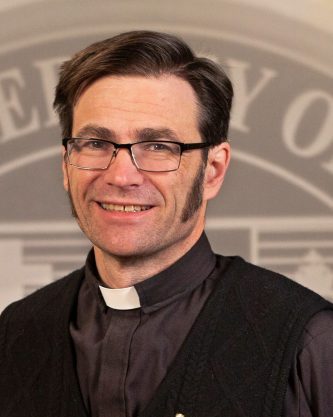
Dcn. Stephen Frezza is a Professor of Software Engineering and current Director of the Software Engineering Program at Franiscan University of Steubenville . Prior to this, he served as a professor and three-time chair of the Computer and Information Science Department at Gannon University for 26 years. His expertise spans requirements engineering, project management, software testing, and embedded systems . Ph.D., M.S., and B.S. in Electrical Engineering from the University of Pittsburgh Professional Software Engineering Master (PSEM) Active in industry-university partnerships His research bridges engineering with theology , focusing on philosophy of engineering, affective-domain assessment, competency modeling, and software engineering education . He has authored numerous scholarly works on virtue formation, educational frameworks, and the philosophical foundations of computing. Recent publications highlight his contributions to computing curricula (CC2020), virtue-based educational models , and Lonergan’s epistemology applied to engineering . His work integrates faith and reason in pedagogical contexts, emphasizing the ethical dimensions of engineering education . Senior Member of the IEEE Computer Society Volunteer for IEEE-CS Special Technical Committee on Education Professional member of the American Society for Engineering Education (ASEE) Dcn. Frezza’s leadership in curriculum design and industry collaboration has shaped software engineering programs globally. His teaching and research underscore the interplay between technical rigor and moral development , advocating for holistic engineering education.
Dr. Florian Egli is an Assistant Professor and head of the Public Policy for the Green Transition group at the Technical University of Munich (TUM). He holds a PhD from ETH Zurich's Energy and Technology Policy Group and has been affiliated with institutions like the Institute for Innovation and Public Purpose (UCL) and the Swiss Young Academy. His research focuses on the intersection of finance and political economy in addressing climate change, emphasizing sustainable transitions and energy policy. Education: PhD in Energy Policy from ETH Zurich Senior Researcher and Lecturer at ETH Zurich's Energy and Technology Policy Group Research Interests: Florian investigates how financial mechanisms and political strategies drive the green transition. Key areas include renewable energy financing, climate policy implementation, and the political economy of fossil fuel phase-outs. His work bridges academic research with policy impact, often addressing global challenges like green hydrogen trade and energy equity in developing regions. Recent Article Trends: His publications analyze cost competitiveness of green technologies (e.g., African green hydrogen), financing barriers in energy transitions, and policy frameworks for equitable climate action. These studies highlight the need for de-risking policies and strategic investment to achieve sustainability targets. Awards: ETH Medal for Outstanding Doctoral Theses SAEE Best Dissertation Award University of St. Gallen Impact Award Financial Times Best Academic Research with Societal Impact Award Advising & Grants: As group head, Florian oversees research on green industrial policy and climate finance. He collaborates with international bodies like the OECD and IRENA, advising on energy transition strategies. His work includes policy briefs on electrification in Africa and de-risking renewable investments. Labs & Teams: Leads the Public Policy for the Green Transition group at TUM, fostering interdisciplinary research on sustainable finance, energy policy, and climate governance.
Dr. Paul Westerhoff is a Regents' Professor and Fulton Chair of Environmental Engineering at Arizona State University's School of Sustainable Engineering and the Built Environment. He leads major NSF-funded research centers, including the Nanosystems Engineering Research Center for Water Treatment (NEWT) and the Science and Technologies for Phosphorus Sustainability (STEPS) Center. With over 400 journal publications (H-index >100), his work focuses on emerging contaminants, water treatment technologies, and nanomaterial fate. Awards include the 2023 National Academy of Engineering membership, 2020 A.P. Black Award, and 2019 NWRI Clarke Prize. Education: Ph.D., University of Colorado-Boulder (1995); M.S., University of Massachusetts-Amherst (1991); B.S., Lehigh University (1989). Research emphasizes water quality, sustainable engineering, and nanotechnology applications. Key areas include PFAS remediation, biofilm control via UV light, and atmospheric water harvesting. He serves as Associate Editor for Environmental Science & Technology . Recent projects include lithium monitoring in drinking water, semiconductor water use, and space-based UV disinfection systems. Over 80 students have graduated under his mentorship, recognized with ASU's 2015 Outstanding Doctoral Mentor Award. Awards span innovation (Water Research Foundation, 2024), teaching (Daniel Jankowski Legacy Award, 2021), and technical excellence (EPA STAA, 2019).
Orla Feely is the President of University College Dublin (UCD), having previously served as Vice-President for Research, Innovation and Impact (2014–2023). She holds a BE from UCD and MS/PhD degrees from UC Berkeley, where her thesis won the DJ Sakrison Memorial Prize. Her research focuses on nonlinear circuits and systems, supported by grants from Science Foundation Ireland and the Wellcome Trust. She is a Fellow of IEEE, Engineers Ireland, and the Royal Irish Academy, and has held leadership roles in organizations like CESAER and the Irish Research Council. Education: BE, University College Dublin MS, University of California, Berkeley PhD, University of California, Berkeley Research interests include nonlinear circuits, systems dynamics, and MEMS technology. Key grants include funding for gravitational turbulence studies (Wellcome Trust, 2024–2026) and nonlinear effects in communications circuits (SFI, 2003–2012). Awards include the IEEE Fellow distinction for contributions to nonlinear discrete-time circuits and systems. Professional activities include chairing the IEEE Technical Committee on Nonlinear Circuits and Systems, serving on the Higher Education Authority Board, and judging panels for the BT Young Scientist and Queen Elizabeth Prize for Engineering.
Dr. Reza Montasari is a Senior Lecturer in Cyber Threats at Swansea University's Hillary Rodham Clinton School of Law. He holds a BSc in Multimedia Computing and MSc in Computer Forensics from the University of South Wales, and a PhD in Digital Forensics from the University of Derby. His professional memberships include Fellow of the Higher Education Academy (FHEA) and Chartered Engineer (CEng). Montasari’s research focuses on Digital Forensics, Cyber Security, and Cyber Terrorism, with over 50 publications. He has authored/co-authored books like Cyberspace, Cyberterrorism and International Security (2024) and Countering Cyberterrorism (2023). His work bridges technical and legal aspects of cyber threats, addressing AI’s role in counterterrorism and national security. He has held roles such as External Examiner at the University of South Wales and leadership positions in cybersecurity initiatives. His expertise includes IoT forensics, dark web challenges, and digital policing strategies. Montasari also collaborates with law enforcement agencies like Cheshire Police and advises media on cybersecurity issues. Key contributions include editorial board memberships, conference presentations (e.g., ICGS3), and contributions to cybersecurity policy development. His research emphasizes ethical AI applications, privacy rights, and mitigating cyber threats in modern societies.
Soner Sonmezoglu is an Assistant Professor of Electrical and Computer Engineering at Northeastern University's College of Engineering. His research focuses on implantable and wearable medical devices enabled by advanced microelectronics and microfabrication for neurological, diagnostic, and therapeutic applications. He leads the Sonmezoglu Lab and has secured major grants including a $13M ARPA-H award for developing photoacoustic imaging systems for early lung cancer detection. Education: PhD in Electrical and Computer Engineering, UC Davis (2017) BSc and MSc in Electrical Engineering with a minor in Solid-State Physics, Middle East Technical University (2010-2012) Postdoctoral Researcher, UC Berkeley EECS (pre-2022) Research Interests: His work spans integrated circuits, micro/nano electromechanical systems (M/NEMS), neural interfaces, and medical device integration. Key projects include ultrasonic wireless neural interfaces and millimeter-scale oxygen sensors for deep-tissue monitoring. Current initiatives include the PAIL project for lung cancer diagnostics. Awards: UC Davis Graduate Division Fellowship Scientific and Technical Research Council of Turkey Graduate Fellowship Grants & Collaborations: Principal Investigator of ARPA-H's $13M PAIL initiative. Active in the Institute for NanoSystems Innovation, contributing to chip-level technology advancements. Labs/Teams: Directs the Sonmezoglu Lab at Northeastern, focusing on next-generation biomedical device innovation through interdisciplinary microsystems engineering.
Hongbo Jiang is a Distinguished Professor and Vice Dean of the College of Computer Science and Electronic Engineering at Hunan University, China. He holds concurrent roles as Director of the Trusted Systems and Networking Key Laboratory of Hunan Province and Director of the Hunan International Technical Cooperation Base for High-Performance Computing and Distributed Systems. His academic journey includes tenures as a Professor at Huazhong University of Science and Technology and a Hong Kong Scholar Research Fellow at The Chinese University of Hong Kong. Education: PhD in Computer Science (Case Western Reserve University, 2008), B.S./M.S. in Mathematics (Huazhong University of Science and Technology, 2002). Research Interests: Distributed systems, mobile computing, smart sensing, wireless networks, IoT, and edge computing. Ongoing projects include mobile/wireless applications, data science in IoT, and edge computing platforms. His work emphasizes practical implementations such as DriverSonar for driving safety and SmileAuth for biometric authentication. Key Achievements: Elected Member of Academia Europaea (2022), Fellow of AAIA, IET, and BCS. Notable awards include the Wu Wenjun Science and Technology Award (2020) and multiple best paper recognitions. Over 100+ publications in top venues like ACM MobiCom, IEEE/ACM Transactions. Professional Contributions: Editorial roles across 8+ journals including IEEE Transactions on Mobile Computing and ACM Transactions on Sensor Networks. Conference leadership includes co-founding ACM TURC and EAI ICECI. Active in technical committees for INFOCOM, MOBIHOC, and ICDCS. Labs/Teams: Leads research groups focused on networking, IoT, and edge computing. Current openings for PhD/MSc students and PostDoc researchers with strong mathematical and systems backgrounds.