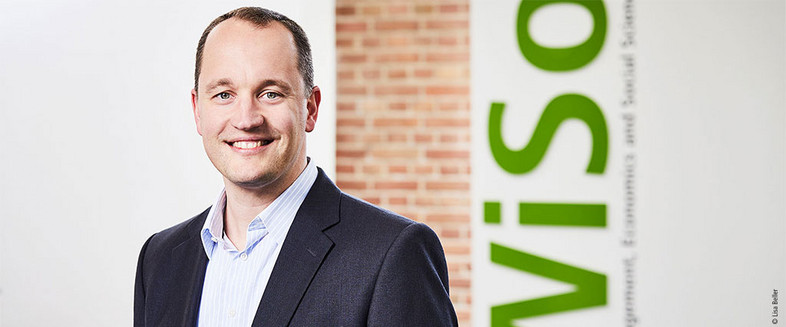
Dr. Andreas Baur is a research associate at the Institute of Ethics and Technology (IZEW) , University of Tübingen, and a PhD candidate at the Amsterdam Institute for Social Science Research (AISSR) , University of Amsterdam. He serves as fellow at the Critical Infrastructure Lab Amsterdam and contributes to the DoingIPS communication team. Education: M.A. in Peace Research and International Politics, University of Tübingen B.A. in Political Science and Economics, University of Tübingen/Universidad de Guadalajara Research Focus: Interdisciplinary analysis of IT infrastructures' political implications, particularly cloud computing's role in power dynamics, digital sovereignty (including EU's Gaia-X initiative), technology ethics, and governance of socio-technical systems. His work bridges International Relations , Science and Technology Studies , and ICT Policy . Recent Research Trends: Examines cloud infrastructure politics through lenses of sovereignty claims, hybrid cloud architectures, and material manifestations of power in digital ecosystems. Publications explore European digital governance attempts, cloud imaginaries, and multi-cloud regulatory challenges. Academic Contributions: Co-editor of Feminist Data Protection special issue ( Internet Policy Review , 2021) Participant in EU Horizon 2020 HEIMDALL project Contributor to EU FP7 SECTOR initiative Member of BMBF-funded Privacy-Arena and digilog@bw projects Teaching & Outreach: Conducts seminars on security in modern information technologies and participates in public workshops regarding AI ethics, digital sovereignty, and cyber security challenges. Regularly contributes to public debates through media appearances and policy discussions.
Nuno Santos is an Associate Professor in the Department of Computer Science and Engineering at Instituto Superior Técnico (IST), University of Lisbon, and a senior researcher at INESC-ID Lisbon. He leads the SysSec team, focusing on systems security and privacy. His research spans secure enclaves, network security, and censorship-resistant systems. Education: Ph.D. in Computer Science (2013) from Max Planck Institute for Software Systems (MPI-SWS) in affiliation with Saarland University. Visiting research stints at Vrije Universiteit Amsterdam (2018) and Technical University of Munich (2024). Research Interests: Systems security, privacy, trusted execution environments (TEEs), network security, censorship resistance, AI security, and secure cloud computing. He has pioneered work on mitigating vulnerabilities in TrustZone-based TEEs and enhancing confidential computing. Publications: Over 30+ peer-reviewed articles in top-tier venues like S&P, USENIX Security, CCS, and NDSS. Recent trends focus on AI-driven security (e.g., automated exploit generation, prompt-to-SQL injections) and confidential computing (e.g., AMD SEV-SNP analysis). Awards: IST Outstanding Teaching Award (2019/2020), 2024 Prémio Científico Universidade de Lisboa/Caixa Geral de Depósitos. Advising & Grants: Supervised MSc theses in areas like AI-powered vishing attacks and confidential VMs. Active in conference organization (e.g., USENIX Security’25 Vice Chair, IEEE EuroSP’26 Co-Chair). Labs/Teams: Leads the SysSec team at INESC-ID Lisbon, collaborating on projects like AnyTEE (TEE framework) and FlowLens (network security tool).
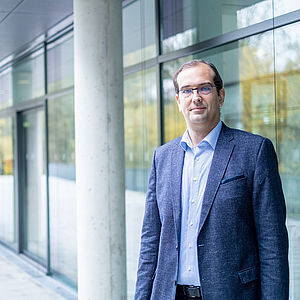
Fabian J. Sting is a Full Professor and Director of the Department of Supply Chain Management - Strategy and Innovation at the University of Cologne since 2016. He also holds a tenured Associate Professorship in Operations Management at the Rotterdam School of Management, Erasmus University since 2014. His academic journey includes a Ph.D. in Productions Management (summa cum laude) from WHU-Otto Beisheim School of Management in 2008 and postdoctoral work at INSEAD in 2008–2010. University of Cologne : Chair of Supply Chain Strategy and Innovation (2016–present) Rotterdam School of Management : Associate Professor (2014–present), Assistant Professor (2010–2014) Education : Ph.D. (2005–2008), M.Sc. in Applied Mathematics (2005–2007), Diploma in Management Science (2002–2005) Sting’s research bridges operations management, innovation strategy, and supply chain dynamics. Key areas include: Supply chain coordination under uncertainty Employee-driven process innovation and cognitive biases Strategic capacity planning and risk hedging Industry 4.0 implementation challenges Interdisciplinary integration of behavioral and technical elements in operations Recent publications focus on dual sourcing strategies, fairness in operational decisions, and employee mobility’s impact on innovation. He contributes to high-impact journals like Management Science and Production and Operations Management . Sting participates in institutional research initiatives such as: ECONtribute: Markets & Public Policy – a Cluster of Excellence addressing digital transformation, inequality, and market failures through interdisciplinary economics, political science, and law Excellent Research Support Programme (ERSP) – supporting collaborative projects like HPDnet (improving pediatric kidney disease care via health networks)
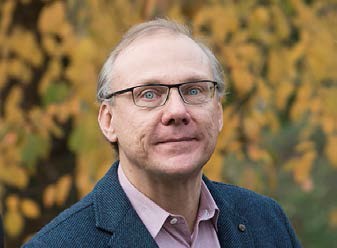
Markus Schäffter is a Professor at Ulm University of Applied Sciences (THU) , specializing in Data Protection and Information Security . He serves as the Official Data Protection Officer, contributing to institutional security frameworks while engaging with interdisciplinary research through affiliations with the Institute of Computer Science , Institute of Higher Education Didactics , and Institute of Applied Research . Research Interests: His work centers on data protection and information security, with a focus on: Technical and managerial aspects of data protection Healthcare and medical data privacy Risk-based approaches to security measures Teaching: Schäffter instructs courses on Data Protection and Information Security in Medical Informatics , offers core and elective subjects in information security, and supervises seminar projects for Bachelor's and Master's students. Contact: Located at Room A309, Prittwitzstraße 10, 89075 Ulm, Germany. Phone: +49 731 96537-576. Email: Markus.Schaeffter@thu.de .
Ana Filipa Sequeira is a researcher affiliated with INESC TEC, Porto, Portugal, and the University of Porto. Her work spans biometrics, fairness in AI, and explainable artificial intelligence. She has contributed to advancements in face recognition, synthetic data applications, and bias mitigation through techniques like knowledge distillation and model compression. Institution: INESC TEC (Porto, Portugal) Research Themes: Face recognition, fairness, explainability, synthetic data, biometric security Her recent publications focus on addressing demographic biases in face recognition systems, developing privacy-preserving explainable methods, and evaluating synthetic data's impact. She collaborates extensively with researchers like Pedro C. Neto, Jaime S. Cardoso, and Naser Damer. Sequeira has participated in organizing and analyzing competitions such as FRCSyn, BIOSIG, and SYN-MAD, emphasizing robust evaluation frameworks. Her work intersects technical innovation with ethical considerations, advocating for responsible AI applications in biometrics.
Min Peng is a Professor at Wuhan University's School of Computer Science. His research focuses on artificial intelligence, machine learning, natural language processing, and knowledge graphs. He has collaborated extensively with institutions like Hefei University of Technology and the University of Chinese Academy of Sciences. His work bridges theoretical advancements in AI with practical applications in finance, social media analysis, and network optimization. Recent contributions include neural-symbolic reasoning frameworks, contrastive learning for knowledge graphs, and financial benchmarking with large language models. Research interests emphasize scalable machine learning models for complex reasoning tasks, explainable AI, and domain-specific applications in finance and social networks. Over 100 publications span venues like WWW, ACL, and NeurIPS, highlighting interdisciplinary impact. Notable projects include SymAgent (neural-symbolic agent frameworks), PIXIU (financial LLM benchmark), and DTC (commonsense machine comprehension). Key technical trends include integrating large language models with structured data, temporal knowledge graph reasoning, and transfer learning across domains. His work often addresses real-world challenges in data efficiency, interpretability, and cross-domain scalability. Current efforts explore financial LLMs, agent-based reasoning systems, and multimodal applications. While no specific grants or awards are listed in the provided data, his prolific publication record indicates sustained research excellence. Collaboration networks include teams in computer science, electrical engineering, and finance disciplines.
Prof. Dr. Dr. Mark-Oliver Mackenrodt, LL.M. (NYU), is a Professor at the TUM School of Management, Technical University of Munich, focusing on digital economy law, competition law, and legal economics. He holds dual doctorates in law (Dr. iur.) and economics (Dr. rer. pol.), with additional qualifications from NYU Law School and Stern Business School. His professional experience includes roles at the Max Planck Institute for Innovation and Competition, Harvard University, the German Embassy in London, and the United Nations (UNCTAD). He is also an Affiliated Research Fellow at the Max Planck Institute. Education: Ludwig Maximilian University of Munich (Dr. iur.) NYU Law School (LL.M.) University of Würzburg University of Geneva Karlsruhe Institute of Technology (Dr. rer. pol.) His research explores digital markets, antitrust practices, platform regulation, and the intersection of law, economics, and innovation. Key themes include data-driven economies, transparency in commercial practices, and the legal frameworks governing digital goods. Key Awards: German National Academic Foundation Scholarship ERP Scholarship from the Federal Ministry of Economics Faculty Prize, Ludwig Maximilian University of Munich GRUR Research Funding (Society for the Protection of Industrial Property) Labs/Teams: Affiliated with the Max Planck Institute for Innovation and Competition, contributing to interdisciplinary research on innovation, competition, and intellectual property.
Rainald Loehner is a Distinguished Professor of Fluid Dynamics at George Mason University's Center for Computational Fluid Dynamics. Since 2003, he has led the Center for Computational Fluid Dynamics at George Mason University. He is currently a Hans Fischer Senior Fellow at the Technical University of Munich's Institute for Advanced Study (TUM-IAS) for 2023, hosted by Professors Kai-Uwe Bletzinger and Roland Wüchner in the 'Adjoint-Based System Identification of Large-Scale Structures' Focus Group. Loehner received his Diplom Ingenieur (Maschinenbau) degree from the Technical University of Braunschweig, and his PhD and a DSc in civil engineering from the University College of Swansea, Wales. After teaching at Swansea for a year, he worked at the Naval Research Laboratory in Washington, DC, followed by a research professorship at George Washington University. He joined George Mason University as an associate professor and was promoted to full professor in 1995 and distinguished professor in 2004. With over 35 years of experience, Professor Loehner's research spans the complete pipeline of numerical solvers and simulation tools. His expertise includes pre-processing, grid generation, numerical methods, field solvers, parallel computing, adaptive mesh refinement, fluid-structure interaction, shape optimization, system identification, and computational crowd dynamics. His current work focuses on developing advanced field solvers for compressible and incompressible flows, acoustics, electromagnetic wave propagation, heat and mass transfer, structural mechanics, and fluid-structure interaction. Key application areas include blast mitigation, ship hydrodynamics, blood flow, contaminant transport, and pedestrian safety. Loehner's recent research output (2020-2024) shows a strong trend toward digital twin technology and adjoint-based methods for structural analysis and optimization. His publications focus on high-fidelity digital twins for detecting structural weaknesses, risk assessment in engineering systems, and optimization of sensor placement. His work bridges computational mechanics with machine learning approaches, particularly in system identification and inverse problems, demonstrating how computational methods can solve complex real-world engineering challenges. 2020: Ranked #15119 in the Stanford List of Most Influential Scientists of the World; #8 in Aerospace and Aeronautics 2010: Distinguished International Career Award, Argentine Association of Computational Mechanics 2008: Fellow, International Association for Computational Mechanics 2006: Associate Fellow, AIAA 2005: Honorary Professor, University of Wales Swansea 2005: Advisory Professor, Shanghai Jiao Tong University 2004: Distinguished Professor of Fluid Dynamics, George Mason University 1999: Computational Mechanics Achievements Award, Japan Society of Mechanical Engineering 1993: Doctor of Science in Civil Engineering, University College of Swansea 1979-1983: Studienstiftung des Deutschen Volkes (Top 1% of German Students) Professor Loehner has mentored numerous students through his work at George Mason University and has supervised research in computational fluid dynamics, structural mechanics, and related fields. His research has been supported by various grants from government agencies and industry partners, enabling the development of advanced simulation tools applied in aerodynamics, hydrodynamics, shock-structure interaction, and medical applications. His codes and methods have been widely adopted in industry and academia for applications ranging from aircraft and ship design to medical simulations and urban pathogen transmission modeling. Loehner leads the Center for Computational Fluid Dynamics at George Mason University, which focuses on developing cutting-edge computational methods for fluid dynamics and related multiphysics problems. The center works on strategic application areas including blast mitigation, ship hydrodynamics, blood flow simulation, and pedestrian movement modeling. As a TUM-IAS Fellow, he collaborates with the Chair of Computational Modeling and Simulation at TUM on adjoint-based system identification of large-scale structures, bringing together expertise in computational mechanics and digital twin technology to address complex engineering challenges.
Stefan Katzenbeisser is a Professor at the Chair of Computer Engineering, University of Passau, focusing on cybersecurity in embedded systems, critical infrastructures, and technical data protection. He serves as spokesperson for the Bavarian-funded research cluster ForDaySec and contributes to the DFG Review Board for Security and Dependability. Research areas: Automotive cybersecurity, railway security, hardware-based security (PUFs), post-quantum cryptography Key projects: RESURREC (autonomous vehicle security), FINESSE (secure transportation sensors), 6G-RIC (future mobile networks) His work spans both theoretical and applied cybersecurity, with collaborations in industry and interdisciplinary fields. Recent publications highlight innovations in secure mobility and critical infrastructure protection.
Andrea Forte is a Professor affiliated with the University of Michigan, with a former position at Drexel University. Her research focuses on Human-Computer Interaction (HCI), Privacy Studies, and Social Media, exploring topics such as privacy expertise, marginalized communities' digital experiences, and collaborative systems. She has published extensively in top venues like CHI, CSCW, and ACM Transactions on Computer-Human Interaction. Her work bridges technical, social, and ethical dimensions of technology, addressing challenges in privacy protection, online anonymity, and the impact of social media on vulnerable populations. She has contributed to understanding how technologies like Wikipedia and social platforms mediate trust, credibility, and activism. Notable projects include studies on user privacy rights in people search websites and the sociotechnical challenges faced by disability activists online. Forte collaborates with interdisciplinary teams, addressing issues such as internet-facilitated harassment of researchers and the design of privacy-enhancing technologies. Her research emphasizes equitable and inclusive approaches to technology, particularly in library and educational contexts.
Prof. Dr.-Ing. Daniela Thrän serves as Professor of Bioenergy Systems at the University of Leipzig's Faculty of Economics and Head of the Department of Bioenergy at the Helmholtz Centre for Environmental Research (UFZ), positions she has held since 2011. She concurrently leads Germany's delegation in IEA Bioenergy Task 44 on Flexible Bioenergy and System Integration and chairs the Social Sustainability Transformations group at UFZ, bridging academic research with national climate policy through roles in the Federal Bioeconomy Council (2012-2023) and Thuringia's Climate Advisory Board. Her academic background includes: Engineering studies in Technical Environmental Protection at Technical University of Berlin (1989-1995) Doctorate at Bauhaus University Weimar (1998-2001) on material flow management in rural regional development Thrän's research centers on bioenergy's role in climate neutrality, specializing in carbon dioxide removal (CDR) via bio-based methods including BECCS, life cycle sustainability assessment, and spatial modeling of renewable energy systems. She analyzes biomass resource potentials within circular bioeconomy frameworks and investigates socio-economic drivers of energy transitions, with recent work focusing on urban-rural biomass integration and flexible bioenergy services for grid stability. Her 2023-2025 publications reveal intensifying focus on bio-CDR implementation challenges and policy frameworks, alongside systematic assessments of biomass allocation in Germany's net-zero pathways. Key trends include AI-enhanced literature mapping for climate research, municipal-scale renewable integration dynamics, and cross-national comparisons (e.g., Germany/Canada biogas systems), with growing emphasis on socio-technical trade-offs in land use and stakeholder acceptance. No scientific awards, prizes, or fellowships were documented in the provided text. Thrän actively mentors doctoral candidates as DBFZ's representative for bioenergy colloquia and leads major initiatives: IEA Bioenergy Task 44: National Team Leader for Germany (2019-present) Helmholtz Climate Initiative (HI-CAM): Co-author of spatial energy transition reports Editor-in-Chief of Springer's "energy, sustainability and society" (2017-present) She directs UFZ's Department of Bioenergy (BEN) and Models team, developing spatially resolved energy system tools like BENOPTex. Her groups focus on techno-economic analysis of biogenic resources, smart bioenergy system services, and socio-ecological impacts of renewable energy expansion, with strong links to European standardization bodies (ISO/TC 238, CEN TC 335) and Germany's aviation biofuels advisory board (aireg).
Prof. Dr. Chunyang Chen is a Full Professor at the Department of Computer Science, Technical University of Munich (TUM), Heilbronn, Germany. He holds the Chair of Software Engineering & AI, serves as a core member of the Munich Data Science Institute, board member of the Heilbronn Data Science Center, and Fellow at Fortiss. He also maintains an Adjunct Professor role at Monash University, Australia. Research Focus: His work bridges Software Engineering, Deep Learning, and Human-Computer Interaction (HCI), specializing in AI/ML, NLP, and program analysis for mobile app development, testing, and security. Key areas include LLM-assisted app development, robustness of deep learning models, and accessibility testing. Scientific Awards: Best Paper Honorable Mention in CHI 2024 Discovery Early Career Researcher Award (DECRA), Australian Research Council ACM SIGSOFT Early Career Researcher Award Facebook Research Award in Probability and Programming Dean's Award for Research Impact at Monash University Academic Leadership: He actively mentors PhD students, supervises postdocs, and leads research teams focusing on software security, automated testing, and LLM applications. His recent work explores the intersection of software security and large language models, with a special issue call for EMSE journal.
Rainer Böhme is a Professor at the University of Münster, Germany. His research focuses on cyber security, cryptography, steganography, digital forensics, and blockchain technology. He has made significant contributions to understanding cyber risk quantification, central bank digital currencies (CBDCs), and the socio-technical challenges in cryptocurrency systems. Key areas of research include steganalysis (analysis of hidden data in digital media), forensic techniques for neural network inference pipelines, and the economic implications of cyber insurance. He actively contributes to conferences like the Financial Cryptography Workshops (FC) and the Workshop on Information Hiding and Multimedia Security (IH). Böhme's work bridges theory and practice, addressing real-world issues such as privacy in CBDCs, adversarial attacks on AI systems, and the role of law enforcement in cryptocurrency markets. His recent studies explore the security implications of image orientation in JPEG files and the detection of privileged parties in blockchain transactions. He has collaborated with institutions like the University of Vienna and ETH Zurich, and his research has been published in top-tier venues such as IEEE Transactions on Information Forensics and Security and the ACM Conference on Computer and Communications Security (CCS).
Dina Dechmann is Group Leader at the Max Planck Institute of Animal Behavior, Department of Migration in Radolfzell, Germany. She leads the Ephemeral Resource Adaptations Research Group, focusing on how animals adapt to fluctuating resource availability through behavioral, morphological, and physiological strategies. Her educational background includes: Ph.D. in Animal Behavior from University of Zürich (2005) MS in Systematics & Ecology from ETH Zürich (1999) Habilitation at University of Konstanz (2018) Dr. Dechmann identifies as a classical behavioral ecologist with a passion for evolution, increasingly focusing on how resource distribution in time and space influences animal adaptations. Her research examines movement patterns (particularly in flying foxes and bats), energetics, information transfer during foraging, and morphological adaptations like wing shape. A significant focus involves seasonal phenological changes, especially in brain structure, as seen in her work on Dehnel's Phenomenon in shrews. She is actively involved in the ICARUS satellite tracking initiative to monitor bat migration. Her recent publications reveal consistent themes across animal behavior, neuroecology, and conservation biology. The work demonstrates sophisticated integration of field studies with molecular and physiological approaches, particularly in studying how animals navigate resource ephemerality. Key trends include bat migration patterns, brain plasticity in response to seasonal changes, and methodological innovations in wildlife tracking. Her research bridges fundamental behavioral ecology with practical conservation applications, especially regarding common bat species. Dr. Dechmann mentors a diverse international team including postdocs, doctoral students, and technical staff. Her group maintains strong collaborations across European institutions and with international partners, particularly in Panama where some field studies occur. While specific grant details aren't provided, her work on the ICARUS initiative and extensive publications suggest substantial research funding. The Ephemeral Resource Adaptations Group operates as a small, international team focused on resource distribution challenges for animals. Current projects examine migration as an adaptation to seasonal change, hibernation energetics in climate change contexts, social information sharing for ephemeral resources, alternative wintering strategies in small mammals, and impacts of research methodologies on animal behavior.
Prof. Dr. Roland A. Müller serves as Department Head of Systemic Environmental Biotechnology at the Helmholtz Centre for Environmental Research - UFZ in Leipzig, Germany, and holds an Honorary Professorship for Integrated Wastewater Resource Management at Leipzig University of Applied Sciences (HTWK) since 2016. With over three decades of experience at UFZ, he has held progressively senior positions including Head of Department SUBT since 2013, Speaker of the Department from 2010-2012, and Head of Infrastructure Unit from 1996-2010. His educational foundation includes university studies in Technical Microbiology at the Carolo-Wilhelmina Technical University of Braunschweig (1984-1990). This technical microbiology background has informed his interdisciplinary approach to environmental biotechnology. Prof. Müller's research pioneers the integration of ecological principles into urban water management systems, particularly focusing on Multifunctional BlueGreen Water Infrastructures for Water Sensitive Cities. His work spans Decentralized Rainwater & Wastewater Treatment, Ecological Engineering, and Resource-efficient Wastewater Treatment systems, with special attention to applications in water-scarce regions like Jordan. He has developed innovative approaches for implementing nature-based solutions that simultaneously address urban flooding, water scarcity, and climate adaptation challenges. His research combines engineering, ecology, and urban planning to create resilient water systems that enhance urban sustainability. Analysis of his recent publications reveals a consistent focus on implementing the 'Leipziger Modell Blau-Grün' - a comprehensive approach to integrated blue-green infrastructure in urban settings. His work demonstrates how nature-based solutions can simultaneously address stormwater management, irrigation needs, and urban greening. A significant portion of his research examines decentralized wastewater treatment systems, with particular attention to their application in arid and semi-arid regions where water resources are constrained. His publications increasingly emphasize participatory planning approaches involving municipal authorities, housing associations, and research institutions to co-design water-sensitive urban developments. 2018: German Environmental Award for solving a central water problem in a decentralized manner in Jordan 2016: Winner of UFZ Knowledge Transfer Award for contributions to Jordanian wastewater policy framework 2014: UFZ Technology Transfer Award for development of vertical filter systems for groundwater purification 2014: Finalist for Hugo Junkers Prize for innovative groundwater purification research Prof. Müller has been instrumental in advising on water policy frameworks, particularly in Jordan where he served as the German representative in the National Implementation Committee for decentralized Wastewater treatment. His work directly influenced the development of national certification standards for wastewater treatment systems with capacities up to 5,000 PE in Jordan. He leads the 'Leipziger BlauGrün' project, a German model city initiative for resource-efficient urban districts that demonstrates practical implementation of his research concepts. His department collaborates with international partners on projects addressing water challenges across diverse climatic conditions. As head of the Systemic Environmental Biotechnology department at UFZ, Prof. Müller oversees research at the intersection of environmental engineering, microbiology, and urban planning. His department is actively involved in the Technical Biogeochemistry Integration Platform, which focuses on 'Tapping Nature's Potential' for sustainable water management solutions. The department maintains strong international partnerships, particularly with institutions in water-stressed regions, to develop and implement decentralized wastewater management concepts that are both scientifically sound and practically implementable in resource-constrained settings.