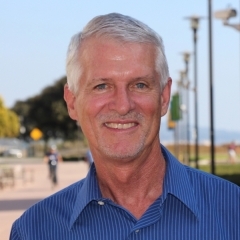
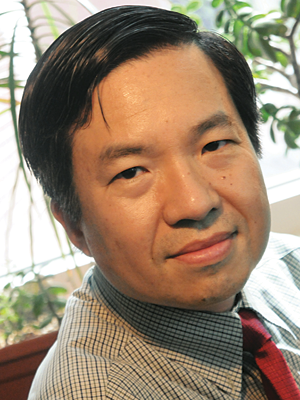
Edgar Troudt, Ph.D., is the Assistant Dean for Research and Strategic Partnerships at Long Island University Brooklyn, where he serves on the entrepreneurship faculty. His work focuses on integrating entrepreneurship concepts into STEM fields through programs like the CUNY Community College Innovation Challenge and the Brooklyn Science Innovation Initiative. Doctor of Philosophy (Computer Science), CUNY Graduate Center Master of Philosophy (Computer Science), CUNY Graduate Center Master of Arts (Computer Information Systems), CUNY Brooklyn College Dr. Troudt’s research explores the intersection of STEM and entrepreneurship education, emphasizing virtual enterprise models, innovation in community colleges, and technology-driven curriculum development. His recent publications highlight strategies for embedding business skills into technical education. Scientific awards include the 2015 Homer Saunder’s Outstanding Paper Award, the 2011 CUNY Michael Ribaudo Award for technology innovation, and the 2008 Best of New York Award for creative technology applications. He has also received recognition for teaching excellence and NSF grant leadership.
Zaklina Spalevic is a distinguished Professor at Singidunum University, specializing in the intersection of law, technology, and business. With a strong academic background in criminal law and extensive research in cyber law, artificial intelligence applications in legal systems, and tourism law, she has established herself as a leading scholar in digital legal frameworks. Her work spans multiple disciplines, connecting traditional legal principles with emerging technological challenges. Dr. Spalevic earned her doctoral degree in Criminal Law from the University of the Academy of Economics in Novi Sad (2008-2012), following basic studies in General Law at the University of Pristina (1996-2001). Her educational foundation in Science and Mathematics from First Pristina High School (1992-1996) provided the analytical basis for her interdisciplinary approach to legal scholarship. Her research interests focus on the evolving landscape of cyber law, particularly the legal implications of artificial intelligence in judicial systems, electronic governance, and tourism industry regulation. Dr. Spalevic has pioneered work on digital evidence processing, algorithmic justice, and the integration of green law principles into sustainable business practices. Her publications reveal a consistent pattern of addressing emerging legal challenges in the digital age, with increasing emphasis on AI applications across various legal domains. Analysis of her recent publications shows a clear trend toward interdisciplinary research that bridges law, technology, and business. Her work increasingly focuses on practical applications of legal frameworks for emerging technologies, particularly in tourism, agriculture, and judicial systems. The integration of technical solutions with legal regulation represents a distinctive feature of her scholarly contributions. Dr. Spalevic has authored numerous publications including three books: 'Fundamentals of Law with Special Reference to Business and Tourism Law' (2021, 2024 editions) and 'Legal Aspects of Cyberspace' (2018). Her extensive publication record includes over 100 journal articles and conference papers spanning cyber security, electronic governance, intellectual property in digital environments, and legal frameworks for emerging technologies. She actively contributes to academic discourse through conference presentations and collaborative research projects, particularly focusing on the legal implications of artificial intelligence across various sectors. Her work demonstrates a commitment to developing practical legal frameworks that address real-world technological challenges while maintaining foundational legal principles.
Dr. Pedro Nava is an Associate Professor and Director of Educational Leadership in the School of Education and Counseling Psychology at Santa Clara University. His scholarship centers on educational equity for Chicanx/Latinx and immigrant communities, combining critical race theory, participatory action research, and community-engaged methodologies. Education Ph.D. in Urban Schooling – University of California, Los Angeles, 2012 Ed.M. in Administration, Planning, and Social Policy – Harvard University, 2003 B.A. – California State University, Fresno, 1996 Research Interests Dr. Nava’s research interrogates systemic inequalities in urban and rural schooling, emphasizing critical pedagogy and critical race theory . He investigates how immigration status intersects with educational opportunity, and he collaborates with families and communities to co-construct transformative practices through participatory action research . His work also explores family-school-community engagement , leveraging community cultural wealth frameworks to amplify migrant and undocumented voices in educational policy and practice. Publication Trajectory Across more than two decades, Dr. Nava’s publications trace the evolution of critical scholarship in education. Early works examine institutional barriers for Chicano students, while recent studies integrate quantitative ethnography and testimonio methodologies to illuminate intersectional experiences of Latinx youth, undocumented graduate students, and farmworker families. Scientific & Community Awards No formal awards are enumerated in the provided text. Advising & Grants While specific grants and advisees are not listed, Dr. Nava’s leadership role as Director of Educational Leadership implies extensive mentoring of master’s and doctoral students, as well as oversight of grant-funded initiatives that advance equity-focused leadership preparation. Labs, Teams & Centers Dr. Nava directs the Educational Leadership programs within the School of Education and Counseling Psychology, fostering interdisciplinary collaboration and community-engaged research teams that partner with local schools, nonprofits, and migrant organizations.
James B. Rawlings is the Mellichamp Process Control Chair in the Department of Chemical Engineering at the University of California, Santa Barbara, and holds the rank of Professor. His research focuses on chemical process control, reaction engineering at the molecular level, and computational modeling with tools like Octave. He has held prominent roles, including the Paul A. Elfers Chair at UW Madison and the Steenbock Professor of Engineering. Education: PhD in Chemical Engineering from the University of Wisconsin-Madison (1985), BS in Chemical Engineering from The University of Texas at Austin. Postdoctoral training at the Institute for System Dynamics and Process Control, University of Stuttgart (1985-1986). Research interests include nonlinear systems, model predictive control (MPC), moving horizon estimation (MHE), and stochastic reaction engineering. His work bridges theory and industrial applications, emphasizing robustness and practical implementation. Awards: Elected Fellow of the National Academy of Engineering (2016), IFAC (2016), and IEEE (2012). Recipient of the Process Automation Hall of Fame (2016), Vilas Distinguished Achievement Professor (2015), and numerous AIChE awards. Honorary doctorate from Technical University of Denmark (2011). Grants & Leadership: Led NSF-funded projects on MPC and control systems. Developed Octave, a widely used computational tool. Active in academic leadership and curriculum development, recognized with teaching awards including the Chancellor’s Distinguished Teaching Award (2013). Labs & Teams: Directs research groups focused on control theory, computational tools, and industrial process optimization. Collaborates with industry on MPC implementation and disturbance modeling.
Shih-Fu Chang is the Dean of Columbia Engineering and holds the Morris A. and Alma Schapiro Professorship at Columbia University. His research focuses on computer vision, machine learning, and multimedia information retrieval. He is recognized as a foundational figure in the field of content-based visual search and has pioneered innovations in image/video search engines, crime prevention systems, and brain-machine interfaces. His leadership roles include Chair of Columbia's Electrical Engineering Department (2007-2010), Editor-in-Chief of the IEEE Signal Processing Magazine (2006-2008), and Senior Executive Vice Dean at Columbia Engineering, where he drives strategic planning and international collaboration. Dr. Chang has received prestigious awards including the ACM Multimedia Technical Achievement Award, IEEE Signal Processing Technical Achievement Award, and IEEE Kiyo Tomiyasu Award. He is a Fellow of AAAS, ACM, and IEEE, and an Academician of Academia Sinica. His recent work emphasizes multimodal reasoning, few-shot learning, and vision-language systems, with applications in healthcare diagnostics and multimedia benchmarking. His research spans cross-modal understanding, event extraction, and adaptive AI systems. Key contributions include systems like Ferret-v2 for multimodal grounding and RESIN for schema-guided event tracking. He has advised multiple startups and actively contributes to curriculum development in AI and engineering education.
Prof. Nurten BİRLİK is a faculty member at the Middle East Technical University (METU), affiliated with the Department of Foreign Language Education under the Faculty of Education. She holds a Professor academic rank and maintains an active affiliation as of the last update in April 2022. Her educational background includes a B.A., M.A., and Ph.D. in English Language and Literature from Hacettepe University (1992, 1995, 2000), followed by a postdoctoral fellowship at Mary Immaculate College, University of Limerick (2004-2005). Research interests focus on literary analysis across multiple traditions and theories: British Modernist Poetry , Romantic Poetry , Contemporary Literary Theory , Lacanian Criticism , Ecocriticism , and the study of Modern Turkish Novel and Poetry . These areas reflect her expertise in both comparative literature and critical theory. While no recent articles are listed in the provided materials, her research trends suggest ongoing engagement with interdisciplinary literary studies, poststructuralist theory, and cultural analysis through the lens of environmental criticism and psychoanalytic frameworks. No scientific awards or grants are explicitly mentioned in the profile. She has not listed formal advisees in the provided information, though her role as a professor likely involves teaching and mentoring responsibilities. Affiliated with the Department of Foreign Language Education, her work contributes to language pedagogy and literature curriculum development in higher education contexts.
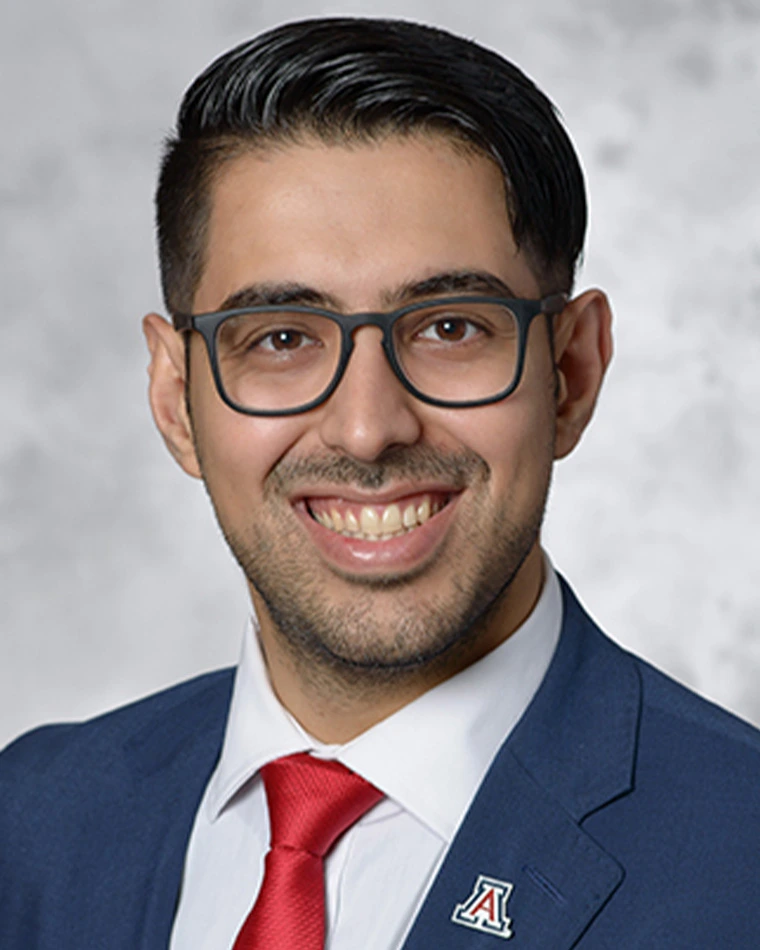
Soheil Salehi is a tenure-track Assistant Professor in the Department of Electrical and Computer Engineering at the University of Arizona, with a joint appointment in Systems and Industrial Engineering. He is the Director of the Privacy-preserving, Intelligent, and Secure Computing (PRISM) Lab, established in August 2022. Prior to this, he was an NSF-Sponsored Computing Innovation Fellow and Postdoctoral Research Fellow at the University of California, Davis. Ph.D., Electrical and Computer Engineering, University of Central Florida, 2020 M.S., Electrical and Computer Engineering, University of Central Florida, 2016 B.S., Isfahan University of Technology, Iran, 2014 Dr. Salehi's research focuses on the intersection of hardware, AI, and security. His work spans hardware and AI-enabled security in IoT , Generative AI for hardware design and security , neuromorphic and biologically-inspired AI hardware , emerging spin-based devices , reconfigurable architectures , low-power VLSI circuits , and digital twins and mixed reality for semiconductor workforce development . He also explores the application of Generative AI in personalized education . His recent publications, spanning 2023–2025, reveal a strong trend toward integrating AI and machine learning into hardware security and design. Key themes include automated secure IC design flows , AI-driven hardware obfuscation , firmware and side-channel attack analysis , security in neuromorphic and spiking neural networks , and educational frameworks using digital twins and generative models . His work appears in top venues like DAC, ICCAD, USENIX Security, IEEE TCAS-I, and ISCAS. Outstanding Reviewer Award, IEEE/ACM Design Automation Conference (DAC), 2023 Best Presentation of the Symposium Award, UC Davis Postdoctoral Research Symposium, 2021 UCF Excellence by a Graduate Teaching Assistant (University-Level), 2016 Nominated for 30-under-30 Award, UCF, 2020 Nominated for Postdoctoral Research Excellence Award, UC Davis, 2022 Dr. Salehi has secured significant research funding as PI and Co-PI, including a $300K NSF SaTC EAGER grant on Generative AI-based Personalized Cybersecurity Tutor, a $174,000 University of Arizona PIF Award, and multiple RII grants totaling over $198K. He has also received industry funding from CHEST. He actively mentors students and leads the PRISM Lab, which focuses on privacy-preserving and intelligent secure computing. His service includes roles as Technical Program Committee (TPC) Member and Session Chair at premier conferences such as DAC, ICCAD, CCS, NDSS, and GLSVLSI. The PRISM Lab, under his direction, conducts cutting-edge research in secure and intelligent hardware systems, with applications in IoT, edge computing, and workforce development. The lab emphasizes interdisciplinary collaboration and innovation in both research and education.
Professor Diana Inkpen is a faculty member at the School of Electrical Engineering and Computer Science, University of Ottawa. She holds a Ph.D. from the University of Toronto's Department of Computer Science and degrees from the Technical University of Cluj-Napoca, Romania (M.Sc. and B.Eng.). Her research focuses on computational linguistics, natural language processing (NLP), and artificial intelligence, with specialties in natural language understanding/generation, lexical semantics, and semantic web agents. Education: Ph.D., Computer Science, University of Toronto M.Sc., Computer Science and Engineering, Technical University of Cluj-Napoca B.Eng., Computer Science and Engineering, Technical University of Cluj-Napoca Affiliations: Director, NLP Lab Editor-in-Chief, Computational Intelligence journal Associate Editor, Natural Language Engineering journal Her research has led to roles such as program co-chair for AI 2012 and leadership in organizing international workshops. She has received funding from NSERC, SSHRC, and OCE, and was honored with a Visiting Professor title at the University of Wolverhampton, UK. Her teaching spans courses like Information Retrieval, Natural Language Processing, and Prolog programming. Professor Inkpen's work bridges NLP innovations with societal challenges, including mental health surveillance via social media analysis and bias mitigation in AI systems. She actively contributes to interdisciplinary projects, such as detecting hate speech and legal text entailment, while maintaining a global research network through collaborations and international conference involvement.
Cecilia O. Alm is a Professor in the Department of Psychology within the College of Liberal Arts at Rochester Institute of Technology (RIT), where she serves as the Artificial Intelligence Program Director. She holds multiple leadership roles including Director of the Center for Human-aware AI and Director of the Computational Linguistics and Speech Processing Lab (CLaSP). Her institutional affiliations span the School of Information, Ph.D. Programs in Cognitive Science and Computing and Information Sciences, Department of Computer Science, and MS in Data Science program. Dr. Alm earned her Ph.D. from the University of Illinois at Urbana-Champaign. Her research focuses on human-centered artificial intelligence with particular emphasis on linguistic and multimodal sensing, affective computing, and natural language processing. She investigates how AI systems can better understand and respond to human communication through multimodal dialogue processing, with applications in accessibility, education, and healthcare. Her recent publications demonstrate a strong trend toward developing inclusive AI systems, particularly through projects addressing Deaf community needs (MULTICOLLAB-ASL), subtle emotion recognition (FUSE corpus), and bias mitigation in NLP. The work consistently integrates multimodal data streams (speech, gaze, gesture) to create more responsive human-AI interaction frameworks. Current research directions emphasize diversity in AI education, visual prosody in sign languages, and human-in-the-loop AI development. Dr. Alm leads several significant NSF-funded initiatives including the AWARE-AI program, IRES AI-PROWIL international research experience, and collaborative projects with Gallaudet University focused on Deaf scientist-centered AI research. She has secured over $2.5 million in external funding for her work on human-aware AI systems. She directs the CLaSP lab which provides research opportunities for PhD, MS, and undergraduate students, with graduates employed at major technology companies including Amazon, Apple, Microsoft, and Facebook. The lab focuses on real-world AI applications in accessibility, human-robot interaction, and multimodal communication systems.
Matthew Santa serves as Professor of Music Theory and Chair of the Music Theory and Composition Area at Texas Tech University School of Music, with prior teaching appointments at Queens College and Hunter College. His leadership shapes curriculum development and academic initiatives within the department. Academic credentials include advanced degrees from Louisiana State University and The City University of New York, establishing foundational expertise in theoretical frameworks and analytical methodologies. Research focuses on post-tonal analysis , diatonic set theory , and parsimonious voice leading , bridging complex theoretical concepts with practical pedagogy. His work integrates popular music analysis and metrical studies, emphasizing accessibility for diverse learners through innovative teaching resources. Publications demonstrate evolving scholarly trends from late-20th century set theory toward contemporary applications in musical form and rhythm. Recent textbooks synthesize Rothstein, Krebs, and Mirka's theories into unified analytical approaches for undergraduate and graduate education. Scientific recognition includes: MTSNYS Young Scholar Award (1998) Mentorship encompasses graduate and undergraduate students across composition and theory disciplines, though specific advisees aren't documented in source materials. No grant funding details appear in available records. Collaborative projects include the Flute/Theory Workout series with Lisa Garner Santa and Thomas Hughes, blending performance technique with theoretical concepts through MIDI accompaniment systems.
Arjan F. Kirkels is an Assistant Professor and University Lecturer in the Department of Technology, Innovation & Society within the School of Industrial Engineering and Innovation Sciences at Eindhoven University of Technology (TU/e). His work focuses on sustainability assessments, decision-making in transitions, and interdisciplinary education for sustainable innovation. His research interests include Life Cycle Assessment (LCA), Multi-Criteria Assessment (MCA), sustainability transitions, industrial ecology, and systems engineering. He applies these to emerging technologies such as batteries, hydrogen systems, and heat pumps, with a strong emphasis on integrating stakeholder values and addressing deep uncertainties in sustainability decisions. The recent articles highlight a consistent focus on assessing emerging technologies, particularly in renewable energy and circular economy applications. Trends include prospective LCA, experience curves in solar technology, socio-technical impact assessment, and educational innovations in sustainability. His work bridges technical analysis with social and governance dimensions of sustainability transitions. Best Teacher Award, 1st year Bachelor Sustainable Innovation, for course 0SV20 'Industrial Ecology' (2013) Best Teacher Award, 1st year Bachelor Sustainable Innovation, for course 0SV20 'Industrial Ecology' (2018) Best Teacher Award, 1st year Bachelor Sustainable Innovation, for course 0SV20 'Industrial Ecology' (2020) Educational award nomination, bachelor Sustainable Innovation, course 0SK30 Inter-University Sustainability Challenge (2023) Education Award 2024 - master Innovation Sciences (2025) Arjan F. Kirkels has supervised over 100 thesis students and more than 100 interdisciplinary student groups. He has developed and taught over 20 courses and co-authored 4 textbooks and 7 publications on educational innovation. He is currently supervising four researchers: Huiying Liu, Prapti Maharjan, Rishi Bhatnagar, and Seyed Mousavi. His research is supported by projects such as the EU-funded cVPP (Community-based Virtual Power Plant) and studies on Dutch sustainability transitions. He is actively involved in educational initiatives, including MOOC development and challenge-based learning, and contributes to public discourse through media appearances and workshops on sustainability education and systems thinking.
Daniel Kreisman is an Associate Professor of Economics at Georgia State University and a faculty affiliate at the University of Milan. His research focuses on labor economics, education finance, and policy, particularly examining school funding, career and technical education (CTE), and student loan repayment systems. Kreisman founded the Career & Technical Education Policy Exchange (CTEx), a multi-state consortium under Georgia Policy Labs, which analyzes CTE policy impacts. He holds a Ph.D. in Public Policy from the University of Chicago and a B.A. in History and Philosophy from Tulane University. Prior to academia, he taught high school English in New Orleans. His education includes a PhD from the University of Chicago (Public Policy) and a BA from Tulane University (History and Philosophy). Research Interests: Educational Finance and School Funding Mechanisms CTE Program Design and Equity Student Loan Repayment Behaviors Labor Market Signaling and Economic Outcomes Public Policy Evaluation CTEx collaborations include state partners in Massachusetts, Michigan, Montana, Tennessee, Texas, Washington, and Atlanta, focusing on data-driven policy to enhance CTE programs. Advising & Grants: Kreisman’s work bridges academia and policy, with grants supporting research on CTE alignment, financial aid impacts, and loan repayment systems. His lab affiliations enable applied policy analysis. Labs/Teams: Director of CTEx and active member of Georgia Policy Labs, emphasizing evidence-based education policy.
Assoc. Prof. Dr. Sema Alaçam Doğan has been affiliated with Istanbul Technical University since 2014, serving as an Associate Professor in the Department of Architecture . She has held administrative roles including Deputy Head of Department and Erasmus Coordinator. Education : PhD in Informatics in Architectural Design (2008-2014), MS in Informatics in Architectural Design (2005-2008), and BS in Architecture (1999-2005) from Istanbul Technical University. Her research explores Computational Design , Artificial Intelligence in Architecture , and Sustainable Material Innovation . She investigates digital tools for heritage preservation, daylight optimization in BIM, and cognitive development in architecture students. Recent publications analyze AI-assisted design literacy , machine learning for Sinan mosques , and environmental comfort in Harran houses . Her work integrates algorithmic frameworks with sustainable practices. Scientific awards include multiple ITU Publication and Performance Awards (2021-2024), FABFEST Prizes , and the 2024 Artemis Educator Award from NASA. Active projects like "Physical Computation in Architectural Drawing" and "Robotic Fabrication with Recycled Wind Turbine Blades" demonstrate her leadership in computational and sustainable research.
Dr. Bimlesh Wadhwa is an Associate Professor in the Department of Computer Science at the National University of Singapore (NUS) and serves as Assistant Dean for Student Life at Tembusu College. She holds dual affiliations as a Residential Fellow at Tembusu College and an active member of the School of Computing's academic community. Her work bridges software engineering, human-computer interaction (HCI), and computing education. Dr. Wadhwa's research focuses on gender issues in HCI, software design quality, and digital well-being. She has pioneered initiatives like the Code for Community program to bring computing education to underserved groups. Her pedagogical contributions include developing courses on object-oriented design, software engineering principles, and interaction design. She actively engages with professional communities through roles such as Faculty Representative at the Singapore Computer Society Student Chapter and advisor to the Computing Club at NUS. Her recent work addresses pressing societal challenges like technology-facilitated sexual violence and integrates AI into educational contexts. She has organized major competitions including CodeXtreme and the Singapore Science and Engineering Fair, fostering innovation among students. Her interdisciplinary collaborations span healthcare applications, smart city technologies, and educational equity initiatives. Dr. Wadhwa’s scholarly contributions include over 80 publications in top venues such as FSE, CHI, and IEEE conferences. She has co-edited book chapters for Springer and Wiley on HCI and informatics, reflecting her commitment to advancing both technical and societal dimensions of computing. In addition to her academic roles, she leads MakerLab initiatives and contributes to national educational policies on computational thinking. Her work emphasizes bridging academia-industry gaps through projects like the GEAR mobile game-assisted rehabilitation system and cloud service brokerage frameworks.
Yasmin Kafai is a Professor at the University of Pennsylvania's Graduate School of Education (GSE), Department of Learning Sciences. Her research focuses on computational thinking, AI education, and equitable K-12 computing pedagogy. She has pioneered work on integrating electronic textiles (e-textiles) and participatory design into STEM education to engage youth in critical perspectives of technology. Kafai's recent work emphasizes algorithmic literacy, youth-led auditing of machine learning systems, and bridging technical and societal dimensions of computing. Key research areas include: computational empowerment, AI ethics in education, youth agency in technology design, and culturally responsive computing curricula. Her projects often involve hands-on making activities, such as constructing generative AI models or debugging e-textile systems, to foster both technical and critical understandings. Publications from 2024-2025 highlight trends in youth engagement with generative AI, algorithm auditing frameworks, and the intersection of physical computing with growth mindset practices. She has also explored the role of storytelling methodologies in reimagining computing narratives for marginalized groups. Kafai collaborates extensively with teachers to develop scalable professional development programs addressing equity in CS education. Her work frequently appears in learning sciences and computing education journals, with a focus on practical classroom implementations and systemic educational reforms. Ongoing efforts include designing 'Hour of Code' activities that integrate critical AI literacy and fostering youth as co-designers of ethical technology solutions.