Aniket 'Niki' Kittur is a Professor in the Human-Computer Interaction Institute at Carnegie Mellon University's School of Computer Science. His research focuses on AI-augmented cognition, exploring how human and machine intelligence can collaborate to enhance creativity, decision-making, and innovation. He leads projects like the Semantic Reader and Skeema browser extension, aiming to reduce cognitive overload through intelligent systems. Education: BA in Psychology & Computer Science from Princeton University; PhD in Cognitive Psychology from UCLA. His work bridges HCI, crowdsourcing, and cognitive science, with 100+ publications and 17 best paper awards. He advises industry partners including Google, Microsoft, and Toyota while maintaining a lab focused on real-world impact. Research interests center on accelerating knowledge acquisition via systems that scaffold sensemaking (e.g., Selenite for web exploration) and fostering analogical innovation through crowdsourced/AI hybrid approaches. Notable contributions include CrowdForge (human-machine workflows) and Kinetica (touch-based data visualization). Awards include NSF CAREER Award, Allen Newell Award, and CHI Academy membership. His lab's Skeema tool has achieved 79% 30-day retention in beta, reflecting impactful user-centered design principles. Current projects emphasize LLM integration for composite cognition, aiming to create systems where 'LLMs + Humans > Either Alone.' Funding来自NSF, NIH, ONR, and industry partners like Bosch and Wikimedia. Teaching includes PhD bootcamps and user-centered research courses. Over 100 students have contributed to his projects, many advancing to tech leadership roles.
John Joseph is a Professor of Strategy and Entrepreneurship at the Paul Merage School of Business, University of California, Irvine. His research and teaching focus on organizational design, strategic decision-making, innovation, and the integration of artificial intelligence in business strategy. He is actively involved in editorial leadership as Senior Editor at Organization Science and former editor of the Journal of Organization Design . PhD, Kellogg School of Management, Northwestern University MBA, Wharton School, University of Pennsylvania John Joseph's research centers on how organizations can be designed to enhance innovation, strategic planning, and decision-making. His work explores the role of attention, feedback mechanisms, and AI in shaping strategic outcomes. He investigates organizational structures in technology and healthcare sectors, with a focus on platform ecosystems and community-driven innovation. His recent publications and research projects examine AI-enabled organizational transformation, mobile industry innovation, and healthcare system design. The body of work shows a strong trend toward behavioral strategy, integrating cognitive and structural perspectives to understand how firms adapt and grow. 2017 Ralph Gomory Award, Industry Studies Association John Joseph has advised numerous organizations including General Electric, Samsung Electronics, Molina Healthcare, and UC Irvine. He has received multiple teaching awards and has taught in full-time, part-time, and executive education programs at Kellogg, Duke, and UC Irvine. He serves as Chair of the Behavioral Strategy Interest Group of the Strategic Management Society. His research is supported by engagements with centers such as the Center for Health Care Management and Policy and the Beall Center for Innovation and Entrepreneurship at UCI.
Iro Laina is a Departmental Lecturer in Computer Vision at the University of Oxford's Visual Geometry Group. She holds a PhD (Dr. rer. nat.) from the Technical University of Munich (TUM), where her dissertation earned the ECVA PhD Award. Her research focuses on unsupervised and language-supervised learning for 3D scene understanding, image/video perception systems, and geometric reconstruction. Education: PhD in Computer Science (TUM), MSc in Biomedical Computing (TUM), Diploma in Electrical & Computer Engineering (NTUA). Research Interests: 3D Reconstruction and Generation Unsupervised Learning Multi-View and Video Analysis Generative Diffusion Models Geometry-Aware Networks Her recent work emphasizes scalable 3D scene synthesis, training-free methods, and cross-modal fusion with LLMs. Over 15+ publications since 2021 reflect her leadership in geometric deep learning. Awards: ECVA PhD Award (2020), Recognized in multiple international conferences. Advising: Mentors DPhil students in creative AI applications (e.g., gameplay design). Active in Oxford's Robotics and Biomedical Engineering networks. Labs/Tech: Core member of the Visual Geometry Group, collaborating on projects like IMAD2025 with the ZERO Institute.
Brendan Dolan-Gavitt is an Associate Professor in the Computer Science and Engineering Department at NYU Tandon School of Engineering and part of the NYU Center for Cybersecurity (CCS). He holds a Ph.D. in Computer Science from Georgia Tech (2014) and a BA in Math and Computer Science from Wesleyan University (2006). His research spans cybersecurity, program analysis, virtualization security, memory forensics, and embedded/cyber-physical systems, focusing on automating the understanding of large software systems to develop novel defenses. Research interests include developing techniques for static and dynamic analyses of real-world software to reveal hidden design assumptions. His work has been presented at top security conferences like USENIX Security, ACM CCS, and IEEE Security & Privacy. He led the development of the open-source PANDA platform for dynamic analysis. His publications primarily focus on AI-driven security solutions, vulnerability discovery, and automated testing tools. Recent work explores LLMs in offensive security, fuzzing enhancements, and secure code generation, emphasizing practical applications in cybersecurity. Scientific Awards: NSF CAREER Award for improving software vulnerability testing and education He leads the OSIRIS Lab, a student-run cybersecurity group, and collaborates on interdisciplinary projects addressing emerging security challenges through grants and industry partnerships.
Professor Rosalyn Moran is a Professor of Computational Neuroscience and Deputy Director of King's Institute for Artificial Intelligence at King's College London. She holds roles in the Department of Neuroimaging and School of Neuroscience within the Institute of Psychiatry, Psychology & Neuroscience. Her research focuses on computational neuroscience, computational psychiatry, and neurology, particularly integrating brain connectivity with algorithmic principles like the free energy principle. She explores neurotransmitter roles in decision-making and disease modeling, with applications in artificial intelligence and neurodegenerative disorders. Moran serves as an editor for Neuroimage and collaborates with leading institutions. Key projects include global neuroimaging initiatives (UNITY) and low-field MRI advancements in low-resource settings. Her work bridges Bayesian inference, AI, and neurobiology, with recent emphasis on pediatric neuroimaging and treatment-resistant psychosis. Education & Research Interests Rosalyn Moran's research spans computational psychiatry, neuroimaging techniques, and AI applications in healthcare. Her lab investigates serotonin and dopamine signaling, brain connectivity patterns, and predictive coding frameworks. Notable contributions include modeling NMDA receptor dysfunction in encephalitis and developing super-resolution MRI methods for global health contexts. Grants & Collaborations Funded projects include MRC Human Functional Genomics (2024-2028), NIHR Maudsley BRC (2022-2027), and Gates Foundation initiatives for low-field MRI enhancement. Collaborators include Karl Friston (UCL), Read Montague (Virginia Tech), and Klaas Enno Stephan (University of Zurich). Recent events include presenting the Free Energy Principle's role in generative AI (May 2023). Labs & Teams Her lab focuses on computational psychiatry and AI-driven neuroimaging solutions, collaborating with the King’s Global Health Institute to advance medical imaging accessibility in low-income regions.
Shiri Azenkot is an Associate Professor of Information Science at the Jacobs Technion-Cornell Institute, Cornell Tech, Cornell University, where she directs the Enhancing Ability Lab. She also serves as an affiliate faculty member in the Computer Science Department at the Technion--Israel Institute of Technology. Her research leverages artificial intelligence to design enabling systems that promote equity and improve quality of life for marginalized populations, with a current focus on visual impairments. Her educational background includes a PhD in Computer Science & Engineering from the University of Washington, advised by Richard Ladner and Jacob Wobbrock. Azenkot's research centers on intelligent interactive systems that enhance perception and ability for people with disabilities. She investigates perceptual abilities and behaviors to design novel systems for navigation, STEM learning, and socialization. Her work spans accessibility, human-computer interaction, and the application of AI/XR technologies to create inclusive solutions for blind and low-vision populations, addressing critical gaps in assistive technology. Recent publications reveal strong trends in developing real-time AI-powered assistive tools for low-vision users, accessible STEM education through tactile interfaces, and examining social dynamics of disability in digital spaces. Her work bridges technical innovation with deep user-centered design, particularly in XR accessibility through co-founded initiatives like XR Access. Scientific awards include: NSF CAREER Award NSF CRII Award 10-year Impact Award at MobileHCI Google Faculty Award Azenkot has advised students including Yuhang Zhao (now Assistant Professor at University of Wisconsin-Madison), Lei, and Danielle. Her research is funded by NSF, AOL, Verizon, and Facebook. She co-founded XR Access and leads the Enhancing Ability Lab, which conducts user studies and develops systems like Markit/Talkit and Livefonts. Current projects include XR accessibility REU programs and symposiums advancing industry-academia collaboration. She directs the Enhancing Ability Lab at Cornell Tech and co-leads XR Access, driving community initiatives to make augmented/virtual reality accessible while mentoring the next generation of accessibility researchers through funded REU programs and industry partnerships.
Dongsheng Yang is an Assistant Professor with the Electrical Energy Systems Group at the Department of Electrical Engineering of Eindhoven University of Technology (TU/e). He has been working at TU/e since 2019, focusing on power electronics and renewable energy integration, and previously served as Assistant Professor at Aalborg University's Department of Energy Technology (2018-2019). Dr. Yang received his B.S., M.S., and Ph.D. degrees in electrical engineering from Nanjing University of Aeronautics and Astronautics, Nanjing, China, in 2008, 2011, and 2016, respectively. His academic journey progressed from postdoctoral researcher at Aalborg University (2016) to faculty positions at both institutions. Dr. Yang's research focuses on the modeling, analysis, control, and design of power electronics dominated power systems , with the goal of safely accommodating high-penetrations of renewable energy sources and energy-efficient end-uses. His work spans several critical areas in modern power systems: Power electronics dominated grid stability and control Renewable energy integration and grid synchronization EV fast-charging infrastructure development Hydrogen production systems Medium-frequency transformer design and modeling AI applications in power electronics Analysis of Dr. Yang's recent publications reveals a strategic research trajectory toward developing advanced control strategies for power converters, improving modeling techniques through AI approaches, and addressing practical implementation challenges for renewable energy systems. His work spans both theoretical developments and practical applications, with increasing emphasis on neural network frameworks for magnetic modeling, safety boundaries for EV charging architectures, and enhanced fault ride-through capabilities for grid-connected systems. This progression demonstrates his commitment to solving real-world engineering challenges in the transition to renewable energy. Dr. Yang has received professional recognition including: Senior Member of IEEE Corresponding Member of CIGRE Working Group C4.56 Topic chair, technical committee member, and reviewer for top-level conferences and journals in power electronics Dr. Yang actively supervises doctoral candidates and postdoctoral researchers, including Xiao Yang (working on AI for power electronics), Saizhao Yang (postdoc), and L.A. Vlaar. He serves as project manager for multiple significant research initiatives totaling over €5 million in funding: REDCON (2023-2028) - Reconfigurable power electronics testbench Flexible Offshore Wind Hydrogen Power Plant Module (2022-2026) Sectorplan-DCES-Y.D.inv.: Reconfigurable power electronics testbench (2021-2029) E2GO-RDC Cost-reduction of EV fast-charging station (2021-2026) CW620863 System impact analysis for large scale renewable hydrogen production (2022-2023) Dr. Yang leads research within the Electrical Energy Systems group at TU/e's High Tech Systems Center, focusing on power conversion technologies. His work connects with multiple research teams across Europe through collaborative projects focused on renewable energy integration, EV infrastructure, and hydrogen production systems. He also teaches the course 'Dynamic control of power conversion in renewable energy systems' and contributes to the UN Sustainable Development Goals related to affordable and clean energy.
Overview Prof. Harris Kyriakou is an Associate Professor and Chair Holder of the Media & Digital Chair at ESSEC Business School. His research focuses on leveraging artificial and collective intelligence to enhance organizational value creation, digital strategy, and data-driven decision-making. He has advised multinational firms like Airbnb, Facebook, and Yelp, and his work is supported by grants from NSF and the Spanish government. Education Ph.D. in Management Sciences (Stevens Institute of Technology, 2016) M.S. in Engineering & Technology Innovation Management (Carnegie Mellon University, 2010) B.Sc. in Digital Systems (University of Piraeus, 2007) Research Focus His research explores intersections between AI/collective intelligence, blockchain, sharing economy regulations, and platform governance. Key themes include data network effects, algorithmic regulation, and digital transformation. Recent work on ChatGPT vs. Google examines AI-driven competitive dynamics in search markets. Recognition Awarded the 2024 Case Centre Triple Award, 2022 Early Career Award (AIS), and multiple best paper awards (AoM, INFORMS). Recognized as a 40-Under-40 MBA Professor by Poets & Quants. Teaching & Leadership Co-leads the 'Algorithmic Governance in Platform Economy' thesis Teaches courses on AI, digital strategy, and IT management at ESSEC and IESE Former Assistant Professor at IESE Business School (2016–2021) Professional Contributions Serves as a European Commission advisor on digitalization, reviewer for top journals (MIS Quarterly, Academy of Management Review), and mentor for doctoral candidates.
Professor Ibrahim Khalil is a faculty member in the School of Computing Technologies at RMIT University, Melbourne, Australia. He holds a PhD in Computer Science from the University of Bern (2003) and has extensive industry experience in Silicon Valley focusing on secure network protocols. His research spans Security, Privacy, Federated Learning, Blockchain, Quantum Computing, and Distributed Systems. He leads high-impact projects funded by ARC grants (DP250100582, DP220100215, etc.) and international initiatives like the EU’s SELFY project. His work addresses challenges in secure AI data analytics, privacy-preserving systems, and critical infrastructure protection. Khalil supervises PhD/Masters students on topics ranging from federated learning security to quantum-enhanced machine learning. Education: PhD in Computer Science (University of Bern, 2003); prior roles at EPFL, Osaka University, and industry tech hubs. Research Interests: Privacy-Preserving Technologies Blockchain Applications in Healthcare and Supply Chains Quantum Computing for Machine Learning Secure Edge Computing and Federated Learning IoT Security and Critical Infrastructure Protection Grants & Collaborations: Over 10 major grants since 2017, including ARC Discovery/Linkage Projects and international partnerships (QNRF, EU). Notable projects include Privacy-Aware Digital Twins for Critical Infrastructure and Federated Learning frameworks for GenAI models. Advising & Labs: Active supervisor of 25+ research projects since 2013, focusing on anomaly detection, secure data analytics, and blockchain-based systems. Collaborates with industry partners on defense and healthcare tech.
Professor John Zeleznikow is an Honorary Associate at La Trobe University's Law School, with a distinguished career spanning 49 years across multiple institutions including the University of Edinburgh and Victoria Business School. His research focuses on AI applications in legal decision-making, dispute resolution, and autonomous vehicle technology. He has secured over $8M in research grants and supervised 20 PhD graduates. Key projects include the Split-Up system (used in high-profile divorce cases like Prince Charles and Lady Di) and Family-Winner software, which won an ABC TV innovation award. His work bridges law, technology, and ethics, with publications in leading journals like the Harvard Negotiation Law Review and Artificial Intelligence and Law . Recent research explores AI-driven online dispute resolution (ODR), autonomous vehicle regulation, and the ethical implications of technology in legal systems. He advocates for transparent, user-centric legal tech solutions to enhance access to justice and improve decision-making processes.
Professor Kylie Peppler is a dual Professor of Informatics and Education at the University of California, Irvine, leading the Creativity Labs and the Connected Learning Lab. Her research focuses on leveraging hands-on creativity—such as e-textiles, robotics, and traditional fiber crafts—to enhance STEM education, particularly for marginalized populations. She emphasizes the role of materiality in fostering systems thinking and equity in learning environments. Education: PhD in Education (UCLA), Postdoctoral training at UC Irvine, and prior roles at Indiana University. Her academic journey bridges psychology, art, and technology. Research Interests: Maker culture, computational thinking, STEAM integration, workforce development, and the impact of arts in education. She explores how tools like e-textiles and looms democratize access to STEM while addressing gender disparities. Key Projects: NSF-funded work on computational construction kits, Re-Crafting STEM initiatives, and Future of Work research using AR/VR for manufacturing training. Collaborations include Boeing, Inner-City Arts, and NYSCI. Awards: NSF Early CAREER Award, Mira Tech Educator of the Year, and Indiana Governor's Award. Her work is supported by NSF, Wallace Foundation, and industry partners. Grants & Labs: Over $10M in grants; directs labs advancing connected learning and equity through technology. Recent studies include virtual reality welding simulators and culturally sustaining arts practices. Labs/Teams: Creativity Labs (designing maker tools), Connected Learning Lab (digital equity), and partnerships with museums and industry to scale inclusive learning.
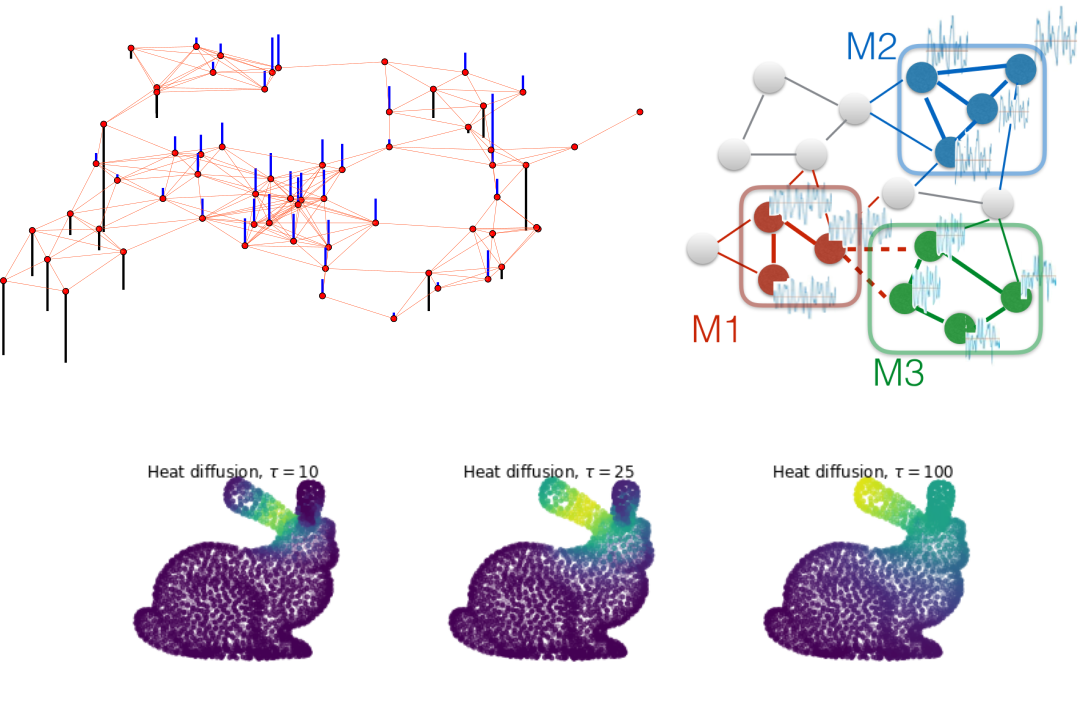
Benjamin Ricaud is an Associate Professor and Group Leader in Machine Learning at UiT The Arctic University of Norway's Department of Physics and Technology. His core affiliations include membership in the Machine Learning Group, Visual Intelligence center, and co-directorship of the Digital Technology Innovation Lab focused on Arctic-region tech startups. He also co-chairs the annual Northern Light Deep Learning conference. Ricaud's research spans: Fundamental ML : Graph signal processing, explainable AI, and generative models Applications : Microfossil classification, medical diagnostics (retinal aging), drug analysis, and climate data interpretation Emerging domains : Self-supervised learning and biological data analysis using Raman spectroscopy His recent publications (2020-2025) cluster in three domains: Graph ML methodologies (35%) Biomedical/biological applications (40%) Geoscience/climate informatics (25%) with consistent focus on interpretability and real-world data challenges. Teaching includes Image Processing (FYS-2010), Pattern Recognition (FYS-3012), and Machine Learning (FYS-2021). He leads outreach initiatives developing AI exhibits for Tromsø Science Centre.
Vassilios Tzerpos is an Associate Professor at the Lassonde School of Engineering, York University, where he has been since 2001. He holds a Ph.D. in Computer Science from the University of Toronto (2001). His research focuses on audio processing for musical applications, deep learning, digital signal processing, machine listening, and software engineering education. He directs the APTLY lab exploring music-technology intersections and leads the LaSSoftE lab developing socially-oriented software solutions. Education: Ph.D. in Computer Science, University of Toronto, 2001 Research Highlights: Dr. Tzerpos' work spans music information retrieval (e.g., automatic music classification), synthetic speech detection using neural networks, and software engineering pedagogy. His recent projects include Music-STAR for audio re-instrumentation and OER-based learning path creation systems. He has pioneered methods in design pattern detection and software clustering evaluation. Grants & Labs: Leads two research groups: APTLY (music-tech) and LaSSoftE (social impact software). Active in developing adaptive cybersecurity solutions against DoS attacks and refining software architecture recovery techniques. Key Themes in Publications: Recent work emphasizes machine learning applications in music technology and cybersecurity, with foundational contributions to software clustering methodologies and design pattern detection algorithms. His work bridges theoretical computer science with practical applications in education and creative industries.
Sharla Alegria is an Associate Professor at the University of Toronto (Downtown Toronto campus), specializing in sociological research focused on race, gender, and technology. Her work intersects colonialism, racialization, and indigeneity with computational methods and organizational studies. She examines how systemic inequalities manifest in tech workforces and AI systems, emphasizing intersectional analyses of labor markets and workplace dynamics. Her research interests include the sociology of artificial intelligence, racialized and gendered labor in tech industries, and the sociotechnical reproduction of inequality. She critiques structural barriers in STEM fields and explores pathways to enhance diversity and inclusion in science and engineering workforces through policy and organizational interventions. Key themes in her recent publications (2024–2016) include algorithmic bias in machine learning, gender pay gaps in federal science agencies, and the invisibility of marginalized workers in global tech supply chains. Her work bridges sociological theory with empirical analyses of contemporary technological and organizational challenges. Despite her prolific output, no specific awards or grants are explicitly listed in the provided materials. Her research often engages with interdisciplinary methods, combining quantitative and ethnographic approaches to study systemic inequities in high-tech environments.
Dr. Eunice Eunhee Jang is a Professor in the Department of Applied Psychology and Human Development at the Ontario Institute for Studies in Education (OISE), University of Toronto. Her research focuses on synergistic learner modeling, dynamic assessment systems, and the intersection of language testing with educational measurement. PhD with specializations in language testing, educational measurement, and program evaluation Develops interactive digital assessment interfaces for struggling readers Author of "Focus on Assessment" (2014) and co-author of OECD Reviews on Evaluation and Assessment in Education Research Interests Dr. Jang's work explores prismatic assessment analytics to understand learner potential and predict learning pathways. She integrates natural language processing and machine learning to create diagnostic feedback systems that support cognitive, metacognitive, and affective growth in technology-rich classrooms. Scientific Awards Jacqueline Ross TOEFL Dissertation Award Caroline Clapham IELTS Master’s Award Tatsuoka Measurement Award Professional Contributions She has served on major advisory boards including EQAO provincial assessments and TOEFL Committees of Examiners. Currently, she is an elected board member for the International Language Testing Association and contributes to the Broader Measures of Success Advisory Committee for People for Education.