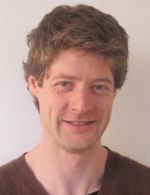
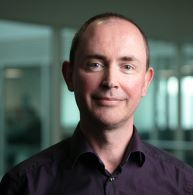
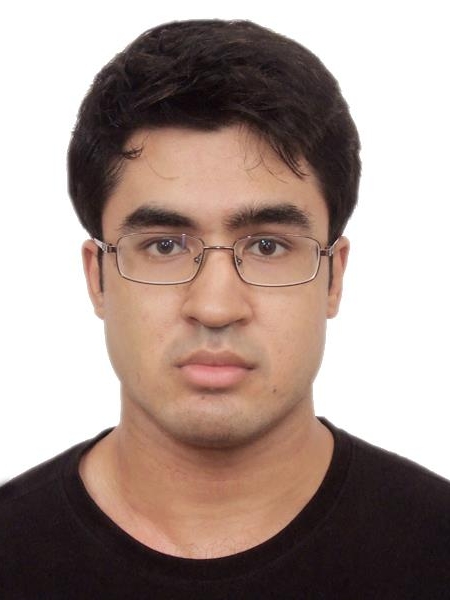
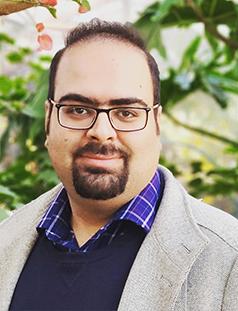
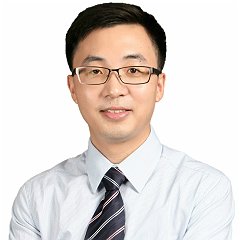
Dr Jon Warren is a Reader in Statistics at the University of Warwick, specializing in probability theory. His research spans stochastic flows, random matrices, and properties of Brownian motion, with significant contributions to understanding complex stochastic systems. Research Interests: Dr Warren's work is centered on probability theory, particularly in the areas of stochastic flows, random matrices, and Brownian motion. His research delves into the intricate behaviors of these systems, exploring their properties and applications in various mathematical contexts. Publications: His recent publications cover a wide range of topics within probability theory, including stochastic heat equations, Dyson Brownian motion, and random matrix theory. These works highlight his expertise in both theoretical developments and practical applications of stochastic processes. Teaching: He teaches ST910 Introduction to graduate probability, demonstrating his commitment to educating the next generation of statisticians and probabilists. Contact: Dr Warren can be reached at J.Warren@warwick.ac.uk for academic inquiries or collaboration opportunities.
Dr Xiaolin Wang is an Associate Professor at the Australian National University's School of Engineering. She leads a research group focused on carbon capture, hydrogen storage, thermal energy storage using phase change materials, gas hydrate sciences, and green building technologies. Her work emphasizes sustainable energy solutions and environmental engineering. She has secured over $2M in research funding, including an ARENA-funded hydrogen storage project. Education: PhD from ANU (2013), joined ANU as an education-focused lecturer in 2018. Awards: ANU Vice Chancellor’s Award for Early Career Academics, AIRAH Excellence in HVAC&R Research, and CECC Remote Teaching Award. She serves as Sub-Dean of Student Experience in her college. Research Interests: Innovations in low-capital-cost hydrogen storage via nano-scaffolding, heat/mass transfer enhancement in hydrate-based CCS, novel PCM recipes for thermal management, and strategies for green building design. Her lab explores biomimetic encapsulation for CO₂ capture and eco-friendly hydrogels for methane hydrate formation. Publications focus on hydrate-based carbon capture mechanisms, thermal energy storage systems, and advanced materials. Key projects include mass transfer enhancement for hydrate CCS and a Global Research Partnership on building physics and acoustics. Grants & Funding: ARENA hydrogen storage project, ARC DECRA Fellowship, and ANU Global Research Partnerships Scheme. Supervises research on carbon capture, thermal systems, and sustainable materials.
Timothy Harris is an Affiliated Lecturer at the University of Cambridge's Department of Computer Science and Technology, where he jointly teaches courses on multicore semantics and programming. Currently, he works at OpenAI, focusing on performance optimization for GPU inference of large language models, including the Azure OpenAI Service. Previously, he held roles at Microsoft, AWS, Oracle Labs, and was a faculty member at the University of Cambridge (2000–2004). His research spans distributed systems, runtime systems, operating systems, and high-performance computing, with an emphasis on scalability and performance. He contributed to projects like the Xen hypervisor and the Barrelfish research OS. Key research interests include distributed training of PyTorch models in the ONNX runtime, large-scale storage performance with Amazon S3, and runtime systems for in-memory graph analytics. His work often bridges 'big data' and high-performance computing techniques. Notable contributions include the book Transactional Memory (2010) and the Barrelfish OS, alongside numerous publications in top-tier conferences like SOSP, ASPLOS, and EuroSys. He has served as PC chair for ISMM 2025, VEE 2017, and EuroSys 2015, reflecting his leadership in the systems research community. His awards include a Best Paper Award at PACT 2010. Beyond academia, Harris is an avid hiker, aiming to complete the UK coastline, and maintains a photography portfolio at tlhphotography.uk .
Jerome Hastings is a Research Professor at the Photon Science Directorate , Stanford University, and a Principal Investigator at the Stanford PULSE Institute. He is affiliated with the SLAC National Accelerator Laboratory and holds the academic rank of Research Professor (A.R.). His research focuses on advanced X-ray scattering techniques, femtosecond laser interactions, and high-energy-density material physics. Currently on leave from June 15, 2025, to September 15, 2025, Hastings has taught courses such as Advanced Topics in X-ray Scattering (APPPHYS 322) and Principles of X-ray Scattering (APPPHYS 222, PHOTON 222). Teaching : 2025-26: Advanced Topics in X-ray Scattering (Spr), Principles of X-ray Scattering (Win), Directed Studies (Aut/Wi/Spr), Research (Aut/Wi/Spr) Prior courses (2024-25, 2023-24) include similar offerings. Research Interests : His work explores the intersection of photon science and material dynamics, utilizing free-electron lasers to probe ultrafast structural changes, phonon hardening, and electronic responses in materials under extreme conditions. Key areas include X-ray diffraction , time-resolved spectroscopy , and high-intensity X-ray interactions . Publications : Hastings has contributed to 47 publications, with recent studies (2024) on supercooled liquid hydrogen crystallization and phonon hardening in laser-excited gold. Earlier works (2019-2016) address X-ray split-delay systems, photodissociation dynamics, and anomalous Compton scattering. Scientific Contributions : Notable projects include the development of compact X-ray diagnostics and phase-contrast imaging instruments at LCLS, enabling nanoscale temporal and spatial resolution for high-energy-density experiments. Students : He has advised doctoral candidates Arijit Majumdar, Chance Ornelas-Skarin, Madison Singleton, and Catherine Weibel. Contact : Academic email jerome.hastings@stanford.edu
Qin Li is an Associate Professor in the Mathematics Department at the University of Wisconsin-Madison. She holds affiliations with the Wisconsin Institutes for Discovery and serves as a senior PI at the Institute for Foundations of Data Science. Her research focuses on numerical analysis, scientific computing, and inverse problems, with a strong emphasis on kinetic theory and multiscale PDEs. Her work spans computational methods for inverse transport and radiative transfer equations, Bayesian approaches in optical tomography, and optimization techniques for solving stochastic and deterministic PDEs. Recent publications highlight applications of diffusion models, Wasserstein gradient flow, and random sampling in inverse problems, as well as control theory for Vlasov-Poisson systems and reconstruction of chemotaxis kernels. She leads a research group within the Mathematics Department and has received funding from the National Science Foundation (NSF), the Office of Naval Research (ONR), and the Wisconsin Alumni Research Foundation (WARF). Her lab, Kinetic At Madison, explores nonlinear hyperbolic PDEs and their applications. She also contributes to teaching as a TA Supervisor.
Dr. Tristan A.F. Long is an Associate Professor in the Department of Biology at Wilfrid Laurier University's Faculty of Science in Waterloo, Ontario. A behavioral ecologist and evolutionary geneticist, he focuses on sexual selection and the role of female mate preference variation in evolutionary change. With teaching responsibilities for large introductory biology courses like BI111 and BI393, he has developed innovative active learning techniques using playing cards, iClickers, and role-playing games to teach population genetics and ecological principles. University of Western Ontario - BSc in Honours Ecology and Evolution (1999) University of Guelph - MSc in Zoology (2001) Queen’s University - PhD in Biology (2005) University of California Santa Barbara - Postdoctoral Fellow (2005-2009) University of Toronto - Postdoctoral Fellow (2009-2010) His research examines how female Drosophila melanogaster vary in their mating preferences and how these differences shape evolutionary trajectories. He has published extensively on reproductive plasticity, sexual conflict, and environmental interaction effects. His laboratory combines experimental evolution with computational modeling to explore genetic trade-offs and behavioral adaptations. Scientific awards include the Laurier Teaching Award for Sustained Excellence (2017). He has developed innovative classroom techniques like the Battle of the Beaks exercise for teaching adaptive evolution and an iClicker-based population genetics simulation using playing cards. His 2024 BI393 biostatistics course policy strongly discourages generative AI use due to concerns about educational integrity and environmental impact.
Alberto Rodrigues da Silva is a Professor at the Institute Superior Técnico , part of the University of Lisbon . He teaches Fundamentals of Information Systems , primarily during the 1st Semester of the 2025/2026 academic year. His scientific interests revolve around Information Systems , Model-Driven Engineering (MDE), Requirements Engineering (RE), Social Computing , and Software Engineering . He has extensively contributed to the development of rigorous requirements specification languages like RSL (Requirements Specification Language) and its extensions (e.g., RSL-IL4Privacy for privacy policies). His collaborative work spans automated acceptance testing, GDPR compliance, and domain-specific languages (DSLs) for applications such as mobile development , digital twins , and legal contexts (e.g., LegalLanguage ). His research trends focus on integrating model-driven engineering with privacy policies , IoT applications , and low-code platforms . He has also explored tools like Maestro for data classification and usability testing, and RiverCure for flood simulation. Email: alberto.silva@tecnico.ulisboa.pt .
Ciprian Cimpan is an Associate Professor at the Department of Green Technology (IGT), University of Southern Denmark, and a key member of the SDU Climate Cluster and SDU Life Cycle Engineering. His research focuses on Circular Economy , Industrial Ecology , Waste and Resources Management , and Life Cycle Assessment , with a strong emphasis on sustainable growth and resource efficiency. Postdoctoral Fellow, Norwegian University of Science and Technology (2019–2021) His recent publications highlight applications of LCA in evaluating additive manufacturing , plastic packaging , and critical material recycling within green transition contexts. He also investigates systemic challenges in textile waste , ICT product obsolescence , and rebound effects in reuse practices . Scientific awards include the DANROAD Prize (2025) for innovative drug recycling. He supervises PhD student Bubinek R. and teaches courses on Eco-efficient Engineering , Waste Management , and Solid Waste Processing .
Matt Weinberg is an Associate Professor of Computer Science at Princeton University , specializing in Algorithmic Mechanism Design . His research focuses on domains where user incentives are critical, such as auctions , cryptocurrencies , and social good applications. Prior to joining Princeton's faculty in 2017, he spent two years as a postdoc in Princeton’s CS Theory group and was a Research Fellow at the Simons Institute in 2015 (Economics and Computation) and 2016 (Algorithms and Uncertainty). Weinberg earned his PhD in Computer Science from MIT in 2014 , advised by Costis Daskalakis , and received his BA in Mathematics from Cornell University in 2010 , where he collaborated with Bobby Kleinberg . His research spans Algorithmic Game Theory , Economics and Computation , and Theoretical Computer Science , with recent trends emphasizing blockchain economics and multi-item auction theory . His scientific awards include Simons Institute Research Fellowships. He advises both PhD and MSE students , with a structured philosophy emphasizing independent problem-solving and technical rigor. Weinberg also co-teaches courses like COS 445: Economics and Computing and COS 521: Advanced Algorithms , often collaborating with faculty such as Mark Braverman . His NSF grant CCF-1954927/1955205 supports a crowdsourced list of TCS-focused Master’s programs.
Tyler Simko is an Assistant Professor of Political Science at the University of Michigan, specializing in US state and local politics, political geography, and computational social science. His research focuses on understanding and addressing inequality in American public policy through innovative methodological approaches. Education: Ph.D. in Government, Harvard University (2024) A.B. in Politics, Princeton University Simko's research examines state and local politics in the United States with particular focus on political geography and subnational policymaking. His active research agendas include legislative redistricting ("gerrymandering"), local public meetings, school segregation, affordable housing, and data privacy. Methodologically, he develops new techniques in computational social science and machine learning to evaluate subnational inequality and how it can be reduced. His work regularly involves partnerships with federal, state, and local officials to improve the design of public policy. His recent publications demonstrate a strong focus on applying computational methods to address real-world policy challenges, particularly in school desegregation, redistricting, and local government transparency. His research often leverages large-scale data collection efforts, such as LocalView (the largest database of local government meetings in the US), to analyze patterns of political behavior and policy outcomes across different jurisdictions. Awards and Recognition: APSA 2024-25 Best Paper in Education Politics and Policy Award APSA 2024-25 Best Paper in Urban and Local Politics, Honorable Mention MPSA 2024 Robert H. Durr Award for "the best paper applying quantitative methods to a substantive problem" Derek C. Bok Award for Excellence in Graduate Student Teaching of Undergraduates (2023) Simko teaches graduate and undergraduate courses in American Politics and Political Methodology at the University of Michigan. His teaching experience spans multiple institutions, including Harvard University and Princeton University. He has designed innovative courses on US Local Policymaking, data science, and computational social science. As a Data Scientist at the Office of Evaluation Sciences, he partners with federal, state, and local officials to improve program design and reduce administrative burdens. He is a co-PI of the Algorithm-Assisted Redistricting Methodology (ALARM) Project and co-creator of LocalView, the largest audio, video, and text database of local government meetings in the United States. These projects represent significant contributions to the field of computational social science and provide valuable resources for researchers studying local governance and policy-making.
Roop Aparajita Subhra Purushottam is an Associate Professor in the Department of Computer Science and Engineering at the Indian Institute of Technology Kanpur. His research focuses on machine learning foundations and applications, particularly in extreme classification, optimization techniques, robust learning, and educational technology. He has developed scalable algorithms for web-scale applications and innovative teaching tools for programming education. His research interests span: Design and analysis of machine learning algorithms Statistical learning theory and online optimization Non-convex optimization for large-scale problems Robust learning against adversarial corruptions Applications in information retrieval, education, and environmental monitoring Recent publications demonstrate a strong focus on extreme classification techniques, efficient deep learning architectures, and educational technologies. His work consistently appears in top-tier conferences including KDD, ICML, NeurIPS, and CVPR, with innovations in scaling machine learning systems to handle millions of labels and users. Significant Awards: Gopal Das Bhandari Distinguished Teacher Award (2024) PK Kelkar Faculty Fellowship (2024-2027) Microsoft Bing Ads Greatness Award (2021) Computer Society of India Faculty Award (2018) Multiple best paper awards and nominations at major conferences He leads several research grants and consults for industry partners including Microsoft Research and Tower Research. His team develops open-source tools like Prutor for programming education and DEFRAG for efficient feature agglomeration in extreme classification. He has advised numerous PhD and Master's students who have received prestigious awards for their research contributions.
Dr. Mohsen Yoosefzadeh Najafabadi is an Assistant Professor in the Department of Plant Agriculture at the University of Guelph, Ontario Agricultural College. He holds a PhD in Plant Breeding from the University of Guelph (2022), following M.Sc. and B.Sc. degrees from the University of Tehran. His research focuses on dry bean breeding, computational biology, and integrating omics technologies to enhance crop resilience and productivity. Key areas include developing stress-tolerant dry bean varieties, leveraging remote sensing for trait prediction, and optimizing genomic selection methods. He leads the Dry Bean Breeding & Computational Biology Program and has contributed to over 30 peer-reviewed publications since 2017. Education : PhD, Plant Breeding, University of Guelph (2022) M.Sc., University of Tehran B.Sc., University of Tehran Research interests emphasize computational tools development (e.g., AllInOne preprocessing framework), omics-based selection strategies, and non-Mendelian heredity mechanisms. His lab combines machine learning with field phenotyping to address agricultural challenges such as disease resistance and climate adaptation. Collaborative projects include soybean cold stress analysis and cannabinoid profile prediction in cannabis. Publications span genomic approaches to crop improvement, remote sensing applications, and transcriptomic studies. He teaches courses in plant breeding methodologies and actively engages in technology transfer initiatives. Lab activities include developing high-yielding dry bean cultivars resistant to biotic/abiotic stresses and advancing data-driven pipelines for crop breeding. Future work aims to synergize AI with multi-omics data to enhance crop resilience in diverse environments.
Senad Bećirović serves as a full Professor at the University of Education Lower Austria (Pädagogische Hochschule Niederösterreich), having progressed from assistant professor (2014) to associate professor (2017) before attaining his current rank in 2023. His academic career spans teaching research methodology, pedagogy, and advanced statistics across undergraduate, graduate, and doctoral programs at international institutions, delivered through both online and in-person formats. Bećirović's research focuses primarily on Artificial Intelligence and digital technologies in education , with significant contributions to intercultural education , gifted education , and foreign language pedagogy . His work demonstrates a consistent trajectory toward understanding how emerging technologies reshape educational practices and outcomes. Through four books published by Springer and Nova Science and over 60 articles in top-tier journals, he has established himself as a leading voice in digital educational transformation. His recent publications (2023-2025) reveal a pronounced emphasis on AI applications in education, with multiple studies examining AI literacy, policy frameworks, and implementation strategies across European higher education contexts. This research demonstrates both theoretical depth and practical relevance to current educational challenges. Bećirović actively contributes to the scholarly community as editor and reviewer for numerous Q1 journals including Smart Learning Environments (Springer), Education and Information Technologies (Springer), and TESOL Quarterly (Wiley). He participates in multiple European Commission-funded initiatives such as ENRICH (Enhancing Teaching and Research through Innovative Digital Technologies) and Erasmus+ projects focused on peace learning and English education. His professional activities extend to international collaboration through membership in the European Network Ethical Use of AI and the American Educational Research Association (AERA). He frequently delivers keynote addresses at international conferences, sharing expertise on AI in education, digital transformation, and intercultural competencies.
Yepang Liu is a tenured Associate Professor in the Department of Computer Science and Engineering at Southern University of Science and Technology (SUSTech) in Shenzhen, China. He leads the Software Quality Lab and serves as director of the Trustworthy Software Research Center within the Research Institute of Trustworthy Autonomous Systems. His educational background includes a B.Sc. with honors from Nanjing University (2010) and a Ph.D. from the Hong Kong University of Science and Technology (2015), where he was supervised by Prof. Shing-Chi Cheung. Prior to joining SUSTech, he worked as a postdoc at HKUST's CASTLE Lab and Cybersecurity Lab. Liu's research primarily focuses on software testing and analysis, empirical software engineering, AI for SE, software security, and trustworthy AI. His work bridges traditional software engineering with cutting-edge AI technologies, particularly in automated testing, security analysis, and quality assurance for mobile, blockchain, and extended reality applications. Recent projects explore how large language models can enhance bug detection, improve testing automation, and address fairness issues in machine learning systems. His contributions have been recognized with three ACM SIGSOFT Distinguished Paper awards (ICSE 2021, ASE 2016, ICSE 2014) and one Distinguished Artifact award (ICSE 2019). He has also received the ACM SIGSOFT Service Award and Distinguished Reviewer Award for his extensive service to the software engineering community. Top-10 Most Active Early-Stage Software Engineering Researcher (2013-2020) Top-10 Most Popular Instructor Among 2024 Undergraduate Graduates at SUSTech Junior Faculty of the Year (2021) SUSTech Teaching Excellence Award (2021) Outstanding Mentor Award (2020, 2024) Liu actively serves on the editorial boards of Empirical Software Engineering (EMSE) and Journal of Computer Science and Technology (JCST). He has participated in over 80 conference committees including leadership roles in ICSE, FSE, ASE, and ISSTA. His research is supported by the National Natural Science Foundation of China, National Key Research and Development Program, and leading Chinese IT companies. He regularly mentors PhD and MSc students and has guided multiple national competition award-winning teams. The Software Quality Lab under Liu's direction focuses on innovative approaches to software testing, security analysis, and quality assurance across various platforms including mobile, blockchain, and extended reality applications. Current projects emphasize the integration of AI techniques with traditional software engineering practices to address emerging challenges in software quality.
Federico Toschi is a Full Professor at Eindhoven University of Technology (TU/e), holding joint appointments in Applied Physics and Mathematics and Computer Science departments. His research focuses on multi-scale transport phenomena, combining statistical physics, fluid dynamics, and computational methods. He leads projects in the 4TU Centre for Multiscale Phenomena and EAISI. Education: PhD in Physics (University of Pisa, 1998) and academic background at Scuola Normale Superiore di Pisa. Interdisciplinary expertise in fluid dynamics turbulence, Lagrangian turbulence, crowd dynamics, and Lattice Boltzmann methods. Recipient of APS Fellow (2015), Euromech Fluid Mechanics Fellow (2012), and Ig Nobel Prize for Physics (2021). Research emphasizes turbulence modeling, pedestrian dynamics, and active matter, with applications in environmental flows and crowd management. His work bridges computational innovations with experimental validations. Recent articles explore kinetic data-driven turbulence modeling, pedestrian flow optimization, and turbulence effects in biological systems. Projects include digital twins for seismicity modeling and rarefied gas dynamics. Teaches fluid mechanics, computational physics, and chaos theory courses. Founded Flow Matters Holding BV, applying research to practical solutions.