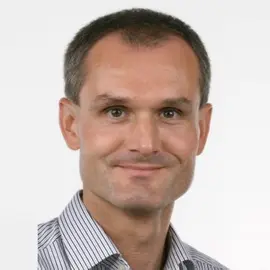
Damien Challet serves as a Lecturer at the Swiss Federal Institute of Technology Lausanne (EPFL) with an Invited guest appointment, teaching within the institutional structure EPFL > CDM > CDM-IF > IF-ENS. His primary teaching responsibilities include Financial Engineering and Financial Big Data courses. His research focuses on Financial Engineering and Financial Big Data, emphasizing quantitative analysis of financial markets through large-scale data processing and algorithmic modeling. Key subfields include risk management, algorithmic trading systems, high-frequency data analytics, computational finance, market microstructure analysis, and machine learning applications in asset pricing.
Prof. Dr. Marcel Honegger is a Lecturer in Robotics and Mechatronics at the Institute of Mechatronic Systems within the School of Engineering at Zurich University of Applied Sciences (ZHAW). He co-leads the Institute and focuses on the development of robot systems, drive controls, and control/regulation software for robotics and mechatronics. Ph.D., ETH Zurich (1996-1999) Dipl. Mech. Eng., ETH Zurich (1990-1996) His research spans robotics, mechatronics, and control systems, with recent work on predictive maintenance using autoencoder-based anomaly detection for delta robots and RGBD segmentation for agricultural automation. Earlier projects involved adaptive controllers for parallel manipulators and Java frameworks for robot control systems. Honegger has led projects such as the full automatic sprinkler robot (FASR) and the Advanced Rail Track Information System . He previously worked as a Senior R&D Engineer at CSEM Alpnach (2001-2009) and Project Manager at maxon motor ag (2009-2014). His publications reflect expertise in industrial automation, sensor integration, and mechanical design. He is involved in teaching and R&D collaborations, with an ORCID ID: 0009-0004-8178-136X.
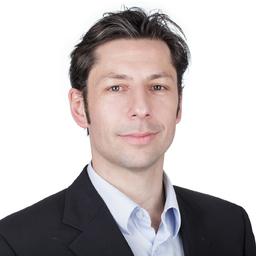
Matthias Meyer holds a Doctor of Business Administration (DBA) from Middlesex University and a Master of Public Health (MPH) from University of Bielefeld. He currently serves as a Lecturer and Co-head of the BSc Health Promotion and Prevention program at ZHAW School of Health Sciences. His career spans roles in public administration, nonprofit organizations, and academia, with specific expertise in digital transformation, organizational change, and public health policy. Lecturer at Zurich University of Applied Sciences (ZHAW) Co-head of BSc Health Promotion and Prevention Former Head of Degree Programme at FHNW Former Head of Health Department in Canton of Zug Doctor of Business Administration (DBA) from Middlesex University Master of Public Health (MPH) from University of Bielefeld His research bridges public health and organizational theory, focusing on knowledge transfer between academia and practice, digital transformation strategies in public/nonprofit sectors, and health policy implementation. Recent publications examine setting-based approaches in digital transformation, workplace mental health, and tobacco prevention segmentation. He received the Best Practice Based Abstract award from Public Health Schweiz in 2010. His work appears in Springer publications, Nomos editions, and Seismo policy dictionaries. He actively consults on organizational development through his firm matthiasmeyer.ch. Advocate for research-practice integration Consultant on digital transformation in public sectors Author of 'Die smarte Verwaltung aktiv gestalten' Expert in systemic organizational change Critic of democratic majority/minority human rights conflicts
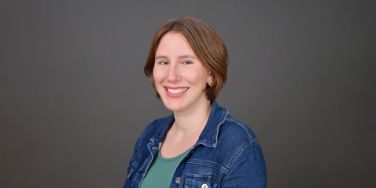
Prof. Dr. Kurt Stockinger is a Professor of Computer Science at ZHAW School of Engineering and holds a doctorate at the University of Zurich . He serves as Head of the MAS Data Science program and co-leads the ZHAW Datalab . His research focuses on Intelligent Information Systems , bridging information systems, natural language processing, and machine learning. Affiliated with the University of Zurich, he contributes to Quantum Machine Learning and Open Data Exploration initiatives. Stockinger's educational background includes a PhD in Computer Science (University of Vienna & CERN), a Master in Business Informatics (University of Vienna), and a CAS in Didactics & Methodology (ZHAW). He has taught courses in Quantum Computing , Big Data for Natural Sciences , and Data Science programs at ZHAW and University of Zurich. His research spans Data Science , Big Data , Natural Language Query Processing , Knowledge Graphs , and Quantum Machine Learning . Recent publications focus on quantum autoencoders , hybrid quantum neural networks , and prompt engineering for knowledge graph question answering. He has developed frameworks like ScienceBenchmark for real-world NL-to-SQL evaluation and NQuest for natural language query exploration. Scientific awards include the Best Paper Award at 7th Swiss Conference on Data Science (2020) He leads major projects such as DataGEMS (Data Discovery Platform, Horizon Europe) Digital Health Zurich (Clinical Innovation Lab) INODE4StatBot.swiss (NL-to-SQL Translation) GraphQueryML (Graph Database Optimization) ScienceBenchmark (NL-to-SQL Evaluation) Stockinger's work intersects with computer vision , biomedical data , and industrial applications , demonstrated through collaborations with institutions like Lawrence Berkeley National Laboratory, CERN, and University of Washington. He has contributed to establishing QuantumBasel and ZHAW Datalab as research hubs.
Prof. Dr. Michael Röthlin is Head of the Computer Science Department and Professor of Business Informatics at Bern University of Applied Sciences. With over 23 years at the institution (full-time since 2004), he leads research in business applications and software development while teaching core computer science courses. His industry background includes engineering and management roles at ABB. Education: Dr. rer. oec., Universität Bern (1999-2010) MBA, Université de Lausanne (1994-1995) Dipl. El.-Ing. ETH, École polytechnique fédérale de Lausanne (1985-1990) Research Focus: Specializes in enterprise systems (ERP/SAP), business process management, and full-stack development with expertise in PHP frameworks (Laravel, Typo3), mobile applications (iOS), and e-learning solutions. Leads projects integrating technology with sustainability initiatives. Student Supervision: Mentored 39+ bachelor/master students since 2012 on projects including: Web platforms for sustainability education (SDG Walk) University management systems (MSE module management) Mobile applications for industrial and academic use Professional Affiliations: Member of ACM, Gesellschaft für Informatik (GI), Schweizer Informatik Gesellschaft (SI), and Electrosuisse.
Prof. Dr. Stefan Grösser is a Professor of Decision Sciences and Policy at Bern University of Applied Sciences, where he leads the research group 'Management Science, Innovation, Sustainability and Entrepreneurship (MISE)' in the Department of Engineering and Computer Science. His academic journey includes a PhD from University of St. Gallen, postdoctoral research at MIT Sloan School of Management, and a Master of Philosophy from University of Bergen. His research focuses on: System Dynamics and agent-based modeling for complex systems Strategic decision-making frameworks Circular economy business models Sustainable supply chain optimization Business analytics and computational modelling His recent publications demonstrate strong emphasis on sustainable systems, healthcare supply chains (especially medicine shortages), renewable energy transitions, and methodological advances in simulation techniques. This work consistently bridges theoretical modeling with practical applications in industry and policy. He actively contributes to academic service through memberships in the System Dynamics Society, Academy of Management, and EU-COST initiatives. His teaching encompasses bachelor and master programs in Industrial Engineering, Business Engineering, and Circularity & Sustainability. Current research projects include developing circular value chains for photovoltaic systems and batteries, decision methodologies for pharmaceutical supply chains, and innovation management frameworks for sustainable business models.
Dr. Christine Grundig is a Researcher at the University of Zurich's Institute of Art History, where she has contributed to the SNSF research project 'Heinrich Wölfflin's Collected Works' since October 2017 under Prof. Tristan Weddigen's chair. She plays a pivotal role in advancing Digital Humanities through both research and teaching, currently contributing to the swissuniversities P8 project (2021-2024) focused on systematic integration of digital skills into humanities education. Her academic journey began with studies in German and English for teaching at grammar schools at Julius-Maximilians-University of Würzburg, where she earned a Master's degree specializing in Older German Literature. She completed her dissertation on 'On Making a Fool. Authorship and Paratextuality in European Ships of Fools around 1500' under Prof. Dr. Joachim Hamm, scheduled for publication in 2023. Prior to Zurich, she held teaching and research positions at the University of Würzburg (2013-2017). Dr. Grundig's research bridges computational methods with humanities scholarship, focusing on digital editions, text/image processing, and OCR for historical documents. Her work demonstrates how digital tools can transform traditional humanities research while maintaining scholarly rigor. She has particular expertise in applying OCR4all and Transkribus to analyze medieval literary traditions, especially the 'Ship of Fools' corpus across European contexts. Her publication record reveals a clear interdisciplinary trajectory, with her 2019 Applied Sciences paper on OCR4all representing significant methodological contribution to historical document processing, while her literary studies publications demonstrate deep engagement with paratextuality and adaptation in medieval literature. This dual focus makes her work valuable to both computer scientists developing humanities applications and traditional scholars seeking new analytical approaches. Co-developer of OCR4all open-source tool for historical document processing Key contributor to digital edition of Heinrich Wölfflin's works Developer of curriculum for Digital Humanities education across multiple institutions Specialist in medieval literature with focus on the 'Ship of Fools' tradition Through her teaching modules, Dr. Grundig systematically introduces humanities students to essential digital skills including relational databases, automatic text recognition, and digital scholarly editions. Her approach emphasizes both practical application and critical reflection, helping students understand not just how to use digital tools but also their limitations and implications for humanities scholarship. Her work represents an important bridge between traditional humanities disciplines and emerging digital methodologies.
Lena Tichy serves as a Lecturer at Bern University of Applied Sciences, working within the Vice Rectorate Teaching and Virtual Academy. She is based at the university's main campus in Bern, Switzerland, with her office located at Falkenplatz 16, 3012 Bern. Education: Ph.D in Creative Writing (2016-2019) at the International Institute of Modern Letters, Victoria University of Wellington, New Zealand MSc in Equality Studies (2011-2012) at the School of Social Justice, University College Dublin, Ireland B.A. in Philosophy (2007-2011) at the University of Bern Dr. Tichy specializes in creative and scientific writing, bringing together her philosophical background with practical writing instruction. Her expertise spans both artistic creative expression and technical academic writing, making her a valuable resource for students across various disciplines who need to develop their writing capabilities. Her work at the Virtual Academy suggests a focus on digital learning environments and innovative teaching methodologies. Awards and Recognition: As a member of the Vice Rectorate Teaching, Dr. Tichy contributes to the university's educational strategy and quality assurance processes. Her position indicates involvement in shaping teaching practices and academic standards across the institution, though specific details about grants or research funding are not provided in the available information. Dr. Tichy is multilingual, with native or bilingual proficiency in German and English, and conversational French, which enhances her ability to work in Switzerland's multilingual academic environment and with international students.
Franco Bezzola serves as a Lecturer and Project Manager at the Institute for Sociocultural Development within the School of Social Work at Lucerne University of Applied Sciences and Arts. He has held this position since 2015, following prior service as a scientific employee at the same institute from 2012 to 2015. His educational background includes: 2010: Licentiate in Sociology, Media Studies and Cultural Anthropology from the University of Basel 2003: Certificate of Advanced Studies in Project Management from Bern University of Applied Sciences 2002: Certificate of Advanced Studies in Practical Training from Lucerne University of Applied Sciences and Arts 1997–2001: Part-time Training in Sociocultural Animation from Lucerne University of Applied Sciences and Arts Bezzola's research focuses on practical training methodologies, participatory processes in community development, social space theory, and qualitative social science approaches. His work emphasizes bridging academic theory with practical interventions in urban environments, particularly through sociocultural animation and neighborhood development initiatives. His publication trends reveal consistent engagement with urban development challenges, evolving from public space safety studies (2014) toward contemporary digital neighborhood networking (2024) and future-oriented social work education. These works span urban studies, community development, and social work education, demonstrating interdisciplinary integration of sociological theory and practical application. Bezzola has led extensive project work including SwissSTES PIT/CC-TES, Digitale Vernetzung im Quartier, Smart Density Bafu, and Holodeck Lucerne. These initiatives focus on participatory urban development, digital community tools, sustainable densification, and sociocultural animation, often in collaboration with municipal governments and community organizations. As a core member of the Institute for Sociocultural Development, he integrates teaching with applied research through projects examining micro-invasive urban strategies, cooperative implementation procedures, and community-led spatial planning. His work consistently emphasizes democratic governance in urban transitions and practical applications of sociocultural theory.
Prof. Dr. Janko Auerswald serves as a Lecturer in Materials Science and Head of the Materials Laboratory at the Lucerne University of Applied Sciences and Arts (HSLU) within the Engineering & Architecture school and Institute of Mechanical and Energy Engineering (IME). His academic foundation includes a doctorate from the University of Ulm under Leibniz Prize winner Prof. Dr. H.-J. Fecht, with prior studies at the Technical University of Berlin and Bowling Green State University (USA) through a scholarship. His research spans materials science , micro/nanotechnology , and laser processing , with significant contributions to high-temperature superalloys, epitaxial semiconductor structures, and sustainable household appliance development. His recent work focuses on microfabrication effects on material properties, microplastic pollution from textiles, and ultra-short pulse laser applications. He has authored two Wiley-published university textbooks and over 40 peer-reviewed scientific publications. Award highlights include the Best Poster Award at Eurosensors XXII (2008), a Senator Fulbright Scholarship , and membership in the Swiss Association for Materials Science and Technology (SVMT) . He actively contributes as a session chair for international conferences (including MNE 2024) and peer reviewer for scientific journals. His industry collaborations with TRUMPF Switzerland and V-ZUG AG have yielded 9 patent families covering dishwasher cleaning systems, thermal crosslinking of appliances, and microfluidic sensors. Current Affiliation: Lecturer, Institute of Mechanical and Energy Engineering (IME), HSLU Engineering & Architecture Research Leadership: Head of Materials Laboratory at HSLU Industry Impact: 9 patent families with applications in laser processing, sustainable appliances, and microfluidics Professional Service: Session Chair for Micro & Nano Fabrication at MNE 2024; SVMT member since 2021 His recent publications reveal a strong trend toward sustainable materials engineering (microplastics research, circular economy concepts) and advanced microfabrication (ultra-short pulse laser precision, micro-tensile testing of miniature components). The interdisciplinary nature of his work bridges academic research with industrial applications in medical devices, food safety, and precision manufacturing.
Samuel Frei serves as a Lecturer at the Lucerne University of Applied Sciences and Arts – School of Design, Film and Art, where he teaches Visual Communication and Data Visualization across Bachelor's and Master's programs including the Applied Information and Data Science and MA Design curricula. His academic journey began after a career shift from biology and finance, completing a Master's in Design in 2011 followed by dissertation research at University College Dublin's SMARTLab (2012-2020). His research focuses on the intersection of analog and digital media, particularly in immersive technologies (AR/MR/VR) , cultural heritage digitization , and data storytelling . Key projects include the Digital Storytelling Lab, ALE (UNESCO World Heritage mobile experiences), and IDN-Kommunale Energie-Transformation. His work consistently explores how mobile and immersive technologies transform learning in cultural institutions and tourism contexts. Frei's 2024-2022 publications reveal a strong trend toward geospatial data visualization in tourism, cultural heritage preservation through mixed realities , and participatory digital archiving , often involving Swiss parks, museums, and indigenous communities like Amazonian collectives. His work bridges technical development with human-centered design principles. Nomination for Swiss Design Prize 2017 (Research category) Best of Swiss App Award 2016 (2x Bronze for ALE project) As former coordinator (2013-2023) and director (4 years) of continuing education programs, he managed interdisciplinary collaborations with cultural institutions, nature conservation groups, and educational organizations. His current leadership of the Investigative Methods in Research Practice module (2025) demonstrates ongoing curriculum development. Frei also maintains professional practice as an illustrator and concept designer, applying research to real-world projects in conservation and cultural sectors. His Visual Narrative research group serves as the primary laboratory context, producing projects like the Digital Storytelling Lab and Virtuelles Museum that integrate mobile technologies, indigenous knowledge systems, and emerging AI/AR platforms for cultural engagement.