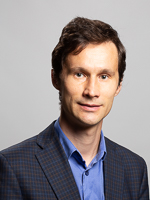
Eivind Rudjord Hillesund is an Associate Professor in the Department of Mathematical Sciences at the University of Agder. He holds qualifications in teaching mathematics and physics from the University of Oslo's lektorprogrammet and defended his doctoral thesis in January 2021 on engineering students' use of learning resources in mathematics courses. His teaching focuses on statistics courses within GLU programs and assignments in EVU courses at UiA since 2019. Research Interests: Resource use and decision-making in undergraduate mathematics education Educational strategies for engineering students Development of tools for tracking student resource utilization Publications include studies on resource systems analysis, didactical purposes of resources, and data collection methodologies. His work emphasizes improving understanding of how students interact with learning materials in STEM fields.
Trym Vegard Haavardsholm is a 20% part-time Lecturer at the University of Oslo (UiO) within the Section for Autonomous Systems and Sensor Technologies. He also serves as Principal Scientist at the Norwegian Defence Research Establishment (FFI) and is a PhD candidate at the Department of Engineering Cybernetics, NTNU. His research focuses on computer vision, machine learning, robotics, and image analysis, with a particular emphasis on multispectral imaging systems and unmanned aerial vehicles (UAVs). Haavardsholm has contributed to advancements in sensor technologies for tactical reconnaissance, autonomous navigation, and real-time data processing. His work spans applications in defense, environmental monitoring, and emergency response systems. Research Interests Haavardsholm’s research integrates interdisciplinary approaches to develop innovative sensor systems and algorithms. Key areas include compact multispectral imaging for small UAVs, in-operation camera calibration, and anomaly detection in hyperspectral data. His contributions emphasize practical applications such as urban feature classification, collaborative indoor navigation, and bioaerosol detection. His work bridges theoretical computer science with applied engineering, addressing challenges in autonomous systems and sensor fusion. Publications His publications highlight trends in multispectral sensor design, UAV imaging, and real-time georeferencing. Recent work includes compact sensor systems for tactical use and advancements in pushbroom image rectification. Earlier research explored band selection algorithms for target detection and GPU-accelerated anomaly detection. Professional Roles As a lecturer, Haavardsholm contributes to academic supervision and teaching in autonomous systems. His dual role at FFI and UiO reflects his commitment to translating academic research into practical defense and civilian applications. His PhD candidacy at NTNU underscores his ongoing academic engagement in engineering cybernetics.
Pål Roland is a Professor at the University of Stavanger, Faculty of Arts and Education, and affiliated with the Norwegian Centre for Learning Environment and Behavioral Research in Education. He is based in Stavanger and actively contributes to research and dissemination in educational leadership, implementation science, and behavioral research in schools and kindergartens. His research interests focus on implementation science , capacity building in educational organizations , social and emotional learning , bullying prevention , classroom interactions , and leadership in change processes . He emphasizes systemic and organizational approaches to sustainable development in pedagogical settings. The recent articles highlight a consistent focus on implementation quality, professional learning communities, leadership in educational change, and behavioral support in early childhood and school contexts. His work bridges theory and practice, often involving collaboration with school leaders and practitioners. Scientific Awards: No awards explicitly mentioned in the provided text. Advising and Grants: No formal advisees or grant information is listed in the provided content. However, his extensive collaborative research and leadership in dissemination suggest active involvement in research projects and networks, likely supported by external funding. Labs and Teams: He is a key researcher at the Norwegian Centre for Learning Environment and Behavioral Research in Education , which functions as a research group focused on improving learning environments through evidence-based practices. He frequently collaborates with researchers such as Sigrun K. Ertesvåg, Ella Maria Cosmovici Idsøe, and others on projects related to bullying, SEL, and implementation.
Alf Steinar Sætre is a Professor of Innovation and Strategy at the Norwegian University of Science and Technology (NTNU), Department of Industrial Economics and Technology Management. He leads the Norwegian Research School in Innovation's Program (NORSi-PIMS), collaborating with institutions like Harvard Business School and INSEAD. His research focuses on innovation management, ambiguity in innovation processes, organizational adaptation, and sustainable business models. Education: MSc in Economics and Business Administration from the Norwegian School of Economics, Bergen PhD in Organizational Communication from the University of Texas at Austin (Fulbright Scholar) Research Interests: Management of ambiguity in innovation Innovation project termination Organizational learning and adaptation Sustainability integration in business models His work bridges theory and practice, emphasizing strategic problem formulation and psychological ownership in innovation. Teaching & Awards: Recipient of Indøk's Lecturer of the Year (2018) Teaches Innovation Management (TIØ4180) and Engaged Scholarship (ØK8101) Outreach: Leads the PIMS Executive Forum, connecting executives with innovation scholars. Authored books like Communication in Organizations and contributed to global research networks.
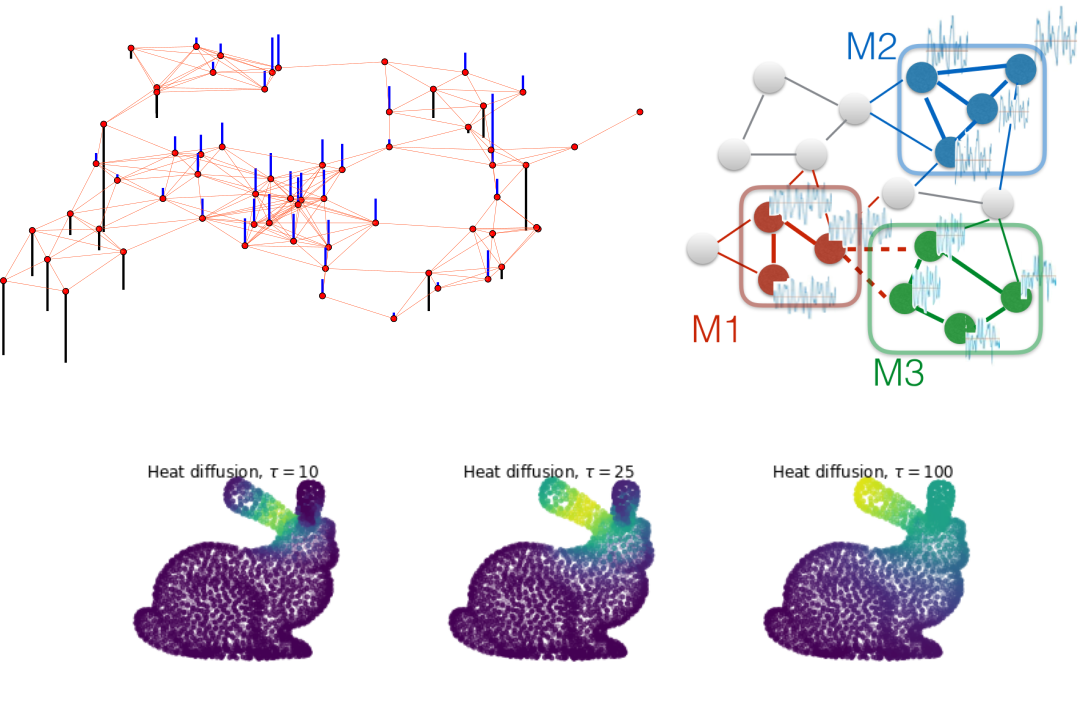
Benjamin Ricaud is an Associate Professor and Group Leader in Machine Learning at UiT The Arctic University of Norway's Department of Physics and Technology. His core affiliations include membership in the Machine Learning Group, Visual Intelligence center, and co-directorship of the Digital Technology Innovation Lab focused on Arctic-region tech startups. He also co-chairs the annual Northern Light Deep Learning conference. Ricaud's research spans: Fundamental ML : Graph signal processing, explainable AI, and generative models Applications : Microfossil classification, medical diagnostics (retinal aging), drug analysis, and climate data interpretation Emerging domains : Self-supervised learning and biological data analysis using Raman spectroscopy His recent publications (2020-2025) cluster in three domains: Graph ML methodologies (35%) Biomedical/biological applications (40%) Geoscience/climate informatics (25%) with consistent focus on interpretability and real-world data challenges. Teaching includes Image Processing (FYS-2010), Pattern Recognition (FYS-3012), and Machine Learning (FYS-2021). He leads outreach initiatives developing AI exhibits for Tromsø Science Centre.
Torgeir Welo is a Professor at the Department of Mechanical and Industrial Engineering , Norwegian University of Science and Technology (NTNU) . He specializes in metal forming , particularly aluminum alloy structures , with a focus on plastic bending behavior , dimensional stability , and 3D forming technologies . His research also encompasses Lean Product Development , emphasizing knowledge reuse and maximizing customer value in automotive and aerospace applications. Key Research Areas : Metal Forming, Aluminum Processing, Springback Control, Lean Development, Additive Manufacturing, Material Substitution Teaching : Courses on Aluminum Technology , Metal Forming Analysis , and Machine Element Design Publications (15 most recent): Focus on springback monitoring , charge weld evolution , flexible forming , machine learning applications , and circular economy frameworks in metal manufacturing.
Ingvill Rasmussen is a Professor at the Department of Education, Faculty of Educational Sciences, University of Oslo (UiO), where she has been employed since 2010. Her academic profile demonstrates expertise in the intersection of digital technology and educational practices, with particular emphasis on classroom dialogue, collaborative learning, and microblogging applications in educational settings. She teaches courses including PED2103 (Development and learning), PED1001 (Learning and teaching), and specialized courses on digital interactions and learning sciences research in the digital age. Dr. Rasmussen's research examines how new technologies transform communication and learning processes. Her work investigates conversations, collaboration, and knowledge production between students and teachers, with special attention to internet and web-based environments. She explores how teachers can effectively guide students in digital learning environments and how students develop necessary self-regulation skills to manage attention across analog and digital activities. Her academic interests explicitly address how ubiquitous technology demands new skills in regulating attention – learning to disconnect, put away devices, and switch between analog and digital activities. Her publication record from 2018-2025 reveals a consistent research trajectory focused on microblogging as a tool for enhancing classroom dialogue. These works examine how digital tools create spaces for student voice, support collaborative meaning-making, and facilitate productive educational interactions across diverse subject areas. Her research shows increasing sophistication in analyzing the nuanced ways technology mediates educational dialogue. Reviewer for prominent international journals including International Journal of Learning, Culture and Social Interaction; International Journal for Educational Research; and British Journal of Educational Technology Library Board, UiO (2014-2022) Employee representative, Department Board (2016-2020) Co-chair and organizer of the Nordic ISCAR conference (2007) Dr. Rasmussen completed her PhD at UiO (2000-2005) on 'Project work and ICT - studying learning as participation trajectories,' followed by postdoctoral work on the TWEAK project (2006-2010). She is currently involved in multiple research projects including AI-supported science conversations, EU Kids Online V (EUKO), and the Samtavla innovation project as a key member of the Living and Learning in the Digital Age (LiDA) research group.
Lilja Øvrelid is a Professor at the Department of Informatics, University of Oslo, leading the Language Technology Research Group. Her research focuses on syntactic and semantic text processing using machine learning techniques such as dependency parsing, negation analysis, and sentiment analysis. She teaches courses including IN1140: Introduction to Language Technology , IN5550: Neural Methods in NLP , and INF5830: Natural Language Processing . Her academic interests span natural language processing, machine learning, and computational linguistics, with a particular emphasis on Norwegian language technology. Recent publications highlight work in sentiment analysis (including patient feedback), event extraction from Norwegian news, benchmarking language models, emotion analysis for under-resourced languages (Pashto, Farsi-Dari), and bias detection in multilingual models. She actively contributes to the development of Norwegian language resources such as NorBench, NorQuAD, and NoReC. Current projects include BigMed and SIRIUS , focusing on biomedical text mining and AI infrastructure. Collaborations with colleagues like Erik Velldal, David Samuel, and Vladislav Mikhailov are frequent in her work. Despite no explicit mention of scientific awards, her contributions to NLP and computational linguistics are substantial through publications, datasets, and tool development.
Heidi Aarum Hansen is an Associate Professor at the Department of Welfare, Management and Organisation, Oslo Metropolitan University. She holds a PhD in Social Work with extensive practical experience in child welfare. Her research focuses on child welfare practices, digitalization challenges, children’s rights, and social media’s impact on social work. Education: PhD in Social Work. Research interests include competence development in child welfare, digital transformation of welfare services, and methods for teaching practical social work. Current projects explore how children's social media usage challenges traditional social work practices. Key research areas span child welfare policy analysis, family contact preservation strategies, and judicial decision-making processes involving children. Her work emphasizes ethical considerations in digital age practices and improving communication in high-conflict cases. Affiliated with the Social Work Research Group and Psychosocial Work Research Group. Active in publishing Nordic Social Work Research and Children and Youth Services Review. No awards explicitly listed, though her work demonstrates significant contributions to child welfare scholarship. Teaches courses related to child welfare practice and digitalization impacts. Advising activities not detailed here. Research focuses on developing practical frameworks for integrating digital tools while maintaining ethical standards in social work.
Daniel Beat Müller serves as Professor at the Industrial Ecology Programme within the Department of Energy and Process Engineering at the Norwegian University of Science and Technology (NTNU), Trondheim. His office is located at Realfagbygget Gløshaugen (E4-120) with contact details daniel.mueller@ntnu.no and +4791897755. His research centers on analyzing human needs in relation to material/energy flows and environmental impacts, with two primary focus areas: (i) urban evolution and associated material flows for managing building/infrastructure stocks, and (ii) national/global metal cycles to identify supply constraint reduction strategies. His methodology integrates design, modeling, and decision-making through transdisciplinary stakeholder engagement. Müller teaches Material Flow Analysis and Systems Analysis of the Built Environment for Industrial Ecology and Civil Engineering Master's students. His research outputs demonstrate strong trends in circular cities, critical mineral management, and urban metabolism, with recent publications emphasizing building information modeling, electric vehicle battery systems, and phosphorus cycling. His work consistently addresses resource criticality within energy transition contexts. As (ad interim) chair of the International Society of Industrial Ecology’s MFA-ConAccount section, he contributes to methodological standardization. He previously served on the U.S. National Research Council’s Committee on Defense Stockpiles and remains active in Switzerland's National Research Programme 65 "New Urban Quality". Müller supervises numerous Master's and doctoral students, with thesis topics spanning lithium-ion battery recycling, building stock dynamics, and urban resource flows. His projects frequently involve industry collaboration for practical implementation of material stewardship strategies.
Aleksandra Raonic is an Associate Professor at the Norwegian University of Science and Technology (NTNU), affiliated with the Department of Architecture and Technology under the Faculty of Architecture and Design. She previously held an Associate Professorship at Xi'an Jiaotong-Liverpool University (XJTLU) in China from 2014 to 2020, where she led Year 3 architecture programs and collaborated with the University of Liverpool. Raonic is also the founder and principal architect of RAUM, an award-winning architectural studio known for research-driven design projects. Her work spans architectural education, urban design, and innovative residential/commercial projects, with a focus on sustainability and community engagement. Her research emphasizes experimental pedagogy and the integration of design practice with academic teaching. Notable projects include the Stubline Kindergarten (2017 S.ARCH Award) and the Central Greenmarket in Negotin (2019 DANS International Award). Raonic has received over 25 design and teaching awards, including the Jiangsu Province Tutor Award (2018) and the Suzhou Excellent Educator Award (2016). She has supervised numerous student projects recognized at national and international levels. Raonic’s teaching philosophy combines theoretical rigor with hands-on practice, evident in her co-authored publications like Framing Indeterminacy (2019). Her recent exhibitions, including Barnas Katedral (2023) and Work in Progress (2023), highlight her commitment to experimental design and public space innovation. She actively collaborates across institutions, such as the Threads of Innovation project with CEPT University in India (2021). Education Background: Professional journey began with early architectural competitions (e.g., 1998 student award for urban design in Pancevo). Formal training includes studies at the Städelschule in Frankfurt, influencing her experimental design ethos. Awards Overview: Over 25 awards spanning teaching excellence, design competitions, and architectural innovation, including Grand Prix (Leonardo 2005) and multiple jury-selected projects. Grants & Projects: Leads applied research initiatives like NTNU’s Threads of Innovation , focusing on space interventions and cross-cultural academic partnerships. Raonic’s architectural practice and academic roles are deeply intertwined, reflecting her belief in education as a platform for advancing architectural discourse and societal impact.
Hakan Basarir is a Professor in the Department of Mining Engineering at the Norwegian University of Science and Technology (NTNU), Trondheim, Norway. His research and teaching focus on mining rock mechanics, rock mass characterization, underground support systems, and the application of soft computing methods in mining engineering. PhD in Mining Engineering (2002) 20+ years of research and teaching experience 60+ publications in journals and conferences Research Interests include rock mass property prediction using measurement while drilling (MWD) techniques, numerical modeling of mining structures, optimization of mine support systems, and sustainable material development. His work integrates machine learning and computational methods to address challenges in mining geomechanics and backfill design. Recent Publications highlight advancements in AI-driven lithology prediction, eco-concrete formulation, and backfill mixture optimization. He has also contributed to tunnel stability analysis and seismic rock slope modeling. Teaching includes advanced courses in mining engineering, mineral production modeling, and specialization projects in geotechnology.
Petter Gullmark is an Associate Professor at the School of Business and Economics , UiT The Arctic University of Norway. He serves as Vice-Dean for Innovation, Industry Collaboration, and Ph.D. education, focusing on public sector innovation and entrepreneurship. Research Areas: Public Sector Innovation, Entrepreneurship, Dynamic Capabilities, Institutional Logics, Leadership Contact: petter.gullmark@uit.no | +47 77 66 05 20 His recent work examines how institutional logics shape public servants' opportunity evaluation, the role of middle managers in deploying dynamic capabilities, and cross-sector collaboration challenges. Publications appear in journals like Public Management Review , Small Business Economics , and Public Administration Review . Current teaching includes BED-3111 Sustainable Innovation . Research trends emphasize organizational entrepreneurship, institutional change, and leadership dynamics in public sector contexts.
Egor Kostylev serves as an Associate Professor in the Department of Informatics within the Faculty of Mathematics and Natural Sciences at the University of Oslo. His research focuses on the theoretical foundations connecting symbolic and sub-symbolic artificial intelligence, particularly examining relationships between formal logic systems and machine learning approaches. His educational background includes an MSc (Specialist, 2005) and PhD (Candidate, 2009) from Lomonosov Moscow State University under Prof. Vladimir A. Zakharov. He subsequently held research positions at the University of Edinburgh (2010-2013) and the University of Oxford (2013-2020) before joining the University of Oslo in 2020. Kostylev's research interests center on bridging symbolic AI formalisms with sub-symbolic approaches. He investigates connections between various logics (Description Logics, Temporal Logics, Datalog), query languages (SPARQL, Regular Path Queries, OTTR), and machine learning formalisms (Graph Neural Networks, Markov Logic Networks). His work addresses critical challenges in Explainable, Trustworthy, and Green AI through theoretical foundations that connect different AI paradigms. His publication record demonstrates consistent high-impact contributions in theoretical computer science and AI, with numerous publications in top venues including AAAI, LICS, Journal of the ACM, and ICLR. His recent work shows a clear trajectory toward unifying logical reasoning with neural network approaches, particularly through graph neural networks and their connections to logical formalisms. The research spans theoretical foundations of knowledge representation, temporal reasoning in knowledge bases, and the logical expressiveness of modern neural architectures. As a research leader, Kostylev supervises multiple PhD students including Shuwen (Aurora) Liu, Maximilian Pflüger, Roxana Pop, Dongzhuoran Zhou, and Erik Snilsberg. He serves as a Research Theme Leader for the Integreat SFF: Norwegian Centre for Knowledge-driven Machine Learning. His teaching responsibilities include IN3020/4020 Database Systems courses. He leads the Data and Knowledge Management (DKM) research group at the University of Oslo, which focuses on foundational aspects of knowledge representation, database theory, and the intersection with modern machine learning techniques. The group actively collaborates with international researchers and contributes to advancing theoretical understanding of how symbolic and neural approaches to AI can complement each other.
Christian Hirsch is an Associate Professor for Data Science and Statistics at Aarhus University, where he studies random networks motivated from biology and health sciences through techniques from topological data analysis and stochastic geometry. He is a member of the Stochastics group at the Department of Mathematics and holds additional affiliations as an Associate Fellow of the Aarhus Institute for Advanced Studies, and with the AU DIGIT Centre and the AU Quantum Campus. Current Position: Associate Professor for Data Science and Statistics, Aarhus University Previous Positions: Assistant Professor at University of Groningen and University of Mannheim Postdoctoral Experience: Aalborg University, LMU Munich, WIAS Berlin Education: PhD from Ulm University Christian Hirsch's research focuses on the statistical foundations of topological data analysis, large deviations theory in stochastic geometry, and percolation theory of spatial random networks. His work bridges theoretical mathematics with practical applications in data science, particularly in analyzing complex structures through topological methods. He investigates how topological features form and disappear in growing data structures, developing statistical tests to determine whether observed patterns are significant or merely random occurrences. His recent publications reveal a strong trend toward applying topological data analysis to increasingly complex structures, with significant focus on statistical validation of topological features. Hirsch has made substantial contributions to understanding the probabilistic behavior of persistent homology, developing functional central limit theorems and large deviation principles for topological functionals. His work spans theoretical foundations in stochastic geometry while finding applications in materials science, neural networks, and wireless communication systems. As an educator, Hirsch teaches graduate courses including Topological Data Analysis, Stochastic Geometry, Monte Carlo Simulation, Markov Decision Processes, Probability Theory, and Stochastic Processes. He has supervised numerous PhD, MSc, and BSc students, with several of his former students securing academic positions at institutions like University of Leiden, Tokyo Institute of Technology, and Budapest University of Technology. Hirsch leads a research group within the Stochastics group at Aarhus University, collaborating extensively with researchers across Europe and North America. His work demonstrates how topological methods can provide rigorous statistical insights into complex data structures, making significant contributions to both theoretical mathematics and practical data analysis techniques.


/trymh/trym.jpg)