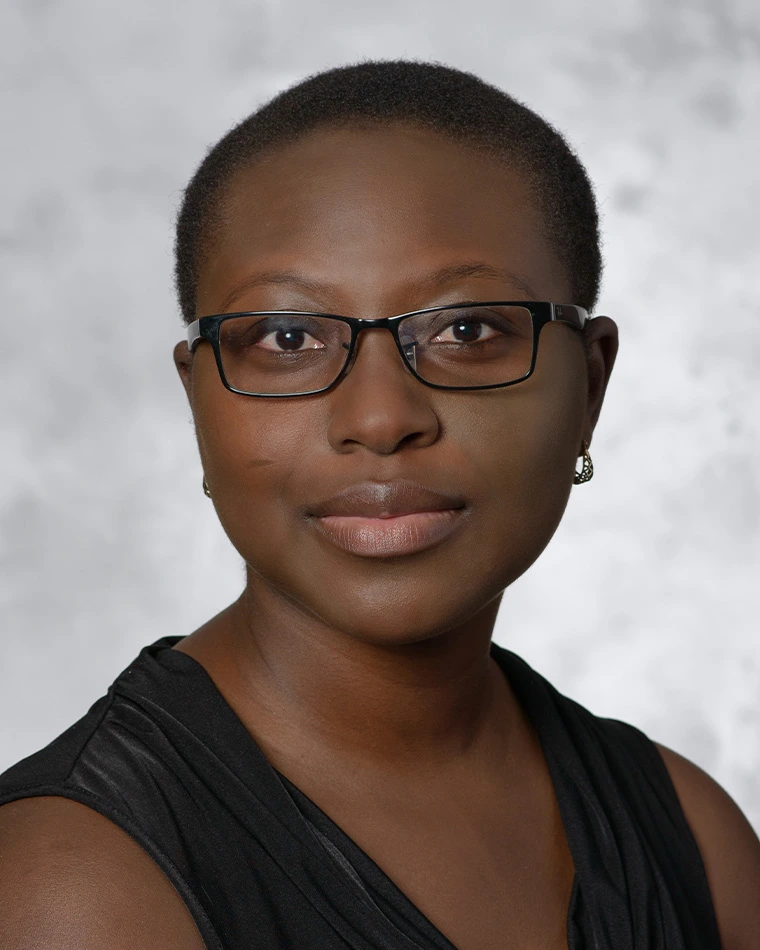
Lisa Sharp is a Full Teaching Professor in the Department of Biology at the University of New Brunswick. With a background from the University of British Columbia and University of Victoria, she joined UNB in 2001. Her roles have included Residence House Don/Advisor, Peer Assisted Learning Coordinator, and Assistant Dean of Science. She develops inclusive curricula and modern laboratories while advocating for student mental health and accessibility. Her research focuses on: Microbial processes in biological systems Biochemical pathways analysis Molecular mechanisms in cellular functions
Kami Mohammadi is an Assistant Professor in the Civil & Environmental Engineering department at the University of Utah , with an adjunct appointment in Geology & Geophysics . Holding a PhD from Georgia Institute of Technology and postdoctoral experience at Caltech, Mohammadi specializes in seismic wave propagation, basin effects, and computational geotechnical modeling. Education PhD (2015), Civil and Environmental Engineering - Geotechnical Engineering, Georgia Institute of Technology MS (2012), Geotechnical Engineering with minor in Applied Mathematics, Georgia Institute of Technology MS (2006), Civil Engineering, University of Tehran BS (2003), Civil Engineering, Chamran University of Ahvaz Their research focuses on: 3D seismic wave propagation in heterogeneous media Basin effects on earthquake amplification Hybrid physics-informed machine learning models Finite element/discrete element modeling of geotechnical systems Ground motion prediction and hazard analysis Hydraulic fracturing in fractured rock Recent work integrates full-waveform inversion with neural networks for subsurface imaging. Mohammadi teaches graduate courses in geotechnical engineering, soil dynamics, and earthquake engineering, with a focus on computational methods and laboratory practices. Current grants include: EXTERNAL GRANT OR CONTRACT (2024-2030): Integration of computational and experimental analyses for earthquake amplification EXTERNAL GRANT OR CONTRACT (2024-2029): 3D site effect modeling at LANL EXTERNAL GRANT OR CONTRACT (2021-2024): Various seismic projects Professional activities include community outreach through engineering education presentations.
Dr. Hing Yan TONG is a Lecturer in Engineering Systems & Supply Chain Management at Aston University's College of Engineering and Physical Sciences. He holds a PhD in Transportation from The Hong Kong Polytechnic University and is a Fellow of AdvanceHE and Chartered Member of CILT(UK). His expertise spans Traffic Engineering, Transport Modelling, and Intelligent Transportation Systems, with a focus on sustainable urban mobility and AI-driven solutions. He leads research projects funded by EU-Rail, TfWM, and Hong Kong government bodies, and has contributed to over 35 publications. Education includes a BSc (Hon) in Applied Mathematics and PhD in Transportation, both from HK PolyU. He previously served at HK PolyU's College of Professional and Continuing Education for 15 years, managing teaching and research in transport and data analysis. Notable projects include developing driving cycles for electric buses and analyzing freight transport policy. Dr. Tong has received awards for his research contributions, including the 2019 Research Peace Award. Key Roles: Lead Guest Editor for 'Sustainability' journals (2023-2025), Research Fellow at Hong Kong Road Research Laboratory (2013–present) Grants: EU-Rail (2024-2026), TfWM-funded freight observatory (2022-2023), HK PolyU projects (2011–2022) His research emphasizes data-driven approaches to transport challenges, including AI-powered traffic signal coordination and urban freight logistics. Recent work focuses on Hong Kong's electric bus systems and regional freight policy frameworks.
Dr. Julia Manor is an Associate Professor of Psychology and Director of Assessment at Ripon College. She specializes in animal cognition and neuroscience, leading a lab that studies species such as rats and dogs. Her courses include Learning and Behavior, Behavioral Neuroscience, and Sensation and Perception. Dr. Manor earned her Ph.D. from the University of Minnesota and a B.A. from Macalester College. Her research focuses on understanding animal thought processes, empathy, and behavioral responses. Notable areas include canine empathy, pain perception in fish, and memory in birds. She emphasizes interdisciplinary approaches, using comparative psychology to enhance educational curricula. Dr. Manor’s work bridges laboratory research with real-world applications, advocating for deeper connections between humans and animals. She has published widely on topics ranging from heart rate variability in dogs to the biological constraints of learning. Outside academia, she enjoys community theater and reading works by Fredrik Backman. She notably discarded her Apple Watch to prioritize human connections over technology.
Dr. Farida Cheriet is a Full Professor in the Department of Computer Engineering and Software Engineering at Polytechnique Montréal . She serves as Director of the 4D Imaging and Vision Laboratory (LIV4D) and holds membership in the Institute of Biomedical Engineering and the Institute for Data Valorization (IVADO) . Her research spans medical imaging , biomedical technology , artificial vision , and 3D movement estimation . Ph.D. (Montreal), DEA (France), Ing. (Algeria) Her work focuses on interpretable AI models for retinal pathology diagnosis, 3D anatomical reconstruction from medical imaging, and automated segmentation of vascular and spinal structures. She leads innovations in deep learning applications for diabetic retinopathy screening, coronary artery analysis , and spine surgery planning . Recent publications highlight her leadership in computer vision for biomedical applications, with 15 featured articles covering ICU readmission prediction, retinal vessel analysis, dental crown design, and spinal ultrasound processing. She received CFI funding (2021) for cutting-edge facilities and collaborates on pan-Canadian ophthalmic image databases (2018). Dr. Cheriet has supervised 28 Ph.D. students and 46 Master's students in biomedical computing, including projects on scoliosis analysis, retinal imaging, and cardiac MRI. Her teaching includes digital communications and computer graphics courses.
Geoffrey L. Cohen is the James G. March Professor of Organizational Studies in Education and Business at Stanford University's Graduate School of Education, with additional appointments as Professor of Psychology and Professor (by courtesy) of Organizational Behavior at the Graduate School of Business. He is also a Faculty Affiliate at the Institute for Human-Centered Artificial Intelligence (HAI) and a Member of the Wu Tsai Human Performance Alliance. Dr. Cohen earned his Ph.D. in Psychology from Stanford University in 1998 and completed his Bachelor of Arts in Psychology at Cornell University. Prior to joining Stanford, he held faculty positions at Yale University (1999-2006) and the University of Colorado, Boulder (2006-2009). Professor Cohen's research focuses on processes that shape people's sense of belonging and self-integrity, with implications for social problems in educational, workplace, and healthcare settings. He specializes in developing theory-driven interventions to address issues related to identity maintenance, stereotype threat, and social belonging. His work combines laboratory experiments, longitudinal studies, content analyses, and randomized field experiments to create solutions for social problems. His recent publications demonstrate a consistent focus on how brief psychological interventions can produce significant and lasting effects on behavior and well-being across diverse contexts - from reducing discipline citations in schools to improving career outcomes for Black Americans and promoting health behaviors. The research spans education, healthcare, and organizational settings, with a strong emphasis on translating psychological theory into practical interventions. Professor Cohen is the author of the book 'Belonging: The Science of Creating Connection and Bridging Divides' (Norton, 2022), which explores the causes and consequences of a sense of belonging across various social contexts. As an advisor, Cohen mentors numerous doctoral students and postdoctoral scholars, including Xingyu Li, Kevin Chi, Joseph Moore, and others. He teaches courses such as 'Advanced Topics in Research on Self and Stigma,' 'Research Methods in Social Psychology,' and 'The Social Psychology of Belonging.' His lab conducts field experiments examining how identity threats affect performance and well-being, with particular attention to underrepresented groups. Current projects explore interventions to create more inclusive spaces in educational and professional settings.
Francis Jones is an Honorary Lecturer (retired) at the University of British Columbia's Department of Earth, Ocean and Atmospheric Sciences (Faculty of Science). He volunteers in roles supporting geoscience education and outreach, focusing on curriculum development, educational technology, and public engagement. His work includes coordinating the OCESE and QuEST projects to enhance quantitative geoscience education, developing open-source educational resources, and improving online and in-person teaching practices. Research interests center on geoscience education innovation, including curriculum redesign, assessment strategies, and bridging geophysics research with educational practice. He collaborates with institutions like the Pacific Museum of Earth (PME) to create accessible learning resources and has advised on geoscience programs at the University of Central Asia. Recent activities include evaluating teaching initiatives through multi-source data (student/instructor/observer inputs), designing interactive online labs, and promoting science literacy among non-science students. Jones emphasizes transfer of geophysical research techniques into education and industry, with a focus on fostering computational and quantitative skills in undergraduate programs. Key collaborations involve the PME, UBC's EOAS department, and international partnerships like the University of Central Asia. His work integrates pedagogical research with practical educational development, aiming to modernize STEM education through technology and community-driven approaches.
Fredrik Henriksson is an Assistant Professor at Linköping University's Department of Management and Engineering (IEI), within the Division of Product Realisation (PROD). His work focuses on sustainable integrated product development, particularly addressing challenges in material selection and adoption in industries like automotive and construction. He actively contributes to curriculum development, emphasizing material-driven design education for engineering students to bridge theoretical knowledge with practical industry needs. Research Interests: His primary areas include sustainable materials innovation, decision-making processes in material selection, and the integration of production systems with product development. He explores barriers to adopting renewable materials such as wood-based solutions and investigates how production systems can adapt to circular material flows. His work also addresses industrial implementation challenges of new materials, including IoT integration in wood products and multi-material automotive body solutions. Key Contributions: His 2021 doctoral thesis highlighted the role of personal habits and biases in material selection decisions, reshaping perceptions of rationality in product development. He has developed case-study methodologies for engineering education that foster cross-disciplinary collaboration and industry-relevant problem-solving. His research outcomes are published in journals like International Journal of Sustainable Engineering and SAE International Journal of Materials & Manufacturing . Labs/Teams: He is affiliated with the Unit of Design and Product Development (PRODDOP), collaborating with the Product Realisation division to advance sustainable industrial practices. His work often involves industry partnerships to ensure real-world applicability of academic research.
Peter Alonzi is an Assistant Professor of Data Science at the University of Virginia's School of Data Science, appointed in 2022. He previously served as lead of research computing and held a postdoctoral position at the University of Washington. His research focuses on the intersection of mental health and criminal justice, with additional expertise in particle physics. Alonzi collaborates across disciplines, partnering with the School of Engineering, School of Medicine, and Darden School of Business on projects addressing societal challenges. He teaches courses like Data Wrangling in Python and Physics, and leads educational initiatives for the M.S. in Data Science program. Education: Ph.D. in Physics (University of Virginia), B.S. Physics (College of William and Mary, Magna Cum Laude) Labs: Paul Scherrer Institute, Fermilab, Oak Ridge National Laboratory, Jefferson Lab, TRIUMF Teaching Roles: Orientation leader, capstone project coach, curriculum committee co-chair Alonzi's research explores criminal justice system inefficiencies, mental health service integration, and data-driven policy solutions. His work combines advanced computational methods with interdisciplinary collaboration. Recent projects analyze electronic incarceration efficacy, mental health screening in correctional facilities, and pandemic-era justice system adaptations. His technical contributions include deep learning fraud detection models and particle physics instrumentation designs. Despite no explicitly listed awards, his collaborative approach and applied data science focus reflect sustained academic engagement.
Becca Franks is an Assistant Professor of Environmental Studies at New York University (NYU), specializing in animal behavior, aquatic welfare, and the intersection of environmental and animal protection. She holds a Ph.D. in Psychology from Columbia University and a B.A. in Anthropology from NYU. Her research addresses how animals are affected by the Anthropocene and how behavioral studies can provide solutions to environmental challenges. She has co-edited a special issue on animal behavior and welfare in Frontiers in Veterinary Science and serves as an Associate Editor for Proceedings of the Royal Society B. Franks' work spans topics like fish welfare, aquaculture ethics, and human-animal relationships, with a focus on quantitative methods and policy advocacy. Her educational background includes advanced studies in psychology and anthropology, blending empirical and theoretical approaches to environmental issues. Key research areas include animal welfare in aquaculture, cognitive enrichment for captive species, and the ethical implications of human activities on aquatic ecosystems. Franks has been recognized with the Killam Research Prize during her postdoctoral fellowship at the University of British Columbia. Franks' publications emphasize the urgency of rethinking human-animal interactions in agriculture and conservation. She advocates for policies like the U.S. OCTOPUS Act to protect wild species and critiques offshore aquaculture expansion. Her work on zebrafish cognition highlights their capacity for social learning and recognition of human handlers, challenging assumptions about fish intelligence. She also explores motivational factors influencing animal well-being across lifespans and species. Scientific awards include the Killam Postdoctoral Fellowship and Killam Research Prize, underscoring her contributions to animal welfare science. Her teaching focuses on quantitative methods and animal behavior in environmental contexts. Though no advising relationships are explicitly listed, her research collaborations likely involve graduate students in environmental studies and biology.
Pavol Federl is an Assistant Professor (Teaching) in the Department of Computer Science at the University of Calgary, Faculty of Science. His research focuses on computational modeling in biological systems, particularly plant growth, fracture mechanics, and interdisciplinary applications of L-systems. He holds a PhD (2002), MSc (1997), and BSc (1995) in Computer Science from the University of Calgary. Research Interests Biological modeling using L-systems Fracture formation in growing materials Computer graphics and interactive simulation environments Plant growth dynamics and pattern formation His work integrates mathematical modeling with computational techniques to study natural phenomena, such as leaf venation patterns and tree bark fracture. Recent research highlights include: Developmental models of multicellular structures Finite element analysis of fracture dynamics Interactive design tools for bonsai tree modeling Grants and Advising No specific grants or advisees are listed in the provided text. His teaching includes courses such as CPSC 457: Principles of Operating Systems. Professional Contributions He has contributed to software development in virtual laboratories and license plate recognition systems, demonstrating expertise in both theoretical and applied computing.
Dr. Ansgar Wohlschlegel is an Associate Professor of Economics at Swansea University, affiliated with the Faculty of Humanities and Social Sciences and the School of Social Sciences. His expertise lies in Applied Microeconomics, Law & Economics, and Industrial Organization. Prior to Swansea, he held academic positions at the Universities of Portsmouth, Bonn, and Aachen, and worked in the private sector at PricewaterhouseCoopers. His research focuses on the economic analysis of legal systems, including enforcement agency incentives, legal procedure design, and tort law impacts. He employs applied game theory, empirical methods, and laboratory experiments. Notable real-world applications include policy projects for the Food Standards Agency and contributions cited in Westminster debates. His teaching spans Microeconomics specializations like industrial organization, contract theory, and the economics of crime, alongside introductory economics courses. His recent publications address topics ranging from bank regulation to litigation incentives, reflecting a blend of theoretical rigor and policy relevance. Dr. Wohlschlegel is actively involved in postgraduate supervision and maintains research links via ORCID and Google Scholar.
Tomás Dorta is a Full Professor at the School of Design, Université de Montréal, and holds an affiliate professorship at Penn State University's Stuckeman School. He specializes in virtual and augmented reality, co-design, and design cognition. His academic roles include directing the Hybridlab research laboratory and serving on editorial boards for journals like CoDesign . He co-founded Hybridlab Inc., a startup focused on design technologies. Affiliations: Université de Montréal (since 1997), Penn State (since 2021), and over 20+ international collaborations. Education: PhD (2001), M.Sc. (1994), Architecture (1991). Research Focus: Hybrid virtual environments, collaborative design tools, and immersive technologies like Hyve-3D. His work bridges design education, innovation, and industry, with funded projects exploring design cognition and co-design methodologies. Notable awards include recognition for teaching and entrepreneurship. He advises over 20 graduate students and has published extensively in design and computer science conferences (e.g., SIGGRAPH, eCAADe).
Bertram F. Malle is a Professor of Cognitive and Psychological Sciences at Brown University, holding a joint appointment in the Department of Cognitive and Psychological Sciences. He is affiliated with the Humanity-Centered Robotics Initiative and has collaborated with institutions like the Army Research Laboratory and the Office of Naval Research. His academic journey includes a Master’s in Philosophy/Linguistics (1987) and Psychology (1989) from the University of Graz, Austria, followed by a Ph.D. in Psychology from Stanford University (1995). Before joining Brown in 2008, he was at the University of Oregon. His research focuses on moral psychology, social cognition, and human-robot interaction. Key interests include moral judgments, blame attribution, social norms, and the cognitive foundations of human-machine collaboration. He has been funded by NSF, DARPA, and the Department of Defense, among others. Malle’s work bridges psychology, philosophy, and AI, emphasizing moral competence in robots and the societal implications of human-robot interaction. His awards include the SESP Outstanding Dissertation Award (1995), NSF CAREER Award, and the 2019 SESP Scientific Impact Award. He is also a Fellow of multiple prestigious societies, including APS and SPSP. His teaching spans courses like Social Psychology, Moral Psychology, and Multivariate Statistics. Collaborators include experts in computer science and robotics, reflecting his interdisciplinary approach to advancing human-centric AI systems.
Dr. Angelina Anani is an Associate Professor in the Department of Mining & Geological Engineering at the University of Arizona, College of Engineering. She is also a member of the Graduate Faculty and actively contributes to research and teaching in mining systems optimization, mine planning, and sustainable mining practices. Education: PhD in Mining Engineering, Missouri University of Science and Technology, Rolla, Missouri, United States BS in Mining Engineering (Summa cum laude), Missouri University of Science and Technology, Rolla, Missouri, United States Research Interests: Dr. Anani's research spans a broad spectrum of mining engineering challenges, focusing on modeling and optimization of mining systems , mine planning and production scheduling , and sustainable mining system design . She investigates mine equipment reliability , tunneling and underground works , and energy and water efficiency . A significant portion of her recent work integrates machine learning and data-driven approaches into mine safety and planning, including 3D/4D/VR applications and digital twin systems . Her interdisciplinary approach also includes ethnographic research in mining communities and supply chain management in the mining sector. Publications Trends: Her recent publications reflect a strong shift toward intelligent systems in mining, with increasing focus on machine learning for safety, process mining for maintenance, and digital twin deployment. She combines traditional optimization techniques like discrete event simulation with modern AI to solve complex mining challenges, particularly in underground and transition mines. Scientific Awards: Freeport-McMoRan, Inc. Career Development Grant Society for Mining, Metallurgy and Exploration, Fall 2022 Faculty Core Advising and Grants: Dr. Anani supervises graduate research through MNE 900 (Research), MNE 910 (Thesis), and MNE 920 (Dissertation) courses. She has secured external funding such as the Freeport-McMoRan Career Development Grant, supporting her innovative work in mine optimization and safety. While current students are not listed, her active supervision load indicates ongoing mentorship of master’s and PhD candidates. Labs and Teams: She is actively involved with the San Xavier Underground Mine Laboratory, where she contributes to monitoring systems and digital twin development. Her collaborative work with researchers from Chile and Ghana highlights her international engagement. She is also affiliated with professional societies including the Society of Mining, Metallurgy and Exploration (SME), Society of Mining Professors, and Women in Mining (WIM), contributing to both technical and diversity initiatives in the field.




.jpg)