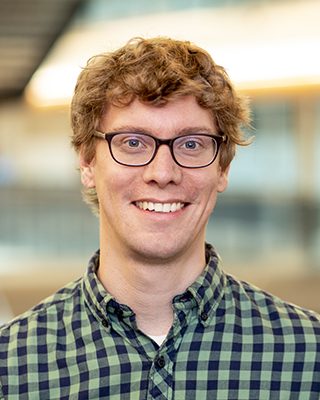
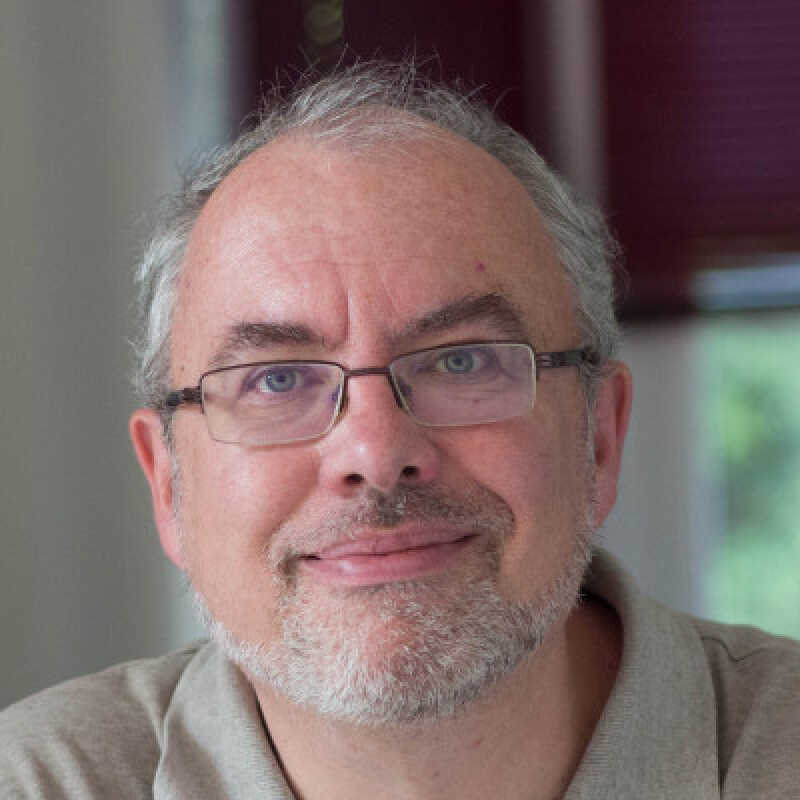
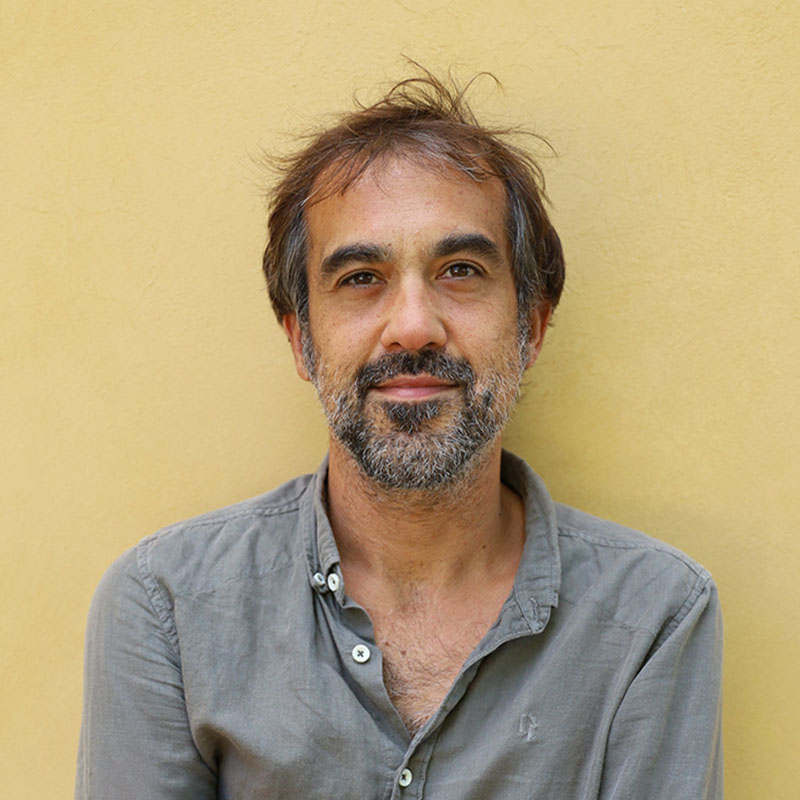
Tim Althoff is an Associate Professor at the Paul G. Allen School of Computer Science & Engineering, University of Washington, specializing in Artificial Intelligence and Human-Centered Computing. His research focuses on behavioral data science, combining Data Science Natural Language Processing Social Computing Human-Centered AI Ethics & Fairness to extract insights about health and well-being. Recent publications highlight advancements in: Mental health support through AI Wearable sensor health monitoring Online community analysis Reproducibility in data science Public health interventions with notable papers in ACL, Nature Machine Intelligence, and NeurIPS. Scientific recognition includes: ACL 2023 Outstanding Paper Award WWW 2021 Best Paper Award Double ICWSM 2021 Best Paper Awards SIGKDD Dissertation Award 2019 Fulbright Scholarship German National Merit Foundation Actively mentoring postdoctoral researchers and seeking PhD students in areas like neural representation learning, NLP applications to psychology, and mobile health technologies through his Behavioral Data Science Group .
Roger Giner-Sorolla is Professor of Social Psychology at the University of Kent's School of Psychology, where he has been a faculty member since 2001 after completing his PhD at New York University in 1996. He served as Editor-in-Chief of the Journal of Experimental Social Psychology from 2016-2022 and currently leads a Leverhulme Foundation grant examining moral heroism across professions. His academic journey includes a postdoctoral fellowship at the University of Virginia and has established him as a leading figure in social and moral psychology. Professor Giner-Sorolla's research focuses on the social role of emotions, particularly moral emotions including self-condemning emotions (guilt and shame) and other-condemning emotions (anger, contempt, and disgust). His work extends to intergroup apologies, dehumanization, emotionally driven prejudice, and collective moral roles, with a notable side interest in the ironic enjoyment of music and aesthetic experiences. He is a strong advocate for transparency in scientific reporting, having written extensively on improved reporting guidelines, pre-registration, and open science practices. Analysis of his recent publications reveals a consistent focus on moral psychology with expanding interdisciplinary reach. His work bridges traditional social psychology with emerging areas including cross-cultural emotion research, replication science, and historical memory. The trend shows increasing attention to methodological rigor while maintaining core interests in emotion and morality, with growing emphasis on practical applications in conflict resolution and intergroup relations. Fellow of the Association for Psychological Science Member of Rising Stars selection committee (2023-2024) Promising Scholars Award (University of Kent, 2006) Vacation Research Scholarship (Wellcome Trust, 2005) Multiple ESRC grants totaling over £400,000 European Science Foundation Workshop Award (2004) Professor Giner-Sorolla has supervised an impressive number of PhD students, with 17 doctoral candidates listed in the documentation including both current and past students. His grant portfolio demonstrates significant research impact with funding from major organizations including ESRC, Wellcome Trust, and Leverhulme Foundation. His supervision style appears to encourage students to pursue research that aligns with his core interests in moral emotions while allowing exploration of novel applications and contexts. While the documentation doesn't specify laboratory or research team structures, his extensive collaborative work suggests leadership of research groups focused on moral psychology and emotion research. His numerous international collaborations and invited workshops indicate an active research program with global reach, likely involving multiple research teams working on interconnected projects related to his core interests in moral psychology and scientific methodology.
Virginia Smith is the Leonardo Associate Professor of Machine Learning at Carnegie Mellon University (CMU), with a courtesy appointment in the Department of Electrical and Computer Engineering. She holds a Ph.D. from UC Berkeley and undergraduate degrees from the University of Virginia. Her research focuses on developing efficient, privacy-preserving machine learning systems, particularly in federated learning, distributed optimization, and resource-constrained settings. Key areas include federated learning frameworks like CoCoA and Ditto, unlearning algorithms, and privacy amplification techniques. Smith's work bridges theory and practice, addressing challenges such as data heterogeneity, fairness, and robustness. She has led initiatives like the LEAF benchmark for federated learning and has contributed to open-source tools for scalable ML systems. Her awards include the Sloan Research Fellowship, Samsung AI Researcher of the Year (2023), and an NSF CAREER Award. She is actively involved in curriculum development, teaching courses on federated learning and large-scale ML at CMU. Her research group explores cutting-edge topics like federated optimization with sparse communication, unlearning in LLMs, and secure ML pipelines. Collaborations span academia and industry, with applications in healthcare, IoT systems, and AI safety. Smith serves as Program Chair for ICML 2025 and frequently contributes to workshops on federated learning and trustworthy AI.
Daria Davitti is a Senior Lecturer and Associate Professor in Public International Law at Lund University's Department of Law. Her research focuses on intersections of international economic law and human rights, particularly in contexts of migration, climate breakdown, and privatized public goods. She leads major projects like the ERC-funded 'Refugee Finance: Histories, Frameworks, Practices' and the Formas-funded 'Screening for Sustainability'. Awards include the 2021 Juridiska Föreningens pedagogiska pris and the title of Docent in Public International Law. She advises on EU migration policies and environmental law compliance, and collaborates with institutions like GLAN and the International Code of Conduct Association for private security service providers. Her work examines refugee finance mechanisms, sustainable investment frameworks, and legal accountability in transnational corporate activities. Key areas include refugee entrepreneurship, EU Taxonomy sustainability criteria, and human rights due diligence in international investment. She has published extensively on topics ranging from refugee bonds to litigation finance in investment arbitration.
Dr. Khurram Aziz is a Senior Instructor in the Faculty of Computer Science at Dalhousie University , Halifax, Canada. He is actively engaged in teaching and research, with a focus on optical networks, data center interconnects, and network performance modeling. Education: PhD in Electrical Engineering, Vienna University of Technology, Austria (2008) MSc in Electrical Engineering, National University of Singapore (2003) BSc (Hons) in Electrical Engineering, University of Engineering and Technology, Lahore, Pakistan (1998) His research interests include optical packet and burst switched networks , optical interconnects for data centers , analytical modeling and simulation , and network routing and switching . He has contributed extensively to the design and performance evaluation of scalable optical switches and hybrid switching systems. The recent publications reflect a strong trend in data center optical networks , focusing on performance, blocking probability, signal degradation, and architectural classification. His work bridges theoretical modeling with practical simulation frameworks, such as CloudNetSim++ in OMNeT++, contributing to cloud and high-capacity network research. Dr. Aziz has no listed scientific awards in the provided text. He teaches several core computer science courses including CSCI 2141: Intro to Database Systems , CSCI 3171: Network Computing , CSCI 3132: Object Orientation and Generic Programming , and CSCI 3120: Operating Systems . There is no mention of graduate student supervision or external research grants. He has co-authored book chapters in major handbooks on data centers and switched systems. Dr. Aziz has not listed any formal lab or research team affiliations in the provided content.
Xavier Serra is a Full Professor at the Department of Engineering at Universitat Pompeu Fabra (UPF), Barcelona. He is the founder and director of the Music Technology Group (MTG), and leads the UPF-BMAT Chair on AI and Music. He also coordinates the Master in Sound and Music Computing and serves as President of the Phonos Foundation. His research focuses on audio signal processing, sound and music computing, and computational musicology, emphasizing open science and open innovation. Education: BSc in Biology, University of Barcelona (1981) Master in Music, Florida State University (1983) PhD in Computer Music, Stanford University (1989) Research Interests: Audio Signal Processing Data-Driven and Knowledge-Driven Methodologies Music Information Retrieval Cultural Music Analysis (e.g., Carnatic/Turkish/Andalusian Music) Music Education Technology Notable Projects: CompMusic (ERC Advanced Grant, 2010-2017): Multicultural computational music analysis Open datasets: Freesound, Saraga, FSD50K Technologies: Reactable, Vocaloid, Essentia API Recent Trends in Articles: Focus on AI-driven audio processing (neural fingerprints, generative models), cross-cultural music analysis, and explainable music difficulty estimation. Awards: ERC Advanced Grant (2010) for CompMusic Project. Labs/Teams: Director of MTG, Phonos Foundation, and UPF-BMAT Chair. Active in open-source projects and international collaborations.
Mikael Thollesson is a Senior Lecturer at Uppsala University, affiliated with the Department of Organismal Biology; Systematic Biology and Klubban’s Biological Station. His research focuses on evolutionary biology, phylogenetics, taxonomy, and molecular biology, particularly in marine and freshwater sponges (Porifera), bacterial pathogens, and computational methods in evolutionary analysis. Evolutionary Biology Marine Biology Taxonomy His recent publications highlight trends in sponge biodiversity, phylogeography, bacterial horizontal gene transfer, and mitochondrial gene evolution. Key articles include studies on Swedish demosponge faunas, Silene sect. Arenosae systematics, and computational tools like SPRIT for detecting gene transfers. No explicit awards or grants are mentioned.
Prof. Dr. Gülşen Eryiğit is a Professor at Istanbul Technical University within the Faculty of Computer and Informatics , Department of Artificial Intelligence and Data Engineering . She founded and directs the ITU Natural Language Processing Group , Turkey's leading team in Turkish-language NLP, and serves as Senior Action Editor for ACL RR , Director of ITU TÖMER (Turkish Language Teaching Center), and Co-Chair of the EU UniDive Cost Action WG3. Education: PhD in Computer Engineering from ITU (2007), MSc and BSc from ITU and Marmara University Research: Focuses on Natural Language Processing for Turkish, including dependency parsing , coreference resolution , multiword expressions , and language education technology Her recent work involves multilingual transfer learning , LLM applications for Turkish text simplification, and gamification for morphology education. She has received prestigious awards like the Siemens Excellence Award and TÜBİTAK's Above Threshold Award . Her research has produced 65+ publications and 29+ projects funded by EU, TÜBİTAK, and industry partners. Scientific Awards: Siemens Excellence Award (2007) Above Threshold Award (TÜBİTAK, 2015) Certificate of Appreciation (EU 7th Framework, 2012) Thank You Plaque (ITU, 2017) The ITU NLP Group under her leadership has developed Turkey's first licensed NLP software exported internationally. She collaborates with European institutions through COST actions and participates in ACL, CoNLL, and LREC conferences. Her lab focuses on language technology for Turkish , including sign language processing and social media normalization.
Andy Pavlo is an Associate Professor with Indefinite Tenure in the Computer Science Department at Carnegie Mellon University's School of Computer Science. He is an active member of the CMU Database Group and the Parallel Data Laboratory, where he leads research in database management systems with a focus on self-driving architectures, transaction processing, and large-scale analytics. His work bridges academic research and industry applications through projects like NoisePage, OtterTune (which he co-founded and served as CEO before it ceased operations), and Peloton. Dr. Pavlo's research interests span database management systems with particular emphasis on autonomous database architectures that can self-tune and optimize without human intervention. His work explores transaction processing systems that can handle high-throughput workloads while maintaining consistency, and large-scale data analytics techniques that efficiently process massive datasets. He has made significant contributions to query optimization, database extensibility, and automatic database tuning using machine learning techniques. His recent work on database extensibility revealed critical issues in PostgreSQL's extension ecosystem, showing that approximately 16% of extensions are incompatible with at least one other extension due to API violations and memory errors. His research output demonstrates a consistent focus on practical database systems challenges, with recent publications examining database extensibility, user-defined function optimization, and the cyclical nature of database research. The articles show a strong trend toward making database systems more autonomous, with increasing integration of machine learning techniques for automatic tuning and optimization. His work often combines deep theoretical analysis with practical implementation in open-source systems. Dijkstra Award 2024 for contributions to database systems research Dr. Pavlo actively mentors graduate students, with current advisees including Wan Shen Lim, William Zhang, and Sam Arch (co-advised with Todd Mowry). His former students have gone on to successful careers in both industry and academia. He has secured significant research funding through CMU's affiliate program with major database companies including ClickHouse, DataStax, dbt, Firebolt, MotherDuck, RelationalAI, SingleStore, Spiral, PingCAP/TiDB, Yellowbrick, and Yugabyte. His research is supported by these industry partnerships and likely includes NSF funding given his active participation in the database research community. At CMU, Dr. Pavlo leads the Database Group and organizes several seminar series including "SQL or Death," "Database Building Blocks," and "ML⇄DB Technical Talks." These seminars bring together researchers and practitioners to discuss cutting-edge developments in database systems. He also runs a summer research internship program that has attracted students for multiple consecutive years, indicating a strong research group with ongoing projects and funding.
Dr. Ray Bobrownicki is a Lecturer in Sport Psychology and Co-Programme Director of the BSc (Hons) Applied Sport Science at the University of Edinburgh's Moray House School of Education and Sport. He holds affiliations with the Institute for Sport, Physical Education and Health Sciences (ISPEHS) and the Human Performance Science Research Group. As a chartered psychologist (BPS) and licensed athletics coach, his work bridges academic research and real-world sport practice. Educations: PhD (Sport Psychology and Coaching), University of Edinburgh MSc (Performance Psychology), University of Edinburgh AB (Psychology), Brown University PGCert (Academic Practice), University of the West of Scotland His research focuses on optimizing coaching instruction, motor learning, and performance under pressure. He explores how verbal instructions, analogies, and technology (e.g., VR) influence skill acquisition and athlete motivation. Secondary interests include the societal impacts of sporting policies on athlete welfare and identity. Recent work critiques traditional sport science methodologies and advocates for interdisciplinary, applied research. His publications span 2015–2025, emphasizing critical analysis of coaching practices, motor learning mechanisms, and systemic issues in sport. Key themes include instructional design, constraints-led approaches, and translational research validity. Awards: Fellow of the Higher Education Academy Chartered Psychologist (British Psychological Society) Associate Fellow (British Psychological Society) Teaching responsibilities include programme leadership for BSc Applied Sport Science and contributions to MSc Performance Psychology modules. He currently supervises PhD student Tongyu Liu on esports support taxonomies and welcomes inquiries on coaching instruction, performance psychology, and athlete policy impacts. Dr. Bobrownicki’s career integrates athletic experience (Commonwealth Games finalist, high jumper) with coaching expertise (e.g., mentoring record-breaking athletes) to inform evidence-based practice in sport science.
Elias Dinas is a Full-time Professor in the Department of Political and Social Sciences at the European University Institute (EUI). He holds the Swiss Chair in Federalism, Democracy, and International Governance. His research focuses on political socialization, authoritarian legacies, and research methodology. Dinas earned his PhD in Political Science from the EUI in 2010. His research interests include the impact of historical traumas on political attitudes, experimental methods, and the dynamics of norm change. He collaborates with institutions like the Graduate Institute in Geneva through seminars, conferences, and methodological workshops. Recent work explores topics such as ideology mapping via AI, the electoral effects of early voting experiences, and the interplay between migration crises and public policy. His research has been published in top journals like the American Political Science Review and highlighted in outlets like The New York Times. Received the Michael Wallerstein Award (2019) for his work on migration and hostility. Supervises 14 students researching memory politics, norm change, and intergroup relations. Leads projects on post-authoritarian ideologies, German political identity, and elite-driven norm erosion. His teaching and supervision emphasize causal inference, experimental design, and quantitative methods, reflecting his commitment to rigorous political analysis.
Florian Kerschbaum is a Professor and NSERC/RBC Industrial Research Chair in Data Security at the Cheriton School of Computer Science, University of Waterloo. His research focuses on data security and privacy, applied cryptography, and confidentiality in data science. Research interests span data collection/preparation management, secure multi-party computation, homomorphic encryption, differential privacy, and machine learning robustness/privacy. His work develops cryptographic solutions for practical data management challenges in distributed systems.
Fabian Suchanek is a full professor at Institut Polytechnique de Paris, specifically affiliated with Télécom Paris. He leads research in the Data, Intelligence, and Graphs (DIG) team within the Computer Science department. His academic career focuses on bridging artificial intelligence with structured knowledge representations. Suchanek's research interests span artificial intelligence, knowledge bases, and natural language processing, with particular emphasis on knowledge graph construction , rule mining , knowledge-based language models , and explainable AI . His work demonstrates how structured knowledge can enhance machine learning systems, particularly large language models, by providing factual grounding and interpretability. The research group he leads develops practical systems that address real-world knowledge management challenges. His recent publications showcase a strong trajectory in knowledge-intensive AI, with notable contributions to knowledge graph completion, rule mining techniques, and neural approaches to knowledge base validation. The research demonstrates increasing integration between symbolic and neural approaches to AI. Best Student Paper Award at KR 2024 for work on contextual reasoning Best Demo Award of IJCAI 2024 for rule mining in knowledge graphs French Open Research Award for the YAGO project Best Paper Award of ESWC 2021 for Neural Knowledge Base Repairs Suchanek has secured significant research funding, evidenced by his active recruitment of PhD students for knowledge-based language model research. He has held visiting positions, including at Nanyang Technological University (June-September 2023), and is recognized internationally through keynote invitations such as the Singapore ACM SIGKDD Symposium 2023. He has deliberately stepped back from administrative duties at Institut Polytechnique de Paris to focus on research. His laboratory maintains strong industry connections through open-source software projects including the YAGO knowledge base, AMIE for rule mining, STACI for explainable AI, and several other tools that have become standard in knowledge representation research.
Sainyam Galhotra is an Assistant Professor in the Department of Computer Science at Cornell University. His research focuses on developing data science tools for trustworthy analytics, integrating causal inference, data management, and machine learning to enhance robustness, explainability, and fairness in algorithmic systems. PhD: University of Massachusetts Amherst (2020), advised by Barna Saha B.Tech: Indian Institute of Technology Delhi (2014), advised by Amitabha Bagchi Postdoctoral Research: University of Chicago (Computing Innovation Fellow) His work spans artificial intelligence, causal inference, and responsible data science, emphasizing ethical algorithm design and reliable data integration. Recent publications highlight advancements in fair clustering, causal feature selection, and entity resolution frameworks. His research trends from 2023–2024 include contributions to spatio-temporal data correlation, community detection in geometric graphs, and distribution-aware dataset search. Key themes are fairness in machine learning, causal modeling, and scalable data management solutions. Computing Innovation Fellowship (2021) DAAD AInet Fellow (2021) ACM SIGMOD Entity Resolution Programming Contest Finalist (2021) Krithi Ramamritham Computer Science Scholarship (2019) BEST Paper Award in SIGSOFT FSE 2017 He actively seeks PhD or Master’s students interested in data science and trustworthy AI. Contact via email: sg@cs.cornell.edu .
Dr. Rene Ferdinands is a Lecturer at the University of Sydney's School of Health Sciences, specializing in sports biomechanics, particularly in cricket and golf. He leads research programs focused on optimizing techniques and minimizing injury risks, such as lumbar load analysis in fast bowlers and spin bowling biomechanics. His work includes developing 3D models for analyzing bowling actions and spin delivery mechanics. Education: MSc and PhD from the University of Waikato. Research Themes: Cricket biomechanics, golf swing dynamics, equine biomechanics, and injury prevention. Professional Roles: Editor of the Cricket Coaching Information service for the International Society of Biomechanics in Sports, Honours Committee Member. His research interests span biomechanical analyses of sports techniques, including the development of smart cricket balls for performance assessment and injury mitigation. Key contributions include refining bowling action legality criteria and advancing understanding of lumbar kinetics in elite athletes. He actively supervises Honours and PhD students in biomechanics research across cricket, golf, and other sports. Notable grants include studies on hydration status in cricket performance (2008), lumbar injury prevention (2013), and biomechanical modeling of fast bowling (2009). His work bridges applied research with practical applications in sports technology and athlete development. Dr. Ferdinands collaborates with the Biomechanics Research Team at the University of Sydney, focusing on innovative tools like smart balls and advanced motion analysis techniques to improve sports performance and safety.