Dr. Justin Gerlach is a Fellow at Peterhouse College and an Academic Associate at the University Museum of Zoology, University of Cambridge. He specializes in broad-spectrum ecology, integrating conservation biology, evolutionary studies, and biodiversity analysis with a focus on island ecosystems in the Indian and Pacific Oceans. His research has pioneered invertebrate reintroduction programs and revealed groundbreaking insights into giant tortoise behavior. Education: DPhil in Zoology from Oxford University Current projects: Biodiversity assessment across Cambridge colleges, Partula snail reintroduction, tortoise aging studies Research interests center on preventing species extinction through conservation, studying species interactions, and evolutionary dynamics. Key initiatives include saving island invertebrates, investigating tortoise predation, and environmental DNA applications for ecosystem reconstruction. Recent publications highlight island conservation challenges, evolutionary patterns, and ecological innovations. Themes include biodiversity preservation, species reintroduction, and interdisciplinary approaches to conservation biology.
Jennifer Dy is a Distinguished Professor at Northeastern University with joint appointments in Electrical and Computer Engineering and Khoury College of Computer Sciences. As Director of AI Faculty at the Institute for Experiential AI, she leads research in machine learning, computer vision, and explainable AI. Her work spans biomedical applications (COPD phenotyping, neuroimaging) and fundamental algorithms (active learning, continual learning). She holds a PhD from Purdue University and is an AAAI Fellow. Research Focus: Dy develops methodologies for robust and interpretable machine learning, including techniques for model stability in continual learning, dependency-aware active learning, and axiomatic explanation frameworks. Her applied research advances diagnostic tools using Raman spectroscopy, CT imaging, and multi-omics biomarker discovery. Awards: Recognized with the NSF CAREER Award, Faculty Research Team Award, and AAAI Fellowship for contributions to unsupervised learning and medical AI. Publication Trends: Recent articles demonstrate strong cross-disciplinary integration, combining theoretical advances in explainability/robustness with applications in healthcare, wireless systems, and particle physics. Methodological themes include optimal transport theory, probabilistic modeling, and transformer architectures.
Scott E. Miller is Senior Biodiversity Advisor, Senior Research Entomologist, and Curator of Lepidoptera at the Smithsonian's National Museum of Natural History. He has held numerous leadership positions including Deputy Under Secretary for Collections and Interdisciplinary Support, Deputy Under Secretary for Science, Associate Director for Science at the Smithsonian's National Zoological Park, and Interim Director of Smithsonian Libraries and Archives. Prior to the Smithsonian, he held leadership roles at the International Centre of Insect Physiology and Ecology in Nairobi, Kenya, and the Bishop Museum in Honolulu, Hawaii. Miller earned his BS from the University of California at Santa Barbara and his PhD from Harvard University. His academic journey has been marked by significant contributions to entomology and biodiversity research. Dr. Miller's research focuses on the integration of systematics, ecology, biogeography and conservation of insects and plants. His current work uses museum-based taxonomy and systematics to mobilize biodiversity information to empower ecology, conservation, and agriculture. Major research themes include moth systematics, biogeography and phylogenomics (particularly Dalceridae, Geometridae, and other families), insect food web and ecology projects in Papua New Guinea, Kenya and elsewhere, and building DNA reference libraries from museum vouchers for ecological applications. He has been instrumental in developing DNA-based identification tools through initiatives like the Consortium for the Barcode of Life. His recent publications demonstrate a strong focus on biodiversity informatics, DNA barcoding, and the application of museum collections to contemporary ecological questions. Miller's work spans tropical ecology, systematics, and the development of new methodologies for biodiversity assessment, with significant fieldwork conducted in Papua New Guinea, Kenya, and other biodiversity hotspots. Dr. Miller has contributed significantly to scientific infrastructure development, including co-chairing the US Government's Interagency Working Group on Scientific Collections and helping establish the Consortium for the Barcode of Life. His leadership extends to international scientific collaboration and the development of research centers like Mpala Research Centre in Kenya. As Senior Biodiversity Advisor, he oversees major initiatives that connect museum collections with contemporary biodiversity challenges. His laboratory and team focus on leveraging the extensive moth collections at NMNH for phylogenomic studies and ecological applications, working closely with international collaborators on projects spanning multiple continents.
Matthew D. Barrett is a researcher at James Cook University , specializing in plant systematics and fungal taxonomy. His work spans diverse areas including angiosperm phylogenomics, fungal biodiversity, and conservation biology of rare Australian flora. Research Focus : Phylogenomic analysis, fungal systematics, and ecological adaptations of Australian plant species. Publications : Contributed to major studies in Nature , Studies in Mycology , and Telopea , with a particular emphasis on Western Australian endemics. His recent publications highlight integrative approaches combining morphological and molecular data for taxonomic revisions, particularly in Basidiomycota and Orchidaceae.
Jean-Philippe MARTINET is a Lecturer in Parasitology at the School of Pharmacy , University of Reims Champagne-Ardenne. He specializes in medical and veterinary entomology, focusing on mosquito-borne zoonotic viruses (West Nile, Usutu) and entomopathogenic nematodes of the Mermithidae family. His work spans vector ecology, transmission dynamics, and climate change impacts on disease vectors. Pharmacist (Faculty of Pharmacy, Reims) Master's in Natural Environment Engineering: Wildlife and Environment PhD in Medical and Veterinary Entomology (defended 2021) Research Interests Vectorial transmission of arboviruses Mosquito surveillance and ecological modeling Temperature-dependent virus transmission Mermithid nematodes as biological control agents Recent Article Trends emphasize experimental studies on mosquito vector competence, climate change effects on Aedes species, and taxonomic advancements in disease vectors. His collaborations include the Pasteur Institute of New Caledonia and EA7510 ESCAPE. Laboratory Affiliations : Dengue and Arbovirus Research and Expertise Unit (UREDA) at Pasteur Institute of New Caledonia; EA7510 ESCAPE research unit in Reims.
Charles C. Davis is a Professor of Organismic and Evolutionary Biology at Harvard University and Curator of Vascular Plants in the Harvard University Herbaria. He leads the Davis Lab, focusing on plant diversity through integrative research in systematics, paleobiology, ecology, and molecular biology. His work emphasizes phylogenetic theory, biogeography, and the application of herbarium collections to address global change challenges. Davis is particularly noted for leveraging herbarium specimens to study plant responses to climate change, phenology, and biodiversity patterns. Research interests include plant-insect interactions, genome architecture evolution in parasitic plants, and the ethical use of herbarium specimens. His lab has pioneered high-throughput phylogenomic pipelines (e.g., PhyloHerb) and explored the future of herbaria in the digital age. Collaborations span global institutions, emphasizing digitization, spectral imaging, and AI-driven analysis of biodiversity data. Recent work highlights the impact of anthropogenic change on plant communities, the role of phenology in species survival, and strategies to mitigate collecting biases in herbaria. Davis teaches courses on plant systematics and evolution, and his lab actively participates in public engagement through exhibits like the HMNH’s *In Search of Thoreau’s Flowers*. His research has been featured in *Trends in Ecology & Evolution*, *Molecular Phylogenetics and Evolution*, and *Current Biology*, with a focus on advancing methodologies for biodiversity science while addressing ethical challenges in specimen sampling.
Dr. Andrea Grover is an Associate Professor in the Department of Information Systems and Quantitative Analysis at the University of Nebraska Omaha’s College of Information Science & Technology. Her research focuses on citizen science, technology design, and collaboration systems in data-intensive environments. She holds a Ph.D. in Information Science & Technology from Syracuse University, an MS in Information from the University of Michigan, and a BA in Mathematics from Alma College. Her research interests include organizational impacts of technology, open collaboration frameworks, and ethics in information systems. She teaches courses on management and IT ethics, employing ungrading techniques to enhance student engagement. Notable contributions include work on citizen science data quality, cyber-security tools leveraging crowdsourcing, and barriers in STEM education equity. Dr. Grover has been recognized with the 2022 Rising Star Distinguished Ecologist award and serves on editorial boards (e.g., Frontiers in Ecology) and conference committees (e.g., ACM CSCW DEI Co-chair). She has secured grants such as the NSF-funded “Streamlining Embedded Assessment to Understand Citizen Scientists' Skill Gains” (2017–2019) and contributed to media discussions on citizen science via National Public Radio. Her recent publications explore hybrid human-AI tools, agile citizen science methodologies, and systemic barriers in education. She actively participates in interdisciplinary initiatives, bridging technology, ecology, and social sciences to advance participatory research practices.
Dr. Sebastian Birk is an environmental scientist and researcher at the Aquatic Ecology department within the Faculty of Biology at the University of Duisburg-Essen. His work focuses on the science-policy interface for aquatic ecosystems in Europe, emphasizing large-scale bioassessment and management under multiple stressors. He served as coordinator for the EU project MARS (2014-2018) and currently manages freshwater science initiatives at the European Topic Centre for Inland, Coastal and Marine Waters (ETC-ICM) supporting the European Environment Agency (EEA). Research Interests : Multiple stressors, ecosystem services, restoration ecology, environmental policy assessment, bioassessment methods, and climate change impacts. Teaching : Scientific writing, surface water ecology, taxonomic identification, and fieldwork in river/lake systems. Recent publications highlight integrated frameworks for freshwater restoration, stressor interactions, and policy-driven water management. Key themes include agricultural land use effects on rivers, diversification of restoration funding, and challenges in harmonizing ecological assessment across Europe. His work bridges ecological theory with practical implementation for sustainable water resource management. Projects like MARS and MERLIN reflect his leadership in addressing complex environmental issues through collaborative science and stakeholder engagement. Dr. Birk's role in the Water Framework Directive intercalibration exercises underscores his technical expertise in standardizing ecological assessment across national borders.
Dr. Michael Alfaro is a Professor in the Department of Ecology and Evolutionary Biology at UCLA, where he leads the UCLA Alfaro Lab. His research focuses on understanding evolutionary dynamics of organismal diversification, particularly in marine fishes. He employs interdisciplinary approaches combining evolutionary morphology, molecular phylogenetics, and theoretical evolution to explore patterns and mechanisms of morphological and functional diversity. Education: Ph.D. in Evolutionary Biology, University of Chicago (2000) M.A. in Biology, Humboldt State University (1995) B.A. in Dramatic Arts, University of California, Davis (1989) Research interests emphasize the interplay between morphological diversity and ecological/functional dynamics. Notable themes include the drivers of diversification in marine lineages, the role of physiological traits in lineage success, and the integration of computational tools for large-scale phenotypic analysis. Alfaro has contributed to advancements in phylogenetic methodology and genomic resources for studying fish evolution. His work bridges macroevolutionary theory with empirical data, often leveraging crowdsourced phenotypic data and bioinformatics tools like Sashimi and Charisma for high-throughput analysis. The lab actively engages in collaborative projects addressing biodiversity patterns and evolutionary mechanisms across marine and terrestrial systems. Grants and advising activities are central to his academic contributions, though specific details are not detailed in the provided text. The UCLA Alfaro Lab collaborates internationally, emphasizing both basic research and applied conservation contexts.
Michael T. Monaghan is a Professor at the Faculty of Biology, Chemistry and Pharmacy, Freie Universität Berlin, and leads the Research Group in Molecular Ecology and Genomics at the Leibniz Institute of Freshwater Ecology and Inland Fisheries (IGB). His work bridges evolutionary biology, molecular ecology, and environmental monitoring, focusing on freshwater systems and urban aquatic habitats. Education: B.S. (The Ohio State University, 1995), M.S. (Idaho State University, 1998), Dr. sc. nat. (ETH Zürich, 2002) Key Positions: Senior Scientist/Research Group Leader at IGB (2008–present), Visiting Professor at Duke-NUS Medical School (2016), Guest Professor at Ehime University (2015–2016) Dr. Monaghan's research explores freshwater biodiversity dynamics using molecular tools like metabarcoding and phylogenomics. His team investigates how environmental changes—climate warming, urbanization, pollution—affect microbial and insect communities, with a focus on eDNA applications and ecohydrology. His publications (2022–2025) span topics such as climate-driven plankton shifts, urban habitat adaptation by bees, toxin genetics in algae, and metagenomic monitoring of aquatic systems. Collaborative projects like BiNatUr and ODER~SO emphasize urban resilience and disaster ecology. Teaching includes data science in biology, evolutionary ecology, and environmental genomics at Freie Universität Berlin and the Institute of Computer Science. He mentors doctoral and master’s students in molecular ecology and trains interns in biodiversity genomics. Lab Members: Dr. Dagmar Frisch (Scientific Staff) Dr. Katrin Kiemel (Postdoc) Elisabeth Funke (Research Technician) Doctoral Candidates: Onur Erk Kavlak, Athena Karapli-Petritsopoulou, Daniel Wewer
Dr. Kaveh Emami is a researcher at Newcastle University , specializing in proteomics, microbiology, and biotechnology. His work spans plant biotechnology, bacterial adhesion, and marine microbiology. Key research areas: Proteomics, Microbial Genetics, Plant Biochemistry, and Environmental Microbiology. Collaborated on studies involving rice mutants, barnacle adhesion, antibiotic discovery, and algal-bacterial interactions. His recent publications (2023–2009) focus on proteomic analysis, bacterial pathways, and applications in agricultural and marine biotechnology. No explicit scientific awards are documented in the provided data. Co-authored studies with Professor Angharad MR Gatehouse , Professor Tony Clare , and Professor Jeff Errington highlight his interdisciplinary collaborations.
Professor Robin Hendry is a faculty member at Durham University , serving as Co-Director of CHESS (Centre for Humanities Engaging with Science and Society) and actively engaged in research leave . His academic work bridges philosophy of science , history of chemistry , and metaphysical questions in physical sciences , with a focus on scientific realism , emergence , and chemical substances . Robin's research explores the ontological relationship between chemistry and physics , arguing for a realist view of chemical substances and strong emergence in chemical systems. He has authored influential works such as 'The Metaphysics of Chemistry' and co-edited The Routledge Handbook of Emergence (2019), contributing to debates on downward causation and scientific modeling . 2023 : Structure, essence and existence in chemistry 2021 : Elements and principles, Structure and emergence 2020 : Trusting Atoms 2019 : Emergence in Chemistry, Philosophy of Chemistry (Stanford Encyclopedia) Recent scientific awards include John Templeton Foundation funding for the Durham Emergence Project (2013-16) and AHRC grants for 'Structure in Chemistry' (2012). He has supervised PhD students in philosophy of science and served as Director of Research in the Department of Philosophy.
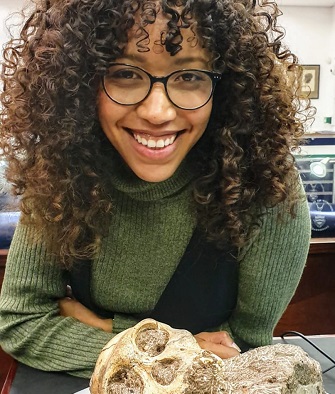
Lauren Schroeder serves as Associate Professor and Associate Chair of Graduate Anthropology in the Department of Anthropology at the University of Toronto Mississauga (UTM). A South African palaeoanthropologist specializing in hominin cranial and mandibular diversity, she employs quantitative methods including 3D morphological modeling and quantitative genetics. Dr. Schroeder maintains research affiliations with the Royal Ontario Museum, Human Evolutionary Research Institute, and Evolutionary Studies Institute at the University of the Witwatersrand. Her academic credentials include: PhD, University of Cape Town, 2015 BSc (Hons), University of Cape Town Dr. Schroeder's research spans Biological Anthropology, Palaeoanthropology, and Evolutionary Anthropology with emphasis on hominin variability, evolutionary theory, and quantitative genetics. Her work integrates statistical analyses of 3D morphological data with quantitative genetic approaches to investigate evolutionary processes underlying morphological variation. Current projects examine primate skeletal evolution, skeletal signatures of hybridization for detecting gene flow in fossil records, and the relative contributions of genetic drift versus natural selection in hominin evolution. Analysis of her 2016-2020 publications reveals consistent focus on paleoanthropological research centered on Homo naledi and other hominin fossils. Her scholarly output demonstrates integration of evolutionary theory, quantitative genetics, and morphological integration to explore hominin diversity and evolutionary mechanisms. Recurring themes include Bayesian phylogenetic methods, hybridization studies in human evolution, and critical reflections on ethics and decolonization within anthropological practice. No scientific awards were documented in the provided materials. Information regarding graduate student advising and research grant funding was not specified in available sources. The Schroeder Lab, situated in UTM's Terrence Donnelly Health Sciences Complex, advances morphological evolution research in humans and primates through innovative quantitative methodologies. Dr. Schroeder has contributed significantly to major paleoanthropological projects including the Malapa excavation (Australopithecus sediba) and Rising Star Cave (Homo naledi) as core research team member analyzing fossil hominins.
Stéphanie Ruphy is a Professor of Philosophy of Science at the École Normale Supérieure - PSL University in Paris, where she conducts research at the intersection of philosophy, science policy, and scientific integrity. She currently serves as Director of the French Office for Research Integrity (OFIS), demonstrating her leadership in promoting ethical research practices across France. Her educational background is uniquely interdisciplinary, holding a doctorate in astrophysics from Sorbonne University and a PhD in philosophy from Columbia University in New York. This dual expertise informs her distinctive approach to philosophical questions about science. Ruphy's research centers on scientific pluralism, scientific integrity, and the relationship between science and democracy. She has developed the concept of "foliated pluralism," which challenges traditional metaphysical interpretations of scientific diversity. Her work examines how citizen participation can enhance scientific objectivity and how research governance structures affect scientific progress. She explores the philosophical implications of computer simulations in scientific practice and investigates questions about natural kinds across different scientific domains. Her publications reveal a consistent focus on the philosophical foundations of scientific practice, with particular attention to the relationship between scientific methods and societal values. Ruphy has made significant contributions to understanding how scientific pluralism relates to metaphysical questions, how citizen science affects scientific objectivity, and how research integrity frameworks can be strengthened. Her work bridges theoretical philosophy with practical concerns about research governance. Among her notable honors: Member of Academia Europaea (2018) Member of European Academy of Sciences (EURASC) (2017) Appointed to French Council for Scientific Integrity (CoFIS) (2017) As an educator at the École Normale Supérieure, Ruphy mentors future researchers in understanding their responsibilities within knowledge societies. She has observed growing student interest in "involved" research connected to societal concerns. Her work on a research integrity oath for PhD students in France demonstrates her commitment to embedding ethical considerations in research training. She actively engages with policy questions about balancing scientific freedom with societal responsibilities. Ruphy leads significant initiatives in research integrity through her directorship of OFIS, where she organizes conferences and develops frameworks for maintaining trust in scientific practices. Her work connects academic philosophy with practical policy concerns, creating bridges between theoretical considerations and real-world research governance.
Reto Nyffeler , PD Dr., has been Lecturer and Curator of Phanerogams at the University of Zurich since 2002. He leads the Institute of Systematic Botany’s herbarium activities and heads the Nyffeler research group, collaborating closely with the Sukkulenten-Sammlung Zürich. Education & Career Diploma in Systematic Botany, University of Zurich (1988-1991) Ph.D., Institute of Systematic Botany, University of Zurich (1994-1997) Post-doctoral researcher & Mercer Fellow, Arnold Arboretum, Harvard University (1997-2000) Post-doctoral researcher, Stanford University (2000-2001) Lecturer and Herbarium Curator, University of Zurich (2002-present) Research Focus Nyffeler’s work integrates plant systematics, biogeography, and phylogenetic methodology. Empirically, he concentrates on the diversification of succulent plants—especially Cactaceae—using molecular phylogenetics to untangle taxonomy, growth-form evolution, and biogeographic history. Parallel interests include the floristics of alpine regions and the systematics of Campanulaceae, Asteraceae, and Ranunculaceae. Across dozens of peer-reviewed papers (2010-2025) he has advanced family-wide phylogenies for Cactaceae and Caryophyllales, documented repeated succulent radiations, and created online taxonomic backbones such as Caryophyllales.org . His current projects combine next-generation sequencing with classical morphology to revise genera like Parodia and to understand adaptation in high-altitude Callianthemum . Students & Mentoring PhD advisee: Anita Lendel (systematics of Trichocereeae) Master advisees: 16 students (2006-2018) working on alpine ecology, cactus morphology, and floristic change Research Group & Collaborations The Nyffeler group comprises a scientific assistant (Dr. Heike Hofmann), technical and IT staff, and rotating Master students. The team maintains close collaborations with the Sukkulenten-Sammlung Zürich, Harvard’s Arnold Arboretum (Mercer Fellowship network), and multiple international cactus specialists.