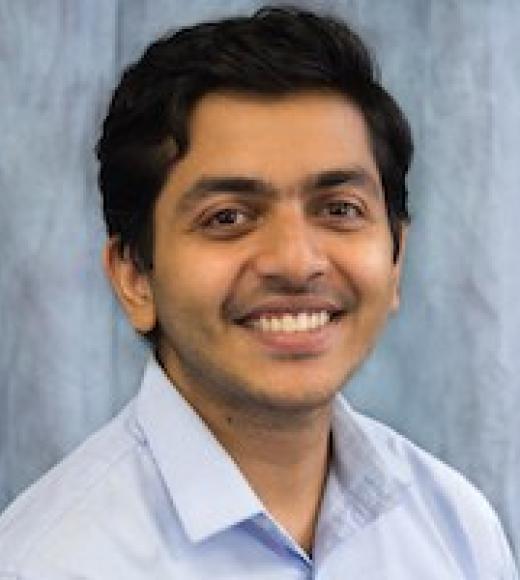
Anujit Chakraborty is an Associate Professor in the Department of Economics at the University of California, Davis . His research bridges Economic Theory , Behavioral Economics , and Experimental Economics , focusing on decision-making under risk and time constraints, procrastination, and present-biased behavior. Education : Ph.D. in Economics (University of British Columbia, 2017), M.S. in Quantitative Economics (Indian Statistical Institute, 2011), B.E. in Electronics Engineering (Jadavpur University, 2009) His work explores procrastination , present bias , prosocial behavior , and interpersonal uncertainty , often using experimental methods to analyze anomalies in economic preferences. Recent publications investigate democracy measurement , news source diversity , and peer-grading systems . Dr. Chakraborty teaches Intermediate Economics (ECN 100B) and Behavioral Economics at both undergraduate and Ph.D. levels.
Jürgen König is a full professor at the Department of Nutritional Sciences , University of Vienna, leading the Research Professorship Specialized Human Nutrition . His work bridges psychological and physiological dimensions of eating behavior, with additional focus on population-level nutritional assessment in Austria. Academic Rank: Professor Department: Nutritional Sciences Research Focus: Hunger/satiety mechanisms, Public health nutrition, Food safety Key research themes include: Psychological drivers of eating behaviors (stress, food craving, sensory cues) Physiological regulation of nutrient homeostasis National nutrition surveys assessing dietary patterns Caloric restriction and metabolic adaptation Child and adolescent hydration/nutrition policies Recent publications highlight: Mechanistic studies on caloric restriction effects (2025) Pandemic impacts on school nutrition (2024) Global obesity/diabetes trends analysis (2024) Behavioral nudging in food selection (2024) Microbiota's role in dietary interventions (2023) Contact: juergen.koenig@univie.ac.at | Sekretariat: sekretariat.ew@univie.ac.at
Helmut Leder is a Professor at the University of Vienna, specifically within the Faculty of Psychology's Department of Cognition, Emotion, and Methods in Psychology. He serves as Head of the Vienna Cognitive Science Hub, integrating interdisciplinary approaches to study aesthetic experiences and cognitive processes. His academic profile includes teaching courses in General Psychology, Cognitive Psychology, and Neurosciences, alongside supervising master's and doctoral thesis seminars focused on perception and neuroaesthetics. Key Research Areas : Empirical Aesthetics, Cognitive Psychology, Visual Perception, Cross-Cultural Psychology, Urban Art Impact, Mental Imagery Studies Methodological Focus : Eye-tracking, Machine Learning Analysis, Cross-Cultural Comparisons, Field Experiments, Neuroimaging Recent Contributions : Investigated urban art's role in stress reduction, developed network models of aesthetic experiences, explored non-visual color navigation for the blind, and applied machine learning to art evaluation. His work bridges psychology with cultural studies, examining how aesthetic experiences shape well-being and cognitive processes. Current projects emphasize the neural and behavioral distinctions between real and imagined art encounters, while challenging traditional gender-based perception models.
Prof. Veronika Somoza is a leading academic in Nutritional Systems Biology, currently affiliated with the University of Vienna and Technical University of Munich (TUM). She holds a professorship in Molecular Food Science and has led key research groups such as the Institute of Physiological Chemistry and the Christian Doppler Laboratory for Bioactive Aromatics. Her career includes roles at institutions like the German Research Institute for Food Chemistry (Garching) and the University of Wisconsin-Madison. Education: Diplom (Justus Liebig University Giessen, 1991), PhD (University of Vienna, 1995), Habilitation (Kiel University, 2002) Research Focus: Bioactive food compounds, flavor chemistry, taste receptor signaling, and gastrointestinal physiology Her work bridges food science and human health, particularly in understanding how food ingredients influence digestion, inflammation, and disease. Notable contributions include discoveries on bitter peptide effects on gastric acid secretion and flavor perception modulation. Awards: FEMA Excellence in Flavor Science (2016), ACS AGFD Fellow (2020), Hans Adolf Krebs Prize (2004) Prof. Somoza has pioneered methodologies in atomic force microscopy for foodborne virus detection and developed bitterness-masking compounds for pharmaceuticals. Her interdisciplinary approach integrates nanobiophysics with nutrition to advance functional food design and clinical applications.
Yoel Inbar is an Associate Professor at the University of Toronto, affiliated with the Department of Psychology and the Morality, Affect, and Politics (MAP) Lab. His research explores the intersection of moral intuitions, emotions, and political/social beliefs, with a focus on disgust sensitivity and its implications. He also investigates public acceptance of emerging technologies like genetic engineering. Contact: yoel.inbar@utoronto.ca . PhD, Cornell University BA, University of California at Berkeley His research spans moral psychology, political ideology, and behavioral responses to technological innovation. Recent studies employ natural language processing to analyze morality in real-world contexts, such as political discourse and environmental attitudes. The MAP Lab emphasizes interdisciplinary approaches, integrating psychology, behavioral economics, and computational methods to study moral decision-making and its societal consequences. Alumni from the lab include researchers now at institutions like UC Berkeley, University of the Fraser Valley, and Cornell University, reflecting his mentorship of advanced psychological and behavioral science scholars.
John Monterosso is an Associate Professor of Psychology at the University of Southern California, specializing in addiction, motivation, and decision-making research. His work explores the neurocognitive mechanisms underlying impulse control and reward processing, with particular focus on substance use disorders and behavioral interventions. Monterosso's research integrates behavioral experiments with neuroimaging to examine decision-making processes in addiction contexts. His lab investigates how immediate rewards influence behavior and how cognitive control mechanisms can be harnessed for addiction treatment. Recent work examines the impact of e-cigarette flavors on appeal and sensory perception, obesity medication perceptions, and neural correlates of value representation. With collaborations spanning public health and neuroscience, his publications demonstrate consistent focus on translating basic psychological research into clinical applications. The methodological progression shows increasing sophistication in neuroimaging techniques and large-scale behavioral studies examining substance use patterns across diverse populations.
Christoph Stadtfeld is Associate Professor of Social Networks at ETH Zurich's Department of Humanities, Social and Political Sciences and co-director of the ETH Social Networks Lab. His research examines social network dynamics, focusing on tie formation processes, network effects on individuals, and advanced statistical methodologies for longitudinal network analysis. Education: PhD from Karlsruhe Institute of Technology (2011) Postdoctoral researcher and Marie-Curie fellow at University of Groningen, University of Lugano, and MIT Media Lab (2011-2014) His work bridges sociology, statistics, and computer science to address fundamental questions about how social structures evolve and influence behavior. Key interests include relational event modeling, co-evolution of networks and attributes, and applications in mental health, political polarization, and scientific collaboration. He develops innovative methods for analyzing dynamic networks using cutting-edge computational approaches. Recent publications reveal strong emphasis on methodological rigor in temporal network analysis, with significant contributions to relational event modeling and dynamic network actor frameworks. His work increasingly addresses societal challenges including political polarization, mental health impacts of social isolation, and innovation dynamics in healthcare. Scientific awards: Raymond Boudon Award of the European Academy of Sociology (2017) Freeman Award of the International Network for Social Network Analysis (2021) As co-director of the ETH Social Networks Lab, Stadtfeld leads interdisciplinary research teams developing novel network methodologies. His work has been supported by prestigious fellowships including Marie-Curie funding, and he actively mentors graduate students in network science methodology and applications across diverse domains. The ETH Social Networks Lab serves as a hub for advancing network theory and methodology, with ongoing projects examining student networks during crises, scientific collaboration dynamics, and innovation ecosystems through the lens of network science.
Jas Brooks is an incoming Assistant Professor at MIT's Department of Electrical Engineering and Computer Science (EECS) and the Computer Science and Artificial Intelligence Laboratory (CSAIL), starting Fall 2026. They completed a PhD in Computer Science at the University of Chicago under Prof. Pedro Lopes, focusing on perceptual engineering—designing interfaces to modulate human sensory perception. Their work addresses challenges in power efficiency and miniaturization for senses like taste, touch, and smell, enabling applications in health, safety, and immersive experiences. Research interests span HCI, olfactory interfaces, thermal feedback systems, and wearable technology. Notable publications include Best Paper Awards at CHI 2020 and CHI 2021, and Honorable Mentions at UIST 2023 and UIST 2021. Awards include the NSF Graduate Research Fellowship, Siebel Scholar, and Rising Star in EECS. Brooks has presented at MIT, UCSD, and international symposia, including a keynote at the 'New Metabolism' event. They co-organized workshops on smell/taste interfaces (STT21, STT23) and led projects like the Timeless Smell Archive and Smell & Paste prototyping toolkit. Teaching includes a graduate VR course at SAIC and contributions to sensory education via the CBORG initiative. Labs/teams include Pedro Lopes' research group at UChicago and collaborations with institutions like the Media Archaeology Lab. Current projects explore adaptive EMS systems, thermal feedback wearables, and historical scent technologies.
Mischa Billing is a Senior Lecturer at Örebro University specializing in Culinary Arts and Meal Science. She is actively involved in research on sensory experiences, wine studies, and food pairing. Her work spans across multiple disciplines including haptics, olfaction, and culinary traditions. Her research interests focus on the intersection of sensory perception and culinary practices. Billing explores how sound affects taste perception, develops haptic attribute models for food design, and investigates improved sensory experiences for the elderly. Her work in sommelier training and critical attribute techniques bridges traditional culinary knowledge with scientific approaches to sensory evaluation. Analysis of her publications reveals a strong focus on practical applications of sensory science in culinary contexts. Her work spans from theoretical explorations of wine tasting as embodied knowledge to practical guides for food and beverage pairing. The recurring themes include sensory integration, cultural contexts of food consumption, and innovative methods for enhancing meal experiences. Gastronomic Academy's Silver Medal Wine Profile of the Year Nose of the Year Honorary Truffle of the Year Billing has served as general secretary of the International Sommelier Association (ASI) and is a member of the Wine Academy in Sweden. She has extensive experience in evaluating diverse products including Swedish tap water and apple juice. Her media presence includes serving as a jury member on TV4's Sweden's Master Chef and delivering radio talks for Sveriges Radio. She leads several research initiatives including the Sense Lab, which focuses on future sensory experiences, and participates in research groups examining meals from social and cultural perspectives. Her projects like 'Rewine The World' demonstrate interdisciplinary approaches to reducing food waste through innovative culinary methods.
Shyon Baumann is an Associate Professor in the Department of Sociology at the University of Toronto, where he has held faculty positions since 2002. He maintains an affiliation with the Centre for the Study of the United States (CSUS) and previously served as Co-Editor-in-Chief of Poetics (2015-2017) while holding multiple administrative roles within the university. His educational background includes: PhD in Sociology from Harvard University Professor Baumann's research centers on the sociology of culture, examining cultural evaluations, preferences, and choices through the lens of social inequality. His work investigates how cultural consumption and production intersect with status hierarchies, with primary case studies in film, television, advertising, music, and food. He is particularly renowned for his contributions to food studies, analyzing the gourmet foodscape and ethical consumption dynamics. His recent publications (2021-2025) reveal a concentrated focus on food sociology, especially meat consumption ethics, the 'meat paradox,' and producer-consumer relationships in sustainable food systems. Parallel research explores cultural capital acquisition across life stages and omnivorous consumption patterns in music and high-status goods, consistently linking cultural practices to social stratification. His notable recognition includes: Best Student Paper (Co-Winner), Culture Section of American Sociological Association (2001) Professor Baumann has taught core sociology courses including Media Ethics and Policy and Sociology of Culture. His editorial leadership at Poetics and sustained research output demonstrate significant scholarly influence, though specific grant details and student mentorship records aren't publicly documented in the provided materials.
Aradhna Krishna is the Dwight F. Benton Professor of Marketing at the Stephen M. Ross School of Business, University of Michigan. She holds affiliations with the International Institute and the Center for South Asian Studies. Her research focuses on sensory marketing, health and nutrition, corporate social responsibility, and political decision-making. She has authored influential books like Customer Sense: How the 5 Senses Influence Buying Behavior and edited collections on sensory marketing. Education: PhD in Marketing, New York University (1989) MBA, Indian Institute of Management Ahmedabad (1984) B.A. in Economics, University of Delhi (1982) Research Interests: Her work explores how sensory cues (sight, sound, touch, smell, taste) shape consumer perceptions and behaviors. Key areas include food marketing, health decision-making, and the impact of political identity on risk perceptions. She has pioneered studies on sensory marketing’s role in persuasion and product design. Awards & Recognition: Fellow of the Society of Consumer Psychology (highest honor) Recognized by HBR as 'foremost expert in sensory marketing' Consulting & Expertise: Advised organizations like Procter & Gamble, General Mills, and the World Food Program. Served as expert witness for legal cases involving Hallmark Entertainment. Engages with policy boards for global health initiatives. Labs & Teams: Active in interdisciplinary collaborations at the Ross School, focusing on consumer behavior and sensory research.
Professor Ingrid Undeland leads the Marine research group at the Division of Food and Nutrition Science, Department of Life Sciences at Chalmers University of Technology. She is a distinguished researcher with expertise spanning marine food science, lipid chemistry, and blue biorefining, having established herself as a leading figure in sustainable seafood research and marine biotechnology. Her educational background includes food science studies from Linnaeus University and a PhD in bioscience from Chalmers University of Technology and SIK (now RISE). Between 1999-2002, she was a post-doctoral fellow at University of Massachusetts Marine Station, which significantly shaped her research trajectory in marine food science. Professor Undeland's research focuses on pioneering next-generation seafood through innovative value chains from seaweed, small pelagic fish, fish side streams, mussels, and microalgae. Her specialized expertise lies in marine lipids and proteins, particularly their stabilization, isolation from complex sources, and nutritional properties including digestibility. She has extensive experience with antioxidant strategies using plant-derived side streams or extracts and fundamental studies of fish hemoglobins as pro-oxidants. Her work also encompasses innovative technologies for biomass fractionation and nutrient recycling to build blue biorefineries, along with in vitro digestion models and general seafood analytics. Beyond marine research, she explores filamentous fungi as sustainable alternative food protein sources. The trends in her recent publications reveal a strong emphasis on valorizing marine resources through advanced processing techniques. Her work increasingly focuses on sustainable extraction methods for seaweed proteins, particularly Ulva fenestrata, and developing antioxidant strategies using berry side streams to stabilize fish proteins. There's a growing interest in understanding the nutritional properties and digestibility of alternative marine proteins, along with environmental assessments of processing technologies. Her research consistently bridges fundamental science with practical applications for creating sustainable seafood value chains. Swedish representative in Nordic Lipidforum, WEFTA, and EuCheMS Editorial board member of Journal of the Aquatic Food Product Technology Member of the National Committee for Nutrition and Food Science at the Royal Swedish Academy of Sciences Co-founder of the startup company AquaFood H-index of 47 according to Google Scholar Professor Undeland has an extensive record of academic mentorship, having supervised or currently supervising 23 PhD students, 14 postdoctoral researchers, and examining over 25 MSc students. Her research is supported by numerous grants, including the WaSeaBi Project which focuses on valorizing seafood side-streams through holistic value chain design. She collaborates with various industry partners and academic institutions across Europe. Her laboratory includes technicians Dr. Karin Larsson and Dr. Rikard Fristedt, and she leads a dynamic research team working on multiple projects related to marine biorefining and sustainable seafood development. Her research group operates within well-equipped facilities at Chalmers University, with specialized laboratories for marine food analysis, protein extraction, lipid oxidation studies, and in vitro digestion modeling. The team also maintains cultivation systems for seaweed and filamentous fungi, enabling integrated research from raw material production to final product development.
Wesley Willett is an Associate Professor in the Department of Computer Science at the University of Calgary, holding the NSERC CRC II Chair in Visual Analytics. His primary research focuses on information visualization, human-computer interaction, and new media applications. He leads the Data Experience Lab and Interactions Lab, exploring innovative methods for data representation and interaction in augmented/virtual reality environments. Education includes a B.S. in Computer Science from the University of Colorado (2006) and a Ph.D. in Computer Science from UC Berkeley (2012). His work bridges technical innovation with user-centered design principles, emphasizing ethical considerations in data visualization and inclusive representation. Key research contributions include: spatial visualization techniques for large environments, gesture-based interfaces for AR/VR, and physical data representations through projects like Cetonia (swarm robotics visualization) and Data Embroidery. His work has been recognized with Best Paper awards at CHI 2015 and Pervasive 2010. Current research emphasizes immersive analytics, wearable visualization systems, and demographically diverse anthropographics. He collaborates with urban designers, neurologists, and environmental scientists to apply visualization in diverse domains like epilepsy surgery planning and air quality monitoring.
Professor Soo-Yeun Lee is a leading Sensory Scientist and academic leader at Washington State University (WSU), serving as Director of the School of Food Science since 2023. She holds a Ph.D. in Food Science from the University of California, Davis, and a B.S. in Food Engineering from Yonsei University, Seoul. Previously, she served as a Professor at the University of Illinois, Urbana-Champaign (UIUC) from 2001-2022, with administrative roles including Assistant Dean and Associate Head. Her research focuses on sensory science and healthful eating, addressing challenges in sodium and sugar reduction, functional food development, and understanding consumer behavior. Notable projects include strategies to enhance taste retention in low-sodium foods and analyzing picky eating behaviors in children. She has published over 100 papers, with recent works exploring remote consumer testing methodologies and sodium reduction perceptions in the food industry. Lee has received numerous awards, including the Fred W. Tanner Lectureship (2021), Paul A. Funk Award (2018), and Samuel Cate Prescott Award (2011). She actively contributes to professional service roles, such as chairing USDA review panels and serving on the IFT Board of Directors. As a mentor, she has shaped food science education through teaching awards and leadership in curriculum development.
Botond Kőszegi is a Professor of Economics at the Faculty of Economics and Business, University of Bonn. His primary contact information includes the university email bkoeszeg@uni-bonn.de and phone number +49 228 73-60399. His research profile is prominently featured on the University of Bonn's economics department website. Kőszegi's research spans multiple areas within behavioral economics, with particular focus on how psychological factors influence market outcomes. His work examines consumer behavior in competitive markets, particularly when consumers exhibit systematic biases or misunderstandings. He has made significant contributions to understanding reference-dependent preferences, self-control problems, and how market structures interact with consumer naivete. His theoretical frameworks have important implications for consumer protection policies, especially in financial markets where consumers face complex decisions with limited attention. His publication record demonstrates consistent high-impact contributions to top economics journals including the Quarterly Journal of Economics, American Economic Review, Review of Economic Studies, and Econometrica. His recent work (2021-2025) shows increasing focus on digital markets, ecosystem competition, and the welfare implications of online steering practices. The progression of his research indicates a deepening exploration of how behavioral factors shape market outcomes across various contexts, from traditional consumer markets to emerging digital platforms. Kőszegi frequently collaborates with Paul Heidhues, with whom he has co-authored numerous influential papers. His collaborative network also includes researchers such as Matthew Rabin, Takeshi Murooka, and Philipp Strack. His work has been featured in major media outlets including the Financial Times and Zeit Online, indicating real-world policy relevance. His research program has evolved from foundational work on reference-dependent preferences to increasingly complex applications in digital markets and consumer protection. This trajectory reflects both theoretical depth and practical relevance, addressing pressing questions about how to design markets and regulations that account for realistic consumer behavior.