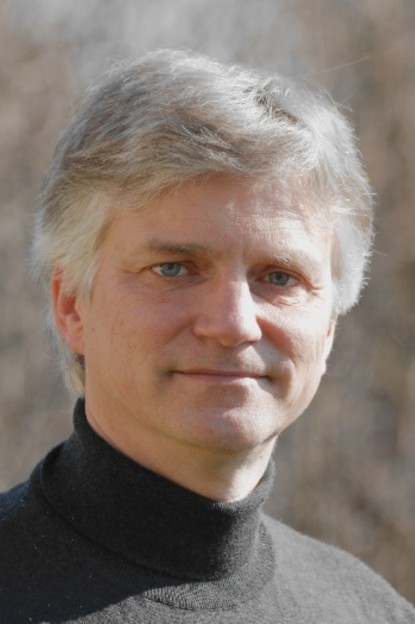
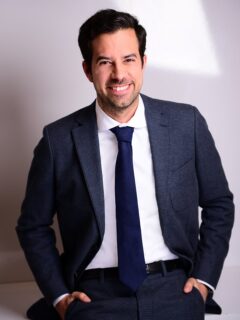
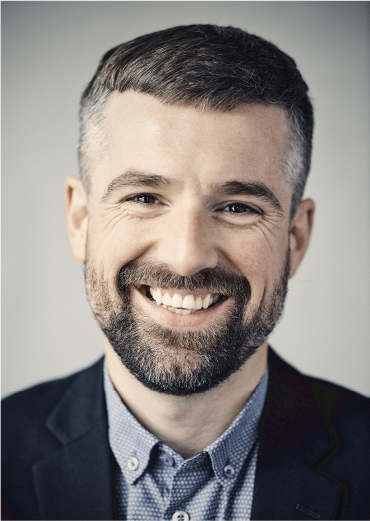
Prof. Dr. Bernd Gröben holds a faculty position at Bielefeld University's Faculty of Psychology and Sport Science , leading the Department of Sport Science as its Head. His research focuses on empirical sports pedagogy , examining educational theories and practices in physical education, with particular emphasis on movement cultures , teacher professionalization , and historical foundations of sports education . He employs methodological innovation in sports pedagogy to advance teaching technologies and curriculum development. Recent publications reveal a thematic concentration on sports interventions in correctional settings , including martial arts training, soccer programs, and physical activity-based rehabilitation. His work investigates how structured movement practices affect prisoner concentration , social outcomes , and mental well-being , while addressing organizational capacity needs for inclusive fitness programs. Methodologically, he explores task-based pedagogy and analogical instruction in sports education.
Martin Boss is a research-active academic at the German Sport University Cologne, affiliated with the Psychological Institute and the Department of Health and Social Psychology. He holds a doctoral degree and is recognized as scientific staff, contributing extensively to research in sport and health psychology. His research interests focus on motivation in health sports , social processes in sport (including social contagion and team conflict), and movement-related interventions . He also emphasizes scientific thinking, interdisciplinary health science, and self/team management in teaching and research. The recent publications highlight a strong focus on team dynamics , interpersonal conflict , and workplace health interventions , particularly in office and transportation settings. His work combines experimental and systematic review methods, often applying psychological theory to real-world health and performance contexts. Scientific Awards: German Construction Prize (2022) e-Teaching Award (2020) He has been involved in advising and academic service, including evaluating the best Master’s thesis in social sciences (2021) and organizing the asp young researchers conference (2018). His research is supported by third-party funded projects such as 'Motiv-Image-Passung in Handball' and 'Truck active'. Martin Boss collaborates closely with researchers like Jens Kleinert, Fabian Pels, and Chloé Chermette, with whom he shares numerous joint publications and projects, indicating strong integration within an active research network.
Florian Hoffmann is an Associate Professor at the Vancouver School of Economics, University of British Columbia, and a Research Fellow in the Department of Structural Change and Productivity at the Halle Institute for Economic Research (IWH). He received his PhD from the University of Toronto. Affiliation: Vancouver School of Economics, University of British Columbia Affiliation: Halle Institute for Economic Research (IWH) Affiliation: Becker-Friedman Institute, University of Chicago Affiliation: Canadian Labour Economics Forum (CLEF) His research focuses on labor economics, macroeconomics, and applied econometrics, with secondary interests in empirical search, human capital, and the economics of education. He explores complex-task biased technological change, earnings inequality, life-cycle dynamics, and the impact of student-instructor interactions on academic achievement. His work often employs dynamic discrete choice models, equilibrium search models, and computational methods. The majority of his recent publications address income inequality, human capital formation, and labor market dynamics. Key themes include the role of education in economic disparities, the interplay between capital and labor income, and the effects of automation on occupational structures. He has collaborated with notable economists such as David S. Lee, Thomas Lemieux, Shouyong Shi, Philip Oreopoulos, and Gueorgui Kambourov. Florian Hoffmann teaches courses in empirical research methods, labor economics, and applied econometrics at both undergraduate and graduate levels. He has also served as a visiting instructor for labor economics programs in Germany.
Mathias Haeger is a Researcher at the Institute of Exercise Training and Sport Informatics within the Faculty of Sport Science at German Sport University Cologne. His primary academic affiliation centers on interdisciplinary research bridging sport science, cognitive psychology, and gerontology. His research focuses on health psychology, attention mechanisms, and dual-task performance , particularly examining cognitive functions under challenging conditions like confinement and aging. Key investigations include the SIRIUS-19 isolation project studying 120-day confinement effects on cardiorespiratory and cognitive systems, and smartphone-based health interventions for elderly populations . His work frequently explores interference psychology, inhibitory control, and the impact of aerobic exercise on cognitive preservation. Research trends from his recent publications indicate strong emphasis on space analog environments (e.g., confinement studies simulating space missions) and digital health solutions for aging . His methodology integrates physiological kinetics measurement with cognitive testing, particularly examining reaction time and dual-task performance. Key collaborations include Otmar Leo Bock (14 shared publications) and Wiebren Zijlstra (2 shared publications). Haeger actively contributes to gerontological research through smartphone-based multi-component health approaches, while his confinement studies provide critical insights for space medicine and extreme environment psychology. His work demonstrates consistent application of sport science principles to solve complex cognitive and physiological challenges.
Dennis Kirstein is a Researcher at the Institute for Chemistry Education within the Faculty of Chemistry at the University of Duisburg-Essen . Since August 2022, he has been teaching chemistry at the Justus-von-Liebig-Schule Moers , a community secondary school. His research focuses on diagnosing and supporting weak learners in chemistry education, particularly in developing technical language , understanding learning prerequisites , and addressing learning difficulties in secondary school settings. Master's Degree : Mathematics and Chemistry for Teaching at Secondary Schools, University of Duisburg-Essen (Master of Education with Distinction, 2016) Bachelor's Degree : Mathematics and Chemistry for Teaching at Secondary Schools, University of Duisburg-Essen (Bachelor of Science, 2014) General Higher Education Entrance Qualification : Städtisches Gymnasium Bergkamen (2011) Kirstein's research explores adaptive and language-sensitive approaches in chemistry education, emphasizing cooperative and experimental learning strategies. His work investigates how diverse student abilities impact experimental inquiry and how tailored educational frameworks can enhance learning outcomes. He has presented findings at international conferences such as ESERA , GDCP , and GEBF and developed teacher training courses like " Fit in the Subject: Language-Sensitive Chemistry Teaching ." Scientific Awards : 2018: Teacher Training Award from Ruhr University Alliance for "Context-Oriented Science and Chemistry Teaching" 2016: Study Prize of the Faculty of Chemistry for the best degree in chemistry for teaching Kirstein has served as a Research Associate at the University of Duisburg-Essen since 2022, with prior roles as a Research Assistant (2016-2017) and Student Assistant (2015-2016). He completed a preparatory service at the Center for Practical Teacher Training Kleve (2020-2022) and holds memberships in the GDCP , IZfB , ZLB , GEW NRW , and ESERA .
Dr. Pascal Lessel is a Post-Doctoral Researcher at the German Research Center for Artificial Intelligence (DFKI) within the Ubiquitous Media Technology Lab at Saarland Informatics Campus. He coordinates aspects related to the Media Informatics program at Saarland University while teaching various courses including GameCraft seminars, scientific writing proseminars, and Media Projects. His educational background includes a doctorate (Dr.-Ing.) with research focused on gamification and human-computer interaction. His teaching portfolio spans from Winter 2012/2013 through Summer 2025, demonstrating long-term commitment to academic instruction in game design, gamification, and media informatics. Dr. Lessel's research focuses on gamification , behavior change support systems , live-streaming of games , and crowdsourcing . His work explores how user-created gamification elements impact engagement, how to personalize gamified experiences based on user types, and how to enhance audience participation in game live-streams. His research combines theoretical frameworks with practical implementations, often developing prototype systems for evaluation. His publication record shows consistent output since 2012 with over 50 publications, demonstrating expertise in gamification design, user experience evaluation, and audience participation systems. His recent work (2021-2022) shows increasing focus on personalization, user-created gamification, and the psychological impacts of different gamification approaches. Honorable Mention at CHI 2015 for 'Analysis of Recycling Capabilities of Individuals and Crowds' Honorable Mention at CHI Play 2019 for 'Crowdjump: Investigating A Player-Driven Platform Game' Active reviewer for CHI, CHI Play, UIST, INTERACT, and other top HCI conferences since 2014 Member of Game Award Saar 2023 jury Member of GamesTalente jury since 2020 Dr. Lessel has supervised numerous bachelor's and master's students, with thesis topics spanning gamified task management, audience-participation games, behavior change interventions, and live-streaming enhancements. His students have developed practical applications for fitness motivation, waste separation, receipt capturing, and audience influence in streaming contexts. He also serves as a reviewer for major conferences in human-computer interaction and game research, demonstrating recognition within his academic community. His research lab work focuses on developing and evaluating systems that bridge the gap between theoretical gamification frameworks and practical implementations, with particular attention to user autonomy, personalization, and audience participation in digital experiences.
Marc Schubhan is a doctoral researcher at the German Research Center for Artificial Intelligence (DFKI) , associated with the Ubiquitous Media Technology Lab (UMTL) on the Saarland Informatics Campus . He contributes to research in gamification, ambient interfaces, and interactive systems. Research Interests: Gamification, Interactive Systems, Prototyping, Human-Computer Interaction, Ubiquitous Computing, User Experience Teaching: Supervised bachelor's and master's theses on gamification, sound feedback, and interactive design; involved in lectures like "Grundlagen der Medieninformatik". Projects: Participated in initiatives such as MarKIeR and Mittelstand-Digital Zentrum Handel, focusing on gamification, ambient interfaces, and VR applications. Publications: Co-author on 14+ papers in CHI, CHI Play, MUM, and MindTrek, addressing topics like gamified hygiene systems, ambient plant-based interfaces, and multi-modal VR interactions. Contact: Email: Marc.Schubhan@dfki.de
Sai Kumar Dwivedi is a PhD candidate and Doctoral Researcher at the Max Planck Institute for Intelligent Systems (MPI-IS) in Tübingen, Germany, working under the supervision of Dr. Michael Black and Dr. Dimitrios Tzionas in the Perceiving Systems department. He closely collaborates with Dr. Cordelia Schmid and has established himself as a leading researcher in computer vision, with multiple first-author publications in top-tier conferences. His educational journey includes: PhD at International Max Planck Research School for Intelligent Systems (2021-Present) Master's and Bachelor's in Computer Science and Engineering from National Institute of Technology, Rourkela (2011-2016) Dwivedi's research focuses on human perception in in-the-wild scenarios and human-object interactions. His work bridges 2D image understanding and 3D scene reconstruction, with particular emphasis on estimating human pose and shape from monocular images. He has pioneered approaches that leverage foundational models to address challenges in human-object contact estimation, creating methods that significantly advance the state-of-the-art in 3D human-object interaction understanding. His publication trajectory shows a clear evolution from basic human pose estimation to sophisticated reasoning about human-object interactions using vision-language models. Recent work demonstrates how large foundational models can be adapted to understand and reconstruct 3D interactions from single RGB images, with applications spanning autonomous vehicles, robotics, and augmented reality systems. Notable scientific achievements include: Outstanding Reviewers Award for CVPR 2025 InteractVLM winning the Human Contact Challenge at CVPR 2025 Outstanding Reviewers Award for ECCV 2024 IMPRS-IS Scholar (2022) RA Fellowship (2021) While not currently supervising PhD students, Dwivedi has mentored junior researchers through his work at MPI-IS and previously at Mercedes-Benz where his research was deployed in production vehicles (EQS 2021 and S-Class 2021). His research has been supported by the International Max Planck Research School for Intelligent Systems and the Max Planck ETH Center for Learning Systems. As a key contributor to the Perceiving Systems department, Dwivedi's work on human-object interaction has practical applications in automotive safety systems, demonstrating the real-world impact of his research. His GitHub repository for InteractVLM has garnered significant attention with 111 stars, reflecting the community's interest in his innovative approaches to 3D interaction reasoning.
Ulrich Reif is a Professor in the Department of Mathematics at Technische Universität Darmstadt. His research focuses on geometric modeling, numerical analysis, approximation theory, and computer-aided geometric design. He explores advanced topics such as isogeometric analysis, subdivision algorithms, and spline-based methods. Key research interests include the theoretical foundations of geometric modeling, computational methods for solving complex mathematical problems, and applications in engineering and computer graphics. His work addresses challenges in surface approximation, numerical stability, and algorithm development for geometric problems. Recent publications highlight contributions to Sobolev regularity analysis, subdivision surface techniques, and the application of deep learning in regression tasks on manifolds. His work often bridges pure mathematics and computational engineering, emphasizing practical implementations and theoretical rigor. No scientific awards or grants are explicitly listed in the provided materials. His academic contributions span over three decades, with a focus on advancing numerical methods and geometric modeling theories.
Shin-Yuan Hung is a Professor in the Department of Information Management at National Chung Hsing University's College of Information Sciences, with an extensive research portfolio spanning over 25 years in information systems. His scholarly contributions include 88 publications in top-tier journals and conferences, with recent works focusing on smart retail, healthcare IT, knowledge management, and social media analytics. Dr. Hung's research interests center on the intersection of technology adoption and organizational behavior, with particular emphasis on healthcare information systems, knowledge management practices, and e-government services. His work frequently examines how user characteristics, organizational context, and technology features influence system success across various domains. Recent research has explored social shopping behaviors, tacit knowledge sharing in development projects, and the impact of service characteristics in smart retail environments. Analysis of his 15 most recent publications reveals a consistent focus on practical applications of information systems in healthcare, retail, and government contexts. His work demonstrates methodological diversity, employing both quantitative and qualitative approaches to investigate technology adoption phenomena. The research shows increasing attention to big data analytics applications across management levels and the evolving role of social media in consumer behavior. Dr. Hung has maintained long-standing collaborations with prominent scholars in the Pacific Asia region, particularly with David C. Yen (18 co-authored papers), Jacob Chia-An Tsai (11 papers), and Kuanchin Chen (9 papers). His leadership in the academic community is evidenced by co-organizing PACIS 2016 in Chiayi, Taiwan, and contributing to special issues honoring distinguished colleagues like Prof. Ting-Peng Liang. His research has significant practical implications for healthcare organizations implementing electronic medical records, businesses developing social commerce strategies, and government agencies designing e-government services. The work provides valuable frameworks for understanding technology adoption across different contexts while addressing both theoretical and practical challenges in information systems implementation.
Dr. Karl Rabes is an alumnus and guest lecturer at the Chair of Information Systems I, Innovation and Value Creation at Friedrich-Alexander-Universität Erlangen-Nürnberg. He holds dual roles as a Business Design Principal at Orange Hills™, a management consultancy specializing in innovation management and agile business design, and as an academic contributor to innovation studies. His research focuses on crowdsourcing mechanisms, open business models, and task-technology fit in collaborative environments. Education: PhD in Information Systems from FAU Erlangen-Nürnberg (2020) His doctoral work, How Ants Build Pyramids: The Concept of Task/Technology Fit in Crowdsourcing , explores how micro-task markets and task complexity influence crowdsourced outcomes. Rabes' publications span innovation education, business model design, and organizational innovation ecosystems. His work bridges academic research with practical consulting in digital transformation and value creation. Notable contributions include analyzing challenges in teaching innovation entrepreneurship and investigating task formulation's role in crowdsourcing efficiency. His research often intersects with boundary objects and stakeholder engagement in service ecosystems.
Mansour Mehranfar is a Researcher at the Chair of Computing in Civil and Building Engineering, Technical University of Munich (TUM). He contributes to advancing AI applications in digital twinning of the built environment through the AI4Twinning research initiative, focusing on automated generation of semantic building models from point cloud data and imagery. His research centers on Digital Twinning, Building Information Modeling (BIM), and Computer Vision, with specific expertise in point cloud processing, semantic segmentation, and 3D reconstruction. He develops AI-driven frameworks that integrate deep learning with geometric modeling to convert raw sensor data into semantically enriched digital representations of buildings and infrastructure components. Recent publications reveal a strong emphasis on staircase modeling, indoor space documentation, and domain adaptation techniques. Key innovations include hybrid top-down/bottom-up approaches for Manhattan-world structures, parametric prototype model fitting, and multi-task learning frameworks that simultaneously handle scene parsing and 3D reconstruction from single images. Dr. Mehranfar actively supervises Master's theses, guiding students in topics such as load-bearing wall detection, staircase modeling automation, and BIM change management. He teaches Engineering Databases at TUM and collaborates within the university's BIM-Lab ecosystem, leveraging facilities for robotic fabrication and mobile machinery research.
Prof. Dr. Bertolt Meyer is a Full Professor (W3) at Chemnitz University of Technology, where he leads research in the Department of Psychology within the Faculty of Behavioural and Social Sciences. His team includes Dr. Maximilian Bretschneider, Dr. Carolin Dietz, Dr. Dominik Dilba, Dr. Monique Mohr, and Susen Schumann. Education background: 1998-2003: Psychology studies at Hamburg University and Humboldt University Berlin 2004-2008: PhD at Humboldt University Berlin (summa cum laude) 2005: Research visit at Japan Advanced Institute of Science and Technology 2007-2011: Postdoc at University of Zurich 2011-2014: Senior Researcher at University of Zurich Meyer's research focuses on organizational and social psychology, with emphasis on: Diversity and Stereotypes : Examining how physical differences and bionics influence perceptions Team Dynamics : Investigating faultlines, subgroup formation, and information processing Leadership : Analyzing micro-level behaviors using sensor-based measurements Workplace Well-being : Studying psychological empowerment and relationship quality His recent publications demonstrate consistent focus on team diversity mechanisms, leadership micro-behaviors, and inclusion processes. Research frequently employs innovative methodologies including sensor technology, meta-analyses, and cross-disciplinary approaches bridging management theory with social psychology. Meyer leads an active research team and serves as Associate Editor for Small Group Research and Frontiers in Psychology (Organizational Psychology section). Office hours are held weekly during semesters at Wilhelm-Raabe-Straße 43.
Fuyuki Ishikawa is an Associate Professor at the Information Systems Architecture Science Research Division of the National Institute of Informatics (NII) in Tokyo, Japan, where he also serves as Director of the GRACE Center. Additionally, he holds positions as Associate Professor at Sokendai (The Graduate University for Advanced Studies) and Visiting Associate Professor at The University of Electro-Communications. His research program, which he describes as 'Trustworthy & Smart Software Engineering,' focuses on dependability in Cyber-Physical Systems and Machine Learning Systems through techniques of formal methods and automated test generation. He investigates verification, reasoning, optimization, automated test generation, and self-adaptation by utilizing various models for requirements, specifications, and designs. His group promotes international and industry-academia collaborations with members from different organizations. Ishikawa's recent work has increasingly concentrated on quantum program testing, autonomous driving systems verification, and quality assurance frameworks for AI systems. His publications demonstrate significant contributions to software engineering, particularly in applying formal methods to emerging domains like quantum computing and machine learning. His research often bridges theoretical foundations with practical applications in safety-critical contexts, particularly for autonomous systems. Awards for Science and Technology (Research Category) from the Minister of Education, Culture, Sports, Science and Technology (April 2024) IPSJ/IEEE Computer Society Young Researcher Award for 'Research on Intelligence-driven Engineering of Dependable Smart Systems' (March 2020) Multiple Best Paper Awards at conferences including ICFEM 2020, SEKE 2020, ICECCS 2019, and ISSRE 2019 Industry Track Best Artifact Award at ISSTA 2015 Ishikawa actively supervises research projects and interns through the ERATO-MMSD Project and MIRAI-eAI Project. He has served on numerous program committees for major software engineering conferences including ASE, ICSE, and ICST, and has organized workshops on machine learning systems engineering (SIG-MLSE) and quality assurance for AI systems (QA4AI). His laboratory provides two main research directions: generative AI for trustworthy software engineering and testing/trust exploration for AI systems, with specific focus on autonomous driving and deep learning applications.
Dr. Pascal Lessel is a Post-Doctoral Researcher at the German Research Center for Artificial Intelligence (DFKI) working within the Ubiquitous Media Technology Lab at Saarland University. His research focuses on gamification, games user research, and persuasive technologies with particular emphasis on audience participation in live-streamed gaming environments. His research interests center on bottom-up gamification approaches where users can customize or create their own game elements, audience-participation games for live streams (like Twitch), and improved interaction channels between streamers and their audiences. He has extensively studied how different user types respond to various gamification elements and how to personalize these systems for better engagement. Through analysis of Dr. Lessel's publication record spanning from 2012-2022, several key research trends emerge. His work consistently explores the intersection of gamification and human-computer interaction, with a growing focus on audience participation in live-streamed gaming environments. He has made significant contributions to understanding how different user types respond to gamification elements, particularly through the Hexad framework. His research also demonstrates a strong commitment to practical applications, with numerous studies evaluating real-world implementations of gamified systems across diverse contexts including physical activity motivation, healthy eating, and workplace productivity. Dr. Lessel has served as a reviewer for numerous top-tier conferences including CHI, CHI PLAY, UIST, and INTERACT. He is also an active member of the academic community, serving on the Game Award Saar 2023 jury and the GamesTalente jury since 2020. He has supervised over 40 student theses and media projects covering diverse topics in gamification and games research. His teaching portfolio includes seminars on GameCraft, Games User Research, and the Media Informatics program at Saarland University. His research has resulted in approximately 50 publications in prestigious venues, demonstrating consistent scholarly productivity and impact in the fields of human-computer interaction and gamification research.