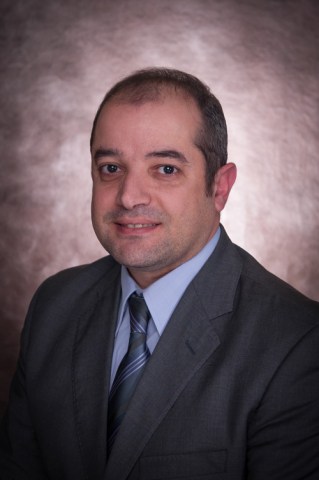
Virginie Galtier is a Researcher at the Laboratoire Lorrain de Recherche en Informatique et ses Applications (LLLIA), affiliated with the University of Lorraine. Her work focuses on distributed computing systems, fault-tolerant architectures, and co-simulation methodologies. She has contributed to projects involving grid computing, UAV swarm systems, and hybrid co-simulation frameworks such as DACCOSIM and MECSYCO. Her research integrates interdisciplinary approaches combining computer science with fields like financial engineering, robotics, and energy systems. Key technical contributions include: Development of fault-tolerant distributed frameworks using JavaSpace Co-simulation solutions for FMI-compliant systems Resource prediction in heterogeneous active networks Recent work emphasizes application-driven research in cyber-physical systems (CPS), particularly using UAV swarms for safety-critical applications and smart space heating modeling. Galtier collaborates extensively with academia and industry on projects requiring distributed simulation platforms and parallel processing techniques. Her technical contributions span: Parallel algorithms for large-scale grid computing Middleware design for reconfigurable distributed systems Optimization of resource utilization in heterogeneous environments She actively participates in conference proceedings and maintains close ties with the MECSYCO and DACCOSIM co-simulation ecosystems. Current research directions include advancing hybrid co-simulation interoperability and exploring adaptive frameworks for dynamic computing environments.
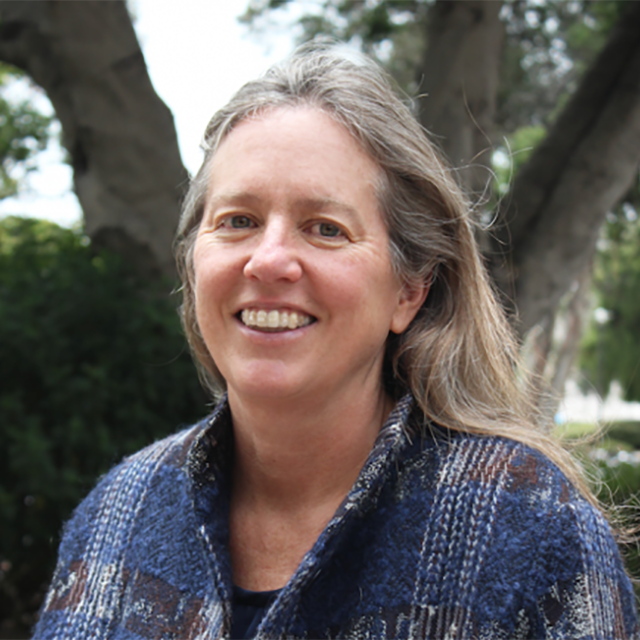
Christopher Kitts is the William and Janice Terry Professor of Mechanical Engineering at Santa Clara University's School of Engineering, where he also serves as Associate Dean of Research and Faculty Development and Faculty Director of the Ciocca Center for Innovation and Entrepreneurship. His external appointments include Associate Researcher at the Monterey Bay Aquarium Research Institute (MBARI) and Visiting Researcher at Lawrence Livermore National Laboratory, reflecting his interdisciplinary work in field robotics. He earned his Ph.D. and M.S. in Mechanical and Aerospace Engineering from Stanford University, M.P.A. in International & Defense Policy from the University of Colorado, and B.S.E. in Mechanical & Aerospace Engineering from Princeton University. Prof. Kitts' research centers on field robotics for scientific discovery and education, with key focus areas: Multi-robot systems design and coordination Collaborative Human/Cobot Control architectures Model-Based Anomaly Management for spacecraft Advanced robotic platforms for underwater, terrestrial, aerial, and space environments His recent publications (2022-2025) demonstrate growing emphasis on human-robot interaction through transformer networks and emotion detection, alongside continued innovation in marine robotics and adaptive navigation for environmental monitoring. Scientific recognition includes: ASME Fellow and AIAA Associate Fellow Multiple Santa Clara University awards across teaching, research, and service NASA Group Achievement Awards (8 total) Industry honors including Edison Innovation Award and AIAA National Award His program has secured tens of millions in funding from government agencies and industry partners for student-operated NASA spacecraft missions and MBARI marine robotics projects, resulting in documented scientific discoveries like tsunami wave evidence in Lake Tahoe. He directs the Robotic Systems Laboratory and Santa Clara's Maker Lab, creating hands-on educational frameworks that integrate entrepreneurial thinking with engineering practice.
Jorge Lobo is an Assistant Professor at the Department of Electrical and Computer Engineering, Faculty of Science and Technology, University of Coimbra. His research focuses on computer vision, sensor fusion for mobile robotics, and low power computing, with recent emphasis on quantum computing and bio-inspired computational approaches. B.Sc/M.Sc in Electrical Engineering (University of Coimbra) Ph.D. in Electrical and Computer Engineering (2007, thesis: 'Integration of Vision and Inertial Sensing') Research Interests: Specializes in artificial perception systems combining computer vision and inertial sensing for robotics. Develops probabilistic models for sensor fusion and explores unconventional computing architectures like stochastic circuits and quantum computing for efficient Bayesian inference. Key applications include autonomous robotic grasping and disaster response systems. Scientific Leadership: Principal Investigator for Q-Bet: Bridging classical/quantum computing via HPC and bio-inspired methods Founding member of Quantum@UC interest group Coordinator of quantum computing specialization courses (collaboration with Physics & Computer Science departments) Key Projects: Contributed to European initiatives BACS (Bayesian Cognitive Systems), HANDLE (robotic dexterity), BAMBI (Bayesian inference hardware), and ECOBOTICS.SEA (marine ecosystem robotics). Academic Recognition: IEEE Senior Member and former president of the Portuguese IEEE RAS chapter. Developed innovative remote labs for stochastic computing education.
Jan Swevers is a Full Professor at KU Leuven , affiliated with the MECO Research Team . His work focuses on predictive control, sensor-based robotics, and optimal motion planning, with applications in autonomous systems, industrial robotics, and aerospace engineering. Research Interests : Predictive control (Model Predictive Control, Iterative Learning Control), sensor-based robotics (surface following, cable shaping), optimal motion planning (Reeds-Shepp algorithms, time-optimal interception), and constraint handling in robotics. Publications : Recent work explores deformable object dynamics, autonomous surface vessel navigation, and computational efficiency in optimal control. Key trends include integrating predictive control with real-time estimation, simplifying complex environments via constraint reduction, and advancing human-like autonomous driving through imitation learning. Advising : Supervised PhD theses on topics like constraint-based robot programming, motion planning, and predictive control for sensor-based tasks. Labs : Leads the MECO Research Team at KU Leuven, focusing on control systems, robotics, and optimal planning.
Amos H. C. Ng is a Professor at the School of Engineering Science, University of Skövde, specializing in simulation-based optimization and Industry 4.0 technologies. His research bridges production engineering with human-robot collaboration, ergonomics evaluation, and cloud-based cyber-physical systems for manufacturing efficiency. Key Affiliations: University of Skövde (School of Engineering Science), Uppsala University (Industrial Engineering and Management) Research Themes: Multi-objective optimization, Digital Twin frameworks, Human-centric production systems, Reconfigurable manufacturing, Throughput bottleneck analysis Projects: ACCURATE 4.0 (Knowledge Foundation), VF-KDO (Virtual Factories with Knowledge-Driven Optimization), EWASS (Wire Harness Assembly Optimization) His recent publications demonstrate expertise in applying evolutionary algorithms, machine learning models, and digital human modeling tools to solve complex manufacturing problems ranging from crankshaft machining to wood supply chain robustness. Current work integrates motion capture technology with DHM tools for objective ergonomic assessments in assembly stations. Amos collaborates extensively with industrial partners like Volvo Penta and academic institutions, utilizing simulation-based approaches to enhance decision-making in production systems. His methodological focus includes non-dominated sorting genetic algorithms, surrogate modeling, and parallel computing architectures for optimization tasks.
Pedro Felzenszwalb is a Professor of Engineering and Computer Science at Brown University , with a research focus spanning computer vision, artificial intelligence, machine learning, and algorithms. Born in Rio de Janeiro, Brazil, he earned his BS in Computer Science from Cornell University (1999) and MS/PhD in EECS from MIT (2001/2003). He previously held a faculty position at the University of Chicago (2004-2011) before joining Brown in 2011. Education : PhD in EECS, MIT (2003) MS in EECS, MIT (2001) BS in Computer Science, Cornell University (1999) His research integrates computer vision and AI, emphasizing scalable algorithms for object recognition, image segmentation, and probabilistic modeling. Key methodologies include deformable part models, belief propagation, and dynamic programming. His work has significant applications in early vision tasks, scene understanding, and geometric constraints in 3D object recognition. Pedro’s publications demonstrate a trajectory from foundational graph/image algorithms (2004-2006) to advanced machine learning approaches (2010-2023), with recurring themes in optimization, clustering, and multiscale modeling. Notable journals include Journal of the ACM , IEEE Transactions , and Communications of the ACM . Scientific Awards : ACM Grace Murray Hopper Award IEEE Technical Achievement Award PASCAL Visual Object Challenge Lifetime Achievement Prize Longuet-Higgins Prize NSF CAREER Award He has received NSF funding for projects including Graph Cut Algorithms (2012-2015) and Object Recognition with Hierarchical Models (2008-2013). At Brown, he teaches graduate courses in machine learning, linear systems, and pattern recognition.
Constandinos Mavromoustakis is a Professor at the Department of Computer Science, University of Nicosia (School of Sciences and Engineering). He leads the Mobile Systems Lab (MOSys Lab) and holds leadership roles in IEEE, including Vice-Chair of the Cyprus Section and Chair of the Computer Society Chapter. He actively contributes to IEEE Communications Society committees and standardization groups like IEEE-SA SCC42 WG2040. Education includes: Dipl.Eng in Electronic and Computer Engineering from Technical University of Crete MSc in Telecommunications from University College London PhD from Aristotle University of Thessaloniki His research integrates Mobile Systems, IoT, and Wireless Communications, with emphasis on: 5G/6G network security using AI-driven strategies Resource optimization in cloud-edge ecosystems UAV-assisted networks for critical infrastructure Healthcare applications via IoMT and data analytics Recent publications (2024-2025) demonstrate strong focus on securing next-gen networks (O-RAN, 6G), optimizing edge computing for VR/IoT, and advancing smart healthcare/cities. Dominant themes include Deep Reinforcement Learning, quantum-inspired optimization, and latency minimization techniques. He participates in EU-funded initiatives including FP7, H2020, Eureka, and national projects. Industrial collaborations include consultancy for Intel Corporation. He directs the MOSys Lab, which researches mobile systems, IoT interoperability, and network security, with projects spanning UAV communications, medical IoT, and sustainable computing.
Jean Carlson is a Professor in the Department of Physics at the University of California Santa Barbara, where she heads the Complex Systems Group. Her research spans multiple disciplines including physics, neuroscience, immunology, and earth sciences, with a focus on developing theoretical frameworks for understanding complex systems. She is an active researcher with numerous publications across diverse fields and serves as a mentor to graduate students and postdoctoral researchers. Professor Carlson's research interests center around complex systems theory, with specific applications in theoretical immunology, earthquake physics, neuroscience, granular materials, amorphous solids, and Highly Optimized Tolerance (HOT). Her work on HOT explores the robust yet fragile nature of complex systems across diverse contexts from immune systems to forest fires. She has made significant contributions to understanding friction modeling through constitutive laws, particularly applying Shear Transformation Zone Theory to earthquake physics and granular materials. Her interdisciplinary approach connects physics principles to biological and environmental systems, revealing fundamental patterns in complex phenomena. Analysis of her recent publications reveals a strong trend toward interdisciplinary research that bridges physics with biological and environmental systems. Her work demonstrates consistent application of complex systems theory across diverse domains, from neural networks to earthquake dynamics to immune system function. The research shows increasing integration of computational modeling with empirical data, particularly in neuroscience applications where brain connectivity and learning dynamics are examined through network analysis. Her earthquake physics work consistently applies physical models of friction and strain localization to understand seismic phenomena, while her immunology research applies theoretical frameworks to understand immune system vulnerabilities and tradeoffs. Professor Carlson actively mentors students and postdocs across multiple disciplines, with notable collaborations including Dani Bassett in neuroscience and Nada Petrovic in disaster response modeling. Her research group has secured funding for projects spanning theoretical immunology, earthquake physics, and wildfire management. She has been involved in significant collaborative efforts such as the Network Architectures of Brain Structures and Functions program and the Physics of Climate Change Program at the Kavli Institute for Theoretical Physics at UCSB. Professor Carlson leads the Complex Systems Group at UCSB, which brings together researchers from physics, biology, and environmental science to study robustness, tradeoffs, and feedback in complex, highly connected systems. The group develops multi-scale models to capture important small-scale details and predict large-scale behavior across diverse applications including disaster response, neuroscience, theoretical immunology, earthquake physics, and granular materials. The group has been particularly active in studying Highly Optimized Tolerance (HOT) as a framework for understanding complexity across different domains.
Eric Demeester is an Associate Professor at the Faculty of Engineering Technology, KU Leuven, affiliated with the Department of Mechanical Engineering and the Robotics, Automation and Mechatronics (RAM) group. He leads RAM and the Subdivision ACRO, with additional roles as contact person for robotics initiatives and council member for academic governance. Academic Rank: Associate Professor Leadership Roles: Head of RAM, Head of Subdivision ACRO Research Focus: State estimation, decision-making under uncertainty, robotic wheelchairs, user modeling, plan recognition, shared control His research spans robotics applications in diverse domains including humanitarian demining, agricultural automation, pharmaceutical manufacturing, and radiological mapping. Projects involve sensor fusion (GNSS-IMU), machine learning for low-data environments, and haptic control systems. Current advisees include Wouter Abbeloos and Pieter Aerts. Key projects include MineInsight (2024-2028), APL-SuppOr (2024-2027), and ROBUST (2024-2025), where he serves as promotor or co-promotor. His work emphasizes practical implementation in industrial and challenging environments.
Dr. Tri Nhu Do is an Assistant Professor in the Department of Electrical Engineering at Polytechnique Montréal, where he conducts cutting-edge research at the intersection of wireless communications and artificial intelligence. His academic journey spans institutions across Vietnam, South Korea, the United States, and Canada, bringing a global perspective to his work. Dr. Do is affiliated with the Advanced Microwave and Space Electronics Research Center (POLY-GRAMES) and contributes to the 'New Frontiers in Information and Communications Technologies' center of excellence. Dr. Do's research focuses on wireless communications systems, artificial intelligence applications in telecommunications, and integrated sensing and communication technologies. His work addresses critical challenges in next-generation wireless networks, particularly in security, resource allocation, and performance optimization. Recent research demonstrates a strong emphasis on applying deep learning, generative AI, and federated learning techniques to solve longstanding problems in wireless communications. His publication record shows remarkable productivity and impact, with numerous articles in top IEEE journals including IEEE Transactions on Communications, IEEE Transactions on Vehicular Technology, and IEEE Communications Letters. The research trends indicate a strategic shift toward integrating AI with traditional communication theory, particularly in security applications, reconfigurable intelligent surfaces, and UAV communications. Dr. Do teaches advanced courses in signal detection and estimation, communication theory, and digital transmission, sharing his expertise with the next generation of electrical engineers. His teaching reflects his research interests, providing students with both theoretical foundations and exposure to cutting-edge developments in the field.
Thorsten Berger is a Professor and Head of the Chair of Software Engineering at Ruhr University Bochum, Germany. His office is located at MC 4.101 on the RUB campus, with contact details including phone (+49 (0) 234 32 25975) and email (thorsten.berger@rub.de). He's an active researcher with extensive service in the software engineering community, serving on program committees for major conferences including ICSE, FSE, ASE, and SPLC. Professor Berger's research primarily focuses on software engineering with specialization in variability management, software product lines, and robotics software engineering. His work bridges theoretical foundations with practical applications, particularly in behavior trees for robotic systems, configuration management, and domain-specific language engineering. His interdisciplinary approach connects software engineering with control theory and machine learning applications. Analysis of his recent publications reveals a strong trend toward robotics software engineering, with increasing focus on behavior trees, test-case specification, and runtime verification for robotic systems. His work also shows growing interest in machine learning integration with traditional software engineering practices, particularly in model integration and asset management for ML-enabled systems. The research demonstrates consistent evolution from foundational work in variability management toward more applied domains. His scientific achievements have been recognized with numerous awards: Multiple Most Influential Paper Awards (SLE 2024, VaMoS 2023, VaMoS 2020) Wallenberg Academy Fellowship VR Starting Grant from Swedish Research Council (2016) Best Paper Awards at Modularity (2015) and CSMR (2013) Distinguished Reviewer Awards from ASE, ICSE, and SPLC conferences ERC Starting Grant finalist (2019, 2020) Professor Berger has secured substantial research funding as Principal Investigator for multiple projects including Novel Techniques for Data-Driven Root-Cause Analysis and Variability Management (Volkswagen Infotainment), Properties and Verification Techniques for Behavior Trees (Phoenix Contact Foundation), and PrivacyE2E framework for AI-enabled systems (Federal Ministry of Education and Research). His Wallenberg Academy Fellowship and VR Starting Grant demonstrate his capacity to attract competitive early-career funding. He leads the Virtual Platform project funded by the Swedish Research Council and participates in EU-funded initiatives like CO4ROBOTS. As Head of the Chair of Software Engineering at Ruhr University Bochum, he leads a research group focused on advanced software engineering techniques with particular emphasis on variability-intensive systems. His team actively participates in international research collaborations including the Wallenberg Autonomous Systems Program (WASP) and has organized significant events like the Dagstuhl seminar 19191 on 'Software Evolution in Time and Space: Unifying Version and Variability Management.'