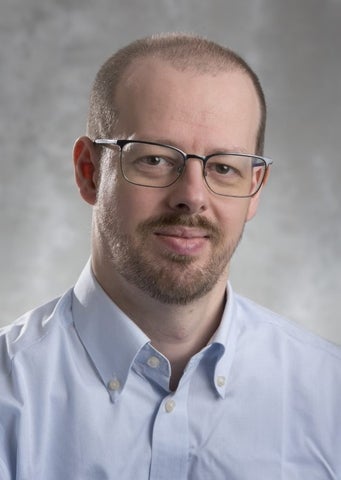
Gordon Geoffrey J. is a Professor at Carnegie Mellon University, specializing in Machine Learning , Artificial Intelligence , and Computer Science . His research spans Reinforcement Learning , Domain Adaptation , Graph-based Planning , and Relational Learning , with significant contributions to Adversarial Learning , Deep Learning Dynamics , and Mobile Sensor Networks . He has pioneered algorithms like ARA* and Anytime Dynamic A* for efficient planning under constraints. Key research areas: Transfer Learning , Bayesian Knowledge Tracing , Multi-agent Systems , Database Optimization His work has been cited thousands of times across foundational topics in AI and robotics, demonstrating sustained impact in algorithm design and applications to complex systems.
Lev Kirischian is an Associate Professor at the Department of Electrical and Computer Engineering , Toronto Metropolitan University. He established the Embedded and Reconfigurable Systems Laboratory in 1999 for research and graduate studies. His expertise spans reconfigurable computing, parallel systems, and embedded design. BSc/MASc in Aerospace Control Systems, Moscow Institute of Aviation Technology (MAI) PhD in Parallel and Reconfigurable Computing Systems, Moscow Power Engineering Institute (MPEI) Research Interests : Task-adaptive reconfigurable computing systems Automated architectural synthesis of data-flow parallel computers FPGA-based stream processors Article Trends : His recent research focuses on reconfigurable computing architectures, modular system optimization, and FPGA applications in aerospace and industrial systems. Work includes radiation protection for FPGAs, multi-parametric architecture optimization, and frameworks for parallel multi-tasking environments.
Octavia A. Dobre is a full Professor and Canada Research Chair Tier-1 in Ubiquitous Connectivity at Memorial University's Faculty of Engineering and Applied Science. Her research focuses on wireless, optical, and underwater communications, integrated sensing and communication systems, and AI-driven network innovations. She leads over 500+ journal/conference publications and holds positions like VP Publications of IEEE Communications Society. Education: Dipl.-Ing. and PhD from Politehnica University of Bucharest Roles: Editor-in-Chief of IEEE Open Journal of Communications Society, former Editor of IEEE Communications Letters Her work spans IEEE standards development, conference leadership (e.g., General Chair, Technical Chair), and industry partnerships with entities like Huawei and DRDC. Recognized globally with awards like IEEE Fellow (2020), Fellow of the Canadian Academy of Engineering (2021), and Top 2% Global Scientist (Stanford, 2020-2024). Her lab explores cutting-edge topics including quantum networks, reconfigurable surfaces, and 6G innovations.
Shawki M. Areibi is a Professor and Area Head of Engineering Systems and Computing in the School of Engineering at the University of Guelph. His research focuses on VLSI Physical Design Automation, Reconfigurable Computing Systems, and Hardware/Software Co-design for Embedded Systems. He leads efforts in developing advanced algorithms for CAD tools, FPGA design, and machine learning applications. His work addresses challenges in VLSI layout optimization, parallel processing, and embedded systems design. Affiliations: AI Affiliated Faculty, Area Heads, Computer Engineering, Engineering Systems and Computing Research. Research Interests: VLSI Circuit Layout, Reconfigurable Computing, Machine Learning, and FPGA-based Accelerators. His research integrates meta-heuristics like Genetic Algorithms and Tabu Search to solve complex optimization problems. He has contributed to hardware acceleration frameworks for machine learning algorithms and embedded systems, with applications in domains like signal processing and data mining. His recent work includes congestion-estimation models for modern FPGAs and analytic placement tools for ultra-scale architectures. Publications span VLSI design, reconfigurable computing, and machine learning, emphasizing algorithmic innovation and hardware-software co-design. His students have explored topics ranging from FPGA placement to domain adaptation in remote sensing. Grants and Advising: Advises graduate and undergraduate students on projects involving FPGA acceleration, machine learning, and embedded systems. His labs focus on developing next-generation CAD tools and hardware accelerators.
James Young is a Professor in the Department of Computer Science at the University of Manitoba, within the Faculty of Science. He holds a PhD and specializes in Human-Computer Interaction (HCI) and Human-Robot Interaction (HRI). His work focuses on designing socially intelligent robots, trust calibration in HRI, and ethical implications of robotic systems. He leads the HCI Lab, collaborating closely with Japanese robotics researchers, and has pioneered projects like the SnuggleBot companion robot and frameworks for robot capability labeling. Education: PhD in Computer Science Research interests include social robotics, teleoperation systems, and human-robot collaboration. He has explored applications in mental health support, disability inclusion, and cultural reconciliation through virtual reality. His lab emphasizes interdisciplinary approaches, combining engineering, psychology, and design principles. Current research includes designing anti-bullying interventions using robots, privacy-friendly robot interfaces, and exploring the societal impact of AI systems. He actively mentors graduate students in HCI and robotics, with funding opportunities for exceptional candidates. His work has been showcased in venues like HRI conferences and ACM publications, emphasizing both technical innovation and ethical considerations. Collaborations extend to international partnerships and industry applications in healthcare and education.
Dr. Scott Nokleby is an Associate Dean, Academic and Professor in the Department of Automotive and Mechatronics Engineering at the University of Ontario Institute of Technology. He holds a PhD in Mechanical Engineering from the University of Victoria (2003), and has over two decades of academic leadership and research experience. His primary roles include academic administration and advancing robotics and mechatronics research. Education: PhD (Mechanical Engineering, UVic, 2003), MASc (Mechanical Engineering, UVic, 1999), BEng (Mechanical Engineering with Co-op, UVic, 1997). Research interests focus on advanced robotics topics including parallel manipulators, mobile-manipulator systems, kinematic redundancy analysis, and autonomous systems. His work emphasizes practical applications such as radiation mapping robots, perching drones, and robotic hazard management. Notable contributions include optimal design methodologies for mechanisms and control systems for human-robot interaction. Publications reflect expertise in robotics systems, mechatronics, and nuclear engineering applications. Recent work explores multi-robot task allocation, autonomous navigation, and advanced control algorithms. Awards: Fellow of ASME (2022) Fellow of CSME (2016) CSME Best Paper Award (2014) UOIT Research Excellence Award (2008) CSME I.W. Smith Award (2007) Teaches graduate courses in advanced robotics, mobile robotic systems, and mechanism design. Active in academic administration, he bridges teaching innovation with engineering education through projects like tablet computing integration in design courses. Labs/Teams: Leads robotics research initiatives focused on autonomous systems development, with collaborations spanning nuclear safety, mining automation, and aerospace applications.
Rodolfo Pellizzoni is a Professor in the Department of Electrical and Computer Engineering at the University of Waterloo, Canada. His research focuses on real-time systems, embedded systems, and computer architecture, with an emphasis on time-predictable computing, multicore systems, and FPGA networks. He has contributed extensively to cache management, memory resource coordination, and security-aware scheduling in critical systems. His work includes designing frameworks like HopliteRT for FPGA NoCs, optimizing memory bandwidth regulation, and addressing challenges in mixed-criticality systems. Pellizzoni is affiliated with the Faculty of Engineering and maintains a research group focused on hardware-software co-design for real-time applications. His research bridges theoretical models (e.g., Network Calculus) with practical implementations, emphasizing latency reduction and resource predictability in heterogeneous platforms. Recent publications highlight advancements in cache partitioning, dynamic memory allocation, and scheduling algorithms for multicore processors. His work often appears in top-tier conferences like Euromicro Conference on Real-Time Systems (ECRTS) and journals focusing on embedded and real-time systems.
Dr. Harold Wareham is a tenured Professor in the Department of Computer Science at Memorial University of Newfoundland (MUN), Faculty of Science. He holds a Ph.D. from the University of Victoria and has been at MUN since 1999, advancing through roles including Assistant Professor, Associate Professor, and Full Professor. His research focuses on computational complexity theory applied to cognitive science, robotics, and computational biology. He has served on numerous academic committees and international conference program committees. Education: B.Sc. (Computer Science) and B.A. (Linguistics/Mathematics) from MUN, followed by an M.Sc. in Computational Biology and a Ph.D. in Parameterized Complexity in Computational Phonology from the University of Victoria. Research Interests Computational complexity of cognitive processes Algorithm design for robotics and swarm control Parameterized complexity in biological systems Machine learning interpretability Recent Work Trends Recent publications emphasize applying complexity theory to AI interpretability (e.g., neural network reverse-engineering) and cognitive science (segmentation processes). His robotics research explores algorithmic foundations for swarm construction tasks. He also investigates computational challenges in software reconfiguration and modularization. Awards 2017 Best Professor Award (MUN CS Graduate Society) Teaching Fellow at Radboud University (2014–) F. A. Aldrich Alumni Graduate Scholarship (1989) Grants & Advising Has supervised numerous courses across undergraduate and graduate levels, including AI topics, computational biology, and theoretical computer science. Active in grant review roles for NSERC and international funding bodies. Served on MUN committees for promotion, tenure, and graduate studies. Labs & Collaborations Associated with the MUN CS Theory Group and the Bio-inspired Robotics (BOTS) Lab. Collaborates internationally on projects like the Dagstuhl Complexity Workshops and cognitive science initiatives.
Roya Firoozi is an Assistant Professor in the Department of Electrical and Computer Engineering at the University of Waterloo, Canada. She holds a Ph.D. in Control Theory from UC Berkeley (2021) and a Postdoctoral Research position at Stanford University's Multi-Robot Systems Lab (2024). Her research focuses on advancing safe robot autonomy in interactive environments through generative AI, distributed optimization, and game theory. Key areas include multi-agent systems, autonomous vehicles, and perception-driven control. Education: Ph.D. in Control Theory, UC Berkeley (2021) Bachelor's in Mechanical Engineering, UC Berkeley (2014) Postdoctoral Research, Stanford University (2024) Research Interests: Robotics-aided generative AI, multi-modal perception, interactive autonomy in multi-agent systems, game-theoretic optimization, and safe navigation in dynamic environments. Her work bridges theoretical foundations with real-world experiments in robotics and autonomous systems. Awards: NSF Postdoctoral Research Fellowship ASEE Fellowship (2021-2023) Rising Stars in Aerospace Engineering (2022) Outstanding Graduate Instructor Award (2021) Advising & Grants: Currently supervising graduate students (PhD/Master's) focused on robotics and control systems. Research is supported by grants from NSF and industry collaborations. She has pioneered algorithms for distributed multi-vehicle coordination and occlusion-aware navigation systems. Labs & Teams: Leads the Autonomous Systems Lab at Waterloo, focusing on robotics, AI, and control. Collaborates with Stanford's Multi-Robot Systems Lab and UC Berkeley's MPC Lab on projects involving autonomous vehicles and fault detection systems.
Dr. Tri Nhu Do is an Assistant Professor in the Department of Electrical Engineering at Polytechnique Montréal, where he conducts cutting-edge research at the intersection of wireless communications and artificial intelligence. His academic journey spans institutions across Vietnam, South Korea, the United States, and Canada, bringing a global perspective to his work. Dr. Do is affiliated with the Advanced Microwave and Space Electronics Research Center (POLY-GRAMES) and contributes to the 'New Frontiers in Information and Communications Technologies' center of excellence. Dr. Do's research focuses on wireless communications systems, artificial intelligence applications in telecommunications, and integrated sensing and communication technologies. His work addresses critical challenges in next-generation wireless networks, particularly in security, resource allocation, and performance optimization. Recent research demonstrates a strong emphasis on applying deep learning, generative AI, and federated learning techniques to solve longstanding problems in wireless communications. His publication record shows remarkable productivity and impact, with numerous articles in top IEEE journals including IEEE Transactions on Communications, IEEE Transactions on Vehicular Technology, and IEEE Communications Letters. The research trends indicate a strategic shift toward integrating AI with traditional communication theory, particularly in security applications, reconfigurable intelligent surfaces, and UAV communications. Dr. Do teaches advanced courses in signal detection and estimation, communication theory, and digital transmission, sharing his expertise with the next generation of electrical engineers. His teaching reflects his research interests, providing students with both theoretical foundations and exposure to cutting-edge developments in the field.