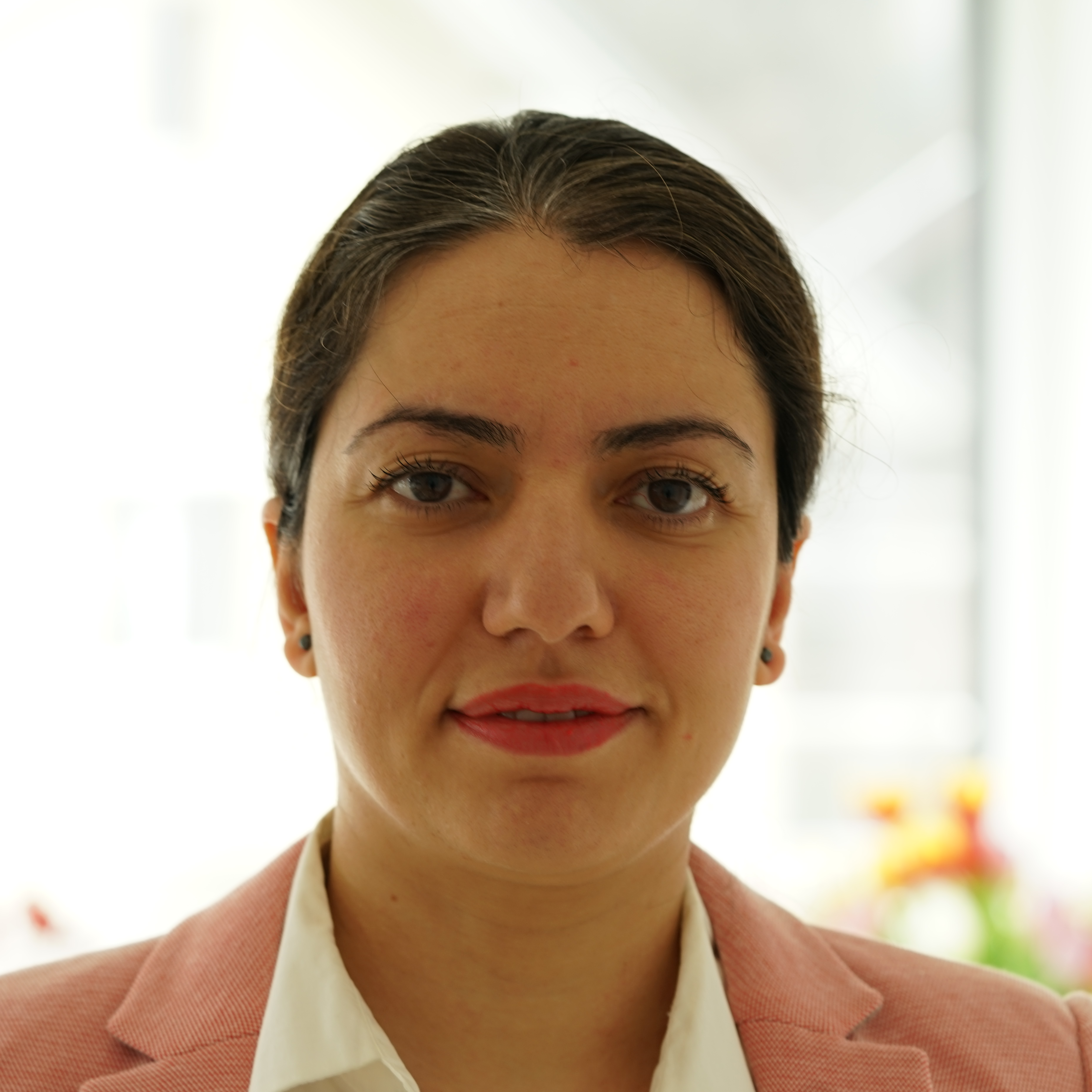
Cresantus Biamba is a Senior Lecturer at the University of Gävle, specializing in Educational Science. His research bridges education theory with technological advancements, focusing on teacher training, sustainability in education, and inclusive pedagogy. Researcher at University of Gävle (Education, Educational Science) Research interests include: Education for Sustainable Development (ESD) in global contexts Teacher education reform and policy analysis Inclusive classroom practices in the Global South Technological integration in educational systems Curriculum development for post-pandemic resilience Publication trends reveal interdisciplinary work combining AI, cloud computing, and IoT applications with educational challenges, particularly in African institutions. His articles address security optimization, healthcare technology, and sustainability frameworks. Academic activities involve collaborations with researchers in cybersecurity, AI, and energy systems, though specific grants or mentoring roles are not explicitly documented here.
Mattias Tiger is an Assistant Professor at the Department of Computer Science (IDA) at Linköping University , where he serves as an AI researcher and deputy lab leader for the Reasoning and Learning Lab (ReaL) . His work is supported by the WASP program and focuses on applied AI research in autonomous systems. Roles : Assistant Professor, AI Researcher, Deputy Lab Leader Affiliations : IDA, AIICS, WASP, AI Academy Research Focus : Artificial Intelligence, Robotics, and Autonomous Systems with specialization in motion planning, dynamic obstacle avoidance, and safety-aware AI. His work bridges theoretical foundations with real-world applications, particularly in urban environments and agile flight systems. Key technical areas: Lattice-based motion planning, deep reinforcement learning, 3D exploration algorithms Application domains: Autonomous road sweeping, drone navigation, retail automation Awards : EurAI award for postdoctoral thesis SAIS award for best degree project supervision Collaborations : Works with Professor Fredrik Heintz and colleagues in projects involving robotic platforms like Spot and Elsa. His research has been highlighted during the Royal Couple's visit to Linköping and through grants from the Norrköping Fund for Research and Development.
Stefano Sarao Mannelli is a tenure-track Assistant Professor in the Department of Computer Science and Engineering at Chalmers University of Technology and University of Gothenburg. He also holds a Visiting Lecturer position at the University of the Witwatersrand. His research group focuses on fundamental aspects of learning in biological and artificial systems, with emphasis on bias generation, optimization dynamics, and comparative neuroscience. Education: Ph.D. in Theoretical Physics, Université Paris-Saclay (2020) M.Sc. in Electronic Engineering, Politecnico di Torino (2017) M.Sc. in Physics of Complex Systems, Politecnico di Torino/SISSA (2016) M2 in Physique Théorique, Paris Diderot/UPMC/ENS Cachan (2016) B.Sc. in Mathematics for Engineering, Politecnico di Torino (2014) Research: Dr. Mannelli develops model-based approaches to reduce complex machine learning problems into analytically tractable frameworks. His core interests include: 1) Bias amplification mechanisms in AI systems, 2) Learning differences between biological and artificial neural networks (continual/transfer/curriculum learning), and 3) Optimization in high-dimensional landscapes. His work bridges statistical physics, neuroscience, and deep learning theory. Publication Trends: Recent articles (2024-2025) predominantly analyze curriculum learning dynamics, bias propagation in optimization, and theoretical comparisons between biological and artificial learning systems. Methodologically, they combine statistical physics frameworks with control theory and high-dimensional analysis. Awards: Academic Grant (CM Lerici Foundation, 2025) Travel Grants (Guarantor of Brains, G-Research 2024) UK–IT Trustworthy AI Exchange Programme (Alan Turing Institute, 2023) SCGB Conference Award (Simons Foundation, 2023) Ph.D. Scholarship (CEA, 2017-2020) Team & Funding: Leads a research group with 2 PhD students and 1 postdoc. Secured significant funding for international workshops including Analytical Connectionism (£42K, 2023; $152K, 2024) and High-Dimensional Methods (135,500 SEK, 2025).
Masoumeh Ebrahimi is an Associate Professor at KTH Royal Institute of Technology, Division of Electronics and Embedded Systems, and holds an Adjunct Professor position at the University of Turku, Finland. She leads research in hardware acceleration, neural architecture search, and fault-tolerant systems. Her work bridges machine learning, embedded systems, and network-on-chip (NoC) design. Research Interests: Hardware-Accelerated Machine Learning 6G Network Architectures Fault-Tolerant Computing High-Performance GPU Systems Network-on-Chip (NoC) Design Federated Learning Key Projects: Co-supervisor of Hui Chen’s postdoc project Generalizing hardware acceleration for nonlinear functions . Active in Digital Futures, a cross-disciplinary center focusing on societal challenges using digital tech. Collaborates on edge computing, 6G networks, and resilient embedded systems. Labs & Teams: Core member of KTH’s Digital Futures initiative, advancing AI accelerators and next-gen communication systems. Engaged in EU-funded projects on NoC reliability and federated learning frameworks.
David Black-Schaffer is a Professor at Uppsala University's Department of Information Technology, specializing in computer systems research. As of 2023, he serves as Dean of Research for the Faculty of Science and Technology. His work bridges software and hardware innovations to enhance data movement efficiency in computer systems, with applications commercialized through a startup and integrated into industry standards like OpenCL. Black-Schaffer earned his PhD in Electrical Engineering from Stanford University in 2008, focusing on many-core processor programming. His career spans roles at Apple Inc. (contributing to OpenCL standards), postdoctoral research at Uppsala University, and academic progression from assistant to full professor (2010–2017). He has held leadership roles including Head of the Division of Computer Systems (2022) and department representative on the faculty Advisory Committee for Research (2021). His research spans computer architecture, memory systems, parallel programming, and simulation techniques. Recent publications (2024–2020) explore garbage collection, cache optimization, memory contention, NUMA systems, and instruction scheduling. Key trends include software-hardware co-design for power efficiency, reuse-aware data placement, and machine learning for performance modeling. Knut & Alice Wallenberg Foundation: Wallenberg Academy Fellowship Prolongation (2020–2025), Wallenberg Academy Fellow (2016–2021) Swedish Research Council (VR): Project Grant (2019–2024), Young Researcher Grant (2015–2018), Framework Grant (2012–2017) European Research Council: ERC Starting Grant (2017–2022) Teaching Awards: Uppsala Engineering and Science Student Union Pedagogical Prize (2012), Uppsala University Pedagogical Prize (2016), Uppsala Technical Physics Students' Teaching Award (2019) Other Grants: ScalableLearning flipped classroom project (2012–2020), Arm Ltd. collaborations on memory system designs He pioneered flipped-classroom teaching through the ScalableLearning project, impacting over 80,000 students. His research is conducted in collaboration with institutions like Arm Ltd., with past contributions to Apple's OpenCL implementation and UPMARC research center.
Alessandro Papadopoulos is a Professor of Electrical and Computer Engineering at Mälardalen University (MDU) and a QUALIFICA Fellow at the Institute for Software Technology and Software Engineering (ITIS), University of Málaga. He leads the Complex Real-Time Embedded Systems (CORE) research group and serves as Scientific Leader for Applied AI under the AI@MDU initiative. His research focuses on control theory, robotics, and real-time embedded systems, emphasizing interconnected systems and uncertainty management. Education: BSc (2008) and MSc (2010) in Computer Engineering from Politecnico di Milano; PhD (2014) in Information Technology, Systems and Control from the same institution. Postdoctoral fellowships at Lund University’s Department of Automatic Control and Politecnico di Milano’s Dipartimento di Elettronica, Informazione e Bioingegneria. Research interests include control theory applications to computing systems, distributed systems, and AI integration. His work addresses challenges in real-time, embedded, and edge computing. Notable contributions include VR starting grant (2020) and SSF strategic mobility grant (2020), and the Most Influential Paper Award at SEAMS 2025. He has advised PhD students like Anna Friebe and Daniel Bujosa Mateu. Grants and collaborations include projects with ABB industrial automation and leadership roles in conferences (e.g., DEBS 2025 Workshop/Tutorial Chairs). His research group explores autonomous systems, cybersecurity in industrial networks, and cloud manufacturing resilience. Labs/teams: CORE group, collaborating with Prof. Thomas Nolte.
Saad Mubeen is a Full Professor of Computer Science at Mälardalen University, Sweden, affiliated with the School of Innovation, Design and Engineering and the Division of Networked and Embedded Systems. He holds a Master's in Electrical Engineering (Embedded Systems) and a PhD in Computer Science and Engineering from Mälardalen University (2014), with a Docent title (2018) focused on vehicular embedded systems. His research emphasizes predictable embedded systems, timing analysis for real-time communication, and component-based software design. Key areas include model-driven development for automotive systems, integration of TSN/5G networks, and fault-tolerant industrial architectures. He has led projects on end-to-end timing analysis in distributed systems, ROS 2 verification, and cognitive edge-cloud scheduling. Publications span 2021–2025, focusing on real-time systems, network protocols (TSN, AVB, 5G), and industrial automation. Notable work includes frameworks for TSN configuration, fault diagnosis tools using NETCONF, and scheduling algorithms for heterogeneous edge-cloud environments. His contributions address critical challenges in timing predictability, security, and resource optimization for cyber-physical systems. Education contributions include problem-based learning modules for vehicular software engineering. He is actively involved in bridging academia and industry through collaborative research on next-generation automotive and industrial systems.
Björn Johansson is a Professor at Chalmers University of Technology, specializing in Production Systems. His research focuses on sustainability aspects of manufacturing through virtual tools, aiming to minimize environmental, social, and economic impacts. Key methodologies include flow simulation, dynamic environmental assessments, 3D visualization, and layout optimization. Primary research areas: Sustainable Manufacturing, Digital Twins, Environmental Impact Assessment Collaborations: Mélanie Despeisse, Henrik Söderlund, and others in automotive, battery production, and maritime industries His work emphasizes integrating digital technologies (e.g., VR, IoT) with sustainable practices, addressing challenges in supply chain resilience, human-robot collaboration, and circular economy models. Recent studies explore VR training environments, 5G-enabled manufacturing, and extended reality (XR) frameworks. Current projects involve 44 initiatives across battery systems, servitization, and digitalization for sustainability. Publications span 179 articles, including topics like digital twin implementation, ergonomic VR assessments, and hybrid simulation models for environmental analysis.
Dr. Gaoyang Dai is an Assistant Professor at Uppsala University's Department of Information Technology, specializing in Computer Systems research. His work focuses on real-time systems, embedded computing, and scheduling algorithms for complex task models. Research interests include: Deterministic timing analysis in distributed systems Priority inversion handling in multicore environments Non-preemptive node scheduling for DAG tasks Cyber-physical system design paradigms Deep learning applications in wireless networks Recent publications demonstrate expertise in IEEE Transactions and DATE conference proceedings, with particular emphasis on sporadic DAG task scheduling and resource sharing protocols. Collaborative work includes development of the TIMES-Pro toolchain for CPS implementation.
Mats Brorsson is a Professor at the Division of Software and Computer Systems , KTH Royal Institute of Technology. His research spans multiple areas of computer architecture and parallel computing, with a focus on system software, energy-aware architectures, and performance debugging tools. He is actively involved in projects like the PaPP ARTEMIS collaboration and coordinates the KTH-SICS Scalable Computing Systems initiative. Research Interests : Mats Brorsson's work primarily addresses parallel computing , task-based programming models (e.g., OpenMP), and energy-efficient computer architectures . He has made significant contributions to NUMA system optimization , work-stealing schedulers , and runtime systems for high-performance computing. Professional Activities : Mats Brorsson serves as coordinator for the PaPP ARTEMIS project and is a member of the KTH-SICS Collaboration in Scalable Computing Systems. His publications reflect deep engagement with task scheduling , cache coherence protocols , and adaptive resource management for parallel systems.
Karl-Erik Årzén serves as Professor and Head of the Department of Automatic Control at Lund University's Faculty of Engineering. He concurrently holds the position of Co-director for the Wallenberg AI, Autonomous Systems and Software Program (WASP) and maintains Fellow status with the Royal Swedish Academy of Engineering Science (IVA), alongside advisory roles at SMaRC and Aalto University. His research operates at the convergence of control theory and computer engineering, specializing in dynamic feedback-based resource management (feedback computing) for embedded systems and cloud infrastructures. Additional expertise spans embedded control, real-time systems, cyber-physical systems, and domain-specific programming languages for control applications, demonstrating consistent bridging of theoretical control frameworks with computational implementation challenges. Recent publication trends reveal intensive focus on applying control methodologies to distributed resource allocation, evidenced by works on real-time application offloading, auction-based storage allocation, and reinforcement learning-driven cloud auto-scaling. These contributions critically address scalability and performance challenges across computer science, telecommunications, and next-generation 6G network architectures. Scientific recognition includes: Best Paper Award (2018) for Predictability and Cloud Application research Best paper award (2018) Best Paper Award at RTNS 2016 Best Paper Award at RTCSA 2004 With 35 supervised students to date, Årzén currently serves as primary supervisor for PhD candidate Ahmed Al Bayati. His research portfolio includes active leadership in the Vinnova-funded AORTA project (2023-2025), Robust and Secure Control over the Cloud initiative (2021-2026), and the long-term WASP program (2015-2029), alongside completed projects like AutoDC and Testing Autonomous Control-Based Software Systems. He actively contributes to the ELLIIT research environment and shapes Lund University's AI and Digitalization profile area alongside LU's Natural and Artificial Cognition initiative.
Masood Fathi is an Associate Professor of Production Engineering at the University of Skövde, Sweden. He holds a position within the School of Engineering Science and Department of Engineering. As an academic, he focuses on advanced manufacturing systems, Industry 4.0/5.0 technologies, and optimization methodologies. His research integrates AI applications, sustainability, and human-robot collaboration in production environments. Education: Formal academic qualifications (specific details not explicitly provided in text). Research Interests: Professor Fathi's work centers on optimizing production systems through advanced algorithms and technologies. Key areas include assembly line balancing, energy-efficient manufacturing, supply chain optimization, and the application of generative AI in industrial processes. He also explores resilience in production systems and sustainable practices such as healthcare waste management and remanufacturing. Recent Trends in Publications: Recent work emphasizes Industry 5.0 sustainability goals, human-robot collaboration, and AI-driven quality inspection. Articles highlight multi-objective optimization challenges, resilient worker performance under disturbances, and the integration of simulation-based decision support systems. Grants & Projects: Lead researcher on projects like 'Enhancing Hospital Services Under Resource Constraints' (2025) and 'Virtual Engineering Agile Manufacturing in Industry 4.0' (2021–2025). Focus areas include smart manufacturing, digital twins, and resilient production systems. Labs/Teams: Collaborates with interdisciplinary teams on projects involving augmented reality for quality inspection, blockchain in supply chains, and lean-green manufacturing integration.
Matthias Becker is an Associate Professor at the Division of Electronics and Embedded Systems within the EECS School at KTH Royal Institute of Technology. He holds a Docent degree from KTH (2024) and has extensive experience in research, including postdoctoral roles at KTH and visiting research at CISTER in Portugal. His primary affiliations include the Digital Futures research center, focusing on edge computing and real-time systems. Education: B.Eng. in Mechatronics/Automation Systems, University of Applied Sciences Esslingen (2011) M.Sc. in Computer Science (Embedded Computing), University of Applied Sciences Munich (2013) Licentiate and PhD in Computer Science and Engineering, Mälardalen University (2015, 2017) Research Interests: Focuses on real-time systems, embedded computing, edge orchestration, automotive systems, and network-on-chip analysis. His work emphasizes safety-critical systems, scheduling algorithms, and design space exploration for multi-core platforms. Articles Trends: Recent publications emphasize edge computing safety, automotive latency optimization, and preemptive scheduling models. Key themes include resource management, timing predictability, and real-time communication protocols. Awards: Best Student Paper Award at RTAS 2021 Grants & Advising: Co-PI of the GPARSE project on edge safety. Supervised over 15 master’s theses on real-time scheduling and embedded systems. Labs/Teams: Active in Digital Futures and collaborates with industry partners on automotive and edge system projects.
Arunselvan Ramaswamy is a Senior Lecturer in Data Science, AI, and Machine Learning Research at Karlstad University. His research focuses on the intersection of Computer Science and Mathematics, with primary interests in reinforcement learning, multi-agent systems, stochastic optimization, and control theory. He has held prior roles as Lecturer at Paderborn University and Junior Research Head at the Heinz Nixdorf Institute, Germany. His work spans theoretical foundations of learning algorithms and practical applications in cyber-physical systems, wireless sensor networks, and Industry 4.0. Key contributions include distributed optimization frameworks, reinforcement learning for autonomous systems, and stability analysis of stochastic approximation methods. He has published widely in top venues such as IEEE Transactions on Automatic Control, NeurIPS, and IFAC conferences. Ramaswamy has contributed to interdisciplinary projects including automated side-channel detection in cryptographic protocols and deep reinforcement learning for microgrid control. His teaching includes courses on machine learning fundamentals and project-based ML applications at Karlstad University. Research highlights include developing the DeepCAS algorithm for control-aware scheduling, analyzing convergence properties of distributed optimization under communication constraints, and exploring gradient-based methods with unbounded delays. Current work emphasizes scalable multi-agent learning and explainable AI systems.
Hazem Ali is a Senior Lecturer at Halmstad University's School of Information Technology. He holds a Ph.D. in Electrical and Computer Engineering from Faculdade de Engenharia da Universidade do Porto (FEUP) and an M.Sc. in Computer Science and Engineering from Halmstad University. His research focuses on embedded systems, real-time systems, and dataflow programming models. He has expertise in hardware/software co-design, parallel computing, and optimization of real-time applications. Education: Ph.D. in Electrical and Computer Engineering (FEUP, Portugal) M.Sc. in Computer Science and Engineering (Halmstad University, Sweden) Recent publications highlight his work in cybersecurity for autonomous vehicles, GPU acceleration of MIMO systems, and optimization of dataflow models. His projects include ELLIIT B02 (Beyond 5G Wireless) and CyberInfra (Cybersecure Traffic Infrastructure). Proficiency in tools includes MATLAB, C/C++, Java, VHDL, and dataflow languages like CAL and Sigma-C, with extensive international experience in Sweden, Portugal, and Egypt.