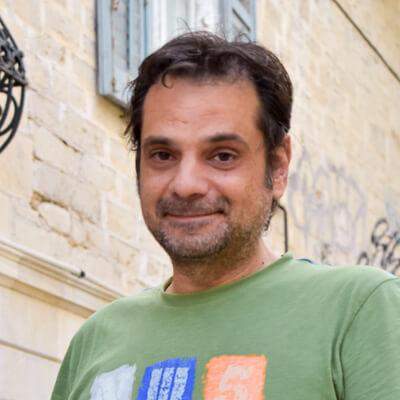
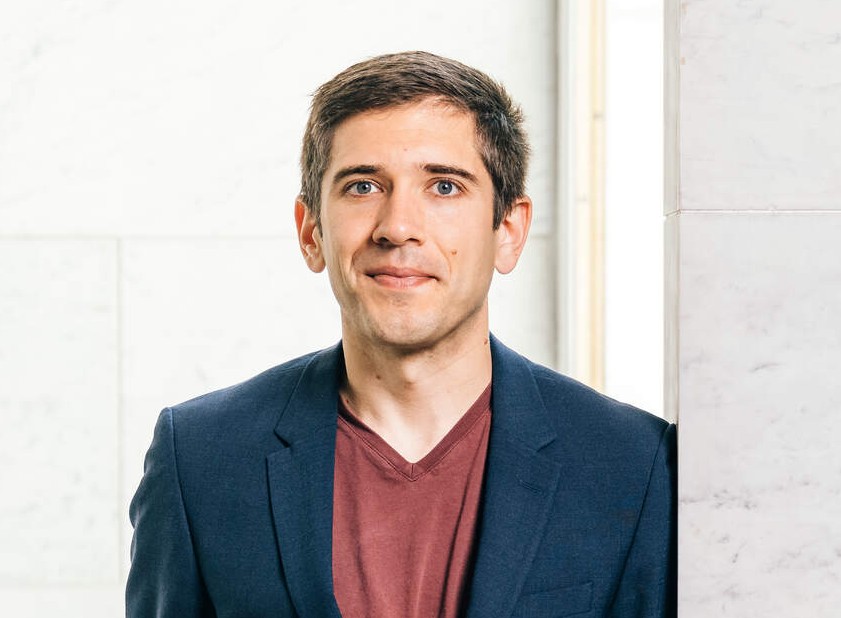
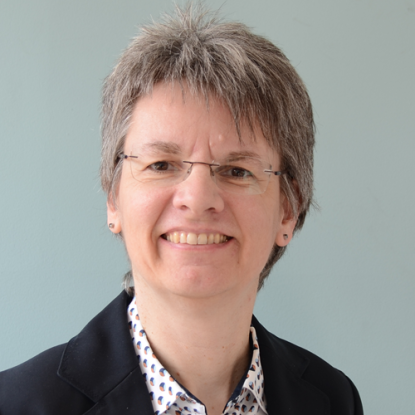
Xinyu Qin is a Professor at the Department of Electrical and Computer Engineering within the School of Information Engineering at Guangdong University of Technology. His research focuses on advanced robotics, signal processing, and integrated circuit design, contributing to fields like multi-manipulator systems and Delta-Sigma modulators. Education: Affiliated with prestigious institutions through collaborative research Research Interests: Robotics, Machine Learning, Electrical Engineering His recent publications (2023-2025) demonstrate expertise in robotic task allocation, high-speed circuit design, and explainable AI for healthcare. Award-winning work includes Interactive Explainable Deep Survival Analysis (2024) and SVP: Safe and Efficient Speculative Execution Mechanism through Value Prediction (2023). Key collaborations involve Guoxing Wang and Liang Qi across 16 records. Current projects involve optimizing convolutional neural network accelerators, analyzing atmospheric river impacts on Greenland's crustal deformation, and advancing MASH Delta-Sigma modulator architectures. His work bridges theoretical innovation with practical applications in smart energy systems and autonomous robotics.
Birthe Kåfjord Lange is an Associate Professor at the Department of Leadership and Organization, School of Communication, Leadership and Marketing, Kristiania University of Applied Sciences. Her primary teaching focus is on management disciplines, with extensive experience in executive education programs. She specializes in Change Management , Managerial Discretion , and Work-Integrated Learning , emphasizing the development of managers and organizational ambidexterity. Her research explores themes such as strategic adaptation during crises, digital transformation challenges, and the psychological dimensions of workplace change. Recent work includes studies on organizational ambidexterity in sports organizations and the role of mentorship in leadership development. Key publications span topics like uncertainty management in the 'New Normal', HR strategies for evolving work environments, and time management in Norwegian managerial roles. Her 2020-2025 works highlight a trend toward analyzing modern workplace dynamics and leadership challenges in hybrid/digital settings. Lange has no listed scientific awards but maintains active research output with 15+ publications since 2002. No grants or advising activities are explicitly mentioned in the provided data.
George Kousiouris is an Associate Professor at the Department of Informatics and Telematics , Harokopio University of Athens . He holds a Ph.D. in Cloud Computing from the National Technical University of Athens (2012) and a Dipl. Eng. in Electrical and Computer Engineering from the University of Patras (2005). His research focuses on Cloud Platforms , Serverless Computing (FaaS) , IoT Infrastructure , and Performance Engineering . He has led major EU-funded projects such as H2020 PHYSICS (lead architect), BigDataStack , and CloudPerfect , contributing to cloud service benchmarking, FaaS frameworks, and edge-cloud collaboration. His work emphasizes practical applications in healthcare, smart agriculture, and urban network analysis. Over 70 publications highlight his expertise in cloud resource optimization , service-level agreements , and data-driven infrastructure management . His recent work explores sustainable computing , human-AI collaboration , and conversational AI for MLOps . Key Projects: PHYSICS, BigDataStack, CloudPerfect, SLALOM, COSMOS Research Highlights: FaaS performance benchmarking, IoT event processing, hybrid-cloud workflows Awards/Grants: Multiple EU H2020 and FP7 project leadership roles He advises on cloud migration methodologies (e.g., ARTIST framework) and contributes to regulatory compliance frameworks like GDPR via semantic ontologies.
Vassilis Papakostopoulos is an Assistant Professor at the Department of Product and Systems Design Engineering, University of the Aegean, specializing in Ergonomics. His academic background includes a PhD in Cognitive Psychology (Panteion University, 2008), MSc in Ergonomics (Loughborough University, 1998), and BSc in Psychology (University of Crete, 1996). He has extensive research experience in driver behavior analysis, human-robot interaction, and workplace design. His research focuses on visual perception, motor coordination, and ergonomics applications in transportation systems. Key areas include advanced driver assistance systems (ADAS), human factors in autonomous vehicles, and safety in urban environments. He has contributed to major EU-funded projects such as interACT, ASK-IT, and PReVENT, addressing challenges in traffic safety and human-machine interaction. Teaching responsibilities include undergraduate and graduate courses on ergonomics, user-centered design, and product development. He has published over 20 peer-reviewed articles, emphasizing holistic approaches to driver behavior analysis and interdisciplinary ergonomics applications. As Greece’s representative in the Centre for Registration of European Ergonomists (CREE), he promotes professional standards in ergonomics practice. Recent research trends include autonomous vehicle interactions, motorcycle safety, and organizational policies affecting risky driving behaviors. His work bridges historical ergonomic principles (e.g., ancient Athenian court design) with modern challenges in smart city infrastructure and human-robot collaboration.
Gautam Srivastava is a Professor in the Department of Mathematics & Computer Science at Brandon University (BU), holding concurrent roles as Visiting Professor at Lebanese American University and Adjunct Associate Professor at Lakehead University. His research focuses on Blockchain Technology, Cryptography, Big Data, and Privacy-Preserving Systems. He actively supervises graduate students requiring strong academic credentials. Education: Ph.D. (Computer Science, University of Victoria, 2012), M.Sc. (Computer Science, University of Victoria, 2007), B.Sc. (Mathematics & Computer Science, Briar Cliff University, 2004) Roles: Holds visiting appointments at institutions in Lebanon, Taiwan, and China, and leads research in Cyber-Physical Systems and IoT Security. His research interests emphasize secure communication protocols, federated learning frameworks, and applications of AI in healthcare and industrial systems. Notable work includes blockchain-enhanced IoT security and privacy-preserving machine learning models. Awards: Best Oral Presentation at Fuzzy Systems and Data Mining (FSDM 2017) Grants: Over $200K in funding from NSERC, MITACS, and CIRA for projects on IoT security, federated learning, and edge computing. Dr. Srivastava’s current projects explore quantum-resistant MQTT protocols, federated learning for healthcare diagnostics, and smart city sensor systems.
Bruce Oddson serves as Associate Professor in Laurentian University's School of Kinesiology and Health Sciences, where his interdisciplinary research bridges health psychology, rehabilitation science, and educational kinesiology. His work demonstrates consistent collaboration across medical, psychological, and outdoor education domains with primary focus on practical health outcome measurement. His academic foundation includes: B.A. (Hons) from University of Waterloo M.A. from University of Guelph Ph.D. in Psychology from University of Toronto Dr. Oddson's research spans exceptionally diverse territories including child communication development (notably through the FOCUS assessment system), wilderness immersion pedagogy, cognitive load management, and cerebral palsy rehabilitation. His approach integrates psychological principles with physical activity contexts, emphasizing real-world applications for wellness improvement. The FOCUS tool development represents a significant thread through his work, evolving from initial conception to validated outcome measurement. Analysis of his publication history reveals growing specialization in communication assessment tools while maintaining parallel investigations into adventure education and cognitive performance. Recent work shows increased methodological sophistication in longitudinal tracking and outcome validation, particularly in pediatric rehabilitation contexts. His 2022 wilderness immersion study exemplifies the Northern Ontario-focused, experiential learning orientation characteristic of Laurentian-based research. No scientific awards were documented in the source materials. While collaborative patterns indicate extensive research partnerships, specific information regarding graduate student supervision or grant funding mechanisms was not provided in available documentation. Operational details about dedicated laboratories or research teams were not specified, though his physical location at the B.F. Avery Physical Education Centre suggests integration with campus recreation and kinesiology facilities.
Dominik Baumann is an Assistant Professor at the Department of Electrical Engineering and Automation at Aalto University in Espoo, Finland. His research focuses on the interplay of systems and control theory with machine learning and communication networks, with a current emphasis on causal inference in control systems. Education: Diploma in Electrical Engineering from TU Dresden, Germany (2016) PhD from KTH Stockholm, Sweden (2020), supervised by Sebastian Trimpe (Max Planck Institute) and Karl H. Johansson Postdoctoral positions at RWTH Aachen University (1 year) and Uppsala University with Thomas Schön (1 year) Dr. Baumann's research bridges theoretical foundations with practical applications in robotics, wireless networks, and decision-making systems. His work spans safe reinforcement learning, event-triggered control systems, causal inference in dynamical systems, and ergodicity economics perspectives on long-term decision-making. He applies mathematical rigor to address challenges in resource-constrained environments, particularly focusing on safety guarantees and computational efficiency for real-world implementation. His recent publication record demonstrates a strong trajectory in safe learning-based control, with increasing focus on ergodicity economics in reinforcement learning, multi-agent coordination, and human-robot interaction. The research consistently balances theoretical guarantees with practical implementation constraints, particularly in bandwidth-limited wireless control systems and robotics applications. Scientific Awards: Best Paper Award for 'Feedback control goes wireless: Guaranteed stability over low-power multi-hop networks' at ACM/IEEE International Conference on Cyber-Physical Systems (2019) Dr. Baumann maintains extensive international collaborations, evidenced by numerous seminar invitations worldwide including Oxford University, ETH Zürich, University College London, and institutions across Asia. His research program addresses fundamental challenges in cyber-physical systems with applications in industrial automation, robotics, and the Internet of Things, securing research funding for projects focused on safe learning in control systems and wireless cyber-physical systems. His research group at Aalto University develops both theoretical foundations of learning-based control and practical algorithms for real-world deployment, with active software repositories on GitHub related to predictive triggering, causal structure identification, and ergodic reinforcement learning.
Joe K. Kearney is a Professor in the Department of Computer Science at the University of Iowa and the University of Minnesota. His career spans over three decades, focusing on virtual reality, computer vision, and human-computer interaction research. Key affiliations: University of Iowa (Iowa City, IA, USA), University of Minnesota (Minneapolis, MN, USA) Research domains: Virtual environments, perception-action coupling, motion capture systems, pedestrian behavior simulation Research trends show sustained contributions to immersive visualization , autonomous navigation , and human factors in virtual reality . His 2014-2025 work explores AR-based pedestrian safety systems, while earlier studies (1986-2006) established foundational frameworks for virtual environment simulation and optical flow analysis. Long-term collaborations with Jodie M. Plumert (1986-2021), James F. Cremer (1986-2009), and Pooya Rahimian (2015-2017) demonstrate consistent team research in VR cognition and autonomous systems.
Prof. Anja Klein is a Professor in the Department of Electrical Engineering and Information Technology at Technische Universität Darmstadt. She leads the Communications Technology group, focusing on cutting-edge research in wireless communications, edge computing, and UAV-enabled systems. Her work emphasizes optimization techniques, machine learning applications, and energy-efficient network designs. Key areas of expertise include integrated sensing and communication (ISAC), multi-agent systems, and resilient digital infrastructure. Her research spans topics such as UAV-assisted communication networks, risk-aware optimization, and decentralized learning in mobile edge computing. Notable contributions include advancements in beamforming algorithms for UAV systems, age of information minimization, and sustainable resource allocation strategies. Prof. Klein collaborates extensively on projects like the MAKI initiative, exploring future wireless network transitions and protocol-independent architectures. Her publications highlight innovations in network resilience, such as Safehaul for mmWave self-backhauling and techniques for handling imperfect feedback channels in status update systems. She also investigates socio-technical challenges, including user preferences in data forwarding and incentive mechanisms for video streaming in multi-hop networks. Her work bridges theoretical foundations with practical applications in 5G/6G networks, IoT, and smart city technologies.
Dr. Eng. Wojciech Kmiecik is a researcher at the Department of Computer Systems and Networks, Faculty of Electronics, Photonics and Microsystems, Wrocław University of Science and Technology. He is actively involved in multiple research teams including Machine Learning, Computer Networks, Advanced Data Analysis Methods, and Metaheuristics. He also contributes to teaching and supervises diploma theses. His research focuses on optical networks , survivable multicasting , multi-criteria optimization , and metaheuristic algorithms . He has led and contributed to projects such as Dark-Box Optimization, evolutionary multi-criteria optimization, and advanced methods for multi-layer networks. His work bridges theoretical algorithm development with practical network design. The publication trends from 2010 to 2020 show a consistent focus on network survivability , elastic optical networks , and task allocation in parallel systems . His research integrates optimization techniques into networking solutions, particularly in dual homing architectures and deadline-sensitive provisioning. Key themes include resilience, efficiency, and scalability in both optical and computational systems. Scientific Awards: Medal for long-standing service to Wrocław University of Science and Technology Dr. Kmiecik has supervised diploma theses and is involved in teaching. He has not received externally reported grants, but his sustained project involvement suggests institutional or collaborative funding. He collaborates extensively with Prof. Krzysztof Walkowiak and other researchers in the department. Research Labs and Teams: Machine Learning Team Teaching Team Computer Networks Team Advanced Data Analysis Methods Team Metaheuristics Team
Bernd Meyer is a Professor and Assoc. Dean for Sustainability at Monash University's Faculty of Information Technology. His research spans collective behavior in biological systems, swarm robotics, edge computing, and intelligent diagrammatic systems. He has contributed extensively to understanding task allocation in social insects, noise-driven decision-making in collective systems, and the application of machine learning in resource-constrained environments. Key research themes include: Swarm Intelligence and Ant Colony Optimization Machine Learning for Environmental Sound Classification Self-Organized Infrastructure in Social Insects Adaptive Diagramming Tools for Education Recent work focuses on deep learning pipelines for edge devices and developing frameworks for multi-object tracking in biological systems. His contributions bridge computational models with real-world applications in robotics, sustainability, and educational technology.
Aviral Kumar is an Assistant Professor in the School of Computer Science at Carnegie Mellon University (CMU), jointly appointed in the Computer Science Department (CSD) and Machine Learning Department (MLD). He earned his PhD from UC Berkeley in 2023, where he received prestigious awards including the CV Ramamoorthy Distinguished Research Award, Apple PhD Fellowship, and Facebook PhD Fellowship. His research focuses on reinforcement learning (RL), particularly offline RL, scaling RL methods, and their intersection with foundation models. He leads the CMU AI & Reinforcement Learning (AIRe) lab, exploring core RL algorithms, robotics applications, and AI foundation models. Education: PhD in Computer Science from UC Berkeley (2023) Research Interests: Reinforcement Learning Offline Reinforcement Learning Robotics Foundation Models His lab emphasizes scalable RL techniques and real-world applications. Current advisees include Bhavya Kumar Agrawalla and Max Sobol Mark. Notable awards include the CV Ramamoorthy Distinguished Research Award for pioneering contributions to CS research. Lab activities and future work focus on advancing RL for autonomous systems and integrating foundation models into decision-making frameworks. The lab recruits PhD students annually from CMU SCS programs (CS, ML, RI). Undergraduates and MS students can apply via a dedicated form for research opportunities.
Shermin Sherkat is a doctoral researcher and research associate at the Institute for Computational Design and Construction (ICD) within the Cluster of Excellence IntCDC at the University of Stuttgart. Holding a Master of Science in Digital Technology in Architecture from the University of Tehran, her work focuses on integrating computational design with artificial intelligence applications in construction and fabrication. Her research explores classical Automated Task Planning (ATP) techniques using Planning Domain Definition Language (PDDL) to optimize robotic assembly processes. Current projects involve modeling fabrication domains for pick-and-place operations with multiple end-effectors, addressing challenges in 3D geometry representation and multi-object stacking limitations within classical planning frameworks. Recent publications examine the application of symbolic AI in construction automation, including systematic reviews of ATP methods and case studies on the BUGA Wood Pavilion's cassette fabrication. She contributes to advancing AI-driven task planning while identifying constraints in numerical tracking and geometric grouping within deterministic environments.
Jörg Denzinger is a Professor at the University of Calgary, Canada, specializing in artificial intelligence, multi-agent systems, and automated testing. His work bridges evolutionary computation, cybersecurity, and game-based simulations, with a focus on emergent behavior and cooperative strategies. Key Research Areas: Multi-Agent Systems, Evolutionary Algorithms, Automated Theorem Proving, Game AI, Data Mining, Cybersecurity, Distributed Systems. Recent Trends: He has concentrated on applying exploratory evolutionary testing to security policy optimization, using deep learning for medical imaging, and modeling emergent coordination in self-organizing systems. Scientific Contributions: Developed frameworks for combining security mechanisms and testing multi-agent systems. Explored decentralized control in water distribution networks and adaptive risk management. Contributed to code reuse tools like Jigsaw and structural correspondence analysis.
Jaroslav Klapalek is a PreDoc Researcher in the Cyber-Physical Systems department at Vienna University of Technology (TU Wien). His work focuses on formal verification of distributed timed-automata, resilient control mechanisms, and timing anomalies in automotive architectures. He is affiliated with the Embedded Systems Group (E191-01) and has contributed to research on machine learning for industrial predictive maintenance, consensus algorithms, and energy-efficient scheduling. Research Trends: Recent publications highlight expertise in formal verification of real-time constraints, security analysis in industrial CPS, and timing predictability under clock drift and network delays. Key methods include model checking, hybrid system modeling, and safety-critical protocol validation. Scientific Awards: