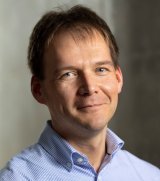
Dr. Michael Boyd is a prominent archaeologist affiliated with the Department of Archaeology at the University of Cambridge and serves as an Honorary Research Associate at the McDonald Institute for Archaeological Research and a Senior Research Affiliate at The Cyprus Institute . His work centers on the prehistoric Aegean, with expertise in material culture, mortuary studies, ritual practices, and landscape archaeology. Research Interests : Boyd's scholarship interrogates the theoretical and methodological foundations of archaeology, emphasizing the dynamic interplay between landscapes, tombs, and human agency. His studies span Early Bronze Age Cycladic cultures, environmental archaeology, and the emergence of ritualized spaces in the Aegean. Publications : Boyd has co-directed the Keros Seaways Project and authored seminal works on Aegean ritual deposits, including the Keros Sanctuary volumes (2016–2018) and Staging Death (2016). His 2021 edited volume Far from Equilibrium critiques contemporary archaeological theory and advocates for reorienting the discipline. Methodological Contributions : He pioneers interdisciplinary and geo-ethnoarchaeological approaches, integrating soil micromorphology and phytolith analysis to reconstruct degradable architectural elements in the Cyclades.
Susan Holmes is Professor at the School of Media, Language and Communication Studies at the University of East Anglia (UEA), where she joined as Reader in Television in 2007 and was appointed to Professor in 2018. She is an active member of several research groups including Media Equality, Film, Television and Media, Gender and Its Intersections Steering Committee, and HealthUEA. Her work spans television studies, celebrity culture, and feminist approaches to eating disorders. Professor Holmes received her academic training at the University of Sussex (BA in English and Media Studies), followed by an MA in Film from the University of Southampton, and completed her PhD on British film and television in the 1950s at the same institution. Prior to joining UEA, she taught Media and Cultural Studies at the Southampton Institute (now Southampton Solent University) and television and film at the University of Kent. Her research focuses on several interconnected areas that challenge traditional disciplinary boundaries. In television studies, she has made significant contributions to understanding British television history, particularly through her books 'British TV and Film in the 1950s' and 'Entertaining TV: the BBC and Popular Programme Culture in the 1950s,' where she challenges canonical ideas about early BBC television. Her work on reality TV examines historical development, generic labeling, and celebrity. Since 2014, she has conducted important empirical research on feminist approaches to eating disorders, analyzing media representations and working directly with people with lived experience. A key focus of this research examines how feminist approaches are neglected in contemporary eating disorder treatment, with implications for both clinical practice and cultural understanding. She co-founded the influential Celebrity Studies journal in 2010 and edited it for the first eight years of its publication. Analysis of Professor Holmes' recent publications reveals a clear trajectory where her expertise in media and television studies converges with her feminist scholarship on eating disorders. Her most recent work (2023-2025) increasingly focuses on cross-cultural applications of feminist approaches to eating disorders (including work in China), the use of innovative methodologies like Photovoice, and examinations of therapeutic alliance in treatment settings. Simultaneously, she continues to analyze contemporary media representations, particularly focusing on motherhood, true crime television, and reality TV through feminist lenses. This dual focus demonstrates how media representations shape cultural understandings of both celebrity and health conditions. Professor Holmes' significant contributions to academia have been recognized with several prestigious awards: Senior Fellowship from Advance HE (2024) UEA engagement award (2017) ALPSP award nomination for Celebrity Studies as best new journal (2011) She currently runs the Feminist Media Studies research cluster at UEA and is actively supervising postgraduate research in areas including popular television, television/film history, British TV history, stardom/celebrity, and feminist approaches to eating disorders. Her current major research project is the 'ALLIANCE study' (2024-2026), funded by the National Institute for Health and Care Research, which aims to develop practice and policy recommendations to support effective therapeutic alliance in inpatient treatment for eating disorders. This builds on her earlier British Academy-funded research on 'Entertaining Television: British TV, the BBC and Popular Programme Culture in the 1950s' (2007-2008). Professor Holmes plays a significant role in the academic community through her editorial work, serving on the boards of journals including Archives of Psychology, Big Data & Society, and Critical Studies in Television, and previously as co-founder and editor of Celebrity Studies. She has also been active in media engagement, contributing expert commentary on topics ranging from Netflix's portrayal of eating disorders to Celebrity Big Brother.
Daniel J. Field is Professor of Vertebrate Palaeontology in the Department of Earth Sciences and the Strickland Curator of Ornithology at the University of Cambridge Museum of Zoology. He is a Fellow of Christ's College, Cambridge, where Charles Darwin studied as an undergraduate, and serves as the founding director of the Darwin-Hamied Centre at Christ's College. Field also maintains research associate positions at the Denver Museum of Nature and Science and the Natural History Museum (London). Field is an evolutionary biologist and palaeontologist whose research focuses on deciphering the origins of modern avian biodiversity using fossil, anatomical, and molecular data. His work spans multiple themes including clarifying how birds survived and diversified following the mass extinction of non-avian dinosaurs, studying the evolutionary histories of major living bird groups, and understanding the evolutionary origins of distinctive biological features such as the modern bird skull. In 2020, his team announced the discovery of Asteriornis maastrichtensis (the 'Wonderchicken'), the oldest-known modern bird fossil and an early relative of the group that gave rise to living chickens and ducks. Field's publication record shows consistent research output across multiple areas of avian evolution, with recent work focusing on avian palate evolution, skeletal pneumaticity, developmental patterns in bird skulls, and the evolutionary relationships among major bird groups. His research integrates cutting-edge techniques including CT scanning, geometric morphometrics, and phylogenetic analysis to address fundamental questions about vertebrate evolution. Field leads an active research group comprising postdoctoral researchers, PhD students, and master's students from around the world. His lab has produced significant work on topics including the evolution of flightlessness in ratites, the developmental underpinnings of avian morphological diversity, and the phylogenetic relationships among major bird lineages. The lab maintains strong international collaborations and has been instrumental in training the next generation of evolutionary biologists and palaeontologists. Field is passionate about natural history and science outreach, and enjoys photographing Earth's vertebrate biodiversity in the field. His work bridges the gap between traditional palaeontology and modern evolutionary biology, contributing significantly to our understanding of how modern bird diversity arose from their dinosaurian ancestors.
Alex Liu is a Researcher at the Department of Earth Sciences within the University of Cambridge. He specializes in palaeobiology , focusing on the origin and early evolution of animals, particularly the Ediacaran biota (~579–539 million years ago), and their co-evolution with Earth's environment. Research Focus: Refines understanding of animal body plan evolution, taphonomy, sedimentology, and macroevolutionary trends. Methodologies: Combines fieldwork, experimental studies, petrology, phylogenetics, and big-data analyses. Collaborations: Works with international museums and research teams on fossil sites in Namibia, Canada, and Brazil. Additional Interests: Explores meiofaunal evolution, paleogeography, paleoclimate, and conservation paleobiology. He supervises Cambridge NERC Doctoral Landscape Awards (DLA) projects and welcomes student contributions to taxonomic, paleoecological, and analytical studies.
Dr. Keyron Hickman-Lewis is a Lecturer in Planetary Exploration at Birkbeck, University of London, with academic positions spanning institutions like the Natural History Museum and Imperial College London. He holds a M.EarthSci from the University of Oxford (2015) and a Ph.D. in Earth Sciences from CNRS Orléans and Università di Bologna (2019). His research focuses on the co-evolution of Earth and early life, planetary exploration (including Mars 2020 Perseverance rover missions), and technique development for analyzing ancient microbial biosignatures. Key interests include microbial mats, Archaean geology, and astrobiological field analogs like Lake Abhe (Djibouti) and Martian environments. Notable achievements include identifying Earth's oldest microbial traces (3.5 Ga) and studying Mars sample return strategies. He is a Fellow of the Geological Society (FGS) and serves on the European Astrobiology Network Association Council. Teaching includes modules on planetary science, geology, and remote sensing. Supervision focuses on astrobiology and planetary exploration topics. Key publications highlight breakthroughs in microbial mat preservation, Mars sample analysis, and Early Archaean stromatolite interpretation. Collaborations span international institutions including NASA, CNRS, and the University of Bologna.
Dr. Victoria Herridge is a Senior Lecturer at the University of Sheffield's School of Biosciences, specializing in evolutionary biology and paleontology. Her research focuses on Ice Age mammals, particularly elephants, and explores evolutionary and environmental changes through fossil records. She co-founded TrowelBlazers, advocating for gender equity in STEM, and co-edits the Open Quaternary journal. Herridge is also a prominent science communicator, appearing in BBC, National Geographic, and Channel 4 documentaries. Her work includes field expeditions to Siberia and the Mediterranean, studying dwarf elephants and mammoths, and she investigates climate impacts on ecosystems. She holds a Daphne Jackson Research Fellowship and has collaborated with institutions like the Natural History Museum and the University of Cyprus. Teaching roles include directing the MSc Science Communication program and coordinating courses on science communication skills. Professional Activities: Co-founder of TrowelBlazers; Editor-in-Chief of Open Quaternary; TV/podcast appearances on BBC Radio 4, National Geographic, and Channel 4 (e.g., Walking Through Time , Bone Detectives ). Research Interests: Evolutionary mechanisms of dwarfism in island elephants, Quaternary paleoclimatology, and the interplay between climate change and biodiversity. Fieldwork includes sites in Scotland (Torridonian Sandstones), Siberia (permafrost fauna), and Mediterranean islands (dwarf elephant fossils). Grants & Awards: Daphne Jackson Research Fellowship (2014–2016), Leverhulme Trust funding, NERC grants. Collaborations span institutions in the UK, Greece, Italy, and Cyprus. Labs/Teams: Leads interdisciplinary projects on mammoth-steppe ecosystems and insular dwarfism. Engages with public archaeology through CITiZAN and SCHARP initiatives.
Brian Pickles is an active academic researcher affiliated with the University of Reading, School of Biological Sciences, where he contributes to research in ecology, mycorrhizal symbioses, and environmental conservation. His work spans forest ecology, urban biodiversity, paleontology, and forensic science, reflecting a highly interdisciplinary approach to ecological challenges. University: University of Reading School: School of Biological Sciences Department: Department of Ecology and Evolutionary Biology Academic Rank: Senior Lecturer His research focuses on mycorrhizal fungi and their role in plant-soil interactions, forest resilience under climate change, and biodiversity conservation. He investigates how ectomycorrhizal networks influence tree communities, how urban trees affect microclimates, and how decomposition processes alter soil ecosystems. His work integrates field experiments, molecular ecology, and remote sensing techniques. Recent publications show a strong trend in applying ecological theory to practical conservation, including reptile habitat management, invasive species policy, and urban green space planning. His studies often employ robust experimental designs such as before-after control-impact (BACI) and leverage large collaborative networks. Brian Pickles has co-authored numerous high-impact papers in journals like New Phytologist , Proceedings of the Royal Society B , and Frontiers in Forests and Global Change . His work on ectomycorrhizal networks, forest carbon dynamics, and urban tree radiative performance demonstrates both theoretical depth and applied relevance. He has also contributed book chapters on mycorrhizal mediation of soil processes and spatial ecology of fungal communities. Brian Pickles collaborates extensively with researchers across the UK, Canada, and globally. Notable collaborators include Suzanne Simard, Melanie D. Hart, Ian C. Anderson, and Miranda M. Hart. These collaborations span topics from fungal community assembly to inter-plant communication via mycorrhizal networks. No formal scientific awards or prizes are mentioned in the provided text. However, his consistent publication record in top-tier journals suggests recognition within the ecological research community. Brian Pickles contributes to research grants and collaborative projects focused on forest resilience, urban ecology, and soil biodiversity, though specific grant titles or funding bodies are not listed. His leadership in experimental design and data interpretation indicates an active role in securing and managing research funding. He is involved in several research teams and labs, particularly those focused on mycorrhizal ecology and forest dynamics. His work with the Simard Lab (University of British Columbia) and collaborations with UK-based environmental monitoring groups highlight his integration into major ecological research networks. He also contributes to urban ecology initiatives using remote sensing and ground-based validation.
Eileen Murphy is a Professor in the School of Natural and Built Environment at Queen's University Belfast, where she is a leading figure in bioarchaeology and community archaeology. She is actively involved in research, teaching, and public engagement, with a focus on human remains, burial practices, and the archaeology of childhood and the Irish diaspora. She is Co-Director of the Centre for Community Archaeology and Chair of the University's Scholarships and Awards Group. Education: PhD in Archaeology (specific institution and year not provided in text) Additional degrees inferred through academic rank and research output, though not explicitly stated Her research interests center on bioarchaeology , particularly the biocultural analysis of Irish and Eurasian populations, deviant and minority burial practices, children's burial grounds (cillini), and the archaeology of childhood and the Irish diaspora. She is deeply committed to community archaeology , exemplified by her leadership in the Community Archaeology Programme Northern Ireland (CAPNI). Her work bridges scientific analysis and public engagement, contributing to sustainable development goals related to inclusive heritage and education. The 15 most recent publications reflect a consistent trajectory in osteoarchaeology , palaeopathology , and ethical archaeology , with increasing interdisciplinary work in medical geology and biomechanics. Themes include disability in the past, environmental health impacts, and the social dimensions of burial. Her outputs span scholarly journals, books, and public-facing media, demonstrating a strong commitment to knowledge dissemination. Scientific Awards and Recognitions: QUB Staff Excellence Award for Community Impact (2020) British Archaeological Award for Best Scholarly Book (2008) County Heritage Award (2021) Listowel Writer’s Week Nilsson Local Heritage Writing Award (2023) QUB Students' Union Most Involved Teaching Staff Member (2017) Fellow of the Society of Antiquaries of London Vice-President, Ulster Archaeological Society Chair, EAA Belfast 2023 Scientific Committee Elected Member, Royal Irish Academy (2025) Eileen Murphy has supervised numerous PhD students, both currently and in the past, covering diverse topics from Neolithic mortuary rites to medical geology. She has secured significant research output and public engagement through projects like the Ballyhanna and Ranelagh excavations. Her administrative roles include co-directing research centers and leading university committees, reflecting her leadership in both research and institutional service. She is actively involved in public outreach, including podcasts, media interviews, and science festivals, particularly through CAPNI. Her work with the Belfast Mummy (Takabuti) and the Forgotten Cemetery project highlights her ability to connect academic research with public interest. She leads major collaborative efforts across Ireland and internationally, fostering networks in archaeological research and education.
Jessica Hendy is a Senior Lecturer in Palaeoproteomics at the University of York's Department of Archaeology. Specializing in ancient protein analysis, she explores culinary practices, diets, and disease in prehistoric societies, with a focus on biomolecular methodologies. University of York (2019–present) Max Planck Institute for the Science of Human History (2016–2019) University of York (PhD, 2015) University of Auckland (BA, BSc, 2010) Her research integrates palaeoproteomics and ZooMS to investigate: Dietary biomarkers in archaeological contexts Origins of fermentation and dairying Protein preservation in dental calculus and ceramics Human-animal interactions through biomolecular data Recent publications highlight her work on: Beerstone proteomes for brewing history Multi-taxa dairy identification Viking Age organic artifacts Neolithic food globalization Diagenesis patterns in ancient proteins Salmon fishing and pottery adoption Her scientific awards include: Philip Leverhulme Prize (2019) General Anthropology Division Prize (2023) Max Planck Society Donors Award (2016) Humanities Research Centre Doctoral Fellowship (2015) As a supervisor, Jessica mentors PhD candidates like Charlotte Blacka (rapid proteomics), Eleanor Green (biomolecule substrates), and Jan Dekker (Mesolithic container technology). She co-supervises external students at Cambridge and British Columbia. She leads initiatives such as the BioArCh research group and directs postgraduate research (2021–2022). Currently on a 2023–2024 sabbatical , her work remains pivotal in biomolecular archaeology.
Professor Graham Williams (BSc, MSc, PhD, SFHEA, FCSFS, FRSB) is a Professor of Forensic Science and Programme Director for Forensic Science at the University of Hull since May 2022. Previously served as Head of Department at Staffordshire University (2017-2019) and held academic roles at University of Huddersfield (2007-2017). Key affiliations include Centre for Biomedicine and Chartered Society of Forensic Sciences . Core Research Areas : Forensic Epigenetics, Body Fluid Identification, Bloodstain Pattern Analysis, AI in Forensic Science, Space Forensics Scientific Awards : Fellow of the Royal Society of Biology (2014) Senior Fellow of Advance HE (2017) Fellow of Chartered Society of Forensic Sciences (2018) UKCGE Recognised Research Supervisor (2021) Teaching Leadership : Directs BSc Forensic Science programs and teaches Crime Scene to Court Room modules. Supervises 8 PhD projects exploring: AI-based bloodstain analysis Forensic strategies for sexual assault cases DNA on counterfeit banknotes Microgravity bloodstain dynamics Epigenetic hearing loss research
Prof Paul Upchurch is a Professor of Palaeobiology at University College London's Department of Earth Sciences. His research focuses on vertebrate systematics and evolution, particularly dinosaurs (including sauropods, pterosaurs, and theropods), Mesozoic ecosystems, and biogeographic patterns. He teaches courses such as GEOL009 Vertebrate Palaeontology and Evolution and GEOL0021 Biodiversity and Macroevolutionary Patterns. His work integrates phylogenetic methods with analyses of fossil record quality to address macroevolutionary questions, including dinosaur origins, Cretaceous-Paleogene biotic turnovers, and latitudinal biodiversity gradients. Key contributions involve revising sauropod diversity in the Hateg Island, exploring Osedax interactions with marine reptiles, and evaluating sampling biases in ceratopsid phylogenies. Prof Upchurch collaborates extensively on global sauropod studies, with recent projects in Romania, China, and Australia. He leads the Vertebrate Palaeontology research group at UCL and actively publishes in high-impact journals like Nature and Palaeontology . His research emphasizes interdisciplinary approaches, combining morphological analysis with computational biogeography models to reconstruct ancient ecosystems. Ongoing projects address sauropod feeding adaptations and the impact of environmental changes on Mesozoic vertebrate diversity.
Daniel Field is a vertebrate paleontologist and evolutionary biologist affiliated with both the Department of Earth Sciences and Department of Zoology at the University of Cambridge. He oversees the University of Cambridge Museum of Zoology’s extensive ornithology collections and the Cambridge Biotomography Centre , a high-resolution microCT scanning facility. His research focuses on macroevolutionary transitions in birds and other vertebrates, particularly their survival and diversification after the Cretaceous-Paleogene (K-Pg) mass extinction. Key Research Areas: Avian biodiversity origins Evolutionary morphology Phylogenetic and divergence time analysis Developmental mechanisms of flightlessness Mass extinction impacts on vertebrates His lab employs digital morphology, geometric morphometrics, phylogenetics, and embryology. He collaborates with institutions like Yale University and the Milner Centre for Evolution at the University of Bath. Field’s work bridges fossil data with molecular and anatomical studies to resolve evolutionary mysteries.
Dr Jon Radley is an Honorary Research Fellow at the University of Birmingham's School of Geography, Earth and Environmental Sciences. His career spans 30 years in museum geology and natural science, focusing on public science interpretation, collecting philosophies, and geoconservation. He holds multiple advanced degrees including a PhD from the University of Portsmouth. Education: BSc (Oxford Polytechnic) MSc (University of Keele) MSc (University College London) PgDip (University of Leicester) PhD (University of Portsmouth) His research interests center on Jurassic and Cretaceous stratigraphy, particularly the Lower/Middle Jurassic of central England and non-marine Lower Cretaceous strata of southern England. He also explores Early-Mid Triassic paleoenvironmental reconstruction. Recent publications focus on dinosaur taxonomy, Jurassic bioerosion processes, and Mesozoic marine ecosystems. His work bridges academic research with public engagement through museum collaborations. Publications highlight contributions to theropod dinosaur studies, trace fossil analysis, and regional geological histories. Though no awards are explicitly mentioned, his extensive publication record reflects sustained scholarly contribution. His research aligns with the School's Earth Science research themes, contributing to undergraduate teaching and public outreach initiatives. As an honorary fellow, he collaborates with museum networks and maintains active fieldwork in key UK geological sites.
Dr. Christopher James Rogers is a Senior Lecturer in Forensic Science at the University of Wolverhampton, affiliated with the Faculty of Science and Engineering and the School of Biology, Chemistry and Forensic Science. He holds a PhD in Forensic Biology and specializes in forensic taphonomy, entomology, and arachnology. Education: B.Sc. (Hons.) in Forensic Science M.Sc. in Forensic and Biological Anthropology Ph.D. in Forensic Biology (Forensic Taphonomy) Postgraduate Certificate in Entomology Postgraduate Certificate in Higher Education and Professional Practice His research focuses on the decomposition of biological tissues, particularly cartilage and bone in burial environments, and extends into forensic entomology and the behavior of medically significant arachnids. He has developed novel methods for estimating the postmortem interval and has contributed to wildlife forensics, especially in fingerprint detection on non-traditional surfaces. His publications from 2011 to 2019 reflect a strong interdisciplinary focus bridging forensic science, zoology, and pathology. Key themes include decomposition analysis, arachnid behavior, and forensic methodology development. His work often employs porcine models to simulate human decomposition, and he has explored legal and practical aspects of keeping dangerous arachnids in captivity. Scientific Awards and Memberships: Fellow, Higher Education Academy Member, European Association of Forensic Entomology Member, Royal Entomological Society Member, British Tarantula Society Christopher has advised on forensic science content for media, including BBC interviews and television documentaries, and collaborates with authors to ensure scientific accuracy. He previously served as a Lecturer at Glyndwr University, a Visiting Fellow in Poland, a Histologist in the NHS, and a Physical Anthropologist at the Natural History Museum in London. He has not publicly listed any doctoral or master’s students. He is actively involved in professional networks and public engagement, particularly in promoting forensic science through media and education. His lab and research team focus on decomposition studies and arthropod-based forensic methods, though specific team members are not listed.
Royal Holloway, University of LondonUnited Kingdom
Simon Armitage is a Professor in Quaternary Science at the Department of Geography, Royal Holloway, University of London. He leads the SFF Centre for Early Sapiens Behaviour (SapienCE) at the University of Bergen, Norway. His research focuses on applying Optically Stimulated Luminescence (OSL) dating to investigate climate-human interactions in Africa and the Arabian Peninsula during the Late Quaternary. Key projects include studies in Libya, Nigeria, South Africa, and the UAE, examining migration routes and environmental impacts on early human populations. Armitage holds a BA from the University of Oxford and a PhD from Aberystwyth University. He has supervised multiple PhD students and led projects funded by NERC, ERC, and the Leverhulme Trust. Education: PhD in Geography: University of Wales Aberystwyth (2006) BA in Geography: University of Oxford Research Interests: Climate change impacts on dryland populations, OSL dating methodology advancements, and the environmental context of human migration out of Africa. Recent work includes analyzing trans-Saharan migration routes and dating AMH occupation in Arabia. Projects & Grants: Principal Investigator: SapienCE (Norwegian Research Council, 2017–2027) TRACSYMBOLS Project (European Research Council, 2010–2015) NERC-funded postdoctoral research (Oxford, 2002–2006) Lab & Teams: Active in the Centre for Quaternary Research at Royal Holloway and collaborates internationally on archaeological dating and environmental reconstruction projects.