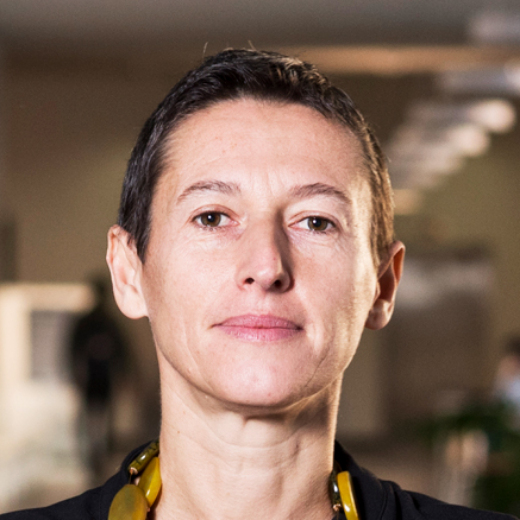
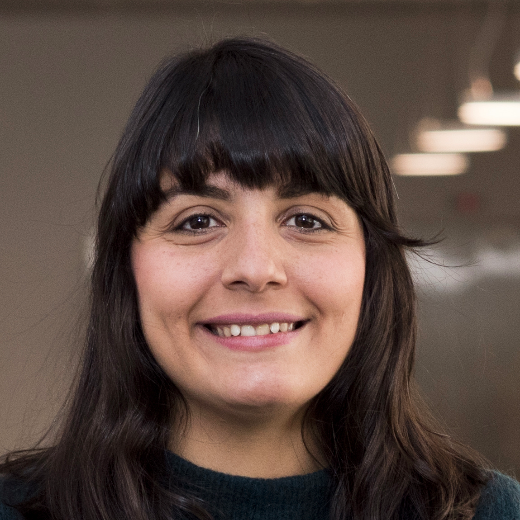
Alexander Müller-Rakow is a Researcher and PhD Candidate at the Design Research Lab at Berlin University of the Arts. His work explores the interplay between embodied interfaces , digital sovereignty , and social design , focusing on bodily movements as a medium for musical and interactive technologies. Education: Industrial and Interaction Design (University of Applied Science Magdeburg, University of Bergen) Current Roles: Research Scientist (Design Research Lab), Lecturer (Hochschule für Kunste Bremen, others) His research spans haptic technology , textile-integrated sensors , and experimental interfaces , often intersecting with digital justice and material interactions . Early-career publications include collaborations on capacitive sensing and urban design interventions , reflecting his interdisciplinary approach. As part of the Design Research Lab, he contributes to projects addressing inclusive digital futures , smart urban mobility , and collaborative tools , aligning with the lab's mission for ecologically sustainable design .
Jon McCormack is a Professor jointly appointed in Monash University's Faculty of Art, Design & Architecture (MADA) and Faculty of Information Technology. He founded and directs SensiLab, a research facility focusing on computational creativity, human-machine interfaces, and generative systems. His work spans electronic media art, evolutionary music, and artificial life. McCormack holds a PhD in Computer Science from Monash University, along with degrees in Computer Science, Applied Mathematics, and Film/Television. Research interests include computational creativity, tangible interfaces, and cybernetic systems. Notable projects include 'Explainable Artificial Creativity' (ARC-funded) and 'Building 4.0 CRC,' addressing architectural innovation through AI. He has been recognized with awards for collaborative projects like the Blundstone Intelligent Footwear for Healthcare. McCormack's recent articles explore AI-driven art, generative systems, and interdisciplinary design. His work bridges artistic practice with technical innovation, emphasizing ethical and creative dimensions of human-AI collaboration. SensiLab serves as a hub for practice-based research in digital media and interactive systems. Education: PhD in Computer Science, Monash University (2004) Bachelor of Science (Honours), Computer Science/Applied Mathematics, Monash University (1987) Graduate Diploma in Film/TV, Swinburne University (1986) Bachelor of Science, Computer Science/Applied Mathematics, Monash University (1985) Key Projects: Lead investigator on 'Explainable Artificial Creativity' (2022–2026) Co-investigator in 'Building 4.0 CRC' (2020–2027), exploring AI-driven architectural design Awards: 2022 Designers Australia Award for Blundstone Footwear 2020 'On the Machine Condition' Prize McCormack's lab, SensiLab, fosters collaborations across disciplines, producing exhibitions, software, and theoretical frameworks for computational creativity. He actively supervises PhD students in practice-based research, emphasizing the intersection of art and technology.
Rosella Gennari is an Associate Professor in Computer Science at the Faculty of Engineering, Free University of Bozen-Bolzano, where she conducts research and teaches in Human-Computer Interaction (HCI). Her work is centered on designing interactive technologies for children, focusing on physical-digital (phygital) artefacts, Technology-Enhanced Learning (TEL), and inclusive design. She leads the Research Unit Human-Centred Intelligent Systems and is actively involved in institutional leadership, including serving on the Third-Mission Board. Ph.D. : Computer Science, Amsterdam University (2002) Postdoctoral Experience : CWI, Amsterdam (ERCIM Alain Bensoussan Fellow); FBK-irst, Trento Leadership : Scientific & Technological Coordinator of the FP7-EU TERENCE project Her research explores how children interact with and design smart technologies, including IoT and AI, through playful and tangible interfaces. She investigates socio-emotional learning, digital well-being, and responsible design, often employing participatory and action research methods. Her work bridges computer science, education, and social impact, aiming to empower young learners as co-creators of technology. The analysis of her recent publications reveals a strong trend in developing and evaluating toolkits and frameworks for children and pre-teens to engage in designing smart things, IoT systems, and sustainable cities. Her work consistently emphasizes inclusivity, reflection, and responsible design, often in collaboration with teachers and learners. The publications span top HCI venues and journals, demonstrating a focus on practical applications in educational settings and the impact of technology on young users. Scientific Awards and Recognition ERCIM Alain Bensoussan Fellowship for talented young researchers Editorial Board Member, Journal of Child Computer Interaction (Elsevier, Q1) Regular reviewer for top HCI conferences and journals Advising and Grants : While specific advisees are not listed, her leadership role in the FP7-EU TERENCE project and numerous other research initiatives indicates extensive experience in securing and managing competitive grants. She mentors students through her research group and teaching, fostering the next generation of HCI researchers. Her collaborative network is extensive, with frequent co-authorship with researchers such as Alessandra Melonio, Maristella Matera, and Mehdi Rizvi. Labs and Teams : She leads the Human-Centred Intelligent Systems research unit, which serves as her primary lab and team. This group focuses on placing humans at the center of computer science and information engineering research. She is also a core member of the organizing committee for the MIS4TEL international conference series, highlighting her role in building and sustaining a global research community in Technology-Enhanced Learning.
Secil Ugur Yavuz is a Professor at the Faculty of Design and Arts, Department of Design, at Free University of Bozen-Bolzano. Her academic work spans eco-social design, research through design, and tangible human-technology interactions, with a particular focus on sustainable materials and collective making practices. She teaches courses including Design 3 for the Master in Eco-social Design and doctoral programs in Experimental Research through Design, Art and Technologies. Professor Yavuz's research explores the intersection of analog and digital through tangible human-technology interactions, with significant contributions to sustainable material systems. Her FERAL WOOL project investigates ecological and cultural dimensions of wool, while her work with biomaterials like microbial cellulose and open-source bioreactors addresses circular production systems. She employs embodied and speculative approaches to examine microplastic emissions, children's nature engagement through tools like TREESENSE, and social play with interactive toys. Her recent publications reveal a strong thematic focus on material culture, sustainability, and human-centered design across multiple scales. The research demonstrates consistent exploration of how digital and physical realms interact to create meaningful user experiences while addressing ecological challenges. Key trends include the use of embodied interaction methods, speculative design for cultural critique, and co-creative processes that bridge technological innovation with social and environmental responsibility. Yavuz leads the Design Friction Lab, which investigates the philosophical foundations of design through customizable interfaces and DIY approaches. Her work with doctoral students in Experimental Research through Design emphasizes reshaping technologies through collective making processes. The FERAL WOOL research project represents a significant current initiative exploring sustainable textile futures through both ecological and cultural lenses.
Christopher G. Healey is the Goodnight Distinguished Professor of Analytics in the Institute for Advanced Analytics and a Professor in the Department of Computer Science at North Carolina State University. His research spans visualization, data analytics, text analytics, sentiment analysis, machine learning, cognitive psychology, computer graphics, and social media analytics. He has graduated 15 Ph.D. and 26 master's students and secured over $6 million in research funding from agencies including the National Science Foundation, Department of Defense, National Security Agency, Army Research Office, and various industry partners. He has published over 100 peer-reviewed articles and is a senior member of both IEEE and ACM, as well as a member of the NC State Academy of Outstanding Teachers. His research focuses on developing visualization techniques that leverage visual perception to support rapid, accurate, and effective analysis of large, complex datasets. More recently, he has been investigating machine learning for natural language processing and text analytics. His work includes projects on visualizing election results, sentiment estimation for social media, and wildfire narratives using large-scale social media data. His publications demonstrate a strong trend toward integrating machine learning with visualization, particularly for text analytics and social media analysis. He has made significant contributions to visualizing deep neural networks, cyber situation awareness, and pandemic response analytics, showing how visualization can enhance understanding of complex systems and large datasets across multiple domains. IBM Faculty Award (2007, 2008, 2010, 2011, 2012) Senior member, Association of Computing Machinery (ACM) (2007) Senior member, Institute of Electrical and Electronics Engineers (IEEE) (2007) NC State Academy of Outstanding Teachers inductee (2003) National Science Foundation Faculty Early CAREER Award (2001) He has successfully mentored numerous graduate students and secured significant research funding across multiple projects. His work with the Laboratory for Analytic Sciences, National Science Foundation, and Department of Defense demonstrates strong industry and government partnerships. His recent projects focus on visualizing social media narratives, deep neural networks for text understanding, and predictive analytics for large document collections. He leads research groups focused on visualization and analytics, working with teams to develop innovative approaches for data exploration and analysis. His current work continues to push the boundaries of how visualization can be used to enhance understanding of complex data across domains including public health, cybersecurity, and social media analysis.
Paulo Blikstein is an Associate Professor of Communication, Media, and Learning Technologies Design at Teachers College, Columbia University. He holds affiliations with the Mathematics, Science & Technology department and the Communication, Media, and Learning Technologies Design program. His expertise spans curriculum design, digital innovation, science education, and educational technology. Dr. Blikstein earned a Ph.D. in Learning Sciences from Northwestern University (2009), M.Sc. in Media Arts & Sciences from MIT Media Lab (2002), and degrees in Engineering from the University of São Paulo (Brazil). His research focuses on leveraging technology to enhance learning through computational modeling, maker education, and tangible interfaces. He leads the Transformative Learning Technologies Lab and the FabLearn Program, which develop innovative tools like MoDa and PlayData, integrating computational thinking with real-world science experiments. His work emphasizes equitable access to technology-driven education, particularly in the Global South. Recent projects include deploying cloud labs for biology education, analyzing disinformation dynamics via agent-based models, and exploring how social media influences political radicalization. He critiques commercial education technology discourse through a critical pedagogy lens, advocating for culturally responsive, hands-on learning. Blikstein’s research bridges theory and practice, addressing systemic challenges in science education through participatory design with teachers and communities. His labs create sustainable educational technologies, such as DIY liquid handling robots and haptic feedback systems, to democratize STEM access. He also investigates computational identity formation in K-12 students and the role of making in fostering gender equity in STEM.
Gillian Hayes is the Vice Provost for Academic Personnel and a Chancellor’s Professor at the University of California, Irvine (UCI). She holds joint appointments in the Department of Informatics (Donald Bren School of Information and Computer Sciences), School of Education, and School of Medicine. Her research focuses on human-computer interaction, assistive technologies, and digital health interventions for children with ADHD and autism. She leads the STAR Group, which designs technologies to address real-world challenges in healthcare and education. Education: PhD in Computing from Georgia Tech, and degrees from Vanderbilt University. Professional roles include Vice Provost for Graduate Education, Dean of the Graduate Division, and faculty director of multiple programs, including the Master of Human Computer Interaction and Design. Research interests include child development, health informatics, and ethical technology deployment. Notable projects include the CERES initiative and work on smartwatch interventions for ADHD. Over 100 peer-reviewed publications and 6 books/chapters highlight her contributions. Scientific awards include NSF CAREER Award, ACM SIGCHI Academy, and recognition for teaching and innovation in accessibility. Advises graduate students in informatics, computer science, and education. Active in leadership roles at UCI and the Computing Research Association (CRA Board member). Labs/Teams: STAR Group, Intel Science and Technology Center (ISTC) collaborator, and co-founder of AVIAA and Tiwahe Technology. Focuses on interdisciplinary research with global collaborators.
Mark D. Gross is a Professor of Computer Science and Director of the ATLAS Institute at the University of Colorado Boulder. His research focuses on modular robotics, tangible interaction design, digital fabrication, and computational design. He co-founded Modular Robotics and Blank Slate Systems, leveraging his expertise in educational technology and maker culture. Education: PhD in Design Theory & Methods from MIT. Academic history includes roles at Carnegie Mellon University and University of Washington Seattle. His work spans architecture, robotics, and human-computer interaction. Research Interests: Modular robotics and computationally enhanced construction kits Tangible interaction and e-textiles Shape-changing interfaces and swarm robotics Sketch-based interaction and digital fabrication Publications highlight advancements in collaborative AR systems, shape-changing interfaces (e.g., LiftTiles, ShapeBots), and accessible technologies like FluxMarker. His work bridges computational tools and creative design processes. Advising: Guided students such as Ryo Suzuki (PhD '20). Entrepreneurial ventures include companies spun off from research. Labs/Teams: Leads projects at the ATLAS Institute, emphasizing interdisciplinary collaboration in robotics, design, and human-centered computing.
Sara Nabil is an Assistant Professor at Queen's University's School of Computing within the Faculty of Arts and Science. She leads the HCI Design Studio and previously held a postdoctoral position at Carleton University's Creative Interactions Lab. Her research focuses on integrating interior design, fashion, and product design with interactive technologies, emphasizing e-textiles, smart materials, and shape-changing interfaces. She holds a PhD from Newcastle University and prior experience as an HCI Lecturer, interior designer, and senior software developer. Education: PhD in Computing, Newcastle University (2019) MSc in Computing BSc in Computing Research interests include designing computational spaces, wearable technology, and e-textile interactions. Her work explores sustainable fabrication methods, user-centered design for smart environments, and bridging traditional crafts with digital technologies. Notable projects include exhibitions like 'Living with Adaptive Architecture' and 'Persuasive Pharmacy Space,' showcasing interactive wearables and spaces. Her recent articles (2023–2025) emphasize e-textile innovations, sustainable design, and human-building interactions. Key themes include smart materials in fashion, modular wearables, and community-driven interaction systems. Awards: None explicitly mentioned. Advising/Grants: No details provided. Labs/Teams: Head of HCI Design Studio and part of iStudio Lab, focusing on interioraction design.
Dr. Rong-Hao Liang is an Assistant Professor at Eindhoven University of Technology (TU/e), affiliated with both the Future Everyday Group (Department of Industrial Design) and the Signal Processing Systems Group (Department of Electrical Engineering). His research bridges intelligent sensing systems and user interface technology for ubiquitous computing and embodied human-computer interaction . He co-organized international ACM conferences (CHI, UIST, DIS) and has over 70 peer-reviewed publications and 10 patents. PhD in Computer Science (2014) and MSc in Electrical Engineering (2010) from National Taiwan University Founded GaussToys Inc. in 2015, focusing on magnetic-field sensors Cross-appointed to Electrical Engineering in 2021 His research explores intelligent sensing systems , tangible user interfaces , and physiological sensors for real-world challenges. Key trends in his work include ubiquitous health monitoring (e.g., preterm infants), wearable technology , and innovative interaction design . Articles like GaussBits and NFCStack demonstrate his focus on magnetic and RFID-based tangible systems . Scientific awards include the ACM CHI 2013 Best Paper Award , 2014 Honorable Mentions , and the ACM SIGGRAPH Asia 2012 Emerging Technologies Prize . He mentors passion-driven projects in user interface design and embedded systems , emphasizing technical rigor and creativity. His STRAP project (2020–2025) addresses heart disease prevention via big data and AI . Labs and teams include the Future Everyday Group and Signal Processing Systems Group , with collaborations across healthcare , education , and technology startups . His work aligns with UN Sustainable Development Goals , particularly good health and well-being .
Eric Paulos is a Professor in the Department of Electrical Engineering and Computer Sciences at the University of California, Berkeley, directing the Hybrid Ecologies Lab, Master of Design program, CITRIS Invention Lab, and co-directing the Swarm Lab. He holds faculty appointments at the Berkeley Center for New Media and Jacobs Institute for Design Innovation. He earned his PhD in Electrical Engineering and Computer Science from UC Berkeley, where he pioneered internet tele-operated robots including Space Browsing blimps and Personal Roving Presence devices. Paulos is a foundational figure in urban computing (coined in 2004) with research spanning critical making, physical computing, and sustainability-focused design. His work consistently bridges Human-Computer Interaction with social justice, emphasizing inclusive prototyping and the societal implications of emerging technologies through hands-on making practices. His recent publications examine hybrid materials as design mediums, failure-mitigation in creative workflows, and light as computational material, revealing a trajectory toward empowering creators through accessible tool development and critical reflection on technological embodiment. No scientific awards were explicitly documented in the source material. He has advised seven PhD students including Katherine Song (2024), Molly Nicholas (2022), Sarah Sterman (2022), Rundong Tian (2021), Christine Dierk (2020), Cesar Torres (2019), and Joanne Lo (2016), with current recruitment for 2026 focusing on technical prototyping skills and equity-centered innovation in the Hybrid Ecologies Lab. His leadership spans the Hybrid Ecologies Lab (critical making research), Swarm Lab (collaborative robotics), and CITRIS Invention Lab (public fabrication space), fostering interdisciplinary work at the intersection of technology, art, and social impact through facilities like Jacobs Hall and the College of Environmental Design.
Dina El-Zanfaly serves as an Assistant Professor in the School of Design at Carnegie Mellon University (CMU), where she directs the hyperSENSE: Embodied Computations Lab. Her work bridges computational design and human-centered interaction, focusing on how physicality shapes sensory experiences and cognitive processes through intelligent systems. Education: PhD in Design and Computation, Massachusetts Institute of Technology (MIT) Master of Science in Design and Computation, MIT (Fulbright scholar) Her research critically examines computational methods for augmenting sensory perception, with emphasis on embodied sense-making in hybrid environments. She investigates co-creative interactions between humans and intelligent systems, exploring how computational tools empower designers and non-designers to shape products, social spaces, and interconnected technologies. Key questions address mutual learning between humans and machines through improvisation and creative production. Analysis of her 2022-2025 publications reveals dominant themes in mixed reality interfaces, AI-augmented skill acquisition (particularly in crafts and welding), and tangible co-creation with generative AI. Her work consistently integrates physical computing with mindfulness applications and privacy-aware smart environments, demonstrating interdisciplinary reach across education, manufacturing, and therapeutic contexts. Scientific Awards: Fulbright Scholarship As lab director, El-Zanfaly mentors students in computational making and embodied interaction projects. Her research is supported through initiatives like Fab Lab Egypt and collaborations with MIT, where she co-founded the Computational Making Group. She chairs major conferences including Fab15 in Egypt and serves on the DESFORUM program committee, indicating significant leadership in maker education and design research communities. She founded and leads the hyperSENSE Lab at CMU, which investigates computational embodiment through projects like Origami Sensei and Sand-in-the-loop. Previously, she co-established the Computational Making Group at MIT and co-founded Fab Lab Egypt (the first community maker space in North Africa/Arab world), demonstrating sustained commitment to global maker ecosystems and interdisciplinary team building.
Eli Blevis is a Professor of Informatics at Indiana University's Luddy School of Informatics, Computing, and Engineering, with a joint appointment as Visiting Professor at Hong Kong Polytechnic University's School of Design. His research focuses on Sustainable Interaction Design, Visual Thinking, and Transdisciplinary Design Theory. He is renowned for integrating sustainability principles into HCI practices and exploring the role of visual media in design and education. Affiliations: Luddy School of Informatics, Computing, and Engineering, Indiana University Visiting Professor, School of Design, The Hong Kong Polytechnic University Research Interests: Sustainable Interaction Design (SID) Visual Thinking in HCI (e.g., photographic ethnography) Design Pedagogy (e.g., Design Challenge-Based Learning) Sustainability in Digital Infrastructure Cross-Cultural Design Practices His work spans over 50 publications, with awards including the CHI Best Paper and Computing Reviews Notable Paper. He advises students on projects like visible mending, nonlinear design thinking, and sustainable food systems. Blevis also curates the Visual Thinking Gallery and contributes to international conferences like NordiCHI and DIS. His lab explores tangible interfaces (e.g., MemoryReel) and eco-conscious design strategies. Awards: CHI Best Paper Award CCC Sustainability Award ACM Computing Reviews Notable Paper DIS Best Paper Award Grants and Funding: Research supported by NSF and industry partnerships.
Hilda Tellioglu is an Associate Professor and Dean of Academic Affairs for Informatics at TU Wien, leading the Artifact-based Computing and User Research department. She holds a dual role as Head of Research Unit and oversees the Office of the Dean. Her work focuses on Human-Computer Interaction (HCI), Design Thinking, and Digital Transformation, with a strong emphasis on socio-technical systems and participatory design methodologies. Research interests span software engineering, CSCW, ambient assisted living (AAL), and digital co-creation practices in urban planning. She has spearheaded projects like aspern.mobil LAB, EnviSense, and StreetForum, exploring smart mobility, environmental sensing, and citizen participation in urban development. Her work frequently integrates tangible interfaces and model-based design approaches. Key contributions include frameworks for digital transformation evaluation (EEFCET 2020), user-centered design for informal caregivers (TOPIC platform), and crisis management systems using crowdsourcing (RE-ACTA). She has led over 20+ research projects funded by FFG, EU, and national agencies, focusing on mobility innovation, healthcare technology, and sustainable urban systems. Teaching responsibilities include courses on Design Thinking, Digital Transformation, and Research Methods across bachelor's, master's, and PhD programs. She actively promotes interdisciplinary collaboration through initiatives like the Center for Technology & Society (CTS) and Living Lab methodologies.
Jon Rogers is Professor of Creative Technology at Northumbria University with a PhD in neural networks from Imperial College London. His research examines human relationships with emerging technologies through hands-on making and critical design practices. Rogers' work explores alternative narratives for digital futures through internet-connected objects and open hardware systems. He develops tangible interfaces that challenge conventional technology design paradigms and enable public participation in technological discourse. Recent research includes experimental prototyping platforms for open hardware development and methodological frameworks for reflecting on connected devices. His publications document innovative approaches to tangible computing and participatory design methodologies. Rogers founded the OpenDoTT doctoral training program exploring trust in IoT systems. He regularly organizes workshops at major technology conferences and maintains collaborations with international makerspaces and research institutions.