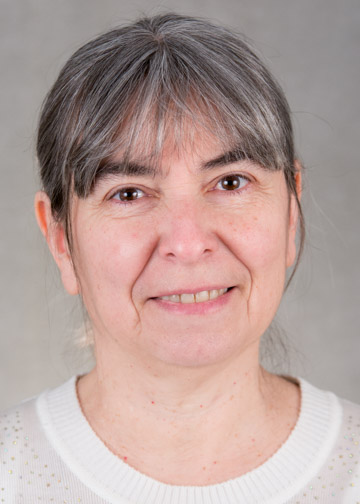
Andrea Bottino is an Associate Professor at the Department of Control and Computer Engineering (DAUIN) at the Polytechnic University of Turin. He has been actively involved in the Computer Graphics and Vision Group and leads various VR@POLITO initiatives. Chair of the Master HUMANAIZE program Coordinator of multiple Machine Learning for Vision and Multimedia courses Research Focus : Augmented and Virtual Reality for education and safety Computer Vision with applications to medical imaging and kinship analysis Human-Computer Interaction in immersive environments Multimodal Learning systems XR for Cultural Heritage Publication Trends : Recent works focus on AI applications , XR training systems , and computer vision techniques applied to medical diagnostics and cultural preservation . Leadership Roles : Scientific Director for MEI - Interactive Egyptian Museum Coordinator of PNRR Mission 4 projects Principal Investigator for Holo-BLSD and ALPTECH initiatives Labs and Collaborations : Active in Visionary LAB and VR@POLITO Collaborates with Balletto Teatro di Torino for cultural XR applications Partners with Fondazione Museo Egizio and Robin Studio
Kristi Heather Kenyon serves as an Assistant Professor in the Human Rights Program at the University of Winnipeg. Her academic journey includes being a 2007 Trudeau Scholar and currently holding dual postdoctoral fellowships: one with the Social Sciences and Humanities Research Council (SSHRC) in the Department of Political Science at Dalhousie University, and another at the Centre for Human Rights at the University of Pretoria. With over fifteen years of experience working within civil society organizations across Southeast Asia, Southern Africa, and Canada, Dr. Kenyon brings a practitioner's perspective to her academic work. Her research centers on the mobilization strategies of civil society advocacy groups in sub-Saharan Africa, particularly in the realms of health and human rights. She investigates why these groups adopt rights-based frameworks, how cultural contexts influence the interpretation of human rights, and the tangible impacts of such advocacy. Her specific areas of interest include HIV/AIDS, sexual and reproductive health, international development, torture prevention, and the abolition of the death penalty. Dr. Kenyon's significant contributions to the field have been recognized through competitive awards: Trudeau Scholarship (2007) SSHRC Postdoctoral Fellowship Her scholarly work is supported by major research grants from the Trudeau Foundation and SSHRC, enabling extensive fieldwork and collaboration with international networks of non-governmental organizations. These grants have facilitated her investigations into the transition of health issues from development concerns to human rights imperatives, particularly in the context of the HIV/AIDS pandemic in Africa.
Kerri Kearney is a Professor at Oklahoma State University's College of Education and Human Sciences , specializing in Educational Foundations, Leadership & Aviation . She holds the Christine Cashel Professorship and serves as Associate School Head for her department. Her work bridges hidden student populations in higher education , organizational behavior , and qualitative research methodologies , with a focus on students from foster care backgrounds and trauma-informed support systems. Doctor of Education in Educational Administration/Leadership (Oklahoma State University, 2001) Master of Business Administration (Oklahoma State University, 1990) Bachelor of Business Education (Oklahoma State University, 1988) Her research explores higher education equity for foster alumni through qualitative case studies, organizational theory applications, and wellness frameworks for student affairs professionals. She founded the R is for Thursday Network of Oklahoma , integrating child welfare and higher education systems. Key article trends include trauma-informed college completion strategies , boundary management in student-family relationships , and interdisciplinary approaches to supporting vulnerable populations. Her scientific awards span teaching excellence and leadership recognitions, with peer-review roles at journals like the Review of Higher Education and Urban Education . Spencer Foundation Grant (2019-2022): National research conference for foster alumni Oklahoma Foundation of Excellence nominee (2019) She leads doctoral dissertation seminars , teaches organizational theory , and mentors through directed readings and internship programs at OSU. Her RisforThursday Network (2012-present) and leadership in Fostering Academic Achievement Nationwide (2018-present) exemplify her commitment to systemic change.
Tony Balko is a Teaching Assistant Professor in the Film and Media Studies Program at the University of Pittsburgh's Dietrich School of Arts and Sciences. An artist and educator from Smithton, Pennsylvania, he works across moving images, sculpture, performance, and experimental mediums with a focus on labor-intensive creative processes and conceptual seriousness. His educational background includes: BA in Film Studies, University of Pittsburgh (2004) MFA in Film/Video, University of Wisconsin-Milwaukee (2012) Balko's research explores the intersections of experimental film, video art, sculpture, and performance through interdisciplinary frameworks. His practice emphasizes material engagement and conceptual rigor across unconventional exhibition contexts including museums, galleries, warehouses, digital spaces, and site-specific installations. The work consistently examines how labor transforms ideas into tangible experiences while challenging traditional artistic hierarchies. Contact: tonybalko@pitt.edu www.tonybalko.com
Audrius Sigitas Maruška serves as Professor at the Department of Biology within the Faculty of Natural Sciences at Vytautas Magnus University (VMU), where he has maintained continuous academic service since 2001. Previously, he led the Department of Chemistry (now restructured as the Department of Biochemistry and Biotechnology) for seven years, demonstrating sustained institutional leadership. His doctoral training in Physical Sciences was augmented by international research internships at Germany's Universities of Mainz, Marburg, and Kassel, along with Sweden's Uppsala University, establishing a robust transnational research foundation. Key educational milestones include: Doctorate in Physical Sciences Advanced research training across four European institutions Professor Maruška's scientific work centers on analytical chemistry methodologies applied to critical environmental and biomedical challenges. His research program systematically addresses: Isolation and analysis of plant-derived biologically active compounds Bioremediation technologies for hazardous waste treatment Development of precision microanalysis techniques This focus manifests in pioneering contributions to nanochromatography sorbents for biological liquids, capillary electrophoresis optimization, phytochemical plant profiling, and nanostructured derivative synthesis. His experimental innovations in liquid nanochromatography and electrochromatography represent significant methodological advances within analytical chemistry. While no formal awards are documented in the source material, his collaborative creation of seven patented inventions underscores tangible scientific impact. The absence of enumerated students or grant details suggests either unreported mentorship activities or primary focus on independent research leadership. Current institutional context places him within VMU's Department of Biology infrastructure, though specific laboratory facilities or research teams aren't explicitly identified in the available documentation.
Sara Arber is Professor of Sociology at the University of Surrey's Faculty of Arts and Social Sciences, with an extensive publication record spanning four decades and substantial scholarly impact (7,181 citations, h-index 47). Her research program consistently examines how social structures shape health experiences across the lifespan, with particular emphasis on gender differences, socioeconomic inequalities, and aging processes. Professor Arber's educational background, while not explicitly detailed in the provided information, reflects deep expertise in sociological theory and quantitative research methods, evidenced by her sophisticated analyses of large-scale survey data. Her career trajectory demonstrates sustained scholarly productivity from the 1980s through 2023, with recent publications continuing to shape contemporary debates in health sociology. Her research interests form a cohesive program examining women's health trajectories across the lifespan, sleep patterns and disorders as social phenomena, socioeconomic determinants of health across the life course, and gendered experiences of aging . Professor Arber has made seminal contributions to understanding caregiving dynamics , particularly nighttime care provision, and medical decision-making regarding coronary heart disease and end-of-life care. Her innovative work on ethnic disparities in vitamin D status and sleep quality demonstrates methodological sophistication in addressing complex health inequalities. Analysis of Professor Arber's recent publications reveals continued evolution of her core research themes. Her 2023 work on elderly care systems examines family-care statutory service interfaces, while her 2021 publications on gendered resource allocation in later life and European pension trends connect micro-level health experiences with macro-level policy frameworks. The 2019 study on ethnic differences in vitamin D status exemplifies her ability to integrate biological and social perspectives in health research. Professor Arber's scientific contributions are reflected in her substantial citation record and extensive collaboration network (164 co-authors across 163 publications). While specific awards aren't documented in the provided information, her sustained research productivity and influence in multiple disciplinary journals indicate significant peer recognition. As an academic leader, Professor Arber has likely mentored numerous students and early-career researchers through her institutional roles and collaborative projects. Her work on organ donation in accident and emergency departments directly informed regional education strategies in North Thames, UK, demonstrating tangible policy impact beyond academic circles. Professor Arber's research has practical implications for health equity policy, particularly regarding gender-sensitive healthcare provision, addressing socioeconomic determinants of health, and improving care systems for aging populations. Her scholarship continues to shape how researchers and policymakers understand the complex interplay between social structures and individual health experiences.
Dr. Brian Leite serves as Assistant Professor and Chair and Program Director in the Department of Business and Economics at Salve Regina University. His contact information includes email brian.leite@salve.edu and phone (401) 341-7497, with his office located in O'Hare Academic Building, Room 122. Dr. Leite holds a B.A. in history from Rhode Island College (1995), an MBA with finance concentration from Providence College (2002), and a DBA from DePaul University (2021). His educational background reflects a transition from history to specialized finance expertise. His research explores behavioral finance and asset pricing, economic freedom and market outcomes, and sports economics. Much of his work investigates how human biases impact investment decision-making. Recent publications span ESG investing, craft beer economics, and sailing race analytics, demonstrating interdisciplinary research interests that bridge finance theory with practical applications. Dr. Leite's 2023 publications reveal a research trajectory examining how environmental, social, and governance factors influence investor behavior, how deregulation affects regional craft beer markets, and performance factors in competitive sailing. His work connects theoretical finance concepts with tangible market phenomena across diverse sectors. As a scholar-practitioner, Dr. Leite has earned professional designations including Chartered Financial Analyst (CFA), Certified Financial Planner (CFP), and Certified Employee Benefits Specialist (CEBS), reflecting his industry experience prior to academia. He actively contributes expert commentary to media outlets such as WalletHub (2023), 401k TV (2016), and Employee Benefit News (2015), where he analyzes credit products, target-date funds, and retirement plan design, demonstrating his ability to translate academic research into practical financial guidance.
Dr. Reneta Barneva serves as Professor and APS Chair in the School of Business at the State University of New York at Fredonia, bringing over 30 years of teaching experience in computer and information sciences. Her academic leadership extends to the Executive Committee of the Fredonia Senate where she has held roles including Senate Chair, Vice-chair, and Governance Officer, while also representing Fredonia at the SUNY Faculty Senate. Her interdisciplinary work bridges theoretical computer science with practical applications across multiple domains. Her research spans data analytics, imaging, multimedia, computational biology, and social impact of technology, with over 100 publications and 18 co-edited books. She has pioneered educational applications of digital geometry, particularly in tangible technology-enhanced learning environments and data analytics for business and sports management. Her work consistently demonstrates cross-disciplinary integration, connecting computer science with education, business, and language learning. Analysis of her recent publications (2018-2021) reveals three dominant research trajectories: educational technology innovations for collaborative learning, data analytics applications in business/sports management, and digital geometry foundations for imaging sciences. These intersect through her focus on practical implementations of theoretical computer science concepts, often involving international collaborations and real-world case studies across diverse academic domains. Dr. Barneva has earned significant recognition including: Chancellor's Award for Excellence in Scholarship and Creative Activities, SUNY (2007) Wilkes Award, British Computer Society (2006) Kasling Memorial Lecturer, SUNY Fredonia (2005) Despite SUNY Fredonia lacking a graduate program, she has successfully co-advised graduate students including Bilyana Stoynova (Ph.D.) and Michael Mendez and Robert Olson (M.S.), with several now holding academic positions. She has secured collaborative research opportunities through hosting 14 international postdocs and visitors from institutions across Europe and Asia, demonstrating significant research mentorship beyond institutional constraints. Her research network includes extensive international collaborations, particularly through hosting visiting scholars from Beijing Jiaotong University, AGH University of Science and Technology, University of Shizuoka, and Brno University of Technology, fostering a globally connected research environment focused on digital geometry and educational technology applications.
Martin Christof Kindsmüller is a Professor of Human-Computer Interaction at the University of Applied Sciences Brandenburg , holding this position since September 2014. Previously, he served as Acting Professor of Human-Computer Interaction at the University of Hamburg (2012-2014). Member of GI e.V. - Fachbereich MCI Associated with Zentrum Mensch-Maschine-Systeme (ZMMS) at TU Berlin Co-founder of IUUI Research Group - Intuitive Use of User Interfaces Research Interests: His work spans User Experience (UX) , Usability Engineering , and Intuitive User Interfaces , with applications in Smart Applications , Medical Systems , and cross-platform development. He has contributed to frameworks like HCD3A for data-driven app design and theories of trend literacy. Recent Publication Trends: His 2025 studies focus on tangible interfaces and collaborative spatial interaction , while 2024 work addresses artistic data visualization and media informatics education . Earlier research (2021-2017) emphasizes UX implementation in SMEs , zooming UIs , and emotional computing . Academic Contributions: He has served on program committees for Mensch & Computer , CogSci , and KogWis conferences, and as reviewer for Behaviour & Information Technology . His teaching focuses on media informatics curricula and practical UX integration.
Prof. Dr. Mine Özkar Kabakçıoğlu is a leading academic at Istanbul Technical University's Faculty of Architecture, Department of Architecture, with a focus on computational design, digital fabrication, and architectural cultural heritage. She holds a Ph.D. from MIT (1999) and has been a full Professor at ITU since 2016, previously serving as Associate Professor at MIT (2013) and ITU (2011-2015), and Assistant Professor at METU (2006-2011). Research Centers: CMU Code Lab, NAAB Accreditation Committee Expertise: Shape grammars, material manipulation, Seljuk geometric patterns, socio-spatial analysis Her work bridges traditional craftsmanship with computational methods, particularly in Anatolian architectural heritage. She has led projects on brick bond analysis (TÜBİTAK 119K896), medieval stone milling workflows, and digital preservation of polyhedral designs like the Gömeç Hatun tomb. Her pedagogy emphasizes critical technical practice and accountability in computational design education. Scientific contributions include 15+ peer-reviewed articles on topics like Digital workflows for heritage conservation Visual reasoning in brickwork Material-aware shape computation She received the METU Young Researcher Achievement Award (2007) and serves on architectural accreditation boards. Her research group includes students and collaborators such as Sevgi Altun, Begum Hamzaoğlu, and international partners from NYU, MIT, and TU Delft.
Katja Hakel is a Professor of Academic Development at the University of Agder (UiA), where she has been working since February 2024 after previously working at the Norwegian University of Science and Technology (NTNU). She leads the associate professor program and serves as the academic chair of the excellent teaching practitioner scheme at UiA, playing a pivotal role in faculty development and recognition of teaching excellence within the institution. Hakel's research centers on Universal Design for Learning (UDL) and the development of equitable academic career paths that recognize teaching excellence alongside traditional research-focused professor tracks. Her work examines how organizational learning occurs in higher education institutions, particularly regarding the 'second career path' for academics who focus primarily on teaching and educational development. She has been instrumental in analyzing the implementation challenges of inclusive learning environments and advocating for systematic approaches to UDL across academic departments. Her publication record shows a consistent trajectory of research focused on practical implementation of educational theory. From analyzing faculty development training impacts to examining promotion criteria for teaching-focused academics, her work bridges theoretical frameworks with actionable strategies for improving both teaching practices and academic career structures. She has particularly emphasized the need for institutional support systems that enable faculty to effectively integrate inclusive teaching practices into their daily work. Meritorious Lecturer at NTNU (2022) Excellent Teaching Practitioner at NTNU (2022) Hakel has created significant mentoring infrastructure for academics pursuing teaching-focused careers through her leadership of the associate professor program at UiA and her involvement with the national Facebook group 'Førstelektor.' She has developed comprehensive training programs and resources that help faculty document and advance their teaching expertise, contributing to national conversations about academic career development in Norway. Her 2021 article comparing the doctoral defense process with senior lecturer promotion highlighted systemic inequities in how teaching excellence is recognized compared to research achievements. At UiA, she leads initiatives related to academic development, serves on committees focused on educational quality, and contributes to the FORTHEM alliance's work on innovative pedagogies. Her approach consistently connects theoretical understanding of effective teaching with practical implementation strategies that can be adopted across disciplines, making tangible contributions to improving both faculty development systems and student learning experiences in higher education.
Onofrio Rosario Battaglia serves as an Associate Professor in the Department of Physics and Chemistry at the University of Palermo, Italy, where he teaches Applied Physics for Biotechnology and Physics for Elementary and Kindergarten Schools. His academic profile centers on innovative physics pedagogy with emphasis on accessible experimental methods. His research expertise spans Physics Education , Science Education , and Educational Technology , specializing in inquiry-based learning frameworks and technology integration. Battaglia develops research-based teaching sequences using smartphone sensors and computer simulations to demystify complex phenomena including surface tension, thermally activated processes, and rotational dynamics. His work targets conceptual understanding across educational levels from primary schools to engineering programs, with notable focus on cluster analysis for evaluating student reasoning patterns and growth mindset development. Analysis of his publication trajectory reveals consistent innovation in making abstract physics tangible through low-cost experimentation, particularly in surface phenomena and thermodynamics education. Recent work integrates pandemic-era teaching adaptations and historical instrument studies, demonstrating responsiveness to evolving educational challenges while maintaining rigorous pedagogical validation. Within the Department of Physics and Chemistry, Battaglia contributes to curriculum development for teacher training programs and STEM laboratory initiatives, supporting the department's mission through evidence-based educational design and cross-disciplinary collaboration in science-mathematics integration projects.
Jose David Patón-Romero serves as a Postdoctoral Fellow in the Department of IT Management at Simula Metropolitan, a research division of Simula Research Laboratory. His work bridges business governance, digital transformation, and sustainable technology practices, with a focus on real-world implementation challenges in organizational contexts. His core research domains include: Business governance and management frameworks Program and project management methodologies Benefits management in digitalization initiatives Assessment and auditing techniques Process improvement strategies Sustainability integration Green IT solutions Analysis of his publication trends reveals a strong interdisciplinary trajectory connecting management science with social impact. His work consistently addresses the human dimensions of technology, particularly through investigations of gender equality in AI systems, decolonizing academic narratives, and mobile applications for social justice. The recurring emphasis on benefits management and goal hierarchies demonstrates a methodological commitment to evaluating tangible outcomes in digital transformation projects, while his Green IT research explores environmental sustainability metrics within IT governance frameworks. No scientific awards were documented in the source material. Available information does not specify student advisement activities or research grant funding. His professional engagements include invited talks on internationalization, doctoral impact, and Green IT implementation at institutions including Unidad Central del Valle del Cauca and Universidad Tecnológica de Xicotepec de Juárez. Dr. Patón-Romero maintains active research collaboration through Simula Metropolitan's IT Management department, with documented partnerships across European institutions as evidenced by his multi-country publications on decolonizing academic practices and gender equality metrics.
Mona Maria Mombeck serves as a Lecturer and Research Associate within the Faculty of Cultural Studies at the University of Paderborn. Her work uniquely bridges animal-assisted interventions with inclusive education to create holistic well-being frameworks for both humans and animals. Based at Technology Park 6 (Room TP6.0.309), she maintains active teaching and research roles while collaborating with community institutions like the Paderborn district youth welfare office. Her research centers on Animal-Assisted Pedagogy and Human-Animal Studies , with specific focus areas including: School-based implementation of animal-assisted interventions for social inclusion Human health promotion through animal/nature contact Animal welfare in educational contexts Education for Sustainable Development (ESD) frameworks This interdisciplinary approach integrates her background in dance/performance arts to develop embodied learning methodologies. Recent publications (2023-2024) demonstrate a clear trajectory toward evidence-based practice, with increasing emphasis on quantitative validation of interventions, teacher perspective integration, and the 'One Health' paradigm connecting human, animal, and environmental well-being. Her work consistently prioritizes practical classroom applications while advancing theoretical foundations in inclusive pedagogy. Mombeck secures competitive research funding through the Faculty of Cultural Studies' research reserve program. Her current project on animal-assisted interventions in schools combines teacher perspective analysis with instrument development, creating tangible resources for educational practice. Teaching collaborations with youth welfare institutions provide students with direct community engagement opportunities in social work contexts.
Prof. Dr. André Hinkenjann is the Founding Director of the Institute for Visual Computing and holds a Research Professorship in Computer Graphics and Interactive Systems at Bonn-Rhein-Sieg University of Applied Sciences. His research spans computer graphics, interactive environments, and visualization, with applications in VR/AR, digital twins, and scientific data analysis. He leads multidisciplinary projects funded by institutions like BMBF and Zukunftsfonds NRW. His research integrates: Computer Graphics : Real-time global illumination, foveated rendering, and GPU optimization Interactive Systems : Haptic interfaces, large-display collaboration, and spatial interaction techniques Applied VR/AR : From trauma therapy to industrial training and cultural heritage preservation Recent publications emphasize mixed-reality interaction, neural rendering, and perceptual optimization, reflecting a consistent focus on bridging theoretical graphics with human-centered applications. His lab frequently contributes to high-impact venues like ACM SIGGRAPH, IEEE VR, and Eurographics. Notable projects under his direction include: PInBiM: Gamified citizen science for museum-based insect research DT4MP: Digital twins for urban/industrial multiphysics simulations GTN: State-wide network advancing game technology in NRW Witality: VR for sensory wine analysis