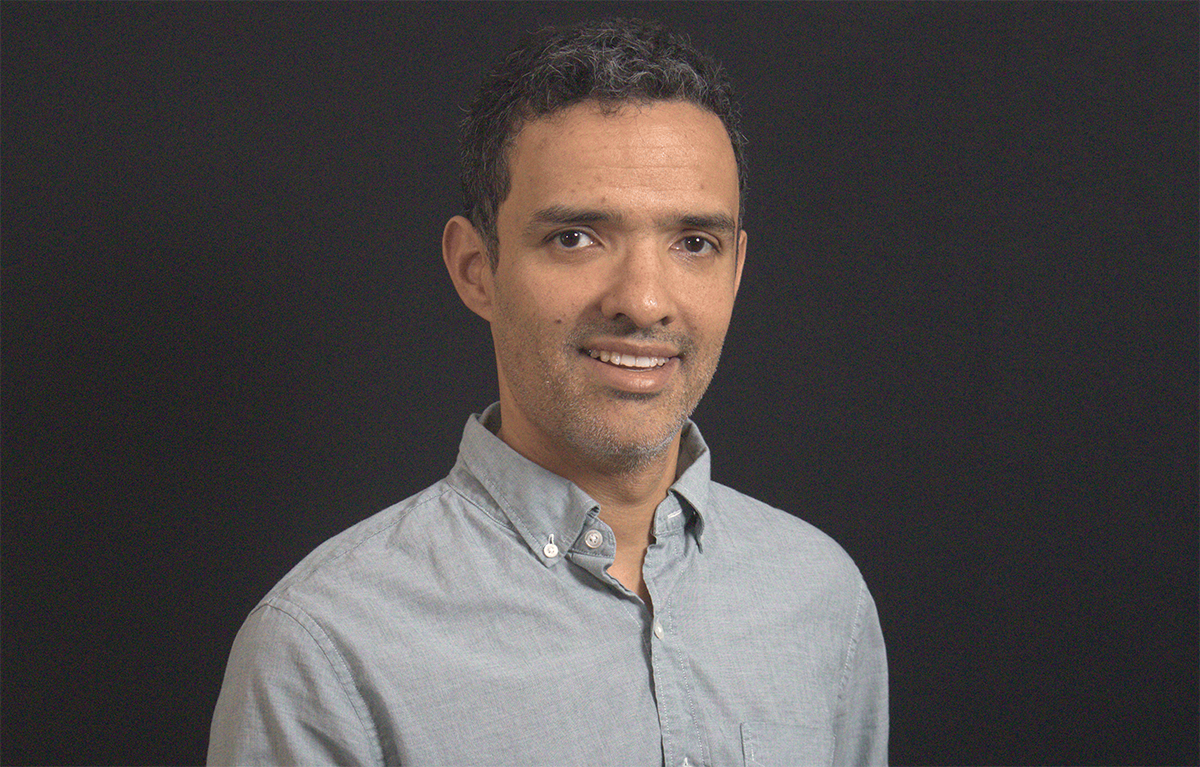
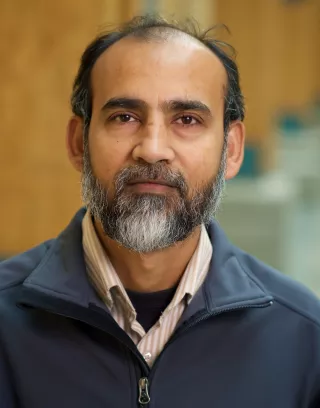
Dr. Tathagata Bhaduri is a Lecturer in the Department of Civil and Environmental Engineering at Rensselaer Polytechnic Institute (RPI). He holds a Ph.D. in Civil Engineering from RPI (2021), an M.Tech. from the Indian Institute of Technology, Kanpur (2016), and a B.E. from the Indian Institute of Engineering, Science and Technology, Shibpur (2014). His research focuses on computational modeling of ultra-high-performance concrete (UHPC), particularly multi-scale techniques, fiber orientation effects, and failure modes in UHPC structures. He also explores smart systems for structural vibration control using bracing and fluid dampers. Dr. Bhaduri teaches core courses including Strength of Materials and Engineering Economics, and served as the course coordinator for Strength of Materials in Fall 2023. His professional involvement includes contributions to the American Concrete Institute (ACI) 239C committee, aiding in UHPC design guide development. His publications emphasize UHPC's mechanical properties, multi-scale modeling, and fiber-reinforced material behavior. Research trends highlight interdisciplinary approaches combining experimental and computational methods to address structural challenges in advanced materials.
Brian M Deal serves as a Professor of Landscape Architecture within the School of Architecture at the University of Illinois at Urbana-Champaign, holding additional appointments in Urban and Regional Planning, the European Union Center, the Center for Latin American and Caribbean Studies, and the National Center for Supercomputing Applications (NCSA). His expertise bridges sustainable planning theory, energy systems, and spatial modeling to develop practical decision-support tools for community development and climate resilience. His educational foundation includes a PhD in Regional Planning (2002), Master of Architecture (1997), and BS in Architectural Studies (1983), all earned at the University of Illinois at Urbana-Champaign. Prior academic experience encompasses a decade of professional architecture practice and senior research at the Army Construction Engineering Research Laboratory (CERL), where he specialized in sustainable military facility design using spatial simulation. Deal's research centers on sustainable planning systems and climate adaptation, with current projects examining urbanization impacts on Korean rural amenities, advancing the University of Illinois' climate action plan (iCAP), and developing next-generation 'sentient' planning support systems. His work integrates land-use modeling, energy systems analysis, and decision-support technologies to address complex urban environmental challenges through interdisciplinary collaboration. Recent publications reveal a pronounced shift toward data-driven sustainability solutions, featuring AI applications for carbon-neutral planning, multi-scaled green infrastructure optimization, and socio-ecological modeling. Key themes include urban carbon sequestration, post-pandemic park dynamics, and climate-resilient coastal design, demonstrating consistent innovation in translating theoretical frameworks into actionable planning tools for real-world implementation. Professor Deal's scientific awards and honors were not detailed in the provided text. As faculty mentor to the Student Sustainability Committee and chair of campus sustainability planning efforts, Deal actively guides student development and institutional policy. His leadership of the LEAM Laboratory and SEDAC involves managing research grants focused on urban resilience, energy systems, and climate adaptation, fostering partnerships with government agencies and community organizations to deploy planning tools that directly impact community decision-making processes. Deal directs the Land Use Evolution and Impact Assessment Modeling (LEAM) Laboratory and Smart Energy Design Assistance Center (SEDAC), leading interdisciplinary teams in developing spatial simulation models and decision-support systems. His operational leadership extends to authoring the university's climate action plan and chairing campus sustainability committees, positioning him at the nexus of academic research, institutional policy, and community engagement for sustainable urban futures.
Marco Martino Rosso is a Research Fellow at the Department of Structural, Building and Geotechnical Engineering (DISEG) at the Polytechnic University of Turin, where he also serves as an external lecturer and teaching assistant in both DISEG and the Department of Mathematical Sciences (DISMA). He is affiliated with the Doctoral School (SCDOTT) and completed his PhD under the supervision of Professor Giuseppe Carlo Marano. His academic work bridges civil engineering with advanced computational methods, focusing on structural health monitoring, optimization, and machine learning applications. His research interests center on Structural Health Monitoring , Machine Learning in Civil Engineering , Earthquake Engineering , Structural Optimization , Operational Modal Analysis , and AI-driven diagnostics for infrastructure. He applies deep learning, neural networks, and hybrid modeling techniques to problems such as damage detection, post-earthquake assessment, tunnel and bridge monitoring, and dynamic analysis of timber and concrete structures. His recent publications, spanning from 2023 to 2025, demonstrate a strong trend toward integrating artificial intelligence with structural engineering, particularly in automating modal analysis, optimizing structural forms, and enhancing seismic resilience. These works appear in journals like Mechanical Systems and Signal Processing , Computers & Structures , and Bulletin of Earthquake Engineering , as well as in proceedings of international conferences such as IOMAC and EWSHM. Marco Rosso has not received any explicitly mentioned scientific awards in the provided text. However, his extensive publication record and active role in research projects indicate strong recognition in his field. He has contributed to teaching as a course collaborator in subjects including Dynamic Identification of Structures , Statistics , Construction Techniques , and Safety Assessment and Retrofitting of Structures . He has also been involved in the ARTISTE 2025 Summer School, indicating engagement in advanced training programs. While no formal lab or team name is specified, his frequent collaborations with researchers such as Angelo Aloisio, Giuseppe Carlo Marano, and Jonathan Melchiorre suggest he is part of a vibrant research group focused on intelligent structural systems and data-driven engineering at Politecnico di Torino.
Professor Antony Darby holds a faculty position in the Department of Architecture & Civil Engineering at the University of Bath , where he serves as Director of Research and Knowledge Exchange . His research focuses on structural dynamics and concrete structure assessment, supported by facilities like the world-unique VSimulators (a collaboration with the University of Exeter). He works with interdisciplinary teams to address motion serviceability criteria and develops passive vibration control methods using impact dampers. Expert in structural strengthening with advanced composites (e.g., carbon fiber) Lead author of Concrete Society’s TR55 design guidance UK principal expert on Eurocode 2 committee for FRP guidelines His work aligns with UN Sustainable Development Goals (SDGs) related to sustainable cities and climate action. Recent publications span topics like structural stone scaling, offshore wind foundations, and occupant comfort in tall buildings. He actively supervises doctoral students and engages in industry knowledge exchange activities.
Eren Vuran serves as Assistant Professor and Vice Head of the Civil Engineering Department within Yeditepe University's Faculty of Engineering. His academic career spans Bogazici University's Kandilli Observatory and Earthquake Research Institute, where he completed doctoral research and served as Research Assistant, to his current leadership role overseeing departmental operations and curriculum development. His educational foundation includes: PhD in Earthquake Engineering from Bogazici University (2008-2014) MSc from Universita degli Studi di Pavia (2006-2007) BSc in Civil Engineering from Istanbul Technical University (2001-2006) Dr. Vuran's research critically examines seismic behavior of complex structural systems, with emphasis on core wall dynamics in tall buildings. His work develops practical methodologies for capacity estimation and ductility demand prediction, directly addressing challenges in modern high-rise construction. Current investigations focus on nonlinear response characteristics, soil-pile-structure interaction effects, and innovative isolation techniques for multi-block building configurations. This research bridges theoretical modeling with practical engineering applications through extensive numerical simulations and code compliance analysis. Publication trends reveal consistent focus on coupled core wall systems since 2016, evolving from fundamental capacity procedures to advanced analyses of shear migration and dynamic amplification phenomena. His work demonstrates increasing sophistication in modeling multi-directional seismic responses while maintaining practical relevance for structural design codes. Dr. Vuran actively mentors graduate researchers through six Master's theses addressing contemporary seismic challenges: Seismic design of isolated building blocks (2024) Multi-structure interaction effects (2025) Soil-pile interaction code compliance (2023) Reinforced concrete slab behavior (2023) Pile-foundation configuration analysis (2024) Post-tensioned slab design (2025) He also contributed to the EU-funded TRIPOD project (366894) as researcher, advancing seismic risk assessment methodologies. Professional engagement includes active membership in the Turkish Earthquake Foundation's Earthquake Engineering Committee (since 2018) and the Chamber of Civil Engineers of Turkey (since 2006), where he contributes to national seismic safety standards development.
Jean-François Semblat is a Professor at ENSTA Paris and holds leadership roles as Head of the Department of Mechanics and Energetics (IP-Paris) and Deputy Head of the Mechanical Engineering Department (UME/ENSTA). He is a researcher at the Institute of Mechanical Sciences and Industrial Applications (UMR IMSIA). His work spans seismology, computational mechanics, and soil-structure interaction. Research Interests: Seismology and seismic wave propagation Computational mechanics (FEM/BEM) Soil dynamics and dynamic soil-structure interaction Structural dynamics and earthquake engineering Wave propagation in complex media Recent Publications highlight advancements in seismic wave modeling, soil reinforcement, and numerical methods (FEM/BEM) applied to urban infrastructure and nuclear safety. His work addresses liquefaction, fault mechanics, and seismic safety of critical systems. Scientific Awards: Shamsher Prakash Research Award in Geotechnical Engineering (2009) Award from the European Association of Geoscientists & Engineers (2005) Award from the International Association for Computer Methods & Advances in Geomechanics (2005) Special award from the French Association for Earthquake Engineering (1999) He contributes to editorial boards of journals like Soil Dynamics and Earthquake Engineering and International Journal of Geomechanics , and participates in international committees (TC203, AFPS).
Luis G. Arboleda is an Associate Professor in the Department of Civil, Environmental and Construction Engineering at the University of Central Florida, College of Engineering and Computer Science. His research expertise spans geotechnical engineering, soil-structure interaction, numerical modeling, and earthquake engineering, with a focus on infrastructure resilience and underground construction. Education: Ph.D. in Geotechnical Engineering, Northwestern University, 2014 M.S. in Structural Engineering, Purdue University, 2006 B.S. in Civil Engineering, National University of Colombia, 2004 Dr. Arboleda's research interests include soil-structure interaction, geotechnical earthquake engineering, soil liquefaction, constitutive modeling of soils and rocks, field and laboratory testing, and sinkhole geomechanics. His work integrates advanced numerical simulations with experimental validation to improve the analysis and design of geostructures such as deep excavations and foundations. He has made significant contributions to understanding the nonlinear-inelastic behavior of soil and structures under seismic and construction loads. The trend in his recent publications reflects a strong emphasis on numerical modeling of soil-structure systems, particularly in deep excavations and tall buildings subjected to seismic and dynamic loading. His work bridges geotechnical and structural engineering, advancing predictive capabilities for ground deformations, soil response, and structural performance. Key themes include nonlinear modeling, field validation, and performance-based design under extreme events. Scientific Awards: Outstanding Reviewer, Journal of Geotechnical and Geoenvironmental Engineering (ASCE), 2021 Fellowship, Second Early Career Workshop for Junior Geotechnical Faculty, Case Western Reserve University, 2018 Dr. Arboleda actively advises graduate students and contributes to major research initiatives, including infrastructure protection from hurricanes. He has led and co-authored numerous studies on excavation-induced movements, seismic soil-structure interaction, and constitutive modeling. His prior industry experience at Janssen and Spaans Engineering Inc. informs his applied research on bridge and infrastructure systems. He is involved in research teams focusing on geotechnical performance, numerical simulation, and infrastructure resilience. His lab work includes laboratory testing of soils and advanced numerical modeling using finite element and hypoplasticity frameworks.
Juliana Felkner is an academic affiliated with ETH Zurich, primarily associated with the Department of Architecture within the School of Architecture, Civil and Environmental Engineering. Her research focuses on integrating structural efficiency with energy performance in tall buildings, emphasizing multi-objective optimization and sustainable design principles. Key contributions include studies on embodied vs. operational energy in buildings, structural design frameworks balancing sustainability and efficiency, and interactive optimization techniques using NURBS curves and Particle Swarm Optimization (PSO). Her doctoral thesis (2016) explored multi-objective design strategies addressing structural, environmental, and architectural considerations. Felkner has published extensively on topics such as energy lifecycle analysis, natural ventilation potentials, and computational design methods. Her work highlights the importance of reducing operational energy in existing building stocks to mitigate greenhouse gas emissions. Awards and grants are not explicitly mentioned in the provided texts, but her peer-reviewed publications indicate active engagement in academic research and collaboration across disciplines.
Renata Borovica-Gajic is an Associate Professor in Data Analytics and an ARC DECRA Fellow at the School of Computing and Information Systems (CIS), University of Melbourne. She also serves as Associate Dean (Diversity and Inclusion) for the Faculty of Engineering and IT, demonstrating leadership in both research and academic community development. Her research lies at the intersection of database systems, machine learning, and artificial intelligence, with a vision of creating adaptive, self-driving database engines that optimize query execution in real-time. Her work spans learned indexes, query optimization, data quality, and data-driven traffic optimization, aiming to reduce costs and improve performance in data analytics. The recent publications reflect a strong trend toward integrating machine learning into core database operations—particularly through learned indexes, bandit-based tuning, and reinforcement learning for traffic systems. These works emphasize automation, provable guarantees, and real-time adaptation, showcasing a cohesive research agenda focused on intelligent, self-optimizing data systems. Her scientific excellence is recognized by numerous awards, including: L'Oréal-UNESCO for Women in Science Fellowship (2023) Victorian Young Tall Poppy (2024) Test of Time Award at SIGMOD 2022 Multiple Research and Teaching Excellence Awards from the University of Melbourne Google Research Inclusion Award (2021) She actively mentors PhD students and leads significant research projects funded by the Australian Research Council, Google, and Telstra. Her service includes roles as Associate Editor for SIGMOD Record, conference organization (e.g., aiDM, ADC, VLDB), and leadership in diversity and inclusion initiatives. She has also contributed to influential publications such as a chapter in the 7th edition of Database System Concepts . Her research lab focuses on AI-powered databases, traffic optimization via reinforcement learning, and self-healing data systems, positioning her at the forefront of next-generation data management.
Marie Johansson is a Professor in Timber Engineering at the Department of Building Technology, Faculty of Technology, Linnaeus University. Her career spans teaching structural engineering in bachelor’s and master’s programs and leading research projects on wood quality, strength grading, and timber mechanics. Acting supervisor in two PhD projects Expert Team Leader for "Construction & Design" in BioInnovation SIO-programme Research Interests : Wood material properties (shape stability, stiffness, strength) Connection technology in timber structures Climate change adaptation in agriculture (Öland, Sweden) Modular multi-storey timber buildings Fiber orientation modeling for strength prediction Publication Trends : Recent work focuses on wind-induced vibrations in tall timber structures, 3D fiber orientation models, genetic selection for timber traits, and non-destructive evaluation of wood properties. Collaborations with international conferences (WCTE, ICEM) and institutions highlight her contributions to wood science and sustainable construction. Research Groups : Leads the Wood Building Technology group, emphasizing applied mechanics and industrialized timber construction.
Dr. Spencer Quiel is an Associate Professor of Structural Engineering at Lehigh University's P.C. Rossin College of Engineering and Applied Science. His research focuses on structural resilience to extreme loads such as fire, blast, and progressive collapse, with particular emphasis on bridges, tunnels, and building systems. He has secured over $1.5 million in grants from NSF, USDOT, and others, and his work is published in leading journals like Engineering Structures and Fire Safety Journal. Prior to academia, he worked at Hinman Consulting Engineers, contributing to structural designs for hazard resistance. He holds a PhD from Princeton University (2009) and a BS from Notre Dame (2004), supported by a DHS Fellowship during his doctoral studies. Dr. Quiel teaches undergraduate courses in engineering statics and civil engineering design, as well as graduate-level structural fire engineering. He currently serves as Vice Chair of the PCI Blast Resistance and Structural Integrity Committee and contributed to ASCE standards on fire loads and structural fire engineering. His research group focuses on experimental testing, numerical modeling, and large-scale infrastructure resilience. Education: PhD, Civil Engineering, Princeton University (2009) Professional Affiliations: ASCE, AISC, PCI Licenses: Professional Engineer (PA, VA) Key Projects: World Trade Center collapse studies, tunnel liner resilience, thermal energy storage systems His research interests span structural fire effects, blast-resistant design, progressive collapse frameworks, and innovative cladding systems. Recent work includes developing fire-resistant tunnel liners and thermal energy storage solutions using concrete matrices. He also investigates multi-hazard simulation methods for tall buildings using real-time hybrid techniques.
Assoc. Prof. Dr. Nuri Serteser is an Associate Professor in the Department of Architecture at Istanbul Technical University's Faculty of Architecture. His academic career spans over three decades, beginning as a Research Assistant in 1991 and progressing through various academic positions to his current role as Associate Professor since 2019. He holds a PhD in Building Science from Istanbul Technical University and has extensive experience in architectural engineering with a specialized focus on fire safety and environmental control systems. His educational background includes a Licence in Architecture (1985-1989), a Master's in Building Information with thesis (1990-1993), and a Doctorate in Building Information (2000-2004), all from Istanbul Technical University. His academic journey reflects a steady progression from Research Assistant (1991-2013) to Doctor Lecturer (2013-2019) and finally to Associate Professor (2019-present). Prof. Serteser's research interests center on fire safety in architecture, physical environmental control systems, building construction technologies, and wind control engineering. His work integrates computational fluid dynamics (CFD) with architectural design to address critical safety concerns in building envelopes, particularly focusing on fire propagation in facades, smoke movement in double-skin systems, and pedestrian wind comfort around tall structures. His research bridges theoretical engineering principles with practical architectural applications, making significant contributions to building safety standards and sustainable design practices. His publication record demonstrates consistent scholarly output with a clear thematic focus on fire safety engineering and wind dynamics in architectural contexts. Recent works (2024-2025) increasingly incorporate building information modeling (BIM) and computational optimization techniques, reflecting evolving methodologies in architectural engineering research. The publications reveal a progression from fundamental fire safety investigations to more complex integrated systems analysis, with growing emphasis on computational modeling and sustainable design solutions. The Japan Prize (2009) International Association for Urban Climate Award (2009) Prof. Serteser maintains active professional engagement through multiple organizational memberships including Türkiye IMSAD Structural Fire Safety Working Group (2016-present), TÜYAK Building Materials Technical Committee (2004-present), ITU Alumni Association (1991-present), and TMMOB Chamber of Architects (1989-present). His research portfolio includes multiple funded projects through ITU's Scientific Research Projects Unit (BAP) and Technology Development Foundation of Turkey (TTO), focusing on wind-building interactions, fire safety performance evaluation, and wind turbine integration in tall buildings. His laboratory work primarily involves computational fluid dynamics simulations and numerical modeling of fire and wind phenomena in architectural contexts. His research group collaborates with both national and international institutions on building physics and safety engineering projects, with particular emphasis on developing early-stage design tools for fire safety and wind comfort assessment.
Dr. Asif Iqbal is an Associate Professor in the Integrated Wood Design program at the University of Northern British Columbia (UNBC), part of the Faculty of Engineering. He holds a PhD in Civil Engineering from the University of Canterbury, New Zealand, and has over ten years of consulting experience in structural engineering across Canada, the U.S., and New Zealand. His research focuses on disaster-resilient construction, particularly seismic protection for wood and hybrid structures, soil-structure interaction, and innovative structural systems for tall buildings. Education: PhD in Civil Engineering (University of Canterbury, New Zealand), Professional Engineer (PEng) designation. His expertise spans seismic design, timber engineering, and structural dynamics. Key research themes include post-tensioned CLT shear walls, energy dissipators, and sustainable tall wood structures. He actively contributes to professional organizations and advises graduate students in Civil and Structural Engineering. Research interests emphasize practical applications of seismic resilience, combining experimental testing with numerical modeling. His work integrates smart materials like shape memory alloys and explores hybrid systems to enhance building performance under earthquakes. Recent projects include structural health monitoring for bridges and optimizing timber cores for high-rise construction. Dr. Iqbal’s publications (2020–2025) highlight advancements in post-tensioned timber systems, seismic isolation for lightweight buildings, and computational modeling of timber connections. He advocates for Indigenous housing practices as inspiration for modern green building designs, merging traditional wisdom with contemporary engineering solutions. He supervises MSc and PhD students in Civil and Structural Engineering and is available for media inquiries as a subject matter expert on timber structures and disaster mitigation. His office is located in WIDC-364 at UNBC’s Prince George campus.
Dr. Thomas Froese is the Department Chair and Professor of Civil Engineering at the University of Victoria (UVic), within the Faculty of Engineering and Computer Science. He specializes in project and construction management, sustainable infrastructure, and the integration of information technologies such as Building Information Modeling (BIM), IoT, and digital twins into building and infrastructure systems. His work emphasizes sustainability assessment, energy efficiency, and innovation in construction processes. He actively contributes to advancing sustainable building practices through applied research and education. Research Interests: Froese’s expertise spans sustainable building and infrastructure design, digital twin-enabled post-occupancy evaluations, timber-concrete composite systems, and the application of BIM in high-performance construction. He explores how technologies like GIS, IoT, and surrogate modeling can optimize building envelopes and enhance infrastructure resilience. His educational focus includes curriculum development for sustainability-centered civil engineering and fostering innovation in construction management. Articles Trends: His recent publications emphasize sustainability in construction, digital twin applications, and innovative materials like bio-inspired auxetics. He frequently examines case studies such as Brock Commons Tallwood House and UVic’s Engineering Expansion Project, highlighting practical implementation of sustainable technologies. His work bridges theory and practice, addressing challenges in thermal comfort, energy efficiency, and lifecycle assessment. Awards and Grants: No specific awards or grants are listed in the provided texts. Froese’s contributions are primarily reflected in his research output and academic leadership roles. He oversees the Civil Engineering Department and collaborates on projects promoting sustainable development, such as the UBC Living Lab initiative. Labs/Teams: As a department chair, Froese likely leads or collaborates with UVic’s civil engineering research groups focused on sustainable infrastructure and digital construction technologies. His work aligns with UVic’s broader commitment to environmental stewardship through applied engineering solutions.
Luis Ibarra is an Associate Professor in the Department of Civil & Environmental Engineering at the University of Utah, where he has been employed since 2010. He was promoted to Associate Professor in July 2016 after serving as an Assistant Professor from 2010 to 2016. He earned his PhD in Civil and Environmental Engineering from Stanford University in 2004. Research Interests Dr. Ibarra's research spans multiple domains of civil engineering with particular emphasis on seismic performance of structures, nuclear safety, and material behavior. His work integrates computational mechanics, experimental testing, and probabilistic risk assessment to address challenges in structural resilience under extreme loading conditions. Primary research themes include: Seismic modeling of nuclear containment structures and fuel rod behavior Development of advanced hysteretic models for structural components Earthquake engineering applications for bridges and buildings Probabilistic risk assessment of structural systems Publications Overview Recent publications (2018-2025) demonstrate Dr. Ibarra's focus on computational mechanics applied to nuclear and structural safety, featuring advanced finite element modeling, probabilistic methods, and experimental validation. Recurring themes include seismic vulnerability of nuclear facilities, deterioration modeling of structural components, and innovative retrofitting techniques for earthquake resilience. The research consistently integrates material science fundamentals with structural engineering applications. Awards and Recognition Ben Jacobsen Kingfisher Bend Ranch Award for exceptional teaching effectiveness (2015) Teacher of the Year Award, CvEEN Department (2014) Teacher of the Year Award in the CvEEN Department (2013) Milek Fellowship Award, American Institute of Steel Construction (2013) Academic Activities Dr. Ibarra maintains an active research program supported by multiple grants including seismic modeling of nuclear structures, machine learning applications for collapse prediction, and performance of retrofitted bridges. He regularly advises graduate students in thesis research and teaches courses in structural dynamics, steel design, and structural analysis. His professional service includes editorial board membership for the Tall and Special Buildings Journal and community outreach through earthquake education programs for high school students.