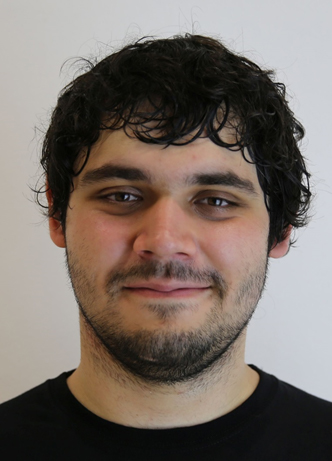
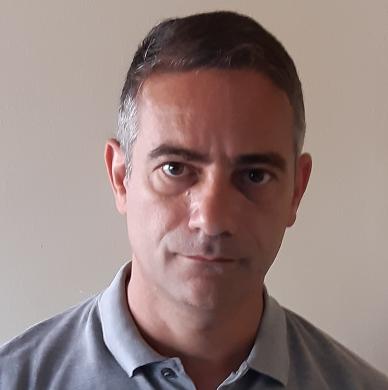
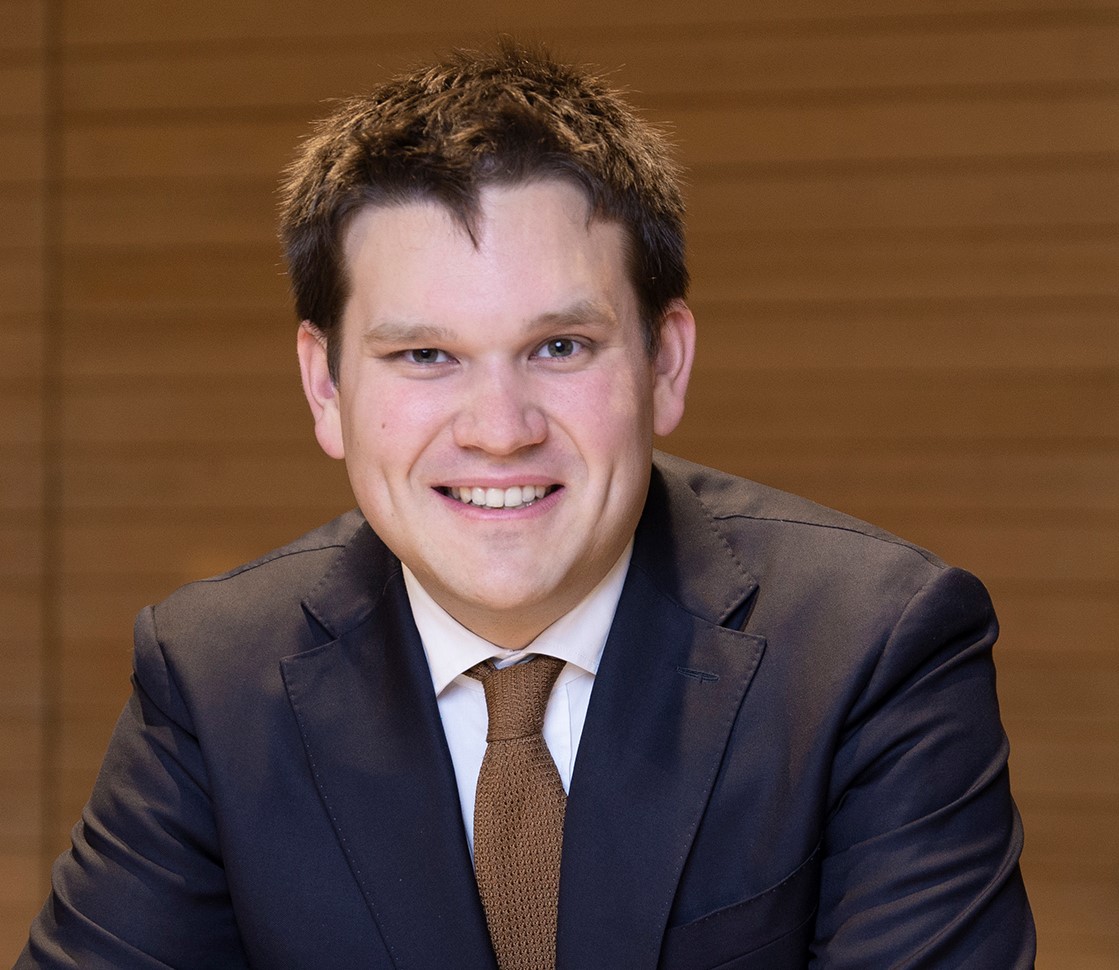
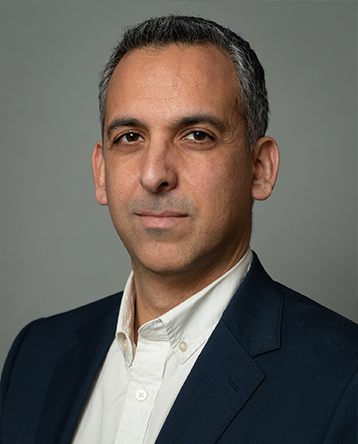
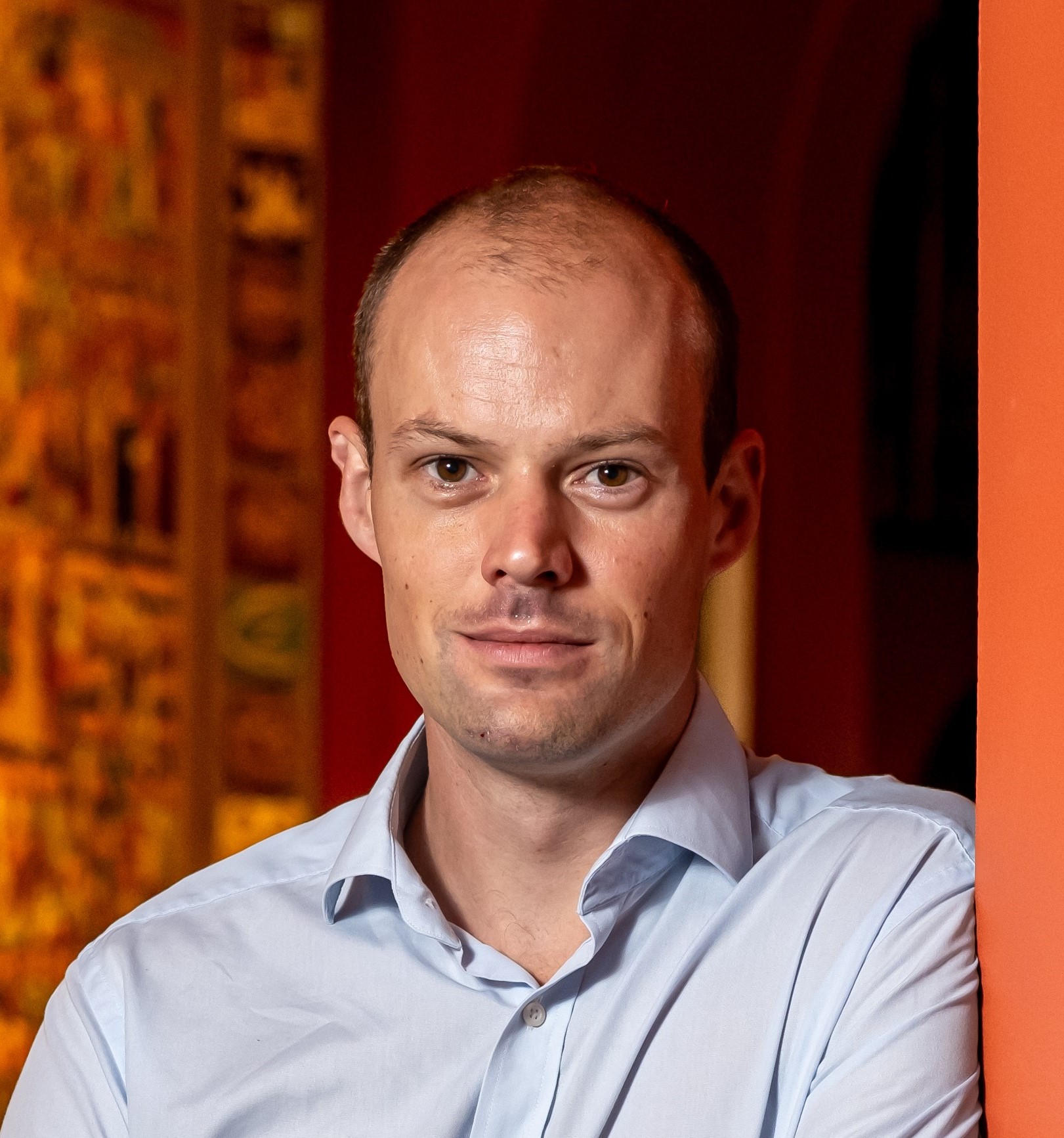
Michal Piovarci is a Researcher (Postdoc) at ETH Zurich's Computational Design Lab led by Bernd Bickel. He holds a Ph.D. from USI Lugano (2020) under Piotr Didyk, receiving the Eurographics PhD Award for his thesis on Perception-Aware Computational Fabrication. His research focuses on computer graphics, computational fabrication, and haptic/appearance reproduction, emphasizing perception-driven solutions. Education: Ph.D., USI Lugano (2020) Previous postdoc at ISTA's Visual Computing Group Research interests include 3D Printing Innovations Haptic Feedback Systems Material Perception Modeling Directional Surface Design Professional Activities: Area chair at ACM Symposium on Computational Fabrication (2024), program committee roles at SIGGRAPH, SAP, and Eurographics. Organized Computational Fabrication Seminars (2021-2022). Grants: SNSF Project Funding (CHF 1M, 2025-2029) and FWF Lise Meitner Grant (2022-2023). Teaching: Taught Scientific Machine Learning for Design (ETH Zurich, 2024) Computational Fabrication (TU Wien, 2022)
Ørjan Grøttem Martinsen is a Professor of Electronics at the Department of Physics, Faculty of Mathematics and Natural Sciences, University of Oslo. He also holds a temporary research position at the Medical Technology Business Area of Oslo University Hospital. With over three decades of experience, he has established himself as a leading expert in bioimpedance research and applications. Education: High-voltage engineer degree (1983) Cand. scient. in electronics/measurement technology (1990) Dr. scient. with thesis on skin's electrical properties (1995) Professor Martinsen's research centers on bioimpedance—the passive electrical properties of biological tissues that vary with anatomy and physiology. His work spans diverse applications including medical diagnostics (skin cancer detection), food quality assessment (fresh vs. thawed fish), skin condition monitoring (moisture levels), and stress level evaluation. His research bridges physics, engineering, and medical applications, creating practical diagnostic tools from fundamental electrical principles. He has pioneered methods to characterize tissue properties through impedance measurements, with particular focus on electrodermal activity and skin impedance. His recent publications (2022-2025) demonstrate a strong interdisciplinary approach combining bioimpedance with machine learning, robotics, and advanced signal processing. The work spans from fundamental biophysics (GABA detection, tissue characterization) to practical applications (dental anxiety assessment, ADHD treatment evaluation). Key trends include integration of AI with bioimpedance measurements, development of novel sensor systems, and expansion into new application areas like optogenetics and micro-robotics. Awards and Recognition: IEEE Senior Member (2006) CLABIO Award (2012) Fellow at Institute of Physics (FInstP) (2015) Dr. Honoris Causa, Tallinn University of Technology (2018) UiO Innovation Award (2019) Member of Norwegian Academy of Technical Sciences (2021) Professor Martinsen has served as Editor-in-Chief of the Journal of Electrical Bioimpedance since 2010 and was President of the International Society for Electrical Bioimpedance (2010-2016). His research has attracted significant funding, enabling collaborations across engineering, medical, and biological disciplines. He has supervised numerous students and researchers in the Bioimpedance Group at UiO, fostering a strong research environment that bridges theoretical and applied work. His work is conducted primarily through the Oslo Bioimpedance Group and Sensorama SmartSense research teams, which focus on developing innovative measurement techniques and applications of bioimpedance technology. These groups maintain strong collaborations with medical institutions and industry partners to translate research findings into practical healthcare solutions.
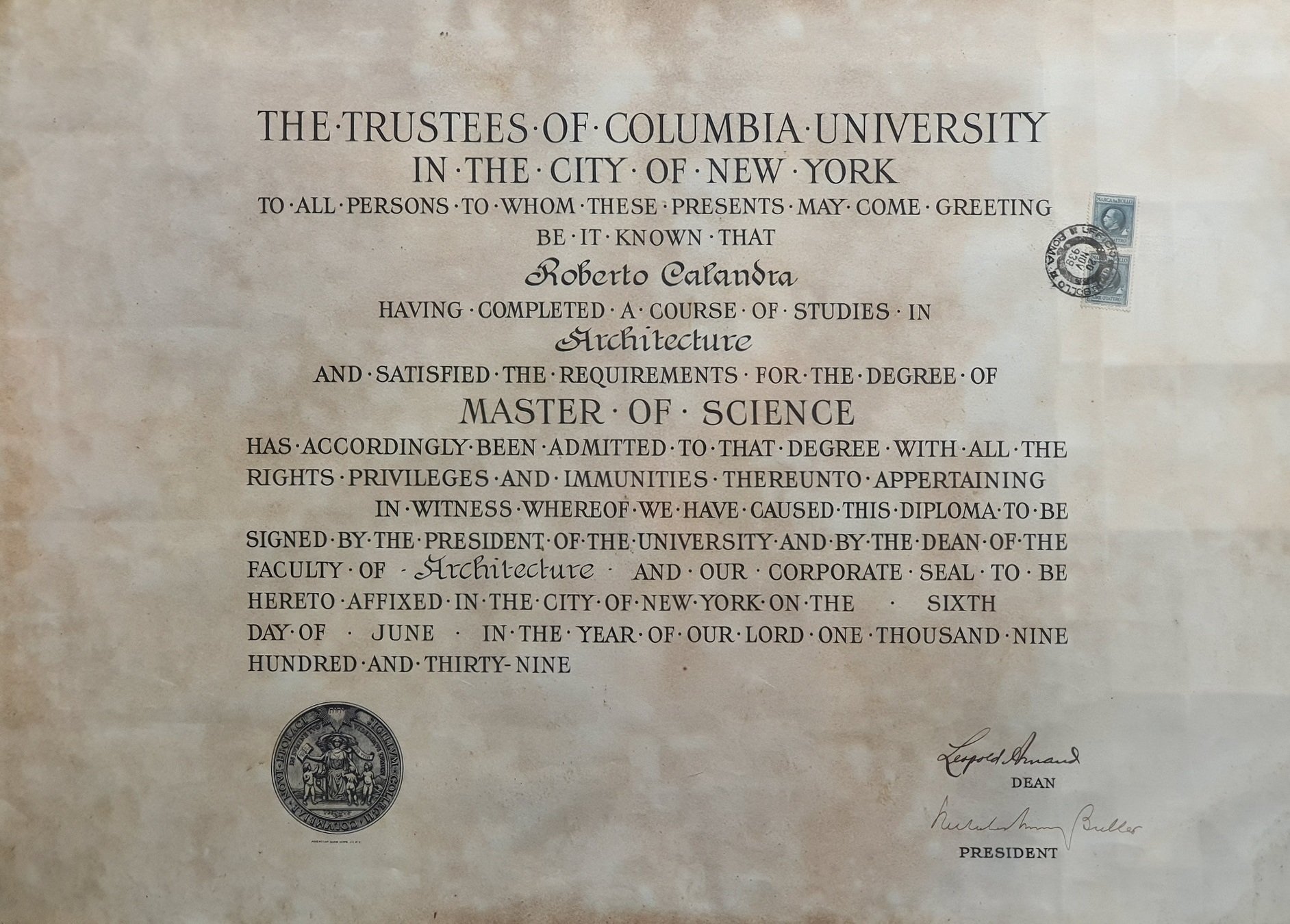
Roberto Calandra is a Full (W3) Professor at Technische Universität Dresden, where he leads the Learning, Adaptive Systems and Robotics (LASR) Lab. Previously, he served as a Research Scientist at Meta AI (formerly Facebook AI Research) and a Postdoctoral Scholar at UC Berkeley’s BAIR Lab under Sergey Levine. His academic journey includes a PhD in Robotics from TU Darmstadt, an M.Sc. in Machine Learning from Aalto University, and a B.Sc. in Computer Science from Università di Palermo. His research bridges Robotics and Machine Learning, focusing on tactile sensing, Bayesian Optimization, and model-based reinforcement learning. He pioneered the DIGIT tactile sensor , now the most widely used tactile sensor in robotics, and advocates for a computational field of Touch Processing to advance haptic understanding. His work emphasizes data-efficient learning, real-world dexterous manipulation, and multimodal perception. Recent publications highlight breakthroughs in tactile sensor design, in-hand object manipulation, and multimodal integration. He organizes workshops on robotics and machine learning (e.g., at NeurIPS, ICRA) and promotes open-source tools like PyTouch and TACTO .
Roman Franz Froschauer is a Professor of Production Informatics at the Upper Austria University of Applied Sciences, Research Center Wels. Since 2018, he has served as Director of Studies for the Master's program in Robotic Systems Engineering and leads the Smart Automation & Robotics research group. His career spans academic and industrial roles, including senior software development and project management at AlpinaTec Technical Products GmbH (2010-2016). Education: Ph.D. in Computer Science (2010) from Johannes Kepler University Linz; Master's in Industrial Informatics (2005) from Upper Austria University of Applied Sciences. Research Areas: Software engineering for intelligent automation systems, human-robot interaction (HRI), control systems, and applications of IEC 61499 standards. His work focuses on proactive collaboration, trajectory planning, and user-centered design for assistive robots in office and industrial settings. Scientific Activities: Active in peer-review, conference organization, and technology development. Projects include VRoboCoop (human-robot trust), MARIE (office robotics), and Autility (automated utility vehicles). Key Contributions: Frameworks for modular manufacturing (PlugBot), skill-based engineering, and intralogistics automation (ATLAS).
Dr Neil Bailey is a Senior Research Fellow at the Australian National University's School of Medicine and Psychology, leading innovative research at the intersection of neuroscience, psychology, and mental health. His work focuses on understanding how mental health can be improved through various interventions, particularly mindfulness practices and brain stimulation techniques. Dr Bailey's research interests include: Investigating how mindfulness meditation affects brain activity, cognition, and mental health outcomes Developing novel treatments for depression, obsessive-compulsive disorder, and schizophrenia Applying non-invasive brain stimulation techniques like rTMS and tACS for mental health conditions Using machine learning and EEG to predict treatment responses for depression Exploring psychedelic-assisted psychotherapy for mental health conditions His recent publications reveal a strong focus on EEG-based research, particularly examining neural connectivity patterns, developing advanced data processing pipelines like RELAX, and investigating the neural mechanisms underlying mindfulness meditation. Dr Bailey's work consistently bridges theoretical neuroscience with practical clinical applications, aiming to enhance treatment efficacy for various mental health conditions. Dr Bailey leads multiple research projects including ASSESS (studying psychedelic medicines), EMPACT (evaluating psychedelic-assisted psychotherapy for depression), and several TACS-related projects for depression and OCD treatment. He also serves as Head of Data Science at the Monarch Mental Health Group, applying his expertise in data analysis to real-world mental health challenges.
Professor Mark Thompson is an Associate Professor in Engineering Science at the University of Oxford and a Tutor/Fellow at Wadham College. He holds an MEng in Engineering and Materials Science (Oxford, 1997) and a PhD in Biomechanics from the University of London (2001). His research focuses on biomechanical engineering with emphasis on tissue repair, prosthetic design, and trauma modeling. Key projects include the OxVent ventilator and in vitro microvasculature systems for traumatic injury studies. His work bridges clinical and engineering challenges, addressing issues like prosthetic maintenance, musculoskeletal modeling, and biomaterials for regenerative medicine. Thompson collaborates with institutions like the Institute of Biomedical Engineering and has contributed to open-source frameworks for motion capture analysis. Current research trends involve mechanobiology of soft tissues and bioprinting for trauma research. Labs/Teams: Affiliated with the Institute of Biomedical Engineering and Oxford e-Research Centre. His work aligns with translational medicine and emergency medical device development. Future directions include optimizing 3D-printed bio-artificial tissues and advancing tactile feedback systems for prosthetics.
Kaiyu Hang is an Assistant Professor of Computer Science at Rice University, directing the Robotics and Physical Interactions Lab (RobotΠ Lab). He holds a PhD and MSc from KTH Royal Institute of Technology and a B.Eng. from Xi’an Jiaotong University. His postdoctoral research was conducted at Yale University. His research focuses on robotic systems capable of physically interacting with the environment and humans, emphasizing algorithms in optimization, learning, and control. Key areas include manipulation systems (small-scale grasping to large-scale multi-robot manipulation), robust control, and energy-efficient UAV perching mechanisms inspired by nature. His work has been featured in MIT Technology Review, Science Robotics, and NPR. Hang has received notable awards such as the NSF CAREER Award (2023) and ASME Rising Star (2024). He serves on editorial boards for IEEE Robotics and Automation Letters (2019–present), ICRA (2021–present), IROS (2020–present), and Humanoids (2019). He also organizes the 10th Robotic Grasping and Manipulation Competition (RGMC) at ICRA 2024. As a faculty advisor for the Rice Robotics Club and on the CS Graduate Admission Committee, Hang actively mentors students and promotes inclusivity in robotics through initiatives like Inclusion@RSS. His lab’s projects aim to enhance manipulation robustness, develop novel UAV landing gear, and advance nonprehensile manipulation via motion planning and control.
Carlo Alberto Avizzano serves as Associate Professor in Robotics and Automation at the University of Pisa's School of Engineering, Department of Information Engineering. He coordinates the Department of Excellence in Robotics & Artificial Intelligence (MUR) and leads the Intelligent Automation System Research Group. Research spans robotics, human-robot interaction, computer vision, and control systems Specializes in creating intelligent automation systems with cognitive capabilities Integrates AI, machine learning, and mechatronics for robust autonomous systems His research focuses on developing robots that learn from human examples, adapt to changing environments, and interact through advanced perception systems. Current work emphasizes wearable robotics, UAVs, and industrial automation solutions with applications in medical rehabilitation, firefighting, and manufacturing. He employs distributed computing architectures integrating sensors, real-time control, and knowledge transfer algorithms. Publications reveal strong emphasis on practical implementations: 15 recent works cover exoskeleton design (2024), UAV firefighting systems (2024), industrial bin-picking datasets (2024), and haptic interfaces (2012-2023). Key trends show progression from virtual reality systems (2006-2008) toward modern AI-integrated robotics with industrial and medical applications. Teaching responsibilities include PhD courses in Sensors for Construction, Python Programming for HealthScience, and Digital Perception; plus undergraduate Mechatronics and Computer Vision labs. He serves on PhD boards for Emerging Digital Technologies and Health Science Technology. Extensive patent portfolio including haptic interfaces (2012), sailing simulators (2006), and UAV systems (2024) Research directly translated to commercial products and spin-off companies
Raine Viitala is an Assistant Professor at Aalto University's Department of Energy and Mechanical Engineering. His research focuses on mechanical vibration analysis, electromagnetic influence in rotating systems, and sustainable energy management in industrial applications. Aalto University Department of Energy and Mechanical Engineering His work spans mechanical engineering , fluid dynamics , and machine learning applications . Recent publications address torsional vibration modeling, aerostatic bearing design, and AI integration in pulp & paper industry energy systems. Viitala's research trends include digital twin technology for collaborative design, eddy current sensing for tool monitoring, and nonlinear damping solutions for mechanical systems.
Yasutoshi Makino is a researcher specializing in ultrasound-based haptics, tactile feedback systems, and human-computer interaction. He has collaborated extensively with Hiroyuki Shinoda and other colleagues, focusing on mid-air haptic displays, noncontact object manipulation, and sensory reproduction. Research Interests Makino's work explores the intersection of acoustics, neuroscience, and engineering to create immersive tactile experiences without physical contact. His innovations include ultrasound-driven actuation mechanisms, thermal sensation rendering, and real-time human motion prediction for robotic systems. Recent Publications The 15 most recent articles highlight advancements in airborne ultrasound tactile displays, texture synthesis via GANs, and applications in guide dog training analysis, virtual reality, and interactive robotics. Key themes include dynamic pressure control , multi-stimulus integration , and low-latency systems . Collaborations Co-authored with Masahiro Fujiwara (43 papers) Collaborated with Hiroyuki Shinoda (145 papers) Worked with Shun Suzuki, Takaaki Kamigaki, and Ryoya Onishi on thermal and mechanical haptic feedback systems.
Carmel Majidi is a Professor in the Department of Mechanical Engineering at Carnegie Mellon University's College of Engineering. He leads the Soft Machines Lab, where his research focuses on soft robotics, wearable computing, and advanced materials that mimic biological systems. His work enables robots and machines to safely interact with humans through soft, deformable technologies. Education: Ph.D. in EECS, University of California, Berkeley (2007) B.S. in Civil and Environmental Engineering, Cornell University (2001) His research interests span soft robotics, stretchable electronics, liquid metal materials, and bio-inspired engineering. He develops soft electromechanical materials for applications in haptics, medical devices, and human-machine interfaces. His group pioneers fabrication methods for soft composites and microfluidic systems that function as artificial skin, nervous tissue, and muscle. The recent trend in his publications highlights a strong focus on soft actuators, self-healing materials, liquid metal composites, and haptic interfaces for virtual and augmented reality. His work integrates materials science, robotics, and advanced manufacturing to enable scalable, robust, and practical soft systems. Scientific Awards: 2023 Inno Fire Award for Trailblazing Innovators, Pittsburgh Business Times Majidi leads a major research thrust in a new NSF Engineering Research Center (ERC) dedicated to improving robot dexterity, funded up to $52 million. He has been instrumental in developing soft robotic systems inspired by prehistoric organisms, such as the pleurocystitid, and in creating healthcare devices powered by body heat using liquid metal technologies. His research has been featured in Popular Science , Communications of the ACM , and Ars Technica . He is actively involved in advancing scalable manufacturing of soft electronics and enabling robust integration between soft materials and conventional microelectronics. His lab collaborates across disciplines to push the boundaries of physical AI and wearable robotics.
Prof. Rolf Findeisen is a Professor in the Department of Control and Cyber-Physical Systems (CCPS) at Technische Universität Darmstadt. His work focuses on advancing control theory and its applications in cyber-physical systems, autonomous systems, and energy storage systems. Key areas include model predictive control (MPC), battery management systems, machine learning integration into control frameworks, and optimization of crystallization processes. He leads research on safety-critical systems, data-driven control methods, and interdisciplinary applications in robotics and biotechnology. His research spans theoretical advancements in MPC stability, stochastic control, and Gaussian process modeling, alongside practical implementations in autonomous vehicles, lithium-ion battery systems, and bioprocess optimization. Notable contributions include frameworks like HILO-MPC for integrating machine learning with control systems, and methodologies for safe exploration in autonomous navigation. Prof. Findeisen's publications emphasize energy-efficient trajectory planning, fault detection in battery systems, and real-time optimization of manufacturing processes. His work bridges academic theory with industrial applications, addressing challenges in scalability, safety, and computational efficiency. His lab collaborates on national projects like IN-Fly-Tec and INFLIGHT, focusing on innovative flight control systems and sensor technologies. Current research trends include hybrid intelligent optimization, cybergenetic control of microbial systems, and safe reinforcement learning for control systems.
Dr Abu Bakar Dawood is a Postdoctoral Research Associate at the Centre for Advanced Robotics (ARQ) within the School of Engineering and Materials Science at Queen Mary University of London. He works on UKRI and EU-funded projects like PALPABLE , focusing on soft robotic systems, tactile sensor skins, and their applications in minimally invasive surgery. PhD in Mechanical Engineering (Robotics), Queen Mary University of London (2023) MSc in Design and Manufacturing Engineering, National University of Sciences and Technology (NUST), Pakistan BE in Mechatronics Engineering, NUST Pakistan His research integrates soft robotics with tactile sensing to develop medical devices for surgical applications. Key innovations include capacitive and optical tomography-based sensor skins, dynamic force sensors for tissue palpation, and steerable eversion robots with pneumatic actuators. His work bridges robotics , materials science , and biomedical engineering . The article titles reflect a strong focus on soft robotics , sensor design , and clinical applications . From 2017 to 2025, his contributions span manufacturing techniques, tactile sensing tools, and real-time pressure estimation systems, emphasizing minimally invasive surgery and soft sensor modeling . His affiliations include the Centre for Advanced Robotics (ARQ) at Queen Mary University of London, where he contributes to advanced robotics research in the Engineering G16 lab at Mile End.
Benoit Delhaye is a Professor at Universite catholique de Louvain , affiliated with the Louvain Polytechnic School (EPL) and Mathematical Engineering Center (INMA) . His research bridges tactile neuroscience and biomechanics to understand how tactile receptors encode object information and how the brain uses these signals for dexterous manipulation. He also contributes to Institute Of NeuroScience (IoNS) . Email: benoit.delhaye@uclouvain.be Email: delhayeben@gmail.com His research focuses on three main areas: Tactile Signal Processing : Analyzing skin deformation patterns during object interactions using advanced imaging and computational models Neuroprosthetic Applications : Developing biomimetic afferent response simulations for bionic hand feedback systems Haptic Perception : Investigating how tactile receptors encode friction, slip, and edge orientation The articles demonstrate his contributions to understanding: tactile mechanics (6 papers), grip force adaptation (4 papers), skin strain patterns (5 papers), and neuroprosthetic simulations (3 papers). Key 2024 publications include collagen-induced anisotropy analysis and 3D fingertip deformation modeling. Benoit's technical innovations include: TouchSim - A MATLAB package for simulating tactile afferent responses Open-source instrumented objects for manipulation studies Advanced skin deformation measurement systems His collaborative network spans institutions in Belgium, the USA, and Germany, working with researchers in Philippe Lefevre 's and Jean-Louis Thonnard 's labs. Current teaching includes LEPL1506 Project and LGBIO2110 Clinical Engineering courses.
I.V. Ramakrishnan is a Professor in the Department of Computer Science at Stony Brook University. His research spans Artificial Intelligence, Computational Logic, Machine Learning, Information Retrieval, and Computer Accessibility. Ph.D. in Computer Science, University of Texas at Austin (1983) His work focuses on advancing AI and machine learning to solve accessibility challenges for visually impaired users, healthcare informatics, and robotic manipulation. Key contributions include leveraging large language models for multimodal text correction, developing gesture recognition systems for blind users, and applying reinforcement learning to medical data analysis. Recent publications highlight the integration of LLMs in accessibility tools, AI-driven healthcare solutions (e.g., mortality risk prediction, physician attribution), and robotics innovations (e.g., manipulation planning, vertical farming automation). Faculty Service Award (2014) He teaches courses CSE 352 (Artificial Intelligence) and CSE 537 (AI). His research bridges theoretical and applied domains, emphasizing inclusive technology and clinical decision support systems.