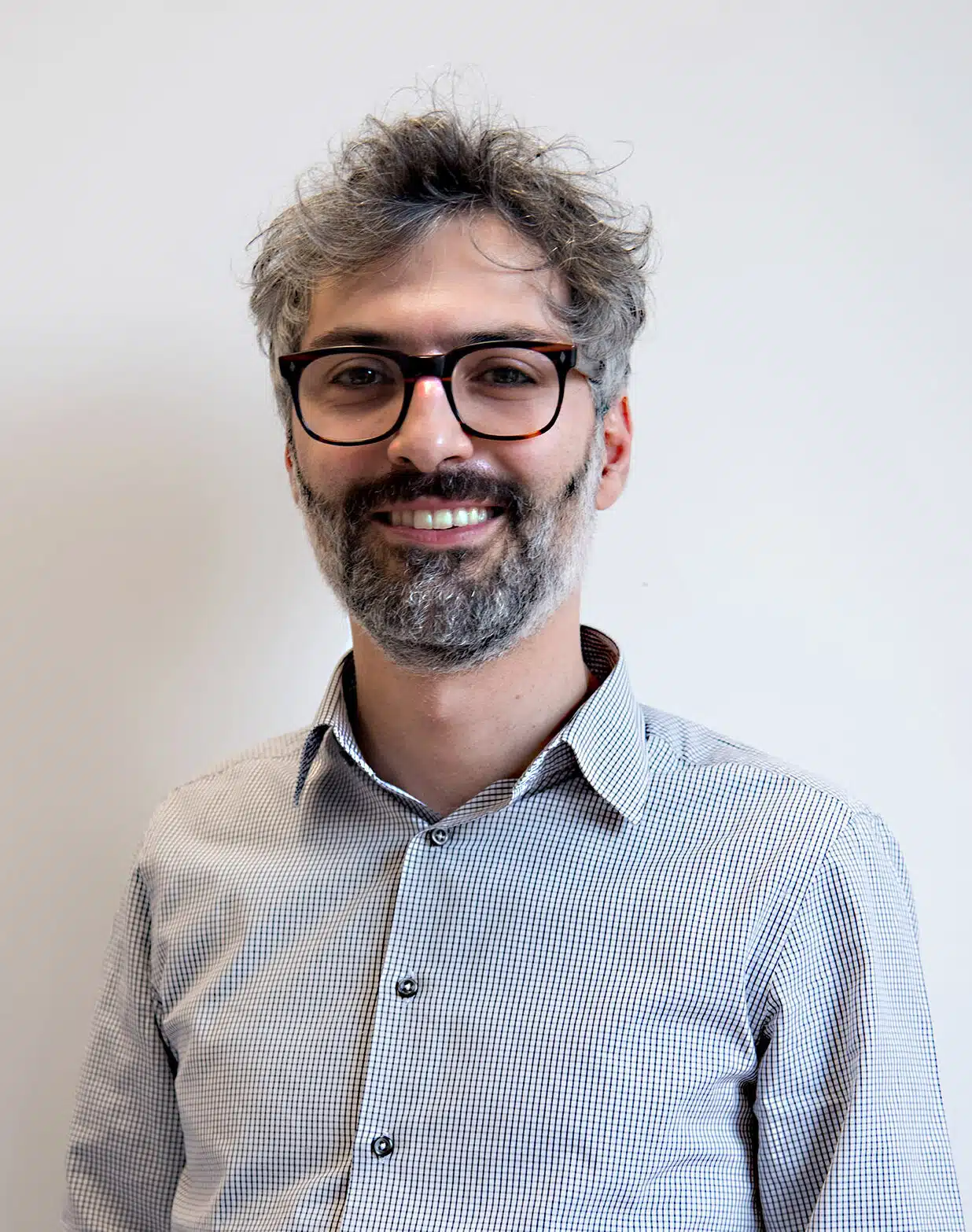
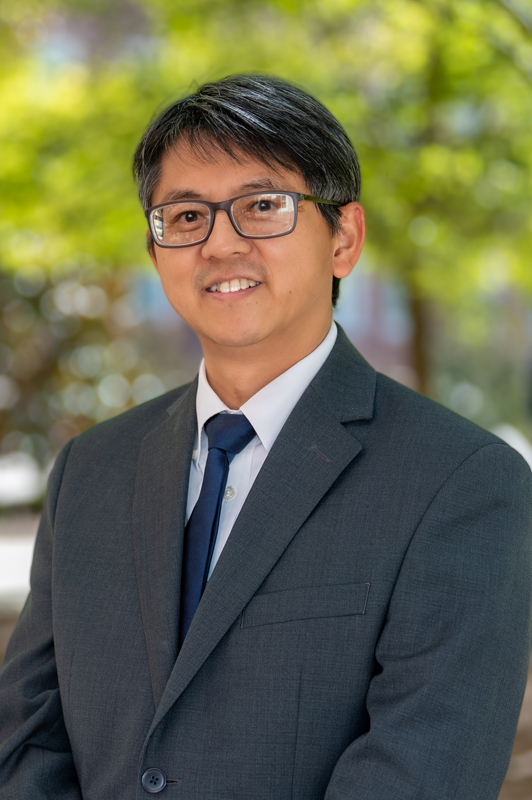
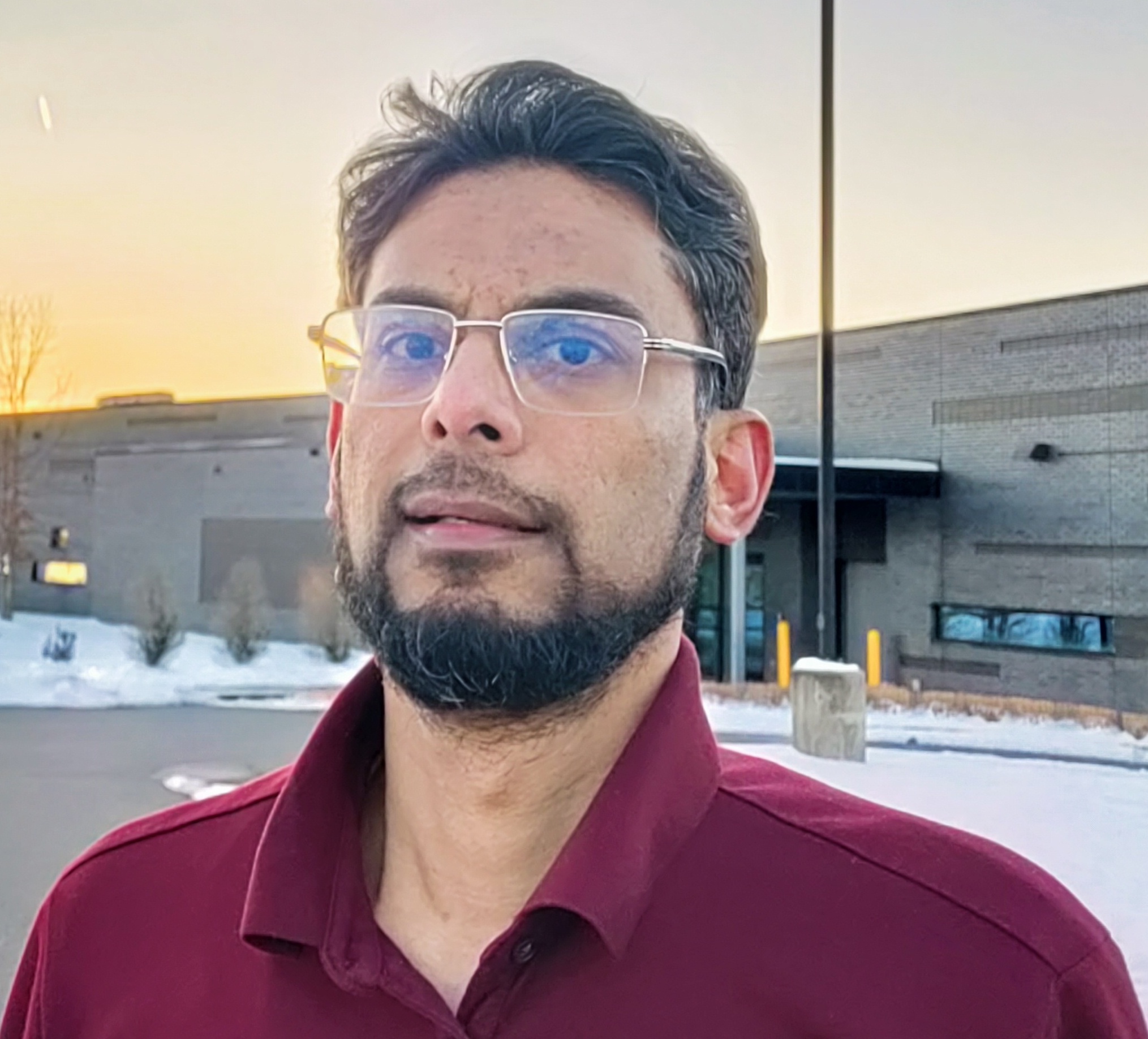
Matteo Palmonari is an Associate Professor affiliated with the University of Milano-Bicocca, where he leads the Insid&s LAB. His research focuses on advancing knowledge graphs, natural language processing (NLP), and semantic web technologies to address challenges in data integration, entity linking, and criminal justice applications. He specializes in developing tools like ABSTAT, SemTUI, and LamAPI for semantic enrichment and analysis of structured and unstructured data. Palmonari's work emphasizes practical applications in public administration, legal systems, and criminal investigations. His recent efforts include exploring large language models (LLMs) for entity disambiguation, zero-shot classification in procurement, and semantic interpretation of tabular data. He has contributed to projects such as the EU Business Graph ontology and semantic document management systems for governmental contexts. His publications span topics like temporal embeddings, cross-lingual ontology matching, and data quality assessment. The Insid&s LAB collaborates on initiatives like the 'innograph' knowledge graph for AI-driven innovation and semantic tools for event-based marketing analytics (BEEO and EW-shopp projects). Palmonari's research bridges theoretical advancements with real-world applications, particularly in improving data interoperability and decision-making through semantic technologies.
Marco Cremaschi is Assistant Professor at University of Milano-Bicocca focusing on Semantic Table Interpretation and Machine Translation using Semantic Web technologies. He leads research on knowledge extraction from tabular data and mentors bachelor's/master's students. Recent work develops AI tools for psychology decision support and mental health applications using gamification. Research bridges semantic web technologies with practical AI implementations.
Xiao Qin is an Alumni Professor and Director of the Computer Science and Software Engineering Graduate Programs at Auburn University's College of Engineering. He holds a Ph.D. in Computer Science from the University of Nebraska-Lincoln, and M.S. and B.S. degrees from Huazhong University of Science and Technology. His research focuses on artificial intelligence, machine learning, database systems, cybersecurity, and healthcare informatics with a particular emphasis on NL2SQL systems, key-value store optimization, graph neural networks, and edge-cloud healthcare solutions. Dr. Qin leads interdisciplinary projects in smart healthcare systems, high-performance storage architectures, and AI-driven data management. His recent work includes advancements in semantic table discovery (DiscoverGPT), intelligent cache allocation (iCache), and distributed graph neural network training. He is affiliated with the Center for Artificial Intelligence and Cybersecurity Engineering and has contributed to initiatives like the Alabama Center for Paper and Bioresource Engineering. His academic contributions span 15+ recent publications (2023-2025) addressing challenges in database optimization, machine learning algorithms, and cloud infrastructure efficiency. His advising includes Corey McDaniels, a master’s student who won the 2024 Eisenhower Transportation Fellowship.
Robin Gras is a Professor at the School of Computer Science, University of Windsor, and former Canada Research Chair. He holds cross-appointments in the Biology Department and Great Lakes Institute for Environmental Research. Additionally, he serves as CSO and Partner at Movyl Technologies and MVYL Associates. His research spans deep learning, machine learning, natural language processing, computer vision, and theoretical biology. Key focus areas include evolutionary modeling using individual-based approaches, NLP innovations like text summarization and attention visualization, and computational methods for genomic analysis. Recent publications demonstrate strong emphasis on transformer model optimization, evolutionary biology simulations, and NLP applications. A consistent theme is developing efficient computational methods to solve complex biological and linguistic problems. Scientific Awards: Canada Research Chair (Former) He leads the EcoSim research group investigating evolutionary dynamics through computational modeling and maintains active industry collaborations in technology development.
Dongjie Wang is an Assistant Professor in the Department of Electrical Engineering and Computer Science at the University of Kansas, School of Engineering. His research focuses on artificial intelligence, machine learning, and data science applications in bioinformatics, transportation planning, and data-centric AI. Wang's research interests span several key areas: Development of reinforcement learning frameworks for biological pathway analysis and gene selection Generative AI applications in urban transportation systems Multi-modal representation learning for cross-domain retrieval Neuro-symbolic approaches for feature engineering His recent publications demonstrate a consistent focus on developing novel AI methodologies for real-world applications, particularly in transportation systems optimization, biological data analysis, and tabular data processing. The articles collectively show strong emphasis on reinforcement learning architectures, graph neural networks, and multimodal integration techniques. Wang advises graduate students in computer science and leads research in data-centric AI applications. His laboratory focuses on developing scalable machine learning solutions for complex systems.
Michèle Sebag is a Principal Scientist (Directrice de recherche) at CNRS and member of the Académie des Technologies, affiliated with Université Paris Saclay. She heads the Équipe A-O at Laboratoire de Recherche en Informatique (LRI) and co-leads Project-Team TAU. Her research spans causal modeling, machine learning, optimization, and AI applications in social sciences. Leadership: Head of Steering Committee for ECML PKDD (2015-2019); Editorial board member for Machine Learning Journal; Board member of DataIA Institute and INS2I Council. Current PhD Students: Armand Lacombe Eléonore Bartenlian Victor Berger Roman Bresson Héri Rakotoarison Nilo Schwencke
Dr. Manar Samad is Associate Professor of Computer Science at Tennessee State University's College of Engineering. His multidisciplinary research spans machine learning, computer vision, natural language processing, health informatics, and explainable AI, with projects funded by NSF, NIH, DoD, and Amazon. Dr. Samad leads research on deep representation learning for tabular data, domain adaptation in computer vision, missing data imputation techniques, and multimodal learning. His health informatics work focuses on clinical decision support systems using electronic health records. Recent publications demonstrate specialization in self-supervised learning, clustering algorithms, and cross-domain adaptation for medical applications. Current projects include mathematically-inspired representation learning for heterogeneous data (DoD), deep clustering of EHR data (NSF), and cross-domain computer vision applications (Amazon). Dr. Samad directs the Computational Intelligence and Data Analytics Lab (CIDALab), advancing fundamental algorithms and applied AI systems. Education: Postdoc (Geisinger Medical Center), PhD (Old Dominion University), MSc (University of Calgary), BSc (Bangladesh University of Engineering & Technology) Awards: 2016 Outstanding PhD Researcher Award (Old Dominion University) Major Grants: NSF ($200K), DoD ($800K), NIH ($421K), USDA ($500K), Amazon ($80K)
Dr. Ryszard Janicki is a Professor in the Department of Computing and Software at McMaster University, affiliated with the Faculty of Engineering. He serves as the Graduate Advisor for Computer Science and has held academic positions since 1975. His expertise spans concurrency theory, rough sets, pairwise comparisons, software engineering fundamentals, and formal verification. He earned a Dr. Habil. from the Polish Academy of Sciences (1980), a Ph.D. (1977), and an M.Sc. (1975) in Computer Science and Applied Mathematics. Ph.D.: Computer Science, Polish Academy of Sciences, 1977 Dr. Habil.: Computer Science, Polish Academy of Sciences, 1980 M.Sc.: Applied Mathematics, Warsaw University of Technology, 1975 His research focuses on concurrency semantics (interval orders, Petri nets), approximation theory (rough sets, pairwise comparisons), software engineering (tabular expressions), and mereology applications. His work bridges theoretical foundations with practical systems modeling, including cardiac pacemakers and elevator systems using Petri nets. Recent publications emphasize advancements in pairwise comparison methods, data poisoning attack prevention in federated learning, and formal verification techniques for concurrent systems. He has advised numerous PhD students and contributed to textbooks and special journal issues on concurrency and rough sets. His contributions span 40+ years of academic leadership, with over 150 publications and international collaborations. He actively participates in conferences like Petri Net Theory and chairs special issues on concurrency and software certification.
Russ B. Altman is the Kenneth Fong Professor of Bioengineering, Genetics, Medicine, Biomedical Data Science, and (by courtesy) Computer Science at Stanford University. He previously chaired the Bioengineering Department (2007–2012) and led major initiatives like the FDA-supported Center for Excellence in Regulatory Science & Innovation. His research focuses on applying AI, data science, and informatics to drug action mechanisms, pharmacogenomics (via PharmGKB), and protein structure analysis (via the Helix Lab). He is a member of the National Academy of Medicine and has received prestigious awards including the U.S. Presidential Early Career Award and multiple fellowships. Education: AB in Biochemistry (Harvard, 1983), MD (Stanford, 1990), PhD in Medical Information Sciences (Stanford, 1989). Research Interests: Computational methods for drug response prediction, protein structure analysis, and functional genomics. His lab develops tools like PharmGKB and COLLAPSE for pharmacogenomics and structural biology. Recent work includes leveraging social media data for public health surveillance (e.g., opioid epidemic tracking) and AI-driven biomedical data science frameworks. Publications & Awards: Over 700 publications, including high-impact studies in Nature Communications and NPJ Digital Medicine . Awards include the AAAS Fellowship and leadership roles in ISCB and ASCPT. He hosts the Future of Everything podcast and co-founded Personalis (NASDAQ: PSNL). Advising & Grants: Mentored over 50 graduate students and postdocs. Served on FDA Science Board and NIH Advisory Committee. Current roles include Faculty Director of the 100 Year Study of AI (AI100) and Stanford’s Predictives & Diagnostics Accelerator. Labs & Teams: Leads the Helix Research Group and collaborates with the Stanford Institute for Human-Centered AI (HAI). Active in global health initiatives via the Chan-Zuckerberg Biohub and digital health collaborations with UC Berkeley.
Prof. Eirini Ntoutsi is a Professor of Open Source Intelligence at the CODE Research Institute for Cybersecurity and Smart Data , Bundeswehr University Munich . She leads the Artificial Intelligence & Machine Learning (AIML) research group , focusing on adaptive learning, responsible AI, and generative AI. Research Interests: Developing intelligent algorithms for real-world data challenges, addressing fairness-aware machine learning, explainable AI, and generative models. Projects: Co-leads the EU-funded MAMMOth (Multimodal AI for Trustworthy Human-Centric Applications) and STELAR (Spatio-Temporal Linked Data for Agri-food) initiatives. Applications: Deploying AI solutions in education, social networks, banking, agriculture, manufacturing, and engineering. Key Contributions: Developed the MMM-Fair open-source toolkit for fairness analysis with no-code interface. Actively contributes to conferences like ECML PKDD , FAccT , IJCNN , and WWW .
Prof. Dr. Olaf Wolkenhauer is a faculty member at the University of Rostock , where he holds the Chair of Systems Biology & Bioinformatics within the Institute of Computer Science . He also serves as an Adjunct Professor at institutions including Case Western Reserve University , Chhattisgarh Swami Vivekanand University of Technology , and the University of Cleveland , as well as a Visiting Professor at the Leibniz Institute for Food Systems Biology at the Technical University of Munich. His research focuses on systems biology, bioinformatics, and machine learning applications in medicine. Chair of Systems Biology & Bioinformatics, University of Rostock Adjunct Professor, Case Western Reserve University Adjunct Professor, Chhattisgarh Swami Vivekanand University of Technology Adjunct Professor, University of Cleveland Visiting Professor, Leibniz Institute for Food Systems Biology Wolkenhauer’s research integrates mathematical modeling , data analysis , and machine learning to address complex biological and medical problems. His recent work explores epigenetic instability in cancer , drug repurposing , synthetic data generation , and collaborative filtering for biomedical applications. He has contributed to advancements in AI-driven diagnostics and functional data analysis . His scientific contributions have earned him recognition, including Fellowship at the Stellenbosch Institute for Advanced Studies (STIAS) and membership in the DFG Review Board 201 Fundamentals of Medicine and Biology . His teaching portfolio includes courses on modeling and simulation in life sciences , data science with Python , and seminars on systems biology and scientific communication . Fellow, Stellenbosch Institute for Advanced Studies (STIAS) DFG Review Board Member, Fundamentals of Medicine and Biology
Monica Agrawal is an Assistant Professor at Duke University with joint appointments in the Division of Translational Biomedical (Biostatistics & Bioinformatics), Trinity College of Arts & Sciences (Computer Science), and Pratt School of Engineering (Biomedical Engineering). Holding a Ph.D. from MIT (2023), her work bridges machine learning, clinical data analysis, and health equity through biomedical AI systems. Research Focus: Combines natural language processing, graph networks, and EHR analysis to address medical challenges. Key areas include polypharmacy side effects, health knowledge graphs, and human-AI collaboration in clinical settings. Scientific Contributions: Pioneering applications of large language models in health equity promotion, clinical information extraction, and EHR-based research. Collaborates with Harvard Medical School and Harvard School of Public Health on translational health projects. Teaching: Instructs courses on natural language processing (COMPSCI 572) and research independent study (COMPSCI 393/394), emphasizing hands-on AI development for healthcare. Recent Publications: Explore medical conversational AI, ambient scribing tools, and LLM safety in clinical communication. Her 2025 paper on health equity highlights AI's potential to reduce disparities.
Tomi Janhunen is a Professor in Computing Sciences at Tampere University, specializing in knowledge representation, automated reasoning, and logic programming. He previously served as Adjunct Professor at Aalto University (2019–2024) and maintains a Doctor of Science (Tech.) degree. His research spans answer set programming, satisfiability checking, optimization, and distributed computation. PhD, Aalto University (Doctor of Science (Tech.)) Adjunct Professor of Computer Science (Aalto University, 2019–2024) His research focuses on Answer Set Programming (modularity, verification, optimization), Satisfiability Modulo Theories , Nonmonotonic Logics , and Computational Complexity . He integrates logic programming into real-world applications like preventive maintenance scheduling and AI security systems. Recent work includes translating logic programs into integer programming, developing probabilistic reasoning systems (Plingo), and creating interpretable classifiers for tabular data. His publications emphasize stable model semantics , optimization techniques , and constraint networks . He supervises M.Sc., Lic.Sc., and Ph.D. theses and has completed pedagogical studies. Janhunen actively reviews for journals like Artificial Intelligence Journal and ACM Transactions on Computational Logic .
João Gama is a Full Professor at the School of Economics, University of Porto, Portugal, and a researcher at LIAAD - INESC TEC (Laboratory of Artificial Intelligence and Decision Support). He holds the position of Professor Emeritus at the University of Porto and serves on the board of directors of LIAAD. His professional affiliations include being a Fellow of EurIA (since 2020), IEEE Fellow (since 2021), Fellow of the Asia-Pacific AI Association, and an ACM Distinguished Speaker. Dr. Gama received his Ph.D. in Computer Science from the University of Porto in 2000. His academic journey has established him as a leading researcher in the field of machine learning and data mining, with an h-index of 67 on Google Scholar. Professor Gama's research primarily focuses on knowledge discovery from data streams , evolving data , probabilistic reasoning , and causality . His work addresses fundamental challenges in processing continuous, high-volume data streams where traditional batch processing methods are inadequate. He has made significant contributions to developing algorithms that can adapt to concept drift, handle evolving data distributions, and maintain high performance in real-time applications. His research has practical applications in diverse domains including predictive maintenance, financial analysis, transportation systems, and environmental monitoring. With over 300 publications to his name, he is the author of the influential book 'Knowledge Discovery from Data Streams' (2010). With an extensive publication record of over 300 reviewed papers in top-tier journals and conferences, Professor Gama's recent work shows a strong trend toward explainable AI for predictive maintenance , edge computing for IoT data streams , and advanced techniques for handling concept drift . His 2024-2025 publications demonstrate increasing focus on practical industrial applications, particularly in transportation systems (like the Metro do Porto case study), financial portfolio management, and resource-constrained edge devices. There's also a clear emphasis on making stream mining techniques more interpretable and applicable to real-world problems, with several papers specifically addressing how to explain anomalies and failures in complex systems. Professor Gama's scientific achievements have been recognized through several prestigious fellowships: EurIA Fellow (since 2020) IEEE Fellow (since 2021) Fellow of the Asia-Pacific AI Association ACM Distinguished Speaker As an educator and mentor, Professor Gama has supervised numerous doctoral students who have gone on to establish their own research careers. His current PhD students include Thiago Andrade, Mário Cordeiro, Shazia Tabassum, and Sofia Fernandes. Among his former students are notable researchers such as Pedro Pereira Rodrigues, Hadi Fanaee, and Elena Ikonomovska. Professor Gama has secured significant research funding through projects like MAESTRA (Learning from Massive, Incompletely annotated, and Structured Data) and Knowledge Discovery from Ubiquitous Data Streams (PTDC/EIA/098355/2008). He has also served in leadership roles for major conferences including ECMLPKDD 2005, IDA 2011, ECMLPKDD 2015, and DSAA 2017, and is currently organizing ECMLPKDD 2025. Professor Gama leads research activities at LIAAD - INESC TEC, where he heads a team focused on data stream mining and knowledge discovery. His laboratory collaborates extensively with industry partners, particularly on predictive maintenance applications as evidenced by the MetroPT-3 Dataset developed for train systems. The team has developed several influential algorithms and frameworks for processing data streams, with applications spanning transportation, finance, healthcare, and environmental monitoring. Current research directions include integrating foundational models with stream processing, enhancing explainability of stream mining results, and developing efficient techniques for edge devices that can operate with limited computational resources.
Robin Tibor Schirrmeister is a researcher at the University of Freiburg's Faculty of Engineering, specializing in deep learning applications for brain-computer interfacing and neurotechnology. His work bridges engineering and medical domains through affiliations with BrainLinks-BrainTools, the Neurorobotics Lab, and the Department of Presurgical Epilepsy Diagnostics. His doctoral research (2024) focused on EEG signal decoding under advisors Frank Hutter and Tonio Ball. Key research areas include: Deep learning for EEG pathology classification Real-time brain-signal decoding systems Human-robot interaction via BCI Medical diagnostics using neural networks Publication trends since 2018 reveal consistent advancement in EEG decoding methodologies, with recent work (2024-2025) focusing on brain-age dynamics, small-data prediction models, and Riemannian geometry applications. His research demonstrates strong clinical translation potential, particularly in epilepsy diagnostics and assistive robotics. Award: 2018 Poster Prize for µECoG research Collaborative work spans multiple labs including BrainLinks-BrainTools and the Epilepsy Center, with significant contributions to clinical EEG dataset development and intracranial signal processing. Current projects focus on scaling behavior in EEG classification and brain-age modeling. Research infrastructure includes the Neurorobotics Lab for BCI-robot integration and the Epilepsy Center for clinical validation, enabling translational work from algorithm development to medical applications.