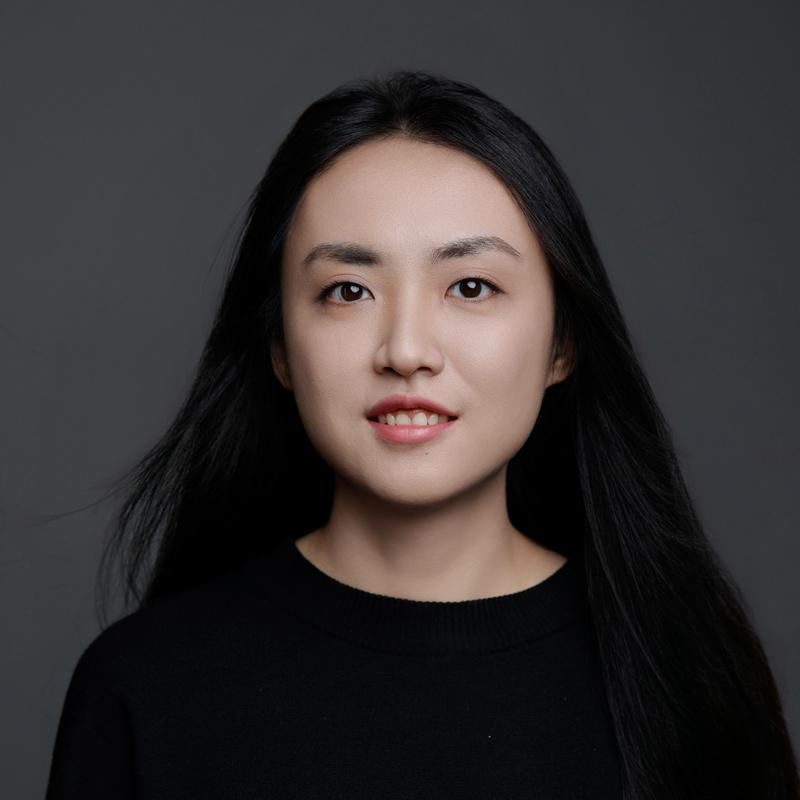
Dr. Wenqi Shi serves as an Assistant Professor at the Peter O’Donnell Jr. School of Public Health at UT Southwestern Medical Center. Her research focuses on the integration of artificial intelligence with healthcare, particularly advancing algorithms and systems for precision medicine. She specializes in working with multi-modal patient data including EHRs, medical notes, imaging, and genomics, with dedicated applications in pediatric healthcare, cancer, and rare diseases. Her research interests include developing large language models for translational medicine, creating agentic AI and generative models for biomedical discovery, and establishing responsible AI practices to enhance clinical outcomes. Publication trends show extensive work in explainable AI, clinical decision support systems, and multi-modal data integration, with recent emphasis on retrieval-augmented language models and causal inference methodologies. Dr. Shi obtained her Ph.D. from the Georgia Institute of Technology prior to joining UT Southwestern.
Jonathan Voersaa Wenshøj is an academic researcher at the Department of Computer Science, University of Copenhagen. He contributes to the Machine Learning section's activities spanning theoretical foundations and applications in diverse domains like information retrieval, medical data analysis, remote sensing, sustainability, and biological modeling. The section participates in the SCIENCE AI Centre and collaborates with initiatives like TreeSense for global tree resource analysis. His research intersects machine learning with quantum computing, medical informatics, and sustainability. Recent publications highlight applications in environmental monitoring, healthcare diagnostics, and energy-efficient AI systems. The department provides advanced compute resources including a powerful cluster for intensive machine learning tasks. This researcher's work appears in diverse machine learning domains, with recent publications addressing quantum-inspired architectures, explainable AI in medical imaging, and sustainable computing practices. The section actively hosts events including seminars, conferences, and PhD defences related to machine learning advancements.
Dr. Ernesto Jiménez-Ruiz is a Senior Lecturer in Artificial Intelligence and Director of Research at City, University of London. He holds a PhD from Jaume I University, Spain (2010), and has held academic positions since 2010. His research focuses on knowledge graphs, ontology alignment, semantic web technologies, and neuro-symbolic AI. Currently, he teaches modules on semantic web technologies and research methods. He leads the Research Center affiliated with City St George's, University of London. Administrative Roles: Director of Research (2024–present), Senior Tutor for Research (2023–2024) Research Interests: AI, knowledge representation, ontology alignment, semantic integration, and biomedical informatics. His work bridges machine learning and symbolic reasoning, with contributions to ontology matching and knowledge graph embeddings. He supervises PhD students in areas like knowledge graph alignment and neuro-symbolic systems. Awards: SWSA Ten-Year Award (2021) for influential ontology alignment work. He is a Fellow of AdvanceHE (FHEA). Grants & Collaborations: Leads projects on semantic industrial data modeling and collaborates with Samsung Research UK, Bosch, and Statoil. Active in initiatives like the Turing Institute's Knowledge Graph Interest Group.
Dr. Mythreyi Velmurugan is an Associate Lecturer in the School of Information Systems at Queensland University of Technology (QUT), within the Faculty of Science. She serves as ECR Co-leader for the Health and Human Biology Theme. Her PhD focused on Explainable AI techniques for tabular data, emphasizing transparency in machine learning. She holds a PhD from QUT and is a member of Women in Technology (WiT) and an Associate Fellow of the Higher Education Academy (AFHEA). Education: PhD in Information Systems (Queensland University of Technology) Research Interests: Her work bridges data analytics and process science, with focuses on: Explainable AI (XAI) for tabular data Transparent machine learning models Predictive process analytics Healthcare social support systems Online community dynamics Publications Trends: Recent work emphasizes: Functionally-grounded evaluation frameworks for XAI Stability/fidelity of post-hoc explanations Healthcare community analysis (e.g., carer support systems) Interpretable probabilistic models for black-box demystification Professional Engagement: Women in Technology (WiT) member AFHEA certification ORCID/Google Scholar profiles maintained
Larry P. Heck is a Professor with a joint appointment in the School of Electrical and Computer Engineering and School of Interactive Computing at the Georgia Institute of Technology. He holds the Rhesa S. Farmer Advanced Computing Concepts Chair and is a Georgia Research Alliance Eminent Scholar . Education: BSEE, Texas Tech University (1986) MSEE, Georgia Institute of Technology (1989) PhD EE, Georgia Institute of Technology (1991) His research focuses on conversational AI , dialogue systems , and machine learning applied to natural language processing and speech recognition . He pioneered early industrial applications of deep learning in speech processing and has contributed to advancements in multimodal interaction, knowledge distillation, and real-time question answering systems. Recent publications emphasize moral reasoning in AI , multimodal dialogue , and large-scale dataset creation for conversational systems. His work bridges language modeling , sensor fusion , and ethical AI through innovations in contextual reasoning and interface masking. Scientific Distinctions: IEEE Fellow (2020) IEEE Signal Processing Society Best Paper Award Academy of Distinguished Engineering Alumni, Georgia Tech (2017) Distinguished Engineer Award, Texas Tech University (2017) Fellow, National Academy of Inventors (2025) He has secured significant funding from DARPA and NSA for speaker recognition systems and has led cutting-edge research at institutions including Microsoft, Google, and Samsung. His lab focuses on conversational systems and deep learning for speech and multimodal data.
Jignesh M. Patel is a Professor in the Computer Science Department at Carnegie Mellon University, where he leads research on efficient data analysis methods. His work focuses on improving both system efficiency (e.g., high-performance data algorithms) and human efficiency (e.g., user productivity with data systems). Research Focus: Patel's group specializes in database systems, query optimization, hardware acceleration, and human-data interaction. Their interdisciplinary work spans: Transactional processing and real-time analytics Query optimization techniques Hardware-algorithm co-design Natural language interfaces for data systems Memory-efficient data processing Professional Activities: Co-founded four technology companies (Paradise, Locomatix, Quickstep, DataChat). Serves on program committees for premier conferences including SIGMOD and CIDR (as co-chair). Teaches database systems courses at CMU. Awards: Received Best Paper Award at DaMoN 2010 for work on cluster efficiency.
Fosca Giannotti is a Full Professor at Scuola Normale Superiore in Pisa, Italy, and leads the Pisa KDD Lab - Knowledge Discovery and Data Mining Laboratory, a joint research initiative of the University of Pisa and ISTI-CNR. Founded in 1994, the Pisa KDD Lab is one of the earliest research labs focused on data mining. Giannotti is a pioneering scientist in mobility data mining, social network analysis, and privacy-preserving data mining. Her educational background includes a Master Degree in Computer Science from the University of Pisa (1982) with 110/100 cum laude. She has held numerous visiting positions including at MCC in Austin, CWI Amsterdam, UCLA, and the Barabasi Lab at Northeastern University. Giannotti's research focuses on social mining from big data, encompassing smart cities, human dynamics, social and economic networks, ethics and trust, and diffusion of innovations. She has authored more than 300 papers and coordinated tens of European projects and industrial collaborations. Her current work increasingly centers on Explainable AI (XAI), as evidenced by her prestigious ERC Advanced Grant for the XAI project focused on "Science and technology for the explanation of AI decision making." Her recent publications reveal a strong emphasis on trustworthy AI, with research spanning privacy-preserving techniques, fairness in machine learning, human-AI collaboration frameworks, and medical applications of explainable AI. The breadth of her work demonstrates how data mining principles are being applied across diverse domains from social sciences to healthcare. ERC Advanced Grant for XAI project Premio Internazionale Tecnovisionarie 2021 Intelligenza Artificiale Giannotti has coordinated numerous significant projects including SoBigData (the European research infrastructure on Big Data Analytics and Social Mining), XAI, TAILOR (Foundations of Trustworthy AI), HumanE-AI-Net, and AI4EU. As former coordinator of SoBigData, she led an ecosystem of ten cutting-edge European research centers providing an open platform for interdisciplinary data science. She leads the Pisa KDD Lab, which serves as a hub for research on knowledge discovery and data mining. The lab has been instrumental in developing techniques for mobility data analysis, social network mining, and privacy-preserving data analytics, with applications ranging from smart cities to pandemic response.
Hamid Karimi is an Assistant Professor of Computer Science at Utah State University (USU), where he leads the Data Science and Applications (DSA) lab. His research focuses on using AI and data mining for social good, including social media mining, educational data mining, and machine learning. He earned his Ph.D. in Computer Science from Michigan State University (MSU) in 2021, with a thesis on AI for social good. His interdisciplinary work includes the Teachers in Social Media project, which developed algorithms to improve PK-12 education quality. Dr. Karimi has received several awards, including the Best Paper Award at ASONAM 2018 and the International Faculty Recognition Award at USU in 2022. His research spans social media behavior analysis, misinformation detection, and fairness in machine learning. The DSA lab prioritizes practical solutions for socially impactful data science applications, such as cross-disciplinary projects in science and engineering. Education: Ph.D. in Computer Science, Michigan State University, 2021 Research Interests: Social Media Mining Educational Data Mining Graph Mining AI for Social Good Lab: Data Science and Applications (DSA) Lab, USU His work bridges theoretical data science with real-world applications, such as analyzing teacher behavior on Pinterest and leveraging GPT for scalable education tools. Dr. Karimi’s research emphasizes ethical AI practices and interpretable machine learning models.
Mateo Espinosa Zarlenga is a Lecturer in the Department of Computer Science and Technology at the University of Cambridge. His research focuses on Explainable Artificial Intelligence (XAI), interpretable deep learning architectures, and the application of these techniques in healthcare. He explores concepts such as concept-based explainability, representation learning, and the mitigation of bias in AI systems. His work emphasizes the design of learning algorithms that produce human-understandable explanations and their practical deployment in critical domains. He has supervised multiple MPhil/Part III projects, including studies on concept intervention policies, iterative concept discovery, and the ethical implications of AI systems. His research has been recognized through prestigious awards, including a Best Paper Award nomination at ECCV 2024 and spotlight presentations at NeurIPS workshops and AAAI conferences. Mateo collaborates with experts in healthcare and computational biology to advance interpretable AI models for real-world applications. Key achievements include the development of Concept Embedding Models (CEMs) and TabCBM, which bridge the gap between model accuracy and explainability, particularly in tabular data. His work often involves designing interventions to improve model performance through expert feedback, as seen in projects addressing concept leakage and bias mitigation without privileged information.
Ashwin Machanavajjhala is a Professor in the Department of Computer Science at Duke University's Pratt School of Engineering. With over 166 publications spanning from 2001 to 2025, his research has significantly impacted the fields of differential privacy, database systems, and data security. His recent work focuses on practical applications of differential privacy for government data releases, particularly for the US Census Bureau. Machanavajjhala's research primarily centers on differential privacy, with significant contributions to database systems, privacy-preserving data analysis, and statistical disclosure control. His work bridges theoretical foundations with real-world applications, particularly in government statistics and census data protection. He has developed numerous frameworks and algorithms including DPXPlain for explaining differentially private query results, PreFair for generating fair synthetic data, and various components of the US Census Bureau's disclosure avoidance system. His research demonstrates a consistent trajectory from theoretical privacy mechanisms toward practical implementations that balance privacy guarantees with data utility. His recent publications reveal a strong focus on applying differential privacy to census data (SafeTab, PHSafe), developing methods for explaining private query results (DPXPlain), addressing fairness in private data analysis (PreFair), and exploring privacy applications in blockchain technology. His work shows increasing engagement with government agencies, particularly the US Census Bureau, where his research has directly informed disclosure avoidance systems for the 2020 Census. Machanavajjhala has advised numerous PhD students who have become prominent researchers in privacy and databases, including Ryan McKenna, Xi He, Yuchao Tao, and David Pujol. His collaborative network includes leading researchers from major institutions, with frequent collaborations with Gerome Miklau, Michael Hay, and Daniel Kifer. His research has been consistently funded by major grants supporting privacy-preserving data analysis. He leads research on the Tumult Analytics framework, a robust and scalable differential privacy system, and has been instrumental in developing privacy technologies for the US Census Bureau's 2020 data release. His work demonstrates a commitment to making differential privacy practical for real-world statistical agencies and data providers.
Szymon Płotka is a Researcher in the Medical Imaging and Robotics department at the University of Amsterdam's Informatics Institute. His work focuses on advancing prenatal care through deep learning, particularly in fetal ultrasound analysis and AI-driven medical solutions. He holds a PhD in Computer Science from the University of Amsterdam (2024), with a thesis on enhancing prenatal care via machine learning. Research Interests : Integration of deep learning techniques for medical image analysis Development of AI tools for diagnostic accuracy and clinical workflow optimization Multimodal data fusion in healthcare Real-time surgical imaging applications Recent work emphasizes fetal biometry measurements, endoscopic synthetic datasets, and real-time placental vessel segmentation. His research bridges cutting-edge AI with clinical practice, aiming to improve accessibility and efficiency in medical imaging. Key Contributions : Advances in fetal ultrasound video analysis matching human expert accuracy Pioneering synthetic endoscopic dataset generation with diffusion models Development of BabyNet++ for birth weight prediction No formal students listed, but his projects likely involve collaborations with academic teams. Active in organizing and participating in medical imaging challenges (e.g., FeTA, FetReg).
Murat Kantarcioglu is an Ashbel Smith Professor of Computer Science at the University of Texas at Dallas within the Erik Jonsson School of Engineering and Computer Science. He holds visiting appointments at UC Berkeley and Harvard University, focusing on data privacy and security. With a Ph.D. in Computer Science from Purdue University (2005), he has made significant contributions to privacy-preserving data mining, blockchain analytics, and secure machine learning. Education: Ph.D. in Computer Science (Purdue, 2005) Current Roles: Ashbel Smith Professor (2021-present), Visiting Scholar at UC Berkeley (2020-present), Affiliate at Harvard (2013-present) Past Roles: Assistant (2005-2011), Associate (2011-2015), and Full Professor (2015-2021) at UTD His research focuses on data privacy , computer security , and machine learning , particularly addressing challenges in privacy-preserving distributed data mining , blockchain analytics , and adversarial machine learning . He has pioneered techniques for secure federated learning , topological analysis of blockchain networks , and privacy-utility tradeoffs in health data systems. Recent publications reveal a strong emphasis on IoT security , graph neural network vulnerabilities , and blockchain data structures . His work combines theoretical rigor with practical implementations using technologies like Intel SGX and homomorphic encryption. Notable Awards NSF CAREER Award (2009) IEEE Technical Achievement Award (2017) AMIA Homer Warner Best Paper Award (2014) Fellow of IEEE (2022), AAAS (2020), and ACM (2016) Key Projects Privacy-Preserving Genomics Data Sharing Adversarial Learning Frameworks Smart Contract Security Medical Data Protection Systems Labs Director of Data Security and Privacy Lab Collaborations with Vanderbilt, UC Berkeley (RISE Lab), and Harvard (Data Privacy Lab)
Dr. Adel Abusitta is an Assistant Professor in the Department of Computer Engineering and Software Engineering at Polytechnique Montréal, where he conducts research at the intersection of artificial intelligence and cybersecurity. With expertise in secure and resilient AI systems, IoT security, and malware analysis, Dr. Abusitta has established himself as a significant contributor to the field of AI-powered cybersecurity solutions. Education: PhD in Computer Engineering from Polytechnique Montréal Postdoctoral Fellow at University of Montréal Postdoctoral Fellow at McGill University Dr. Abusitta's research focuses on developing secure and trustworthy artificial intelligence systems with applications in cybersecurity. His work spans several critical areas including explainable AI for security applications, AI-powered malware analysis, intrusion detection systems, and IoT security. He has made significant contributions to the understanding of how AI can be both secured against attacks and used to enhance security systems. His research addresses the dual challenge of making AI systems resilient to adversarial manipulation while leveraging AI's capabilities to detect and prevent cyber threats in complex environments like cloud computing and IoT networks. Analysis of Dr. Abusitta's recent publications reveals a strong focus on the intersection of AI and cybersecurity, particularly in developing robust anomaly detection systems, explainable security solutions, and resilient architectures for IoT environments. His work demonstrates a consistent trajectory toward making AI systems both more secure and more useful for security applications, with increasing emphasis on practical implementations that can withstand real-world challenges. Dr. Abusitta has collaborated extensively with Defence Research and Development Canada (DRDC) on projects related to AI-powered data analytics for discerning malware intent. He has also worked with industrial partners through the Institute for Data Valorization (IVADO) to develop privacy-preserving machine learning techniques that maintain accuracy while protecting sensitive information. His research has practical applications in critical infrastructure protection and secure AI deployment.
Dr. Tieming Liu is an Associate Professor in the School of Industrial Engineering and Management at Oklahoma State University , where he has served since 2005, first as Assistant Professor and then promoted to Associate Professor in 2011. His expertise bridges operations research, supply-chain coordination, healthcare analytics, renewable-energy policy, and production scheduling. Education Ph.D. in Transportation and Logistics, Massachusetts Institute of Technology, 2005 M.S. in Industrial Engineering and Management Science, Northwestern University, 2001 M.S. in Control Theory and Control Engineering, Tsinghua University, 2000 B.S. in Control Theory and Control Engineering, Tsinghua University, 1997 Research Interests Dr. Liu’s scholarship is organized around three pillars: Supply-Chain & Logistics: coordination contracts, inventory bounds, responsive pricing, channel rebates, and production flexibility under uncertainty. Healthcare Analytics: machine-learning models for diabetic retinopathy and sepsis risk prediction, clinical decision-support systems, and handling imbalanced EHR data. Energy & Sustainability: renewable portfolio standards, capacity coordination with renewable energy certificates, and incentive mechanisms for renewable and conventional generators. Recent methodological contributions include hidden Markov models for continuous mortality prediction, tree-augmented Bayesian networks for sepsis risk, and tensor-completion-driven convolutional networks for longitudinal medical data. Scientific Awards & Honors EJOR Reviewer Award, 2019 IEM Faculty Award, 2019 Halliburton Outstanding Faculty Award, OSU, 2014 Merrick Foundation Teaching Award, OSU, 2013 Riata/Koch Faculty Fellow, OSU, 2012 Lockheed Martin Teaching Award, OSU, 2011 Student Organization Faculty Advisor of the Year, OSU, 2010 Student Mentorship & Collaboration Dr. Liu has advised or co-advised a large cohort of doctoral and master’s students whose names appear as first or co-authors on his publications. His collaborative network spans MIT, Northwestern, IBM T. J. Watson Research Center, and multiple departments across OSU, fostering interdisciplinary projects that integrate operations research with real-world healthcare, transportation, and energy challenges. Laboratories & Teams He conducts research within the analytics and optimization laboratories of the School of Industrial Engineering and Management, directing projects funded by federal agencies and industry partners aimed at next-generation decision-support systems for healthcare providers, logistics operators, and energy market regulators.
Bogdan Kulynych is a research scientist at Lausanne University Hospital in Switzerland, working within the Clinical Data Science group. He holds a Ph.D. in Computer Science from EPFL (Switzerland), where he was advised by Carmela Troncoso, and a B.Sc. in Applied Mathematics from Kyiv Mohyla Academy in Ukraine. His academic journey also includes a visiting fellowship at Harvard University with Flavio du Pin Calmon, and internships at Google and CERN. His research spans three interconnected domains: Algorithmic Accountability, Verification, and Reliability; Privacy-Preserving Learning and Statistics; and Algorithmic Systems in Healthcare. Kulynych develops methods for obtaining practical guarantees on model stability, robustness, and reliability, while also auditing these properties. His privacy work focuses on systems ensuring practical privacy guarantees with legally legible and interpretable operational risk analyses. In healthcare, he critically studies algorithmic system deployment in clinical practice through collaboration with clinicians and medical informatics practitioners. Kulynych's publication record demonstrates significant impact in top venues including NeurIPS, ICML, ICLR, FAccT, and PETS. His recent work addresses fundamental questions in differential privacy, operational privacy metrics, and healthcare AI applications. His research trend shows increasing focus on translating theoretical privacy guarantees into practical healthcare settings while addressing the social implications of algorithmic systems. Unifying Re-Identification, Attribute Inference, and Data Reconstruction Risks in Differential Privacy (NeurIPS 2025) (ε,δ) Considered Harmful: Best Practices for Reporting Differential Privacy Guarantees (2025) Attack-Aware Noise Calibration for Differential Privacy (NeurIPS 2024) As an active member of the academic community, Kulynych regularly presents at major conferences and seminars, including recent talks at Harvard Privacy Tools Seminar, NeurIPS, and Imperial College London. His work has received media attention in The Guardian, Wired, The Verge, and CNET regarding algorithmic bias challenges. Kulynych maintains an active presence on Bluesky (@bogdankulynych) where he engages in critical discussions about AI ethics, privacy, and the societal implications of technology.