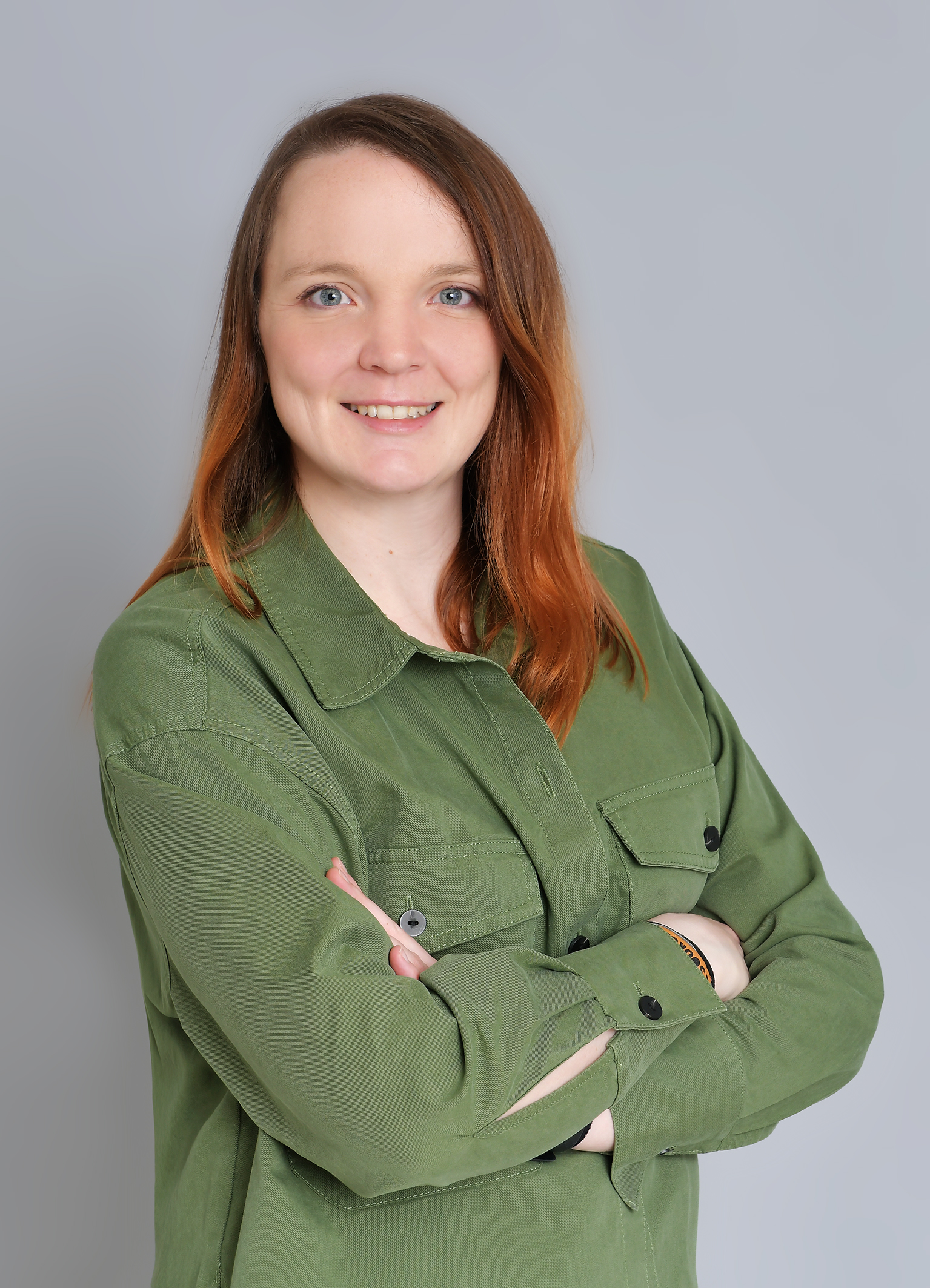
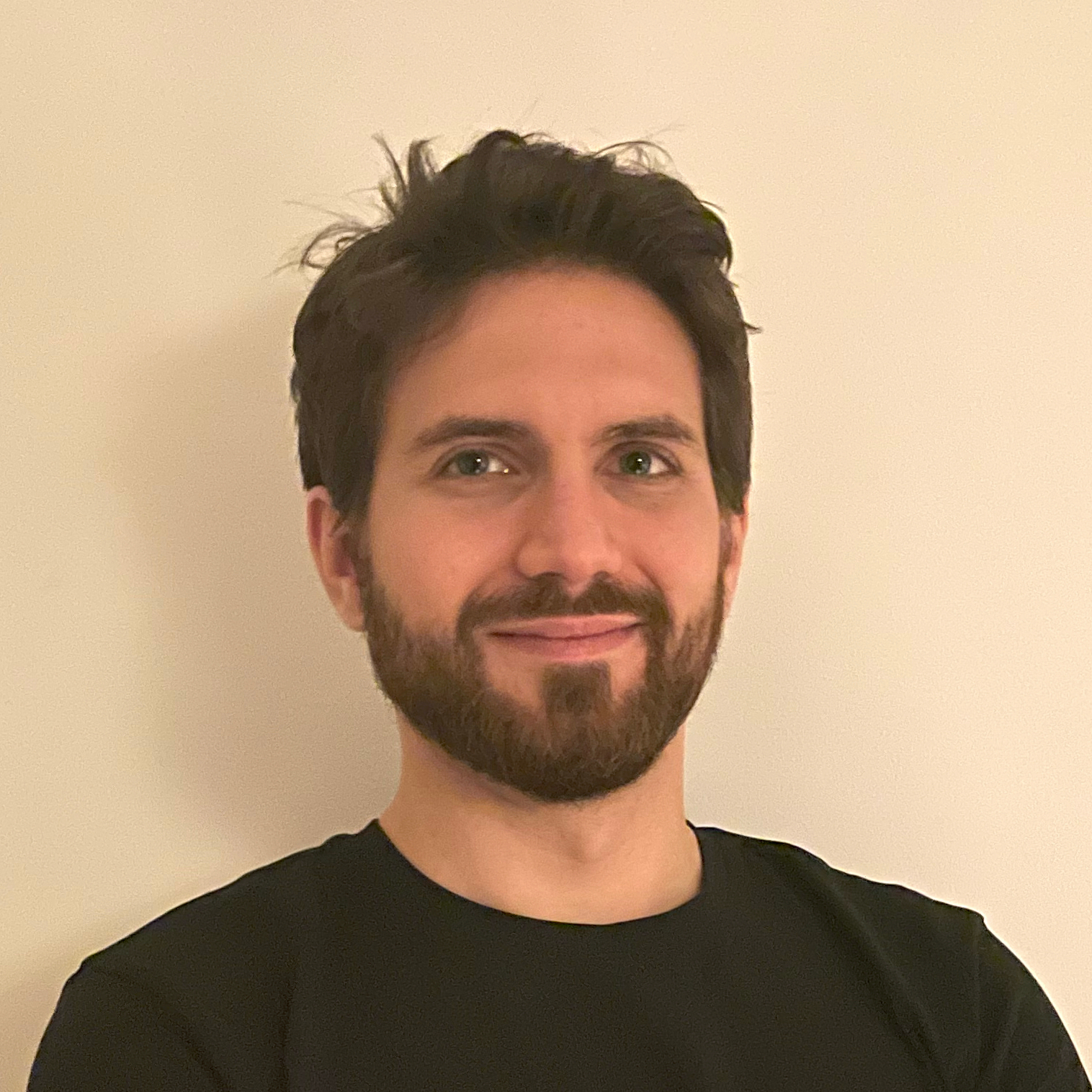
Maciej Zięba is an academic researcher affiliated with the Faculty of Information and Communication Technology at Wrocław University of Science and Technology, specifically within the Department of Artificial Intelligence . His work spans machine learning, deep learning, and computer vision, with a focus on hyperspectral imaging, autonomous systems, and 3D modeling. Recent research includes uncertainty-aware sensor deployment for autonomous vehicles, low-light image enhancement algorithms, and probabilistic regression frameworks for tabular data. He has co-authored publications on flow-based models, hypernetworks, and neural radiance fields (NeRF) applied to 3D face rendering. Contact: maciej.zieba@pwr.edu.pl
Paolo Papotti is an Associate Professor of Computer Science at EURECOM (France) since 2017, affiliated with the Data Science department. Previously, he was a senior scientist at QCRI (Qatar) and an assistant professor at Arizona State University (USA). He earned his PhD in Computer Science from the University of Roma Tre (Italy) in 2007, following an MEng in Computer Engineering from the same institution in 2003. His research focuses on scalable data management, data integration, data cleaning, and computational fact-checking. Notable contributions include work on knowledge graph rule discovery (Rudik), fact-checking frameworks (Scrutinizer), and data quality systems. His research has been supported by awards such as the 2020 Google Faculty Research Fellowship. Key publications include advancements in table representation learning, LLM-based data querying, and crowdsourced fact-checking validation. His work spans theoretical foundations and practical tools for improving data quality and information trustworthiness.
Prof. Jacco van Ossenbruggen is a Full Professor in Intelligent Information Systems at Vrije Universiteit Amsterdam (VU), affiliated with the Network Institute. He serves on the Management Board of ODISSEI, a national research infrastructure for social sciences and economics. His academic background includes a PhD in Computer Science (2001) from VU’s Faculty of Science, focusing on hypermedia processing. Research Interests: His work centers on cultural AI, FAIR data principles, ontology engineering, and semantic web technologies. Key areas include inclusive cultural heritage metadata, bias mitigation in AI systems, and knowledge discovery via linked data. Recent projects involve leveraging large language models (LLMs) for metadata enrichment and ontology construction. Key Contributions: He leads initiatives like the Cultural AI Lab, exploring AI applications for cultural heritage. His research bridges technical innovations (e.g., semantic integration of restricted-access data) with societal impacts (e.g., ethical AI frameworks for public-sector applications). Developed frameworks for evaluating entity alignment in knowledge graphs Pioneered FAIR-aligned data management plans for scientific communities Designed tools like Alter Heritage for collaborative metadata curation Grants & Projects: Principal Investigator of the ODISSEI Portal project (2020–2024), advancing open data infrastructures. Active in funding initiatives promoting reproducible research and ethical data practices. Labs/Teams: Cultural AI Lab at VU, focusing on AI-driven solutions for cultural heritage preservation and accessibility.
Gustav Eje Henter is an Assistant Professor at KTH Royal Institute of Technology, holding roles as the Head of Research at Motorica AB and a Core Team Member of the Wallenberg Research Arena (WARA) for Media and Language. He is the Secretary of the ISCA SynSIG (Special Interest Group on Speech Synthesis) and a Co-Organiser of the GENEA Workshops on Embodied Agents' Non-Verbal Behavior. His research focuses on speech synthesis, gesture generation, and multimodal interaction, with contributions to TTS systems, neural networks, and embodied AI. He leads Digital Futures, a cross-disciplinary research center addressing societal challenges through digital technologies. This center is a collaboration between KTH, Stockholm University, and RISE. His work spans foundational research to industrial applications, emphasizing ethical AI, privacy in voice conversion, and human-robot interaction. Key research themes include causal reasoning in LLMs, adversarial privacy techniques, and benchmarking frameworks like the GENEA Leaderboard. He has organized international workshops (GENEA 2021-2024) and contributed to standards in TTS evaluation methodologies. His technical innovations include HiFi-Glot for formant synthesis and Matcha-TTS for fast waveform generation. His research integrates audio, gesture, and motion synthesis with deep learning, addressing challenges in spontaneous speech synthesis, multimodal coherence, and listener perception. He advocates for rigorous evaluation practices and open challenges to advance the field's reproducibility and real-world applicability.
Lingyang Chu is an Assistant Professor at McMaster University's Department of Computing and Software, previously serving as a postdoc fellow at Simon Fraser University under Jian Pei. He earned his Ph.D. in Computer Science from the University of Chinese Academy of Sciences. Research interests span data mining , machine learning , and statistics , with focus on trustworthy AI (privacy, interpretability, security, robustness, fairness), federated learning , and graph-based machine learning . His work includes scalable data mining on large graphs and deploying systems like personalized federated learning on Huawei Cloud's Harmony OS devices. Publications emphasize adversarial attacks, medical AI, graph robustness, and federated learning frameworks. His advising record includes 28 mentees across Ph.D., M.Sc., and internship levels. Scientific achievements include Best paper candidate at ICME'13 Best demo award at ICMR'13 Academic service roles include: Program Committee: NeurIPS, SIGKDD, CVPR, ICML, and 12+ other top-tier conferences Journal Reviewer: IEEE TKDE, ACM Transactions on KDD, and 8+ journals Editorial Board: ACM Transactions on KDD (Associate Editor) Grant Reviewer: Hong Kong RGC Labs/teams: Maintained open-source ALID algorithm (VLDB'15) for dominant cluster detection, demonstrating technical leadership in scalable graph mining
Zohreh Shams is a Visiting Fellow at the Computer Laboratory, University of Cambridge, and Chief Scientific Officer at Leap Labs. Previously, she served as a Senior Research Associate at the University of Cambridge and held roles at Babylon Health as a Senior ML Scientist. Her research focuses on ML interpretability, explainable AI, knowledge discovery, and automated reasoning with applications in healthcare and safety-critical systems. Dr. Shams completed her PhD in Artificial Intelligence at the University of Bath, specializing in explanatory decision-making in multi-agent systems using Argumentation Theory. Her work bridges cognitive science and AI, collaborating with institutions like the University of Brighton on projects such as Accessible Reasoning with Diagrams , which explores explainable ontology reasoning systems. Her research interests include generative modeling, concept-based representations, and the integration of domain knowledge into AI systems. Notable contributions include developing frameworks like CGXplain for neural network explanations and REM for healthcare data analysis. Her publications span venues such as ECCV, AAAI, and TMLR. Shams has contributed to interdisciplinary projects, including the Integrated Cancer Medicine initiative, and maintains affiliations with Wolfson College as a former Junior Research Fellow. Her work emphasizes ethical AI practices, clinician collaboration, and the societal impact of explainable AI systems.
Chun Ouyang is a Professor at Queensland University of Technology (QUT) in the School of Computer Science within the Faculty of Science. With an extensive publication record spanning over two decades from 2002 to 2025, Professor Ouyang has established themselves as a leading researcher in Business Process Management, Process Mining, and Explainable AI. Their work bridges theoretical foundations with practical applications across healthcare, finance, and industrial sectors. Professor Ouyang's research interests primarily focus on Business Process Management systems, Process Mining techniques, Explainable Artificial Intelligence, and Healthcare Process Analysis. Their work has evolved from foundational BPMN/BPEL translation research in the early 2000s to sophisticated process mining approaches in the 2010s, and most recently to cutting-edge Explainable AI applications in clinical and business contexts. They have developed novel methodologies for process querying, predictive process analytics, and XAI evaluation frameworks that have significantly advanced the field. Their research consistently emphasizes practical applicability while maintaining strong theoretical foundations, with publications in top-tier journals and conferences including IEEE Transactions, Springer journals, and major BPM conferences. Analysis of Professor Ouyang's recent publications (2023-2025) reveals a strategic research trajectory that integrates traditional process mining with modern AI techniques, particularly focusing on explainability and trustworthiness. Their work demonstrates a consistent pattern of addressing real-world challenges through rigorous methodological development, with increasing emphasis on healthcare applications, clinical decision support systems, and the ethical implications of AI deployment. The publications show strong interdisciplinary collaboration patterns, particularly with medical researchers and industry partners. Professor Ouyang has mentored numerous PhD students and early-career researchers who have gone on to establish themselves in the BPM and AI communities. Their research group at QUT has secured multiple competitive grants supporting innovative work in process analytics and AI. They maintain active collaborations with leading researchers globally, including Catarina Pinto Moreira, Arthur ter Hofstede, and Moe Wynn. Professor Ouyang leads the Process Analytics Research Group at QUT, which focuses on developing advanced techniques for business process analysis, prediction, and optimization. The group maintains strong industry connections with healthcare providers, financial institutions, and government agencies, ensuring their research has practical impact. Current projects include developing trustworthy AI systems for clinical decision support, cross-organizational process analysis frameworks, and next-generation process mining techniques for complex, distributed systems.
Dr. Chenang Liu is an Associate Professor in the Department of Industrial Engineering & Management at Oklahoma State University's College of Engineering, Architecture and Technology (CEAT). Their research focuses on smart manufacturing systems, real-time quality monitoring, and machine learning applications in manufacturing and healthcare. Ph.D., Industrial and Systems Engineering, Virginia Tech, 2019 M.S., Statistics, Virginia Tech, 2017 B.S., Mathematics (Statistics track), Zhejiang University, China, 2014 B.S., Environmental and Resource Sciences, Zhejiang University, China, 2014 Research Interests: Dr. Liu develops advanced sensing and data analytics methodologies for smart manufacturing, statistical frameworks for real-time quality control, and mathematical models integrating machine learning with healthcare applications. Their work bridges industrial engineering principles with cutting-edge data science techniques. Publication Trends: Recent articles demonstrate expertise in diabetic retinopathy prediction via interpretable AI, supply chain coordination mechanisms, EHR analytics for disease progression modeling, and combinatorial optimization algorithms. Key themes include healthcare data science, resilient manufacturing systems, and stochastic resource allocation. Scientific Recognition: Featured Article in ISE Magazine, IISE, 2019 Gilbreth Memorial Fellowship, IISE, 2018-2019 Best Poster Award, INFORMS Annual Meeting, 2018 Best Student Paper Finalist, IISE Annual Conference, 2018 Best Paper Awards at INFORMS (2017) and IISE (2017)
Haoyi Xiong is an active academic researcher in artificial intelligence, machine learning, and data science, with extensive publications in top-tier journals and conferences including IEEE TPAMI, NeurIPS, ICML, KDD, and AAAI. His work spans explainable AI, graph neural networks, diffusion models, remote sensing, and large language models. Research Interests: Explainable AI (XAI) and model interpretability Graph Neural Networks and contrastive learning Diffusion models and generative AI Medical and remote sensing image analysis Large language models and autonomous agents Learning to rank and web search His recent publications (2023–2025) show a strong trend toward self-supervised learning , model robustness , and integration of LLMs with structured data and knowledge graphs . He frequently collaborates with researchers from major tech and academic institutions. Scientific Awards: No explicit awards mentioned in the provided text. Advising and Grants: While no direct mention of students or grants, his role as a senior author on numerous papers suggests he advises graduate students and likely leads funded research projects in machine learning and AI. His work on frameworks like COLTR , GS2P , and MUSCLE indicates leadership in developing scalable AI systems. Labs and Teams: Though not explicitly stated, his frequent collaboration with Jiang Bian, Dejing Dou, and Dawei Yin suggests affiliation with a well-established AI research lab or industry-academia partnership focused on data mining, intelligent systems, and large-scale learning.
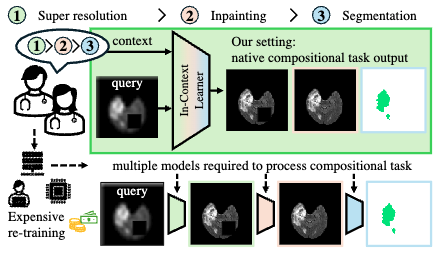
Prof. Dr. Erik Rodner is a faculty member at the University of Applied Sciences Berlin (HTW Berlin), where he serves as a Professor for Machine Learning and Data Science. He also contributes to the School of Engineering Sciences - Technology and Life. His research spans computer vision, machine learning, and biomedical applications, with a focus on learning with limited data, robust visual recognition models, and medical image analysis. He has developed innovative methods for medical diagnostics, industrial classification, and anomaly detection. Recent publications (2025-2016) highlight his expertise in visual in-context learning, semi-weakly segmentation, and active learning frameworks. He has collaborated with institutions such as ZEISS Group, Friedrich Schiller University Jena, and UC Berkeley. Scientific Awards: Award for Excellent Teaching (2023)
Andrea Passerini is a Full Professor in the Department of Information Engineering and Computer Science at the University of Trento, Italy, where he also serves as Coordinator of the PhD programme in Information Engineering and Computer Science (Ministerial Decree 45/2013). His academic footprint spans multiple departments including Mathematics, Sociology, Cellular Biology, and Industrial Engineering, reflecting deep interdisciplinary engagement across computational sciences and life sciences. His research centers on Machine Learning and Data Mining with specialized expertise in Neuro-Symbolic AI , Probabilistic Reasoning , and Statistical Relational Learning . He pioneers methods for graph-based learning, medical AI applications, and explainable systems, with significant contributions to bioinformatics (particularly RNA-protein interactions) and healthcare diagnostics. His work bridges theoretical rigor with practical implementations in critical domains. Analysis of his 2025 publications reveals dominant trends in neuro-symbolic integration for graph data, human-AI collaboration in medical decision-making, and robust recommender systems. His research increasingly focuses on interpretable AI for high-stakes applications like surgical planning and physician support, while advancing foundational techniques in graph neural networks and concept-based modeling. As PhD programme Coordinator, Professor Passerini mentors doctoral candidates across AI and computer science disciplines. His collaborative network extends to medical researchers at CIBIO (Cellular, Computational and Integrative Biology department) and industrial partners, though specific lab structures aren't documented in available materials. Current projects emphasize medical AI validation, temporal network modeling, and LLM integration with structured reasoning frameworks.
Katharina Eggensperger is an Early Career Research Group Leader at the University of Tübingen , leading the AutoML for Science group within the Cluster of Excellence Machine Learning for Science . She previously completed her Ph.D. at the University of Freiburg under Frank Hutter and Marius Lindauer (2022), and actively contributes to the AutoML community through open-source tool development and competition leadership. Co-developer of AutoML.org tools Faculty member of IMPRS-IS Chair for multiple AutoML workshops/conferences (2019-2025) Her research focuses on automated machine learning (AutoML) with specific attention to: AutoML Systems Hyperparameter Optimization Tabular Machine Learning Scientific Applications of ML She has organized multiple AutoML schools and conferences, including serving as Program Chair for AutoML 2024 and Non-archival Track Chair for AutoML 2025. Her work emphasizes making machine learning accessible through automation while maintaining scientific rigor and interpretability, particularly for tabular data applications. Katharina actively recruits PhD students through IMPRS-IS and collaborates with institutions like the University of Freiburg and Cyber Valley .
Deborah McGuinness is a Professor of Computer Science, Cognitive Science, and Industrial and Systems Engineering at Rensselaer Polytechnic Institute (RPI), holding the Tetherless World Senior Constellation Chair. She leads research in semantic web technologies, ontology engineering, explainable AI, and applications in health and environmental informatics. Her work emphasizes semantic technologies to enhance human-machine collaboration through knowledge representation and reasoning. Education: B.S./B.A. (Computer Science & Mathematics, Duke University, 1980), M.S. (Computer Science, UC Berkeley, 1981), Ph.D. (Knowledge Representation, Rutgers University, 1997). Research interests include: ontology creation/evolution, commonsense AI, machine learning fairness, clinical decision support systems, knowledge graphs for scientific data, and policy modeling. Recent work focuses on AI explainability, semantic data dictionaries for public health surveys, and leveraging knowledge graphs for personalized health recommendations. Her publications span semantic web standards, AI commonsense benchmarks, clinical informatics applications, and policy frameworks. Notable projects include the Explanation Ontology for user-centered AI and the CHEAR Data Repository for environmental health research. McGuinness has pioneered semantic technologies for data integration across diverse domains like nanomaterials science and stroke care policy analysis.
Denghui Zhang is an Assistant Professor in the School of Business at Stevens Institute of Technology. His research focuses on data science, large language models (LLMs), and business analytics, with particular emphasis on applications in financial systems, knowledge graphs, and spatio-temporal prediction. He is a member of the Stevens Institute for Artificial Intelligence and has held academic roles including reviewer positions for prestigious journals like Nature Communications and conferences such as AAAI and SIGKDD. Dr. Zhang holds a PhD in Information Systems from Rutgers University (2023) and an MS in Computer Science from the University of Chinese Academy of Sciences (2018). His educational background bridges computer science and business analytics, enabling his cross-disciplinary research. His research explores cutting-edge topics like federated learning optimization for LLMs, theory-of-mind reasoning mechanisms, and ethical AI governance. Notable contributions include turbulence forecasting models, traffic prediction frameworks, and venture capital investment strategies leveraging reinforcement learning. Dr. Zhang has received prestigious recognitions including the ICIS 2023 Best Student Paper Award and AAAI-23 Student Scholar distinction. His work frequently addresses practical challenges in AI ethics, financial decision-making systems, and scalable machine learning architectures. He actively contributes to academic communities through program committee roles for top conferences and has pioneered novel methodologies in multi-agent financial systems and graph neural network design.
Pierre Monnin is a Junior Fellow in AI at Université Côte d'Azur , conducting research within the Wimmics team at the I3S Laboratory . He also teaches within the EFELIA Côte d'Azur program. His work spans multiple institutions through funded projects like SHACKLE (EU Horizon), ECLADATTA and AT2TA (ANR), with collaborations at Télécom Paris , Università di Bari , and INESC-ID in Lisbon. Previous roles include temporary lecturer at TELECOM Nancy (2023-2024) and researcher at Orange (2020-2023). Research Interests focus on the knowledge graph lifecycle (construction, matching, refinement, mining, discovery) from neurosymbolic AI and analogical reasoning perspectives. He explores Domain knowledge injection into ML models Symbolic-semantics for graph embeddings Zero-shot bootstrapping techniques Context-aware semantic annotation Link prediction with constraint enrichment Life sciences applications Recent scientific awards include: Best Paper Award at ESWC 2024 (Student & Resource Papers) Best Thesis Award from French Association EGC (2022) 1st Prize (Accuracy Track) at Semantic Web Challenge (2021) His teaching portfolio covers AI fundamentals for foreign languages, marketing, and adult education programs, with specialized courses in Semantic Web technologies NoSQL databases XML tools Compiler implementation He supervises multiple PhD students and interns on topics involving neurosymbolic refinement , knowledge reconciliation , and analogical reasoning . Key software contributions include: KGPrune - Web application for thematic Wikidata subgraph extraction PyGraft - Synthetic knowledge graph generation tool DAGOBAH UI - Semantic table interpretation interface He also maintains datasets like PGxLOD and YAGO4-LP for pharmacogenomics and link prediction.