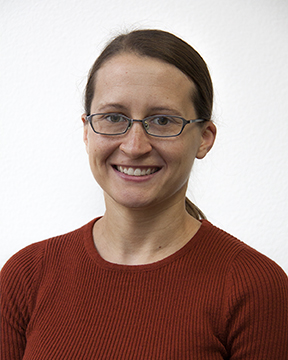
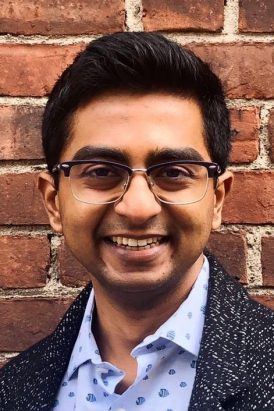
Dr. Arne Schmitz is a researcher at the Department of Computer Science, RWTH Aachen University, specializing in computational methods for wireless communications and computer graphics. His work bridges radio wave propagation physics with advanced visualization techniques, focusing on practical applications for mobile network planning and mobile device interfaces. His primary research domains include: Radio wave propagation modeling in urban environments GPU-accelerated beam/ray tracing algorithms Antenna pattern compression using spherical harmonics Real-time 3D visualization for resource-constrained mobile devices Ad-hoc multi-display systems for collaborative mobile applications Analysis of his publication timeline reveals an evolution from foundational radio propagation models (2006) toward increasingly sophisticated urban simulation frameworks (2011-2012), with consistent emphasis on computational efficiency. His most impactful contributions integrate computer graphics rendering techniques with telecommunications engineering, particularly in adapting beam tracing for radio wave simulation and developing novel mobile visualization paradigms that overcome hardware limitations through client-server architectures. Dr. Schmitz maintains a strong collaborative relationship with Professor Leif Kobbelt and colleagues at RWTH Aachen, with co-authorship appearing in 9 of his 10 documented publications. His research demonstrates consistent funding support through participation in IEEE and ACM conferences, though specific grant details are not disclosed in the available materials.
Dr. Ann-Marie Horcher is an Associate Professor and Cybersecurity Program Lead at Northwood University. She holds a BS in Technical Writing & Engineering, MS in Information Science, and Ph.D. in Information Systems Security from the University of Illinois, Champaign-Urbana and Nova Southeastern University, respectively. Her research focuses on Cybersecurity Trends and Technologies, Mobile Security, Usable Security and Privacy, Internet of Things (IoT), and Conversational User Interfaces (CUI). She has over 28 years of industry experience in Information Systems Security at Dow Corning (now Dow Chemical) and 10 years in Web Application Security consulting with MIAG Consulting. Her recent work explores innovative methods like tabletop games to enhance security education and examines the mid-pandemic effects on mobile learning motivation. She actively contributes to cybersecurity program development and academic-industry collaboration.
Prof. Dr. Fabian DI FIORE is a Lecturer and Research Coordinator at the Department of Computer Science, Faculty of Sciences, Hasselt University. He is affiliated with the Expertise Center for Digital Media (EDM) and leads research in Computer Graphics, Virtual Reality, and Extended Reality (XR). His roles include coordinating research projects and teaching courses such as Operating Systems, Computer Animation & Simulation, and Computer Graphics & Visual Computing. His research focuses on modeling and simulation, computer vision, and digital media applications. Notable projects include XR innovations for manufacturing, digital support for industrial processes, and collaborative virtual environments for education. He coordinates 16 active research projects, emphasizing XR infrastructure and applied technologies in industry and healthcare. Prof. DI FIORE supervises PhD candidates in Extended Reality applications, such as Psychomotor Task Assistance and Training using XR. He is involved in education initiatives like the International interdisciplinary project and the International School program. His work bridges academic research and practical applications, with a focus on innovation in digital media and educational technology. His teaching responsibilities include coordinating courses on operating systems, computer animation, and project management. He is a co-owner of key training components such as Computer Architecture and International interdisciplinary projects, reflecting his dual role in education and research leadership.
Lisa Anthony is a Professor affiliated with the University of Florida, specializing in Human-Computer Interaction (HCI) with a strong focus on gesture recognition, touchscreen interfaces, and child-computer interaction. Her research emphasizes the design of user-centered technologies for diverse populations, including children, older adults, and individuals with disabilities. Key contributions include studies on children's touchscreen interaction patterns, multimodal authentication systems, and mHealth applications for behavior change. Her work spans over two decades, with publications in top-tier venues such as CHI, ICMI, and IEEE Transactions. Notable projects include the MTAGIC initiative exploring child motion characteristics, the design of MyTrack+ for weight management, and studies on spherical interfaces. She collaborates extensively with researchers in computer science, education, and healthcare to address real-world challenges in technology accessibility and usability. Lisa's research has implications for improving educational tools, healthcare apps, and collaborative learning environments. While no grants or awards are explicitly listed, her prolific publication record underscores her sustained contributions to HCI and related fields.
Josh Vura-Weis is an Associate Professor of Chemistry and Associate Head of Major Projects at the University of Illinois, Urbana-Champaign. He leads the Vura-Weis Research Group, which focuses on femtosecond x-ray spectroscopy of transition metal catalysts, spin crossover materials, and photovoltaics. His work bridges inorganic synthesis, ultrafast laser spectroscopy, and computational methods to study catalytic reaction mechanisms and electronic dynamics. Education: B.S. in Chemistry from Stanford University (1999), followed by postdoctoral research at UC Berkeley and Northwestern University. His career includes roles as an NSF Postdoctoral Fellow and multiple leadership roles in academic and research institutions. Research Interests: Development of tabletop ultrafast x-ray transient absorption techniques to study element- and oxidation-state-specific dynamics in transition metal systems. Key areas include solar fuels production, electron transfer pathways, and real-time observation of catalytic processes. Current projects explore spin-state switching in molecular magnets and vibrational dynamics in protein active sites. Awards: 2023 ACS Richard Van Duyne Early Career Award, 2017 Sloan Research Fellowship, and 2016 NSF CAREER Award. His work has been funded by AFOSR MURI, NSF grants, and industry partnerships. Advising & Grants: Supervised over 15 graduate students, including Dr. Lauren Boedicker and Dr. Liz Ryland. Active in securing multi-million-dollar grants for spectroscopic infrastructure (e.g., AFOSR DURIP funding for new laser systems). Labs & Collaborations: Affiliated with the Materials Research Lab at UIUC. Collaborates with Prof. Mirica (photocatalyst design), Prof. van der Veen (XUV spectroscopy), and theoretical groups for computational modeling of electron dynamics.
Majken Kirkegård Rasmussen is an Associate Professor at Aarhus University in the Department of Digital Design and Information Studies, School of Communication and Culture. Her research and teaching focus on innovative human-computer interaction techniques, particularly in physical and kinesthetic design. Her research interests include Interaction Design, Physical Computing, Human-Computer Interaction, Robotics, and Shape-Changing Interfaces. She explores how users interact with dynamic and tactile technologies, emphasizing embodied and sensory experiences in design. Her recent publications show a strong trend in designing interactive systems that merge physical form with digital functionality, especially in robotics and adaptive interfaces. These works frequently appear in premier venues like CHI and DIS, highlighting contributions to haptic feedback, social robotics, and design methods. She has received several scientific awards, including: Gitte Lindgaard Award (2017) Honorable Mention Award (2014) Honourable mention award (2022) She is actively involved in research funding and supervision. Currently, she leads or co-leads two major research projects—ACUTE and DARE—funded by the Independent Research Fund Denmark, focusing on domestic and assistive robotics. She also teaches the course 'IT Produktdesignprojekt' and has collaborated with researchers across Europe, including at Eindhoven University of Technology. She is affiliated with active research teams working on social robotics, assistive technologies, and interactive design, contributing to both academic and practical advancements in the field.
Sample is a Professor in the Departments of Epidemiology and Urology at the University of Michigan. Their research interests focus on urological epidemiology, biostatistics, public health, and innovative medical technologies. They lead a lab at the University Hospital in Ann Arbor, Michigan, and have mentored students like Paul Grant, MD. Their work integrates advanced technologies such as virtual reality (VR), sensor systems, and artificial intelligence (AI) to address challenges in healthcare delivery, patient adherence, and medical training. Research highlights include developing VR-based simulations for team training in acute care, passive magnetic sensing systems for object recognition, and privacy-preserving activity monitoring. Their lab’s interdisciplinary approach spans medical informatics, wearable devices, and robotics. Notably, Sample has pioneered sensor systems for eye drop instillation success in glaucoma patients and magnetic-based navigation for mobile robots. Their contributions bridge clinical practice and engineering, emphasizing real-world applications in healthcare.
Dr. Tanja Dackermann is a Researcher at the Leibniz Institute for Science and Mathematics Education (IWM) in Tübingen, Germany, where she has served as a research assistant since August 2014 and was a member of the former Junior Research Group Neuro-cognitive Plasticity. Her educational foundation includes a Diploma in Psychology from Justus Liebig University Gießen and the University of Tübingen. From 2011 to 2014, she completed her doctoral studies as a scholarship holder of the Cooperative Research Training Group funded by the Ministry of Science, Research and the Arts in Baden-Württemberg, investigating spatial representations of number magnitude and embodied numerical training approaches. Dr. Dackermann's research centers on numerical cognition with emphasis on developmental trajectories of numerical skills in children. She pioneers embodied and media-supported training programs to enhance basic numerical competencies while developing diagnostic tools for identifying mathematical learning difficulties. Her work bridges cognitive psychology with practical educational applications, demonstrating how physical interaction and digital media transform mathematical learning processes through rigorous empirical investigation. Analysis of her publication record reveals consistent innovation in number line estimation methodologies, exploring bounded versus unbounded task constraints, multimodal presentation formats, and embodied training effects across diverse learner populations. This research program demonstrates how spatial-numerical associations predict arithmetic development and informs targeted interventions for children with mathematical learning difficulties. At the IWM, Dr. Dackermann contributes to the institute's research ecosystem through engagement with labs focused on multimodal interaction and knowledge construction, advancing the institute's mission to optimize digital learning environments through evidence-based cognitive science research.
Boris Müller is Professor for Interaction Design at the University of Applied Sciences Potsdam, where he has been employed since May 2004. He currently serves as Vice Dean and head of the Interface Design graduate programme. Müller is also co-director of the Urban Complexity Lab, a research group focusing on data visualisation and information design, which he established together with Prof. Dr. Marian Dörk. Born in 1972 in Berlin, Müller studied design at the University of the Arts Bremen before pursuing a Master of Arts in Computer Related Design at the Royal College of Art in London. His professional career has spanned multiple prestigious institutions including MetaDesign San Francisco, the Institute for Media Communication of the Fraunhofer Gesellschaft, and the Interaction Design Institute Ivrea in Italy, where he worked as a researcher and visiting professor. Müller's research focuses on the intersection of design, data, and technology, with particular emphasis on Data Visualisation , Interaction Design , and Generative Design . His work explores how visual representations can make complex information accessible and engaging, while also investigating the philosophical and cultural implications of digital interfaces. He has published extensively on these topics, with a particular interest in how design can facilitate understanding of scientific data, especially related to climate change and urban environments. Over the past decade, Müller's publications have evolved to address increasingly complex challenges at the intersection of design, data science, and societal issues. His recent work shows a growing emphasis on speculative design approaches, critical examinations of AI in creative practice, and innovative methods for visualizing climate data. Müller has also been increasingly focused on the pedagogical aspects of design education, exploring how to prepare the next generation of designers for a rapidly changing technological landscape. Scientific Awards Special Distinction at the Lucky Strike Junior Designer Award (2000) 1st prize in the student category of the EuroPrix (2001) Excellence Award of the 4th ACA Media Arts Festival in Tokyo (2000) Honourable Mention of the rhizome.org Net Art Commission (2002) Certificate of Typographic Excellence from the Type Directors Club New York (2003) 100 best posters (100 Beste Plakate) (2003) iF design award (2005) Information is Beautiful Silver Award (2013) German Infographics Award, category Science (2014) Müller has supervised numerous students through the Interface Design graduate programme at the University of Applied Sciences Potsdam, though specific names of advisees are not publicly listed. His work at the Urban Complexity Lab has attracted various research grants focused on data visualization and urban futures. Müller frequently collaborates with international institutions, as evidenced by his lectures at venues including Kyushu University in Japan and Aalto University in Finland. As co-director of the Urban Complexity Lab, Müller leads a research group dedicated to exploring how data visualization can help understand complex urban systems. The lab's work combines design practice with scientific research, creating innovative approaches to representing urban data. Müller's team has developed several notable projects, including the SENSES project which translates complex scientific climate scenario information into relevant knowledge for different user groups.
Dr.-Ing. Anne Gutschmidt is a researcher at the University of Rostock's Department of Computer Science, actively engaged in participatory business modeling and technology acceptance. She combines expertise in behavioral data analysis with empirical research methodologies. Current roles: Research Assistant at Chair of Business Informatics Administrative roles: Program Manager (Bachelor of Business Informatics), Internship Manager Key projects: Coordinator of Center for Artificial Intelligence in MV (2020-2022) Collaborations: Chair of Business Informatics, Chair of Software Engineering Her research focuses on participatory enterprise modeling , emphasizing human-computer interaction and tool support for collaborative modeling environments. She investigates psychological ownership dynamics in modeling sessions and explores media comparisons (multi-touch tables vs traditional methods). Major funding sources include the European Fund for Regional Development and the Ministry of Economic Affairs of Mecklenburg-Vorpommern . Her methodological expertise spans controlled experiments, behavioral observation, and digital tool evaluation.
Ingmar Rothe is a Researcher at the Institute for Media Research, Faculty of Humanities, Chemnitz University of Technology, and concurrently serves as a Lecturer in Social and Cultural Studies at the University of Applied Sciences Fulda. His academic foundation includes a Diploma in Speech Science and Phonetics with a minor in German Philology (2001–2009). He is presently completing his dissertation titled "Communication and Interaction at Multi-touch-systems" under Prof. Dr. Claudia Fraas, focusing on human-computer interaction in exhibition environments. Rothe's research integrates qualitative methodologies across multiple domains: Human-Computer Interaction : Analyzing user engagement with multitouch systems in public spaces. Conversation Analysis : Examining linguistic patterns in professional contexts like call centers. Applied Linguistics : Optimizing communication frameworks for service industries. Social Research : Investigating technology-mediated social behaviors. His publications emphasize practical applications of communication theory in digital interfaces and service optimization. Since 2015, he has contributed to the DFG-funded research training group "CrossWorlds" , an interdisciplinary initiative connecting virtual and real social worlds through computer science and social sciences collaborations (2012–2018). Professional timeline includes prior roles in corporate training (2007–2015) and academic assistance at Halle’s Institute for Speech Science (2004–2007). No awards or advised students are documented.
Markus Aspelmeyer is a Full Professor at the University of Vienna's Faculty of Physics and Director of the Institute for Quantum Optics and Quantum Information Vienna (IQOQI-Vienna) of the Austrian Academy of Sciences. He leads the Aspelmeyer Group, which is internationally recognized for pioneering work at the intersection of quantum mechanics and gravitational physics. Education and Career: While specific degrees are not listed in the provided text, Prof. Aspelmeyer has established himself as a leading figure in quantum physics. His career includes prestigious appointments and memberships in scientific academies, including the Academy of Sciences in Hamburg and the European Academy of Sciences and Arts. Research Interests: Prof. Aspelmeyer's research spans several cutting-edge areas: Quantum Optomechanics: Developing quantum optical control techniques for micro- and nanomechanical systems, exploring quantum states of motion in massive objects Precision Gravitational Measurements: Investigating small-scale gravitational forces using microscopic source masses, pushing the boundaries of gravitational sensitivity Quantum Gravity Interface: Studying the phenomenology of gravitational effects in quantum regimes, exploring quantum superposition of massive objects Advanced Optical Technologies: Developing low-noise crystalline mirrors for precision interferometry and quantum measurements Research Trends: The group's recent publications demonstrate a strong focus on quantum control of levitated nanoparticles, precision gravitational measurements at microscale, and quantum tests of gravity. Their work increasingly bridges fundamental quantum physics with practical precision measurement technologies, contributing to both theoretical understanding and experimental capabilities in quantum-limited measurements. Scientific Recognition: Prof. Aspelmeyer has received numerous prestigious awards: Berthold Leibinger Innovationspreis Fellow of the American Physical Society Ignaz L. Lieben Preis Friedrich Wilhelm Bessel Forschungspreis Fresnel Preis Wissenschaftspreis der Stadt Wien (2017) ERC Consolidator Grant Research Group and Mentorship: The Aspelmeyer Group comprises over 30 researchers including postdocs, PhD students, and master students. The group has produced numerous successful alumni who now hold positions at prestigious institutions worldwide, including TU Delft, University of Stuttgart, Stanford University, and others. Current research personnel include key team members such as Ass.-Prof. Dr. Nikolai Kiesel and Mag. Alexandra Ehrlich. Laboratory and Facilities: The group operates state-of-the-art facilities at the University of Vienna's Faculty of Physics, including cryogenic platforms for superconducting levitation experiments, ultra-high vacuum systems for nanoparticle trapping, and precision interferometry setups. Their laboratories are located at Boltzmanngasse 5, 1090 Vienna, Austria.
Allison Sauppe is an Associate Professor in the Computer Science & Computer Engineering department at the University of Wisconsin-La Crosse. She holds a Ph.D. and M.S. from the University of Wisconsin-Madison and a B.S. from Rose-Hulman Institute of Technology. Her research focuses on Human-Robot Interaction (HRI), Human-Computer Interaction (HCI), and making CS education accessible to non-traditional groups. She has contributed to projects like Figaro (a tabletop HRI authoring tool) and explored social implications of robots in manufacturing. Education: Ph.D. 2015 (UW-Madison), M.S. 2011 (UW-Madison), B.S. 2009 (Rose-Hulman) Research interests include collaborative robotics, HRI design tools, and K-12 CS education. Her work emphasizes interdisciplinary approaches combining CS, psychology, and design. Notable achievements include a Best of CHI award for her 2015 paper on robot co-workers. Awards: Best of CHI award (2015) Teaching experience spans undergraduate courses like Introduction to HCI and outreach programs such as Grandparents University. She advises MSE capstone projects and collaborates on initiatives like rural K-12 CS professional learning communities. Active in the HCI Lab at UW-Madison during her Ph.D., her work bridges theory and practical applications in human-robot collaboration.
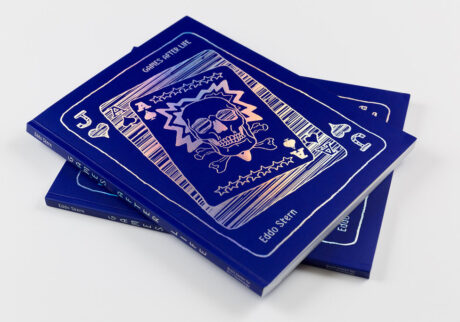
Eddo Stern is a Professor and Chair of the Department of Design Media Arts at the University of California, Los Angeles (UCLA). He teaches courses on game design, computer game development, and physical computing in an artistic context. His work explores the intersection of physical existence and electronic simulation, focusing on themes like violence, memory, and identity. Stern is a leading advocate for independent game development and its potential as an artistic medium. His research interests span game design as cultural critique, digital art, and the synthesis of technology with traditional art forms. Key projects include Games After Life (2019) and Vietnam Romance (2015), which interrogate historical narratives through interactive media. Stern’s work has been exhibited globally at institutions like the Tate Liverpool, Sundance Film Festival, and the Walker Art Center. Notable awards include the Rockefeller Foundation New Media Fellowship and grants from Creative Capital and the Edith Russ Foundation. He co-founded the UCLA Game Lab, fostering interdisciplinary research in game studies. Stern’s creative practice spans installations, video sculptures, and collaborative game projects, often blending humor with critical analysis of technology’s societal impacts. Grants and collaborations include support from the Beall Center for Art + Technology and the University of California Institute for Research in the Arts. His work frequently addresses geopolitical themes, pop culture, and the commodification of history through participatory and immersive formats.
Suraj Shankar is an Assistant Professor in the Physics department at the University of Michigan. His office is located in 2241 Homer A. Neal Lab at the Physics Randall Lab and Homer A. Neal Lab building at 450 Church Street, Ann Arbor, MI. Dr. Shankar received his Ph.D. in Physics from Syracuse University. Professor Shankar's research lies at the interface of physics and biology, with a focus on how collective phenomena emerge, can be controlled, and become functional in soft materials and living systems. His work spans both theoretical and experimental approaches across multiple subfields of physics. His research employs a combination of theoretical modeling, computational analysis, and tabletop experiments to uncover general principles from specific examples Current research topics include controlling active fluids that can flow spontaneously Understanding bacterial dynamics in the gut Investigating the role of feedback and the environment in organ morphogenesis Studying biophysical constraints in cellular/organismal physiology Designing bio-inspired metamaterials with unusual mechanical responses Professor Shankar's research is largely curiosity-driven and involves strong interdisciplinary collaborations with other experimental and theoretical groups. He is deeply committed to advancing diversity, equity, and belonging in his research group by cultivating an inclusive environment that supports the well-being and success of all members.