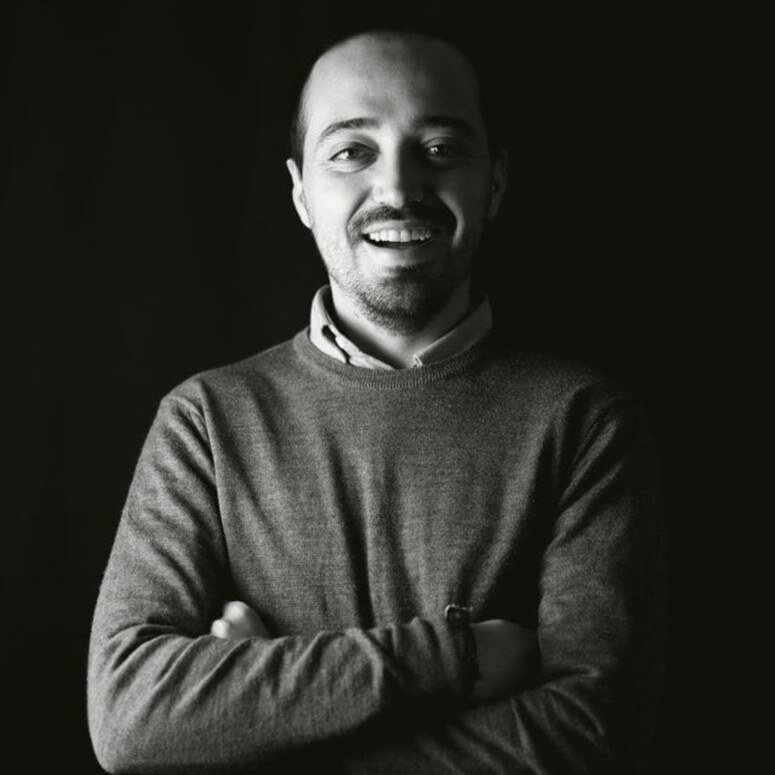
Rawad Chaker is a Professor of Educational Sciences at Université Lumière Lyon 2, holding an HDR (Habilitation à Diriger des Recherches). He serves as Director of Studies at FORSE e-learning Campus and coordinates the Master's programs in Ingénierie Numérique et Pédagogique en Education et Formation . His research focuses on digital technologies in education, including virtual reality, AI, robotics, and hybrid learning systems. He leads projects such as SIREN-VR (VR emergency training), MODELI+ (3D anatomy tool), and PHOENIX (sustainability education). Research Interests: Embodied cognition, distributed learning theories, AI in education, environmental citizenship education, and MOOC analysis. His work bridges sociological and psychological approaches to study educational phenomena. Grants & Projects: ANR-funded initiatives (SAPS, MODELI+), EU COST Action PHOENIX, and national programs like INCLUDE. Collaborates with institutions like LIBM, LIRIS labs and Le Vinatier Hospital. Teaching: Coordinates interdisciplinary programs integrating digital pedagogy. Advises on innovative training methods for healthcare and engineering professionals. Key Contributions: Over 50 peer-reviewed articles since 2012, including influential works on embodied learning in VR, robot integration in K-12, and pandemic-era anatomy education. Active in international networks like COST Action CA19123.
Andreas Katsouri is a Lecturer in Concept Art at the Department of Digital Arts and Animation, School of Computing, Media and the Arts, Teesside University. His expertise focuses on concept art areas such as character design, props, and terrains, with professional experience spanning indie mobile games and tabletop wargaming miniature designs. Education: Master's in Concept Art, Teesside University (2018–2019) Bachelor's in Games Design, University of Central Lancashire (2013–2016) Research Interests: Specializes in concept art creation across characters, environments, and props, with a practical background in both indie and large-scale gaming projects. His work bridges academic teaching with industry applications in digital arts. Additional Notes: No scientific awards, grants, or publications listed. His professional portfolio is accessible via ArtStation (linked in original text).
Erik van der Spek is Assistant Professor in Industrial Design at Eindhoven University of Technology, where he serves as research director of the TU/e Game/Play Lab. His work explores how games and playful interactions can create meaningful experiences for education, vitality, and empathy development. Research focuses on: Augmented reality for learning and empathy Fantasy integration in educational games Participatory design with children Hybrid physical-digital play experiences Publications demonstrate empirical investigations into fantasy's role in AR learning, child-centered design methodologies, and multi-perspective game experiences. Recent work received the Best Design Award (2021) and Best Paper Award at IFIP-ICEC 2021. As secretary of IFIP Technical Committee on Entertainment Computing, he coordinates international research initiatives bridging game design and human-computer interaction.
Scott Swearingen is an Associate Professor in the Department of Design at The Ohio State University. His research focuses on game design for social good and collaborative play mechanics, emphasizing connectivity across physical and social boundaries. He holds an MFA and BFA in Art & Technology from The Ohio State University (2004 and 1998 respectively). His work includes award-winning games exhibited at SIGGRAPH, CURRENTS New Media, and the Montreal Independent Games Festival. Notable projects include The Woods , a mixed-reality cooperative game, and Wall Mounted Level v.2 . Prior to academia, he worked in the video game industry for over a decade at studios like MAXIS (Electronic Arts) and Gearbox Software, contributing to franchises such as The Sims , Medal of Honor , and Dead Space . Swearingen actively advises university clubs including the Game Creation Club and Board to Death Club. His research spans interactive media, immersive environments, and physical computing, with publications in venues like ACM Computer Graphics and Sensors .
Emanuel Vonach is a PreDoc Researcher at the Institute of Visual Computing & Human-Centered Technology at Vienna University of Technology (TU Wien), specializing in virtual reality, haptics, and tangible user interfaces. His work focuses on developing innovative VR systems with robotic haptic feedback, health monitoring technologies for children, and motion capture applications. He maintains an active research profile with publications spanning from 2011 to 2025, demonstrating continuous contribution to the field of human-computer interaction. Vonach's research interests primarily center around enhancing virtual reality experiences through physical interaction. His work explores how robots can provide haptic feedback in VR environments, developing systems like CoboDeck (a large-scale haptic VR system using collaborative mobile robots) and Action-Origami inspired haptic devices. He has also pioneered applications in health monitoring for children through projects like MediCubes, which transforms medical examinations into engaging storytelling experiences using tangible interfaces. His research bridges the gap between theoretical computer science and practical applications in healthcare, education, and emergency response. His publication record shows a clear progression from foundational work in motion capture and tracking systems to increasingly sophisticated haptic VR applications. Recent publications focus on environment-independent locomotion prediction for haptic VR and safety monitoring systems for encountered-type haptics, indicating a maturation of his research toward more complex, real-world applications. The consistent funding from organizations like the Austrian Research Promotion Agency (FFG) and European Commission demonstrates recognition of his work's significance. Vonach actively supervises graduate students, with thesis topics covering mobile collaborating robots for haptics, in-situ questionnaires for haptic experience, and visual assessment with eye-tracking displays. His role as a PreDoc Researcher with FWF funding suggests he is either completing or has recently completed his doctoral studies while maintaining an active research program. His collaborations with Professor Hannes Kaufmann and other researchers at TU Wien form a cohesive research group focused on advancing VR and haptic technologies.
Francesco De Pace is a PostDoc Researcher at the Institute of Visual Computing and Human-Centered Technology within the Faculty of Informatics at Vienna University of Technology (TU Wien). His research focuses on the intersection of augmented reality, virtual reality, and human-robot interaction, with particular emphasis on developing innovative interfaces for industrial applications. Dr. De Pace's research spans several key areas in immersive technologies and human-computer interaction. His primary interests include Augmented Reality (AR) and Virtual Reality (VR) systems, Human-Robot Interaction (HRI), Brain-Computer Interfaces (BCIs), and advanced tracking and localization techniques. He has made significant contributions to the development of AR/VR interfaces for industrial robots, outdoor tracking with Real-Time Kinematic GPS, and SLAM (Simultaneous Localization and Mapping) systems. His work bridges theoretical research with practical industrial applications, focusing on creating more intuitive and effective human-machine interfaces. Dr. De Pace's recent publications demonstrate a clear trajectory toward enhancing human-robot collaboration through immersive technologies. His research shows increasing sophistication in integrating multiple modalities (visual, spatial, and neural) to create more natural interaction paradigms. A notable trend is the application of AR/VR to industrial settings, particularly for assembly tasks, path planning, and training scenarios. His systematic evaluation of RTK-GPS for wearable AR represents important foundational work for outdoor AR applications, addressing critical challenges in positional accuracy across different environmental conditions. While specific awards are not prominently documented in the available information, Dr. De Pace's research has been supported by significant funding mechanisms, including grants from the Austrian Research Promotion Agency (FFG) under Grant Agreement No FO999886342 KIRAS MRespond, indicating recognition of the importance and potential impact of his work. Dr. De Pace appears to be actively involved in multiple research projects, including PostDisaster and MRespond as indicated in his profile. His collaborative approach is evident through his extensive co-authorship with researchers across institutions. While specific student advising information isn't detailed in the available materials, his role as a PostDoc Researcher likely involves mentoring junior researchers and contributing to the academic development of students working on related projects. Dr. De Pace is associated with the Mixed Reality Lab at TU Wien, as indicated in the website navigation. His research appears to be conducted within collaborative frameworks that include both academic and industry partners. His work on the MRespond project suggests engagement with emergency response applications of mixed reality technologies, indicating interdisciplinary team involvement spanning computer science, engineering, and potentially public safety domains.
Alex Sushkov is an Associate Professor in the Department of Physics at Boston University with joint appointments in Electrical & Computer Engineering and Materials Science. His lab develops quantum sensors using nitrogen-vacancy centers in diamond for precision measurements in fundamental physics, including dark matter detection and condensed matter studies. Research includes the Cosmic Axion Spin Precession Experiment (CASPEr), using nuclear magnetic resonance to detect axion dark matter, and nanoscale magnetic imaging of materials. Recent work explores levitated ferromagnets for ultralight dark matter detection and spin dynamics in disordered systems. Publications focus on quantum sensing methodologies applied to particle physics, with experiments conducted at cryogenic temperatures using custom RF circuits and magnetic shielding. The CASPEr project represents a major tabletop-scale approach to dark matter research.
Dr. Sebastian Stein is a Research Fellow in the School of Computing Science at the University of Glasgow, working within the Inference, Dynamics and Interaction Research Group. His current research focuses on the EPSRC-funded project 'Closed-Loop Data Science for Complex, Computationally- and Data-Intensive Analytics' under Professor Roderick Murray-Smith. With a background spanning human-computer interaction, ubiquitous computing, and machine learning, his research integrates computer vision, action recognition, and intelligent interactive systems. He holds a PhD in Computing from the University of Dundee and a Diplom in Computer Science and Electrical Engineering from TU Dortmund. Stein's publications demonstrate expertise in multimodal sensing systems, rehabilitation engineering, probabilistic modeling interfaces, and intelligent transportation solutions. Recent work includes EEG-based pain biomarkers, interactive Bayesian models, and COVID-19 containment strategies through control theory. His technical contributions span healthcare applications like spinal cord injury rehabilitation, neuroprosthetics development, and urban computing platforms for built environment analysis.
Zimmerman, Joshua J is an Assistant Professor at the University of Arizona, affiliated with the LGBTQ+ Institute. He also serves as an instructional design and community engagement consultant for TTG, LLC in Minneapolis, MN. His primary role involves teaching and research in the Department of Public & Applied Humanities, with a focus on bridging academic and applied humanities practices. He holds a PhD in Rhetoric, Composition & the Teaching of English from the University of Arizona (2016). Since 2009, he has taught a diverse array of courses across multiple units, including the Writing Program, School of Information, Honors College, and his current department. His research interests center on developer-fan discourses in the computer game industry, online community dynamics , and the interplay between play and work in digital media spaces. He also explores instructional design methodologies and cultural analysis of games as global artifacts. While no specific publications are listed here, his course offerings reflect engagement with video game studies, global game cultures, and tabletop game design. Affiliations: LGBTQ+ Institute, Department of Public & Applied Humanities Consulting: TTG, LLC (Minneapolis)
Dr. Philipp Mock serves as a Research Fellow at the Leibniz Institute for Knowledge Media (IWM) in Tübingen, Germany, where he has been a core member of the Media Development Group since 2014. His technical expertise centers on developing machine learning algorithms and AI systems for human-machine interaction, with current responsibilities including software development and methodological consulting for ML applications. Education: PhD in Computer Science, University of Tübingen (2017) Diploma in Computer Science, University of Tübingen (2004-2011) Mock's research integrates Human-Computer Interaction with machine learning to analyze behavioral patterns through interaction data. His work spans multimodal interfaces, educational technology, and cognitive assessment systems, with particular focus on translating touch interaction metrics into predictors of cognitive states (ADHD risk, workload) and developing novel collaborative interfaces for tabletop displays. This interdisciplinary approach bridges computer science, cognitive psychology, and educational design to create adaptive systems that respond to user behavior in real-time. His publication trajectory reveals a clear evolution from foundational work on interactive surface technologies (2012-2015) toward sophisticated ML applications for behavioral analysis (2016-2018). Current projects like the longitudinal human-AI interaction study (2024-2026) demonstrate continued innovation in understanding long-term dynamics between users and intelligent systems, with strong emphasis on real-world educational and clinical applications. Mock actively contributes to multiple IWM research labs including Multimodal Interaction, Everyday Media, Perception and Action, and Knowledge Construction. His collaborative projects such as the human-AI interaction study span these labs, reflecting an integrated approach to studying how people interact with increasingly sophisticated AI systems across diverse contexts from museums to educational settings.
Stacey Scott is a Professor and Director of Graduate Studies at the University of Guelph 's School of Computer Science. With a focus on Human-Computer Interaction and User-Centred Design , her research explores interface design for emerging technologies in entertainment and agriculture. She leads the Collaborative Systems Laboratory (CSL), which operates in both Guelph's School of Computer Science and Waterloo's Department of Systems Design Engineering . Her interdisciplinary work spans: Precision Livestock Farming (digital technologies for animal welfare) Animal-Computer Interaction (designing interfaces for non-human species) Multi-Display Environments (collaborative spaces with digital tabletops/walls) Global Fan Experiences (K-pop live streaming interfaces) Recent publications demonstrate expertise in cross-device interaction , awareness systems , and collaborative workflows . She is actively seeking students with backgrounds in psychology, sociology, or animal behavior who possess strong technical capabilities.
Regan L. Mandryk is a Professor at the University of Saskatchewan and Tier 1 Canada Research Chair in Digital Gaming Technologies and Experiences. With over 200 publications cited 10,000+ times, she pioneered affective physiological evaluation for games and focuses on games for health, wellbeing, and interpersonal relationships. Inducted into Royal Society of Canada (2014) E.W.R. Steacie Fellowship (2018) Led inaugural CHI PLAY and Canadian graduate training program SWaGUR Research Interests : • Game-based wellbeing interventions • Toxicity and harassment in online spaces • Affective computing and player emotion • Accessibility in digital games • Social dynamics in multiplayer environments • Gamification for health outcomes Recent Article Trends highlight: 1) Toxicity mitigation in esports, 2) Physiological feedback mechanisms, 3) Spatial cognition in games, 4) AI integration in game design, 5) Social anxiety and digital play, 6) Cultural representation in gaming. Scientific Awards : Tier 1 Canada Research Chair (2020–present) E.W.R. Steacie Fellowship ($430,000, 2018) Royal Society of Canada Inductee (2014) Best Paper Awards at ACM CHI, CHI PLAY, IEEE Games, ASSETS, CSCW Teaching & Supervision : Developed courses in affective computing, game design, and human-computer interaction. Supervised numerous undergraduate honors theses on topics including biofeedback games, social anxiety in play, and toxicity detection systems.
Dr. Ivan Lopes Barroso is a researcher affiliated with the School of Communication, Architecture, Arts and Technologies (ECATI) and the HEI-Lab (Digital Laboratories of Environments and Human Interactions). He has been actively involved in projects like Y4Y: Youth for Youth and TEGA: Training Educators via Serious Games , supported by the Erasmus+ program. His research focuses on video game culture, game design, and educational applications of gaming in contemporary society. PhD Student in Digital Media or related field Research interests include serious games, educational technology, and student engagement His scholarly work spans interdisciplinary domains, involving collaborations across Europe. Recent publications analyze tabletop and digital game-based learning, with an emphasis on critical thinking and 21st-century skills. While not explicitly stated, his role as a researcher in funded projects suggests significant contributions to pedagogical innovation.
Allan Stewart Johnson joined IMDEA Nanoscience as an Assistant Professor in January 2023, leading the Ultrafast Science of Quantum Materials group. Prior to this, he was a La Caixa Junior Leader (2021-2022) and PROBIST Marie Curie Postdoctoral Fellow (2018-2021) at ICFO - The Institute of Photonic Science in Barcelona. He earned his PhD in 2017 at Imperial College London, where he developed tabletop attosecond x-ray laser sources under a Marie Curie Doctoral Fellowship and NSERC PGS Award, and his B.Sc. in Physics-Mathematics at the University of Ottawa in 2013. Dr. Johnson's research focuses on the ultrafast dynamics of quantum materials, bridging nanotechnology, photonics, and condensed matter physics. His work employs advanced laser sources to probe femtosecond-scale electronic and structural processes in materials with potential applications in quantum computing and nanoscale optoelectronics. Scientific awards include: Ramon y Cajal Assistant Research Professor (tenure track), IMDEA Nanoscience (2023) La Caixa Junior Leader Fellowship, ICFO (2021-2022) PROBIST Marie Curie Postdoctoral Fellowship (2018-2021) Marie Curie Doctoral Fellowship (duration: 2013-2017) NSERC PGS Award (during PhD studies) His academic trajectory spans institutions in Spain, the UK, and Canada, with technical expertise in ultrafast laser systems and quantum material characterization.
Dr. Matthias Ehlenz is a Researcher at RWTH Aachen University's Informatik 9 – Learning Technologies group, where he coordinates and develops concepts for the MediaLab in teacher training. He holds a Dr. rer. nat. (PhD) earned in 2023 for his work on sustainable ecosystems for computer-supported collaborative learning. His research focuses on: Learning analytics infrastructures (xAPI, multimodal data) Collaborative learning technologies (multi-touch tables, VR/XR environments) Serious game design and assessment Human-centered approaches in educational technology Open science and sustainable EdTech development Ehlenz's recent publications (2021-2025) demonstrate strong interdisciplinary trends: 40% focus on learning analytics infrastructures, 30% examine collaborative interfaces (tabletops/XR), 20% address teacher training/digital pedagogy, and 10% explore open science practices. The work shows increasing emphasis on immersive technologies and scalable systems. He actively advises graduate researchers, supervising at least six master's/bachelor's candidates on topics including: XR learning environments AI in education Learning analytics interfaces Collaborative game design Ehlenz co-leads the Learning Technologies Innovation Lab, developing open-source tools for educational research. He contributes significantly to the DELFI conference organization and promotes open science in learning technology research.