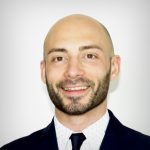
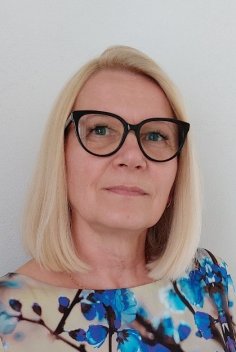
Dr. Richard Telford is a Professor of Analytical Chemistry and Director of the Analytical Centre at the University of Bradford, overseeing specialized analytical equipment and managing industrial collaborations. He joined the university in 2005, delivering over £3 million in commercial research income and leading projects like CAYMAN and SIBLING (totaling £4 million). His expertise spans NMR, vibrational spectroscopy, mass spectrometry, and hyphenated techniques, with a focus on pharmaceuticals and 3D printing. He co-authored a book chapter on thermal analysis and has extensive industry experience at Zeneca/AstraZeneca/Syngenta. Research interests include hyphenated techniques (e.g., DSC-Raman/FTIR/XRD), 3D printing applications in pharmaceuticals, and advanced analytical methodologies. His work bridges academia and industry, addressing challenges in drug delivery, material characterization, and sustainable technologies. Notable achievements include pioneering vat photopolymerization 3D printing for drug formulations and advancing understanding of molecular behavior via spectroscopic and thermal methods. Collaborations span multiple sectors, including agrochemicals and specialty chemicals.
Dr. Nutsuda Sumonsiri is a Lecturer in Food Science & Technology at Teesside University's School of Health & Life Sciences, where she leads modules in Food Innovation and Product Development for postgraduate programs. She holds a PhD in Food Science & Technology from Ohio State University and a BSc in Agro-Industrial Biotechnology from Chiang Mai University. Her research focuses on electrostatic food coating technologies, healthy food development, and value-added food processing. She has particular expertise in powder coating applications for snacks, functional ingredient development, and optimization of food preservation techniques. Her work integrates food chemistry, processing technology, and nutritional science to improve food quality and functionality. Publications demonstrate consistent advancement in food processing technologies, from fundamental studies on electrostatic coating mechanisms to applied research in functional foods and preservation. Recent work emphasizes bioactive compound extraction, probiotic delivery systems, and nutrient enhancement through innovative processing methods. She serves as Review Editor for Frontiers in Sustainable Food Systems and maintains collaborations with international institutions including King Mongkut's University of Technology North Bangkok where she previously held positions as Associate Professor and Assistant Professor.
Katarzyna Winnicka is a Professor and Vice-Dean for Science and Evaluation at the College of Pharmaceutical Sciences, Department of Pharmaceutical Technology, Medical University of Bialystok. Her research focuses on drug delivery systems, pharmaceutical technology, and formulation development. Key areas include compounded medications, topical drug formulations, and targeted drug delivery for conditions like periodontitis, candidiasis, and dermatological disorders. She has published extensively in journals such as European Journal of Pharmaceutical Sciences and International Journal of Molecular Sciences , with notable contributions on hydrogel systems, microencapsulation, and emulsifying drug carriers. She co-edited Podstawy Receptury Aptecznej , a textbook for pharmacy students. Her work emphasizes optimizing drug stability, bioavailability, and patient compliance, particularly in pediatric and dermatological applications. Research interests also encompass regulatory aspects of pharmaceuticals, including drug expiration dating and formulation guidelines. Her projects involve innovative approaches to antibiotic delivery systems and natural product integration in compounded preparations.
David Egan is a Research Fellow at the University of Limerick, affiliated with the Department of Chemical Sciences and the Pharmaceutical Manufacturing Technology Centre (PMTC). His research focuses on advanced materials science, pharmaceutical manufacturing processes, and diamond tool technology. He specializes in process modeling, scale-up challenges, and quality control in pharmaceutical production, alongside innovative applications in sintering and material joining techniques. Key research areas include: Pharmaceutical process optimization (tableting, granulation) Advanced material synthesis (amorphous dispersions, carbon nanomaterials) Electro discharge sintering (EDS) for diamond tool fabrication Real-time process monitoring via NIR spectroscopy His work emphasizes interdisciplinary approaches, integrating chemical engineering principles with materials science to address challenges in both industrial manufacturing and biomedical applications. Over 12 peer-reviewed articles demonstrate contributions to process modeling, material characterization, and advanced manufacturing systems. Notable collaborations include partnerships on roller compaction modeling and diamond tool development. His research often bridges academic innovation with industrial scalability, particularly in pharmaceutical and advanced materials sectors.
Joanna Lenik is an Assistant Professor at the Department of Analytical Chemistry , Maria Curie-Skłodowska University , Faculty of Chemistry. With a habilitation degree in chemical sciences, her work focuses on electrochemical sensors and cyclodextrin chemistry for pharmaceutical analysis. Education: Licencjat (1995), Magister (1997), PhD (2006) in Chemistry from UMCS Habilitacja (2018): Studies on ion-selective electrodes sensitive to carboxylic acid derivative drugs Her research interests center on electrochemical sensors, particularly potentiometric systems using functionalized cyclodextrins for biomedical and pharmaceutical applications. Key projects include: Development of β-cyclodextrin-based sensors for NSAIDs like naproxen and ibuprofen Taste masking evaluation techniques using sweeteners and cyclodextrin Carbon nanotube-modified electrodes for drug detection Application of ethylcellulose in taste-masked formulations Recent publications highlight her expertise in analytical chemistry , with a focus on membrane electrodes , potentiometry , and pharmaceutical analysis . Her work demonstrates interdisciplinary integration of polymer science, electrochemistry, and drug formulation. She actively contributes to academic knowledge through her achievements : 31+ publications Scopus h-index: 2 Web of Science h-index: 6 Total Impact Factor: 22.757 Joanna Lenik is also involved in academic collaborations and maintains her professional profile through her ORCID 0000-0002-2364-4429 and Scopus profile.
Haja Muhamad is a Researcher in the Department of Pharmacy at the School of Applied Sciences, University of Huddersfield, UK. Their work focuses on pharmaceutical formulation and dissolution behavior of polymer-based drug delivery systems. University: University of Huddersfield School: School of Applied Sciences Department: Department of Pharmacy Research interests include analyzing swelling and dissolution dynamics of pharmaceutical matrices using advanced imaging techniques. Key areas involve studying xanthan gum and polyethylene oxide (PEO) blends with excipients, and applying 3D printing to develop controlled-release tablets. Recent publications highlight expertise in dissolution imaging, drug release kinetics, and polymer-excipient interactions. Collaborations span multiple institutions, with contributions to understanding hydrogel matrix behavior for optimized drug delivery. Current research outputs demonstrate applications in SDG 3 (Good Health and Well-being) through pharmaceutical technology innovations. Network analysis shows active external collaborations in drug delivery science.
Diego Caccavo is a researcher at the Department of Industrial Engineering (DIIN) , University of Salerno , Italy. He holds a PhD in Industrial Engineering and has been actively contributing to research and teaching since 2017, transitioning from a research fellow to a permanent researcher in 2022. His academic work spans interdisciplinary domains at the intersection of chemical engineering, pharmaceutical sciences, and materials science. Education: He earned his Bachelor's degree with honors in Chemical Engineering from the University of Salerno in 2013, with part of his thesis work conducted at Chalmers University of Technology, Sweden. He completed his PhD in 2017 at the University of Salerno. Dr. Caccavo’s research is centered on hydrogel-based systems for biomedical and agro-food applications, with a strong emphasis on mathematical modeling of drug release mechanisms. His work explores the development of innovative nanoparticle production methods, such as coaxial jet mixers and microfluidic analogs, with a focus on liposome synthesis. He also investigates process control and optimization, particularly in wet granulation and rapid prototyping of pharmaceutical devices. His research integrates transport phenomena , biomaterials science , and process engineering to design advanced drug delivery systems. The analysis of his recent publications reveals a consistent focus on modeling hydrogel behavior , controlled drug release , and nanoparticle synthesis . His work often combines experimental data with computational models, particularly using population balance equations and viscoelastic frameworks. There is a strong trend toward translational research, evident in his spin-off ventures and patent filings. Topics such as in vitro stomach simulation, USP II testing, and pharmacokinetic modeling indicate a growing interest in bridging laboratory findings with clinical outcomes. Scientific Awards and Recognition: Recognized as a Top Scientist 2019–2020 (top 2% globally, PLOS Biology) Editorial Board Member of European Journal of Pharmaceutics and Biopharmaceutics (Elsevier) Active peer reviewer for multiple ISI-indexed journals Dr. Caccavo has supervised over 40 thesis projects in Chemical Engineering, including numerous master’s theses. He has contributed to research grants and collaborative projects, though specific grant names are not mentioned. His entrepreneurial activities include co-founding two spin-offs: Eng4Life S.r.L. and EST S.r.L. , which likely commercialize technologies in drug delivery and process instrumentation. He holds two Italian patent applications related to beverage alcohol measurement and gastric pH monitoring, highlighting his innovation in analytical and biomedical devices. He is actively involved in laboratory research, with affiliations to the T5a Laboratory (DIIN) and the Plant and Process Laboratory (DIFARMA) . These labs support his work in process development, formulation, and characterization of advanced materials.
Abhishek Gupta is a Principal Lecturer (Business Development) at the University of Wolverhampton , affiliated with the School of Pharmacy and Life Sciences under the Faculty of Science and Engineering (FSE) . Prior to this role, he served as a Senior Lecturer in Physiology and Pharmacology (2023–2025) and a Lecturer in Anatomy and Physiology (2021–2023) within the same university. His academic journey includes a PhD (2014–2020) and an MPhil (2006–2008) at the University of Wolverhampton, complemented by a PG Cert. in Academic Practice (2011–2012). Abhishek's research focuses on advanced wound management technologies , particularly non-antibiotic antimicrobial therapies and green chemistry approaches for biomedical applications. His work explores metal nanoparticles (e.g., silver), natural compounds (e.g., curcumin, thymoquinone), and polymer-based systems for controlled drug delivery. Publications highlight his expertise in 3D printing , bacterial cellulose , and biodegradable polyester biomaterials . He has contributed to editorial boards and special issues, including the Polymers journal. Notable professional activities include editorial board membership for journals such as the Journal of Global Vaccines and Vaccination and Annals of Biochemistry and Biotechnology . His teaching spans anatomy, physiology, and pharmacology , with roles in both the Faculty of Education, Health and Wellbeing (FEHW) and FSE . While student supervision titles (e.g., Anti-fungal capabilities of bacterial cellulose hydrogels ) suggest advising roles, individual student names are not provided in the dataset.
Dr. Michael Hageman is the Valentino J. Stella Distinguished Professor in the Department of Pharmaceutical Chemistry at the University of Kansas and Director of the Biopharmaceutical Innovation & Optimization Center. With over 30 years of pharmaceutical industry experience prior to academia, his career spans both industrial innovation and academic research leadership. Department: Pharmaceutical Chemistry, University of Kansas Lab: Physical Pharmacy and Drug Delivery (P2D2) Lab Core Research: Physicochemical characterization, formulation optimization, and bioperformance analysis of drugs and excipients Key Techniques: Spray-drying, lyophilization, vacuum evaporation, and molecular dynamics simulations Dr. Hageman's lab focuses on three main research objectives: Developing tools to study solubilized formulations at physiological interfaces Applying advanced processing capabilities for amorphous material generation Identifying instability mechanisms in solid-state peptide/protein drugs The P2D2 Lab actively collaborates across disciplines while maintaining close-knit team dynamics. Current graduate researchers include Zahraa Al-Tamimi (intestinal media effects on peptides), Sivani Badrivenkata (protein therapies for underserved populations), Xi Luan (high-concentration protein analysis), Indeewara Munasinghe (molecular synthesis for SCB Core), Benjamin Odei Nyarko (ASD stability), Mengjuan Pang (subcutaneous injection models), Yezan Salamoun (prodrug development), Jack Terry (peritoneal drug delivery), and Anthony Tomlinson (protein-polymer conjugate screening). Scientific advancements from the lab span: Amorphous solid dispersion optimization Subcutaneous delivery system modeling Protein stability and solubility investigations Cyclodextrin formulation applications Computational approaches to drug-polymer interactions Machine learning in dosage form development
Mai Lill Suhr is an Associate Professor at the Faculty of Teacher Education and International Studies, Oslo Metropolitan University, specializing in science education and medical genetics. Her research bridges Classroom Research , Text and Subject Didactics , and Oral Medicine , focusing on inquiry-based learning and technology integration in primary and secondary education. Research interests include Science Pedagogy , Student Engagement , and Medical Genetics . Recent publications analyze inquiry-based teaching quality , tablet integration in experiments , and life mastery education . Scientific Publications : 15+ in science education and oncology Projects : EDUCATE (student well-being), classroom dynamics frameworks
Dr. Urve Paaver is a full-time Associate Professor of Pharmaceutical Technology and Program Manager of Continuing Education at the Department of Pharmacy, University of Tartu, Faculty of Medicine. His career spans over four decades, including a diploma in pharmacy (1981), an MSc in organic chemistry (2006), and a PhD in pharmacy (2015) from the University of Tartu. His research focuses on multifunctional nanomedicines , solid pharmaceuticals , and 3D printing technologies for drug delivery. He leads the continuing education program at the Institute of Pharmacy and teaches courses on pharmaceutical excipients and technology. His work explores the physical stabilization of poorly water-soluble drugs, dissolution behavior, and excipient functionality in formulations. Dr. Paaver has participated in numerous research projects, including VMVFA22189: Development of 3D-printed drugs with process analytical technology (2022–2025) Multifunctional nanomedicines (2015–2020) Development of honey-based ointments/gels (2018) He has authored over 130 publications, edited textbooks, and reviewed for journals like the Journal of Pharmacy and Pharmacology . His accolades include: 2021 Silver Award, International DDRS Conference 2020 Estonian Academic Pharmaceutical Society recognition 2018 University of Tartu Medal of Honor 2017 Best Lecturer of the Year in Pharmacy Dr. Paaver is active in Prof. J. Heinämäki’s research group and contributes to advancements in nanofibrous drug delivery systems and tablet coating technologies.
Annalisa Bianchera is an Associate Professor at the University of Parma, Department of Food and Pharmaceutical Sciences. Her academic work focuses on pharmaceutical technology, drug delivery systems, and biomaterials. Teaches courses in biomaterials, pharmaceutical technologies, and digital marketing in pharmacy Research spans drug delivery , 3D printing in medicine , and biomaterials for advanced therapies Key contributions in nasal administration , pulmonary delivery , and controlled release systems Her recent publications highlight innovations in polyelectrolytic nanocomplexes , ocular drug delivery , and green formulation techniques . While no formal scientific awards are listed in publicly available data, her work emphasizes practical advancements in pharmaceutical sciences. Contact: annalisa.bianchera@unipr.it
Maria del Rosario Aberturas Ramos is a Professor in the Department of Biomedical Sciences at the University of Alcalá's School of Pharmacy. With an academic career spanning from 1984 to 2023, she has established herself as a specialist in pharmaceutical technology and drug delivery systems. Her institutional profile shows consistent scholarly activity through publications, thesis supervision, and editorial contributions to academic proceedings. Her research interests focus on pharmaceutical formulation , particularly in the development of nanoparticle delivery systems for various therapeutic applications. She has made significant contributions to the understanding of PLGA and chitosan-based nanoparticles , drug encapsulation techniques , and the formulation of topical products including sunscreens. Her work bridges fundamental pharmaceutical science with practical therapeutic applications. Analysis of her publication record reveals a strong trajectory in advanced drug delivery systems , with recent work emphasizing natural product delivery (particularly turmeric) and cancer therapeutics . Her research demonstrates consistent evolution from foundational work in topical formulations to sophisticated nanoparticle-based delivery systems. As an academic advisor, she has directed two doctoral theses, most recently co-directing Ana Luísa Gomes Júlio's 2023 work on ionic liquids for sustained delivery systems. Her collaborative network includes prominent researchers such as Jesús Molpeceres García del Pozo, with whom she has co-authored multiple publications across decades. Professionally, she has served as a literary editor for the XVI SEFIG Congress proceedings in 2023, demonstrating her standing within the Spanish Society of Industrial and Galenic Pharmacy. Her academic contributions extend to textbook authorship, including the 2022 'Dermopharmacy and Health Products Practice Notebook' published by the University of Alcalá Press.
Shalom E. Holtz is Professor of Bible at Yeshiva University, specializing in the intersection of biblical texts with ancient Near Eastern legal and religious practices. His academic career focuses on contextualizing biblical law and literature within the broader cultural and historical framework of the ancient Near East. Dr. Holtz's research expertise includes: Neo-Babylonian legal procedures and their relationship to biblical law Ancient Near Eastern treaty formulations reflected in biblical covenants Temple worship practices and their evolution in ancient Israel Comparative study of biblical and Mesopotamian religious texts Cuneiform documentation of legal proceedings relevant to biblical interpretation His scholarly publications demonstrate a consistent methodological approach that combines textual analysis of biblical passages with archaeological evidence and ancient Near Eastern documentation, particularly cuneiform records. This interdisciplinary methodology has yielded significant insights into the historical context of biblical narratives, legal formulations, and religious practices. Dr. Holtz has established scholarly recognition through publications with prestigious academic presses including Brill (Cuneiform Monographs series), the Society of Biblical Literature, and Brown Judaic Studies. His academic leadership is evident through his extensive publication record and contributions to biblical scholarship, though specific details about direct student mentoring are not prominently documented in available sources. His work represents an important bridge between biblical studies and ancient Near Eastern scholarship.
Dr. Justyna Strankowska is an Adjunct Professor at the University of Gdańsk's Faculty of Mathematics, Physics and Informatics. She works within the Institute of Experimental Physics, specifically the Division of Biomaterials and Medical Physics, focusing on medical materials and polymer science. Her research spans drug delivery systems, hydrogel mechanics, and nanocomposite materials. Key research areas include: Drug transport mechanisms in polymer matrices Hydrogel swelling and stress relaxation Medical applications of nanocomposite materials Transdermal patch formulation optimization Recent work (2018-2025) emphasizes paracetamol delivery, silicone-acrylate patch comparisons, and graphene-enhanced materials. Publications analyze hydrogen bonding effects, nanocomposite morphology, and transport kinetics in wound dressings and skincare products. She serves as Deputy Dean for Students and Education at the Faculty of Mathematics, Physics and Informatics, contributing to academic administration alongside her research activities.