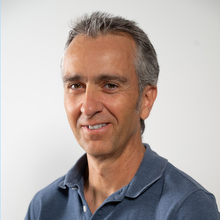
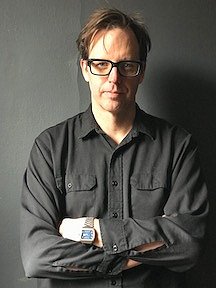
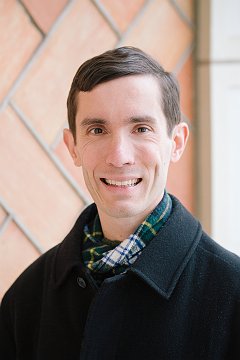
Dr Steven Powell is an active researcher at Newcastle University with a focus on clinical and translational medicine. His work spans otolaryngology, pediatric surgery, and oncology, evidenced by publications from 2003 to 2025. Affiliated with medical research at Newcastle, he contributes to high-impact studies in respiratory diseases, cancer biology, and infection control. His research centers on Otolaryngology and Pediatric Surgery, with specific expertise in recurrent respiratory papillomatosis, tonsillectomy outcomes, and antimicrobial therapy for pediatric tracheostomy patients. He also investigates prostate and colorectal cancer mechanisms, alongside foundational work on microbial contamination in ENT instruments. This dual focus on clinical ENT challenges and molecular oncology demonstrates interdisciplinary breadth. Analysis of his 2003-2025 publications reveals an evolution from basic infection control studies toward complex clinical trials and systematic reviews. Recent work (2024-2025) addresses urgent gaps in respiratory papillomatosis interventions and antimicrobial stewardship, reflecting responsiveness to emerging clinical needs. His consistent collaboration with ENT specialists, oncologists, and pediatricians underscores team-based translational research.
Dongwan Shin, Ph.D. is a Professor of Computer Science and Engineering at New Mexico Tech (NMT). He serves as Director of the Secure Computing Laboratory (SCL), NSF SFS and S-STEM Programs, and Faculty Advisor for the NMT ACM Student Chapter. His roles include leadership in cybersecurity education and research, including Center of Academic Excellence (CAE) designation for NMT. He has held the Orr Endowed Chair and served as Department Chair (2015–2018). Research Interests : Focuses on cybersecurity, usable security, software engineering, and cloud security. Key areas include access control, malware analysis, cryptography, and privacy-preserving technologies. His work addresses challenges in secure system design, blockchain, and insider threat mitigation. Grants & Projects : CyberCorps SFS Renewal (NSF, PI, 2020–2025) New Mexico SMART Grid Center (NSF, co-PI, 2018–2023) S-STEM Program (NSF, co-PI, 2018–2023) EPSCoR: Sustainable Grid Research (NSF, co-PI) Professional Activities : Program Chair for ACM Symposium on Applied Computing (2017–2020) Guest Editor for IEEE Transactions on Dependable and Secure Computing Leadership roles in TrustCol, CloudApp, and Smart Grid Track conferences Teaching : Offers courses in cybersecurity, cryptography, software engineering, and cloud computing at both undergraduate and graduate levels.
Riccardo Focardi is a Full Professor at Ca' Foscari University of Venice in the Department of Environmental Sciences, Computer Science and Statistics. He has held this position since September 2017, following roles as Associate Professor (2013–2017) and Researcher (1996–2002). He is also co-founder and Chief Scientist of Cryptosense and 10Sec, startups focused on cybersecurity and IoT security solutions. Education: PhD in Computer Science from the University of Bologna (1999), Laurea cum laude in Computer Science (1993). Research focuses on cybersecurity, cryptography, formal methods for security protocol analysis, and secure hardware/software systems. Notable projects include the Cryptosense Analyzer tool for cryptographic device analysis and contributions to IoT security via 10Sec's fingerprinting technologies. His work on PKCS#11 vulnerabilities and padding oracle attacks has significantly impacted practical cryptographic security. Publications emphasize applied cryptography, API security, and IoT systems. Recent work explores GAN-based authentication (EUAS-GAN) and zero-shot malware detection (Z-MDZS). Over 110 publications span top venues like CRYPTO, CCS, and IEEE S&P. Leadership roles include coordinating national cybersecurity projects (e.g., POR FESR 2017–2020), chairing conferences (ITASEC 2017, CSF 2007), and directing Ca' Foscari's Computer Science PhD program (2012–2019). Active in public engagement, including media appearances on cybersecurity trends. Labs/Teams: Cryptosense (founded 2013), 10Sec (2020), and the DAIS department's security research group. Supervised over 10 PhD students, contributing to academic-industry collaborations in secure systems.
Maria Jose Ginzo Villamayor is an Assistant Professor at the University of Santiago de Compostela (USC), affiliated with the Department of Statistics, Mathematical Analysis and Optimization within the Faculty of Labor Relations. She holds a PhD in Statistics (2022) with a thesis on Statistical Techniques in Geolinguistics. Onomastic Modeling , supervised by Dr. Rosa M. Crujeiras Casais. Her research focuses on interdisciplinary applications of statistics and optimization, including wildfire management logistics, geolinguistic surname analysis, forest inventory systems (via TLS technology), and healthcare analytics. Education: PhD in Statistics (2022), University of Santiago de Compostela. Research interests span: Statistical modeling in geolinguistics and onomastics Optimization models for emergency resource allocation (e.g., firefighting helicopter logistics) Development of R packages for environmental data analysis (e.g., FORTLS for forest inventories) Applications of machine learning in epidemiology and medical diagnostics Demographic studies involving spatial distribution patterns Her recent work demonstrates expertise in merging mathematical techniques with real-world challenges, particularly in environmental management and public health. Despite prolific publication output, no formal academic awards are explicitly mentioned in the provided data. Labs/Teams: Active member of the MODESTYA research group (Optimization, decision, statistical models and applications) and the Galician Mathematical Research and Technology Center (CITMAga).
Luca Barbierato is a Fixed-term Assistant Professor at the Department of Control and Computer Engineering (DAUIN), Politecnico di Torino, specializing in applied artificial intelligence, cybersecurity, and co-simulation infrastructures for integrated energy systems. He actively contributes to research in edge computing, IoT, and sustainable energy technologies. Research Focus: AI applications in energy systems, secure IoT infrastructures, and co-simulation frameworks Teaching Roles: Invited PhD teaching component (2025/26), teaching assistant across multiple programs His recent publications address critical areas including OpenTitan-based security controllers, urban building energy modeling, and distributed power system co-simulation. Barbierato's work aligns with SDG Goals 7 (Affordable Energy), 9 (Innovation Infrastructure), and 11 (Sustainable Cities). Notable scientific recognition includes the Learning to Teach (L2T) badge from Politecnico di Torino.
Eric Cornelissen is a Doctoral Student at the School of Electrical Engineering and Computer Science, KTH Royal Institute of Technology in Stockholm, Sweden. He works within the Division of Theoretical Computer Science, focusing on supply chain security as part of the CHAINS project. His research spans theoretical computer science and cybersecurity, with a particular emphasis on cryptographic protocols, secure communication frameworks, and vulnerability analysis in software systems. This aligns with his involvement in the CHAINS project, which addresses systemic security challenges. Recent publications highlight his expertise in cryptographic analysis and JavaScript runtime security. Key contributions include evaluating the Message Layer Security (MLS) protocol and identifying prototype pollution vulnerabilities in web technologies. His work intersects theoretical rigor with practical applications in supply chain and software security.
Stig Frode Mjølsnes serves as a Professor in the Department of Information Security and Communication Technology within the Faculty of Information Technology and Electrical Engineering at the Norwegian University of Science and Technology (NTNU). His research spans mobile network security, cryptographic protocols, and privacy engineering, with particular focus on vulnerabilities in LTE/4G systems and subscriber identification mechanisms. His office is located at Elektro B, B219, Gløshaugen, OS Bragstads plass 2, and he maintains active research collaborations internationally. Professor Mjølsnes' research interests center on mobile network security with emphasis on privacy exposure in cellular systems, cryptographic protocol design, and security education. His work has systematically exposed critical vulnerabilities in LTE paging mechanisms that enable IMSI catchers and subscriber tracking, while developing practical countermeasures through privacy-preserving identification protocols. He bridges theoretical cryptography with real-world implementation challenges, particularly in wireless communication systems where security flaws have immediate practical consequences. His research methodology combines formal protocol analysis with experimental network security testing. His publication record demonstrates consistent focus on mobile network privacy vulnerabilities, particularly in LTE systems, where his team has documented low-cost attack methodologies accessible even to non-programmers. The research trajectory shows evolution from foundational cryptographic work toward applied security testing frameworks that have influenced both academic understanding and practical security implementations in mobile networks. His contributions include developing educational tools for security experimentation and analyzing cryptographic weaknesses in voting systems. Professor Mjølsnes actively contributes to the academic community through conference organization, particularly the Norwegian ICT Conference for Research and Education (NISK), where he has served as program chair. His editorial work includes prefaces for major security conference proceedings published by Springer in the Lecture Notes in Computer Science series. He has also contributed to security standardization discussions through technical reports and government consultations. His teaching philosophy emphasizes hands-on security education, as evidenced by publications on security laboratory didactics and mobile network security experimentation frameworks. He has developed practical educational approaches for teaching information security through software laboratories and web security exercises, focusing on bridging theoretical knowledge with practical implementation skills.
Assistant Professor Bahar Soğukz Özdemir is a faculty member at Yeditepe University's Faculty of Engineering, Department of Genetics and Bioengineering, where she has been teaching since 2014. She previously held academic positions at Bahçeşehir University (2011-2014) and Sabancı University (2006-2011). Her academic career spans over 15 years with significant contributions to plant biotechnology research. Educational Background: PhD in Biological Sciences and Bioengineering, Sabancı University (2003-2009) Master's in Biology, Middle East Technical University (1998-2003) Bachelor's in Molecular Biology and Genetics, Middle East Technical University (1994-1998) Dr. Özdemir's research program centers on plant biotechnology with emphasis on Brachypodium distachyon as a model system for understanding grass genomics and stress responses. Her laboratory investigates molecular mechanisms of drought and salinity stress tolerance, proteome and metabolome dynamics under environmental challenges, genetic transformation techniques, and DNA barcoding applications for plant identification. Her work bridges fundamental molecular studies with practical agricultural applications, particularly in crop improvement under climate change conditions. Analysis of her publication record reveals a consistent focus on Brachypodium distachyon as a model for temperate grasses, with increasing sophistication in omics approaches over time. While early work focused on establishing transformation protocols and basic genomic characterization, recent publications demonstrate advanced integration of proteomics, metabolomics, and physiological analyses to understand plant stress responses at systems level. Scientific Awards: Young Scientist Travel Award in MBFT, Hokkaido University, Japan Mühendislik Fakültesi Akademik Performans Ödülü 3.lük, Yeditepe University Workshop travel grant from British Council/Newton Fund Yurtdışı Bilimsel Etkinliklere Katılma Desteği from TÜBİTAK Dr. Özdemir has supervised 22 graduate students (15 Master's and 7 PhD candidates) and secured research funding totaling approximately 3.2 million Turkish Lira. Her active projects include "Antarktika'dan Örneklenen Vasküler Bitki Örneklerinde Genom Büyülülüğü Çeşitliliğin Araştırılması" (50,000 TL) and "Türkiye Tohum Gen Bankası Ulusal DNA Barkodlama Projesi" (150,000 TL). She has served as principal investigator on multiple projects totaling over 2 million TL, including "Türkiye'nin stratejik bitkisi fındıkta doku kültürü çalışmaları" (135,000 TL). Her laboratory maintains specialized facilities for plant tissue culture, proteomics analysis, and DNA barcoding work, collaborating with multiple national institutions including Istanbul Technical University and Erciyes University on various research initiatives. She actively participates in international scientific networks through the International Association for Plant Biotechnology and European Federation of Biotechnology.
Prof. Dr. Michael Rademacher is a full-time Professor of Embedded Systems and Networks at Hochschule Bonn-Rhein-Sieg (H-BRS) and Research Group Leader of 'Secure Mobile Communication' at Fraunhofer FKIE. His dual affiliation bridges academic research and applied industry solutions, focusing on wireless networks and cybersecurity. Research Focus: Rademacher's work spans wireless communication (5G, LoRaWAN), IoT security, and network protocol optimization. He leads projects like HiLeit, developing satellite-5G hybrid networks for emergency services, and DigitalTwin-4-Multiphysics-Lab for industrial simulations. His lab investigates vulnerabilities in mobile systems while creating tools like Katti for automated web threat detection. Awards & Recognition: VDI Köln Promotion Prize, 1st Place (2014) Best Master's Thesis in Computer Science, H-BRS (2014) AFCEA Bonn Study Award, 1st Prize (2014) Projects & Grants: He directs multiple funded initiatives, including HiLeit (resilient disaster communication) and Cyber Security Learning Lab. His teams develop open-source frameworks like open5Gcube for network testing and publish extensively on TLS optimization and spectrum management.
Dr. Francien Dechesne serves as Endowed Professor of 'Data and AI for the Rule of Law' at Tilburg University through a joint appointment between the Tilburg School of Humanities and Digital Sciences (TSHD, lead school) and Tilburg Law School (TLS). Funded by the Ministry of Justice and Security's Research and Data Centre (WODC), her five-year term (2025-2030) is based in TSHD's Intelligent Systems department. Her academic foundation includes: PhD in Mathematical Logic (Tilburg & Eindhoven Universities of Technology, 2005) Research on security protocol verification (Eindhoven, 2005-2009) Research on ethics of information technology (Delft, 2009-2014) Studies in mathematics (intuitionistic) and philosophy (Radboud University Nijmegen) Dechesne's research confronts critical tensions between AI innovation and legal accountability, focusing on responsible data analysis frameworks for justice/security applications. She investigates how algorithmic opacity and biased training data undermine public trust—exemplified by the Child Benefits Affair—and develops governance models for rule-of-law-compliant AI in tax administration, law enforcement, and judicial systems. Her work uniquely bridges technical AI development with legal theory and societal impact assessment. The WODC-funded chair establishes institutional collaboration between Tilburg University and the Ministry of Justice, prioritizing scientifically rigorous approaches to AI implementation in public governance. Dechesne leverages her pre-academic IT management experience and interdisciplinary scholarship to translate theoretical frameworks into actionable policy guidance for Dutch security agencies.
Byron Cook is Professor of Computer Science at University College London (UCL) and Director of Automated Reasoning at Amazon Web Services. He leads Amazon's Automated Reasoning Group (ARG) and has driven the broad adoption of formal methods across AWS services. His career spans academia and industry, with significant contributions to program verification and automated reasoning. His research focuses on verification, automated reasoning, program analysis, computer/network security, programming languages, theorem proving, logic, and applications to hardware design, operating systems, and biological systems. Cook's work bridges theoretical foundations with practical applications in cloud security and system reliability, particularly through his leadership in applying formal methods to AWS infrastructure. Cook's recent publications demonstrate a strong focus on applying automated reasoning to cloud security challenges, particularly around access control policies, network reachability, and cryptographic implementations. His work shows a clear trajectory from theoretical program verification toward practical security applications in large-scale cloud environments, with emphasis on making formal methods accessible to developers through "one-click" verification tools. Scientific Awards: FREng (Fellow of the Royal Academy of Engineering) As an academic advisor, Cook has mentored numerous PhD students and interns who have gone on to significant careers in programming languages and verification research. His work at Amazon has secured substantial research funding for developing and deploying automated reasoning tools across AWS services. Cook founded and leads Amazon's Automated Reasoning Group (ARG), which develops tools like IAM Access Analyzer, Tiros, Zelkova, and T2. Previously, he managed the Programming Principles and Tools (PPT) group at Microsoft Research Cambridge, where he co-founded projects including TERMINATOR, SLAyer, and the Bio Model Analyzer (BMA).
Bryan Parno is the Kavčić-Moura Professor of Electrical & Computer Engineering and Computer Science at Carnegie Mellon University, where he leads the Secure Foundations Lab within CyLab, CMU's Security & Privacy Institute. His research combines theory and practice to provide formal, rigorous security guarantees about concrete systems, with emphasis on creating solid foundations for practical solutions. His research spans secure systems , formal software verification , applied cryptography , data privacy , and usable security . Current work focuses on protocols for verifiable computation and zero-knowledge proofs, building practical formally verified secure systems, and developing next-generation application models. His lab maintains a strong commitment to reproducibility, open-sourcing code under permissive licenses, and avoiding patenting results to maximize public benefit. His recent publications demonstrate a clear trend toward practical verification of real-world systems, particularly through the Verus project for verifying Rust code, Everest for building verified HTTPS stacks, and Ironclad for provably secure systems. These works bridge the gap between theoretical security guarantees and practical implementation, with applications ranging from blockchain protocols to verified cryptographic libraries deployed in the Linux kernel. His scientific achievements include multiple Distinguished Paper/Artifact Awards (USENIX Security, SOSP, PLDI), the IEEE Cybersecurity Award for Practice , the Sloan Fellowship , and the ACM Doctoral Dissertation Award . His work on verifiable computation protocols has influenced blockchain systems, while his research on secure code execution environments contributed to Intel's SGX and TDX technologies. As an advisor, Parno has mentored numerous PhD students including Aymeric Fromherz (recipient of the ACM SIGSAC Doctoral Dissertation Award) and Jay Bosamiya. His lab receives funding from diverse sources including NSF, industry partners, and security foundations. Notably, his work has been incorporated into Windows 8+, iOS 13+, and the Linux kernel. He also serves in leadership roles including Chair of IEEE Computer Society's Technical Committee on Security & Privacy. The Secure Foundations Lab maintains strong industry connections, with alumni joining Microsoft Research, Inria, Northeastern University, and other leading institutions. Recent projects like Verus, Everest, and Ironclad represent the lab's commitment to building end-to-end verified systems that provide rigorous security guarantees while maintaining practical performance.