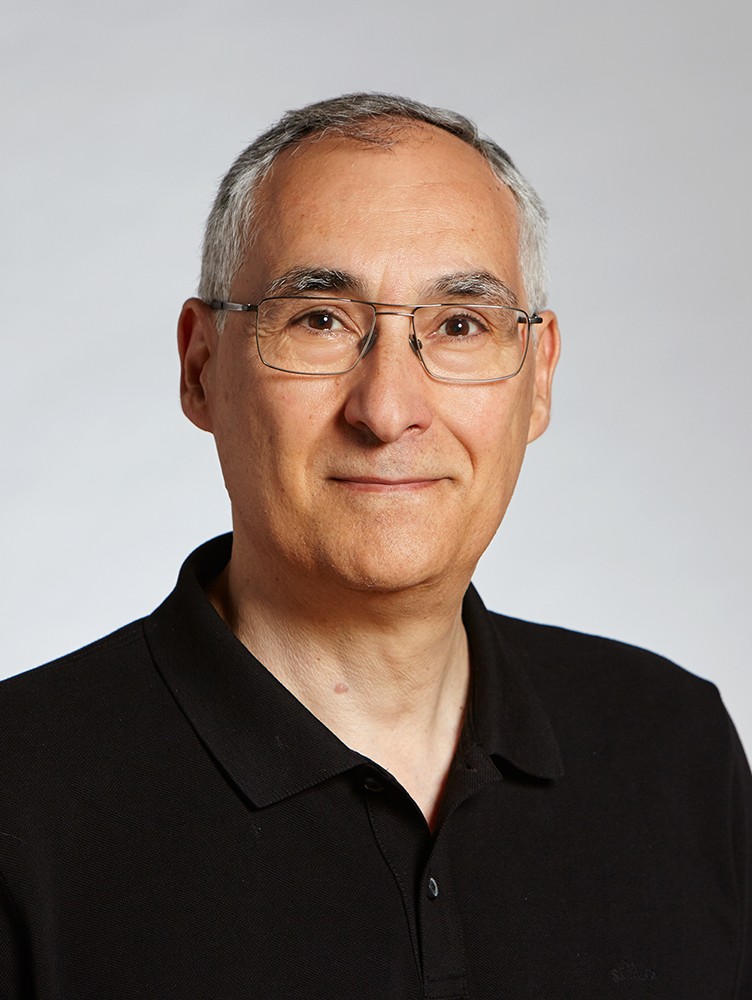
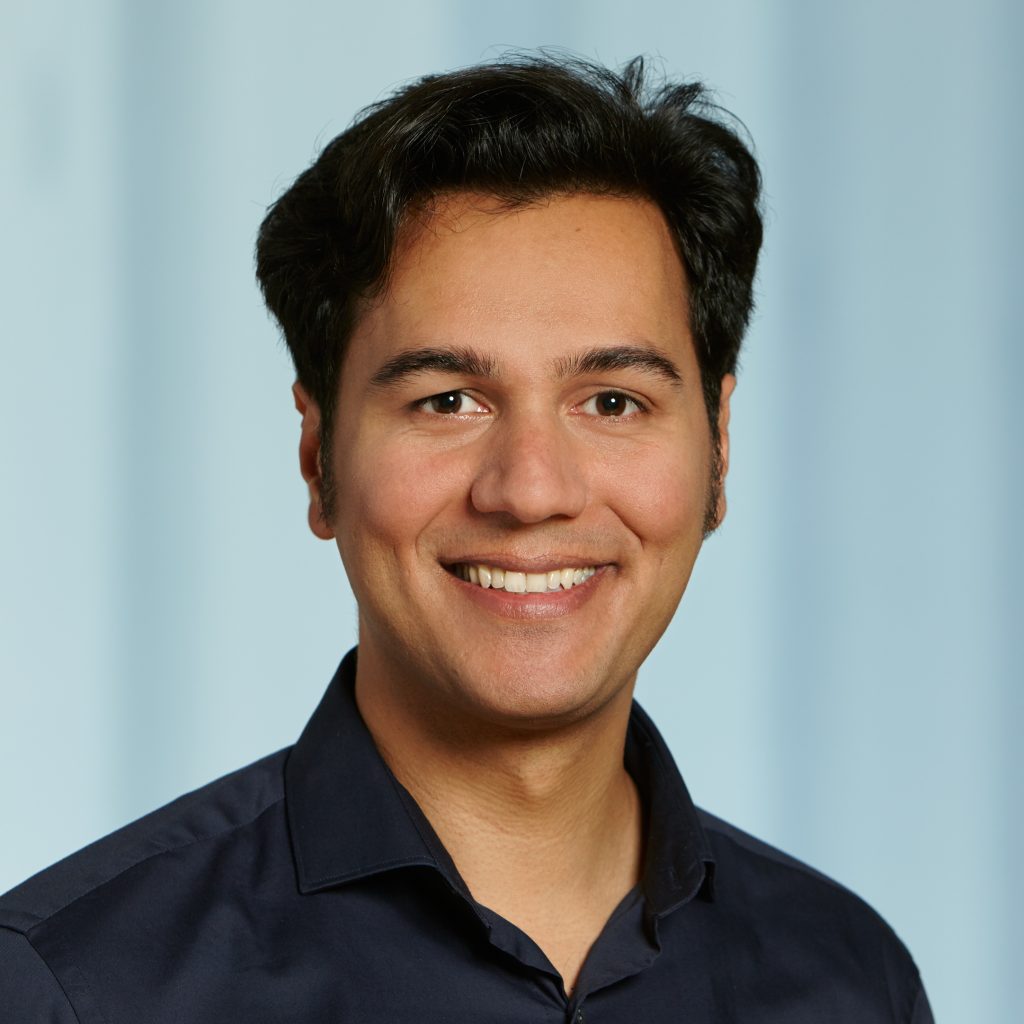
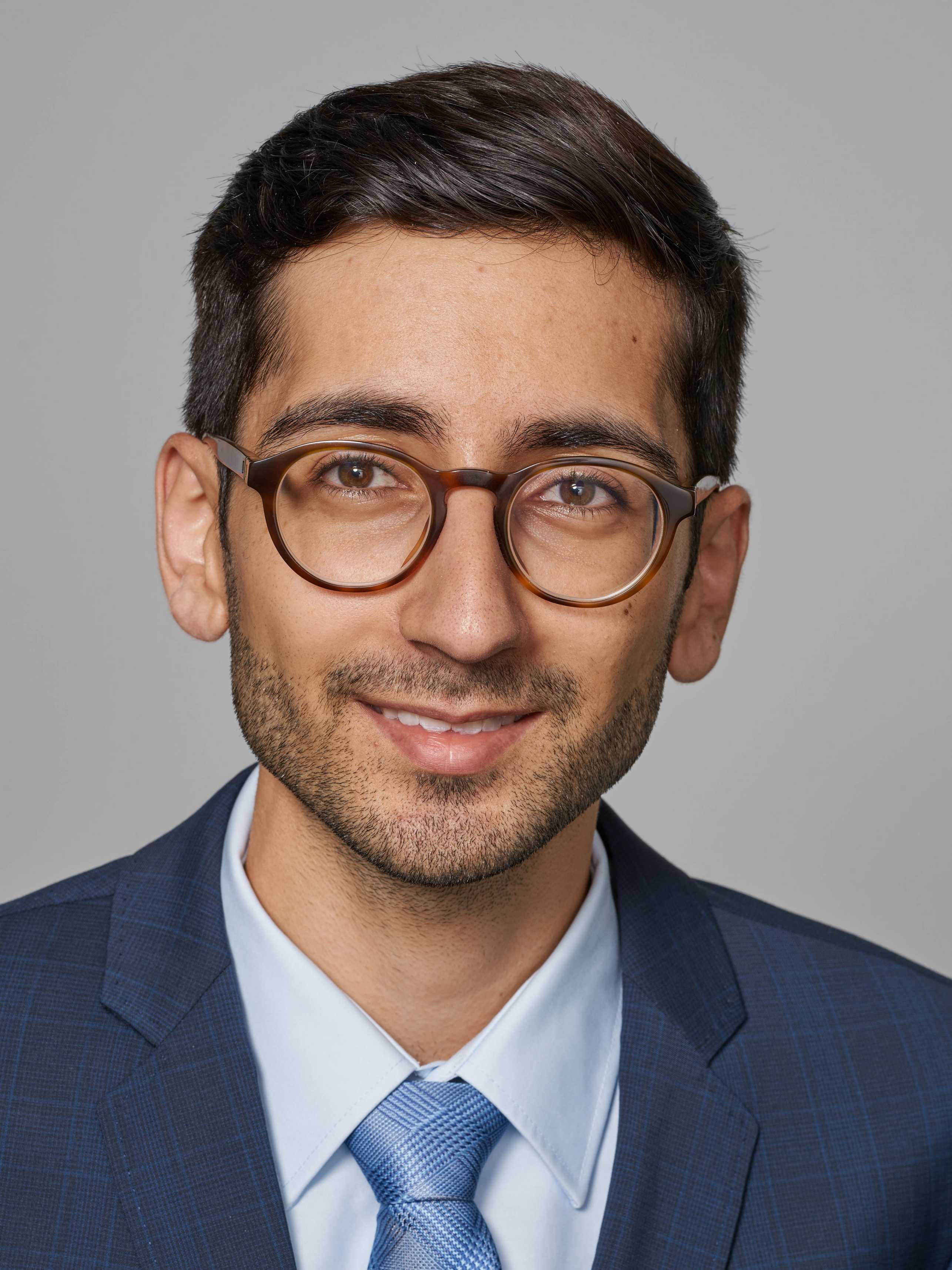
Olga Sorkine-Hornung is a Professor of Computer Science at ETH Zurich and head of the Institute of Visual Computing. She leads the Interactive Geometry Lab, focusing on theoretical and practical advancements in digital content creation, geometry processing, and shape modeling. Current position: ETH Zurich, Department of Computer Science Previous roles: Courant Institute (NYU), Technical University of Berlin Education: BSc and PhD from Tel Aviv University, postdoc at TU Berlin Her research spans shape representation, digital fabrication, computer animation, and fundamental geometry processing. Key contributions include Laplacian surface editing, as-rigid-as-possible deformation, and generalized winding numbers. She works on applications in VR, AR, and autonomous systems. Awards include Test of Time Awards (2024), ACM Fellow (2020), ERC Consolidator Grant (2020), and EUROGRAPHICS Young Researcher Award (2008). She has supervised numerous students and co-developed software libraries like libigl and Instant Meshes . Co-chair roles for SIGGRAPH, Eurographics, and Pacific Graphics Editorial board member for ACM Transactions on Graphics and other journals Keynote speaker at VMV, CVPR, and SIAM conferences Her work bridges mathematical rigor with practical implementation, advancing computer graphics and geometry processing through intuitive algorithms that maintain surface detail while enabling efficient computation.
Peter Bühlmann is a Professor at ETH Zürich within the Seminar für Statistik , focusing on high-dimensional statistics, causal inference, and machine learning. His work bridges theoretical advancements with practical software implementations in R packages like pcalg , mboost , and glmmlasso , impacting fields such as genomics, proteomics, and intensive care analytics. Key Contributions : Causal structure learning, stability selection, anchor regression, and deconfounding. Software : Developed widely used R packages for statistical modeling and causal inference. Teaching : Courses on high-dimensional statistics at ETH Zürich and international institutions. Research Trends : Recent articles emphasize causal robustness, domain adaptation, and applications in medicine. His work addresses challenges in heterogeneous data, missing values, and covariate shifts using methods like spectral deconfounding and residual prediction tests. Scientific Recognition : Co-author of a paper designated as a New Hot Paper (Meinshausen and Bühlmann, 2006) by Essential Science Indicators, indicating significant impact in high-dimensional multiple testing.
Prof. Srdjan Capkun is a Full Professor in the Department of Computer Science at ETH Zurich and Director of the Zurich Information Security and Privacy Center (ZISC). He holds a Dipl.Ing. from the University of Split (1998) and a Ph.D. from EPFL (2004). His research focuses on system and network security, including wireless security (e.g., secure positioning), trusted computing, blockchain technologies, and privacy-preserving systems. He co-founded 3db Access (acquired by Infineon) and Sound-Proof, addressing secure distance measurement and authentication. Notable achievements include an ERC Consolidator Grant (2016), ACM Fellowship, and IEEE Fellowship. Education: Dipl.Ing., Electrical Engineering / Computer Science, University of Split, 1998 Ph.D., Communication Systems, EPFL, 2004 Research Interests: Wireless security (e.g., UWB, GNSS, cellular) Trusted execution environments (TEEs) Blockchain and cryptocurrency systems Privacy-preserving technologies Awards & Grants: ERC Consolidator Grant (2016) ACM Fellow and IEEE Fellow Leadership of ZISC Advising & Labs: Leads the System Security Group at ETH Zurich Guided postdoctoral researchers and graduate students in security and privacy Companies: 3db Access (secure distance measurement) Futurae (online authentication)
April Yi Wang is a tenure-track Assistant Professor in the Department of Computer Science at ETH Zürich, where she directs the Programming, Education, and Computer-Human Interaction Lab (PEACH Lab). She is a core faculty member at the Institute for Intelligent Interactive Systems and associated with the ETH AI Center. Wang is also an active member of ETH HCI and Swiss CHI communities, contributing significantly to human-computer interaction and educational technology research. Dr. Wang's educational background includes: Ph.D. in Information Science from University of Michigan (2023), advised by Steve Oney and Christopher Brooks M.Sc. in Computer Science from Simon Fraser University (2018), advised by Parmit Chilana B.Eng in Computer Science from Zhejiang University (2016) Dr. Wang's research focuses on human-centered approaches to programming and data science. Her work reimagines programming as a form of literature that communicates with both machines and people, exploring creative representations like text, shapes, animations, and everyday objects. She investigates how to make programming more natural and intuitive through literate programming environments, with applications in professional and educational contexts. Her research spans human-computer interaction, educational technology, and AI-assisted programming tools. Analysis of Dr. Wang's recent publications reveals a strong focus on AI-enhanced educational tools, particularly for programming and data literacy. Her work increasingly integrates large language models to scaffold learning while maintaining user agency. There's a clear trajectory toward developing situated learning approaches that connect abstract concepts to real-world contexts through augmented reality and tangible interfaces. Her research bridges HCI, education, and AI to create more accessible and engaging technical learning experiences. Dr. Wang has received numerous prestigious awards including: 2023 Gary M. Olson Award and Honourable Mention Award at ACM CHI 2022 Rising Stars in EECS and Heidelberg Laureate Forum Young Researcher 2020 Best Short Paper Award at IEEE VL/HCC and Honourable Mention at ACM CHI 2019 Best Paper Award at ACM CSCW Dr. Wang actively mentors students through thesis projects at ETH Zürich, supervising numerous bachelor's and master's students on topics ranging from AI-assisted programming to data literacy tools. Her lab, PEACH Lab, has secured funding including the recent innovedum funding for the Coducate project. She serves on program committees for major conferences including CHI and UIST, and regularly reviews for top HCI and education journals. The PEACH Lab, directed by Dr. Wang, focuses on creating expressive, intelligent, and human-centered systems that make technical topics more accessible. The lab explores textual, visual, and embodied representations for programming, with emphasis on enhancing communication, collaboration, and learning. Current research directions include balancing automation with user agency, supporting diverse learning needs, and developing tools for interdisciplinary technical communication.
Ana Klimovic is an Assistant Professor at the Department of Computer Science, ETH Zürich, and Deputy Head of the Institute for Computing Platforms. She leads the Efficient Architectures and Systems Lab (EASL) and focuses on optimizing cloud computing performance and resource efficiency. Education: Ph.D. in Electrical Engineering (Stanford University), M.S. in Electrical Engineering (Stanford), B.A.Sc. in Engineering Science (University of Toronto) Previous Roles: Research Scientist at Google Brain Her research spans cloud computing, operating systems, distributed systems, and their intersection with machine learning. Key areas include cloud-native programming models, elastic storage, GPU sharing, and data pipeline optimization. The 2025-2024 articles highlight trends in serverless computing, large language model (LLM) serving, GPU optimization, and data-centric ML systems. Themes include elasticity, resource multiplexing, heterogeneous computing, and infrastructure for AI/ML workloads. Scientific Awards: Microsoft Research PhD Fellowship, Stanford Graduate Fellowship She has led research projects on ephemeral storage, distributed training automation, and cost-efficient ML preprocessing, with grants from Microsoft Research and Stanford.
John Lygeros is a Full Professor and Head of the Institute for Automatic Control at ETH Zurich's Department of Information Technology and Electrical Engineering. He received his B.Eng. (1990) and M.Sc. (1991) from Imperial College London, and Ph.D. (1996) from UC Berkeley. Before joining ETH Zurich in 2006, he held academic positions at the University of Cambridge and University of Patras. His research focuses on: Modeling and control of hierarchical hybrid systems Large-scale dynamical systems applied to biochemical networks Control of automated transportation systems via wireless networks Energy systems and advanced manufacturing control His research demonstrates strong emphasis on optimization methods, distributed control architectures, and machine learning applications in control systems, with significant contributions to real-time optimization algorithms and data-driven control methodologies. Major scientific awards include: HSCC Test of Time Award (2024) ERC Advanced Grant (2018) O. Hugo Schuck Best Paper Award (2018) IEEE George S. Axelby Paper Award (2016) Three Golden Owl teaching awards from ETH Zurich He leads the Automatic Control Laboratory at ETH Zurich and serves as Director of the National Centre of Competence in Research 'Dependable Ubiquitous Automation'. He has advised over 60 doctoral candidates since 2017, with research spanning optimization algorithms, power systems, autonomous systems, and machine learning applications.
Shweta Shinde is an Assistant Professor at ETH Zürich's Department of Computer Science. She leads the Secure & Trustworthy Systems (SECTRS) group and is affiliated with the Institute of Information Security and the ZISC Center. Her research focuses on foundational and practical aspects of trusted computing, system security, and program analysis to protect devices ranging from smartphones to cloud servers. Key areas include AMD SEV-SNP, Arm CCA, Intel SGX, and hardware-software co-design for security. Dr. Shinde has made significant contributions to confidential computing, including frameworks like OpenCCA and tools for analyzing hardware vulnerabilities. Her work has been recognized with Best Paper Awards and Distinguished Paper Awards at top venues. She advises a group of PhD students, including Mark Kuhne, Supraja Sridhara, and Benedict Schlüter. Her service includes program committee roles at IEEE Security & Privacy, USENIX Security, and as Track Co-Chair for AsiaCCS 2026.
Elisa Ricci is a Full Professor at the Department of Information Engineering and Computer Science (DISI) at the University of Trento and serves as Head of the Research Unit Deep Visual Learning at Fondazione Bruno Kessler. She coordinates the Doctoral Program in Information Engineering and Computer Science at the University of Trento and holds prestigious fellowships from ELLIS and IAPR. Her research focuses on advancing computer vision and deep learning systems capable of operating in open-world environments. Key interests include domain adaptation, continual learning, and self-supervised learning for visual and multi-modal data processing. Her work addresses critical challenges in enabling machines to adapt to new domains without forgetting prior knowledge, with applications spanning robotics perception, medical imaging, and privacy-preserving AI systems. Recent publications reveal a dominant trend toward leveraging vision-language models for open-vocabulary tasks, training-free adaptation methods, and federated learning architectures. Significant research thrusts include machine unlearning for privacy, robustness against bias in visual classifiers, and novel class discovery using foundation models—particularly evident in 2025 publications addressing medical imaging, 3D segmentation, and collaborative generative systems. Her major recognitions include: ELLIS Fellow IAPR Fellow As Doctoral Program Coordinator at the University of Trento, she oversees PhD training while leading the Deep Visual Learning unit at Fondazione Bruno Kessler. Her research group secures competitive grants in AI-driven perception systems, though specific funding sources aren't detailed in the source material. The Deep Visual Learning Research Unit specializes in open-world computer vision challenges, developing frameworks for domain adaptation, continual learning, and multi-modal perception. Current projects integrate generative models with robotics applications while addressing privacy concerns in vision-language systems through unlearning techniques.
Gustavo Alonso is Full Professor at the Department of Computer Science (D-INFK) of ETH Zurich and Head of the Institute for Computing Platforms . He has been at ETH since 1995, first as a post-doc, then as Assistant Professor from April 1998, and promoted to Full Professor in October 2001. Within the Systems Group he leads the Information and Communication Systems Research Group . Education: 1989 – Telecommunications Engineering (undergraduate), Madrid Technical University (UPM-ETSIT), Spain 1992 – M.S. Computer Science, University of California, Santa Barbara (UCSB) 1994 – Ph.D. Computer Science, University of California, Santa Barbara (UCSB) Research Interests: His work spans databases, distributed systems, cloud-computing architecture, FPGAs, hardware acceleration for data science, parallel and reconfigurable computing . The group investigates how modern heterogeneous hardware—from GPUs to SmartNICs—can be integrated into data-processing systems to achieve orders-of-magnitude performance gains, energy savings, and new functionality such as in-network computation and serverless acceleration. Scientific Awards & Honors: Fellow of the ACM (Association for Computing Machinery) Fellow of the IEEE (Institute of Electrical and Electronics Engineers) Distinguished Alumnus, Department of Computer Science, UC Santa Barbara Four Test-of-Time / Most Influential Paper Awards across databases, programming languages, cloud computing, and software engineering Labs & Projects: He directs the Information and Communication Systems Research Group within the Systems Group ( systems.ethz.ch ). The lab develops open-source platforms such as Coyote v2 for FPGA abstractions, Shuhai for HBM benchmarking, and MicroRec for micro-second recommendation serving, while collaborating with industry on SmartNICs, serverless analytics, and cloud-scale data analytics.
Prof. Dr. Timothy Roscoe is a Full Professor in the Department of Computer Science at ETH Zurich. His research focuses on operating systems, networking, and distributed systems. He was inducted as an ACM Fellow in 2014 for contributions to these fields. Previously, he worked at Intel Research Berkeley, UC Berkeley (Adjunct Professor), and Sprint Labs. His work includes foundational contributions to systems like PlanetLab, P2 Declarative Networking, and the Nemesis OS. Roscoe holds a PhD from the University of Cambridge and has led projects in cloud computing, wide-area network measurement, and secure systems design. His current research emphasizes hardware-software co-design, formal verification of systems, and scalable memory architectures. Education: PhD in Computer Science, University of Cambridge (1995) Key Roles: Principal Researcher at Intel Berkeley Lab, Visiting Researcher at National ICT Australia Research Highlights: Contributions to distributed systems (PlanetLab), declarative networking (P2), and secure microkernels (seL4 integration). Current projects address challenges in disaggregated memory systems, coherent interconnects, and trustworthy embedded systems. Awards: ACM Fellow (2014), numerous grants and industry collaborations. Labs/Teams: Systems Group at ETH Zurich, focusing on OS design, hardware architectures, and formal methods.
Professor Martin Schrimpf is a Tenure Track Assistant Professor at EPFL, holding dual appointments in the School of Life Sciences (SV) and the School of Computer and Communication Sciences (IC). His research bridges computational neuroscience, deep learning, and cognitive science to model human natural intelligence in vision and language. He leads the NeuroAI Lab, focusing on aligning artificial neural networks with brain mechanisms and human behavior. Education: PhD in Brain and Cognitive Sciences from MIT (2017–2022), MSc in Software Engineering from TUM/LMU/UNA (2014–2017), and BSc in Information Systems from TUM (2011–2014). His work has been recognized with awards including the Neuro-Irv Open Science Prize, McGovern Fellowship, and Takeda AI+Health Fellowship. He co-founded Integreat, a social impact startup recognized with Google.org’s Impact Challenge and TUM’s Social Impact Award. Research interests include neuroAI, brain-like models, and clinical translation (e.g., visual prosthetics). He has published in top venues like Neuron, Nature Human Behavior, NeurIPS, and ICLR. Current projects involve developing topographic language models (TopoLM) and investigating causal language network interactions using LLMs. Teaching: Courses include Neuroscience Foundations for Engineers and Brain-like Computation and Intelligence . Supervised over 26 students, including PhD candidates Badr Alkhamissi, Ben Lönnqvist, and Yingtian Tang. Active in grants from SNSF, NeuroX, and EPFL’s AI Center. Labs/Teams: NeuroAI Lab at EPFL Neuro-X Institute. Future directions include advancing brain-inspired models for clinical applications and expanding interdisciplinary collaborations between neuroscience and AI.
Colin Jones is an Associate Professor at the École Polytechnique Fédérale de Lausanne (EPFL) in the Automatic Control Laboratory, School of Engineering. He earned his BASc and MASc in Electrical Engineering and Mathematics from the University of British Columbia (1994-2002) and a PhD in Control Theory from the University of Cambridge (2002-2005). Prior to EPFL, he was an assistant professor there and a senior researcher at ETH Zürich. Current role: Director of the Robotics, Control, and Intelligent Systems Doctoral Program at EPFL Research focus: Optimization-based and model predictive control (MPC) for renewable energy systems, green energy management, and data-driven control methods His recent work (2023-2025) spans high-speed predictive control , smart grid optimization , and physically consistent neural networks , with applications to buildings, hovercrafts, and power systems. He has secured an ERC Starting Grant for his research on optimal control of building networks. Publications include over 200 papers in journals like Automatica , IEEE Transactions , and Energy and Buildings . Notable article trends include distributed optimization , data privacy in energy systems , and nonlinear MPC for autonomous vehicles . Scientific Awards : ERC Starting Grant for optimal control of building networks Advising : Supervises 10 current PhD students and has advised 19 past PhD students, including Alessandretti Andrea and Diwale Sanket Sanjay. Grants and projects emphasize smart energy systems , predictive demand response , and nonlinear control .
Babak Falsafi is a Full Professor at the School of Computer and Communication Sciences (IC) at EPFL, leading the Parallel Systems Architecture Laboratory (PARSA). He is a renowned expert in computer architecture, datacenter systems, and cloud-native server design. His research focuses on post-Moore era computing, emphasizing heterogeneous architectures, energy efficiency, and scalable IT infrastructure. Falsafi is the founder of EcoCloud, an EC-sponsored industrial-academic consortium investigating sustainable information technology. He holds ACM and IEEE fellowships, a Sloan Research Fellowship, and has contributed to major projects like Optimus Prime (data transformation acceleration), AstriFlash (flash-based online service systems), and Midgard (virtual memory re-design). His work spans hardware-software co-design, memory systems, and security. Falsafi advises numerous PhD students and collaborates with industry partners such as Google and Cavium. Key achievements include pioneering scalable multiprocessor architectures, snoop filters in IBM BlueGene, and spatial memory streaming in ARM cores. His lab develops open-source tools like QFlex for server simulation. He frequently presents at top conferences (HPCA, ISCA, MICRO) and chairs workshops on post-Moore infrastructure. Teaching roles include leading courses in computer architecture and parallel systems across multiple EPFL departments (SIN, EDIC, SSC, SMA). His work addresses datacenter challenges like the 'data tax' and mitigating latency through specialized accelerators.
Kaveh Razavi is an Assistant Professor at ETH Zurich in the Department of Information Technology and Electrical Engineering, supervising the Computer Security Group. He is also affiliated with the Department of Computer Science. Research focuses on commodity hardware and operating systems security Teaching: Computer Engineering (BSc 2022–2025), Hardware Security (MSc 2016–2025), Advanced Operating Systems (MSc 2016–2019) Research Interests: Razavi's work bridges computer systems and security, emphasizing microarchitectural vulnerabilities, hardware exploitation, and security verification. His group develops tools for analyzing hardware-software interactions and mitigating memory attacks like Rowhammer. Scientific Awards: Distinguished/Best Paper Awards at IEEE S&P, USENIX Security, MICRO Five Pwnies Awards for innovative research Dutch Veni Grant, ERC Starting Grant Jochen Liedtke Young Researcher Award Golden Owl Teaching Award (2022) ETH Medal, Intel Bounty Reward, BlackHat USA Recognition
Jakob Merane is a postdoctoral researcher at ETH Zurich's Professorship of Law, Economics and Business, and a visiting researcher at the Max Planck Institute and Harvard Law School. He holds a Ph.D. from ETH Zurich and law degrees from the University of Basel, with additional studies in applied statistics. His research focuses on AI-driven legal enforcement, legal technology, and compliance-by-design approaches, leveraging computational and empirical methods. Merane's work includes developing tools like SwiLTra-Bench for multilingual legal translation and LEXam for benchmarking AI legal reasoning. He has contributed to GDPR compliance studies, automation of legal enforcement processes, and quantitative analyses of Swiss legal datasets. Awards include the 2024 Young Scholar Prize from the German Law and Economics Association. Teaching responsibilities include ETH's Law & Tech course since 2020, emphasizing AI regulation and interdisciplinary collaboration between law and computer science. Merane's research also addresses AI liability in medical contexts, digital advertising regulations, and ethical AI integration in legal systems. His work bridges legal theory with practical applications, aiming to enhance justice accessibility through technology.