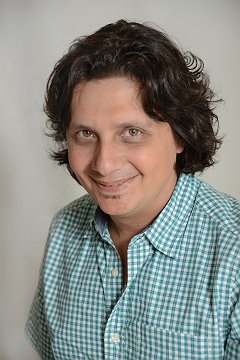
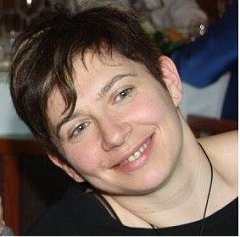
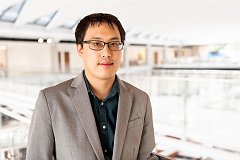
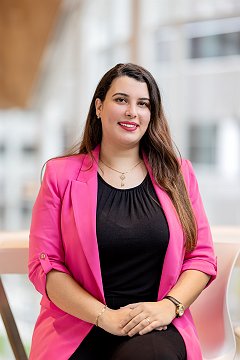
Ana Cavalcanti is a Professor of Computer Science at the University of York, UK. Her research focuses on formal methods for safety critical systems, particularly in robotics and real-time software. She leads the SER research group and has secured major funding from EPSRC and the European Commission. Education 1987 - BSc in Computer Science, Universidade Federal de Pernambuco, Brazil 1990 - MSc in Computer Science, Universidade Federal de Pernambuco, Brazil 1997 - DPhil in Computer Science, Oxford University Her work bridges formal verification, concurrency, and object-orientation, with recent projects like RoboSapiens and DOMINOS addressing trustworthy autonomous systems. She has published extensively on robotic controller verification, adaptive architectures, and ethical requirements for AI. Selected scientific accolades include the Royal Society Wolfson Research Merit Award and a Royal Society Industry Fellowship. She has held academic positions at Universidade Federal de Pernambuco (1997-2002) and the University of Kent (2002-2004) before joining York in 2004.
Diego Garbervetsky is an Associate Professor at the Computer Science Department, School of Sciences, University of Buenos Aires, and a Researcher at ICC/CONICET. He also serves as Director of the Institute of Research in Computer Sciences (ICC). His academic career spans software engineering, programming languages, and formal methods with a focus on program analysis and verification. His research interests include: Static and dynamic program analysis Reverse engineering and compiler optimizations Program understanding and validation Testing and verification of programs featuring rich protocols Automatic symbolic resource analysis (gas consumption, dynamic memory, energy, etc.) Garbervetsky's recent work focuses on smart contract analysis and verification, particularly for Solidity on Ethereum blockchain. His research bridges theoretical program analysis with practical applications in security-critical domains. He has developed several tools including Contractor for behavior validation, JConsume2 for heap memory analysis, and BudaPest for automated software verification. His scientific contributions have been presented at top-tier conferences including ICSE, FSE, ISSTA, and PLDI. Garbervetsky has served on numerous program committees for major software engineering conferences and has advised multiple PhD and undergraduate students through their research.
Sriram Krishnamoorthy is a Research Professor at Washington State University's School of Electrical Engineering & Computer Science and a research scientist at Pacific Northwest National Laboratory (PNNL), where he serves as the System Software and Applications Team Leader in PNNL's High Performance Computing group. Dr. Krishnamoorthy earned his B.E. from the College of Engineering, Guindy in Chennai, India, and his M.S. and Ph.D. degrees from The Ohio State University. He is a senior member of the Institute of Electrical and Electronics Engineers. His research focuses on parallel programming models, fault tolerance, and compile-time/runtime optimizations for high-performance computing. He has made significant contributions in areas including: Fault tolerance techniques that minimize rollback during failures Dynamic load balancing for irregular parallel applications Compiler and runtime optimizations for HPC applications GPU programming and heterogeneous computing Quantum chemistry simulations and quantum computing Dr. Krishnamoorthy's publications span computational science, high-performance computing, and quantum chemistry. His recent work shows strong trends toward quantum computing applications, fault tolerance in large-scale systems, and optimization of computational chemistry methods. He has developed techniques for density matrix quantum circuit simulation, floating-point error analysis, and scalable execution of coupled-cluster models. His scientific achievements have been recognized with several prestigious awards: Best Paper Award at International Conference on High Performance Computing (HiPC'03) Best Paper Award at International Parallel and Distributed Processing Symposium (IPDPS'04) U.S. Department of Energy Early Career award (2013) PNNL's Ronald L. Brodzinski Award for Early Career Exceptional Achievement (2013) The Ohio State University's Outstanding Researcher award (2008) Dr. Krishnamoorthy has advised numerous graduate students and collaborated extensively with researchers across computational science domains. His work on the NWChem project demonstrates significant grant funding and large-scale collaborative research efforts in computational chemistry. He leads research efforts in PNNL's High Performance Computing group, focusing on system software and applications development for next-generation supercomputing platforms.
Adrian Sampson is an Associate Professor in the Department of Computer Science at Cornell University, where he is part of the Computer Systems Laboratory and the programming languages group. He joined Cornell in 2016 as an Assistant Professor and was promoted to Associate Professor in 2022. Prior to Cornell, he was a Visiting Researcher at Microsoft Research (2015-2016). He received his Ph.D. from the University of Washington in 2015 under advisors Luis Ceze and Dan Grossman, with a dissertation on Hardware and Software for Approximate Computing. His research focuses on breaking down abstraction barriers and rethinking the hardware-software interface. He is particularly known for his work on approximate computing, which explores how computers can be more efficient by allowing them to make controlled mistakes. He leads the Capra research group at Cornell, which investigates programming languages and computer architecture. Sampson's recent publications demonstrate a strong focus on hardware acceleration, FPGA programming, compiler design, and programming language theory. His work often bridges the gap between high-level programming abstractions and low-level hardware implementation, with particular attention to predictability, verification, and energy efficiency. He has made significant contributions to geometry types for graphics programming, timeline types for modular hardware design, and virtual machines for FPGA programming. Among his notable recognitions are the IEEE TCCA Young Computer Architect Award (2021), NSF CAREER award (2019), and multiple Distinguished Artifact Awards at major conferences. He has advised numerous Ph.D. students who have gone on to positions at institutions like Wellesley College, Northwestern University, and Amazon. Sampson is actively involved in academic service, serving on program committees for major conferences including PLDI, ASPLOS, and ISCA. He has also held leadership roles such as ACM SIGARCH Board of Directors (2023-2025) and SIGPLAN Information Director. His teaching at Cornell includes courses on computer systems, programming languages, and advanced compilers.
James Cheney is a Personal Chair of Programming Languages and Systems at the University of Edinburgh, working in the Laboratory for Foundations of Computer Science within the School of Informatics. He leads the Principles of Provenance research group and has been a Turing Fellow from 2018 to 2023. His educational background includes a PhD in Computer Science from Cornell University (2004), an MS in Mathematics from Carnegie Mellon University (1998), and a BS in Computer Science and Mathematics from Carnegie Mellon University (1998). Cheney's research focuses on the intersection of databases and programming languages, with particular emphasis on data provenance. His work spans several key areas: Databases and data provenance Programming languages and compilers Generic programming Logic and automated theorem proving Compression and information theory XML and related technologies His recent publications demonstrate a strong focus on language-integrated query systems, type systems for programming languages, and formal approaches to data provenance. These works often bridge theoretical foundations with practical applications in database systems and programming language design. Cheney has received several notable awards and recognitions: Royal Society University Research Fellowship (2008-2016) Turing Fellow (2018-2023) ERC Consolidator Grant for the Skye project (2016-2021) Google Research Award for Language-integrated provenance As an advisor, Cheney has supervised numerous PhD students and postdoctoral researchers who have gone on to positions at institutions including New York University, LSE, University of Southampton, Meta, and others. His research has been supported by various grants from DARPA, EPSRC, AFOSR, EU FP7, and industry partners including Google, Microsoft Research, and Huawei. Cheney leads the Principles of Provenance group, which conducts fundamental research on data provenance and its applications in security, data curation, and scientific computing. The group has worked on projects including Skye (a programming language for scientific data curation), ADAPT (a DARPA-funded project on advanced persistent threat prevention), and language-integrated provenance systems.
Dr. Zhenman Fang is an Associate Professor in the School of Engineering Science (Computer Engineering Option) and Associate Member in the School of Computing Science at Simon Fraser University, Canada. He founded and directs the HiAccel Lab, focusing on accelerator-rich architectures. His PhD (2014) is from Fudan University, China, with 15 months spent at the University of Minnesota. Prior to SFU, he was a Staff Software Engineer at Xilinx (2017-2019) and a postdoc at UCLA (2014-2017). His research spans: Hardware acceleration for ML, big data, genomics, and HPC FPGA-based customizable computing and near-data processing Compiler/runtime systems for heterogeneous platforms Performance/reliability optimization of accelerator-rich systems His recent publications (2024-2025) focus on FPGA acceleration for machine learning (e.g., on-device training, quantization), computational chemistry, image/video compression, database systems, and reconfigurable computing, demonstrating cross-domain applications of specialized hardware. Awards & Honors: Best Paper Awards: FPL 2024, MEMSYS 2017, TCAD 2019 Best Paper Nominations: ICCAD 2025, FCCM 2025, HPCA 2017, ISPASS 2018 SFU Research Excellence Horizon Award (2025) NSERC Alliance, CFI JELF, and Xilinx University Awards He advises 20+ PhD/Master's students in HiAccel Lab, focusing on accelerator design. Major grants include NSERC Alliance (2020) and CFI JELF (2019). The lab operates a 10-node cluster with FPGA/GPU infrastructure.
Benoit Baudry is a Professor in Software Technology at Université de Montréal, Canada, with previous affiliation at KTH Royal Institute of Technology in Sweden. His research focuses on automated software engineering with emphasis on practical execution-based approaches. Baudry's core research interests include: Software testing : Automated test generation, mocking, and improvement techniques Software diversity : Runtime protection through variant execution and WebAssembly transformations Randomization : Fuzzing and chaos engineering for robustness validation DevOps : Supply chain analysis and dependency management in Maven ecosystems Analysis of his 15 most recent publications (2022-2025) reveals strong emphasis on: Software supply chain security and dependency management (6 publications) Test automation and mock generation techniques (4 publications) WebAssembly compilation and security (3 publications) Software-art interdisciplinary research (2 publications) His work consistently combines empirical analysis with tool development across Java and WebAssembly ecosystems. Baudry actively contributes to the academic community through program committees (ASE, ESEC/FSE, ICSE, ICST) and keynote presentations. He leads research in software diversity through his Software Diversity Lab .
Shahzad Ahmad is a Researcher at the Institute of Networks and Security within Johannes Kepler University Linz (JKU), actively affiliated with the LIT Secure and Correct Systems Lab. His work bridges theoretical cryptography and practical security implementations with geometric data applications. Master of Science (MSc) degree holder His research concentrates on cryptographic security mechanisms, including control flow integrity verification and deniable encryption systems, while also advancing geometric algorithms for point cloud manipulation. This dual focus demonstrates significant interdisciplinary contributions to both computer security and spatial data processing domains. Publication analysis reveals consistent innovation in cryptographic protocol design, particularly in malware-resistant instruction chaining and plausibly deniable storage systems. His geometric research shows methodological evolution from Euclidean foundations toward customized metric spaces for complex point cloud relationships. No scientific awards were documented in the source materials. Available records indicate no formal student advising responsibilities or grant funding disclosures. As a core contributor to JKU's LIT Secure and Correct Systems Lab, Ahmad participates in developing formally verified security architectures and cryptographic implementations resistant to side-channel attacks.
Michael Pradel is a full professor at the University of Stuttgart and a faculty member at the CISPA Helmholtz Center for Information Security. He leads the Software Lab at the University of Stuttgart and holds additional affiliations with the International Max Planck Research School (IMPRS) for Intelligent Systems and the Stuttgart ELLIS Unit. Previously, he served as an assistant professor at TU Darmstadt, a postdoctoral researcher at UC Berkeley, and a lecturer and postdoctoral researcher at ETH Zurich, where he completed his PhD. His educational background includes computer science studies at TU Dresden and engineering studies at Ecole Centrale Paris, with a master's thesis conducted at EPFL. He has taken sabbaticals at Facebook, UC Berkeley, and UCLA. Pradel's research spans software engineering, programming languages, security, and machine learning, with a focus on tools and techniques for building reliable, efficient, and secure software. He is particularly interested in neural-symbolic software analysis, analyzing web applications, dynamic analysis, and test generation. His recent work increasingly incorporates large language models for software engineering tasks including bug detection, test generation, and program repair. His research group has produced significant work in WebAssembly analysis, Python dynamic analysis, quantum program analysis, and automated program repair, with notable tools including Wasm-R3, DynaPyt, LintQ, and RepairAgent. Ernst-Denert Software Engineering Award Emmy Noether grant by the German Research Foundation (DFG) (1.3 million Euro) ERC Starting Grant (1.5 million Euro) Best/Distinguished Paper Awards at FSE (3x), ISSTA, ASE, ASPLOS, and MSR ACM Distinguished Member Multiple ACM SIGSOFT Distinguished Paper and Artifact Awards Pradel has advised numerous PhD students including Matteo (thesis on "Testing and Analysis of Quantum Software"), Luca (thesis on "Supporting Software Evolution via Search and Prediction"), and Daniel (thesis on program analysis for WebAssembly). His research has been supported by significant grants including the Emmy Noether grant and ERC Starting Grant. He serves in leadership roles for major conferences including PC co-chair for FSE 2027 and area chair for ICSE 2026. Pradel leads the Software Lab at the University of Stuttgart, which includes visiting professors Cristian Cadar and Prem Devanbu (both supported by Humboldt Research Awards). The lab maintains active collaborations with institutions including CMU, Google, KAIST, and USI Lugano, and regularly contributes to major software engineering conferences.
Soha Hussein is an Assistant Professor at Ain Shams University in Egypt. She is actively involved in the software engineering research community, serving in various roles including Publication Co-chair for ASE 2025 and Posters/Tools/SRC Co-Chair for SPLASH/ISSTA 2026. Dr. Hussein received her Ph.D. and M.S. in Computer Science from the University of Minnesota. She also completed the Early Career Teaching and Learning program and the Prepare Future Faculty program at the University of Minnesota, demonstrating her commitment to both research and education. Her research focuses on enhancing software reliability and security through advanced program analysis techniques. Specifically, she specializes in symbolic execution, fuzzing, formal verification, and software testing. Her work addresses the critical challenge of path explosion in symbolic execution through innovative path-merging approaches. Dr. Hussein's research has practical applications in verifying Java programs and improving automated program verification techniques, with recent work extending to AWS Lambda applications. Her publications demonstrate a consistent trajectory of advancing verification techniques while maintaining strong theoretical foundations. Dr. Hussein has received multiple prestigious awards for her work on Java Ranger, including Gold Medals at SV-COMP 2020, 2021, and 2025, as well as a Bronze Medal at SV-COMP 2020. These awards recognize the effectiveness of her path-merging approach in reducing path explosion and improving verification efficiency. She is actively involved in mentoring students, particularly through the Google Summer of Code program where she serves as an organization admin and mentor for the Java Pathfinder (JPF) Organization. Dr. Hussein encourages excellent students to reach out for research opportunities in her lab, having successfully mentored students like Kunha Kim who accepted a Master scholarship at University of Colorado Boulder. Dr. Hussein leads research related to Java Ranger, an extension to Symbolic Pathfinder that implements path-merging techniques for Java verification. Her team continues to advance this work, with recent developments supporting string and array operations and applying the technology to AWS Lambda applications. She maintains active contributions to the SymbolicPathFinder/jpf-symbc repository on GitHub, demonstrating her commitment to open-source verification tools.
Diego Garbervetsky is an Associate Professor at the Computer Science Department, School of Sciences, University of Buenos Aires, and a Researcher at ICC/CONICET. He also serves as Director of the Institute of Research in Computer Sciences (ICC). His academic career spans multiple roles in software engineering research and education. His educational background is not explicitly stated in the provided texts, but his current position reflects extensive academic achievement. Garbervetsky's research focuses on static analysis techniques for Java-like programs and Smart Contracts, automated program verification , program understanding , and validation . His specific interests include program understanding, testing and verification of programs featuring rich protocols, static analysis for program verification, and automatic symbolic resource analysis (gas consumption, dynamic memory, energy, etc.). His research has significant implications for blockchain technology, particularly in smart contract verification. Analysis of his recent publications reveals a strong trend toward smart contract security and verification , with multiple papers on modal abstractions, predicate abstractions, and tools like VeriSol for Solidity smart contracts. His work bridges formal methods with practical software engineering challenges, particularly in the blockchain domain. His scientific contributions include the development of multiple research tools: Contractor: Automated tool for behavior validation Contractor.NET: Visual Studio extension for .NET validation JConsume2: Compositional analysis for Java heap memory Consume.Net: Compositional analysis for .NET heap memory BudaPest: Automated software verifier VInTime: Verification suite for Real Time systems Garbervetsky has supervised numerous PhD students including Daniel Wappner, Javier Godoy, and Alexis Soifer, with former students now working at companies like Microsoft, Veritran, and Dialpad. He has served on program committees for major conferences including ICSE, FSE, ASE, and ISSTA, demonstrating his standing in the software engineering research community. His service includes chairing workshops and serving on artifact evaluation committees, showing his commitment to research quality and reproducibility. He currently teaches Software Engineering 2 at the University of Buenos Aires, having previously taught courses in algorithms, automatic software validation, program analysis, programming paradigms, and computer organization.
Antinisca Di Marco is an Associate Professor in the Department of Applied Clinical Science and Biotechnology at the University of L'Aquila, Italy. She has held this position since October 2017, having previously served as an Assistant Professor in the Department of Computer Science from 2008 to September 2017. Her research spans Software Engineering with specific focus on extra-functional properties and adaptation mechanisms. Key research areas include: Software modeling and performance analysis Performance antipatterns and model-based reconfiguration Context-aware systems and non-functional analysis Bio-inspired paradigms for self-adaptive systems Bioinformatics (since 2013) Dr. Di Marco's recent publications demonstrate a strong interdisciplinary approach, bridging software engineering with healthcare applications, particularly in mobile health systems for cancer treatment monitoring and symptom management. Her work also addresses fundamental challenges in context-aware mobile systems, performance optimization, and wireless sensor networks. She has received significant recognition including: Best Paper Award at FASE 2010 for performance modeling of context-aware mobile systems Best Poster Award at ECSA 2010 for bio-inspired self-adaptive paradigms Dr. Di Marco has advised multiple PhD students and has been actively involved in numerous research projects including iCARE (ERC Proof of Concept), VISION ERC, and CONNECT FET. She serves as Director of the University of L'Aquila Node of the InfoLife CINI Laboratory, focusing on Bioinformatics and Systems Biology research.
August Shi is an Assistant Professor in the Department of Electrical and Computer Engineering at The University of Texas at Austin. His research focuses on software testing, particularly regression testing, with emphasis on improving reliability with respect to flaky tests and increasing testing speed without compromising quality. Dr. Shi obtained his PhD in Computer Science from the University of Illinois at Urbana-Champaign in 2020. Prior to that, he earned a B.S. in both Computer Science and Electrical and Computer Engineering from The University of Texas at Austin in 2013. Dr. Shi's research interests center on software testing and regression testing , with a particular focus on addressing challenges related to flaky tests . His work aims to make regression testing both more reliable (by tackling issues with flaky tests) and faster (without sacrificing testing quality). His research spans multiple aspects of software testing including test prioritization, test scheduling, flaky test detection and repair, and optimization of continuous development processes. Dr. Shi's publication record shows a consistent focus on flaky tests and regression testing across multiple top-tier software engineering conferences including ASE, ICSE, ISSTA, and ESEC/FSE. His research has evolved from foundational work on test suite reduction and mutant generation to more recent innovations in flaky test classification, debugging, and repair. A notable trend is his increasing application of machine learning techniques to testing problems, particularly in his 2024-2025 publications. Dr. Shi actively contributes to the software engineering research community through committee service on major conferences including ASE, ICSE, ISSTA, and ESEC/FSE, where he has served on program committees for Research Papers, NIER tracks, and Tool Demonstration tracks. Dr. Shi is currently seeking PhD students to work on projects related to his research interests in software testing. He has supervised or co-supervised multiple student projects presented at major software engineering conferences, demonstrating his commitment to mentoring the next generation of researchers.
Manel Abdellatif is a Professor in the Department of Software Engineering and IT at École de Technologie Supérieure (ETS) in Montreal, Canada. Her research spans trustworthy AI, service computing, and software maintenance/evolution, with significant contributions to software engineering conferences including ASE (Tool Demo PC Member 2025), ICSE (Awards Chair 2025), and DeepTest (Committee Member 2026). She actively publishes in top venues like IEEE TSE and ACM TOSEM with recent work on deep learning safety and microservice modernization. Dr. Abdellatif holds an M.Sc. from ÉTS and a Ph.D. from Polytechnique Montréal. Her doctoral research focused on service identification approaches for legacy system migration to SOA, establishing her expertise in software modernization. She maintains strong industry connections through applied projects addressing real-world challenges in system migration and digital transformation. Her research program centers on AI system reliability and software modernization , with three interconnected thrusts: (1) Safety monitoring and testing of deep reinforcement learning systems (SMARLA framework), (2) Microservice migration including antipattern detection and service identification, and (3) Legacy system modernization using machine learning and semantic analysis. She combines empirical studies with practical tool development, often collaborating with industry partners on real systems. Analysis of her 15 most recent publications reveals a clear trajectory toward ensuring trustworthy behavior in AI systems while addressing architectural challenges in modern software. Her work bridges theoretical advances in deep learning testing with practical solutions for microservice adoption, showing increasing focus on formal methods for safety guarantees in autonomous agents. Dr. Abdellatif supervises a dynamic research group with 9 current graduate students working on cutting-edge topics including federated learning anti-patterns (Amirhossein Roudgar), AI-to-microservice migration (Hakim Ghlissi), and deep learning test optimization (Hatem Feki). Her supervision spans both theoretical research (master's theses) and industry-applied projects addressing concrete modernization challenges. Her work is conducted within ETS's Software Systems, Multimedia and Cybersecurity research axis, where she collaborates with colleagues on software quality, IoT systems, and empirical engineering methods. The department's strong industry connections enable her team to validate approaches on real-world systems while maintaining academic rigor.
Omar I. Al-Bataineh is a Research Scientist at Gran Sasso Science Institute (GSSI) in Italy, specializing in software engineering and formal methods. His work bridges theoretical foundations with practical applications in automated program repair and software verification. Education: Ph.D. in Computer Science, University of Western Australia Additional degrees from University of New South Wales and Jordan University of Science and Technology His research centers on three interconnected themes: (1) Multi-fault Automated Program Repair addressing complex bug interactions, (2) Formal Methods for Reliable Repair ensuring provable correctness, and (3) Termination-Aware Repair integrating performance considerations. He develops lightweight test oracles and context-sensitive repair techniques to overcome patch overfitting and scalability limitations in real-world systems. Recent publications reveal strong focus on multi-fault scenarios (60% of 2025 output), with growing emphasis on formal verification (30%) and performance-aware repair (10%). Key venues include ASE, ICSME, and SANER where he explores program slicing, oracle design, and fault interaction analysis. Awards: Best Paper Award at QRS 2022 for advancing automated program repair capabilities Prior to GSSI, he held research positions at Simula Research Laboratory, National University of Singapore, and Nanyang Technological University. His teaching experience includes Advanced Computer Security at UNSW and Java Programming at UWA, though current academic instruction isn't emphasized in recent activities. He maintains active contributions to workshops like APR@ICSE and FASE, focusing on practical tool development.