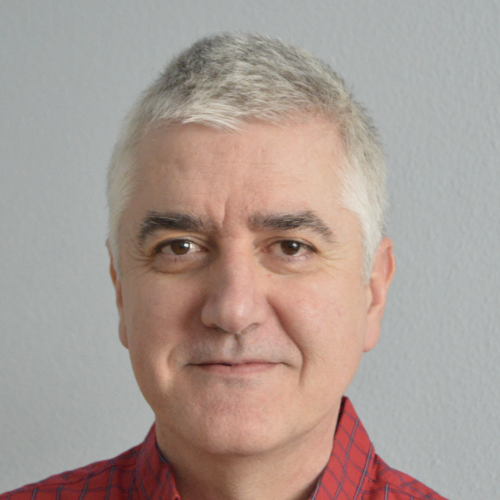
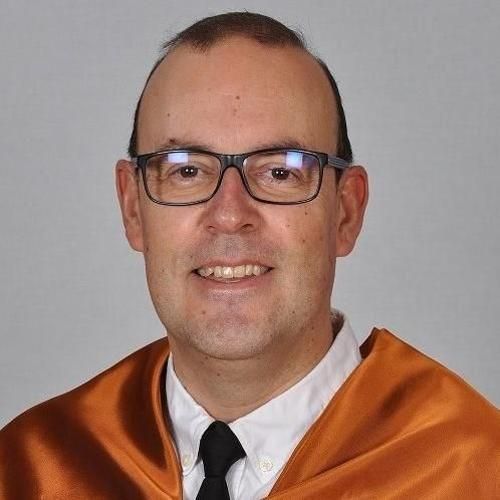
Juan Antonio Carral Pelayo is a Full Professor at the University of Alcalá (UAH), affiliated with the Polytechnic School and the Department of Automática . He has held academic positions since 1998, starting as an Assistant Professor and advancing to his current role. His research focuses on Software Defined Networks (SDN), Internet of Things (IoT), network protocols, and advanced switching architectures . Education: Telecommunications Engineering degree from the Polytechnic University of Madrid (UPM), 1993. PhD in Telecommunications from UAH (2013) with a thesis on advanced Ethernet switch design. Research Contributions : He coordinates the NetIS research group (High-Performance classified) at UAH, exploring intelligent networks and systems. His work spans SDN hybrid protocols, IoT integration, and scalable resource management in dense networks. He has published over 20 articles in top journals and actively participates in national/international conferences. Administrative Roles : Director of Transparency at UAH since 2019, equivalent to a dean-level position. Collaborates with the Madri+d Foundation (VERIFICA panel) and ANECA (Teacher Evaluation Programme). Collaborations & Grants : Extensive involvement in EU, national, and regional projects since the 1990s. His FPU grant (1994-1998) supported early research. Currently leads the NetServ subgroup within NetIS. Labs/Teams : Leads the NetIS group , with 25 researchers focusing on intelligent network systems and SDN/IoT integration.
Josefa Gómez Pérez is a Professor in the Department of Computer Science at Universidad de Alcalá. She holds a PhD in Computer Science from the same institution (2011), focusing on CAD tools for electromagnetic analysis of complex structures under supervision of Dr. Manuel Felipe Cátedra Pérez and Dr. Iván González Diego. Her research spans multiple areas including antenna design optimization, numerical methods for engineering problems, gamification in education, medical image analysis, and computer vision applications. She is affiliated with research groups such as the Climate Physics Group (CPG), Group of Advanced Numerical Techniques (GTNA), and TIFyC (Information Technologies for Training and Knowledge). Her work frequently integrates bio-inspired algorithms and web-based tools for solving engineering challenges. Key areas of contribution include developing simulation tools for radio propagation using OpenStreetMap data, optimizing antenna positioning with genetic algorithms, and enhancing educational engagement through gamified platforms. She has also explored interdisciplinary topics like class imbalance mitigation in medical AI and gender perspectives in engineering career choices. Josefa has authored numerous publications in top venues, with recent focus on AI-human interaction, 3D reconstruction techniques, and educational technology innovations. Notable tools she has developed include the NewFasant Suite, DSEXAMS automated questionnaire system, and LearningRlab educational package.
Marçal Mora Cantallops is a Visiting Professor at the Department of Computer Science, University of Alcalá. His research focuses on artificial intelligence, data science, social network analysis, and education technology. He holds a PhD from Universidad de Alcalá with a thesis on player experience in MOBA games (2018), supervised by Dr. Miguel Ángel Sicilia Urbán. His work bridges computational methods with societal applications, including healthcare innovation, digital transformation, and ethical AI education. Research Interests: Dr. Cantallops explores AI ethics, quantum computing applications, and the intersection of technology with culture and education. Notable themes include the preservation of gaming history, predictive analytics using social media (e.g., Twitter), and metacognitive scaffolding in e-learning. His studies often employ graph analytics and network analysis to uncover patterns in complex systems. Publications Trends: Recent work emphasizes trustworthy AI in healthcare, automated conversational agent design, and the role of Spanish innovation in retro gaming. Earlier research analyzed League of Legends player behavior and bacterial species modeling through clustering techniques. Awards: None explicitly mentioned in available texts. Grants & Advising: No specific grants or advisees listed. His contributions include collaborative projects with the I4 research group (Inteligencia, innovación, internet e información). Labs/Teams: Active member of the I4 research group at UAH, focusing on intelligence systems, internet studies, and information innovation.
Salvador Otón Tortosa is an Associate Professor at the University of Alcalá's Computer Science Department, specializing in Learning Technology and Accessibility. He coordinates the Master's in Agile Software Development for the Web and leads the European EduTech project under the Erasmus+ program, focusing on accessible virtual education. His research interests emphasize accessibility metadata, e-learning standardization, and interoperability. He holds a Computer Science Engineering degree from the University of Murcia (1996) and a PhD from the University of Alcalá (2006), with a thesis on service-oriented architectures for distributed learning object repositories. His recent work explores gamification in education, healthcare IT systems, and accessibility frameworks for virtual campuses. He has authored over 80 scientific publications on topics like metadata analysis, adaptive learning systems, and inclusive OER (Open Educational Resources). Key projects include the EduTech initiative to establish accessibility units in Latin American universities and the development of the RALO assessment ecosystem for learning objects. He leads two research groups: PMI (Intelligent Mobile Platforms) and TIFyC (Information Technologies for Training and Knowledge). His work bridges educational technology with practical implementation in higher education systems.
Sebastián Sánchez Prieto is a Professor at the Department of Automatic Control, Universidad de Alcalá, Spain, affiliated with the Space Research Group (SRG-UAH). He holds a Doctorate from the same institution (1998) with a thesis on cosmic ion telescope control systems. His research focuses on space instrumentation, radiation detection systems, on-board data management, and embedded systems for space applications. He has contributed extensively to the Solar Orbiter mission, working on the Energetic Particle Detector (EPD) instrumentation and software validation. His technical expertise spans FPGA-based signal processing, RISC-V processor architectures, and model-driven engineering for space systems. Notable work includes advancing virtualization techniques for mixed-criticality space systems, digital beamforming architectures, and neural network applications in particle trajectory analysis. Publications emphasize cutting-edge topics like fault-tolerant computing in space environments, adaptive signal processing for space communications, and low-power positioning systems. He actively develops educational frameworks integrating on-board data management concepts across interdisciplinary university curricula. His contributions include over 50 peer-reviewed articles addressing hardware-software co-design, space software verification, and radiation effects mitigation. Current research explores AI-driven approaches for space instrumentation data analysis and next-generation on-board computing solutions.
Alicia Garrido Alenda is an Assistant Professor in the Department of Software and Computing Systems at the University of Alicante, affiliated with the Escuela Politécnica Superior. Her work is closely tied to the Pattern Recognition and Artificial Intelligence Group (gRFIA), where she contributes to interdisciplinary research at the intersection of computing and music technology. Her research interests include: Pattern Recognition and Artificial Intelligence Music Information Retrieval and Audio Processing Automatic Transcription of Music Scores Semantic Processing of Digital Music Feature Extraction and Classifier Fusion Machine Translation and Shallow Parsing Compiler Design and Programming Education The two publications attributed to her reflect a dual expertise: one in natural language processing and machine translation between Romance languages, and another in compiler design. These suggest a strong foundation in formal systems, parsing, and symbolic computation, which likely underpin her current work in music transcription and analysis. Her research bridges symbolic and audio-based representations, particularly in multimodal music processing. She supervises PhD students engaged in cutting-edge music technology research: Víctor Arroyo Martínez – Multimodal Transcription of Music Scores María Concepción Hontanilla Alfonso – Technologies for Interactive Music Learning She is actively involved in teaching, currently offering Programming 2, and maintains regular office hours, indicating an ongoing academic role. She participates in research projects related to music encoding, machine learning for music, and pattern recognition, contributing to international workshops and conferences in these domains.
Mirta Diaz Fernandez serves as a University Professor in the Department of Business Organization and Marketing at the Faculty of Business Sciences, Universidad Pablo de Olavide. She teaches core courses including Human Resources Management for Business Administration degrees, Organizational Theory for Finance and Accounting programs, and specialized instruction in capability development for the Master's in Strategic Human Resources Management. Her research centers on Human Resource Management systems and organizational dynamics , with particular emphasis on leadership-competency linkages, innovation processes, and sustainability integration. Recent work explores AI-driven competency frameworks, psychological capital in entrepreneurship, and ambidextrous strategies in technology transfer offices. She employs rigorous quantitative methodologies including panel-data analysis to examine how HRM practices drive firm performance and social outcomes. Analysis of her publications (2015-2025) reveals three dominant research trajectories: (1) Human capital mechanisms linking leadership to organizational learning, (2) Internationalization drivers for academic spin-offs through relational and psychological capital, and (3) Sustainability-HRM integration examining alignment between employee competencies and social outcomes. Her work consistently applies Spanish contextual analysis while addressing global organizational challenges. Professor Diaz Fernandez supervises Master's theses in Strategic Human Resources Management and leads the R&D&I project "Digital Transformation and Human Resource Competencies: The Path to Sustainability" (2022/00249/001), investigating how digital competencies enable sustainable business transformation.
Lusine Hakobyan is a Researcher in the Department of Analytical Chemistry at the University of Valencia, affiliated with the Faculty of Chemistry. She completed her Doctorate in 2021 with the thesis New strategies for improving the sustainability of analytical methods in different matrices , supervised by Dr. Pilar Campíns-Falcó and Dr. Yolanda Moliner Martínez. Her research focuses on innovative analytical methodologies, emphasizing sustainability, sensor technology, and biomedical applications. Key areas include volatile biomarker detection in breath/saliva, nanomaterials for sensors, and environmental/clinical analysis. Recent work explores rapid diagnostic tools (e.g., smartphone-integrated chemosensors), toxicity assessment of nanomaterials, and sustainable reagent systems for water/food analysis. Her studies bridge fundamental chemistry with practical applications in healthcare and environmental monitoring. Lusine has contributed to 13 peer-reviewed articles since 2016, addressing topics like medical diagnostics, food safety, forensic chemistry, and green analytical strategies. Her Prometeo Program affiliation suggests involvement in high-impact research initiatives.
Cristina Sendra Mocholí is a Professor in the Department of Experimental Sciences Didactics at the Faculty of Teacher Training, University of Valencia. Her work bridges science education, narrative pedagogy, and health literacy, with a strong focus on teacher training and early childhood education. Her research interests include: Narrative and experiential approaches to teaching Health and hygiene literacy in compulsory education History of science education and botanical studies Curriculum analysis and competency-based learning Material culture and pedagogical documentation Environmental and sensory education Her recent publications reflect a consistent focus on integrating health literacy into school curricula, developing narrative methodologies in teacher education, and analyzing historical contexts of science teaching. She emphasizes reflective, experience-based, and student-centered pedagogies. Notable scientific contributions include curriculum analyses on health competencies and innovative proposals for narrative-based teaching. Though no formal awards are listed, her sustained scholarly output and leadership in research groups underscore her academic impact. She actively mentors students, having supervised master’s theses and contributed to initial teacher training programs. Her work is supported by engagement with interdisciplinary research groups such as GEOLIT (Literary Geographies) and a dedicated science education research group. Her research environment includes collaboration on pedagogical innovation, curriculum development, and historical studies of science education, particularly in the Valencian context.
Álvaro Juesas Torres is an Associate Professor in the Department of Educational Sciences at CEU Cardenal Herrera University, Castellón, Spain. He holds a PhD in Physical Activity and Sport Sciences from the University of Valencia with Cum Laude distinction and is accredited by ANECA as a Doctoral Professor in Physical Education and Sport. He has taught at the University of Valencia and IPETH (Mexico) and is currently involved in undergraduate and postgraduate programs in Early Childhood, Primary, and Physical Activity and Sports Sciences. PhD in Physical Activity and Sport Sciences – University of Valencia (Cum Laude) Master in Research and Intervention in Physical Activity and Sport – University of Valencia Master in Teacher Training – Catholic University of Valencia Bachelor in Physical Activity and Sport Sciences – Catholic University of Valencia His research focuses on physical education, psychomotor development, body expression, health promotion, and adapted physical activity for special populations. He is a member of the 'Ejercicio Físico y Rendimiento' research group at CEU and collaborates with PHES and Sport and Health Research Units at the University of Valencia. His editorial roles include section editor for 'Sport and Physical Activity Psychology' in the Scientific Journal of Sport and Performance and editor for Healthcare (JCR Q3). The analysis of his recent publications reveals a strong trend in interdisciplinary research combining education, health, and sport science. His work spans psychomotor development in children, inclusive physical education, neuromuscular rehabilitation, and pedagogical innovation in teaching processes. A significant portion of his articles are published in Q1 and Q2 journals, reflecting high academic impact. He has received notable recognition, including: Best Scientific Communication Award at an international conference Ángel Herrera Award for Best Teaching Achievement (2023/24) Álvaro Juesas Torres actively supervises academic projects and theses across multiple programs. He has directed one doctoral thesis and over twenty final degree and master's theses. He is also involved in academic management as the coordinator of the first year of the Physical Activity and Sports Sciences degree and the Sports Management course at CEU. He contributes to international academic evaluation as an external referee for Universidad de Los Lagos (Chile) and serves on the scientific committee of 'Costa Blanca Sports Science Events'. He is also a scientific reviewer for multiple indexed journals and holds a six-year research period (2019–2024) recognized by the Spanish research evaluation system.
Amparo Merino de Diego is an Associate Professor in the Department of Business Management at the Faculty of Economics and Business Administration (ICADE), Comillas Pontifical University, Madrid. She teaches undergraduate and graduate courses in Strategic Management, Social Entrepreneurship, Business and Sustainability, and Qualitative Research Methods for doctoral candidates. She is a member of the academic committee of the doctoral program and actively supervises PhD students. Education: PhD in Economics and Business Administration, CEU San Pablo University (2001) Degree in Economics and Business Administration, Complutense University of Madrid (1994) Master’s in Business Environmental Management Diploma in University Teaching, Comillas Pontifical University (DIFOPU) Her research centers on Sustainability Transitions , particularly exploring diverse economies, social enterprise, education for sustainability, and the psychological and spiritual dimensions of pro-environmental behavior. She investigates how interconnectedness with nature and sacred values influence sustainable action and organizational change. The 15 most recent publications reflect a strong interdisciplinary focus, combining sustainability science, social entrepreneurship, environmental psychology, and organizational studies. Key themes include energy poverty, open innovation in agri-food systems, loving-kindness meditation and prosocial behavior, sacred natural sites, and transformative education. These works appear in high-impact journals such as Journal of Cleaner Production , Ecology and Society , and Environmental Education Research . Scientific Awards and Recognitions: Sexenio in Economic and Business Sciences (2011–2020) ACAP Certification as Doctoral Professor at a Private University (2007) She has led and participated in numerous national and international funded research projects, including the Erasmus+-funded European University for Transition consortium and a Comillas-based study on sacred natural sites. She serves as an academic evaluator for journals like Journal of Consumer Studies and Environmental Education Research , and is a member of the Board of the Platform for Economic Democracy. She is also affiliated with the Socially Progressive Innovation and Entrepreneurship research group at the University of Strathclyde. Her work is supported by active research groups at Comillas, including Business, Economy and Sustainability (E-SOST) and the Chair of Energy and Poverty . She contributes to shaping sustainability education and policy through curriculum analysis and interdisciplinary collaboration.
Alfonso Antonio Lopez Rodriguez is an Assistant Professor at the University of Santiago de Compostela's College of Political Science and Administration, with expertise in political systems, public management, and socio-labour policies. Their email contact is alfonsoantonio.lopez@usc.es . Teaching areas include Analysis of Scenarios and Electoral Spaces, Civil Service Management, Legal-Forensic Psychology, and Socio-Labour Policies Active in research through the Politics and Policies research group Research focuses span electoral dynamics, public administration frameworks, and intersectional policies in political science, criminology, and organizational psychology. They contribute to both undergraduate (Bachelor of Political Science, Criminology) and graduate (Master's in Local Government, Labour Management) programs.
Germà Coenders Gallart is a full Professor in the Department of Economics at the University of Girona, where he holds the Chair in Quantitative Methods for Economics and Business. He is affiliated with the Faculty of Economic and Business Sciences and actively contributes to research through the Research Group in Statistics, Econometrics and Health (GRECS), the consolidated Catalan research group COSDA (Compositional and Spatial Data Analysis), and the Campus of Food and Gastronomy. He earned his PhD in Management Sciences from Ramon Llull University in 1996. PhD in Management Sciences, Ramon Llull University (1996) His primary research focus is compositional data analysis (CoDa), a statistical methodology for analyzing parts of a whole, with wide applications in accounting, finance, marketing, tourism, and health. He has pioneered the use of CoDa in financial statement analysis, developing compositional structural equation models, spatiotemporal models, generalized linear models with compositional predictors, and models incorporating totals. His methodological innovations address key statistical issues in traditional financial ratio analysis. His recent publications (2023–2025) reflect a strong trend in applying CoDa to real-world economic and social challenges, including financial resilience during geopolitical crises (e.g., Ukraine-Russia war), post-pandemic recovery in tourism and fisheries, air pollution and child mental health, biodiversity accounting in apiculture, and systemic risk in the Eurozone. His work combines rigorous statistical modeling with practical relevance across multiple domains. Scientific recognition includes: 5 Sexennis (Research Quinquennia) from CNEAI h-index of 29 (Web of Science and Scopus), 44 (Google Scholar) Over 3000 citations (Web of Science) Founding member and former Secretary General of the Association for Compositional Data He has supervised 7 doctoral theses and collaborates extensively with researchers across disciplines. He has secured multiple research grants and leads a dedicated lab on financial statement analysis as compositional data. His teaching spans research methods, statistics, and econometrics across undergraduate, master’s, and doctoral programs at the University of Girona and other institutions including ESADE and the University of Ljubljana. He is a member of editorial boards for journals such as Metodoloski Zvezki , ReHuSo , and Tourism Analysis , and maintains a strong digital presence through ORCID, ResearchGate, Google Scholar, and other academic platforms.
Lluís Ramió Torrentà is an Associate Professor at the Faculty of Medicine, University of Girona, where he also serves as Coordinator of the Medicine Degree Program. He is affiliated with the Department of Medical Sciences and the Institute of Biomedical Research of Girona (IDIBGI), leading the Neurodegeneration and Neuroinflammation Research Group. He is a key member of the Research Group on New Therapeutic Targets (TargetsLab) and actively collaborates with national and international networks such as the Spanish Multiple Sclerosis Network (REEM) and institutions including Cemcat, University College London, and the German Center for Neurodegenerative Diseases. His educational background includes an MD from Universitat Autònoma de Barcelona (1997, with Extraordinary Prize), Neurology specialization at Hospital Dr. Josep Trueta (2002), a PhD from the University of Girona (2014), and two master’s degrees: Executive Master in Healthcare Management (ESADE, 2014) and Master in Neuroimmunology (UAB, 2014). Ramió Torrentà’s research focuses on multiple sclerosis and neurodegenerative diseases, with major contributions in neuroimmunology, epigenetics (miRNAs, methylation), advanced MRI imaging, cognitive impairment in MS, patient empowerment, and clinical trial management. His work integrates clinical, research, and teaching missions to improve patient care and scientific understanding. He has led numerous competitive and non-competitive research projects funded by ISCIII, Fundació La Marató TV3, Novartis, and others. The recent publications of Dr. Ramió reflect a strong emphasis on advanced neuroimaging techniques in multiple sclerosis, particularly in progressive forms, alongside epigenetic studies and computational analysis of neurological data. His work frequently appears in high-impact journals in neurology, neuroradiology, and medical informatics, demonstrating a multidisciplinary approach that bridges clinical neurology with cutting-edge technology and data science. Extraordinary Prize in Medicine, Universitat Autònoma de Barcelona (1997) Research Accreditation, Agència de Qualitat Universitària de Catalunya (2019) Lector Accreditation, Agència de Qualitat Universitària de Catalunya (2015) Collaborator Professor Accreditation, Agència de Qualitat Universitària de Catalunya (2006) Dr. Ramió has supervised multiple PhD students in nursing and psychology, secured funding for predoctoral and postdoctoral researchers (including AGAUR, DFG, and private foundations), and led over 80 Phase II-IV clinical trials in MS. He has directed and co-directed several doctoral theses and has established a robust research team focused on translational neurology. His leadership extends to academic management, having served as Study Coordinator, Academic Quality Officer, and Dean’s Assistant at the Faculty of Medicine. He leads the Neurodegeneration and Neuroinflammation Research Group at IDIBGI and the Unit of Neuroimmunology and Multiple Sclerosis of Girona (UNIEMTG), a multidisciplinary team integrating neurologists, nurses, psychologists, neuropsychologists, and basic researchers. This team is recognized nationally and internationally for its comprehensive approach to MS care, research, and training. He also collaborates closely with the Medical Imaging Group at IDIBGI, the VICOROB group at UdG, and international partners in Hamburg, London, and Madrid.
Joan Salvi Mas is a University Professor in the Department of Computer Architecture and Technology at the School of Engineering, University of Girona, where he is also the current Rector. He is a researcher in the Computer Vision and Robotics Research Group (VICOROB) and affiliated with the Institute for Research in Computer Vision and Robotics (VICOROB). His research focuses on computer vision, robotics, medical imaging, and underwater robotics . He has led multiple competitive national and European research and technology transfer projects. He is also a founding partner of two spin-off companies: AQSense and BonesNotes . He was a Visiting Professor at the Ocean Systems Lab, Heriot-Watt University (UK), and has held key academic leadership roles including Vice-Rector, Director of the School of Engineering, Department Secretary, and Master's Program Director. Scientific Awards: Extraordinary Engineering Award He has supervised doctoral theses and contributed extensively to scientific publications, though specific titles are not detailed in the provided text. His work bridges academic research and industrial application through innovation and entrepreneurship.