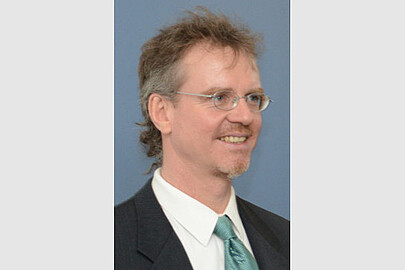
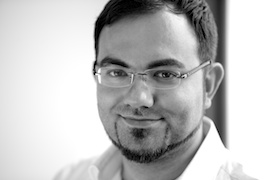
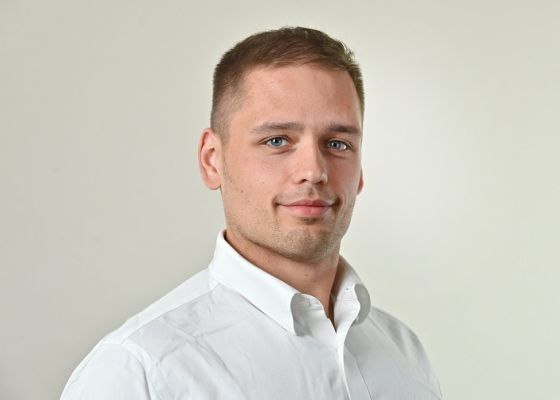
Prof. Rafael Wittek is a Full Professor at the University of Groningen in the Faculty of Behavioural and Social Sciences, Department of Sociology. He serves as Scientific Director of the interdisciplinary research center SCOOP: Sustainable Cooperation and Coordinating Principal Investigator for the SOCION consortium. His research spans: Sociology of Organizations Economic Sociology Social Network Analysis Sociological Theory Humanitarian Action Recent research focuses on: Sustainable cooperation mechanisms Institutional decay theories Healthcare intern behavior during crises Hybrid organizational forms Refugee integration strategies Major grants include: NWO Gravitation Grant (18.8M€, 2017) NWO SUMMIT Grant (30.6M€, 2024) Scientific recognition: Bi-Annual James Coleman Best Book Award (2014) Best Conference Paper Awards (2012, 2005, 2004) Elected member, European Academy of Sociology (2010) He supervises numerous PhD candidates and teaches in the Research Master Behavioral and Social Sciences and the Transdisciplinary PhD-Training Program Sustainable Cooperation (SCOOP).
Thorsten Koch is a Professor for Software and Algorithms for Discrete Optimization at Technische Universität Berlin , with multiple leadership roles including Head of the Applied Algorithmic Intelligence Methods (A²IM) , Digital Data and Information for Society, Science, and Culture (D²IS²C) , Kooperativer Bibliotheksverbund Berlin-Brandenburg (KOBV) , and Forschungs- und Kompetenzzentrum Digitalisierung Berlin (digiS) . Based at Zuse Institute Berlin and affiliated with TU Berlin's Institute for Mathematics, he focuses on integrating mathematical optimization with high-performance computing and artificial intelligence to solve complex real-world problems. Research Pillars : Mathematical optimization algorithms Quantum computing applications AI/ML integration in decision systems Energy systems optimization Scientific software development Leadership Roles : Head of Applied Algorithmic Intelligence Methods (A²IM) Head of Digital Data & Information for Society, Science, and Culture (D²IS²C) Head of Kooperativer Bibliotheksverbund Berlin-Brandenburg (KOBV) Head of Forschungs- und Kompetenzzentrum Digitalisierung Berlin (digiS) Key Collaborations : Working with IBM Quantum on quantum optimization Collaborating across institutions for energy system modeling Developing open-source optimization tools like SCIP Contributing to digital library infrastructure Recent Research Trends : Quantum optimization benchmarking Machine learning-aided optimization Multi-objective decision frameworks Energy infrastructure optimization Adaptive algorithm design CO2 network modeling Impact : Advancing hybrid optimization methods Developing open-source tools for scientific computing Building digital infrastructures for libraries and research Exploring quantum-classical algorithm synergies
Prof. Dr.-Ing. Rüdiger Kapitza serves as a Professor and Chair of Computer Science 4 (Systems Software) at Friedrich Alexander University Erlangen-Nuremberg (FAU). His extensive research portfolio spans trusted execution environments, Byzantine fault tolerance, blockchain technology, and secure systems. Kapitza actively contributes to the academic community through program committee roles for major conferences including OSDI, Middleware, EuroSys, and DSN. His research interests focus on creating secure, reliable systems through the integration of hardware security features with distributed systems. Kapitza investigates how trusted computing can enhance system security while maintaining performance, particularly for critical applications. His work bridges theoretical foundations with practical implementations across domains including cloud infrastructure, edge computing, and transportation systems. Analysis of his recent publications reveals consistent innovation in trusted execution environments, distributed consensus protocols, and secure virtualization. His research demonstrates a clear trajectory from early work on adaptive services to current focus on hardware-assisted security solutions. Key themes include making distributed systems more robust through trusted components, optimizing energy efficiency in heterogeneous systems, and developing practical security solutions for real-world applications. Prof. Kapitza's standing in the systems research community is evidenced by his service on program committees for top-tier conferences. His work has been published in prestigious venues including OSDI, EuroSys, Middleware, and DSN, reflecting significant impact in both academic and industrial contexts. He leads the Systems Software research group at FAU, mentoring students and collaborating with researchers worldwide. The group addresses fundamental challenges in systems security, reliability, and performance, with applications ranging from drone data recording to railway systems and secure cloud services. His team develops practical tools and frameworks that advance the state of the art in systems research.
Prof. Dr. Jörn Walter serves as a Senior Professor for Genetics and Epigenetics at Saarland University's Faculty of Natural Sciences and Technology. His laboratory investigates epigenetic mechanisms across development and disease states, with particular emphasis on DNA methylation, chromatin dynamics, and epigenomic mapping of cell types. Member of the International Human Epigenome Consortium (IHEC) Coordinator of the German Epigenome Program Director of an in-house Sequencing Facility (HiSeq2500, Mi-Seq, Nextseq-500) Research focuses include: Epigenetic programming during cellular differentiation DNA methylation dynamics in disease contexts Stem cell epigenetics and reprogramming Evolution of epigenetic mechanisms Recent publications highlight interdisciplinary approaches combining next-generation sequencing , bioinformatic modeling , and clinical epigenetics , with particular attention to immune cell development , metabolic disease epigenetics , and computational epigenomics . The group maintains collaborations with the West German Sequencing Center and contributes to epigenetic data standardization efforts. Lab members include active researchers like Dr. Nina Gasparoni , Dr. Gilles Gasparoni , and M.Sc. Alea Leismann , alongside an extensive alumni network of former advisees who have advanced epigenetic research in various institutions.
Georg Gottlob is a Professor at the University of Oxford's Department of Computer Science, with additional affiliation at TU Vienna's Faculty of Informatics. He has maintained an exceptionally productive research career spanning over four decades, with 494 publications documented in the DBLP database from 1983 to the present. His research interests focus on Database Theory , Logic Programming , and Knowledge Graphs , with particular expertise in hypertree decompositions, Datalog systems, and existential rules. His work bridges theoretical foundations with practical applications, as evidenced by his development of the Vadalog system for knowledge graph reasoning. Gottlob's recent publications (2023-2025) demonstrate continued innovation in query optimization, rule-based reasoning, and the integration of large language models with database systems. His work shows a consistent trend toward making theoretical advances in database theory practically applicable, particularly in the context of knowledge graphs and semantic web technologies. Scientific Awards: 2020 ACM PODS Alberto O. Mendelzon Test-of-Time Award for influential contributions to database theory Gottlob maintains extensive research collaborations with scholars including Reinhard Pichler, Andreas Pieris, and Matthias Lanzinger. His work has significant practical impact through systems like Vadalog, which combines machine learning with logical reasoning for knowledge graph applications. He has supervised numerous PhD students (though specific names aren't listed in the DBLP record) and has been instrumental in advancing the field of database theory from theoretical foundations to real-world applications. His research group focuses on the intersection of database theory, knowledge representation, and artificial intelligence, with particular emphasis on developing efficient algorithms for complex query processing and reasoning tasks over large knowledge graphs.
Mario Baldi is a researcher affiliated with the Polytechnic University of Turin, Italy , with significant contributions to computer networking , distributed systems , and software-defined networking . Key research themes: network function virtualization , programmable dataplanes , time-driven scheduling , and traffic analysis . Recent work focuses on RDMA-enabled compute offloading (2023) and DNN inference in network data planes (2023). Longstanding expertise in multicast routing , voice/data packet efficiency , and XML-based protocol parsing (2000–2006). Collaboration network includes Yoram Ofek , Fulvio Risso , and Han Hee Song , with 99+ publications spanning 1994–2023.
Kamyar Sarshar is a Professor of Business Informatics at the Hamburg School of Business Administration (HSBA) since January 2014, serving as Academic Director of the Bachelor's program in Business Informatics within the Department of Technology & Markets. His educational background includes: Computer Science degree from the University of Hamburg MBA from Cardiff University, United Kingdom PhD from the Institute of Business Informatics in Saarbrücken Prior to HSBA, he worked as a Managing Consultant at Logica (now CGI), leading cross-industry process management projects. Research interests focus on: Business Process Management E-Business IT in Healthcare His work emphasizes empirical evaluation of modeling techniques like Event-driven Process Chains and Petri nets, particularly in healthcare applications and end-user usability. Publications from 2004-2008 reveal consistent contributions to business process modeling methodology, with strong empirical validation across healthcare, energy, and construction sectors, highlighting practical applicability and user-centered design principles. No scientific awards are documented in the provided materials. Information regarding student supervision, research grants, laboratories, or collaborative teams is not specified in the source text.
Tracy Camp is a Professor in the Department of Computer Science at Colorado School of Mines, College of Applied Science and Engineering. With a distinguished career spanning over three decades, she has established herself as a leading researcher in wireless networking, mobility modeling, and computing education. Her work has evolved from foundational research in mobile ad hoc networks to impactful contributions in broadening participation in computing. Dr. Camp's research interests span wireless networking, mobility modeling, machine learning applications in networking, and computer science education. Initially focusing on mobility models for ad hoc networks, she published seminal work including the widely cited survey 'A survey of mobility models for ad hoc network research' (2002). More recently, her work has shifted toward computing education, particularly broadening participation in computing, K-12 teacher preparation, and supporting underrepresented students through scholarship programs like S-STEM. Her recent publications reveal a strong emphasis on machine learning applications for network security, particularly in analyzing encrypted messaging applications and smart device traffic. Simultaneously, she has become a national leader in departmental strategies for broadening participation in computing, developing frameworks for BPC (Broadening Participation in Computing) plans that are now required by the NSF. Dr. Camp has been instrumental in developing the CS@Mines program, creating successful scholarship ecosystems for low-income and underrepresented students, and leading Colorado's strategic approach to prepare K-12 computer science teachers. Her work bridges technical research with practical educational initiatives that address critical challenges in the computing field. She has served in leadership roles for major computing education conferences including SIGCSE, where she has contributed to shaping the national conversation about computing education, enrollment surges, and diversity in the field. Her collaborative work with organizations like CRA-W (Computing Research Association-Women) demonstrates her commitment to addressing systemic issues in computing.
Martin Pusch is a Research Group Leader and Programme Area Speaker at the Leibniz Institute of Freshwater Ecology and Inland Fisheries (IGB) in Berlin, Germany, where he leads the research group on Functional Ecology and Management of Rivers and Lake Shores within Department 2 (Community and Ecosystem Ecology). His research spans multiple dimensions of aquatic ecology with particular focus on: Structure and functioning of aquatic ecosystems River hydrodynamics and sediment processes Nutrient cycling and self-purification capacity of rivers EU Water Framework Directive implementation Ecosystem services of rivers and floodplains Hydropower impacts and environmental flows Integrative management of aquatic ecosystems Dr. Pusch's recent publications (2022-2025) demonstrate a strong emphasis on river ecosystem services, hydropower impacts, and responses to environmental disasters, particularly the Oder River catastrophe. His work frequently involves large-scale European collaborative projects examining human impacts on river systems and developing integrative management approaches. He has been instrumental in developing the River Ecosystem Service Index (RESI) methodology and has contributed significantly to policy recommendations following environmental disasters. He teaches courses at the University of Potsdam (Fundamentals of Stream Ecology since 2002, Applied Stream Ecology since 2003, and Ecology of Floodplains since 2018) and Humboldt University Berlin (Limnology I, focusing on running waters since 1996). Dr. Pusch leads a research team comprising Dr. Gabriela Costea, Bianca Dörgeloh, Helena Huđek, Magnus Keller, Dr. Antje Kerkow, Tim Königsberger, Jürgen Schreiber, and Dea Zyruku, focusing on freshwater ecosystem research, management, and policy implementation.
Matthias Becker is a Professor at the Institute for Practical Computer Science within the Faculty of Electrical Engineering and Computer Science at Leibniz University Hannover, where he has been a core member of the Human-Computer Interaction group since 2019. He serves as Internship Coordinator for Computer Science and Computer Engineering and holds key roles in the Computer Science Examination Board and Selection Committee, actively shaping academic governance and student development. His academic journey began with PhD studies at the University of Bremen (1996-2000) supported by a DFG grant, followed by a postdoctoral permanent position at Leibniz University Hannover (2000-2019), an Associated Assistant Professor role at École des Mines de Nantes (2000), and a Habilitation in Computer Science in 2013. This foundation enabled his transition to a full professorship in 2019. Becker's research spans Human-Computer Interaction, Simulation and Modeling, and Bio-inspired Computing, with applications in agriculture, renewable energy, and manufacturing. His work integrates distributed systems, optimization algorithms, and wireless sensor networks to solve complex real-world problems, such as greenhouse monitoring, wind farm logistics, and tire noise reduction. Recent publications reveal a strategic focus on practical validation of simulation models and cross-domain applications of nature-inspired algorithms. His 15 most recent publications (2018-2024) demonstrate consistent innovation in applying simulation techniques to offshore wind farm installation, agricultural pest management, and sports science. These works emphasize real-world validation, collaborative problem-solving, and the development of domain-specific optimization frameworks that bridge theoretical algorithms and industrial implementation. As Internship Coordinator, Becker facilitates critical industry-academia connections for students, while his examination board responsibilities ensure rigorous academic standards. His leadership in the Human-Computer Interaction group drives research on interactive systems for agriculture, energy, and health, with particular emphasis on user-centered design in complex operational environments like wind farm logistics and greenhouse automation.
Dr. Daniel Pietschmann is a Researcher at the Institute for Media Research , Faculty of Philosophy, Chemnitz University of Technology . His work focuses on the psychological and physical aspects of user experience in virtual environments, with particular emphasis on spatial presence , embodiment in VR/AR , and digital game studies . He serves as a reviewer and editorial board member for multiple journals. Research Interests : Spatial presence formation in virtual environments Human-computer interaction with natural interfaces Transmedia storytelling analysis Psychophysiology of media reception Evolutionary psychology perspectives on digital games Scientific Contributions : Developed validated scales for player-avatar interaction (cPAX) Created stereoscopic ability tests for immersive media Keynote speaker on evolutionary game psychology Best Paper awards at ACHI 2017 and VAMR 2015 Academic Service includes editorial board membership for the Journal of Media Psychology and International Journal of Gaming , as well as conference reviewing for ICA and ECREA. His research has been funded through the DFG Graduate Program "Crossworlds" from 2012-2015.
Dr. Marika Karbstein is a Researcher at the Zuse Institute Berlin (ZIB), where she has been employed since April 2006. Affiliated with the DFG Research Center Matheon "Mathematics for key technologies" from 2006-2014, she earned her doctoral degree in Mathematics from Technische Universität Berlin in 2013. Her work bridges theoretical optimization and practical public transport applications. Her academic background includes: 1999-2005: Studies of Applied Mathematics (Wirtschaftsmathematik) at Technische Universität Berlin 2003-2006: Student assistant at Konrad-Zuse-Zentrum Berlin 2013: Doctoral degree in Mathematics (Dr. rer. nat), Technische Universität Berlin Dr. Karbstein specializes in mathematical optimization for public transport systems, focusing on strategic planning, service design, and passenger behavior modeling. Her research integrates timetabling, line planning, and passenger routing through advanced integer programming and network optimization techniques. She develops practical solutions for infrastructure design, crew scheduling, and fare planning, emphasizing real-world applicability in urban transport networks. Her methodology combines theoretical rigor with implementation-focused approaches to improve system efficiency and user experience. Her publication record shows consistent innovation in periodic timetable optimization and integrated transport modeling. Early work established foundations in Steiner tree problems for transport networks, evolving into sophisticated frameworks for passenger routing and line planning. Recent contributions emphasize direct connections and transfer minimization, reflecting industry needs for seamless passenger journeys. The research demonstrates strong interdisciplinary connections between operations research, computer science, and transportation engineering. Her scientific recognition includes: Diploma Thesis Award of the German Operations Research Society (2006) Runner-Up for Richard-Rado-Prize (2014) Dissertation Award of German Operations Research Society (2014) VBKI Wissenschaftspreis (2014) Tucker Prize Finalist (2015) Best Paper Award at ATMOS 2013 As a core member of the DFG Research Center Matheon, Dr. Karbstein contributed to major collaborative projects funded by the German Research Foundation. Her work with Ralf Borndörfer at ZIB has led to practical implementations including Potsdam's 2010 line plan optimization. While specific grants aren't detailed, her research has been sustained through institutional support at ZIB and Matheon's interdisciplinary framework. She actively collaborates with transport operators to translate theoretical advances into operational improvements. Dr. Karbstein operates within ZIB's renowned applied mathematics environment, leveraging its high-performance computing resources. Her work extends through Matheon's consortium connecting Berlin's mathematics community. Current research focuses on integrating passenger behavior models with real-time scheduling systems, advancing the frontier of data-driven transport optimization.
Ana Lucic is an Assistant Professor in Artificial Intelligence at the University of Amsterdam , with a joint appointment between the Institute for Logic, Language and Computation and the Informatics Institute . Her research focuses on interpretable machine learning applications for scientific discovery and societal impact. Formerly at Microsoft Research AI for Science and Partnership on AI PhD in Explainable Machine Learning from University of Amsterdam (2022) BSc/MSc in Mathematics from McMaster University Research Highlights: Develops mechanistic interpretability methods for deep learning architectures. Created Aurora , a foundation model for Earth system forecasting outperforming traditional operational models in air quality prediction and tropical cyclone tracking. Pioneers Clifford-Steerable CNNs for geophysical data analysis. Actively hiring PhD students for AI transparency research . Collaborative Networks: Contributions to ELLIS Summer School and ICML workshops . Collaborates with Microsoft Research AI for Science team on climate-related ML projects. Involved in organizing TerraBytes workshop at ICML 2025. Recent Advancements: Key role in publishing Aurora model in Nature (2025), demonstrating superior performance in Earth system forecasting. Supervises Ege Erdogan , new PhD student focused on mechanistic interpretability. Actively contributes to open-source AI development through GitHub repositories and technical discussions.
Dr. Malte Teichmann is a researcher at the University of Potsdam , affiliated with the Chair of Business Information Systems and the Weizenbaum Institute for the Networked Society . He leads research group 7 on Education and Further Education in the Digital Society , focusing on immersive technologies in vocational training, Industry 4.0 applications, and knowledge transfer in SMEs. Bachelor in Educational Sciences & Business Administration (2015, University of Potsdam) Master in Educational Sciences (2018, University of Potsdam) Doctorate in Knowledge Management (2021, University of Potsdam) His research explores: Immersive virtual learning environments (VR/AR/Metaverse) Design science methodology for educational frameworks Age-appropriate training systems for blue-collar workers Industry 4.0 implementation in SMEs Recent Research Trends Malte's publications since 2020 show increasing focus on: Metaverse applications in public administration Eye-tracking analysis of cognitive load in VR learning Process-oriented education design Corona-sensitive data collection methodologies Scientific Contributions As lead author and co-researcher, he has: Developed frameworks for VR learning environments Created design guidelines for Metaverse implementation Proposed SME-tailored AR/VR integration strategies Advanced subject-oriented learning methodologies Published 15+ works on digital transformation pedagogy Current Projects Actively involved in: Beer and Science (2025-2027): Brewing as pedagogical model ReWork:KMU (2022-2024): Remote work integration for SMEs Weizenbaum Institute (2018-present): Networked society research
Prof. Kirstin Drenkhahn is a Professor of Criminal Law and Criminology at the Free University of Berlin's Faculty of Law. Her research focuses on prison climate (MQPL+ project), rural criminology (Farm Crime study), restorative justice, juvenile justice, and judicial practices. She leads international collaborations, including projects on prison social climate in Germany and Switzerland, and rural crime against farmers. Her teaching includes courses on criminal law, criminology, and juvenile justice. She advises PhD students and organizes academic events like the North Crimea Conference and Criminology Network meetings. Her work emphasizes resocialization, legal education reform, and policy-driven research. Research Highlights: MQPL+ Project: Investigates prison climate's impact on resocialization, supported by DFG/SNSF. Rural Criminology: Examines agricultural crime and farmer victimization through international surveys. Judicial Practices: Analyzes decision-making in penal enforcement chambers and law student well-being. Teaching & Outreach: Offers courses in criminal law, criminology, and juvenile justice. Organizes the 'University in Prison' initiative for student-inmate academic exchanges. Grants & Collaborations: DFG/SNSF-funded MQPL+ project. Swiss Federal Office of Justice-funded pilot on prison climate. International partnerships with Bern, Cologne, and Cambridge universities.