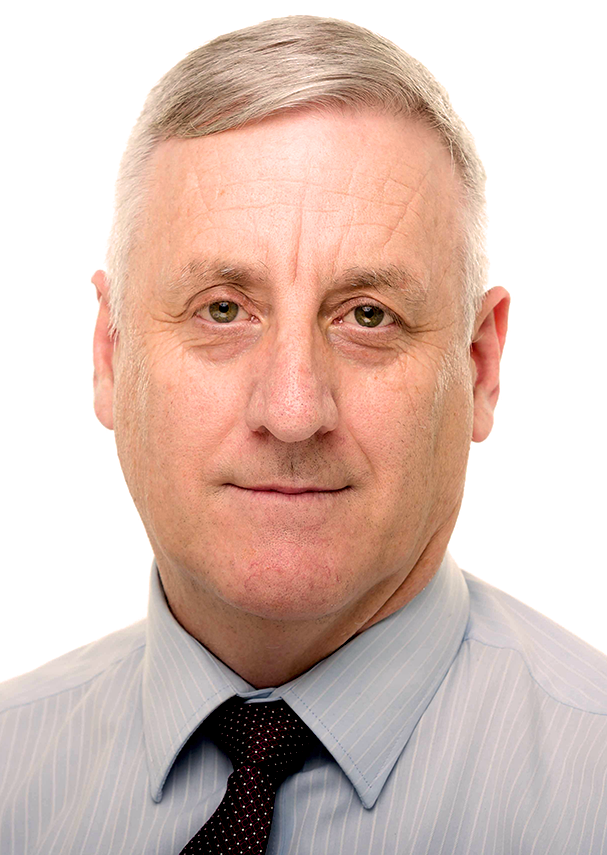
Professor Elena Pirogova is a faculty member of RMIT University’s School of Engineering, part of the STEM College. She holds the roles of Professor and Associate Dean of the Electrical & Biomedical Engineering Discipline. Her research focuses on biomedical engineering, biomaterials, therapeutic peptides, and biological effects of electromagnetic radiation. She earned her PhD in Biomedical Engineering from Monash University (2002) and a BEng (Hons) in Chemical Engineering from the National Technical University of Ukraine (1991). Academic Positions: Professor (2020–present), Associate Dean (2018–present), and roles in research leadership since 2002. Teaching: Coordinates courses in biomedical engineering design, project management, and professional engineering projects at both undergraduate and postgraduate levels. Research: Over 170 publications in areas like tissue engineering, microfluidics, and wearable technologies. Key projects include biofabrication of scaffolds, electromagnetic radiation effects on cells, and smart textile applications. Supervision: Advises on advanced projects involving biomaterials, medical devices, and interdisciplinary engineering solutions. Her work bridges engineering and healthcare, emphasizing translational research in regenerative medicine and medical technology. She is active in curriculum innovation, particularly post-pandemic educational strategies.
Derek Hao is a materials scientist and environmental engineer holding the Vice Chancellor’s Postdoctoral Fellowship at RMIT University's School of Science. His research focuses on advanced materials for environmental sustainability and energy conversion, particularly in waste plastic valorization, photocatalytic systems, and nanotechnology. He has secured over AU$1.2m in research funding and commercialized two patents on bismuth catalysts, generating significant industry impact. His work spans collaborations across Australia, Germany, China, and beyond. Education: PhD in Engineering (University of Technology Sydney, 2022); Bachelor’s in Chemical Sciences (China University of Geosciences). Research Priorities: Sustainable waste plastic solutions, photocatalytic energy conversion, nanomaterials, and environmental toxicology. Awards: Humboldt Research Fellowship (2022), RMIT Vice Chancellor’s Fellowship (2023), inclusion in Stanford’s Top 2% Scientists (2022–2023). Teaching: Teaches Analytical Chemistry and supervises 5 PhD students in areas like electrocatalysts for hydrogen production and CO₂ reduction. Grants & Patents: AU$1.2m+ in funded projects; commercialized bismuth catalyst patents yielding AU$500k+ annually. His research bridges fundamental science and practical environmental solutions, with over 100 peer-reviewed papers (H-index 46), including ESI Highly Cited and Hot Papers. He serves on editorial boards for journals like Science for Energy and Environment and Nano Research Energy .
Dr. Angela Finn is a Senior Lecturer at RMIT University in the Department of Fashion & Textiles , City Campus, Australia. With expertise in sustainable fashion design , fashion manufacturing , and practice-led research , she focuses on design methodology and knowledge transfer in fashion education. Teaching Interests : Fashion Design, Sustainable Fashion & Textiles, Design/Research Methodology Research Emphasis : Sustainable design strategies, technological integration in textiles, historical design adaptation Her 15 most recent publications explore themes like minimization in fashion design , luxury sustainability , and virtual teaching resources . Key subtopics include zero-waste design , regional manufacturing , and UV-protective textiles for health applications. Supervision Availability : Open to mentoring Masters or PhD students in sustainable fashion and textiles research.
Professor Craig Wheeler is a distinguished academic in the School of Engineering at the University of Newcastle, specializing in Mechanical Engineering with a focus on bulk solids handling and belt conveyor technology. As Associate Director of the Centre for Bulk Solids and Particulate Technologies and Deputy Chairman for the Australian Society for Bulk Solid Handling, he has established the university as a global leader in fundamental and applied research within this field. Wheeler's research interests primarily center on reducing the energy intensity and environmental impact of ore and mineral transportation globally. His work develops novel theoretical approaches to model and optimize belt conveyor and bulk handling systems, with significant contributions in energy-efficient transportation, dust emission control, and innovative conveying technologies like the Rail Conveyor system. His research bridges fundamental computational techniques with practical industrial applications, addressing real-world challenges in bulk material handling. His extensive publication record demonstrates trends toward increasingly sophisticated modeling techniques, combining continuum mechanics, discrete element methods, and computational fluid dynamics to solve complex problems in bulk material flow and energy consumption. Recent work shows particular emphasis on large-diameter idler rollers for energy savings, rail-running conveyor systems, and advanced dust control methodologies. 2023 Engineers Australia - Australian Society for Bulk Solids Handling 2017 Significant Contributions to Engineers Australia's Warman Design and Build Competition (Weir Minerals) 2017 Australian Council of Engineering Deans National Award for Engineering Education Excellence 2016 Innovative Technology Award (Australian Bulk Handling) 2010 Rising Star Award (Newcastle Innovation, The University of Newcastle) 2009 Pro-Vice Chancellor's Award for Research Excellence 2006 Best Research and Development Project (Australian Bulk Handling Review) 2000 A.W. Roberts Award (Australian Society for Bulk Solids Handling) Professor Wheeler has successfully led numerous Linkage Projects with major companies including Rio Tinto, Veyance Technologies, and Laing O'Rourke, securing significant cash and in-kind contributions for research projects. His industrial consulting experience, built on a 10-year engineering career with BHP, provides valuable insights that bridge fundamental research with practical applications. He actively supervises research students and contributes to professional development courses both within Australia and internationally. As a key member of the Centre for Bulk Solids and Particulate Technologies in association with TUNRA Bulk Solids, Wheeler leads research teams focused on developing eco-friendly conveying solutions. His work has resulted in new licensed technologies, internationally recognized testing methods, design guidelines, and Australian Standards that have transformed industry practices worldwide.
Professor Anna Giacomini is a leading academic in Rock Mechanics and Civil Engineering at the University of Newcastle. She holds a PhD from the University of Parma, Italy, and has been at the University of Newcastle since 2005. Her roles include Director of the Priority Research Centre for Geotechnical Science and Engineering and Deputy President of the Academic Senate (Research). She specializes in rockfall hazard analysis, mine geotechnics, and numerical modeling of geomechanical systems. Her research focuses on improving safety in mining and civil environments, with over $7.5M in funding and 140+ publications. Key areas include rockfall trajectory analysis, energy absorption in safety barriers, and drapery systems. She has led 20 major projects through ACARP and pioneered low-cost photogrammetric monitoring systems for rock slopes. Professor Giacomini is also a co-founder of HunterWiSE, promoting women in STEM. She has received prestigious awards such as the 2022 NSW Premier’s Engineering Prize and the 2019 John Booker Medal. Her administrative roles include membership in the ARC College of Experts and leadership in gender equity initiatives. Her technical contributions span experimental and numerical rock mechanics, including advancements in discrete element modeling (DEM) and stochastic approaches for discontinuity shear strength prediction. She collaborates internationally with institutions like the Colorado School of Mines and the University of Bologna.
Mark Griffin is a Professor and Director of the Future of Work Institute at Curtin University’s Faculty of Business and Law. His research focuses on organizational performance, leadership, workplace safety, and employee well-being. He holds a PhD from Pennsylvania State University and has held academic positions at institutions including the University of Queensland and the University of Sheffield. Griffin’s research spans multilevel modeling, safety climate, and leadership behaviors. He has managed large-scale projects across industries like healthcare, energy, and construction, emphasizing practical applications of theory. His work has been published in top-tier journals such as the Journal of Applied Psychology and Academy of Management Journal . Key awards include Fellowships from the Australian Academy of Social Sciences and the US Society for Industrial/Organizational Psychology. He has also served as an editor for major journals including the Journal of Management and Organizational Psychology Review . Griffin’s current role at the Future of Work Institute promotes productive and meaningful work in the digital age, addressing societal and economic challenges through collaborative research. His work integrates psychological and systems perspectives to advance organizational practices and workplace well-being.
Professor Hazel Bateman is a Professor and Deputy Dean in the School of Risk and Actuarial Studies at UNSW Sydney’s Business School. She also serves as Deputy Director of the ARC Centre of Excellence in Population Ageing Research (CEPAR). Her research focuses on pension economics, behavioral retirement finance, and lifecycle financial decisions, particularly exploring how choice architecture, financial literacy, and information influence retirement planning, superannuation, and housing wealth utilization. Roles: Deputy Dean (Business School), CEPAR Deputy Director, Professor of Risk & Actuarial Studies Research Themes: Pension systems, long-term care insurance demand, reverse mortgages, behavioral economics in retirement finance Her work addresses critical issues such as the role of housing wealth in retirement portfolios, intergenerational wealth transfer dynamics, and the impact of financial advice on consumer decisions. She has contributed to policy debates on retirement income strategies and public reverse mortgage schemes in Australia. Key Trends in Publications: Recent studies emphasize behavioral factors in financial decision-making, the intersection of health and retirement finance, and policy design for aging populations. Her research often combines experimental methodologies with longitudinal data to assess consumer preferences and systemic impacts. Grants & Collaborations: Involved in CEPAR’s multidisciplinary projects, though specific grant details are not listed here. Research partnerships include analyses of aging demographics in China and Australia. Labs/Teams: Leads research initiatives within the School of Risk and Actuarial Studies and collaborates with CEPAR teams on population aging challenges.
Dr Simone Marino is a Post Doctoral Research Fellow at Edith Cowan University's School of Education, collaborating with Professor Narelle Lemon on the Citizen Wellbeing Scientist Project. His interdisciplinary work bridges gerontology, anthropology, and music therapy to address migrant wellbeing, particularly focusing on dementia care through cultural engagement. His research centers on ethnic identity construction among Italian-Australian communities and innovative interventions like Comusichiamo —a music and narrative engagement program using home languages, life soundtracks, and storytelling to support migrants with dementia and their caregivers. As Music & Cultural Engagement Consultant for WA InCasa Aged Care, he implements culturally responsive care models informed by his ethnographic expertise. Analysis of his 15 most recent publications reveals strong thematic continuity in migrant wellbeing , dementia interventions , and cultural identity transmission . His work increasingly integrates multi-modal approaches, with recent publications emphasizing practical applications in aged care settings amid contemporary challenges like pandemic restrictions. TASA Sociology in Action Bursary (2024) Inpress Magazine Autori in Viaggio Prize for ethnographic research (2020) ACIS Honorary Research Fellow Award (2020-2023) TASA Precarious Work Conference Scholarship (2019) Three Minutes Thesis Competition Finalist (2015) Marino co-leads major research initiatives including the $1.48M NHMRC-funded BEFRIENDING WITH GENIE project addressing dementia care for culturally diverse populations, and the Let's Sing Together intervention combating social isolation among older migrants. His community engagement extends through WA InCasa Aged Care and the SAGE Futures Lab, where he develops practical applications of his theoretical work on cultural wellbeing. As an Adjunct Research Fellow at ECU's SAGE Futures Lab, he contributes to collaborative research on social ageing while maintaining active roles in the Australian Association of Gerontology, Australian Anthropological Society, and Asian Australian Studies Research Network.
Dr. Cheng-Chew Lim is a Professor in the School of Electrical and Mechanical Engineering at the University of Adelaide. He specializes in control theory, autonomous systems, and multi-agent reinforcement learning. His research focuses on trusted autonomous systems, secure cyber-physical networks, and decentralized decision-making models. He has published over 300 articles and supervised 50+ PhD and master’s students. Dr. Lim teaches courses in control systems, autonomous systems, and engineering project management. He has held editorial roles, including Associate Editor for IEEE Transactions on Systems, Man, and Cybernetics, and is actively involved in professional associations like the IEEE Control and Aerospace Electronic Systems Joint Chapter. His current projects include physics-informed neural networks for medical imaging, secure distributed autonomous systems, and resilient formation control under cyberattacks. Dr. Lim has secured research grants from ARC and industry partnerships, emphasizing practical applications in robotics, cybersecurity, and smart systems.
Dr. Adriana Milazzo is a Senior Lecturer in the School of Public Health at the University of Adelaide, within the Faculty of Health and Medical Sciences. Her research focuses on infectious disease epidemiology, climate change impacts on public health, and One Health approaches to zoonotic diseases. She completed her PhD on the relationship between heatwaves and foodborne disease incidence, contributing novel insights into heat-related public health interventions. Prior to academia, she worked at SA Health’s Communicable Disease Control Branch and coordinated a national influenza surveillance system. Research Interests: Climate change and infectious diseases, foodborne illness prevention, meningococcal disease transmission, pandemic preparedness, and One Health frameworks. Collaborations: Works closely with the Communicable Disease Control Branch (SA Health) and leads research projects in the Climate Change & Infectious Disease group. Teaching: Supervises students at all levels (PhD/MPhil/Honours) in climate-sensitive disease research and One Health topics. Her work bridges environmental and health sciences, addressing global challenges like heatwaves’ impact on food safety and non-pharmaceutical interventions during pandemics. Current projects include analyzing climate variability’s role in diarrheal diseases in Bangladesh and evaluating Australia’s response to outbreaks like meningococcal disease and COVID-19.
Noel Cressie is a Distinguished Professor of Statistics at the University of Wollongong (UOW), Australia, affiliated with the School of Mathematics and Applied Statistics and the National Institute for Applied Statistics Research Australia (NIASRA). He is also the Director of the Centre for Environmental Informatics (CEI). His academic journey includes a PhD from Princeton University (1975) and a B.Sc. with First Class Honours from the University of Western Australia (1972). His research focuses on spatial and spatio-temporal statistics, Bayesian methods, environmental informatics, and applications in climate science. Notable projects include work on atmospheric CO2 flux inversion (WOMBAT framework), Antarctic environmental research (SAEF initiative), and statistical remote sensing for NASA. He has secured over $20 million in research funding and authored four influential books, including Statistics for Spatial Data . Cressie has received prestigious awards such as the COPSS R.A. Fisher Award (2009), Pitman Medal (2014), and Fellowship of the Australian Academy of Science (2018). He leads interdisciplinary teams addressing global challenges like carbon cycle dynamics and biodiversity modeling. His contributions to statistical methodology and environmental science have been recognized through international collaborations and advisory roles.
Mick Filmer is a Senior Lecturer at Curtin University's School of Earth and Planetary Sciences (EPS) within the Faculty of Science and Engineering. He serves as Curtin's representative on the Land Surveyors Licensing Board of Western Australia and holds a PhD (Curtin University) and a Bachelor of Geoinformatics and Surveying (University of South Australia). His research focuses on InSAR technology, vertical land motion, height systems, and coastal sea surface topography, with over 30 peer-reviewed publications since 2007. Teaching responsibilities include Survey Law Ethics Practice, Cadastral Surveying, and Applied Geodetic Surveying. Research contributions span geodetic datum development (e.g., AUSGeoid09), InSAR deformation analysis, and land subsidence monitoring in the Perth Basin and Latrobe Valley. He collaborates with organizations like the International Association of Geodesy and European Geosciences Union. Key projects include evaluating Australia’s AUSHYDROID vertical datum model (2024), integrating InSAR with terrestrial reference frames (2021), and analyzing ocean tide signals in coastal zones (2023). His work bridges geodesy, remote sensing, and hydrogeology, addressing challenges in vertical land motion monitoring and geodetic infrastructure planning.
Associate Professor Hannah Wardill is an NHMRC EL2 Investigator at the University of Adelaide, affiliated with the Faculty of Health and Medical Sciences and SAHMRI. She leads the Supportive Oncology Research Group, focusing on improving cancer patients' health through innovative supportive care solutions. Her research spans microbiome science, clinical oncology, and genetic medicine, with landmark trials like CANCAN, GENESCREEN, and MYWELL. Education: PhD in Biomedicine from the University of Adelaide (2016), followed by a CJ Martin Fellowship at the University of Groningen (Netherlands). Current roles include Vice Chair of MASCC's Mucositis Study Group and Chair of the Cancer Symptoms Trials Group's Gut Dysfunction Node. Research interests center on mitigating long-term effects of cancer treatment, including chemotherapy-induced side effects, microbiota dysbiosis, and mental health interventions. She has attracted over $15M in funding, including an NHMRC Investigator Grant until 2029. Awards include the University of Adelaide Alumni Award, Australian of the Year Finalist (SA Top 4), and South Australian Tall Poppy of the Year. She supervises 3 staff, 1 postdoc, and 6 HDR students, with a focus on nurturing early-career researchers. Community engagement includes founding pooisnottaboo.com and active roles in patient advocacy through MASCC's Patient Partnership Committee.
Dr. Peter Zilm is an Associate Professor in the Adelaide Dental School at the University of Adelaide, part of the Faculty of Health and Medical Sciences. His research focuses on bacterial biofilm dynamics, particularly in oral pathogens linked to caries and periodontal disease, and their systemic implications. Key projects include developing oral microbiome transplantation therapies and pH-responsive 'intelligent particles' as antimicrobial agents. Collaborations with chemical engineers and industry aim to advance nano-technological solutions for dental applications. Research interests span biofilm inhibition mechanisms, the gut microbiome's role in gastrointestinal inflammation triggered by periodontitis, and the development of novel antimicrobial coatings for medical devices. His work integrates advanced technologies like cellular impedance (exCELLigence) and next-generation sequencing. He has secured NHMRC funding (2020-25) for oral microbiome transplantation research. Projects are based at the Helen Mayo South Building and involve collaborations with institutions in Spain, the UK, and elsewhere. Dr. Zilm supervises Honours, Masters, and PhD students across multiple translational projects, including anti-biofilm agents, oral microbiome transplantation efficacy, and the relationship between oral bacteria and systemic diseases like cardiovascular issues and cancer. His recent publications highlight innovations in nano-technology, biofilm disruption, and probiotic interventions for periodontal disease.
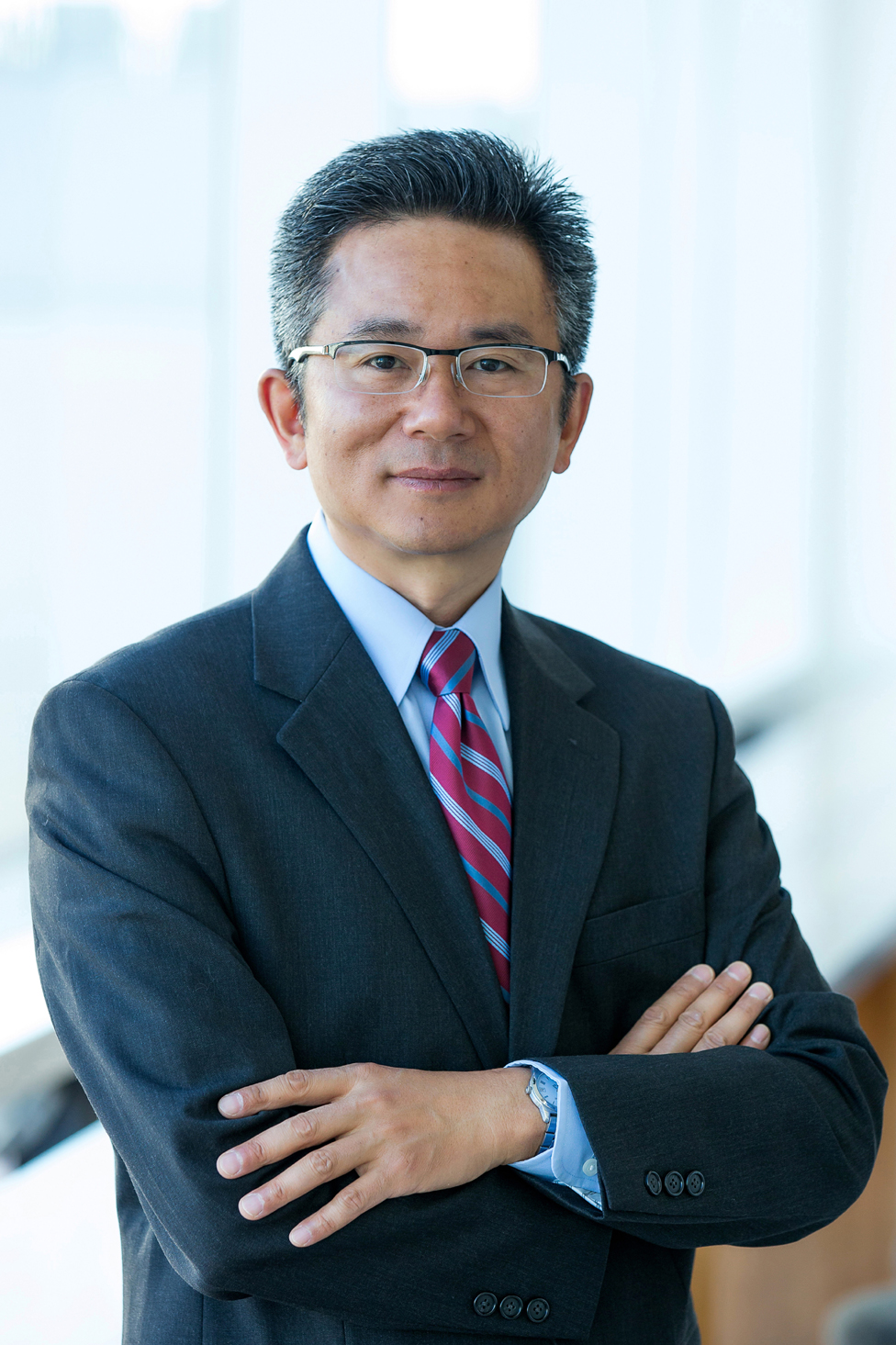
Professor Qihe Tang is a SHARP Professor at UNSW Business School's School of Risk and Actuarial Studies since 2017, where he also serves as Co-Director of the Innovations in Risk, Insurance and Superannuation (IRIS) Knowledge Hub. Previously, he was a Full Professor and held the F. Wendell Miller Endowed Chair at the University of Iowa (2006-2019), following academic appointments at the University of Hong Kong, University of Amsterdam, and Concordia University. Dr. Tang earned his PhD in Statistics from the University of Science and Technology of China in 2001. His research expertise centers on extreme value theory for insurance, finance, and quantitative risk management, with current focus areas including catastrophe risk modeling, systemic risk in financial networks, decision making under uncertainty, pricing in incomplete markets, and climate change impacts on insurance. His recent scholarly output demonstrates significant contributions to tail risk analysis, risk measurement methodologies, and insurance-linked securities pricing. The articles reveal a strong emphasis on extreme events, systemic risk propagation, and innovative approaches to quantifying and managing catastrophic risks in increasingly complex financial and environmental contexts. Elected Member of the International Statistical Institute (ISI) SHARP Professor at UNSW Sydney F. Wendell Miller Endowed Chair at University of Iowa Professor Tang has supervised over a dozen PhD students who now hold positions in academia and industry worldwide. He serves as Editor of Insurance: Mathematics and Economics and has been Principal Investigator for multiple major research grants including three ARC Discovery Projects, NSF funding, and several Society of Actuaries research grants. His research has achieved an H-index of 43 according to Google Scholar.