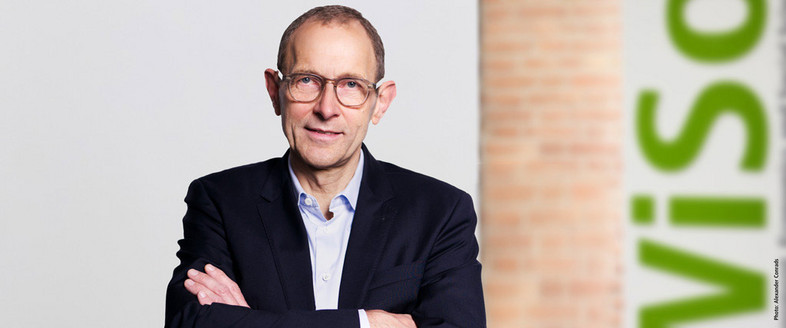
Prof. Dr. Poldi Kuhl is a Professor of Educational Psychology at Leuphana University , Lüneburg, since 2021. Affiliated with the Institute of Psychology in Education (IPE) and the Center for Empirical Research on Language and Education (ERLE) , Kuhl specializes in educational psychology, developmental psychology, and inclusive education. Their research focuses on data-driven decision-making, digital learning platforms, academic language demands, and teacher professional development. Education: Diploma in Psychology (2003) and PhD in Philosophy (2008) from Freie Universität Berlin. Kuhl’s recent work examines how academic language features affect learning outcomes, digital data utilization in primary education, and mental health literacy among teachers. Their publications span topics from virtual reality training tools to inclusive teaching strategies in mathematics. Kuhl’s career includes leadership roles at the Research Data Center (FDZ) at the Institute for Quality Improvement in Education (IQB) and a Junior Professorship at Leuphana University. They have collaborated with institutions like the Universitat Oberta de Catalunya and the Max Planck Institute for Human Development .
Professor Julia Schlüter is a distinguished academic in the Chair of English Linguistics within the Humanities Faculty at the University of Bamberg, Germany. She has served as Senior Lecturer at the Chair of English Linguistics and Language History under Prof. Manfred Krug since June 2008, holding the title of Professor following her habilitation in 2008. Her institutional profile demonstrates deep commitment to both research and teaching innovation, particularly through her leadership of the KorPLUS project and development of open educational resources for corpus linguistics. Her research interests span corpus linguistics for English language learners, empirical methods for studying language variation and change, and the application of corpus methods to teaching. She specializes in examining grammatical, phonological, and lexical differences between British and American English across historical periods from Middle English to present-day usage. Her work investigates phonological variation (particularly phonotactically controlled alternations), morphological change, and syntactic variation through corpus analysis, with special attention to functional grammar and grammaticalization theory. Professor Schlüter's recent publications (2022-2025) reveal a strategic evolution in her research focus, with increasing emphasis on the intersection of corpus linguistics and digital education. While maintaining her foundational work in historical English linguistics, she has developed significant expertise in applying corpus methods to language teacher education and evaluating AI writing tools. Her work demonstrates consistent methodological innovation, moving from traditional corpus analysis to blended learning approaches and digital educational resource development. Her scientific recognition includes: Winner of the 2025 Teaching Innovation Prize from the International Society for the Linguistics of English for the KorPLUS project University of Bamberg Prize for outstanding habilitation (2009) Lise Meitner Programme post-doctoral scholarship (2005-2006) Rectorate Prize from University of Paderborn for outstanding Ph.D. thesis (2005) Multiple DAAD scholarships for international study Professor Schlüter actively supervises doctoral research, currently guiding three Ph.D. candidates (Katharina Deckert, Aklima Nahar, and Nikolai Beland) while having successfully completed supervision for several others. She leads the KorPLUS project (2021-2025), funded by the Stiftung Innovation in der Hochschullehre, which develops open educational resources for corpus linguistics. Her research has been consistently supported by the German Research Foundation (DFG) and other funding bodies throughout her career. She heads the KorPLUS team (with Carina Großmann and Katharina Deckert) which develops the interactive Open Educational Resource platform for corpus linguistics. Her YouTube channel offers video tutorials on corpus basics, and she has created the Video Podcast Series "How to Update your Grammar" for English teachers. She regularly organizes in-service teacher trainings and collaborates with the Virtual Linguistics Campus at RWTH Aachen University to deliver her educational materials globally.
Prof. Dr. Christina Raasch is Professor of Digital Economy at Kühne Logistics University (KLU) and holds a joint appointment with the Kiel Institute for the World Economy (IfW) . Since 2017 she has led research and teaching on how digitalization reshapes innovation processes, enterprise crowdfunding, and customer-driven disruptive innovation. Education Habilitation (Dr. habil.) in Business Administration, Hamburg University of Technology (TUHH), 2012 PhD in Management, University of Erlangen-Nuremberg, 2006 MSc (lic. oec.) in Economics & Management, University of St. Gallen (HSG), 2002 Visiting Researcher, MIT Sloan School of Management, 2010-2012 Research Interests Prof. Raasch’s work centers on digital transformation of innovation . She investigates how firms leverage digital technologies—ranging from AI to crowdfunding platforms—to enhance idea generation, evaluation, and implementation. Core themes include: Open & User Innovation: understanding when and how users become valuable innovators inside and outside firms. Disruptive Innovation Dynamics: analyzing whether disruptive ideas stem from users or producers under varying environmental conditions. Enterprise Crowdfunding: designing decentralized decision-making systems that mitigate hierarchy-induced biases. Publication Trends Her 70+ publications reveal a systematic exploration of demand-side innovation . Early work modeled welfare impacts of user innovation; recent studies use large-scale field data from Siemens and other multinationals to uncover cognitive and social biases in idea evaluation. A consistent thread is bridging micro-level behavioral insights with macro-level policy and strategy implications. Scientific Awards & Honors Fellow of the Open and User Innovation (OUI) Society Host of the 2023 OUI Conference at KLU Research Funding & Industry Collaboration Current grants exceed €2 million and include: FabCity-Citizen Extension (2025-2026) – decentralized urban innovation funded by the German Federal Ministry of Education and Research. EvaluationShirking (2024-2026) – idea evaluation biases in collaboration with a global industrial manufacturer. Idea Evaluation in Democratized Innovation (2019-2023) – DFG-funded project on enterprise crowdfunding design. Labs, Teams & Knowledge Transfer Prof. Raasch leads the Open & User Innovation Research Group at KLU, supervising doctoral researchers and managing industry partnerships with firms in automotive, high-tech, and logistics sectors. She regularly contributes to policy panels and media outlets such as Harvard Business Manager and Springer Professional .
Prof. Dr. Nina Zschocke is Professor of Art History with a focus on 'Digital Aesthetics' at the Karlsruhe University of Arts and Design (HfG Karlsruhe) since April 2024. Previously, she served as senior research associate and lecturer at the Department of Architecture at ETH Zurich until 2023, and as a research associate at the Institute of Art History at the University of Zurich from 2005. She maintains strong connections with the ZKM | Center for Art and Media in Karlsruhe through collaborative projects and lecture series. Her educational background includes studies in art history, ethnology, and classical archaeology at the University of Cologne, where she earned her doctorate in 2004 with a dissertation on 'irritation' in art reception. She furthered her academic work as a DFG visiting scholar at University College London and Columbia University in New York. Zschocke's research centers on the intersection of art history, digital aesthetics, and materiality, with particular emphasis on how computational processes reshape artistic production and reception. Her work explores the material dimensions of digital media, algorithmic authority, and unconventional computing paradigms. She investigates how traditional art historical frameworks can be adapted to address contemporary digital practices and the physical manifestations of computational processes in artistic contexts. Her publications and symposia reveal consistent engagement with digital materiality, examining how digital processes manifest in physical form and how traditional art historical methods apply to contemporary computational practices. Recent work focuses on 'unconventional computing' - exploring alternative physical substrates for computation beyond standard silicon-based systems, and questioning the dominant paradigms of digital technology. Zschocke has organized numerous significant academic events including the 'Conversations on Art and Media' lecture series (2025), 'Dirty Computers' seminar week (2024), 'Digital Matters Symposium' (2024), and the long-running 'Don18 - Conversations on Art and Architecture' (2006-2022). These events demonstrate her commitment to creating interdisciplinary dialogue platforms that bridge art, architecture, media theory, and computational practices. Her academic leadership extends to doctoral program development, having co-designed the SNSF doctoral program 'ProDoc Art&Science' (2008-2014) and the 'Doctoral Program in the History and Theory of Architecture' at ETH Zurich (2012-2015). She has taught at multiple institutions including the University of Fribourg, Bremen University of the Arts, and Bern University of the Arts, establishing herself as a significant figure in European art and media theory education.
Armin Grunwald serves as Head of the Institute for Technology Assessment and Systems Analysis (ITAS) at Karlsruhe Institute of Technology (KIT) and Head of the Office of Technology Assessment at the German Bundestag (TAB). Since 2007, he has held the Chair of Philosophy and Ethics of Technology at KIT's Institute of Philosophy, building on his previous professorship at the University of Freiburg (1999-2007). His leadership positions include membership in the German Ethics Council, the National Advisory Board for Repository Search, and the Science-Policy Advisory Board of ETH Zürich. Grunwald's research focuses on the theory and practice of technology assessment, ethics of technology, sustainability concepts, and digital transformation. His work explores humanity's relationship with technology, particularly examining how digitalization challenges human self-understanding and autonomy. He investigates philosophical questions surrounding artificial intelligence, anthropocentrism in the Anthropocene, and the ethical dimensions of technological progress. His extensive publication record demonstrates consistent scholarly output across multiple disciplines. Recent work shows increasing focus on AI ethics, the philosophical implications of digital transformation, and technology assessment methodologies for addressing grand societal challenges. His publications span philosophical analyses, empirical studies on technology implementation, and policy-relevant assessments for governmental bodies. Grunwald has supervised numerous doctoral students across interdisciplinary fields including energy transition, AI governance, urban sustainability, and technology ethics. His leadership extends to directing major research initiatives through ITAS, which serves as Germany's parliamentary technology assessment body providing scientific advice to the Bundestag on emerging technologies and their societal implications.
Prof. Dr. Tobias Popovic is a Professor at the Stuttgart University of Applied Sciences , affiliated with the Faculty of Civil Engineering, Building Physics and Economics in the Business Studies Department . His work spans Corporate Finance , Risk Management , Capital Markets , and Sustainable Finance , with a focus on SME financing, financial crises, and energy transition financing. Email: tobias.popovic@hft-stuttgart.de Other Positions: Senate Commissioner for Sustainable Development, Senate Commissioner for Ethics Research Areas include the causes and effects of the financial and debt crisis, demographic change implications, SME financing, asset-based finance, cooperative financial networks, and responsible investments. His work emphasizes sustainable finance and energy transition in municipal contexts. Publications (2009–2013) address SME financing challenges, Basel III impacts, energy transition financing, and demographic change effects on debt crises. Keywords span Finance , Economics , and Sustainability , with sub-fields like SME Financing , Basel III , and Renewable Energy Finance .
Heinz Pampel is Professor of Information Management at the Institute of Library and Information Science at Humboldt University of Berlin since December 2022, holding a joint appointment with the Einstein Center Digital Future (ECDF). He also serves as a Scientific Consultant at the Helmholtz Open Science Office of the Helmholtz Association. Professor Pampel's research focuses on Open Science, digital transformation, and information infrastructures in science. His work examines how digital research and information infrastructures can support the cultural shift toward Open Science, with particular attention to academic libraries, computer centers, and other research-supporting service facilities. Key research areas include information infrastructures for Open Science, research data management, Open Access developments, research software, management of research information, and science policy. His recent publications demonstrate strong engagement with institutional repositories, Open Access implementation challenges, research information systems, publication cost monitoring, and scholarly communication infrastructure. Pampel has been instrumental in developing the Registry of Research Data Repositories (re3data.org), an important Open Science tool providing an overview of existing repositories for research data. Prior to his professorship, Pampel worked from 2007-2022 at the Helmholtz Open Science Office, where he served as Open Science Officer and later as Deputy Head. He received his PhD in 2021 from Humboldt University of Berlin on Open Access topics. His educational background includes studies in Library and Media Management at Stuttgart Media University (2003-2007).
Andreas Peschel serves as Institute Director of the Institute for Sustainable Hydrogen Economy (INW) at Forschungszentrum Jülich, a leading German research center within the Helmholtz Association. His leadership oversees interdisciplinary research advancing hydrogen production, storage, and utilization systems for sustainable energy transition. Research interests focus on catalytic processes and materials engineering for hydrogen technologies, organized across four specialized divisions: INW-1: Catalytic Interfaces INW-2: Catalyst Materials INW-3: Reaction Engineering INW-4: Process & Plant Engineering for Chemical Hydrogen Storage Key emphases include developing efficient catalysts, optimizing reaction pathways, and engineering scalable storage solutions for industrial hydrogen applications. No publicly listed scientific awards or student supervision activities appear in the source documentation.
Insa Feinkohl is a Professor at the Chair of Medical Biometry and Epidemiology within the Faculty of Health at the University of Witten/Herdecke . Her research focuses on risk factors for cognitive dysfunction and mental health in older adults, particularly post-surgery, with emphasis on metabolic and cognitive risk factors. Bachelor of Science (BSc) in Psychology (1 st class honors) – University of Dundee (2006-2009) Master of Science (MSc) in Psychology of Individual Differences (with distinction) – University of Edinburgh (2009-2010) PhD in Community Health Sciences – University of Edinburgh (2010-2014) Post Doc in Knowledge Construction Group – Leibniz Institute for Knowledge Media, Tübingen (2014-2015) Postdoc in Molecular Epidemiology Group – Max Delbrück Center, Berlin (2015-2022) Habilitation in Molecular Epidemiology – Charité Universitätsmedizin Berlin (2021) Her research integrates medical biometry and epidemiology to study postoperative cognitive dysfunction (POCD), delirium, and aging-related cognitive decline. Key areas include biomarker validation (e.g., leptin, interleukins), brain connectivity (dopaminergic networks, thalamus), and metabolic risk factors (diabetes, obesity). She contributed to the BioCog project , an EU-funded initiative for personalized risk prediction of postoperative cognitive impairment. Her recent publications highlight trends in perioperative neuroscience, including brain mineralization, cytokine associations with neurocognitive disorders, and structural/functional imaging in delirium. Articles also explore metabolic syndrome, cognitive reserve, and delirium prediction models using machine learning. Insa Feinkohl is affiliated with major academic societies, including the German Society for Epidemiology , German Society for Medical Informatics, Biometry and Epidemiology , and the German University Association .
Prof. Ady Arie is a Professor of Electrical Engineering at Tel Aviv University, where he serves as the Head of the Tel Aviv University Center for Light-Matter Interaction and holds the Marko and Lucie Chaoul Chair in Nano-Photonics. He has been a faculty member at the Iby and Aladar Fleischman Faculty of Engineering since 1993, previously serving as Head of the School of Electrical Engineering (2013-2017) and Vice Dean of Research (2011-2013). His educational background includes: B.Sc. in Mathematics and Physics from Hebrew University of Jerusalem (1983) M.Sc. in Physics from Tel-Aviv University (1986) Ph.D. in Engineering from Tel-Aviv University (1992) Prof. Arie's research spans multiple frontiers of optics and photonics. His work in nonlinear optics focuses on advanced frequency conversion techniques and shaping of light parameters using nonlinear photonic crystals. In quantum optics , he develops quantum light sources based on spontaneous parametric down conversion and explores applications in quantum sensing and communication. His plasmonics research investigates manipulation of surface plasmon polaritons on metal surfaces. In electron optics , he studies electron-matter-light interactions and techniques for sculpting electron wave functions. His lab also explores hydrodynamics through quantum simulations with water waves, creating analogies to quantum mechanical phenomena. Analysis of Prof. Arie's recent publications (2023-2025) reveals a strong focus on quantum technologies, particularly in quantum light generation, quantum sensing, and quantum information processing. His work increasingly integrates concepts from nonlinear optics, electron microscopy, and quantum physics, with growing emphasis on practical applications in quantum communication and computation. The research shows sophisticated manipulation of light-matter interactions across multiple platforms including nonlinear photonic crystals, plasmonic structures, and electron beams. Prof. Arie has received significant recognition for his work: Kadar Foundation Award for Excellence in Research (2016) Fellow of the Optical Society of America Editorial roles including Topical Editor of Optics Letters (2008-2014) and Associate Editor of Optica (since 2018) Prof. Arie leads the Nonlinear Optics and Wave Propagation Laboratory at Tel Aviv University, where his team investigates diverse wave phenomena from light frequency conversion to electron beam manipulation. He has served as chair of the national steering committee of the Israeli Planning and Budgeting Committee on Quantum Science and Technology. His research has been supported by various grants enabling the development of novel optical technologies and quantum systems. While specific grant details aren't provided in the text, his extensive publication record and leadership positions suggest substantial research funding. Prof. Arie's laboratory focuses on the intersection of classical and quantum wave phenomena. The lab investigates light manipulation through nonlinear optical processes, plasmonic structures, and electron microscopy techniques. Current research directions include quantum light generation, electron-photon interactions, and hydrodynamic analogs to quantum systems. The lab appears well-equipped for advanced optical experimentation with capabilities spanning visible to infrared wavelengths, nonlinear crystal engineering, and electron beam characterization.
Dr. Ina Säumel is a scientific collaborator at the Institute of Agricultural and Horticultural Sciences at Humboldt University of Berlin. Her work bridges urban ecology, biodiversity conservation, and socio-cultural dimensions of sustainability through participatory approaches. Research Focus : Urban sustainability transitions, nature-based solutions, medicinal plants, and climate change adaptation. Key Projects : Edible City Solutions, biochar conversion from agro-residues, and biodiversity assessments in urban cemeteries. Geographic Scope : Uruguay, Andes, South Tyrol, and Berlin. Emphasis on post-industrial and water-sensitive cities. Her recent publications highlight interdisciplinary methods in co-creation, land-use impacts on metacommunity structures, and health-promoting urban green spaces. Contact: ina.saeumel@hu-berlin.de
Susanne Narciss is a Professor at the Psychology of Learning and Instruction department of Technische Universität Dresden, leading the Center of Tactile Internet with Human in the Loop (CeTI). Her research focuses on error processing in educational contexts, with 15 recent publications analyzing error climates, feedback strategies, and motivational frameworks. Key Research Areas : Learning from errors/failure, instructional feedback design, affective-motivational responses, error-related metacognition. Methodological Scope : Combines longitudinal studies, experimental designs, and qualitative analyses across K-12, university, and informal learning settings (museums, home contexts). Her work emphasizes context-specific interventions for educators, parents, and students, including error-competency training programs and metacognitive scaffolding tools. Current projects examine vibrotactile feedback systems for motor learning and cultural responsiveness in psychology education. Collaborative Networks : Works with international teams on the International Competences for Undergraduate Psychology model and cyber-physical system pedagogy. Recent Trends : 2025 articles focus on collaborative error processing, scenario-based human-machine interaction, and generative learning tasks in digital environments.
Prof. Ulrich W. Thonemann is a Full Professor and Director of the Department of Supply Chain Management & Management Science at the University of Cologne's Faculty of Management, Economics and Social Science. Since 2019, he has served as Dean of the Faculty and President of the University of Cologne Executive School since 2018. His research spans Supply Chain Management Optimization Behavioral Operations Information Systems . His recent work focuses on Incentive systems for forecast sharing Behavioral inventory metrics Contract design for newsvendor problems Demand information sharing Capacity rationing . He has served on the scientific advisory board of Bundesvereinigung Logistik and as Associate Editor for Production and Operations Management . Scientific Awards: Terman Fellow (1999-2000) Anderson Faculty Scholar (1998-2000) Outstanding Academic Achievements at Stanford (1992) Contact: ulrich.thonemann@uni-koeln.de | Research Group Website
Prof. Dr. Patrick Cichy is an affiliated professor at the Institute for Technology and Innovation Management (TIM) of RWTH Aachen University and also associated with Bern University of Applied Sciences. His research agenda lies at the intersection of information systems, innovation management, and data science, with a core focus on privacy & cybersecurity, service and business-model innovation, IoT ecosystems, and text mining/visual analytics. Research Interests: Privacy & Cybersecurity: Investigating how individuals and organizations balance privacy concerns with data sharing incentives, especially in emerging technology contexts. Service & Business Model Innovation: Examining how firms create and capture value from digitally enabled services and personal data. IoT Ecosystems: Studying the dynamics of value creation, legitimacy, and privacy within interconnected Internet-of-Things environments. Text Mining & Visual Analytics: Leveraging advanced computational techniques to map and analyze large-scale discourse and innovation patterns. Across his latest publications (2014–2024), a clear thematic trajectory emerges: an evolving exploration of privacy calculus and data-sharing behavior, methodological advances in text mining for innovation studies, and longitudinal analyses of privacy discourse spanning three decades. These works collectively contribute to both theoretical development and practical guidance for policymakers and managers navigating digital transformation. Contact: Email: cichy@time.rwth-aachen.de Office hours: By appointment
Hanna Meissner is Professor for Interdisciplinary Women's and Gender Studies at Technical University of Berlin, serving as Head of Department at the Center for Interdisciplinary Women's and Gender Studies (ZIFG) within Faculty I - Humanities and Educational Sciences. Appointed to her professorship in January 2020, she has maintained an active research and teaching profile with significant contributions to feminist theory and social philosophy. Her academic credentials include: Doctorate (2009) from Humboldt University of Berlin with dissertation on "Conditional Contingency: On the Social Constitution of Subjectivity and Agency" Diplom-Soziologin (1998) from Freie Universität Berlin Professor Meissner's research spans critical intersections of feminist theory, social philosophy, and political economy. Her work examines subjectivity through new materialist and critical theoretical frameworks, while exploring work-life balance as a systemic crisis of capital reproduction. She has developed significant scholarship on commons theory from feminist perspectives and collective subjectivity in communal living arrangements. Her theoretical contributions bridge classical social theory with contemporary gender issues. Analysis of her recent publications reveals a strong trajectory from theoretical foundations toward practical applications of feminist thought. Her 2024-2025 work increasingly focuses on counterhumanist assemblages, precarious subjectivity, and feminist approaches to commons, demonstrating evolution from earlier work on new material feminisms and historical materialism. This progression shows deepening engagement with collective action models and alternative social organization. Her scholarly contributions have been supported by: Volkswagen Foundation funding for international summer school in Nigeria DAAD support for research in Sudan Hans Böckler Foundation projects on women's career advancement Professor Meissner has supervised numerous students and collaborated extensively across disciplinary boundaries. Her teaching has spanned multiple institutions including TU Berlin, University of Vienna, and University of Duisburg-Essen, with notable international engagement in Nigeria and Sudan. During the pandemic, she co-authored research on the abrupt transition to online teaching. As leader of ZIFG at TU Berlin, she fosters collaborative research that transcends traditional disciplinary boundaries. Her team engages with national and international partners on projects addressing contemporary gender issues through theoretical innovation and practical application, particularly focusing on collective action models and feminist approaches to social organization.