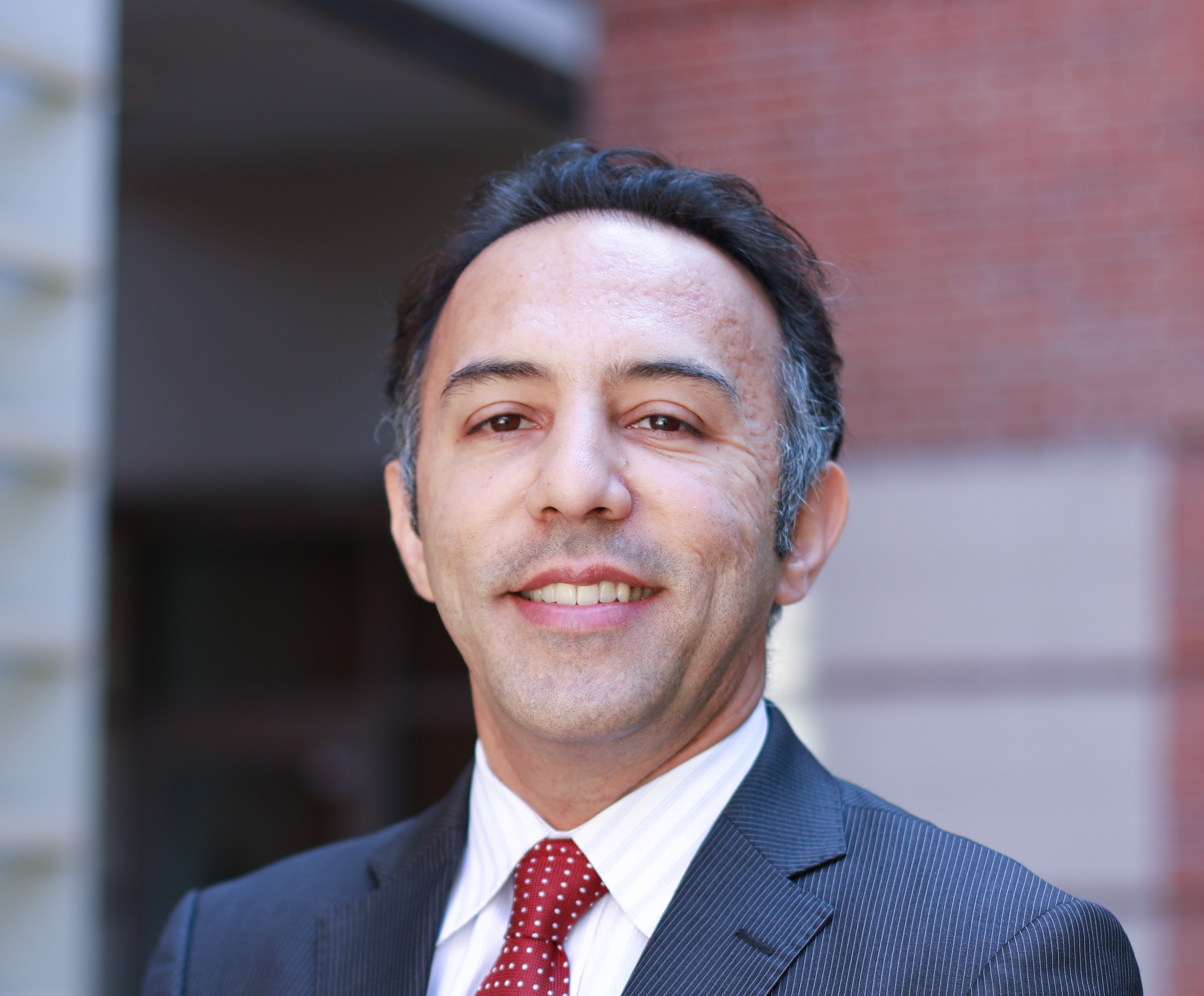
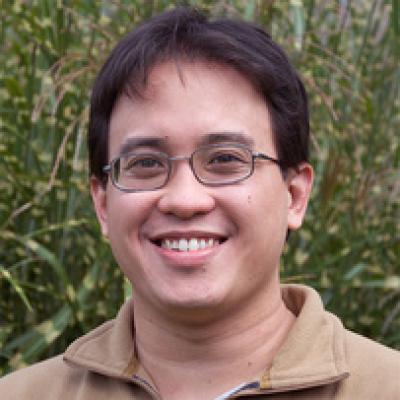
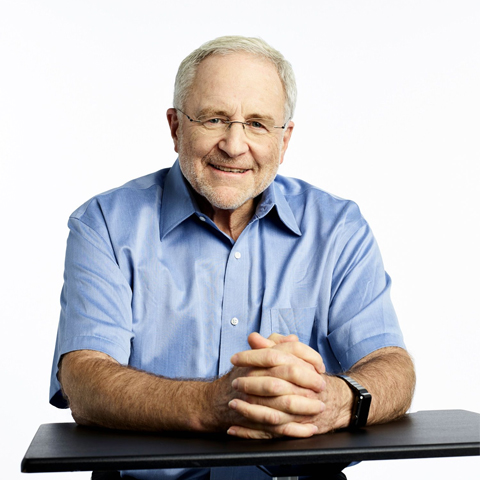
Aydin Babakhani is a Professor in the Department of Electrical and Computer Engineering at the University of California, Los Angeles (UCLA), affiliated with the College of Life Sciences. He directs the Integrated Sensors Laboratory (ISL), which focuses on the design and implementation of integrated sensors and systems. His research spans high-speed wireless communication, terahertz technology, medical implants, radar systems, and industrial monitoring solutions. Research Interests: Prof. Babakhani's work integrates silicon-based technologies with applications across multiple domains. Key areas include: Silicon mm-Wave/THz transceivers and on-chip antennas for communication and sensing Wirelessly powered medical implants for biopotential monitoring and neural stimulation THz radar systems for micrometer-resolution imaging and vibration detection Energy harvesting solutions for batteryless sensors in industrial and biomedical applications CMOS-based optoelectronic systems and photonic computing accelerators His recent publications (2021-2025) demonstrate a strong emphasis on terahertz systems, wireless power transfer, and miniaturized medical electronics. Over 80% of his latest articles involve silicon-integrated solutions for biomedical implants or THz sensing, with emerging focus on AI-accelerated photonic computing and multi-Gbps wireless links.
Josiah Hester is Associate Professor of Interactive Computing and Computer Science at Georgia Tech's College of Computing, where he also directs the Center for Advancing Responsible Computing and the Ka Moamoa – Ubiquitous and Mobile Computing Lab . His research focuses on sustainable, battery-free computing systems for health, conservation, and education, informed by his Native Hawaiian heritage. Education: Ph.D. in Computer Science, Clemson University, 2017 B.S. in Computer Science, Clemson University Honors College, 2011 Research Interests: Hester’s group pioneers intermittent computing —devices that harvest ambient energy (solar, radio, thermal, microbial) and operate reliably despite frequent power loss. Applications span: Large-scale conservation sensing with Indigenous communities Battery-free health wearables (smart masks, implantables) Educational tools for sustainable design Carbon-aware IoT and recyclable robotics Recent Work & Trends: His 2024–2025 publications unveil soil-powered sensors, recyclable electronics, and culturally-grounded CS education tools. A consistent theme is co-design with underserved communities and embedding sustainability metrics at every layer—from hardware to curriculum. Scientific Awards: Presidential Early Career Award for Scientists and Engineers (PECASE) – 2025 Alfred P. Sloan Fellowship – 2022 NSF CAREER Award – 2022 Popular Science “Brilliant 10” – 2021 3M Non-Tenured Faculty Award – 2021 Multiple best-paper & best-presentation awards Grants & Teams: Hester’s lab is supported by >$50 million in active funding from NSF, NIH (ARPA-H), DARPA, DoD, Sloan, VMware, and 3M. He leads interdisciplinary teams on projects such as: $35 million ARPA-H bioelectronics initiative for diabetes and cancer $5 million NSF “Coastlines and People” Hub for Manoomin conservation $2 million NSF-DELPHI sustainable edge device design Laboratory & Mentorship: The Ka Moamoa Lab (named with Hawaiian meaning “lamp of the moamoa fish”) hosts graduate, undergraduate, and post-doctoral researchers. Hester actively recruits Native and Indigenous students and has mentored award-winning advisees such as Nivedita Arora (ACM Doctoral Dissertation Award 2024).
Professor Ernest Foo is a distinguished academic at Griffith University's School of Information and Communication Technology, specializing in cybersecurity with a focus on industrial control systems and cryptographic protocols. With over 15 years of experience in computer networking, he has established himself as a leading expert in SCADA security and smart grid cybersecurity. His research has significant practical applications in critical infrastructure protection, and he has developed hands-on security training programs that have trained professionals from major Australian utilities and government agencies. Professor Foo's educational background includes: Bachelor of Engineering with Honours in Electronic and Computer Engineering from University of Queensland Doctor of Philosophy from Queensland University of Technology Professor Foo's research interests center around secure cryptographic protocols with specific applications in industrial control system security and cyber physical systems. His work spans SCADA security, smart grid protection, wireless sensor network security, and post-quantum cryptography. He has made significant contributions to understanding vulnerabilities in industrial protocols like Modbus and DNP3, and has pioneered the application of process mining and data mining techniques for attack detection in critical infrastructure systems. His research bridges theoretical security concepts with practical implementations in real-world industrial environments. Professor Foo's recent publications demonstrate a clear trajectory toward increasingly sophisticated security frameworks for critical infrastructure. His work shows a progression from foundational SCADA security research to advanced applications of artificial intelligence, machine learning, and formal methods in cybersecurity. A notable trend is the integration of zero trust principles with industrial control systems, alongside growing emphasis on post-quantum cryptographic solutions. His publications span high-impact journals and conferences in cybersecurity, with increasing focus on anomaly detection in cyber-physical systems and the application of graph-based machine learning techniques to network security challenges. Professor Foo's notable scientific achievements include: Best paper award at the 2nd International Cyber Resilience Conference for "Gap analysis of Intrusion Detection in Smart Grids" Professor Foo has secured significant research funding including an ARC Linkage grant with Powerlink Queensland focused on cyber security for electricity sub-stations. He currently leads multiple research projects including Westpac Micro-Credentials in Financial Crime Investigation, Digital Banking Micro-credentials with ANZ, and research on quantum-safe cryptography. As a dedicated educator, he serves as Program Director for multiple cybersecurity programs including the Master of Cyber Security, and has supervised numerous doctoral and masters students. His Cyber Security: Industrial Control System course, conducted annually from 2013-2018, featured innovative hands-on training with real-world participants from major Australian utilities. Professor Foo has been instrumental in establishing the SCADA security research laboratory with multiple vendor system miniatures running industrial PLCs. His work bridges theoretical security concepts with practical implementations, making significant contributions to the security of industrial control systems and critical infrastructure worldwide.
Xiaoming Liu is the Anil K. and Nandita Jain Endowed Professor of Engineering and MSU Foundation Professor in the Department of Computer Science and Engineering at Michigan State University . Holding a Ph.D. from Carnegie Mellon University (2004), he leads cutting-edge research in computer vision and machine learning. Research Interests : Computer Vision Pattern Recognition Image and Video Processing Machine Learning Medical Image Analysis Multimedia Retrieval Recent Research Trends : Focus on 3D object detection and depth estimation Development of robust biometric recognition systems Integration of radar-camera fusion for autonomous systems Advancements in self-supervised and multimodal learning Exploration of adversarial AI security Creation of interpretable forgery detection frameworks Teaching : Spring 2013: CSE891-006 Computer Vision Seminar Fall 2012-2015: CSE803 Computer Vision Spring 2014-2017: CSE 471 Media Processing and Multimedia Contact Information : Email: liuxm@cse.msu.edu Office: EB 3137, Michigan State University Phone: +1 (517) 355-2359
Jun-Kun Wang is an Assistant Professor at the University of California, San Diego (UCSD), with a joint appointment in the Department of Electrical and Computer Engineering and the Halicioğlu Data Science Institute. He joined UCSD in July 2023, previously serving as a postdoc at Yale University. His research focuses on optimization, sampling, and machine learning, emphasizing acceleration techniques and theoretical guarantees. He explores connections between optimization and areas like no-regret learning, sampling, and hypothesis testing. Education: PhD in Computer Science from Georgia Tech (advised by Jacob Abernethy), M.S. in Communication Engineering and B.S. in Electrical Engineering from National Taiwan University. Research Interests: Acceleration in optimization and sampling, trustworthy machine learning, momentum methods, and algorithmic convex optimization. His work bridges theoretical foundations and practical applications, with publications in top-tier venues like COLT, ICML, ICLR, and NeurIPS. Teaching: Courses include ECE 174 (Linear/Nonlinear Optimization), ECE 273 (Convex Optimization), and DSC 211 (Optimization). His lectures cover topics such as gradient descent, duality theory, mirror descent, and non-convex optimization. Lab/Team: Leads the Optimization and Machine Learning Group, advising PhD students Can Chen and Maria-Eleni Sfyraki, and MS student Yi Liu. His group focuses on theoretical and applied aspects of optimization algorithms.
Paolo Gardoni is the Alfredo H. Ang Family Professor and an Excellence Faculty Scholar in the Department of Civil and Environmental Engineering at the University of Illinois Urbana-Champaign, with additional professorial appointments in Industrial & Enterprise Systems Engineering and Biomedical & Translational Sciences. He also serves as Director of the MAE Center and Editor-in-Chief of Reliability Engineering & System Safety. Education Ph.D. in Civil Engineering, University of California, Berkeley (2002) M.A. in Statistics, University of California, Berkeley (2001) M.Eng. in Structural Engineering, University of Tokyo (1997) Laurea (BS+MS equivalent) in Structural Engineering, Politecnico di Milano (1997) Research Interests Gardoni’s scholarship integrates probabilistic methods with large-scale infrastructure systems to advance reliability, risk, and life-cycle analysis. His work quantifies the performance of deteriorating systems under natural and anthropogenic hazards, models societal impacts of disasters, and develops decision frameworks for sustainable and resilient infrastructure. He also examines ethical, social, and legal dimensions of risk, and investigates optimal strategies for hazard mitigation, disaster recovery, and climate adaptation. Across more than 250 refereed journal papers, he has advanced sub-fields ranging from probabilistic mechanics and earthquake engineering to catastrophe bond pricing and engineering ethics, leveraging tools such as stochastic differential equations, Bayesian networks, and physics-informed machine learning. Awards & Honors Alfredo Ang Award on Risk Analysis and Management of Civil Infrastructure (ASCE, 2021) Best Paper Awards in ASCE Journal of Sustainable Water in the Built Environment (2019) and Geotechnical Research (2018 Telford Premium Prize) Fellowships and named professorships: Alfredo H. Ang Family Professor, Excellence Faculty Scholar, and courtesy or honorary professorships at Tsinghua, IIT Guwahati, Tongji, Jianghan, and Loughborough universities. Research Leadership & Funding Gardoni has secured over $58 million in research funding from NSF, DHS, NIST, USAID, Qatar National Research Fund, and other agencies. He directs the MAE Center—formerly an NSF Engineering Research Center—focused on multi-hazard engineering approaches, and is Editor-in-Chief of Reliability Engineering & System Safety (Elsevier, IF 9.4). He founded and formerly led the journal Sustainable and Resilient Infrastructure (Taylor & Francis) and serves on editorial boards of nine additional journals. Advising & Mentorship He has graduated 27 PhD and 35 Master’s students, many of whom now hold faculty positions worldwide. His group maintains an active pipeline of doctoral and post-doctoral researchers working on resilience analytics, infrastructure monitoring, and risk-informed decision-making. Laboratories & Collaborations He leads the MAE Center and is affiliated with the Critical Infrastructure Resilience Institute (CIRI) and the Biomedical and Translational Sciences group. International collaborations span the UK (Loughborough), India (IIT Guwahati), and China (Tsinghua, Tongji, Jianghan), fostering cross-disciplinary research in reliability and resilience engineering.
Phuong H. Nguyen is an Associate Professor at the Department of Electrical Engineering at Eindhoven University of Technology (TU/e). He leads the digital Power & Energy Systems (digi-PES) lab, focusing on smart energy systems, distributed control, and IoT integration for future energy grids. His research addresses energy transition challenges, including microgrid optimization, flexibility markets, and data-driven grid management. Nguyen holds a PhD from TU/e (2010) and has held visiting researcher positions at Clemson University. His work contributes to UN SDG goals related to affordable and clean energy. Education: Bachelor's in Electrical Engineering, Hanoi University of Science and Technology (2002) Master's in Electrical Engineering, Asian Institute of Technology (2004) PhD in Electrical Engineering, TU/e (2010) Key Research Areas: Smart Grids and Cyber-Physical Systems Distributed Energy Resource Management Local Energy Markets and Flexibility Provision IoT and Big Data in Energy Systems Awards & Recognition: Best Paper Award SEST 2020 Projects & Grants: REACT-D: Reactive Power Management (Project Manager) Al-driven Applications to Smarten Power System Operation (Project Lead) UNIversity Campus as a Self-Regulated Network (Co-Manager) Labs & Teams: The digi-PES lab develops cyber-physical tools for energy transition, including microgrid simulations, flexibility markets, and grid resilience strategies.
Brendan O'Connor is an Associate Professor in the Manning College of Information and Computer Sciences (CICS) at the University of Massachusetts Amherst. His research focuses on computational social science and natural language processing (NLP), particularly exploring how social factors influence language technologies and using text analysis to understand societal trends. His work includes studies on racial bias in NLP, political event analysis, and social media linguistics. He holds a PhD in Machine Learning from Carnegie Mellon University (2014) and dual MS/BS in Symbolic Systems from Stanford University (2006). Education: PhD in Machine Learning, Carnegie Mellon University (2014) MS in Symbolic Systems, Stanford University (2006) BS in Symbolic Systems, Stanford University (2006) Research interests span AI ethics, social media analysis, and computational methods for studying language and society. Notably, he investigates racial disparities in NLP systems, linguistic variation in African American English, and event detection in news and social media. His work has been recognized with NSF CAREER and Google Faculty awards, and his research has been cited thousands of times. His lab, the Statistical Social Language Analysis Lab, develops tools for analyzing large-scale text data. He is affiliated with the Center for Data Science, Center for Intelligent Information Retrieval, and Computational Social Science Institute. Recent projects include analyzing global news coverage of critical events and developing frameworks for zero-shot argument explication. Awards and Honors: NSF CAREER Award Google Faculty Research Award Best Paper Award Advising and Grants: O'Connor has advised projects on social media polling representativeness and demographic analysis. His grants include collaborative research on sociopolitical event extraction and bias mitigation in AI systems. He has also contributed to platforms like Rookie for news archive exploration and ezCoref for coreference resolution. Labs/Teams: Leads the Statistical Social Language Analysis Lab and collaborates with the UMass NLP Group and Harvard Institute for Quantitative Social Science. His work bridges NLP with social science methodologies, emphasizing transparency in algorithms and causal inference using text data.
Moshe E. Ben-Akiva is the Edmund K Turner Professor at the Massachusetts Institute of Technology (MIT), affiliated with the School of Engineering and the Department of Civil and Environmental Engineering. He holds a B.S. from Technion-Israel Institute of Technology (1968), and M.S. and Ph.D. degrees in transportation systems from MIT (1971, 1973). His research focuses on transportation systems analysis, intelligent transportation systems, demand modeling, econometrics, and infrastructure management. He has been recognized with prestigious awards, including election to the National Academy of Engineering (2025) for contributions to transportation systems modeling and demand analysis. His work spans theoretical and applied domains, including agent-based microsimulation for freight logistics, tradable credit schemes for congestion management, and behavioral dimensions of transport decarbonization. Ben-Akiva collaborates with industry and policymakers to design sustainable mobility solutions. His notable publications include foundational texts on discrete choice analysis and stated preference elicitation. He advises on transportation policy, urban planning, and emerging mobility technologies such as automated vehicles and urban air mobility. Current research explores impacts of automated mobility-on-demand systems, real-time tolling strategies, and e-commerce delivery demand modeling. His team develops tools like SimMobility Freight, an agent-based urban freight simulator. He remains active in teaching, focusing on demand modeling and econometrics courses at MIT.
Rashmi Vinayak is an Associate Professor in the Computer Science Department at Carnegie Mellon University, with a courtesy appointment in the Electrical and Computer Engineering Department. She is a member of both the Systems group and Theory group at CMU and leads TheSys research group. She is also affiliated with the Parallel Data Lab (PDL). Her educational background includes a Ph.D. from UC Berkeley in 2016, followed by postdoctoral studies at the same institution. Rashmi's research spans the intersection of computer/networked systems and information/coding theory. Her current focus is on robustness and resource efficiency in data systems across storage, communication, and computation. Key thrusts include storage systems, caching systems, and systems for machine learning. Her work on SIEVE, a cache eviction algorithm, has been widely adopted by industry including VMware, Google, Redpanda, and numerous open source libraries. Her recent publications demonstrate a strong trend toward practical systems research with theoretical foundations, particularly in caching algorithms, storage systems, and machine learning infrastructure. Many of her papers have received best paper awards and industry adoption. Notable awards include: Sloan Research Fellowship (2023) IEEE Information Theory Society Goldsmith Lecturer (2023) NSF CAREER Award (2020) Multiple USENIX NSDI Community (Best Paper) Awards VMware Systems Research Award (2021) Facebook and Google Research Awards Rashmi has supervised numerous PhD, Master's, and undergraduate students, many of whom have gone on to prestigious positions at Harvard, Google, Meta, and other leading institutions. Her research has been generously funded by NSF, Sloan Foundation, Open Compute Project, Google, Facebook/Meta, VMware, and Amazon Web Services. She actively collaborates with industry partners including Google, Microsoft, NetApp, Facebook, Cisco, Intel and Cloudera. She leads TheSys research group which focuses on designing next-generation data systems that are robust, efficient, and performant. The group takes a multi-disciplinary approach spanning computer systems, information theory, and machine learning.
Angela D. Kent is a Professor in the Department of Natural Resources and Environmental Sciences at the University of Illinois Urbana-Champaign, where she also serves as Director of the Program in Ecology, Evolution, and Conservation Biology within the School of Integrative Biology. She is affiliated with the Carl R. Woese Institute for Genomic Biology. Her research focuses on microbial communities in agroecosystems and natural environments, particularly their roles in nitrogen cycling, soil health, and sustainable bioenergy production. Key research interests include microbial interactions in plant-microbe systems, the impact of genetic variation in crops on microbial processes, and the ecological and biogeochemical implications of soil microbiomes. She has authored over 99 publications and supervised datasets on topics such as denitrification dynamics, rhizosphere microbiome assembly, and microbial contributions to nitrogen retention. Dr. Kent has received the NACTA Educator Award (2012) and has contributed to high-impact studies on topics like microbial community responses to environmental stressors and the application of stable isotopes in bioenergy research. Her work bridges microbial ecology, agronomy, and environmental science, emphasizing practical solutions for sustainable agriculture and ecosystem management.
Itsik Pe'er is a Full Professor and Vice-Chair in the Department of Computer Science at Columbia University's Fu Foundation School of Engineering & Applied Science, and holds a joint appointment as Professor of Systems Biology at the Vagelos College of Physicians and Surgeons. His research focuses on computational methods in human genetics, including genetic variation analysis, disease association studies, and algorithm development for genomic data. He leads the Itsik Pe'er Lab of Computational Genomics, which develops tools like Xplorigin, Germline, and SEACells to address challenges in genomics and medical research. His work spans machine learning applications in healthcare, microbiome analysis, and cancer genomics. Notable contributions include studies on hypertensive disorders in pregnancy, bias correction in predictive models, and the development of non-Euclidean learning libraries like Manify. Pe'er has advised students including Vladimir Vacic, Anat Kreimer, and Arthi Ramachandran, and collaborates on grants addressing genetic epidemiology and computational biology. His lab's location is in the Computer Science Building at Columbia's Morningside Campus.
Associate Professor Ng Bing Feng leads research in Additive Manufacturing, Aerospace Engineering, and Thermofluids at Nanyang Technological University's School of Mechanical & Aerospace Engineering. As Cluster Director for Smart & Sustainable Building Technologies at NTU's Energy Research Institute, he oversees projects spanning energy-efficient cooling technologies, advanced filtration systems, and bio-inspired materials. His interdisciplinary work integrates advanced manufacturing with environmental engineering, focusing on sustainable solutions for air quality management and thermal regulation. Current research explores radiative cooling technologies, acoustic agglomeration for emissions control, and crashworthy structures via biomimetic design. Professor Ng's publications demonstrate consistent innovation in multi-scale manufacturing and fluid dynamics, with growing emphasis on sustainable urban technologies. Methodologies combine experimental fluid dynamics with computational modeling and AI-driven design. Leadership Roles: Cluster Director, Energy Research Institute @ NTU Principal Investigator for multiple industry collaborations in sustainable materials Research Output: 42+ publications in high-impact journals Multiple patents in filtration technologies and cooling systems
André DeHon is the Oliver C. Boileau Jr. and Nan Eleze Boileau Professor of Electrical Engineering at the University of Pennsylvania, with affiliations in the Electrical and Systems Engineering (ESE) and Computer and Information Science (CIS) departments. He founded the Penn Computer Engineering (CMPE) program and directs the DARPA-sponsored CyberSavvy Security Center. His research spans reconfigurable computing, FPGA architecture, interconnect design, hardware security, and energy efficiency, with a focus on adapting to fabrication imperfections and runtime variability. His work explores programmable substrates (e.g., CMOS VLSI, molecular electronics) and algorithmic mappings to create resilient, efficient systems. Current projects include runtime feedback mechanisms (REFINE), partial reconfiguration (ExHiPR), and security frameworks like SCALPEL and μSCOPE. Recent publications highlight advancements in FPGA compilation (PLD, HiPR), security (SCALPEL, μSCOPE), and interconnect optimization (Asymmetry in NoC). These studies intersect computer architecture, security, and embedded systems. Scientific awards and recognitions: 2023 IEEE Fellow 2020 IEEE Mary Kenneth Keller Teaching Award 2018 ACM Fellow TCFPGA Hall of Fame (2019) Best Paper at ICFPT 2015 Academic leadership: He chairs the ACM/SIGDA Technical Committee on FPGAs and Reconfigurable Computing, previously held faculty roles at Caltech (1999–2006), and was a postdoc at UC Berkeley (1996–1999). Education includes MIT SB (1990), SM (1993), and PhD (1996) in Electrical Engineering and Computer Science.
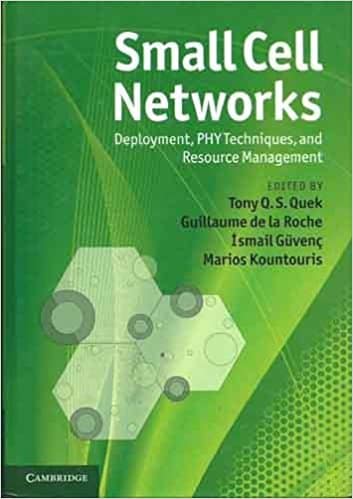
Dr. Ismail Guvenc is a Full Professor in the Department of Electrical and Computer Engineering at North Carolina State University. He holds an IEEE Fellowship and is a Senior Member of the U.S. National Academy of Inventors. His research focuses on 5G/6G wireless systems, UAV communications, heterogeneous networks, and spectrum management. He leads the NSF AERPAW project and serves as the NC State Site Director for the NSF BWAC I/UCRC center. Dr. Guvenc has authored/co-edited four books and holds over 30 U.S. patents. Education: Ph.D. in Electrical Engineering, University of South Florida (2006) Master's in Electrical and Computer Engineering, University of New Mexico (2003) Bachelor's in Electrical Engineering, Bilkent University, Turkey (2001) Research Interests: Dr. Guvenc’s work spans UAV communication systems, 5G/6G networks, spectrum sensing, and machine learning for network optimization. He emphasizes experimental validation through platforms like AERPAW, focusing on drone-based networks, radio dynamic zones, and testbed-driven innovation. His contributions address challenges in UAV localization, interference management, and energy-efficient networks. Grants & Leadership: PI and Director of NSF AERPAW (2019–Present) NC State Site Director for NSF BWAC I/UCRC (2019–Present) Recipient of NSF CAREER Award (2015) and NC State Faculty Scholar Award (2021) Publications & Awards: He has authored over 130 peer-reviewed papers and contributed to standardization efforts. His awards include the R. Ray Bennett Faculty Fellow Award (2019) and the USF Outstanding Dissertation Award (2006). Labs & Teams: Dr. Guvenc directs research in the ECE’s wireless communications group, leveraging AERPAW’s experimental capabilities to advance UAV networks and 6G technologies. His team collaborates with industry and government on spectrum policy and autonomous systems.